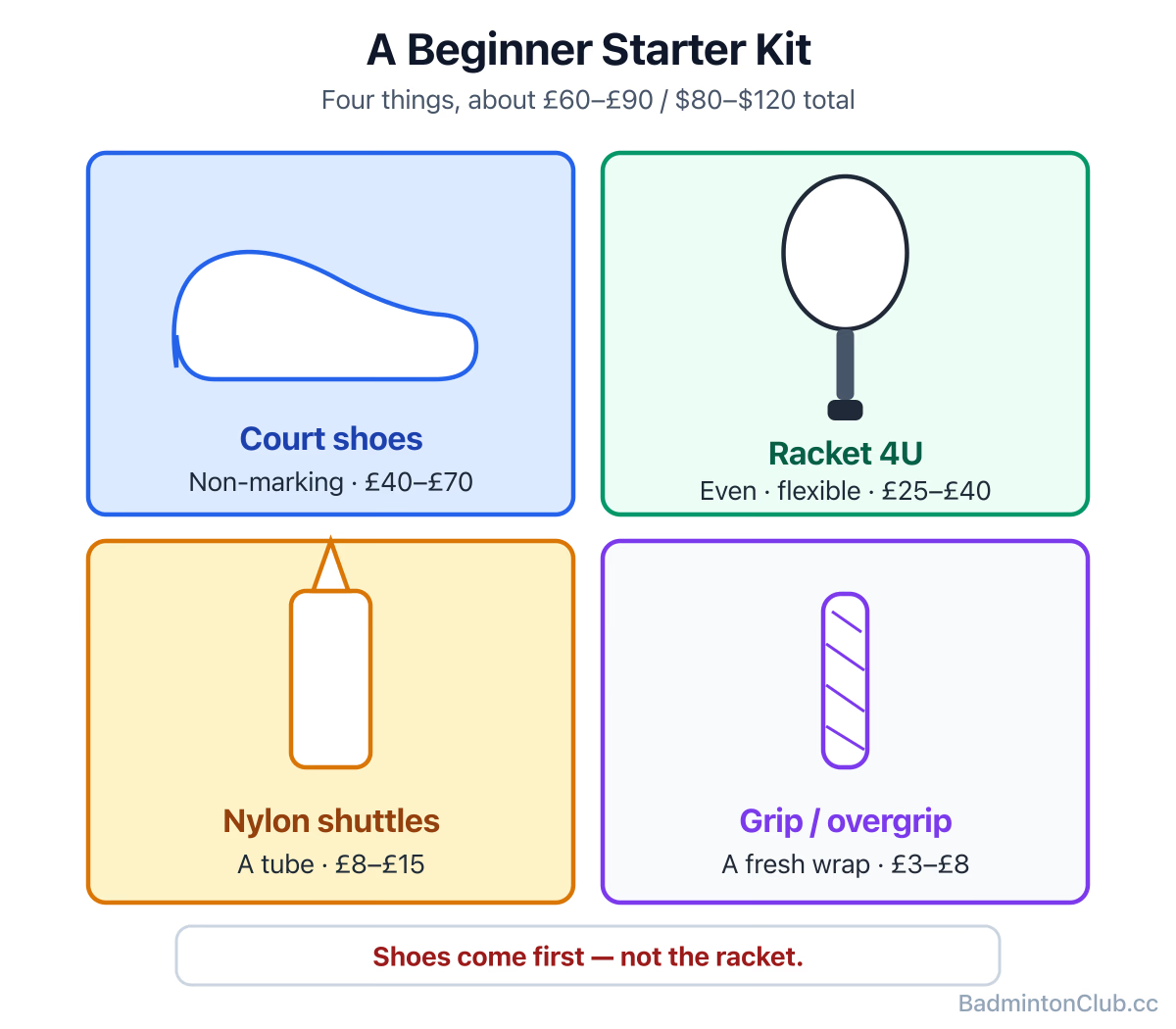
A complete badminton starter kit for a beginner is cheaper than you think: court shoes, a lightweight racket, a tube of nylon shuttles and a grip — and that's genuinely all you need to start. This guide gives you the exact buy-first order with real price bands, explains why the shoes come before the racket, names what's a waste of money on day one, and shows how to kit out for a club night versus the garden without overspending.
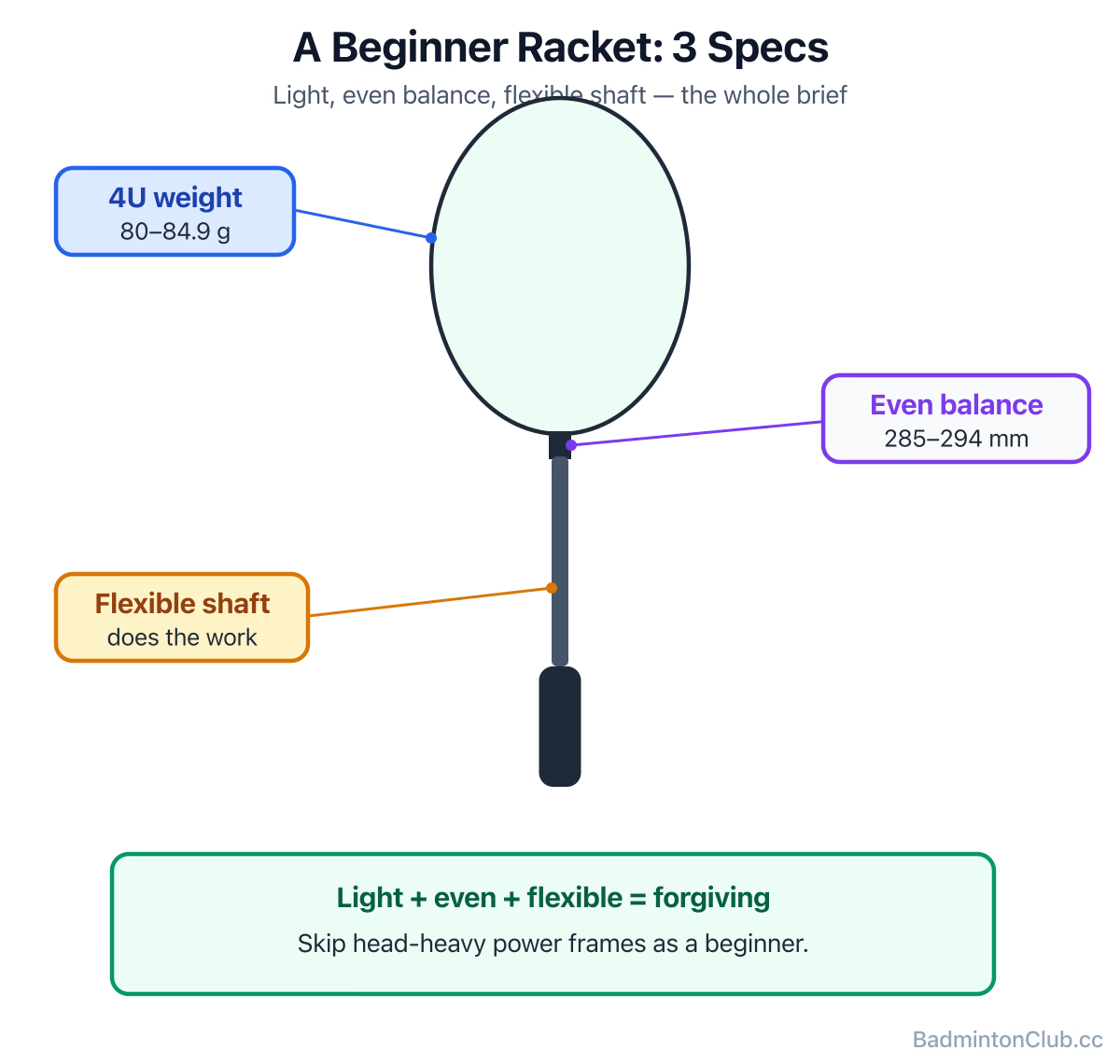
Looking for the best badminton racket for beginners? You want a lightweight 4U frame, an even balance and a flexible shaft — and you should spend about £25–£40, not £15 and not £150. This is a plain buyer's guide that tells you the three specs that actually matter for a new player, the price band that's worth it, which brands are safe bets, and the garden-toy rackets to walk straight past, with no affiliate-spam padding.
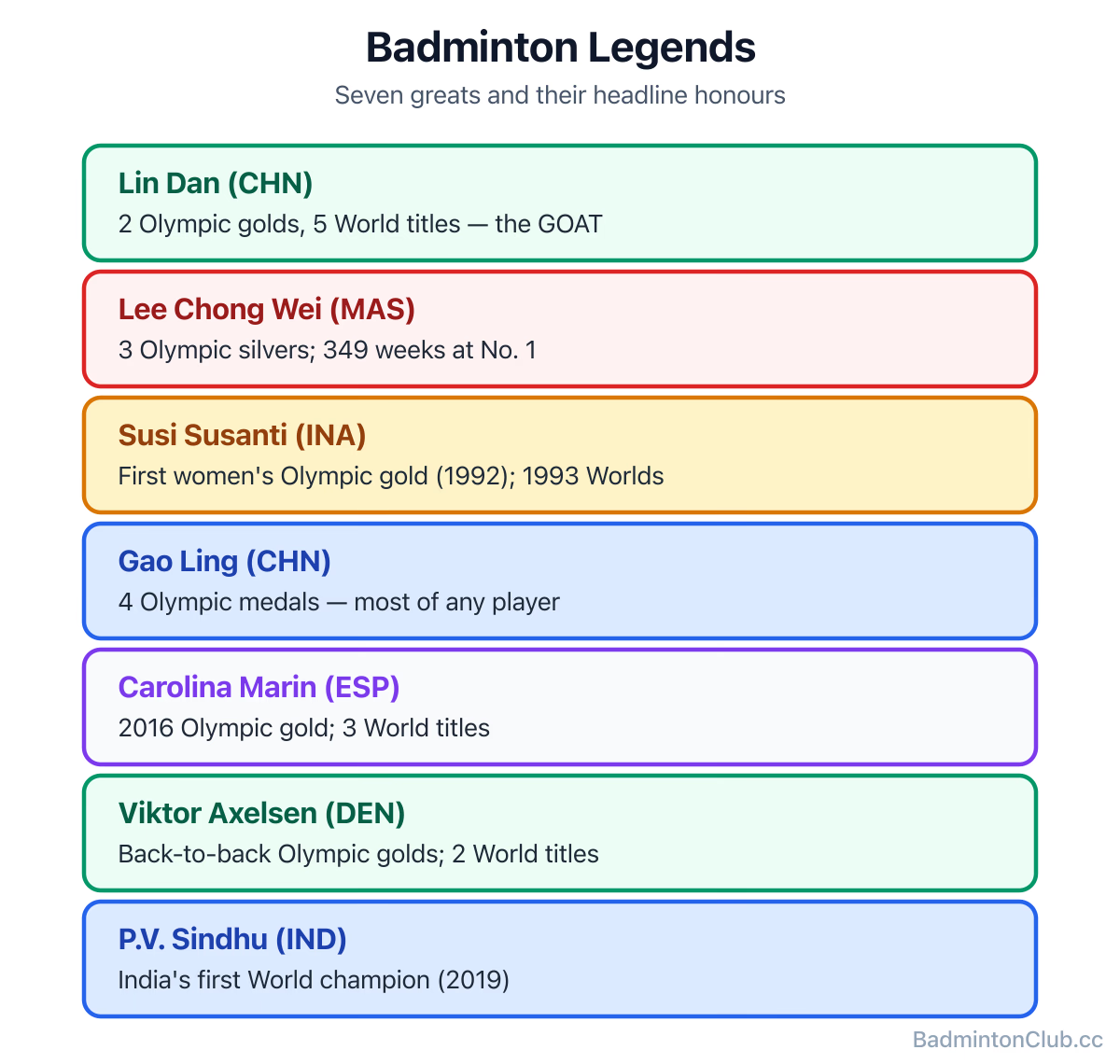
Who are the greatest badminton players ever? This guide covers the legends — Lin Dan, Lee Chong Wei, Susi Susanti, Gao Ling, Taufik Hidayat, Carolina Marín, Viktor Axelsen and P.V. Sindhu — with their real honours, not hype: Olympic golds, world titles, weeks at No. 1 and the records that actually settle the 'best of all time' argument. Every stat is checked against BWF and Olympic records, with an honest take on why the GOAT debate isn't as close as people think.
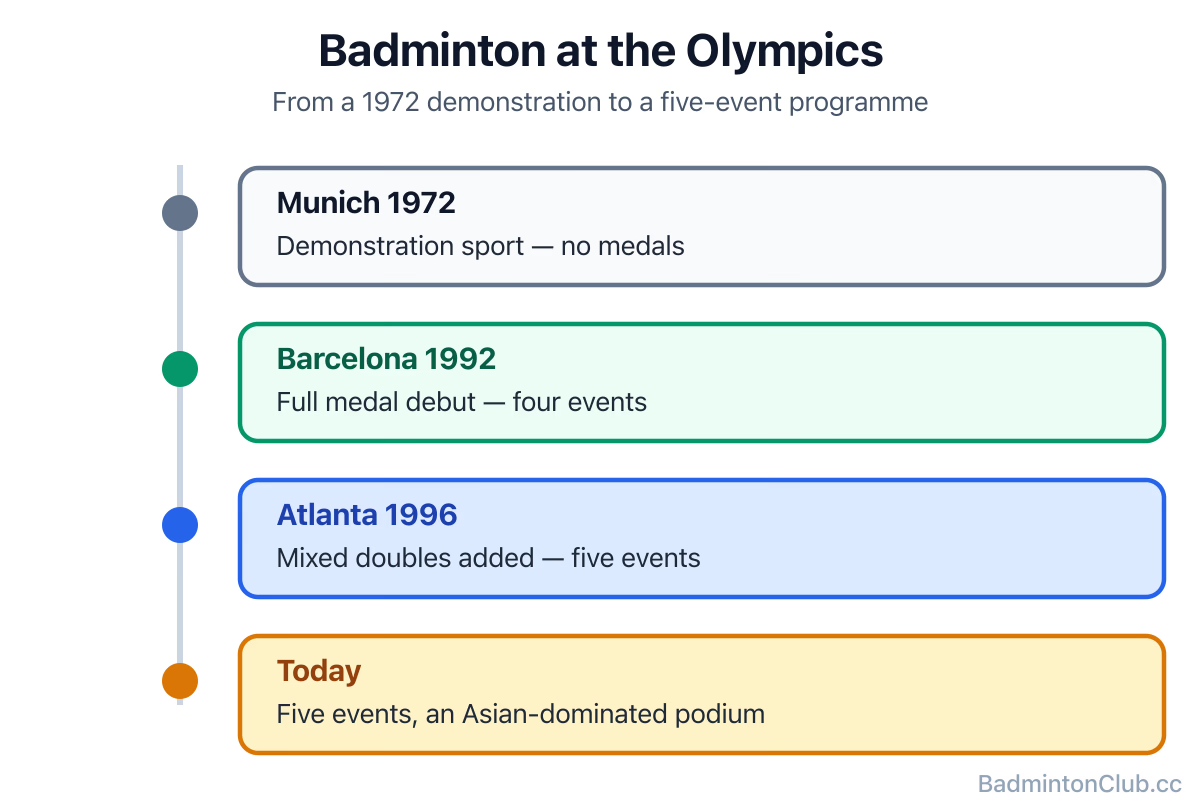
Badminton has been a full Olympic medal sport since Barcelona 1992, after a one-off demonstration at Munich 1972. This guide covers how it joined the Games, the five events contested today, the first champions (Indonesia's Susi Susanti and Alan Budikusuma), the nations that dominate the podium, and the format quirks — like why mixed doubles only arrived in 1996 — with every date checked against the BWF and Olympic records.
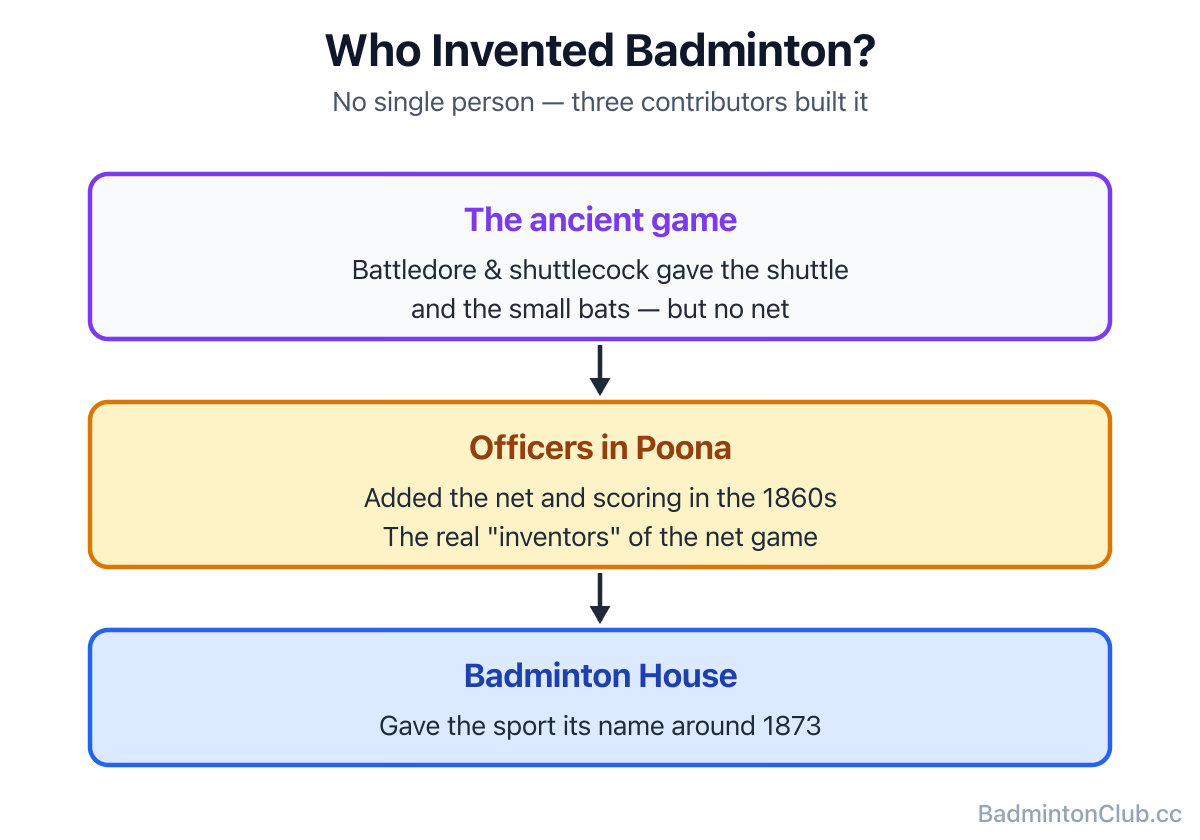
No single person invented badminton — and that's the honest answer most pages dodge. The game evolved from ancient battledore and shuttlecock, was turned into a net sport by British officers in Poona, India, in the 1860s, and was named after Badminton House in England around 1873. This guide untangles who actually did what, why the Duke of Beaufort gets the credit he doesn't quite deserve, and which 'inventor' claims to treat with caution.
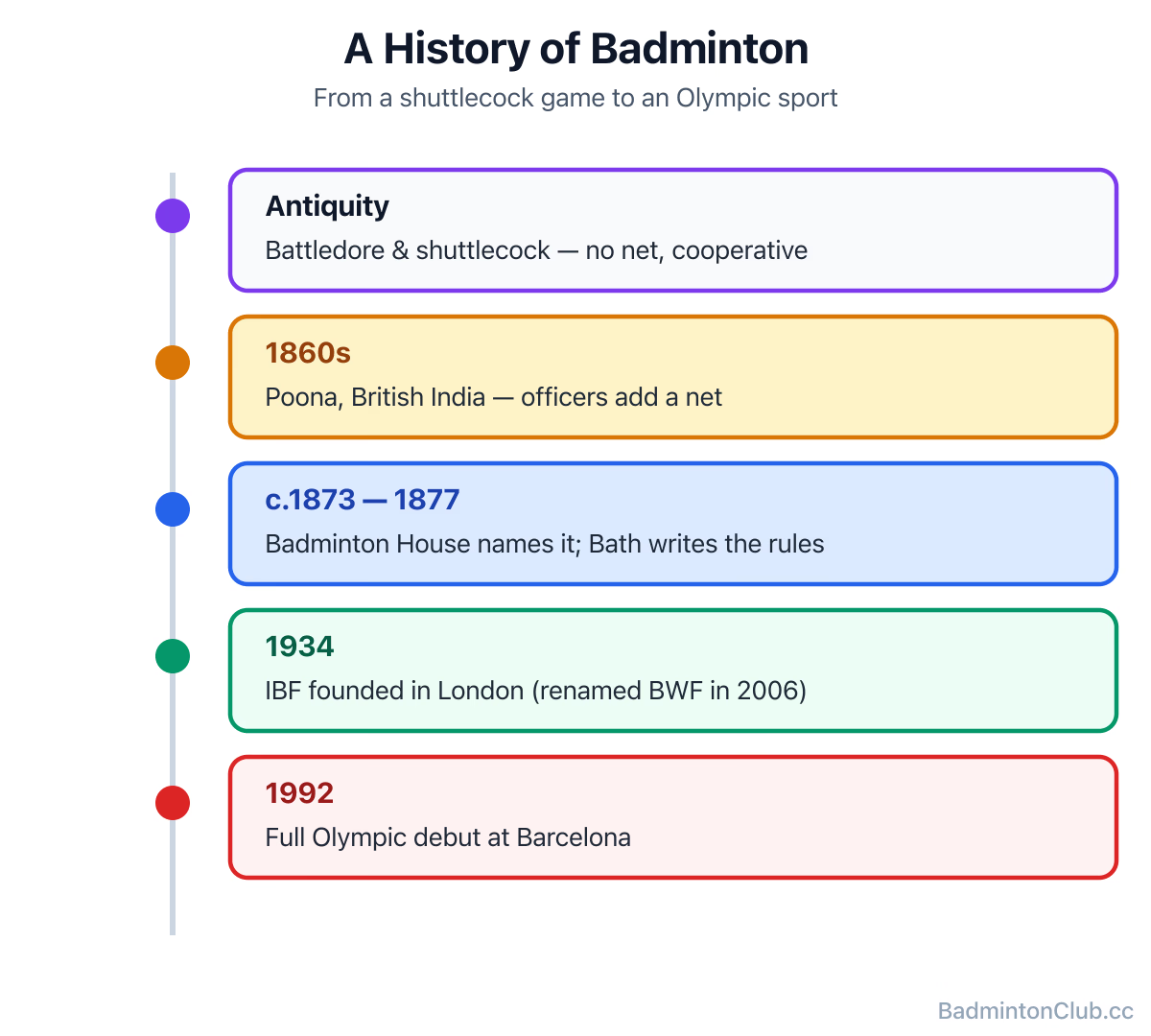
Badminton's history runs from an ancient shuttlecock game to British India, where army officers in Poona added a net, to an 1870s garden at Badminton House in England that gave the sport its name. Here's the whole story in order — where badminton originated, who shaped its first rules, how it spread worldwide through the IBF (now the BWF), and how it ended up on the Olympic stage at Barcelona in 1992 — with the dates checked against Britannica, the BWF and Olympic records.
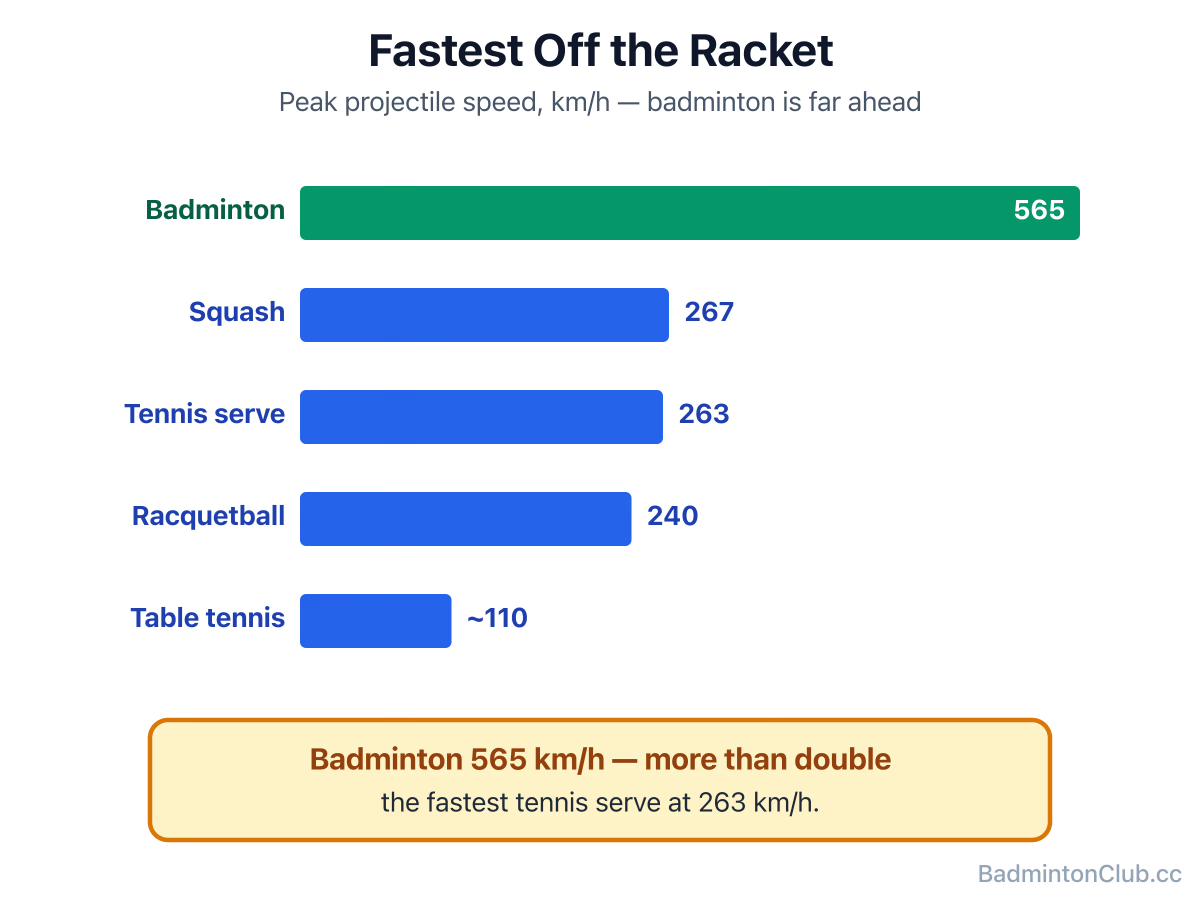
Is badminton the fastest racket sport? By the speed of the projectile leaving the racket, yes — the fastest badminton smash (565 km/h) crushes the fastest tennis serve (263 km/h). This guide gives the verified smash records, the shuttle speed in mph, and the crucial catch most articles skip: the shuttle decelerates faster than any ball, so 'fastest off the racket' and 'fastest on arrival' are two different questions with two different winners. Here's the honest, fully-sourced answer.
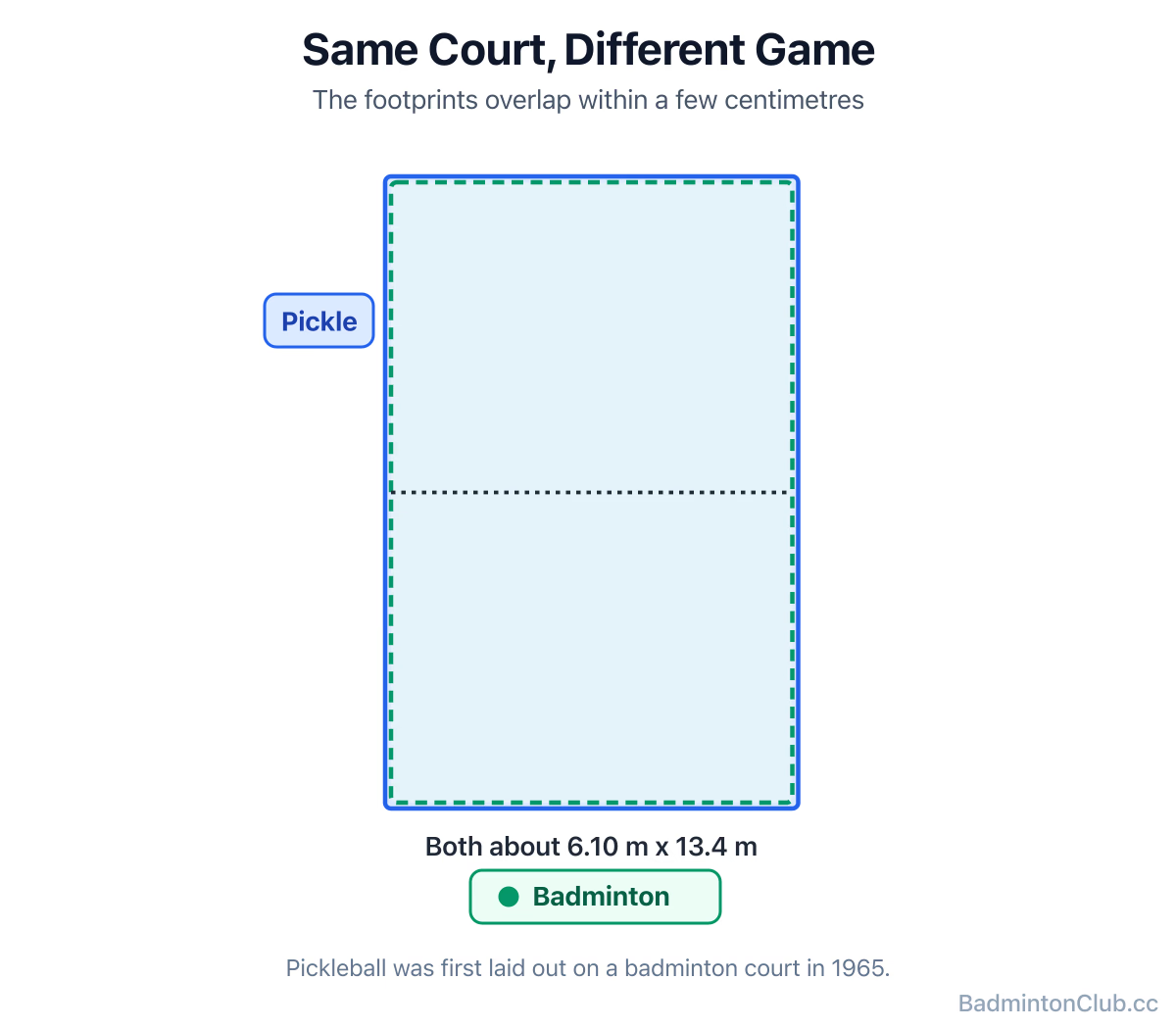
Badminton vs pickleball is the comparison that surprises everyone: the two courts are almost exactly the same size, yet the games could not be more different. We line up court dimensions, net height, the paddle-versus-racket, ball-versus-shuttle speeds, scoring and difficulty — and explain why a badminton court and a pickleball court share an identical footprint but play nothing alike. If you're deciding which to take up, here's the honest, numbers-first breakdown.
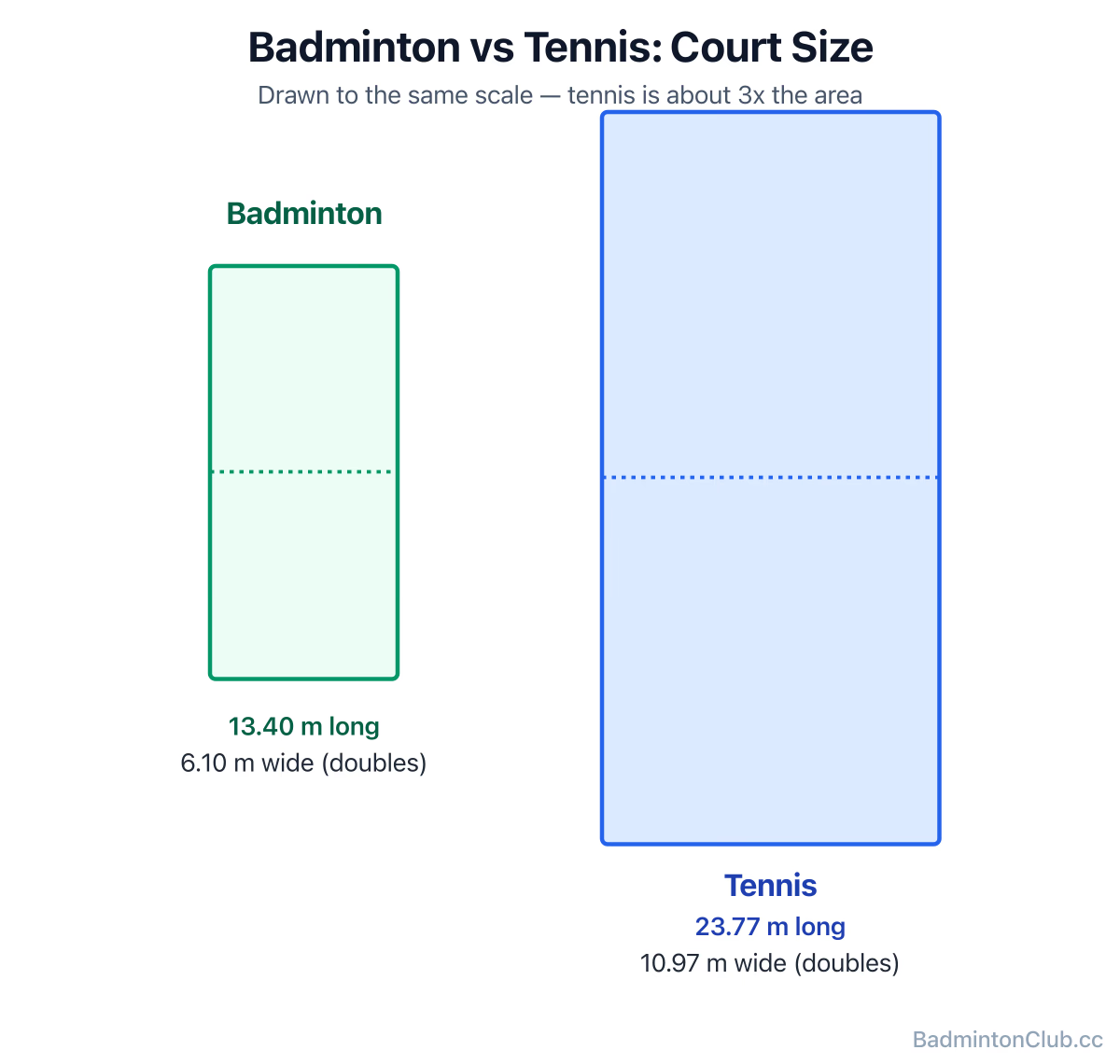
Badminton vs tennis, settled with real numbers: the smaller, faster shuttle game versus the heavier, more powerful ball game. We compare court size, net height, serve and projectile speeds, scoring, calories and how hard each is to learn — and say plainly which sport wins on each axis. Badminton's shuttle is far faster off the racket; tennis's ball is heavier and the rallies last longer. If you're choosing between them, this is the honest head-to-head.
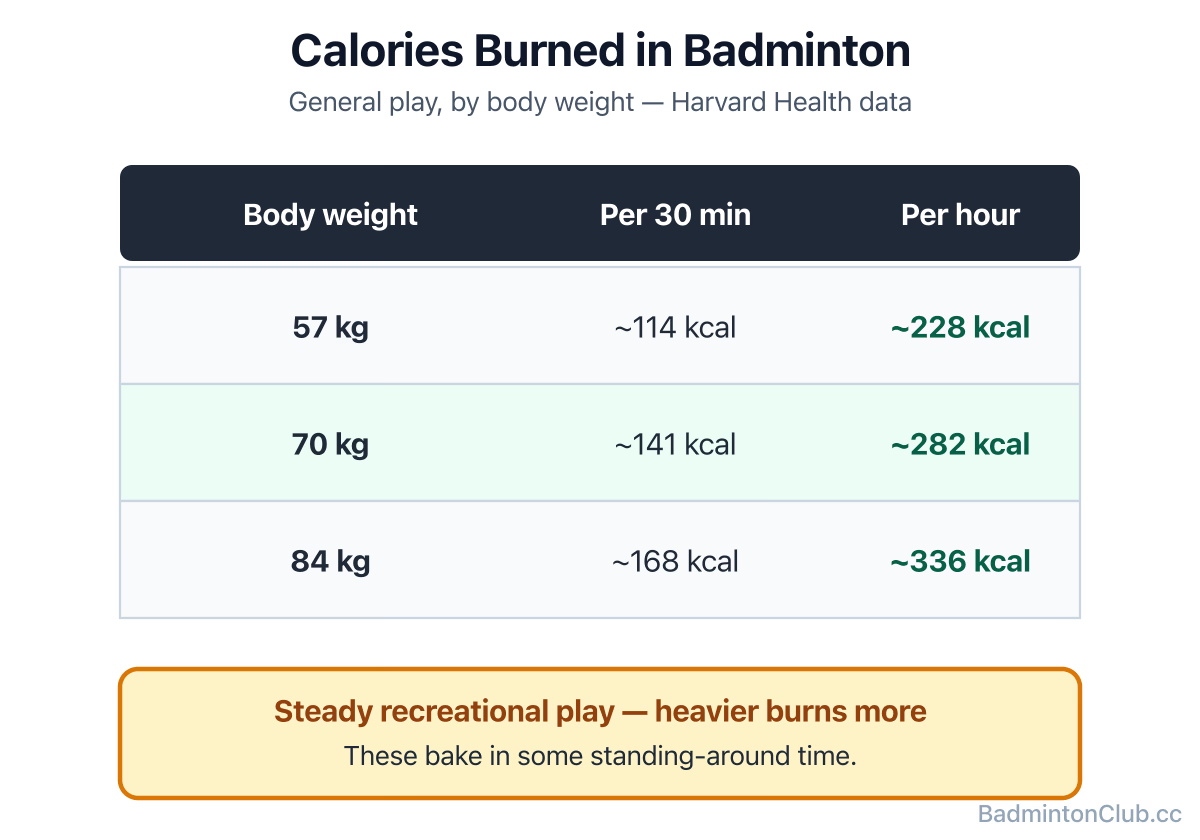
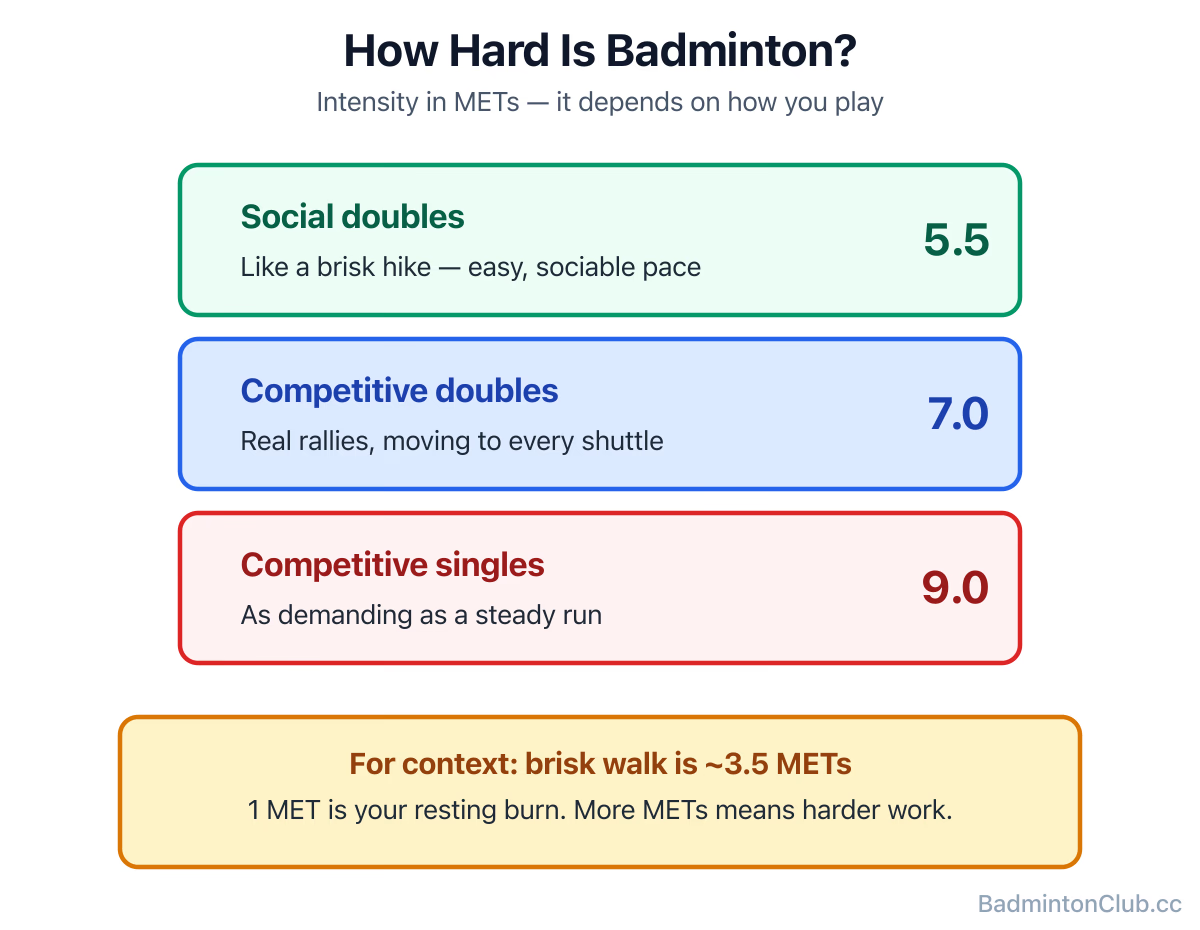
How many calories does badminton burn? Roughly 280 calories an hour for a 70 kg player in social doubles, rising past 450 an hour in competitive singles — and it scales with your body weight. This guide gives the real Harvard Health and MET-based numbers for light, casual and competitive play across body weights, shows the simple formula so you can work out your own burn, and explains why the calorie counter on your watch is probably lying to you.
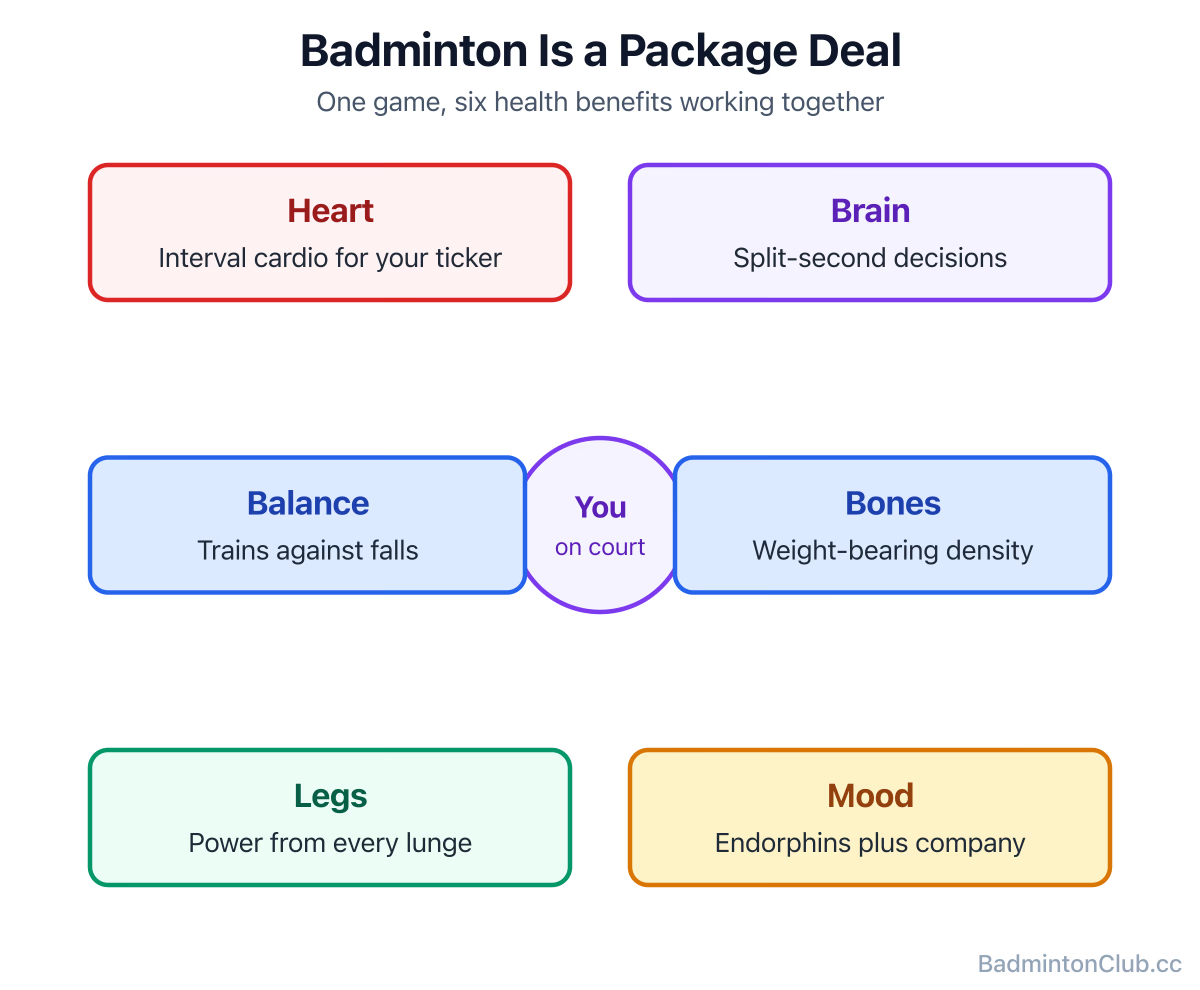
Badminton's health benefits go well beyond burning calories: it strengthens your heart, sharpens reflexes and balance, builds bone and leg strength, lifts mood, and — through its social, game-based nature — keeps people exercising for decades. This guide gathers the evidence-backed benefits, including the study linking racquet sports to a 47% lower risk of early death and the Copenhagen data tying badminton to longer life expectancy, with the honest caveats on what's proven versus promising.
Yes — badminton is genuinely good exercise: a moderate-to-vigorous interval workout that trains your heart, legs and reflexes while barely feeling like a workout. This guide puts real numbers on it (MET values, heart-rate zones, how a doubles night compares to a gym session), separates social knockabouts from competitive singles, and explains why one big study linked racquet sports to a 47% lower risk of dying early — so you know exactly what you're getting from a game.
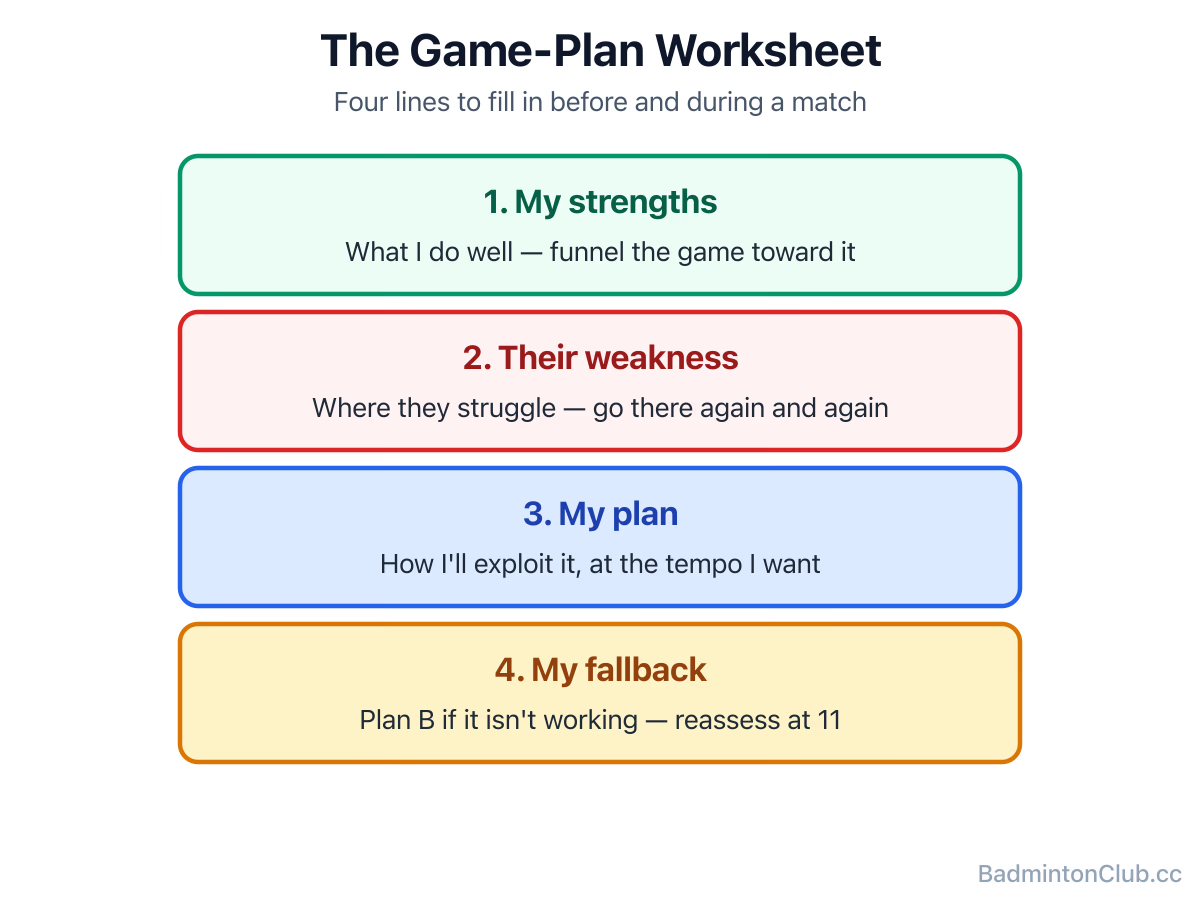
Winning at badminton isn't about hitting harder — it's about a clear game plan: play to your strengths, target your opponent's weakness, control the tempo, and stay disciplined when it's tight. This guide shows how to win at badminton by building a real badminton game plan before and during a match, how to adjust when it isn't working, and how to use the score and the change of ends to your advantage. The strategic thinking that turns even strokes into wins.
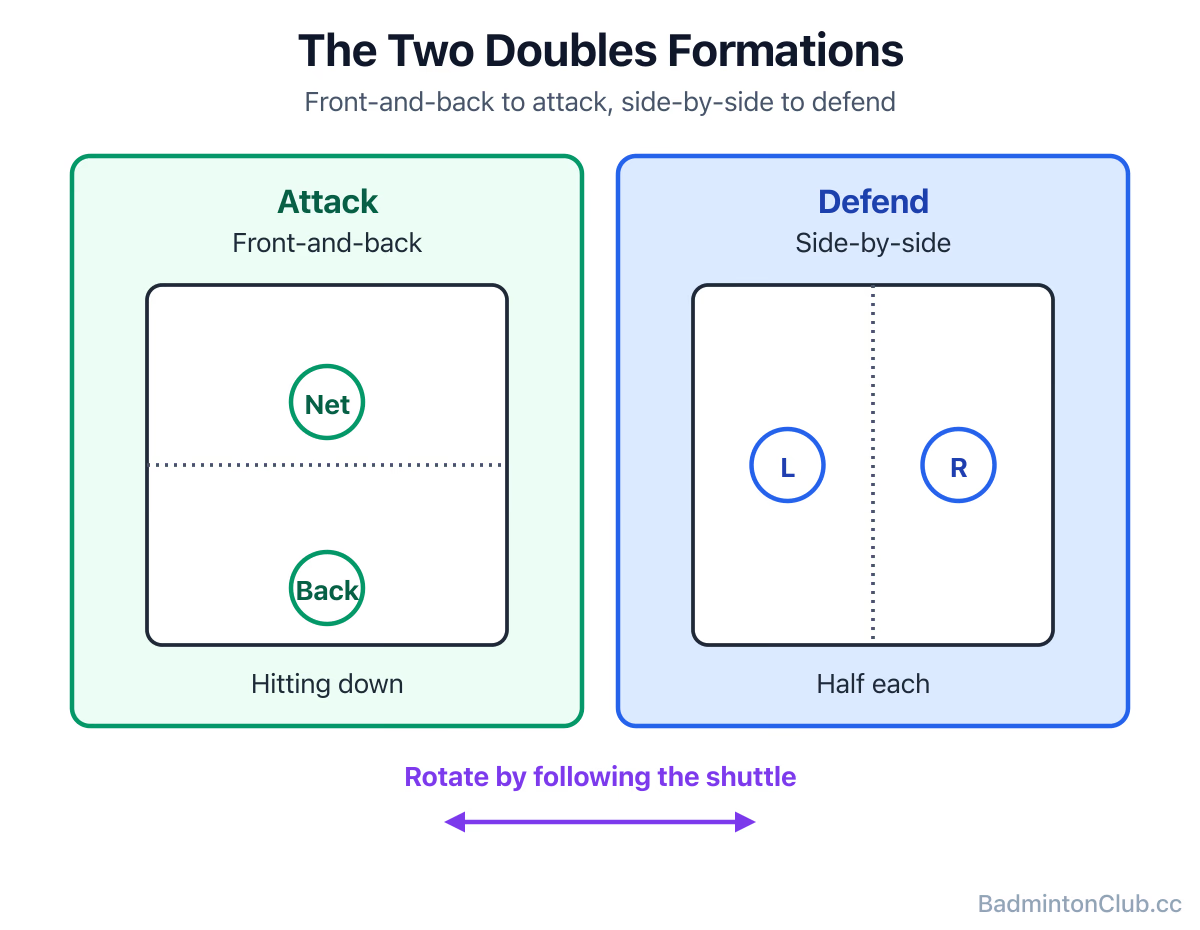
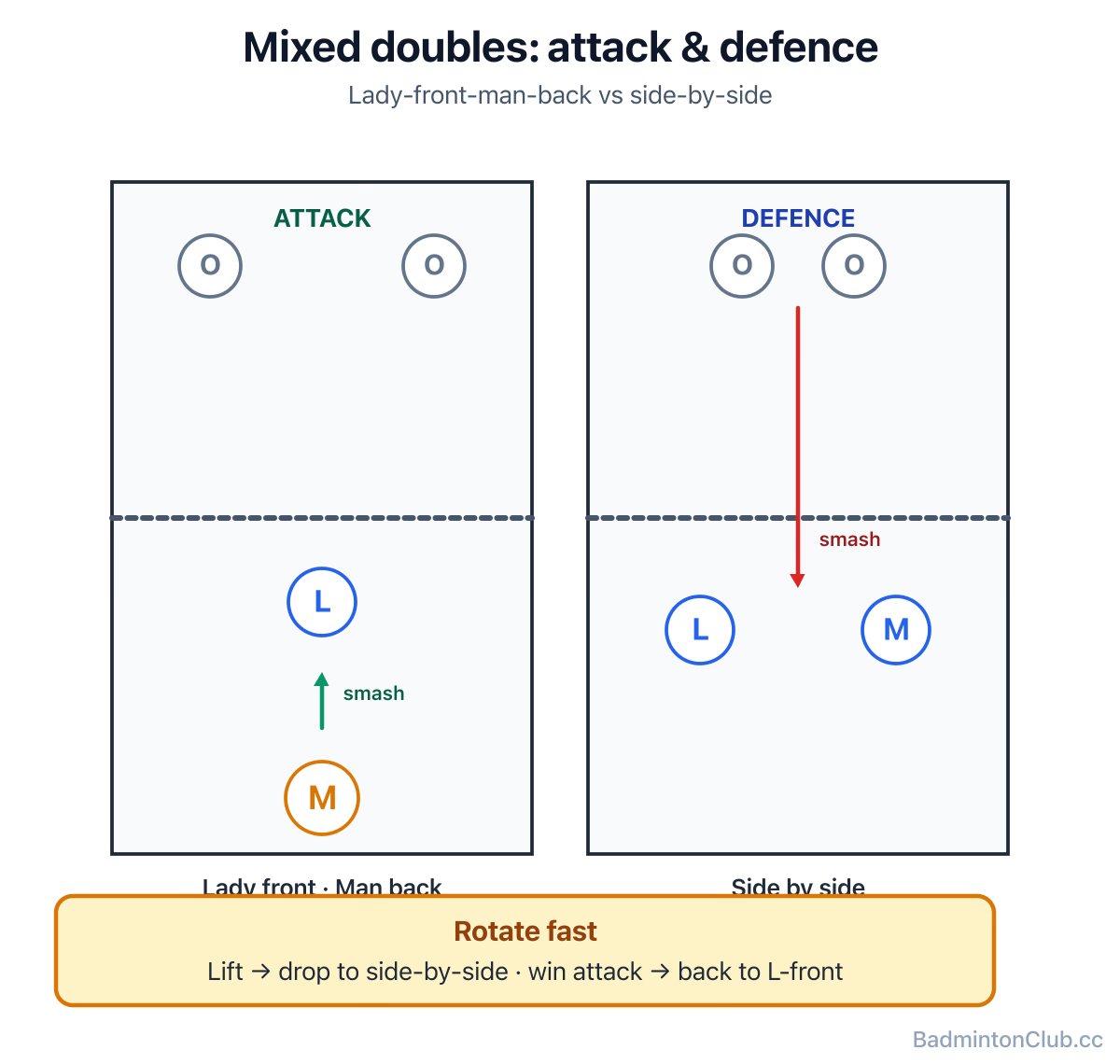
Doubles badminton is about attacking together and defending together: front-and-back when you attack, side-by-side when you defend, rotating smoothly between the two. This beginner doubles strategy guide explains both formations, how to rotate by following the shuttle, who takes which shots, why keeping the shuttle down wins doubles, and the communication that stops you and your partner both leaving it. The essential tactics for anyone stepping onto a club doubles court for the first time.
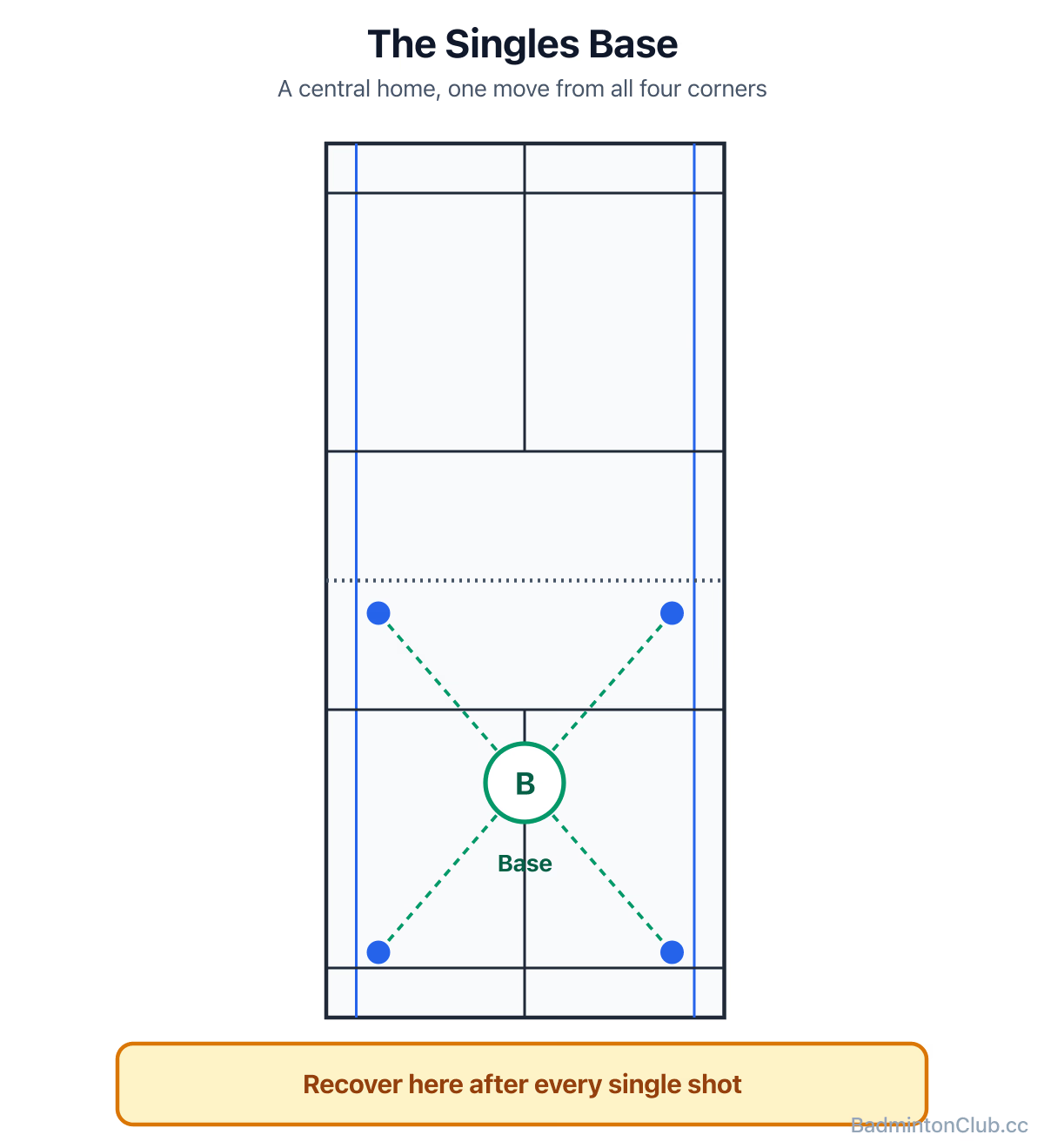
Singles badminton is a game of movement and patience: hold a central base, move your opponent corner to corner, and wait for the weak reply rather than going for winners. This beginner singles strategy guide covers the base position, why hitting to the corners works, the clear-and-drop patterns that stretch opponents, when to attack, and the fitness-and-discipline mindset that wins singles — the format where the fitter, smarter, more patient player almost always comes out on top.
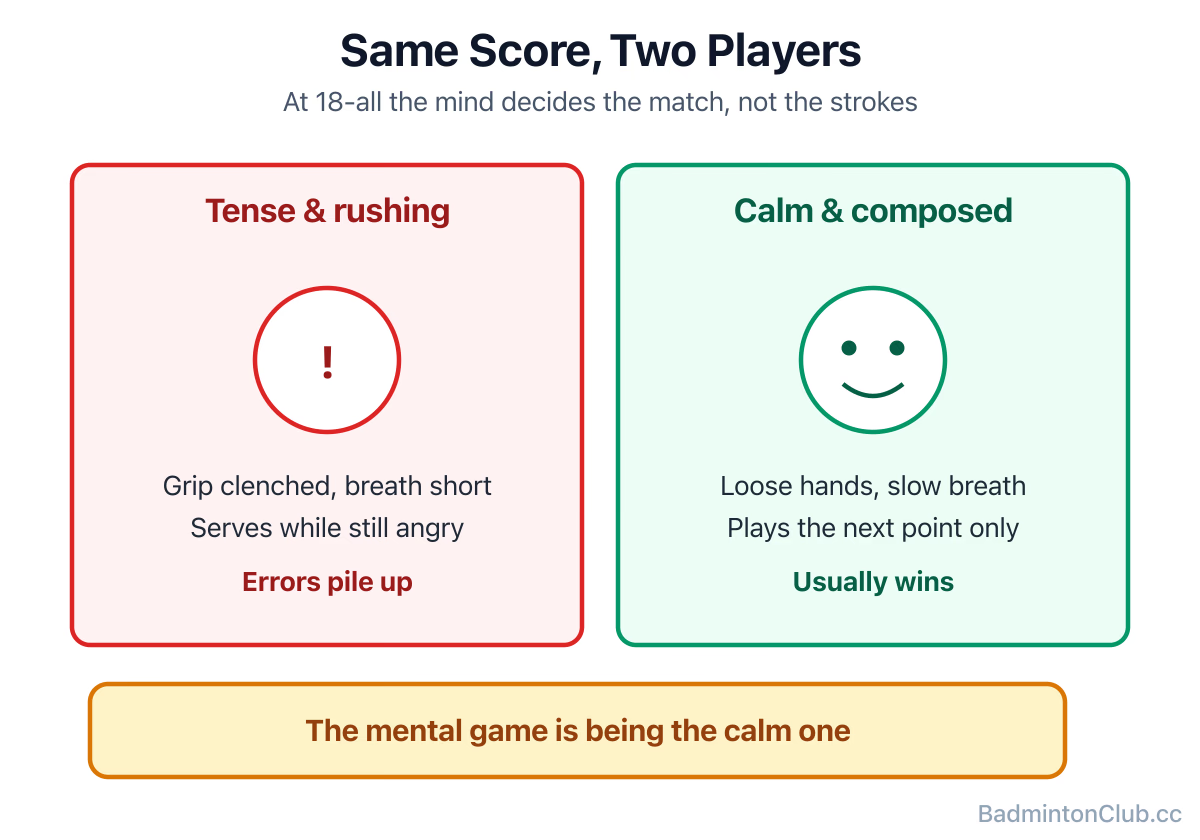
Badminton is won as much in the head as in the hands: the player who stays calmer, focuses on the next point, and refuses to panic at 18-all usually wins. This is the complete guide to the badminton mental game for club players — how nerves actually sabotage your shots, the breathing and routine tricks that steady you, how to stop the score in your head, and the on-court mindset that turns a shaky beginner into someone hard to beat under pressure.
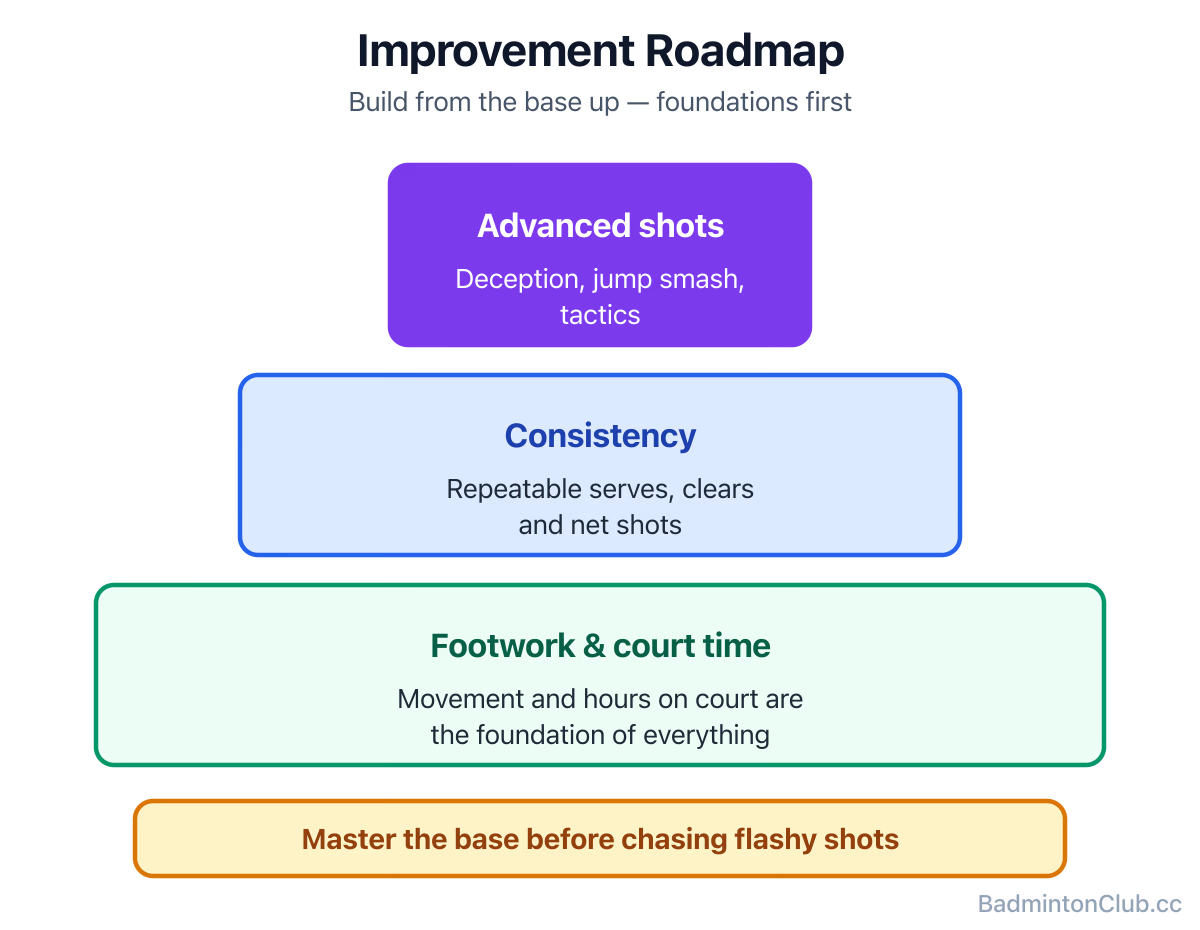
Want to know how to get better at badminton? Forget chasing a harder smash — real improvement comes from footwork, court time, fixing one weakness at a time, and playing people better than you. This is a practical, no-nonsense plan covering what to work on and in what order, how to structure practice, the habits that quietly separate levels, and the mindset that turns a casual player into a genuinely good one. The fixes are unglamorous, but they work.
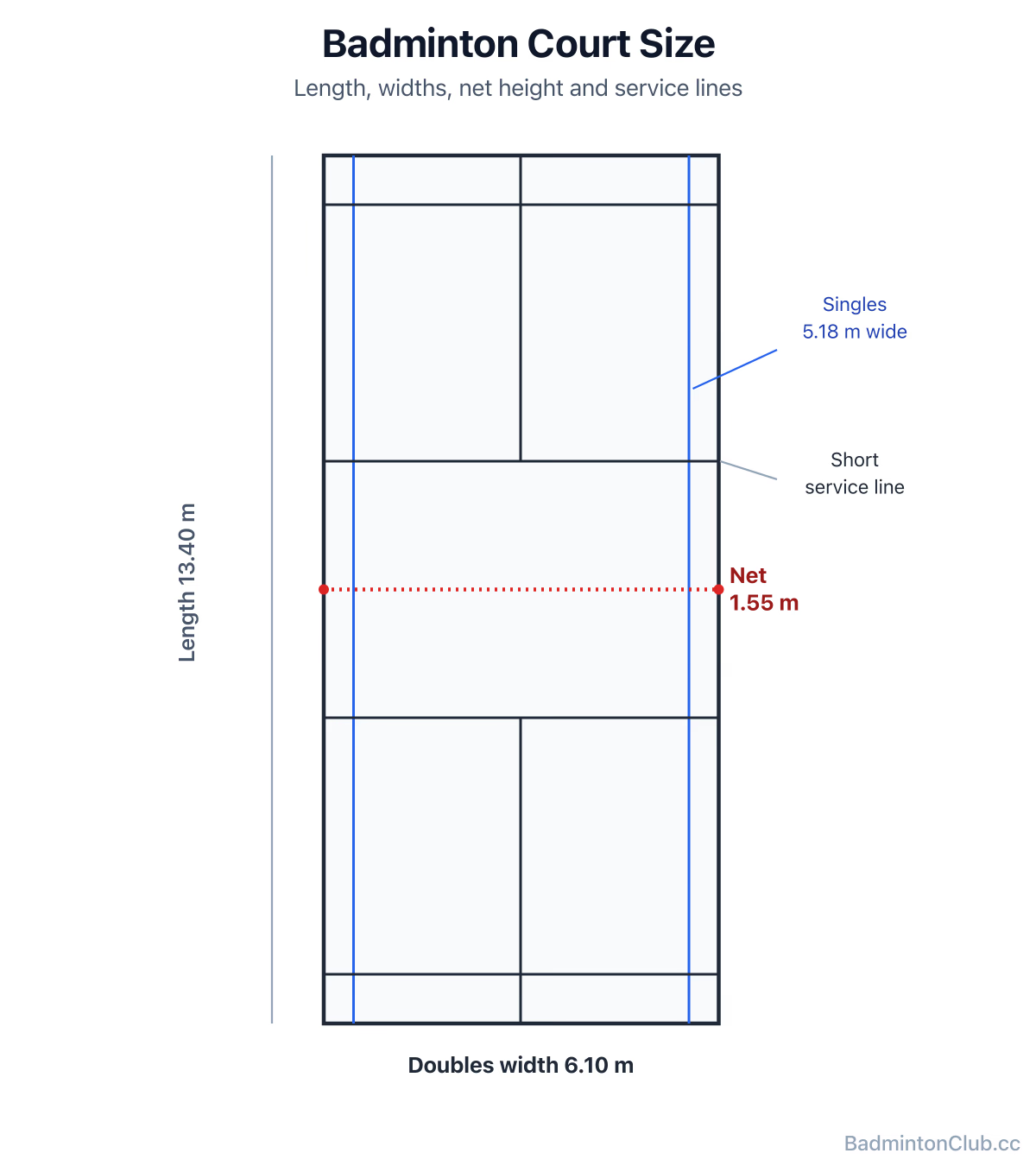
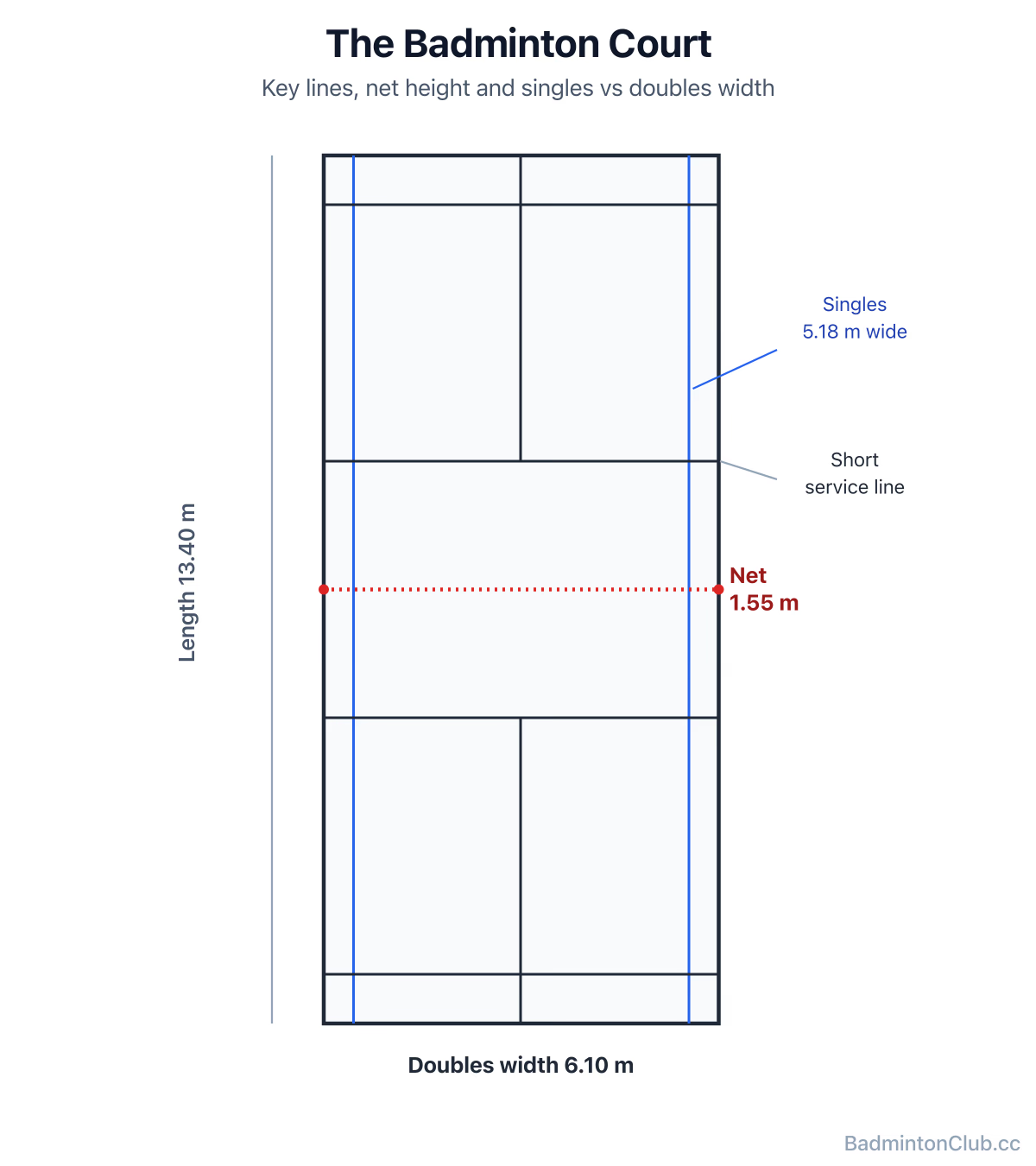
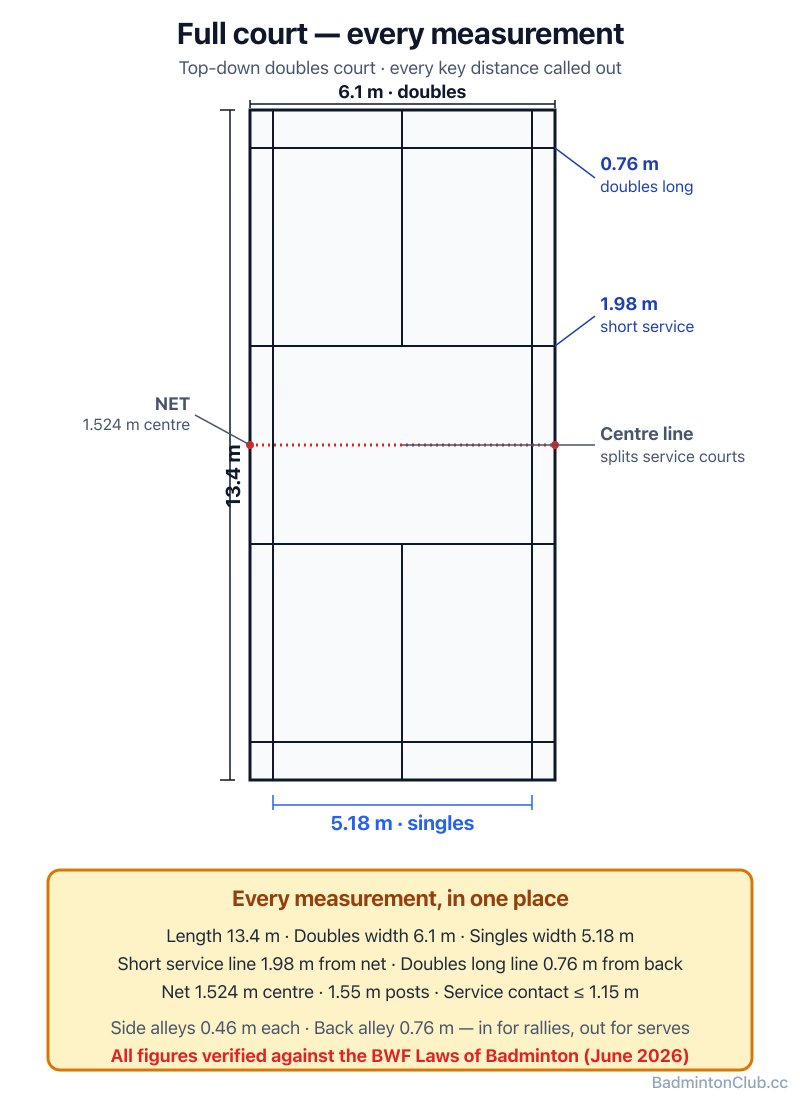
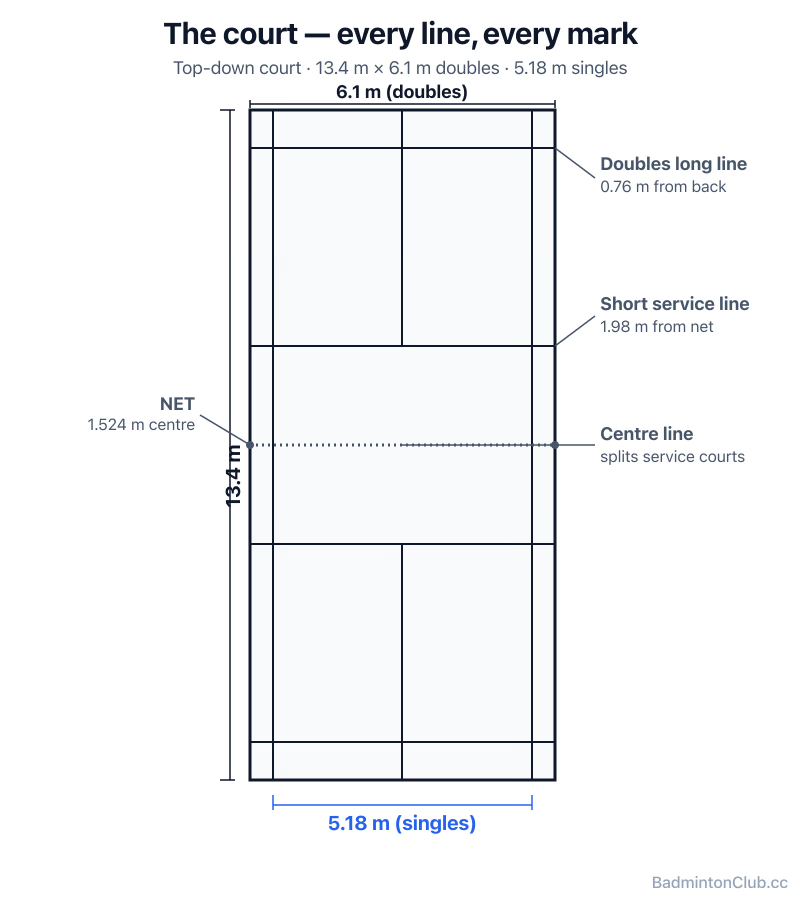
The official badminton court size is 13.40 m long and 6.10 m wide for doubles, narrowing to 5.18 m for singles, with the net at 1.55 m. This guide gives every measurement that matters — court length and width, net height, service lines and tramlines — explains the singles-versus-doubles boundary switch that confuses everyone, and shows how much space you actually need to fit a court at home or in a hall, all with a clear labelled diagram.
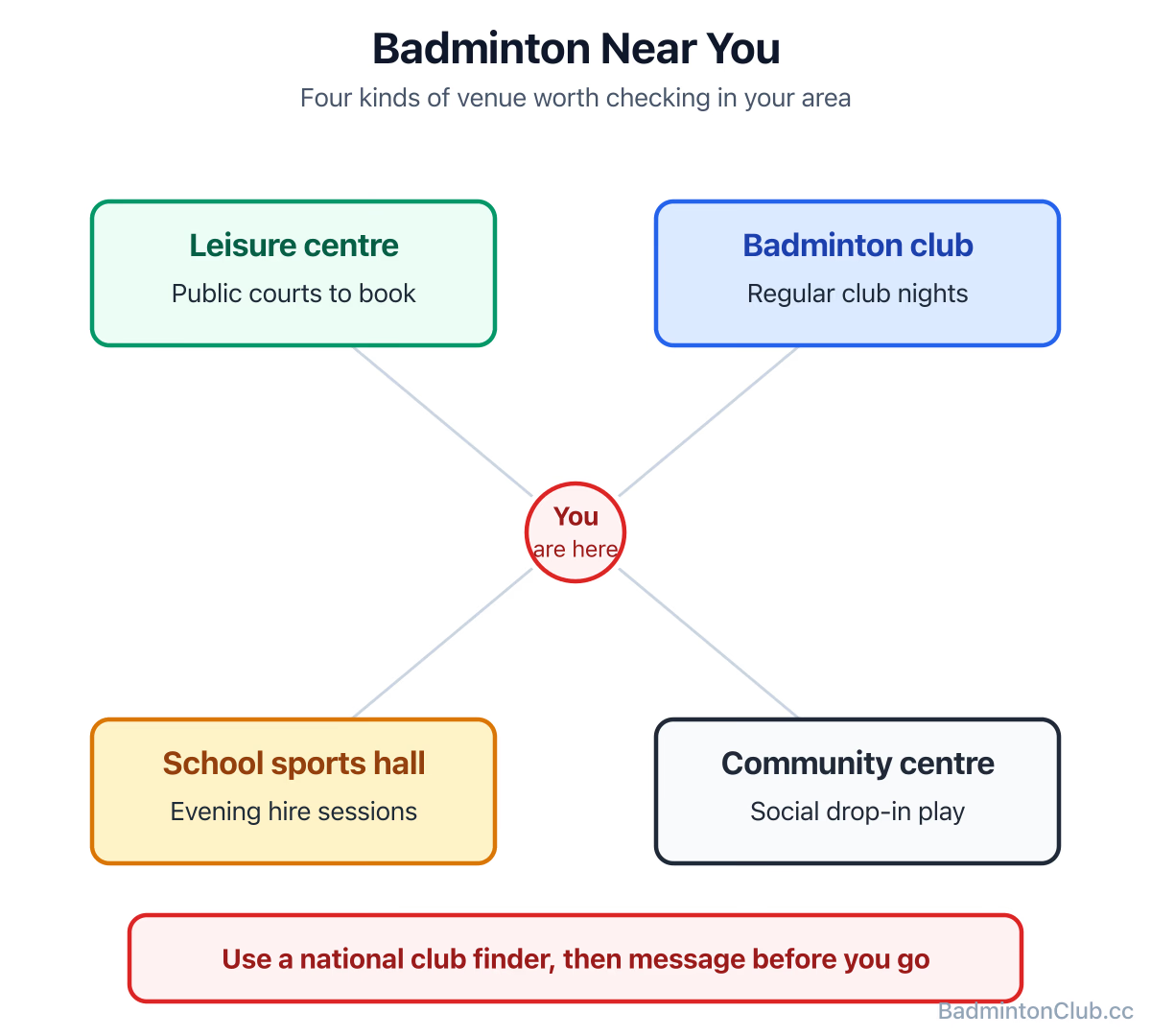
Searching for badminton near you? Here's how to actually find courts, clubs and drop-in sessions close to home — what to type into a map search, where leisure-centre and community-hall games hide, how to tell a beginner-friendly club from a competitive one, and what a typical session costs and looks like. This is the practical, no-fluff guide to going from 'I want to play' to standing on a court this week, whether you want casual social games or a proper club.
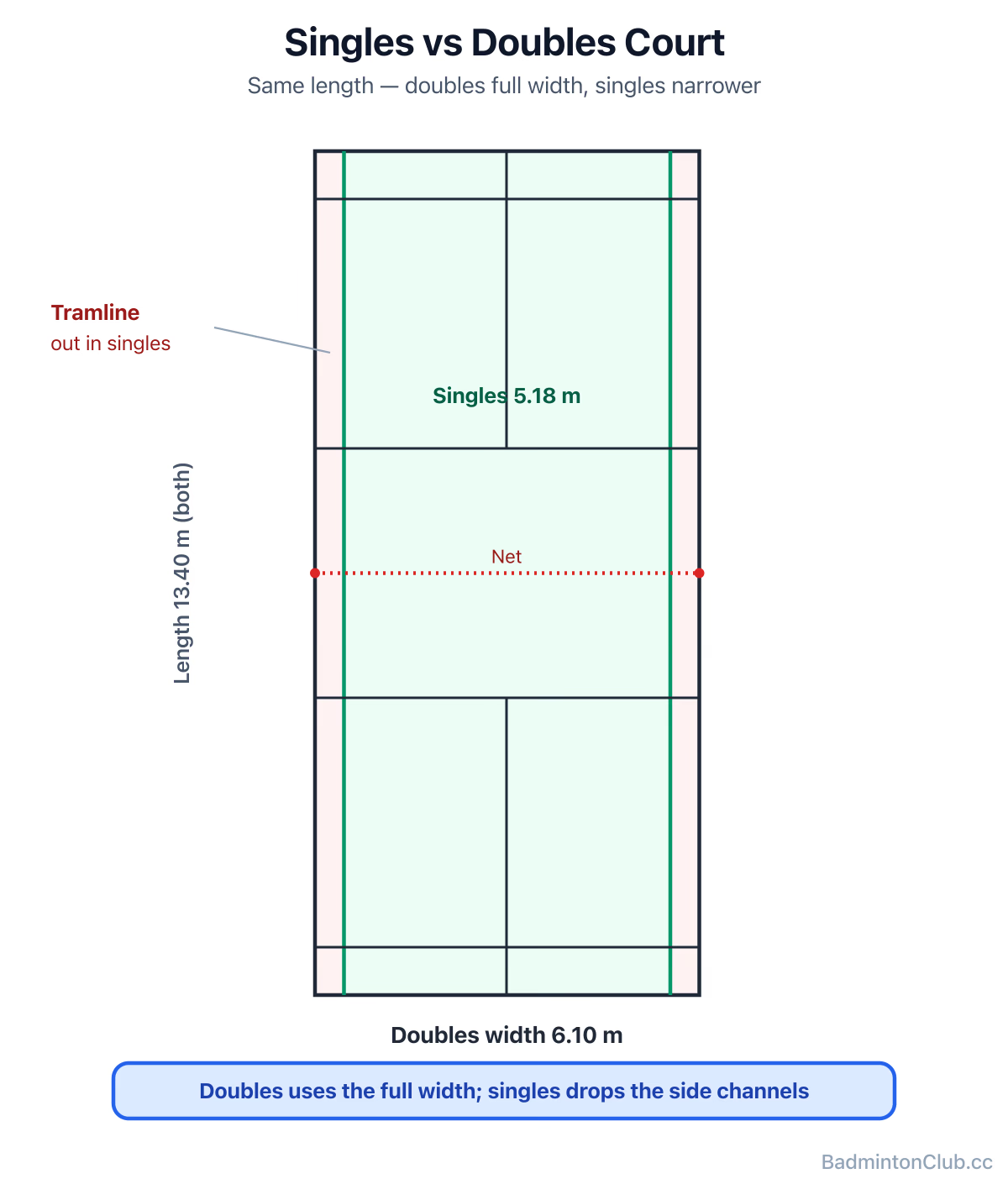
Singles and doubles badminton share the same scoring but differ in court width, service-court shape, and tactics. This breaks down exactly what changes — the singles court is narrower, the doubles service court shorter and wider, singles is a running game of corners while doubles is a fast attacking battle — plus the service-line rule that confuses everyone and an honest take on which format suits you.
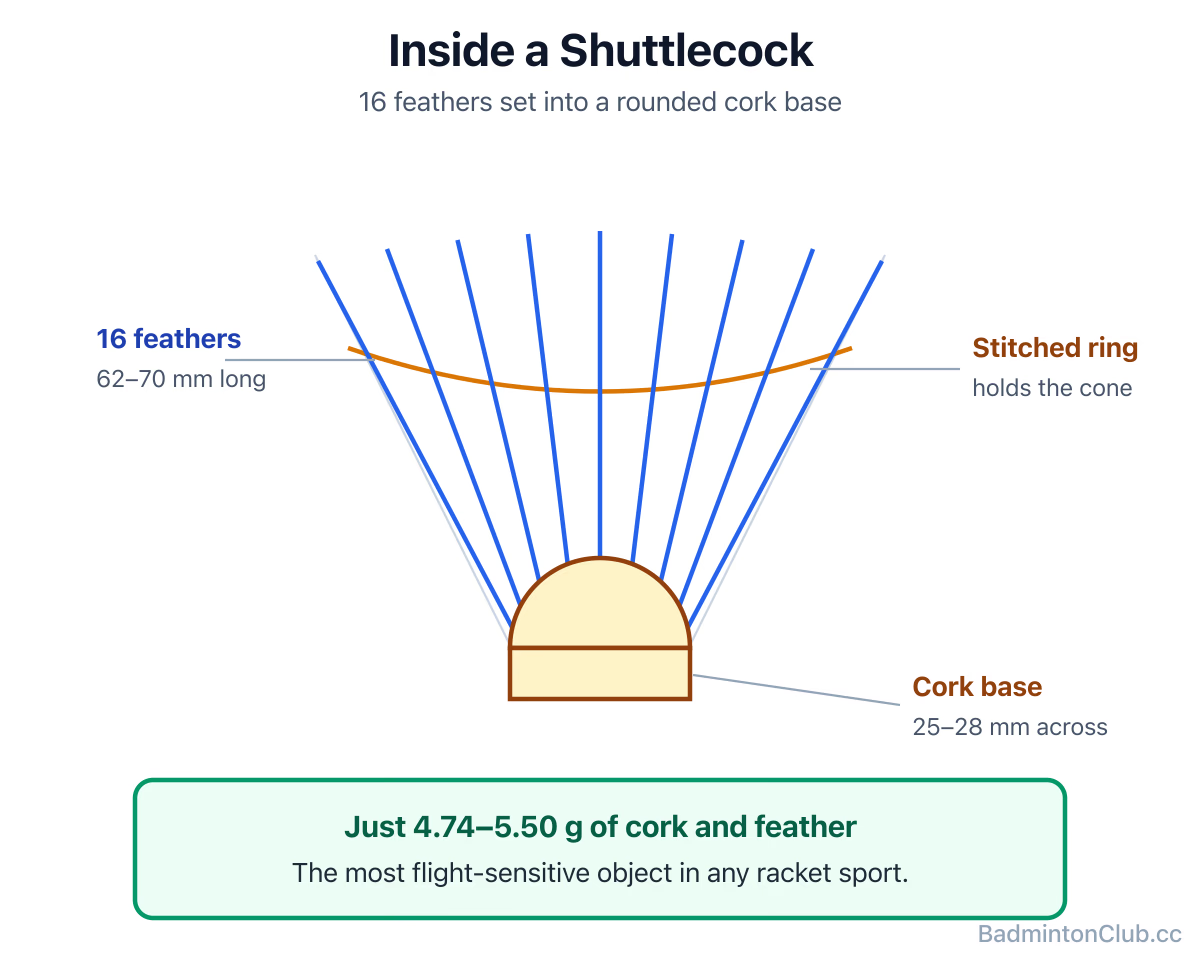
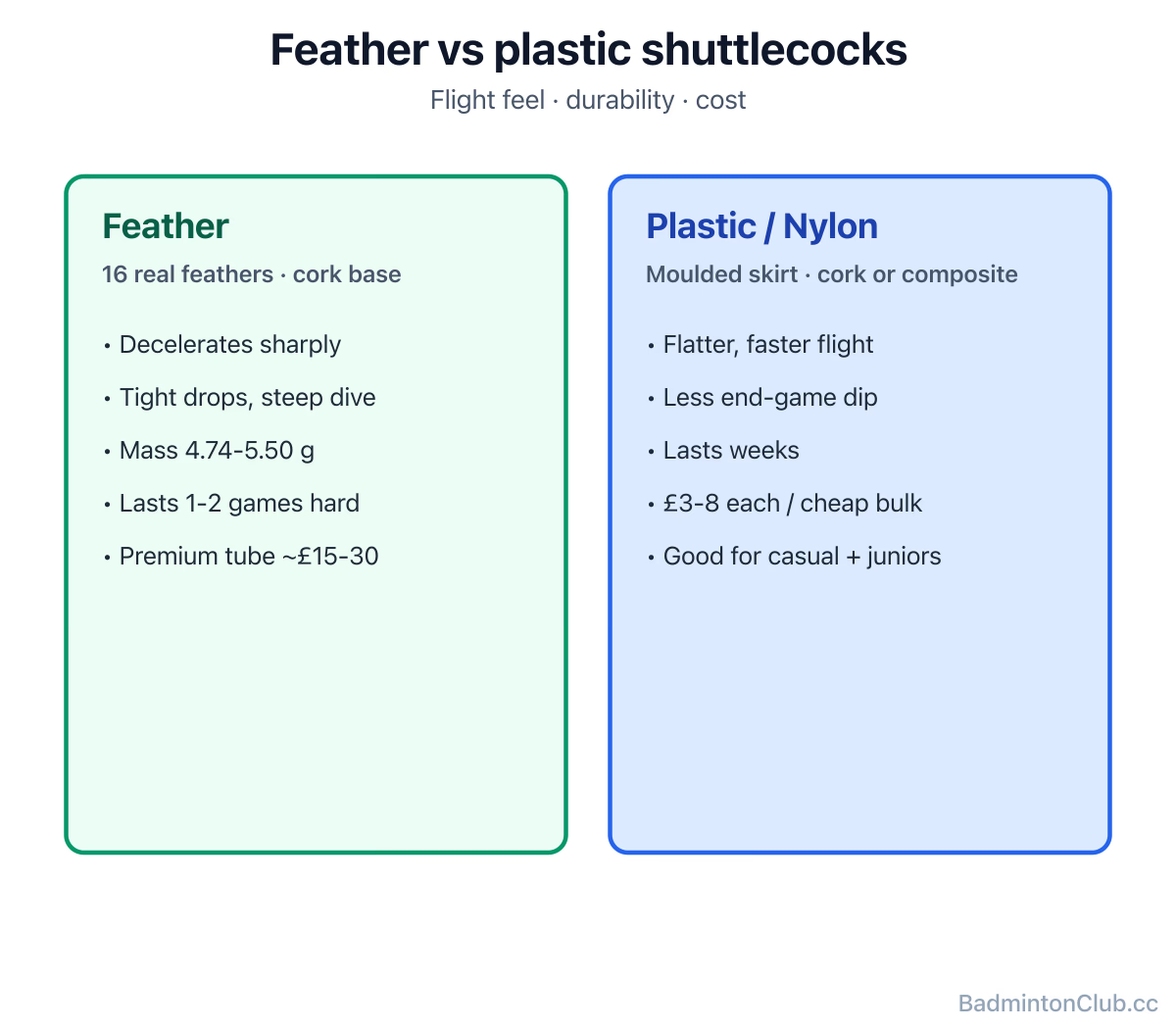
A shuttlecock is badminton's projectile — an open cone of 16 feathers (or a nylon skirt) set in a rounded cork base — and its shape is why badminton plays nothing like tennis. This covers what a shuttle is made of, the BWF weight and feather specs, feather versus plastic shuttles, why it always flies cork-first and decelerates so fast, and the speed-rating numbers printed on the tube.
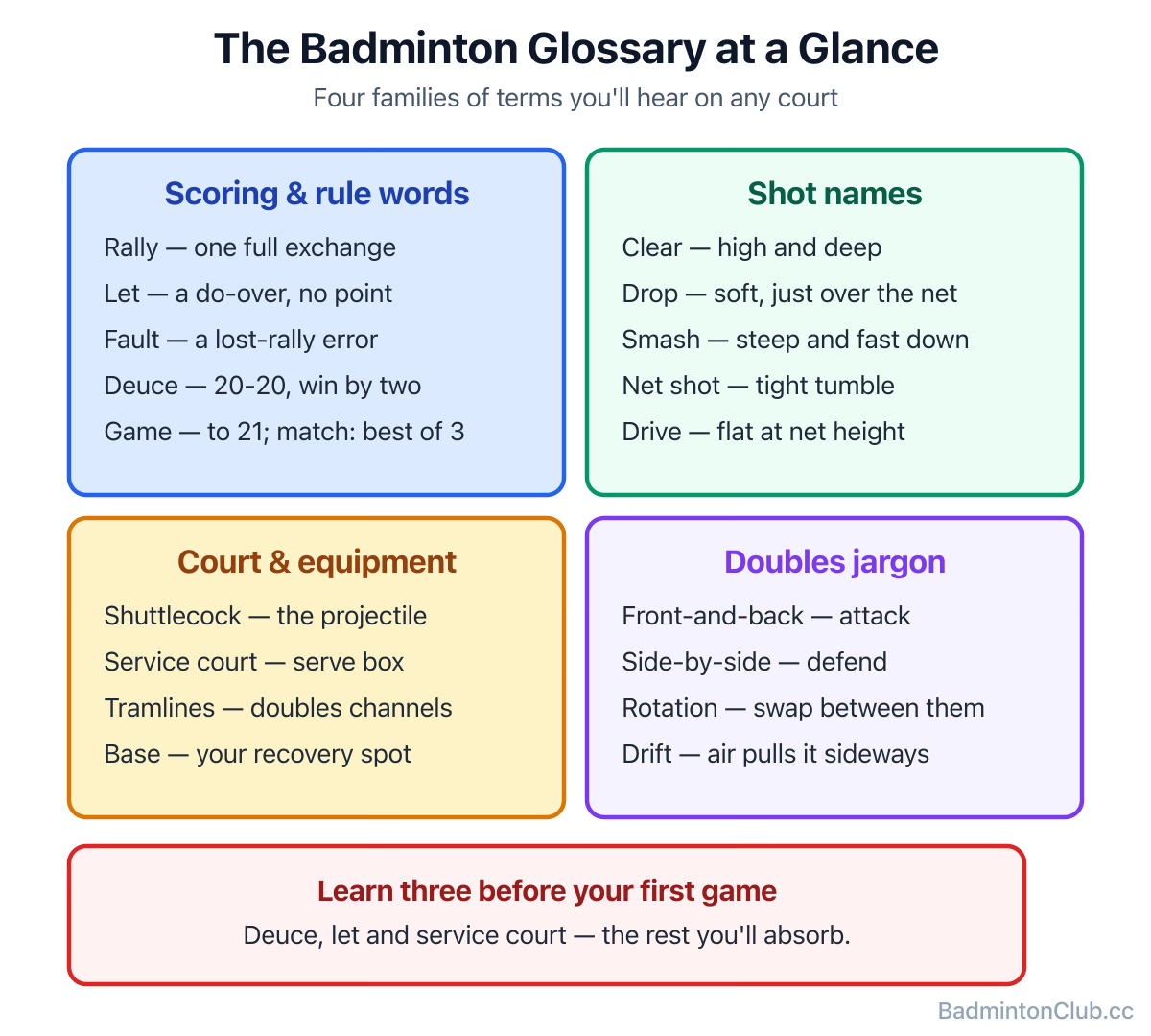
A plain-English badminton glossary covering the terms you'll hear on any court: rally, let, deuce, shuttlecock, clear, drop, smash, service court, and the slang nobody explains. Instead of a dry word list, this groups the terminology the way it actually comes up in a game — scoring words, shot names, court areas, doubles jargon — and links out to a full guide for each big one, so you can look up a word fast or read the lot.
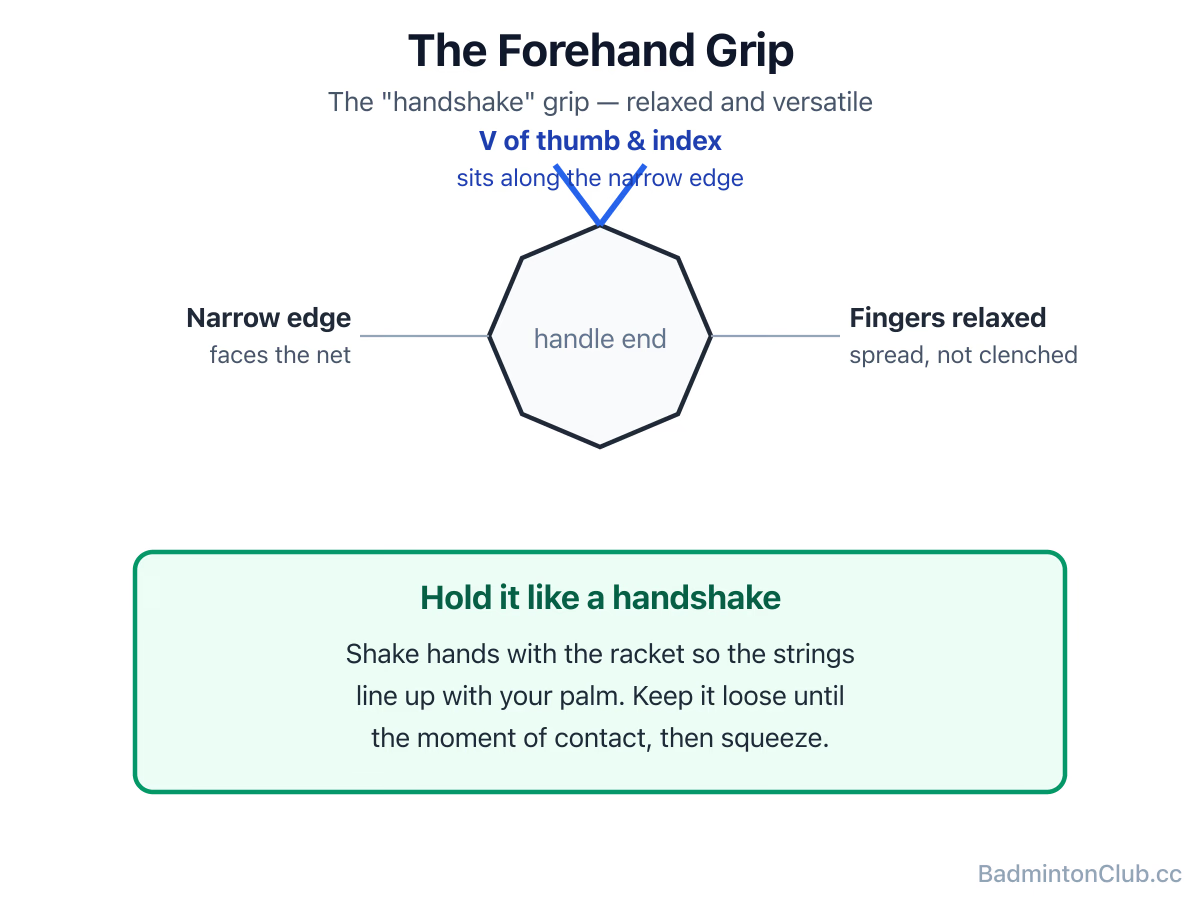
How you hold the racket determines almost everything else in badminton — power, control and whether your wrist survives. This guide covers the forehand (handshake) grip, the backhand (thumb) grip, how to switch between them mid-rally, the right grip pressure, and the panhandle 'frying pan' grip that quietly wrecks most beginners' technique. Fix your grip first and every other shot gets easier.
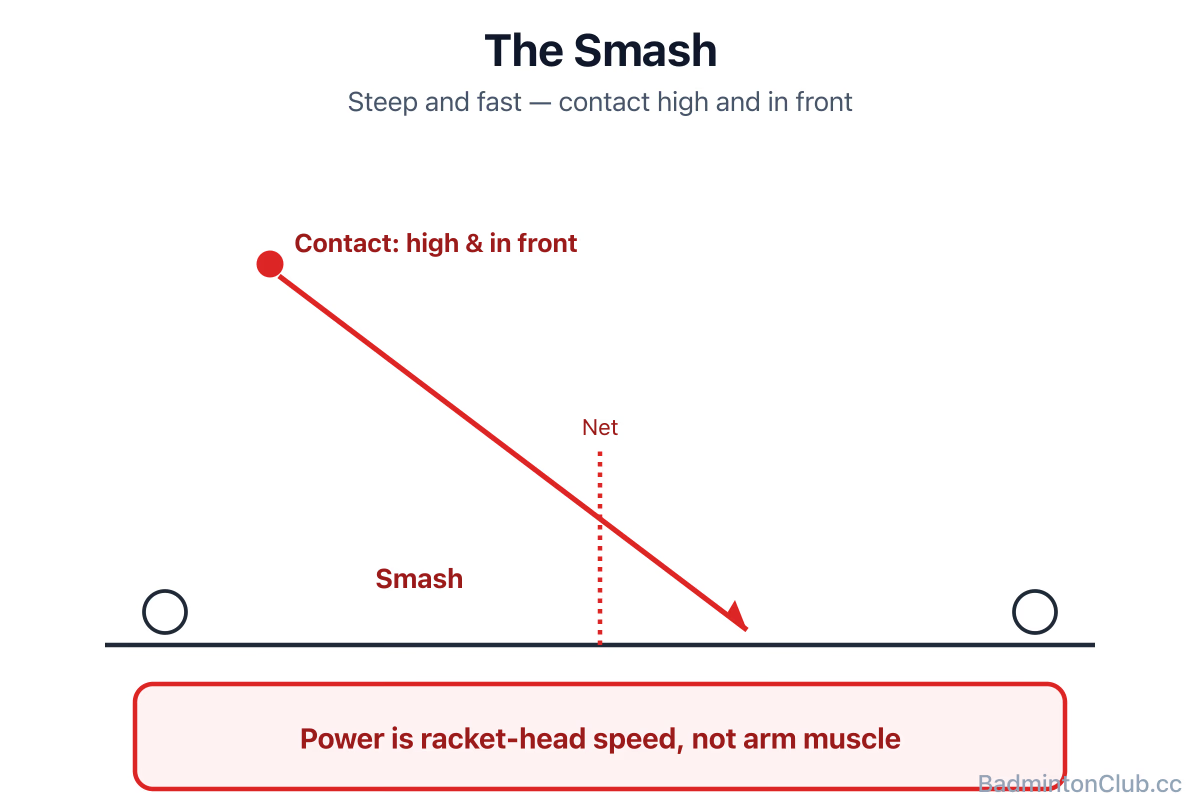
The smash is badminton's knockout punch — a steep, fast downward shot that ends rallies — but power comes from technique, not muscle. This guide breaks down the jump and standing smash, the forearm pronation that generates real racket-head speed, where to aim, and the part most guides skip: when NOT to smash, because a mistimed smash from the wrong position loses more points than it wins for a beginner.
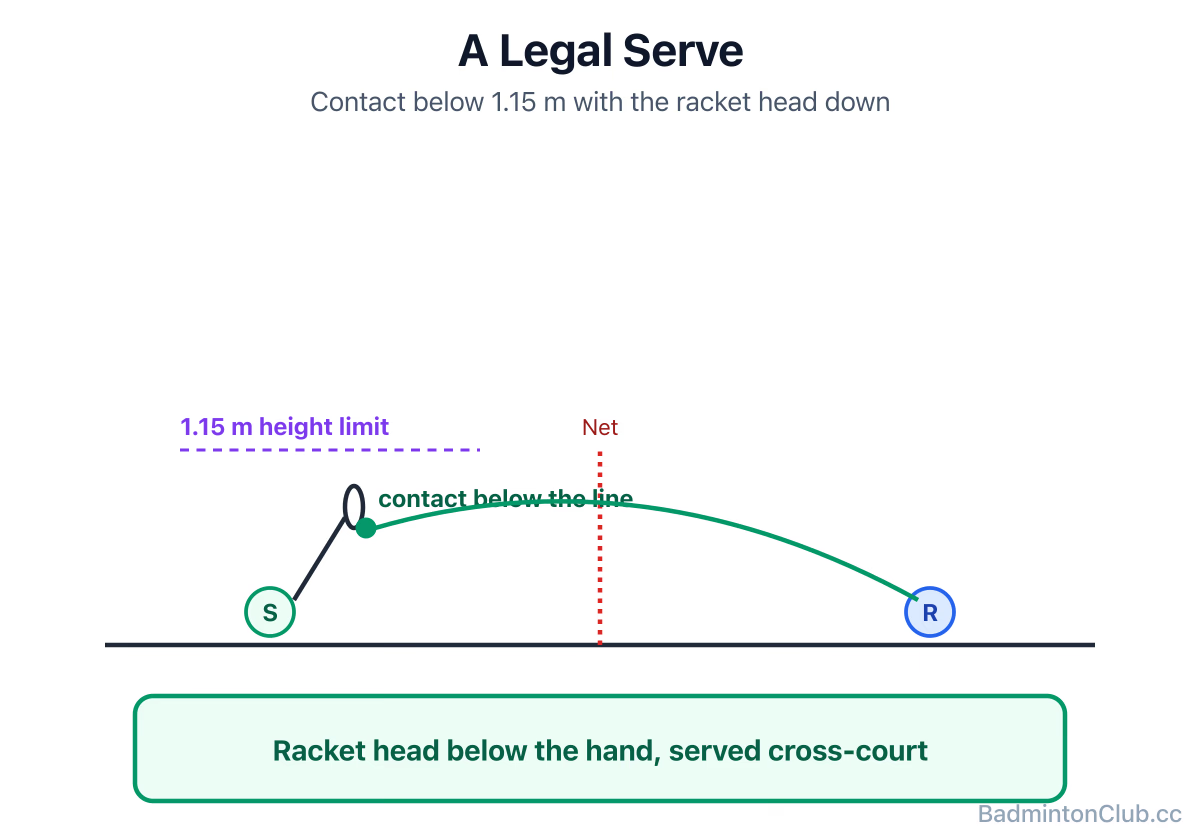
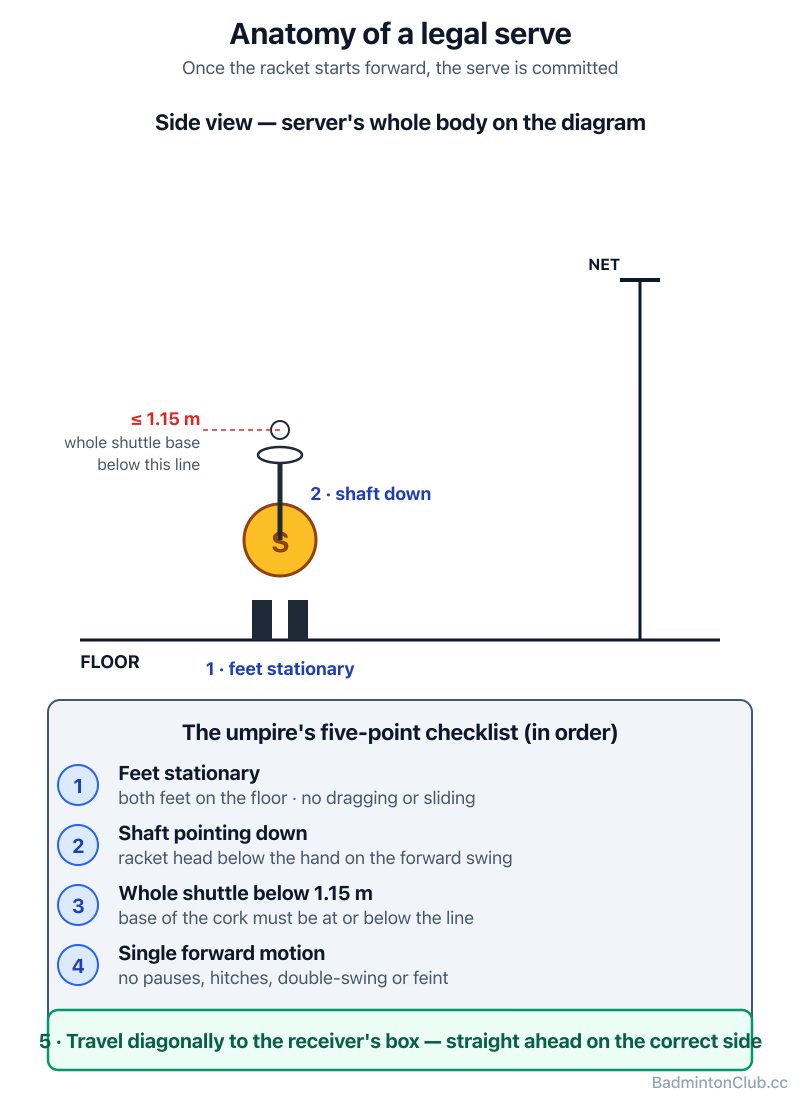
Learn how to serve in badminton legally and consistently: the underhand technique, the 1.15 m height rule, where to stand by score, and when to use a low serve versus a high serve. The serve is the only shot you fully control and the easiest place for a beginner to leak points — this breaks down a legal serve step by step, the faults service judges actually call, and the low doubles serve that takes the attack away from your opponent.
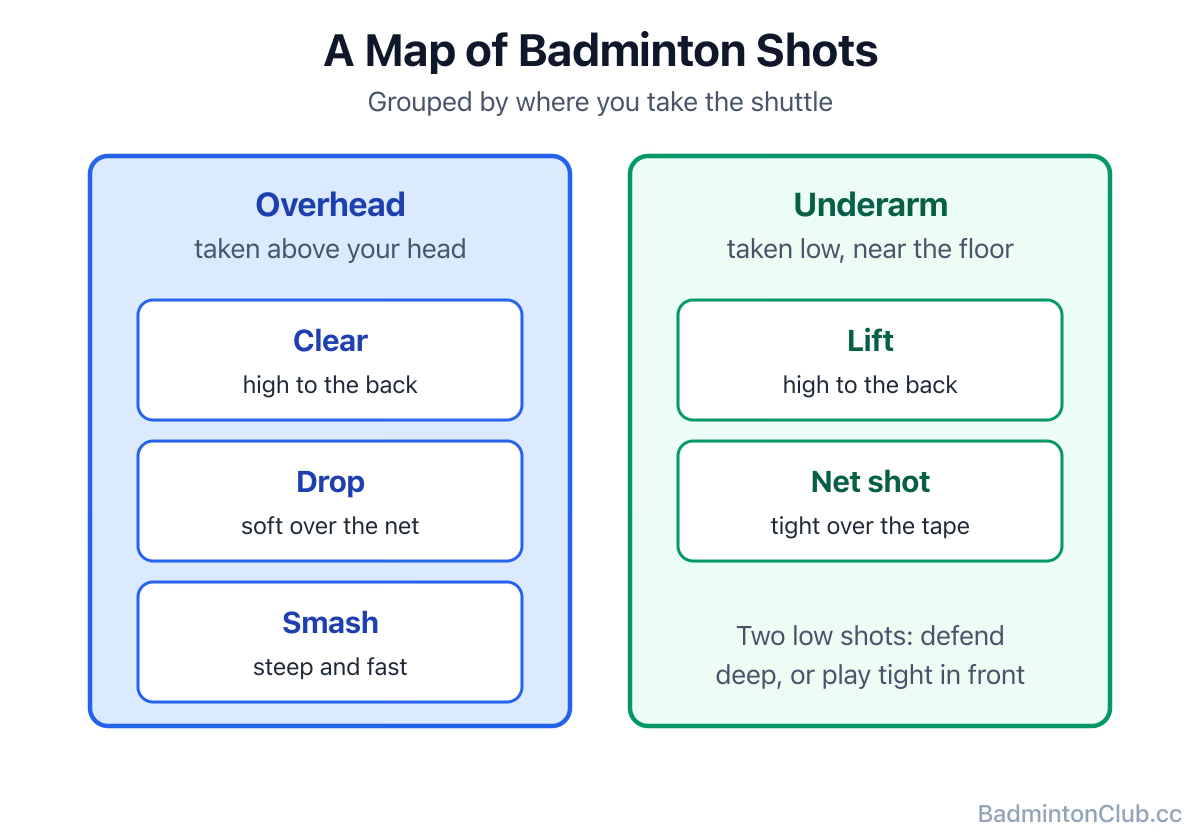
A clear map of every badminton shot by name and trajectory — serve, clear, drop, smash, drive, net shot, lift and block — and exactly when each one is the right choice. Instead of a flat list of definitions, this groups the shots the way they actually work on court (overhead vs underarm, attacking vs defending) so you can see why a drop and a smash come from the same swing, and pick the right shot under pressure.
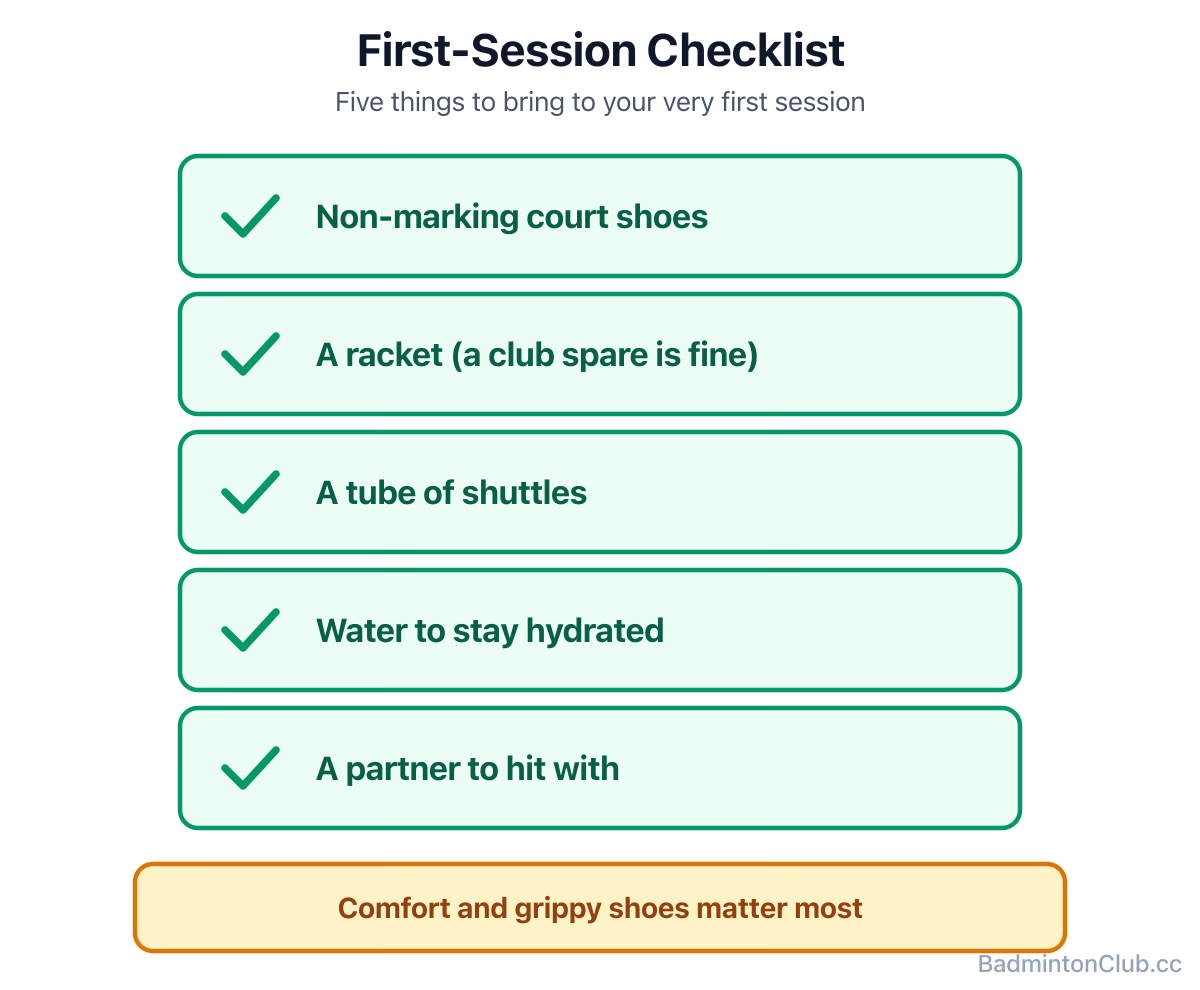
New to badminton? Here's exactly what to do at your first session: what to bring, the basic rules and grip, the ready position that fixes half of all beginner problems, and the order to learn things in so you improve fast. Written as the lesson we'd give a friend coming to a club night for the first time — what really happens, what nobody tells you, and the few things worth practising before everything else.
Learn how to play badminton from scratch: the court, the kit, the 21-point rally scoring system, a legal serve and the handful of shots you actually need on day one. This is the plain-English walkthrough we give every newcomer who turns up to a club night — no jargon, just what to do when the shuttle comes at you, how a game to 21 is won, and the three mistakes that mark you out as brand new (and how to skip them).
Mixed doubles badminton tactics — the lady-front-man-back attacking formation, the side-by-side defensive switch the instant they lift, and how to survive the opposition's near-universal 'attack the woman' plan with soft blocks, fast rotation and an active racket. Plus the serve and receive convention (low backhand serve, lady receives), the awkward weave on the male partner, and the honest reason mixed is where tactics beat raw talent more reliably than any other format.
Shuttlecocks explained — feather vs plastic, the verified BWF specs (16 feathers, 4.74–5.50 g, 62–70 mm), and how to choose between speeds 76 (hot or altitude halls), 77 (standard sea-level) and 78 (cold halls). Includes the high-serve test from the back boundary line to dial in shuttle speed on the day, when plastic is fine, and the 2–3 lbs string-tension drop that comes with plastic. The article most people search after their first 'why does the shuttle feel different here?' moment.
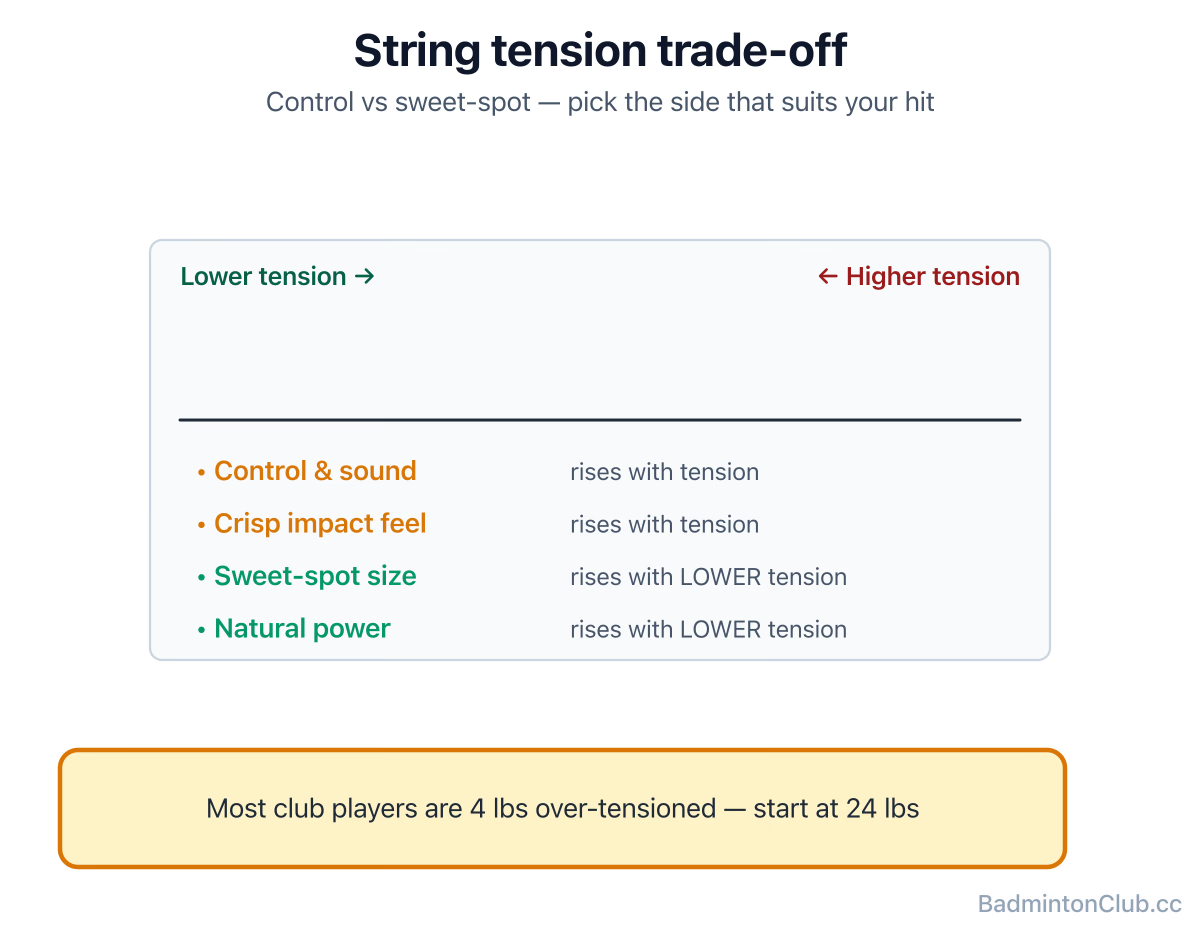
Badminton string tension by level — 17–22 lbs for beginners, 22–26 lbs for intermediates, 26–30 lbs for advanced — plus what BG65, BG80 and the Yonex BG-string family actually feel like in the hand. Covers the control-vs-sweet-spot trade-off, the manufacturer-max ceiling that protects the frame, the plastic-shuttle 2–3 lbs adjustment, and the honest answer to 'should I restring?' Most club players are 4 lbs over-tensioned.
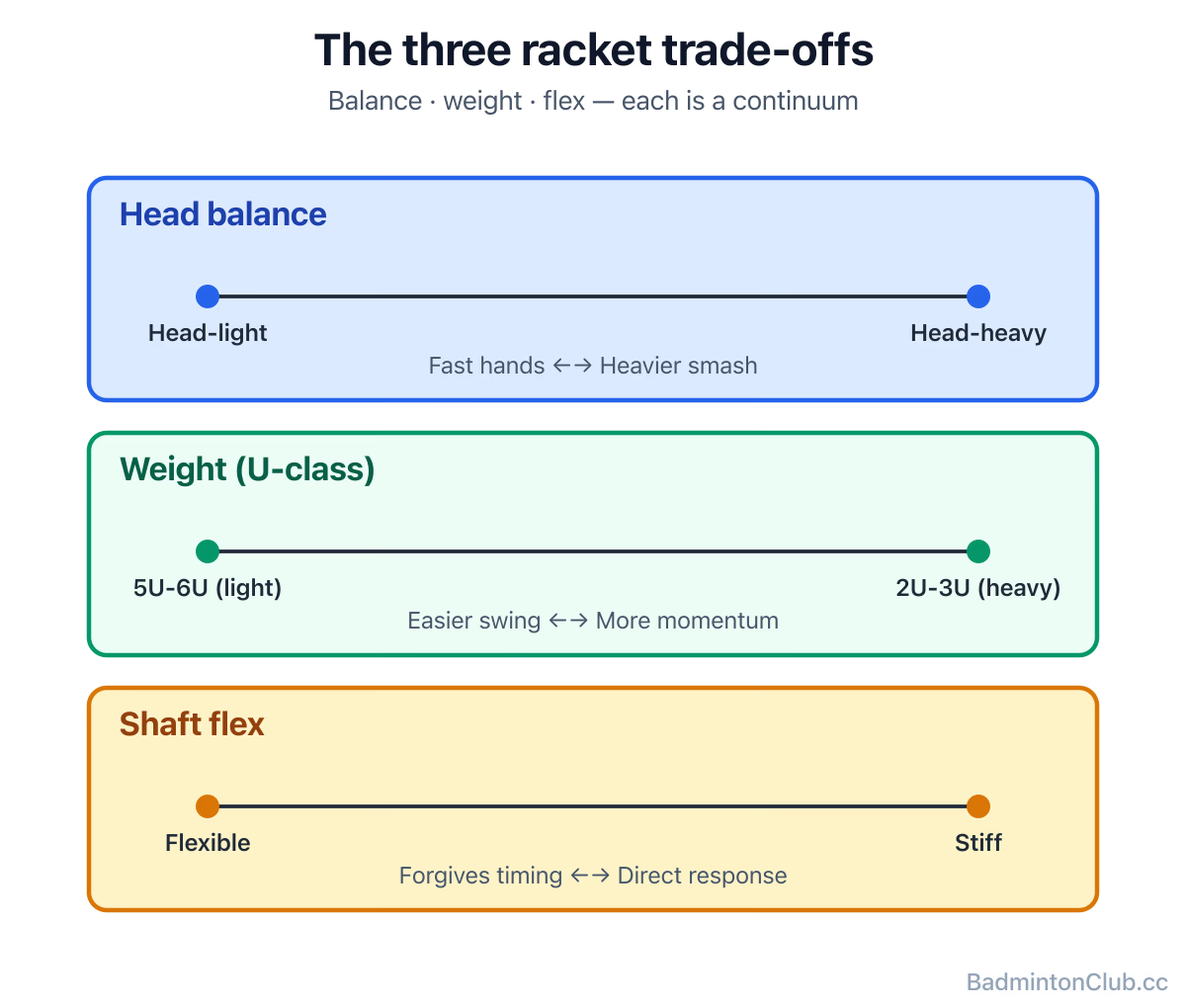
A badminton racket buying guide for club players — explaining the three trade-offs that actually matter: head balance (head-heavy vs head-light vs even), weight class (2U through 6U, with 3U for singles attackers and 4U as the doubles default), and shaft flex (flexible for beginners, stiff only for fast swingers). With a simple buyer's framework matched to playing style, and the frank reason most club players are better off one notch lighter and more flexible than they think.
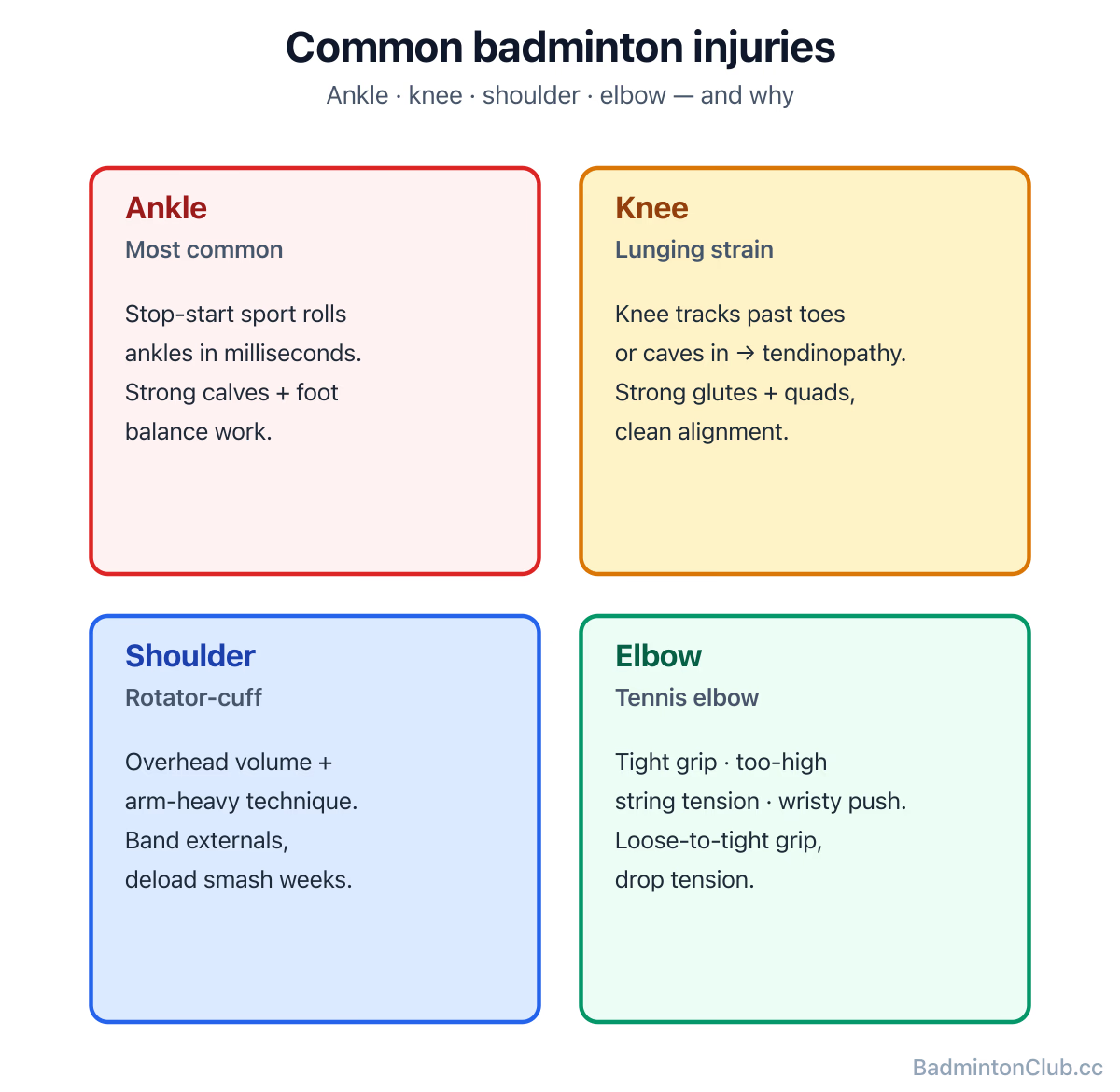
The four most common badminton injuries — rolled ankles, lunge-related knee strain, rotator-cuff shoulder overuse, and tennis elbow — and how to prevent each with strengthening, technique fixes and sensible training load. Practical: how to tape an ankle, when to see a physio, why over-tensioned strings cause more elbow pain than backswings, and the lunge alignment that saves knees. Not medical advice, but a player's flag for patterns that quietly end most club careers.
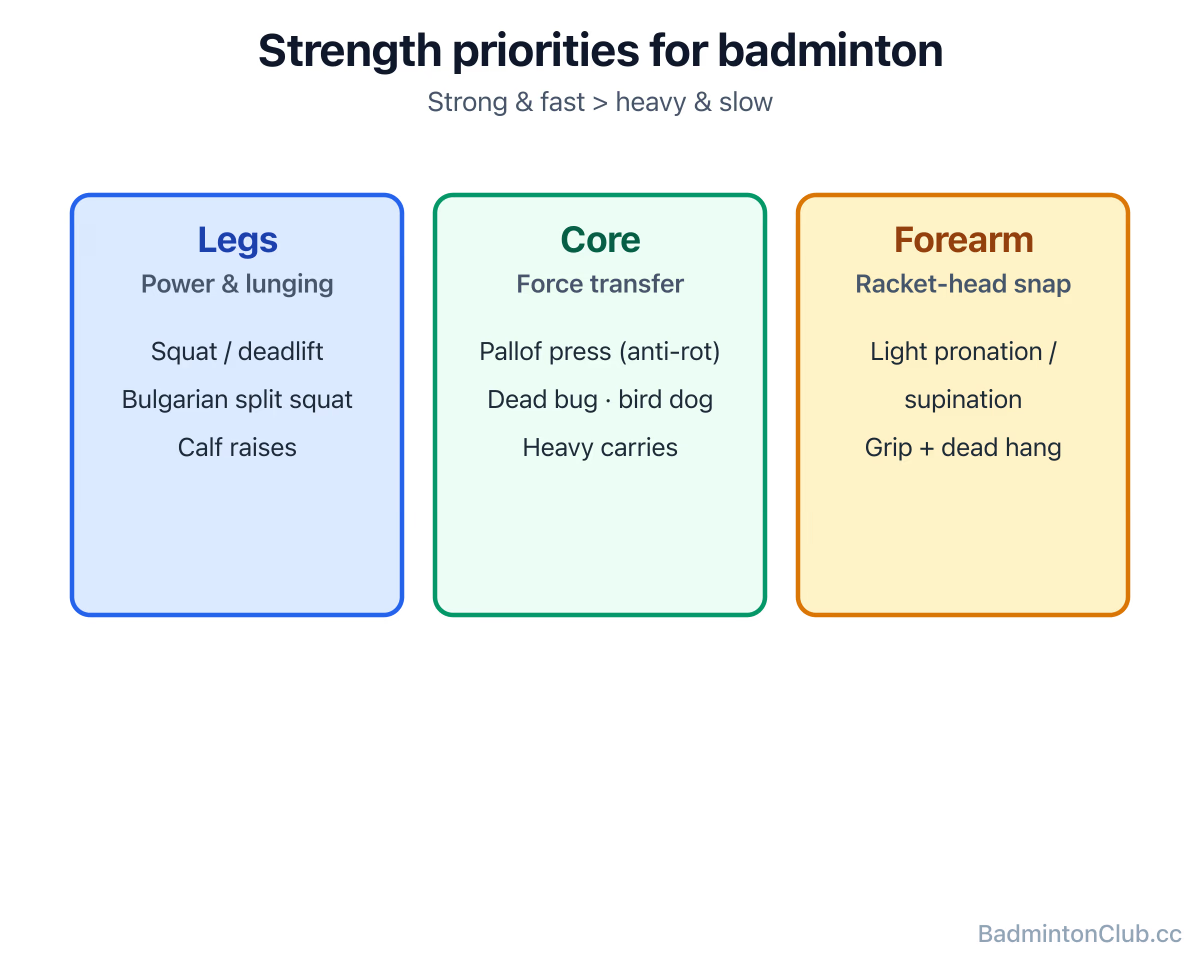
Badminton strength training in 45–55 minutes twice a week — legs (squat, deadlift, split squat, calf), core anti-rotation (Pallof, dead bug, carries), and forearm rotation work for the racket-head snap. The article gives full session structure, sets and reps in the 4–8 range moved fast (not heavy-and-slow), and the brief on why heavy wrist curls are counter-productive. The minimum useful programme.
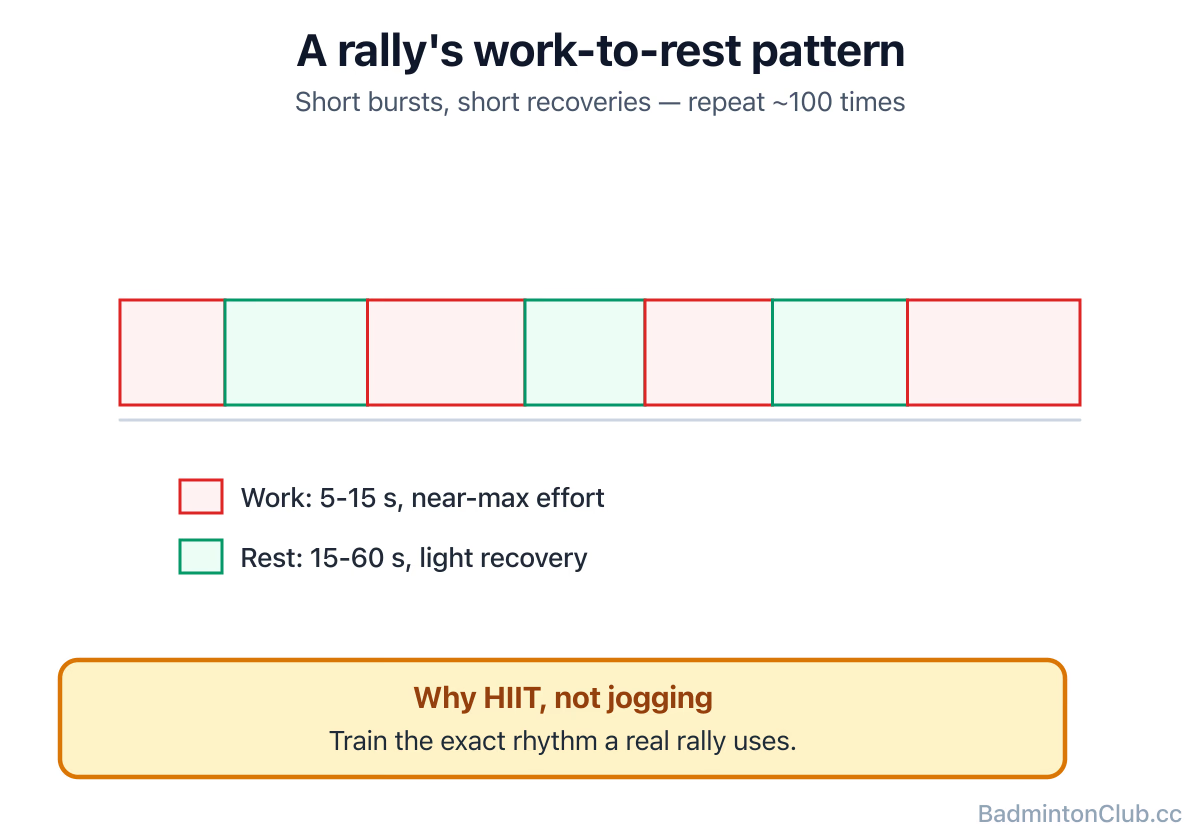
Build badminton stamina with HIIT intervals that mirror rally physiology — 5–15 second bursts, incomplete recovery — not the long jogging that wastes most club players' time. The article lays out a 3-day weekly plan (court HIIT plus aerobic base plus mixed intervals), three on-court endurance drills (multi-shuttle feed, long rallies, 3-on-1), and the verified per-hour calorie ranges. Built for adults who want third-game stamina without the gym hours.
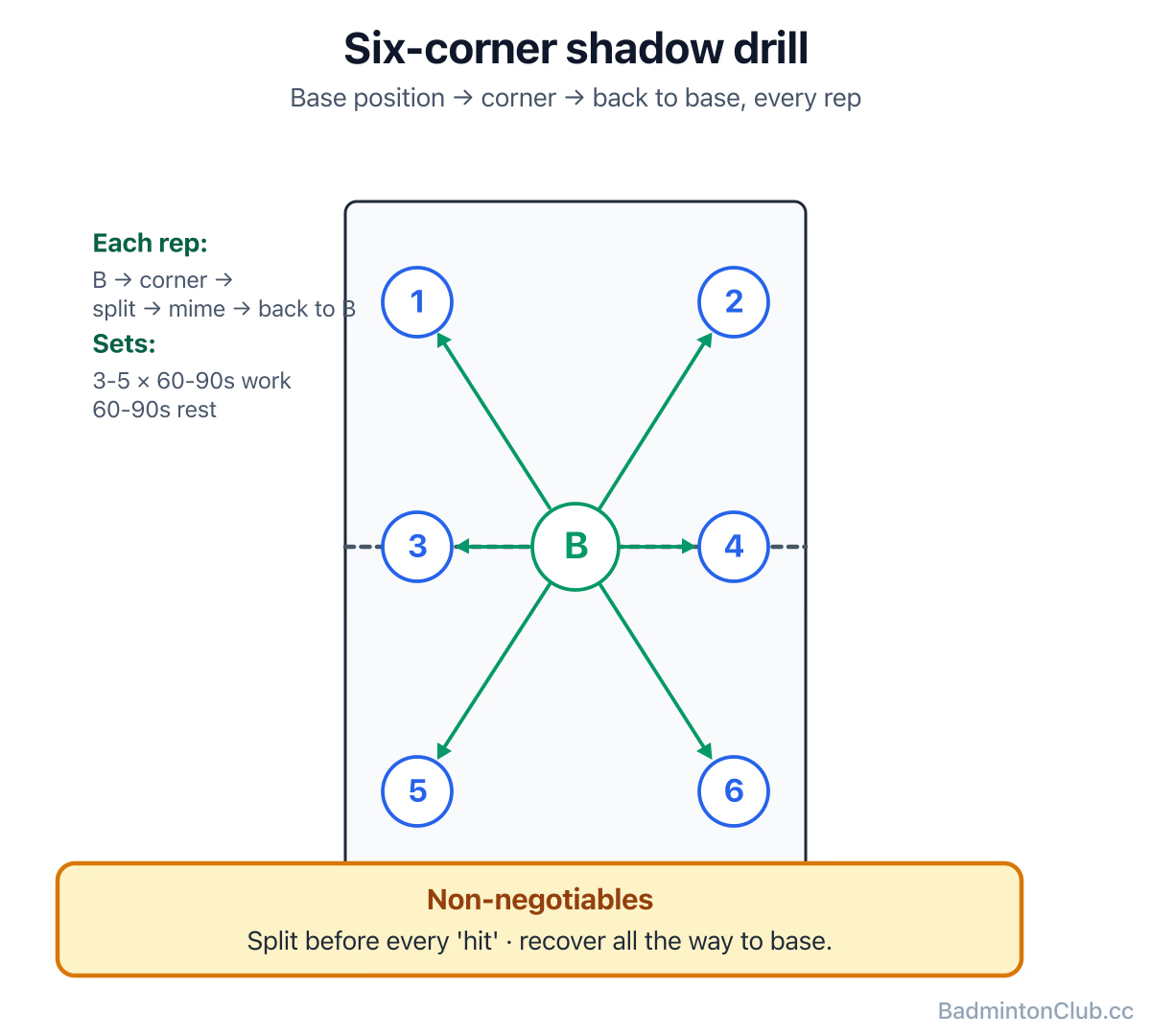
Badminton footwork drills you can groove anywhere — from a six-corner shadow routine on court to split-step ladders and corner taps in a 3×3 m hallway, written for club players whose movement is the weakest part of their game. The piece walks through three home drills, an on-court routine with work/rest reps per level, the split-step timing trigger, and what the lazy version costs you. Cross-linked to the techniques footwork article so mechanics and drilling sit side by side.
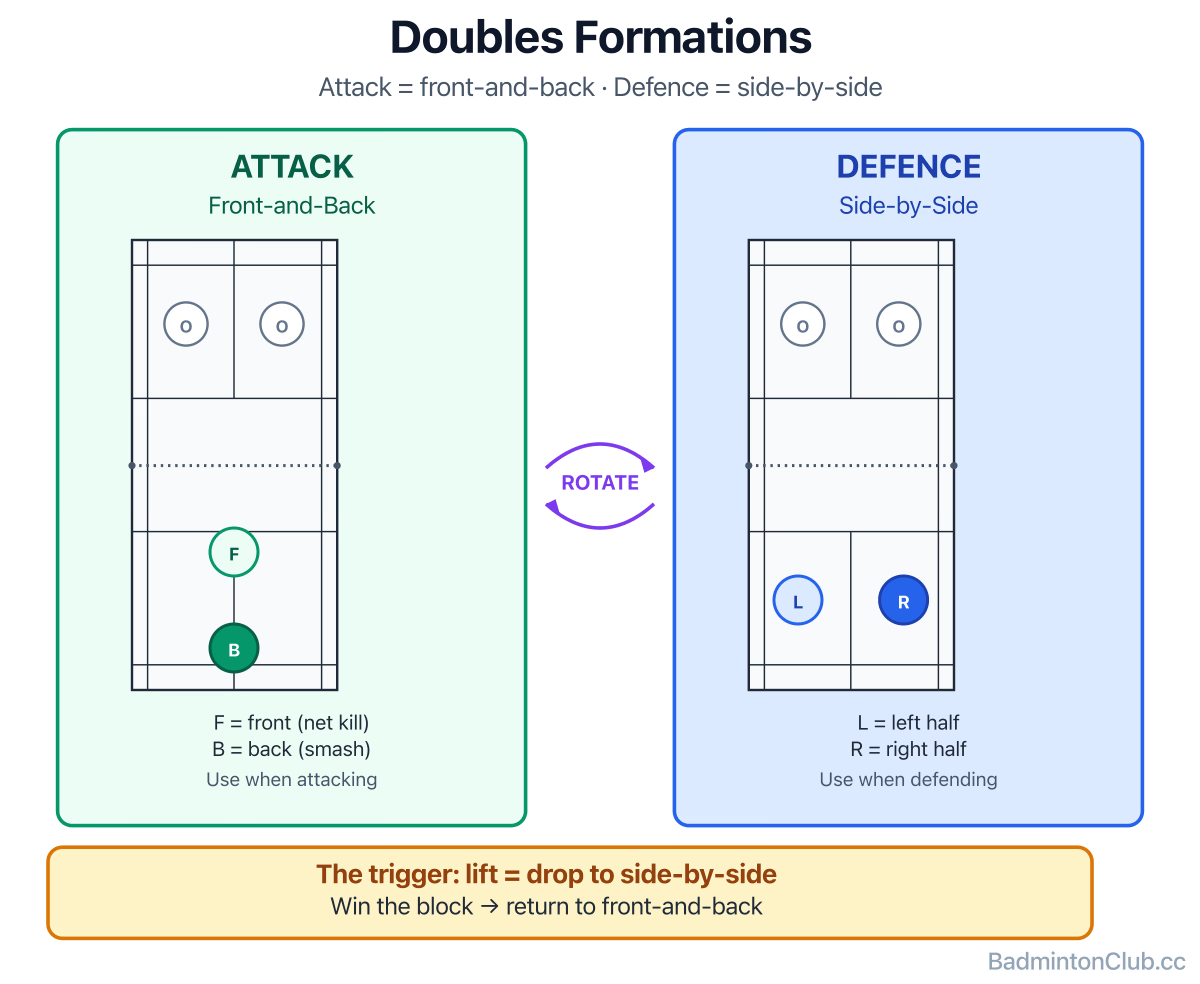
Master badminton doubles by learning when to attack in front-and-back formation and when to defend side-by-side — and how to rotate cleanly between them. Covers the serve-and-third-shot battle, court communication, and the "my side" rule that stops most middle-shuttle arguments. For club players who want to stop playing like two strangers sharing a court.
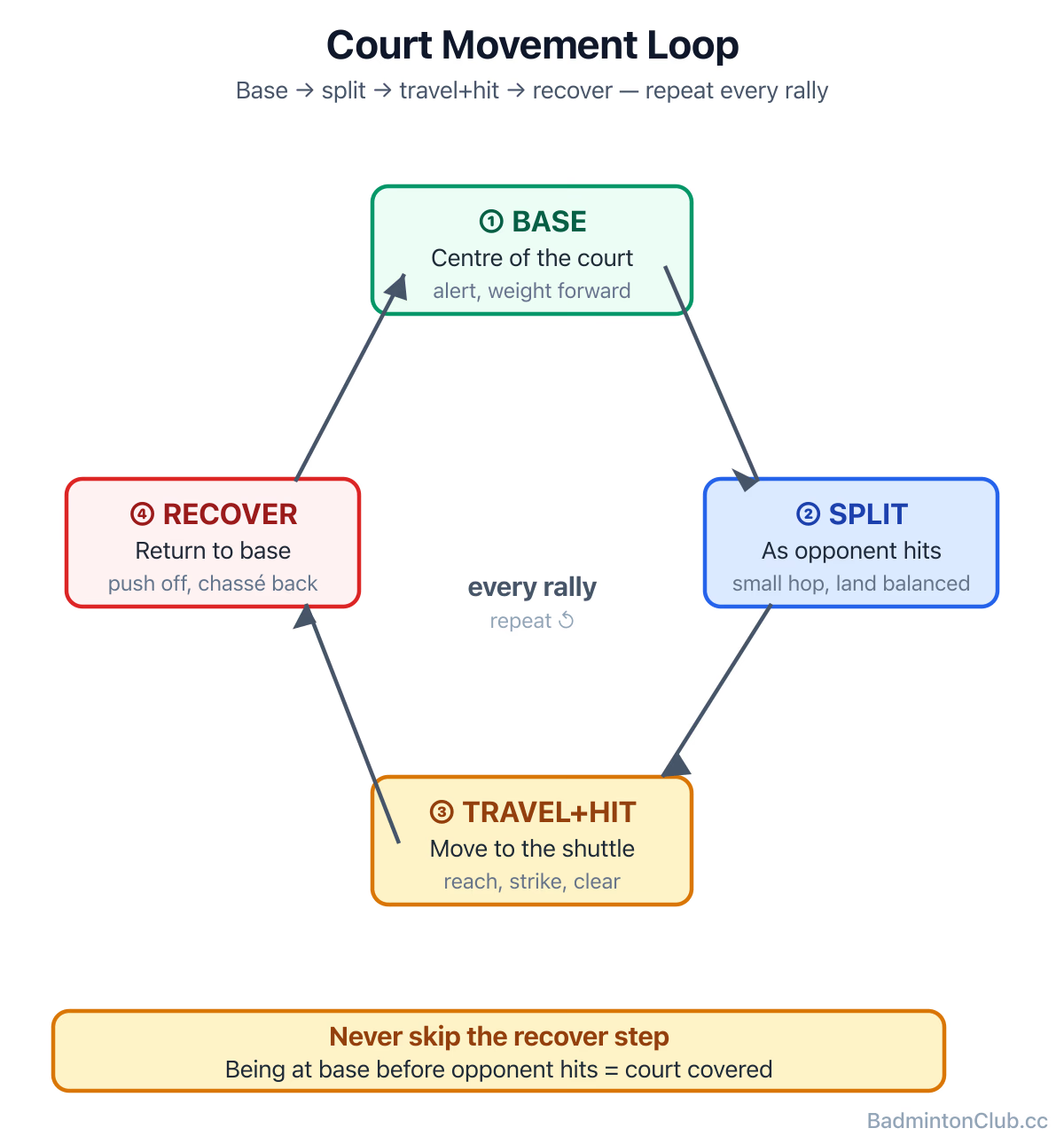
Badminton footwork starts with the split step — landing balanced the instant your opponent hits — then efficient chassé and crossover patterns to reach every corner and recover to base. This guide breaks down each movement, explains when and why to use it, and gives you a shadow-drill routine you can practise alone to make court coverage automatic.
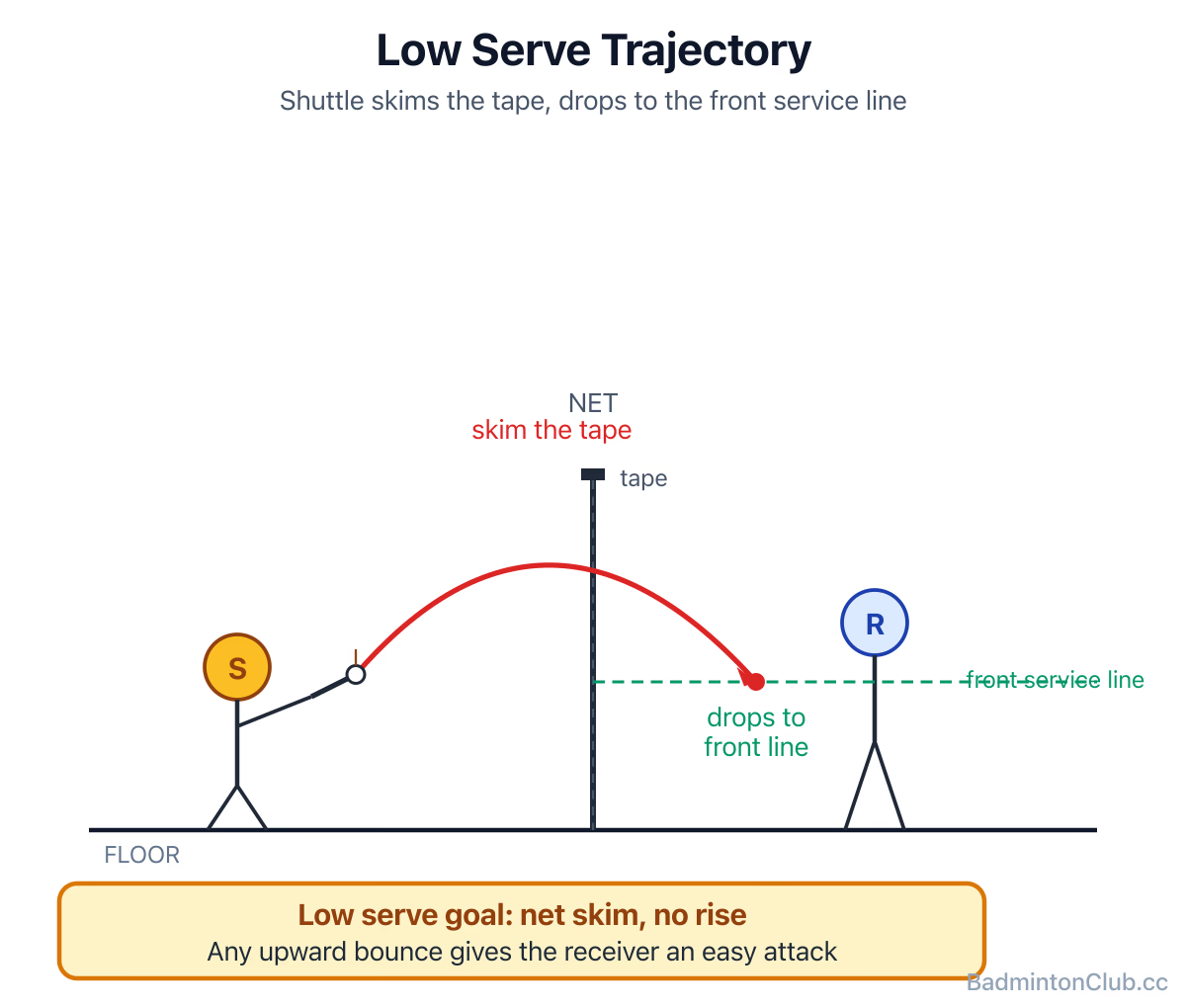
Master the backhand low serve in badminton — a thumb-braced grip, a short push that skims the tape, and a fixed routine that holds under pressure. This guide covers technique, the 1.15 m service law, a 50-serve drill for repeatability, and how to disguise the flick behind the same action so receivers can never read you early.
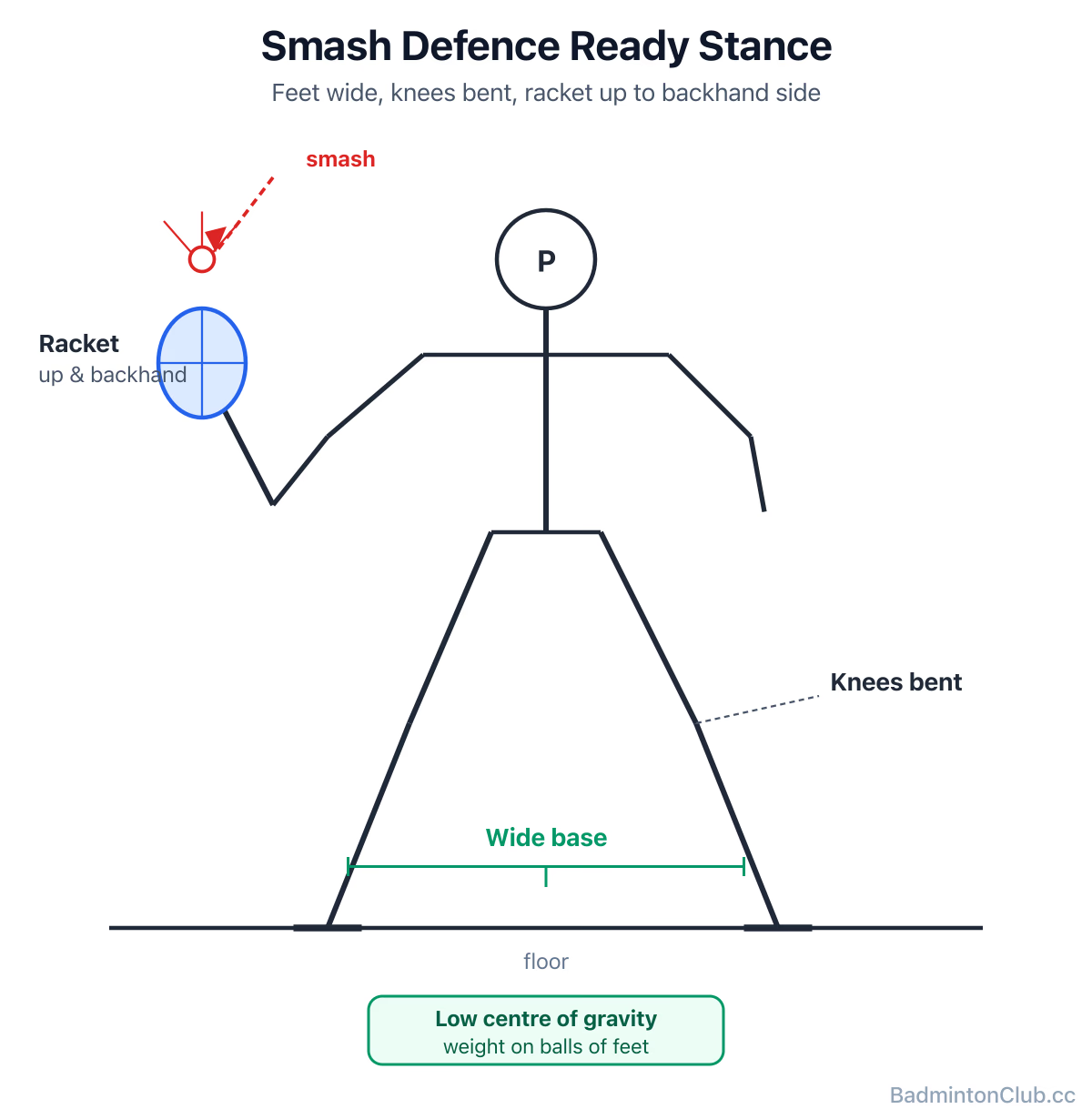
Learn how to defend a smash in badminton using the block and soft block. This guide covers the low defensive stance, racket position, where to place your return, and the mindset shift that turns a ferocious smash into your net opportunity — useful for singles and doubles players at any level.
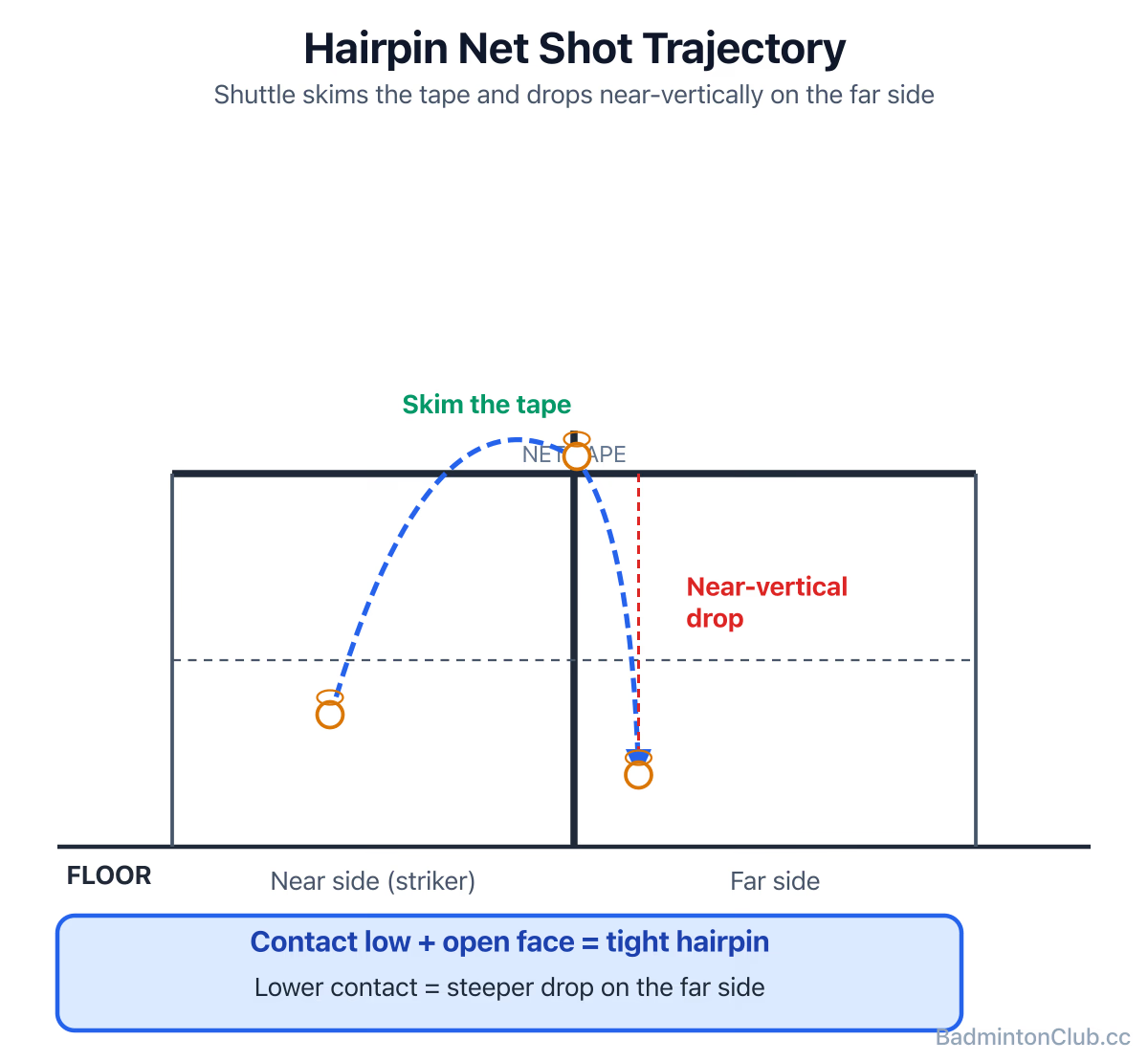
Tight net shots win points by forcing the opponent to lift — but only if the shuttle barely clears the tape. This guide explains the hairpin net shot: the fingertip grip, high contact point, and relaxed swing that make net play unattackable. Covers cross-court net shots, punishing loose replies, a tightness drill, and the gap test for honest self-assessment.
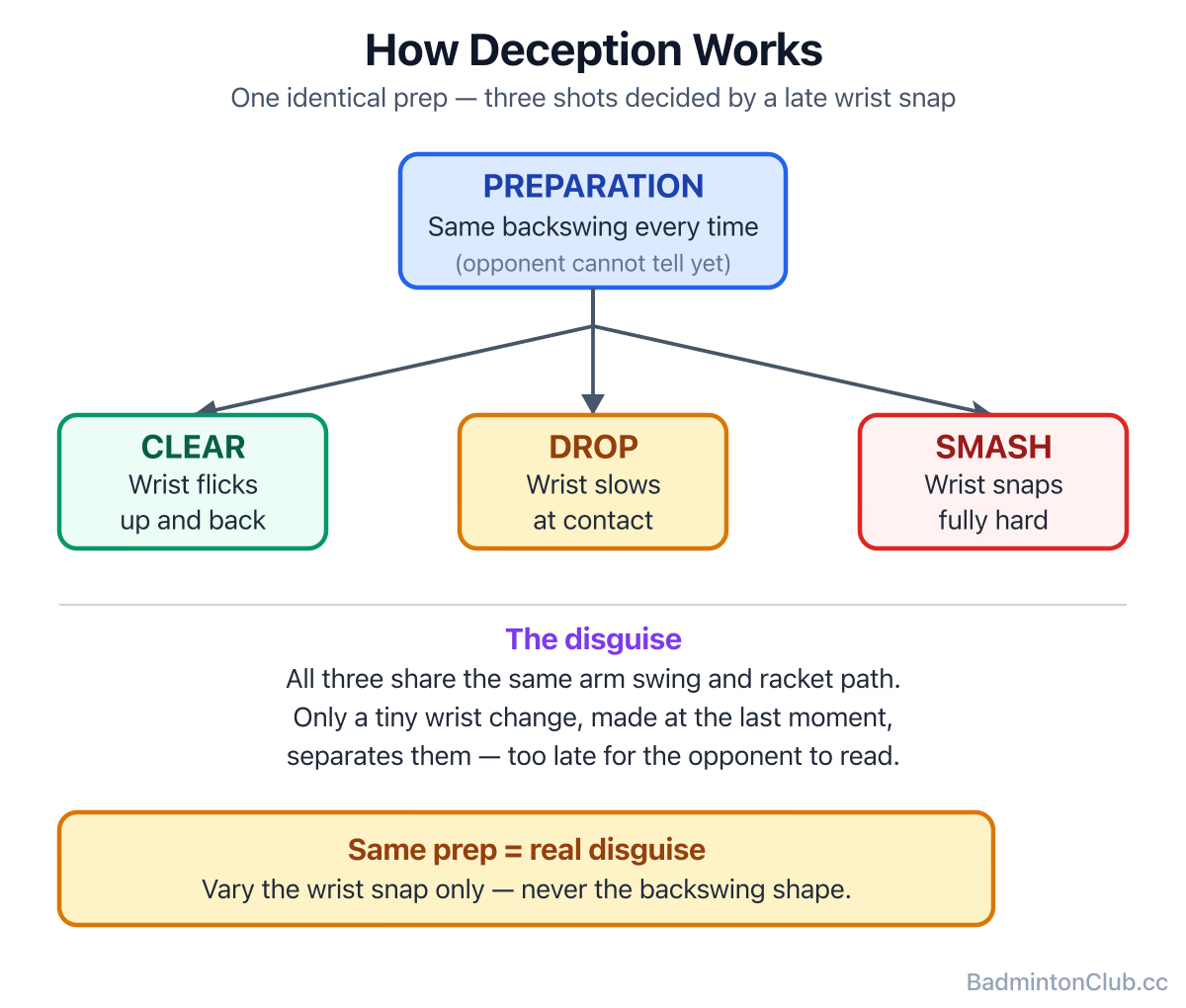
Deception in badminton turns the same preparation into multiple threats — learn how a late wrist snap, double action fake, and held hit freeze your opponents. Covers identical backswing technique, dummy shots, the hold-and-strike sequence, and the one tell (your eyes) that gives everything away at club level.
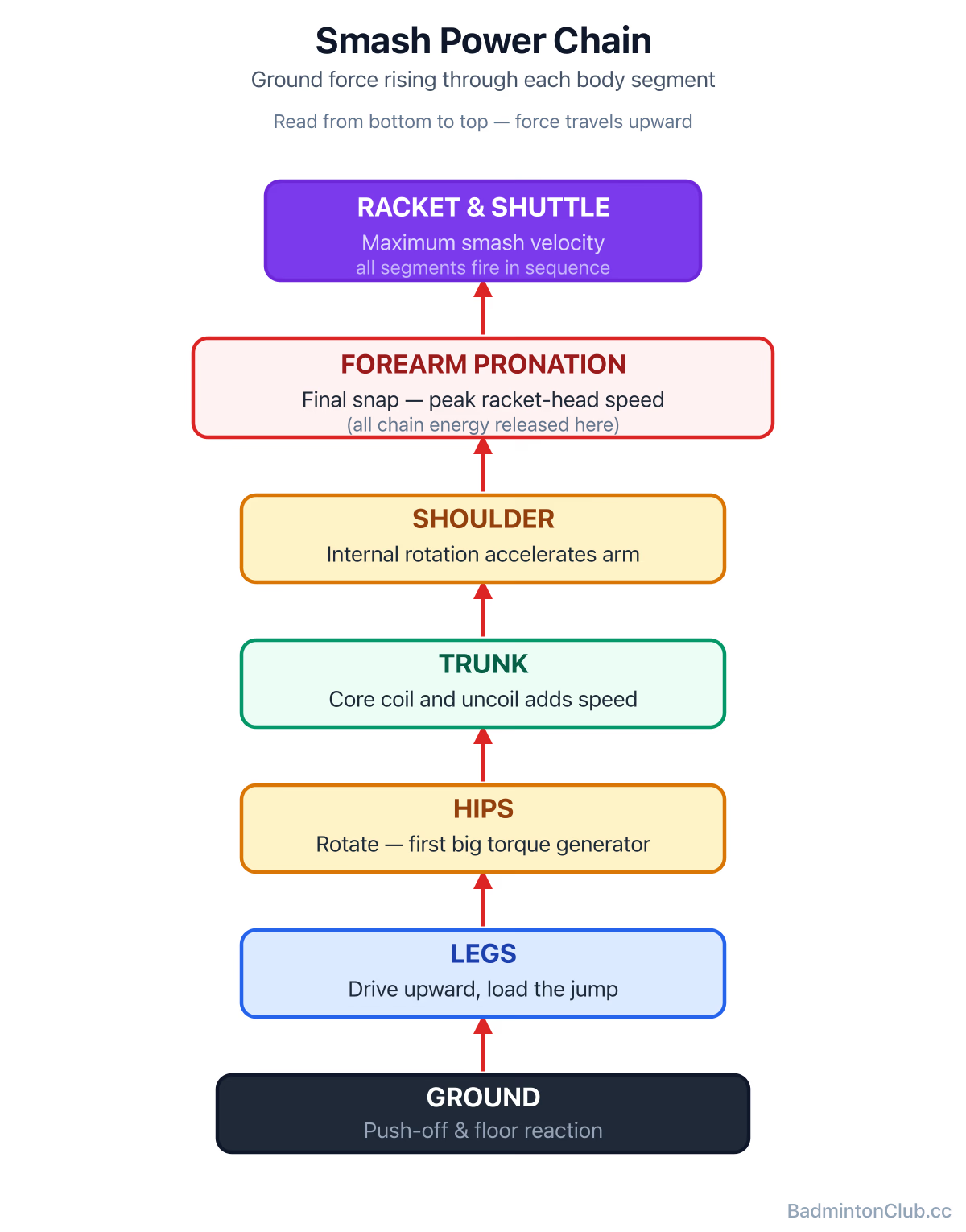
Forearm pronation is the true engine of a hard badminton smash — not arm muscle. This guide breaks down the ground-up kinetic chain (legs, hip, trunk, shoulder, forearm snap), why the jump smash is really about angle rather than speed, how to drill the late-pronation crack, and the sound test that instantly tells you whether your chain held. Perfect for club players who want a genuinely heavier smash.
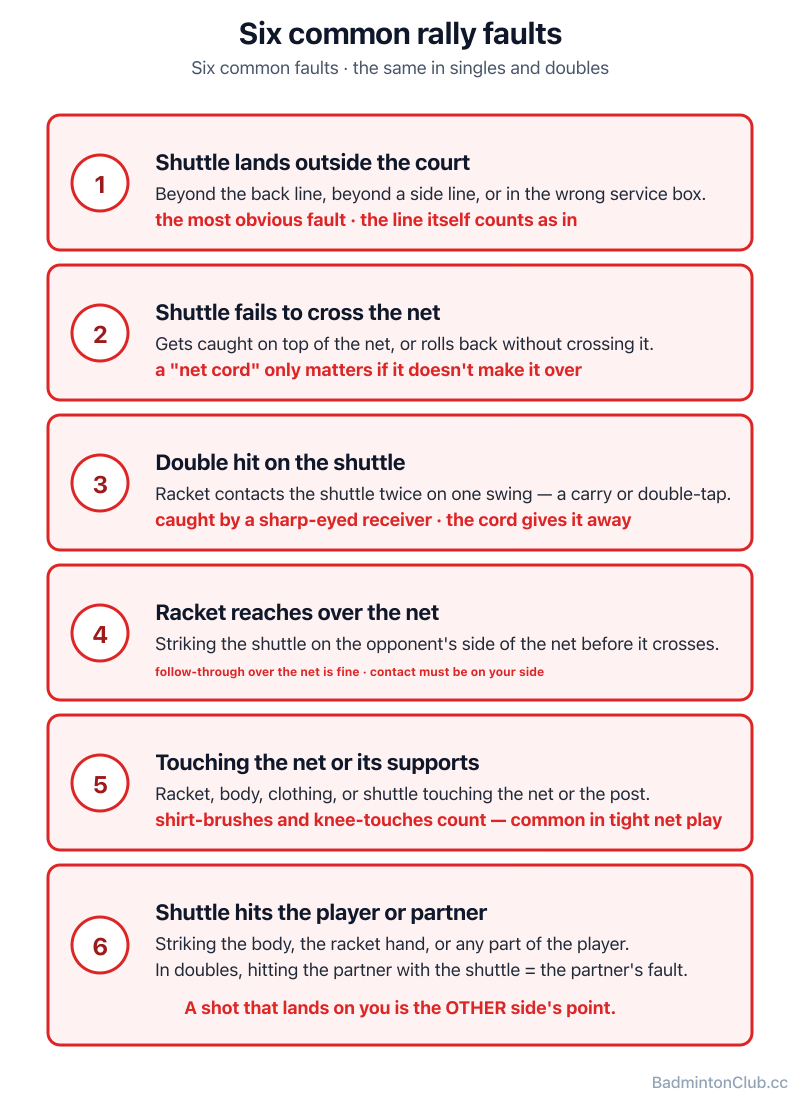
A fault in badminton is any illegal action that immediately ends the rally and hands the point to your opponent. This guide covers every fault that matters — shuttle out, into the net, double hit, carry, body contact, reaching over, touching the net, and distraction — including the ones quietly ignored in club play but called without hesitation in competition.
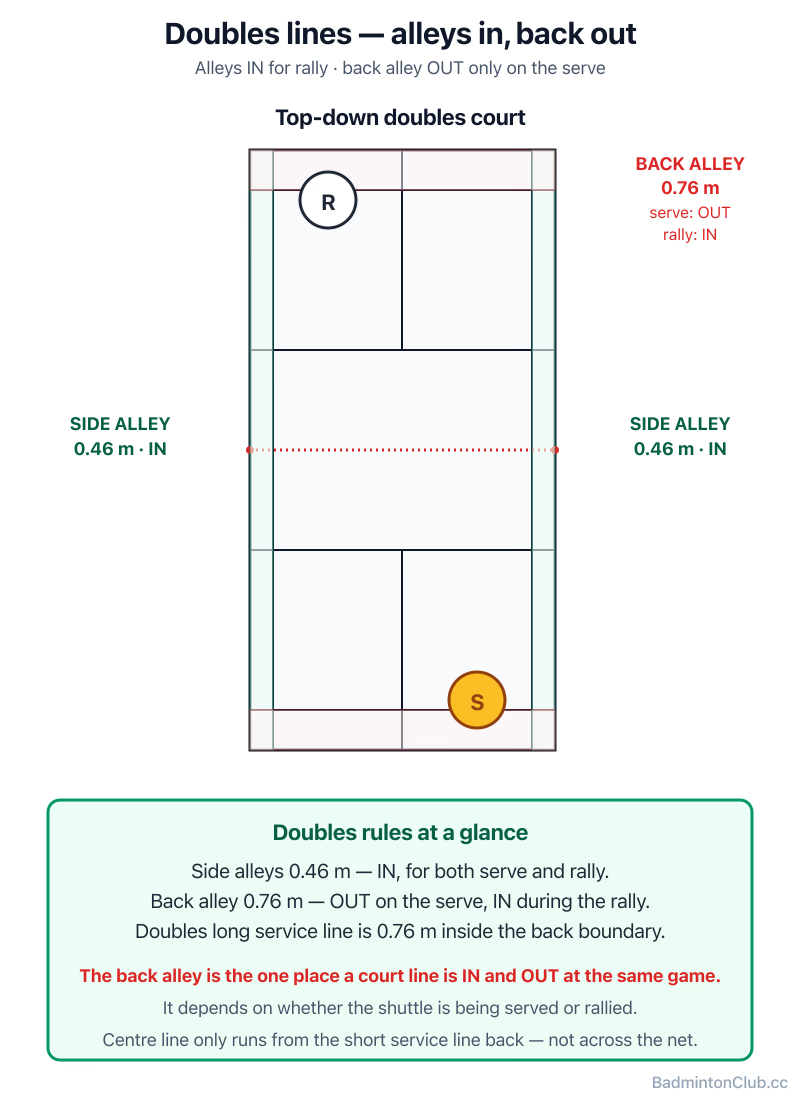
Doubles badminton uses the full-width court — side alleys are always in — but the serve must land short of the back alley. Learn exactly when the back alley is out (serve) versus in (rally), plus every line that matters in doubles, with simple mental models and quick FAQ answers.
Badminton court dimensions at a glance: 13.4 m × 6.1 m (44 × 20 ft) for doubles, narrowing to 5.18 m (17 ft) for singles. This guide covers every line and measurement — short service line, doubles long service line, net heights, tramlines and back alley — in both metres and feet, with tips on marking a court correctly from scratch.
Badminton service rules require an underarm strike with the whole shuttle below 1.15 m, both feet stationary and off the lines, served diagonally into the correct court. This guide walks through every condition — contact height, racket angle, footwork, and court selection — so you can serve legally every time and spot a service fault the moment it happens.
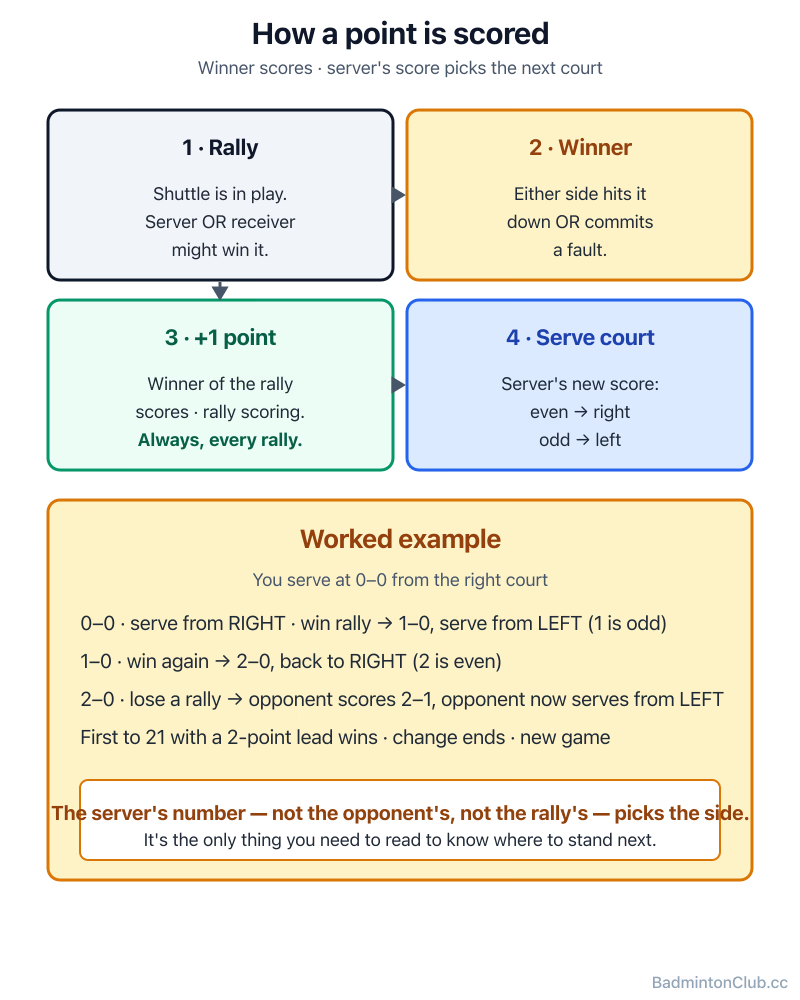
Badminton uses rally scoring to 21 points — every rally won earns a point, no matter who served. You must win by 2, with a hard cap at 30–29. This guide explains how to count points, read the scoreboard, determine the service court from the score, and what happens at deuce. Covers the full match format (best of three) and common scoring questions for beginners and club players.
Badminton rules explained for 2026 — from rally scoring and the 21-point game to legal serve height, court lines, and common faults. Whether you're a complete beginner or brushing up before a club night, this guide covers every rule that actually comes up in play: when deuce kicks in, which side to serve from, why the line is always in, and what counts as a fault.
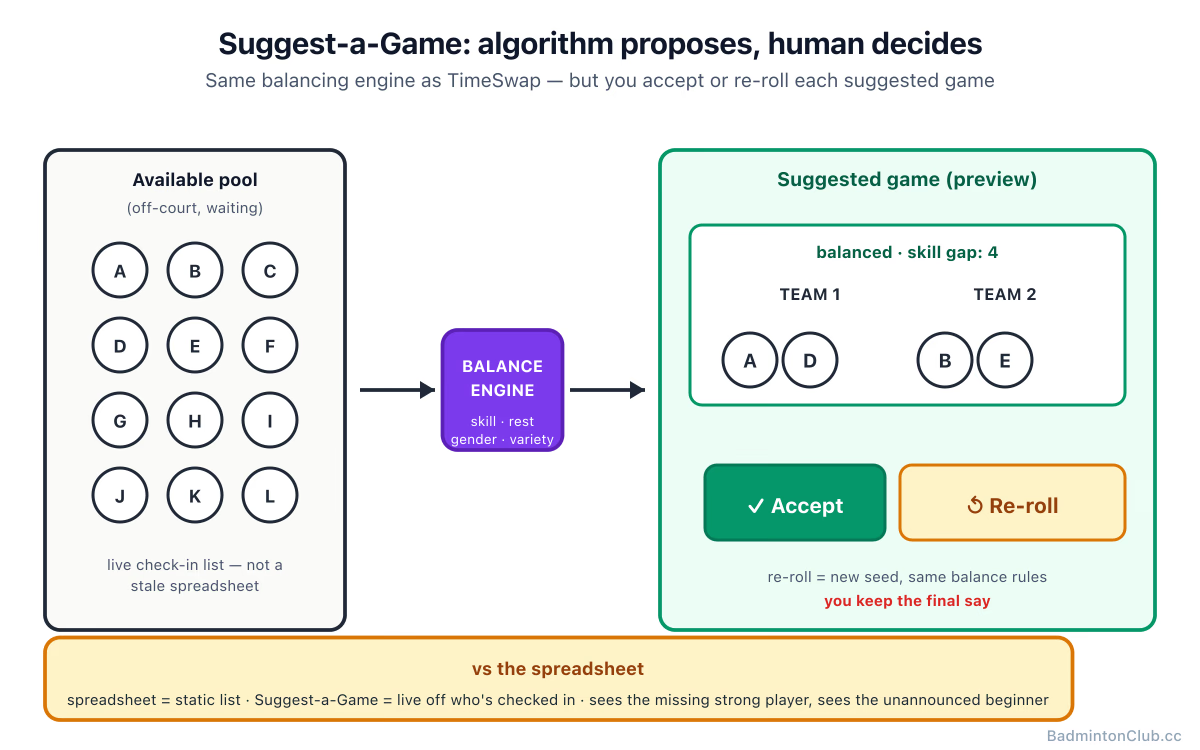
Suggest-a-Game uses a skill-balancing engine to propose one fair, evenly matched badminton court for you to accept or re-roll before it goes live. Perfect for club organisers who want algorithm-balanced teams without handing over full control — ideal for any size club that values curated, fair matchups.