Singles vs Doubles Badminton: Court, Service Lines, Tactics and Which to Play
8 June 2026 · Badminton Fans
Singles and doubles badminton use identical scoring and the same length of court, but differ in three big ways: the court is narrower for singles, the service court is a different shape for each, and the tactics are almost opposite — singles is an endurance game of moving your opponent to the corners, doubles is a fast, attacking, position-rotating battle. Most club players play far more doubles; singles is the fitness test.
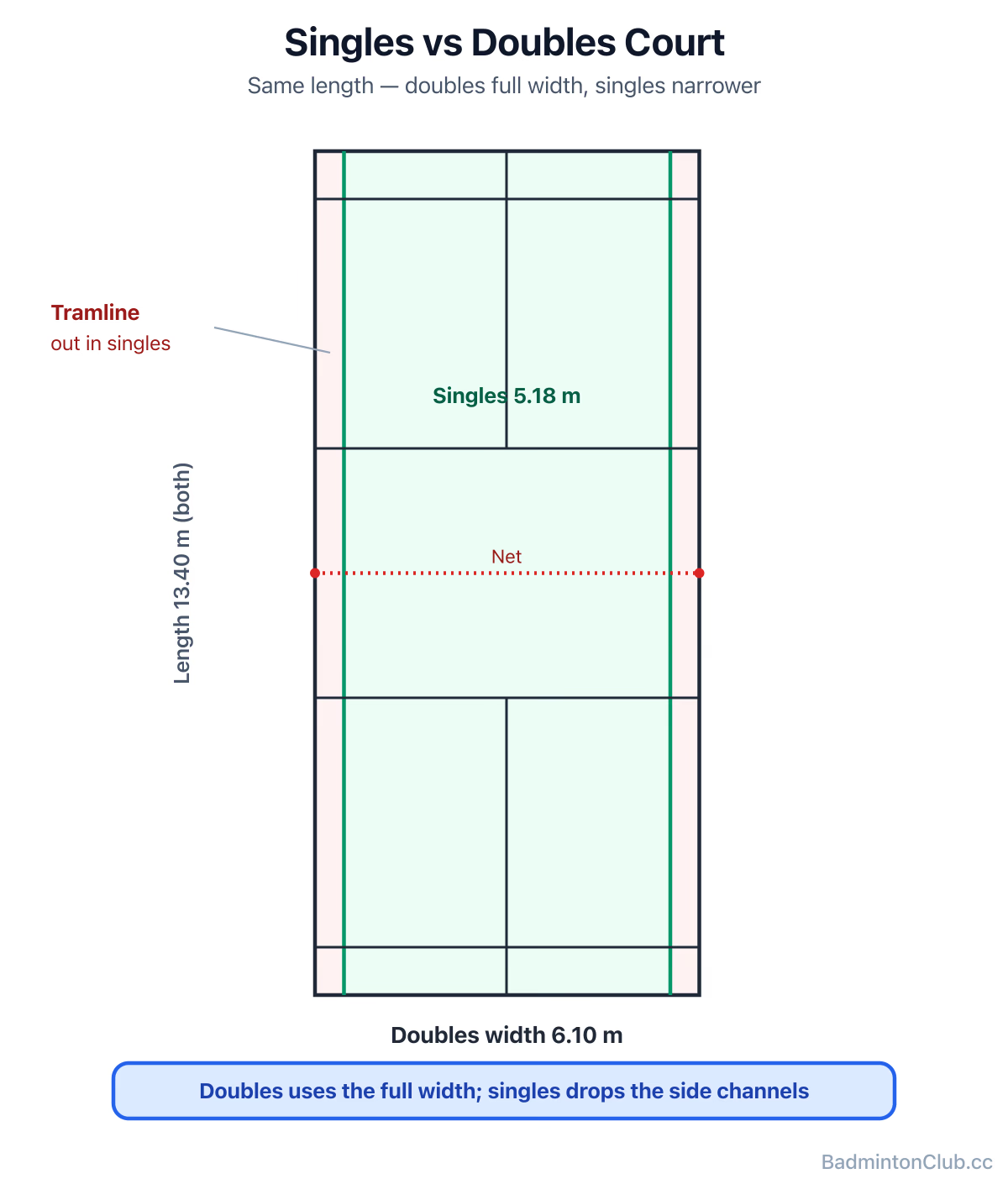
Same court length, different width
The court is 13.40 m long for both. The difference is width and the service boxes:
- Doubles uses the full 6.10 m width — the outer side tramlines are in.
- Singles is narrower at 5.18 m — the outer side tramlines are out, so the long thin side channels don't count.
The net is identical: 1.55 m at the posts, 1.524 m in the centre.
The service court rule everyone gets wrong
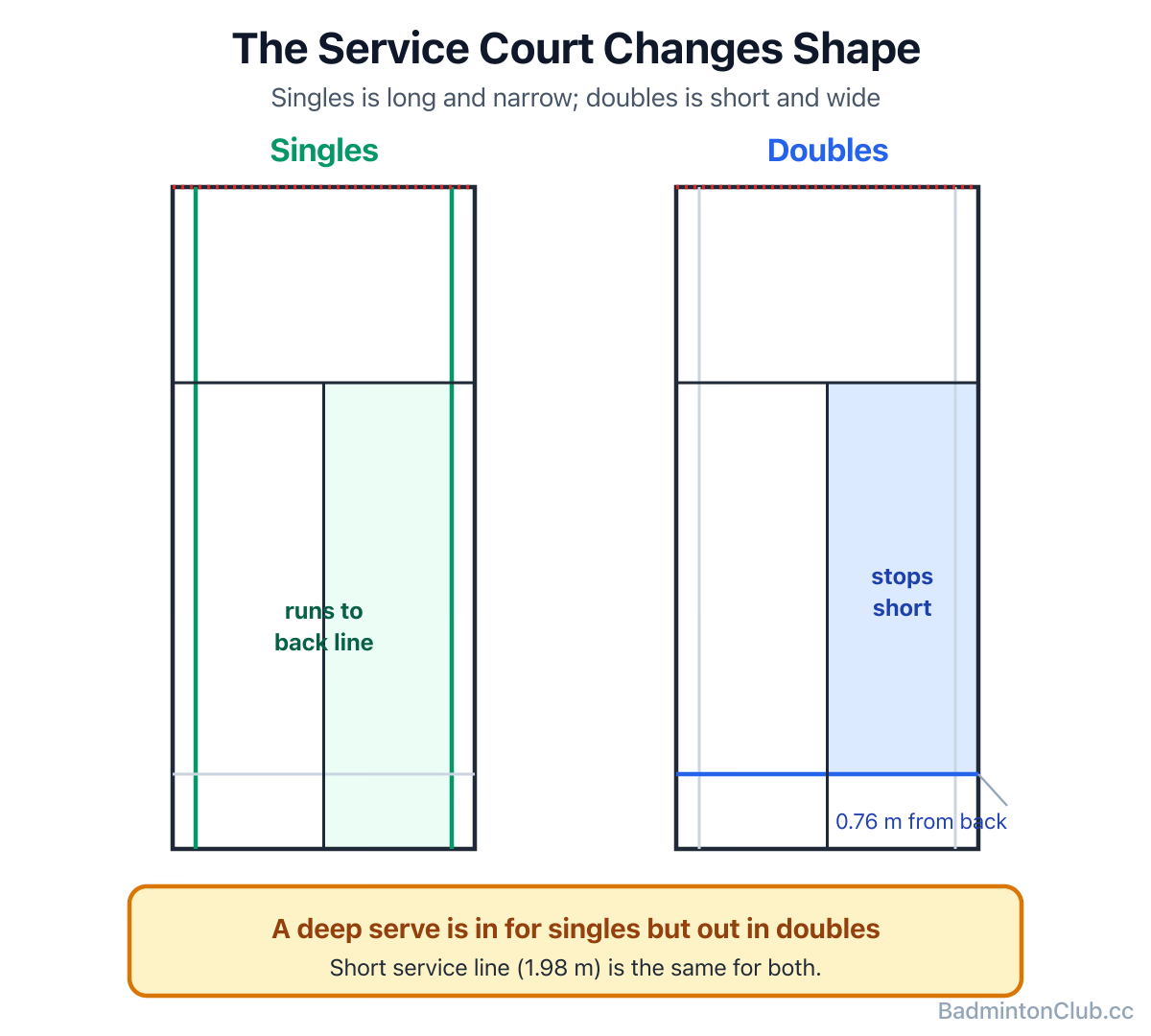
This is the part that genuinely confuses people, so here it is straight. The short service line (1.98 m from the net) is the same for both. The difference is at the back:
- In singles, the service court is long and narrow — it runs all the way to the back boundary, but only the inner (singles) sideline counts.
- In doubles, the service court is short and wide — it stops at the doubles long service line, 0.76 m in from the back boundary, but uses the full-width outer sideline.
So a doubles serve that drifts to the very back line is out (it passed the long service line), while the same serve in singles would be in. Get this backwards and you'll wave "out" at perfectly good singles serves.
Tactics: opposite games
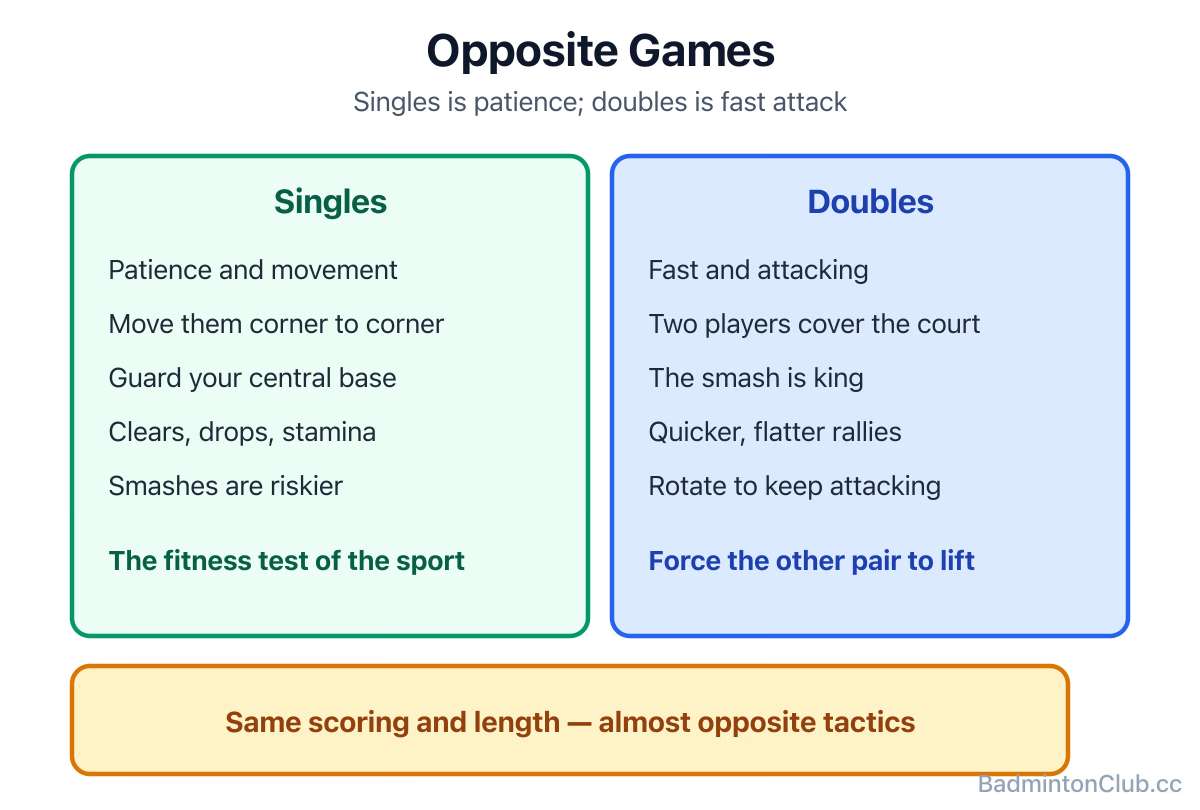
- Singles is a game of patience and movement. You can't be everywhere, so you move your opponent to the four corners and wait for the short reply, all while guarding your central base. Smashes are riskier — out of position they leave you exposed — so clears, drops and stamina dominate. It's the fitness test of the sport.
- Doubles is fast and attacking. With two players covering the court, the smash is king, rallies are quicker and flatter, and the whole game is about rotation — keeping your pair in attacking front-and-back shape and forcing the other pair to lift.
Which should you actually play? (an honest opinion)
Most people, given the choice on a club night, should play doubles — and most clubs run almost entirely doubles for good reasons. It's more sociable, you get four people per court, the rallies are punchier, and you're not personally responsible for chasing every shuttle into all four corners. Singles is brutal: it exposes your fitness mercilessly, and an hour of competitive singles will wreck a beginner who breezes through doubles. But here's the case for singles that nobody makes loudly enough — it improves your doubles faster than anything. Playing singles forces clean footwork, full-court coverage and shot consistency with nowhere to hide and no partner to cover for you. My advice: play doubles for the fun and the games, but throw in a singles game now and then, even if you lose, because it ruthlessly exposes the weaknesses doubles lets you hide. The fittest, cleanest movers at any club are almost always the ones who play some singles. Keeping a fair mix of both across a busy hall is exactly the headache a rotation app like BadmintonClub.cc exists to solve.
FAQ
- Q: What's the difference between singles and doubles badminton? Same scoring and court length, but singles uses a narrower court and a long-narrow service box, while doubles uses the full width and a short-wide service box. Singles is a running game; doubles is a fast attacking one.
- Q: Is the badminton court the same size for singles and doubles? Same length (13.40 m), different width: doubles uses the full 6.10 m, singles the narrower 5.18 m with the outer side tramlines out.
- Q: Why is a serve out in doubles but in for singles? Because the doubles service court ends 0.76 m short of the back boundary at the long service line, while the singles service court runs to the back line. A deep serve crosses the doubles line but not the singles one.
- Q: Is singles or doubles harder? Singles is far more physically demanding — you cover the whole court alone. Doubles is faster and more tactical but shares the load. Most find singles more tiring and doubles more sociable.
- Q: Should beginners play singles or doubles? Doubles, almost always — it's more sociable, less exhausting, and what clubs mostly run. Add occasional singles to sharpen your footwork and fitness once you've found your feet.
- Q: Does the scoring change between singles and doubles? No. Both use 21-point rally scoring, win by two, cap at 30, best of three games. Only the court, service court and serving positions differ. See the glossary hub.
Singles and doubles badminton share the same scoring but differ in court width, service-court shape, and tactics. This breaks down exactly what changes — the singles court is narrower, the doubles service court shorter and wider, singles is a running game of corners while doubles is a fast attacking battle — plus the service-line rule that confuses everyone and an honest take on which format suits you.