What Is a Smash in Badminton? The Game's Fastest, Most Decisive Shot
8 June 2026 · Badminton Fans
The smash is badminton's knockout punch — a steep, fast, downward overhead shot that's meant to end the rally right there. It's the fastest shot in the sport and the one that gets casual fans out of their seats. But here's the thing beginners almost never believe: the power doesn't come from strong arms or a big shoulder swing. It comes from a forearm rotation and a wrist snap that happens in the last few centimetres before contact — a whip, not a push. I've seen 60-kilogram players produce smashes that sound like gunshots, and I've seen big guys who bench twice as much produce gentle floaters. Technique beats muscle every time, and that's honestly one of the most satisfying things about the sport.
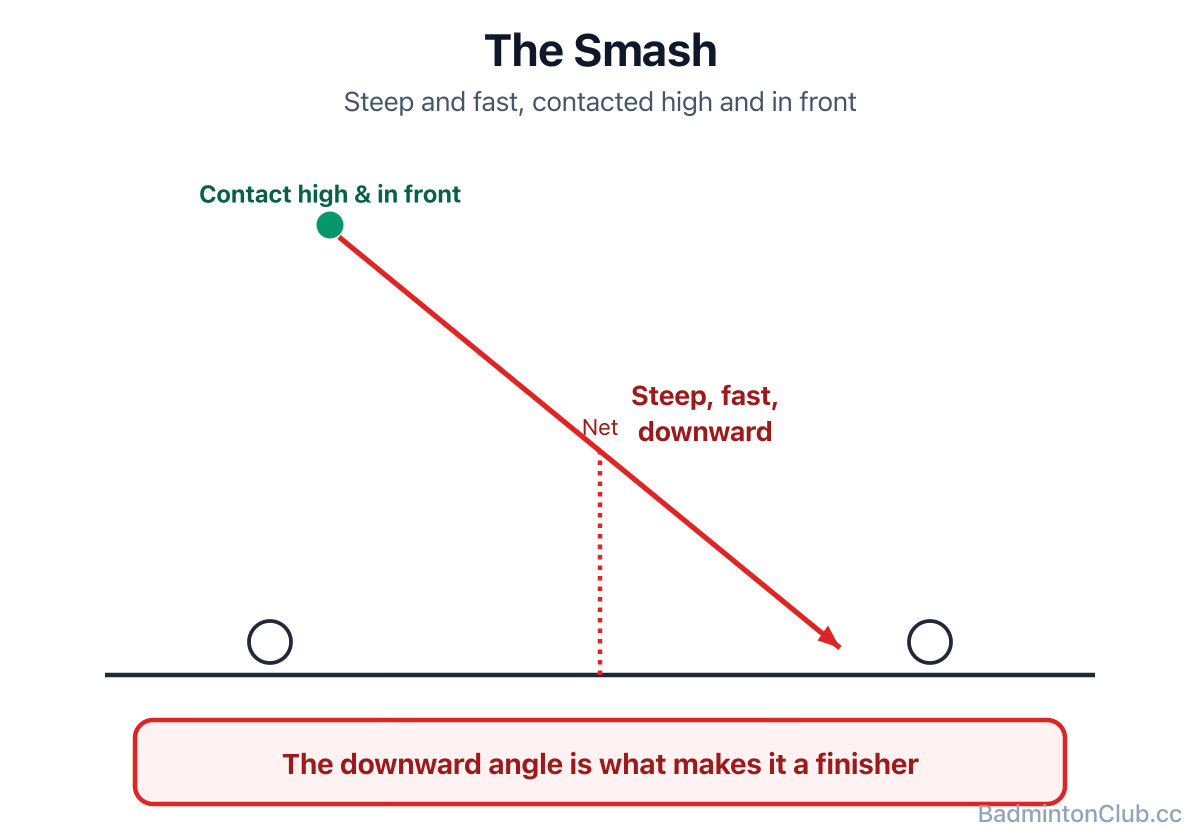
What makes a shot a smash
Three things define it: it's overhead (hit from above your head), it's fast, and it travels steeply downward. That downward angle is the whole point — it forces the opponent to react low and fast, with little time to make a controlled reply. A flat or rising fast shot is a drive, not a smash; the steepness is what makes it a finisher. The smash shares its preparation with the clear and the drop, which is what makes a good one deceptive: until the last instant, the opponent can't tell which is coming.
Where the speed really comes from
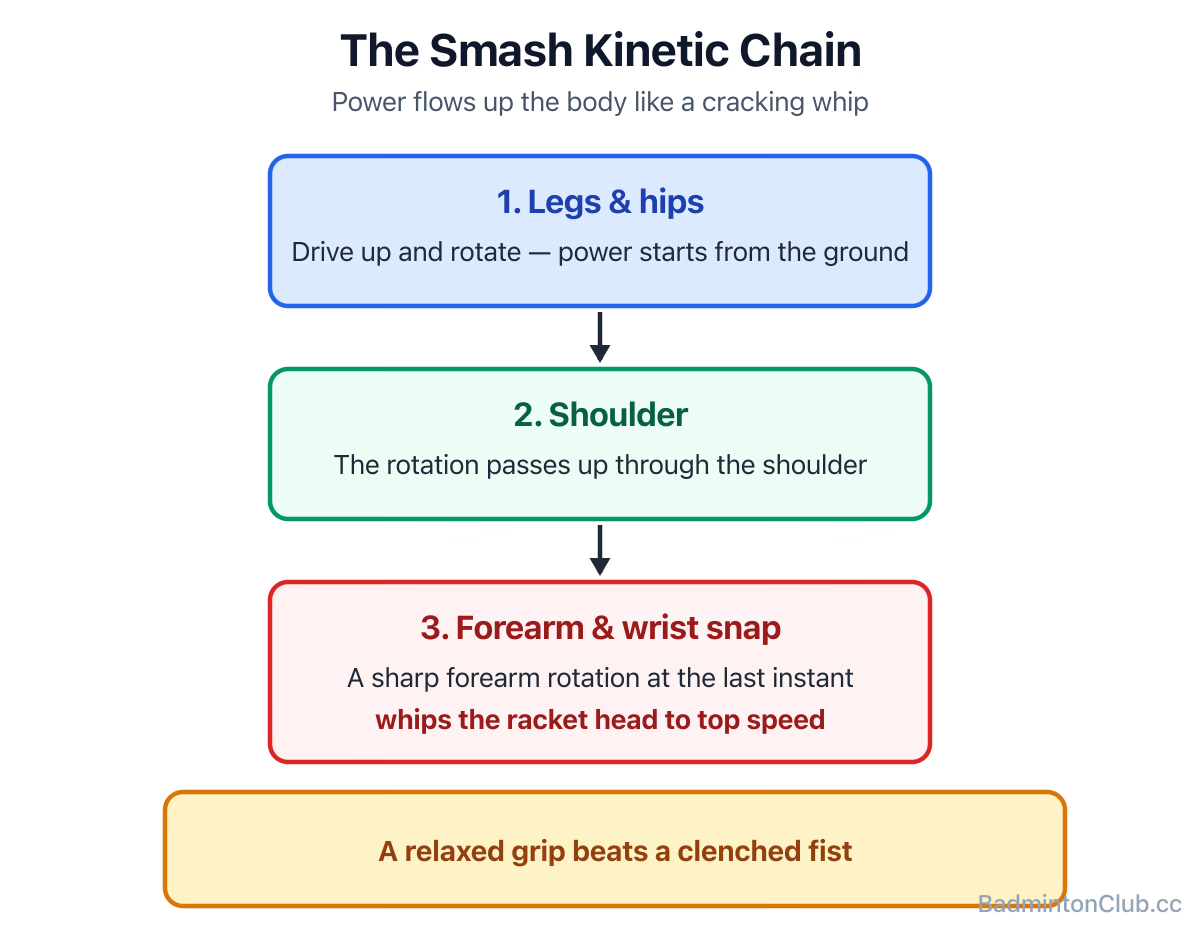
Beginners think the smash is arm strength. It isn't — it's a whip. Power flows through a kinetic chain: legs and hip rotation, then shoulder, then a sharp forearm pronation and wrist snap at the very last moment, so the racket head accelerates like the cracked tip of a whip. A relaxed grip that tightens only at contact produces far more speed than a clenched fist. The proof is in the record books: Tan Boon Heong hit 493 km/h in a 2013 controlled test, and Satwiksairaj Rankireddy reached 565 km/h in a 2023 lab test — speeds no amount of arm strength alone could produce.
Record speed vs match reality
The headline numbers are lab tests, not match shots. In an actual rally — with the shuttle coming at an awkward height, the player off-balance, and a defender to beat — smashes typically land in the 250–420 km/h range. And here's the thing the record books hide: the fastest smash rarely wins the rally. A perfectly placed 300 km/h smash into the body beats a wild 450 km/h one that the defender blocks. Speed is the headline; placement is the substance.
When the smash is actually the wrong shot (a strong opinion)
Most coaching glossaries define the smash and stop. Here's what they leave out, and it's the most useful thing on this page: for a beginner, the smash loses more points than it wins. It's seductive — it's loud, it feels powerful, it ends rallies on highlight reels. But a smash from the wrong place is a slow, flat, blockable gift. You should only smash when the shuttle sits up short, high and central, and you're behind it and balanced. Smash from deep court and the angle's too flat; smash off-balance and you're stranded for the reply. I'd put it bluntly: the single biggest improvement most club players could make is to smash less and clear or drop more, attacking only when the shuttle genuinely sits up. The patience to not smash a half-chance is a more advanced skill than the smash itself. Save it for the ball that's begging to be hit, and your win rate on the shot doubles.
FAQ
- Q: What is a smash in badminton? A steep, fast, downward overhead shot used to finish a rally — the sport's main attacking shot and its fastest. It forces the opponent into a hurried, low reply.
- Q: How fast is a badminton smash? Lab records reach 493 km/h (2013) and 565 km/h (2023), but in-match smashes are typically 250–420 km/h. Placement matters far more than top speed.
- Q: Where does smash power come from? From racket-head speed via a kinetic chain — legs, hips, shoulder, then a sharp forearm rotation and wrist snap at contact. Technique and a relaxed grip beat raw arm strength.
- Q: When should you smash in badminton? Only when the shuttle sits up short, high and central and you're behind it and balanced. From deep court or off-balance, a clear or drop is the smarter choice.
- Q: Why does my smash keep getting returned? Usually it's hit from too deep or too flat, lacking the downward angle, which gives the defender time to block it. Take the shuttle earlier and higher, and pick better moments.
- Q: Is the smash the most important shot to learn? No — it's the most overrated for beginners. Control shots like the clear and drop win more rallies. Add the smash once your positioning and patience are solid. See the glossary hub.
A smash in badminton is a steep, powerful overhead shot hit sharply downward to end a rally — the sport's knockout punch and its fastest shot. This explains what a smash is, where the power really comes from (forearm rotation, not arm muscle), the record speeds versus what's normal in a match, when a smash is the right shot, and why beginners lose more points to it than they win.