Badminton Terms & Glossary: An A–Z of the Words Every Player Should Know
8 June 2026 · Badminton Fans
Some sports have a vocabulary you can bluff your way through for months — I've played football my whole life and couldn't tell you what a "rabona" actually is. Badminton isn't like that. The moment you step on a club night, people throw around words like let, deuce, clear, tramlines and drift, and if you don't know them you're lost within the first rally. Most of it is actually dead simple once someone explains it, and the few terms that genuinely trip everyone up — let versus fault, how deuce works, why the service court changes shape — are the ones worth learning before you need them. This page is the A–Z starting point: a quick definition of each major term, with links to the full deep-dive where one exists.
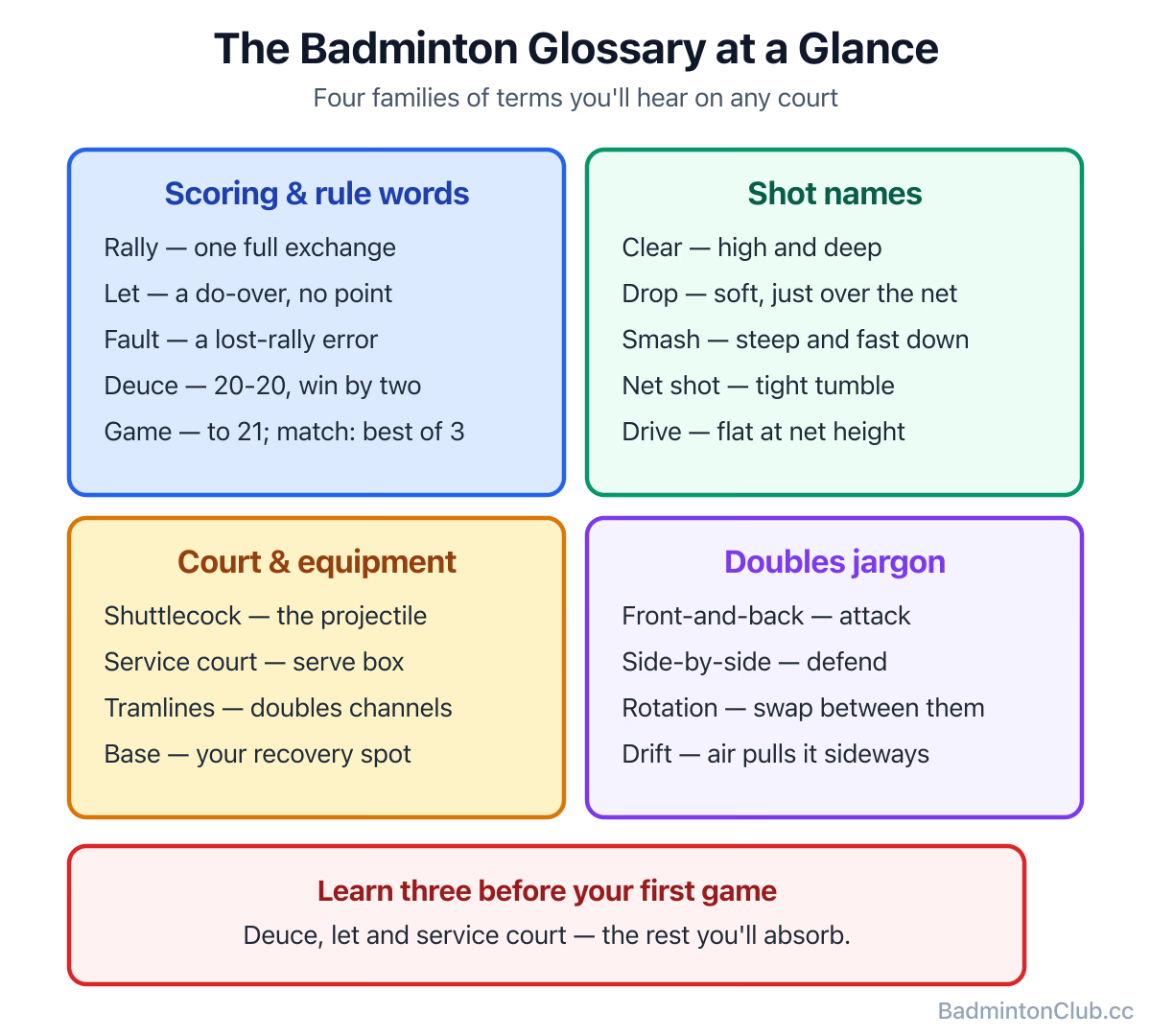
Scoring and rule words
These are the terms that decide who wins, and the ones newcomers mishear most.
- Rally — one continuous exchange, from the serve until the shuttle hits the floor or goes out. Win the rally, win the point. Full guide: what is a rally.
- Let — a do-over. Play stops, the rally doesn't count, and the same player serves again. See what is a let.
- Fault — an illegal action or a shot that loses the rally: a serve above 1.15 m, the shuttle landing out, hitting the net, a double hit. A fault gives the point to the other side.
- Deuce — the score at 20-20, where you then have to win by two. See what is deuce.
- Game and match — a game is to 21; a match is best of three games.
Shot names
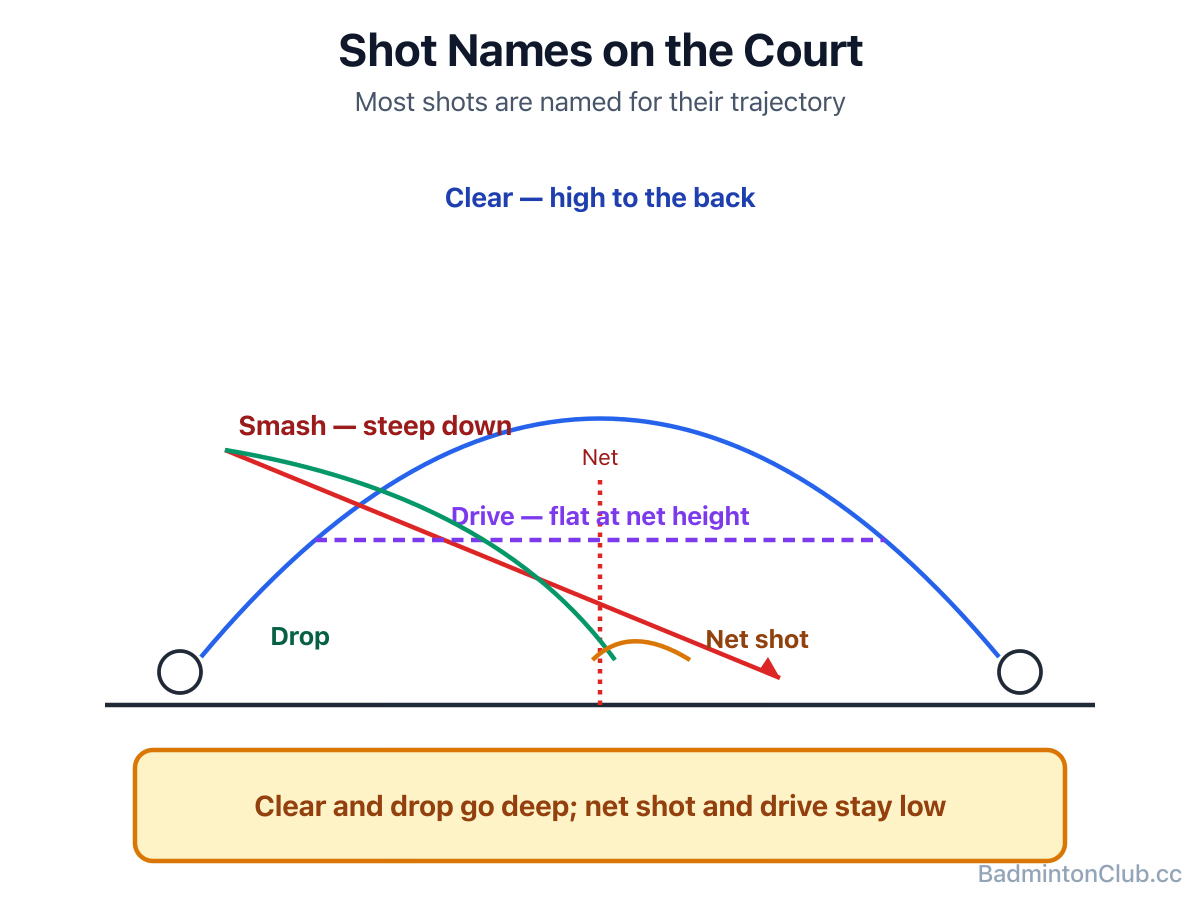
The shots are a family, not a random list — most are named for their trajectory.
- Clear — sent high and deep to push your opponent off the net and buy yourself a second to recover.
- Drop — feathered softly so it dies just over the tape, dragging a back-court opponent forward.
- Smash — steep, fast, downward; the put-away you hit when the shuttle finally sits up. Full guide: what is a smash.
- Net shot — a delicate tap that tumbles tight over the tape, tempting a lift you can attack.
- Drive — flat and fast at roughly net height; the doubles midcourt slugging match.
- Lift — an underarm rescue that lofts a low shuttle to the back when you're under pressure.
Court and equipment words
- Shuttlecock (or shuttle, or birdie) — the projectile: 16 feathers in a cork base, or a moulded nylon skirt. See what is a shuttlecock.
- Service court — the box you must serve into, diagonally opposite. The lines differ between singles and doubles.
- Short service line — 1.98 m from the net; your serve must clear it.
- Tramlines — the side and back "doubles" channels between the inner and outer lines.
- Base / centre — the middle-ish spot you recover to after each shot.
Doubles and tactical jargon
This is the half of the glossary nobody hands you, and it's where a club night sounds like a foreign language. Front-and-back is the attacking formation (one player at the net, one at the rear); side-by-side is the defensive one. A rotation is the pair swapping between those two. A drift is the lateral pull of air conditioning in a hall that quietly carries the shuttle out — every regular has lost a point to it and blamed the shuttle. "Yours!" is, statistically, the most-shouted word in any doubles hall, usually a fraction too late. None of that is in the Laws of Badminton, but you'll hear all of it within ten minutes of walking in.
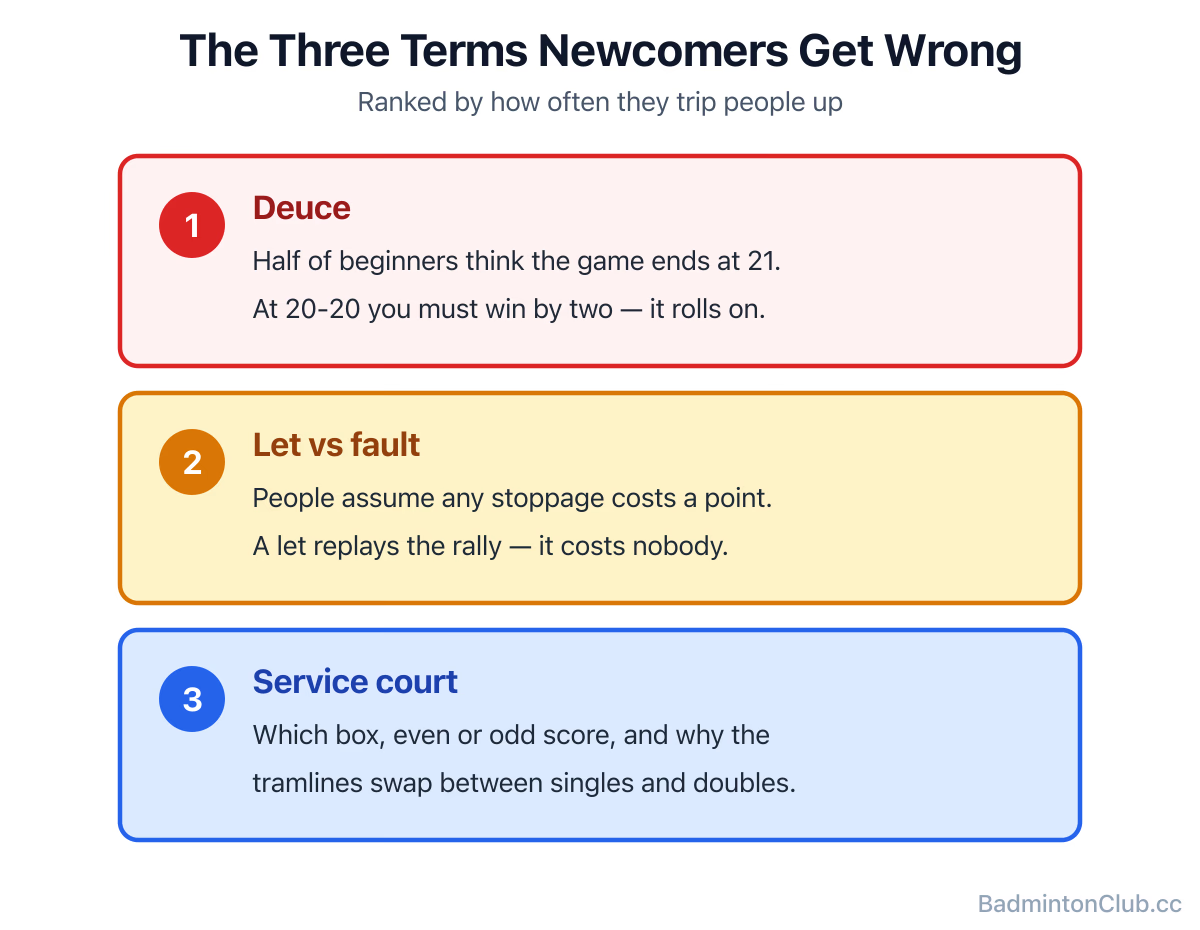
The terms that trip up the most newcomers (an honest ranking)
After pointing new players at the right word for longer than I'd care to count, here's my ranking of what genuinely confuses people, in order of how often I've had to explain it. Deuce takes the gold — easily half of beginners think the game wraps up at 21 and look bewildered when it rolls on to 24-22. They're not stupid; the rule just sounds wrong the first time you hear it. Second place is the let versus fault distinction: almost everyone assumes any stoppage loses a point, when a let costs nobody anything. I've watched players concede points they didn't owe because they didn't know they could call a let. Third is the service court — which box you stand in, even or odd score, and why those tramlines swap between singles and doubles. The rest — shot names, "base," "drift" — most people absorb in a session or two without even noticing. If you memorise just three terms before your first proper game, make it deuce, let and service court; the rest will show up on their own.
FAQ
- Q: What are the basic terms in badminton? The core set is rally (one exchange), serve, fault (a lost-rally infraction), let (a replay), clear, drop, smash, net shot, drive and the service court. Learn those ten and you can follow any game.
- Q: What is the terminology for scoring in badminton? A game is to 21 points (win by 2), a match is best of three games, deuce is 20-20 where you must win by two, and a rally is the exchange that earns each point under rally scoring.
- Q: What is a "birdie" in badminton? It's a casual name for the shuttlecock — common in North America. "Shuttle" is the more standard term elsewhere; both mean the same feathered or nylon projectile.
- Q: What does "let" mean in badminton? A let is a replay: play stops, no point is scored, and the same player serves again. It's not a fault and costs nobody a point.
- Q: What's the difference between a game and a match? A game is played to 21 points; a match is the best of three games. You can win two games and take the match without playing the third.
- Q: Why do players shout "service" or "fault"? Those are calls — "fault" flags an illegal serve or an out shuttle, and in officiated matches a service judge specifically watches the serve height and feet. In club play, players call their own.
A plain-English badminton glossary covering the terms you'll hear on any court: rally, let, deuce, shuttlecock, clear, drop, smash, service court, and the slang nobody explains. Instead of a dry word list, this groups the terminology the way it actually comes up in a game — scoring words, shot names, court areas, doubles jargon — and links out to a full guide for each big one, so you can look up a word fast or read the lot.