What Is a Rally in Badminton? The Exchange That Decides Every Point
8 June 2026 · Badminton Fans
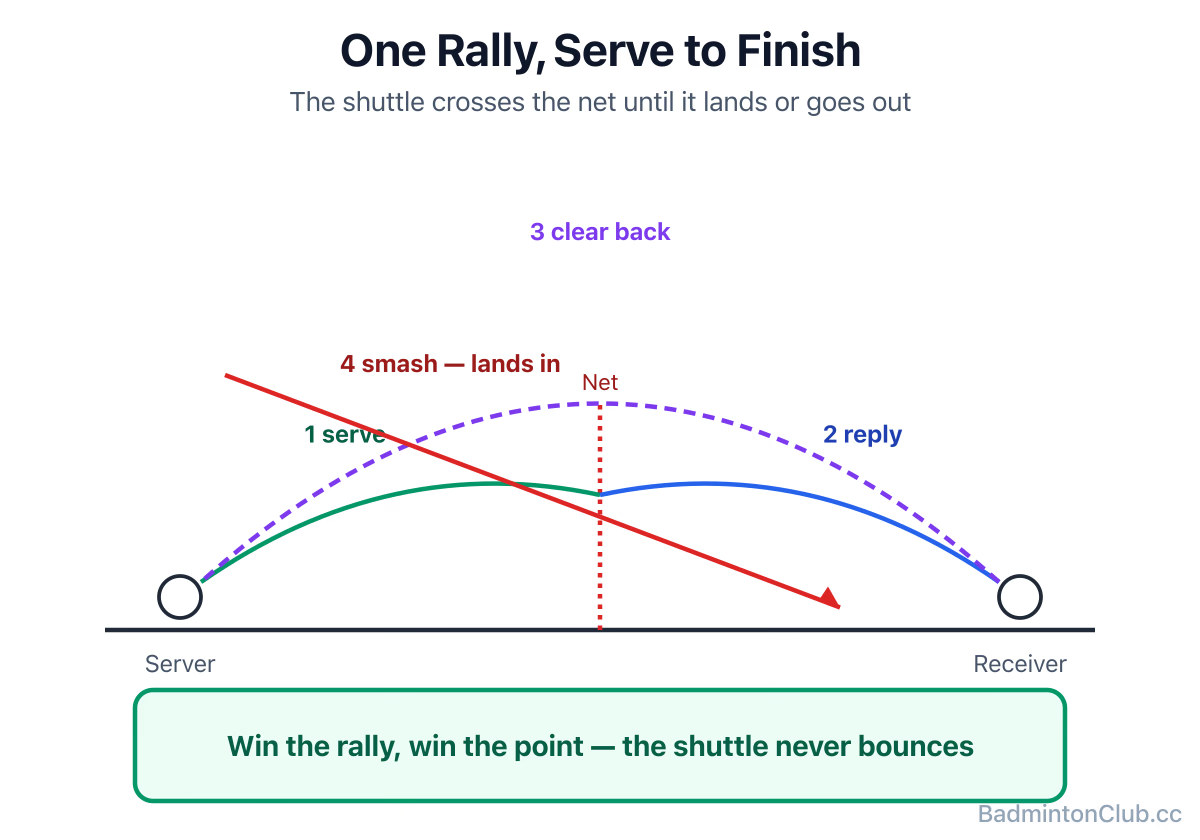
If you strip badminton down to its smallest unit, this is it: a rally is one continuous exchange of shots, starting the moment the server strikes the shuttle and ending the instant it hits the floor, goes out, or someone commits a fault. Under the rally-scoring system the sport has used since 2006, whoever wins that exchange gets a point — simple as that. Every point you'll ever see or play is the result of exactly one rally.
When a rally starts and ends
The BWF Laws put it simply: a rally is "a sequence of one or more strokes starting with the service, until the shuttle ceases to be in play." It starts the moment the server strikes the shuttle. It ends when any of these happens:
- The shuttle lands on the floor (in or out).
- A player hits it into the net or out of bounds.
- A fault occurs (illegal serve, double hit, racket touches the net, etc.).
The defining quirk of badminton: unlike tennis or squash, the shuttle is never allowed to bounce. The instant it touches the ground, the rally is over. There's no second chance, which is why the sport rewards quick recovery over raw power.
Rally scoring: why every rally matters now
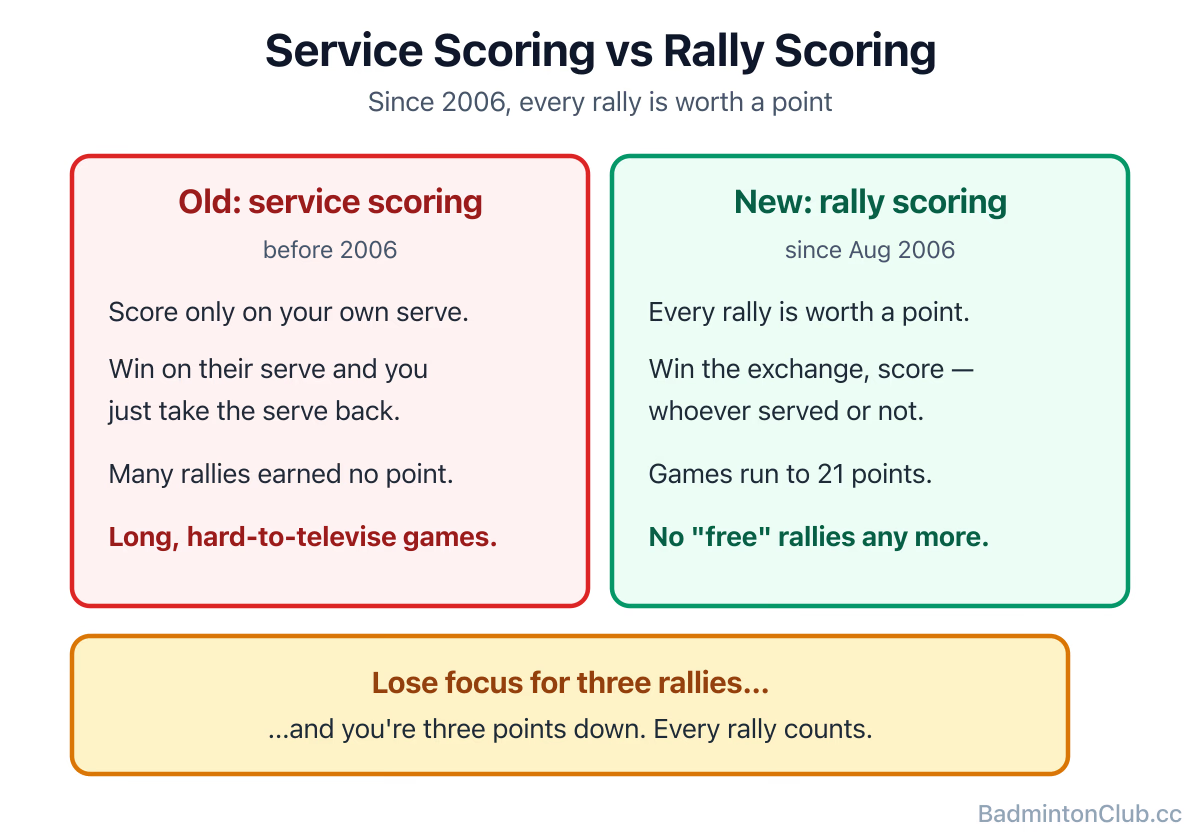
Before 2006, badminton used service scoring — you could only score on your own serve, so a rally you won on the opponent's serve just handed you the serve back, not a point. In August 2006 the BWF switched all events to 21-point rally scoring: now every rally is worth a point to whoever wins it. The change made matches shorter, more predictable for television, and a lot more punishing — there are no "free" rallies any more. Lose your concentration for three exchanges and you're three points down.
What a real rally looks like
A club-level doubles rally typically goes something like: low serve, net shot, lift, smash, block to the net, net shot, lift, clear, drop, scramble, net kill — done. Twelve shots packed into maybe eight seconds, and by the end everyone's breathing hard. At the top level, rallies regularly push past 30, 40, even 60 shots; the longest recorded professional exchanges have sailed well past 100. A beginner rally, on the other hand, is often two shots — serve, one reply, and a swing into the net — over in less than two seconds and followed by a sheepish "sorry." I tell new players not to apologise for it. Every single good player on that court started the same way.
The rally length that tells you everything about a player
Here's a pattern I'd bet money on watching any new player: count the shots in their rallies. Beginners live and die on two-to-three-shot rallies — serve, one reply, an error. The single clearest marker of improvement isn't a better smash, it's the rally getting longer because you stopped gifting cheap errors. When a beginner's average rally creeps from three shots to seven, they've quietly become an intermediate, even if no individual shot looks prettier. I tell people to stop counting winners and start counting how long they can keep the shuttle alive under control. A long rally you eventually lose teaches you far more than a two-shot point you won off a mishit. Rally length is the honest scoreboard of skill that the actual scoreboard hides.
FAQ
- Q: What is a rally in badminton? A rally is one continuous exchange of shots, from the serve until the shuttle lands, goes out, or a fault ends it. The winner of the rally scores a point under rally scoring.
- Q: When does a badminton rally end? The instant the shuttle touches the floor (in or out), is hit into the net or out of bounds, or a fault is called. The shuttle is never allowed to bounce, so there's no recovery once it lands.
- Q: Does every rally score a point in badminton? Yes, since 2006. Under rally scoring, whoever wins the rally gets the point regardless of who served. The old service-only scoring was retired that year.
- Q: How long is a typical badminton rally? Club doubles rallies often run 6–15 shots; elite rallies frequently exceed 30, and the longest professional rallies have passed 100 shots. Beginner rallies are usually two or three.
- Q: Can the shuttle bounce during a rally? No. The moment it hits the floor the rally is over — the opposite of tennis. This is what makes badminton so reliant on fast recovery between shots.
- Q: What's the difference between a rally and a point? A rally is the exchange; a point is what's awarded for winning it. Under rally scoring they map one-to-one: one rally, one point.
A rally in badminton is one continuous exchange of shots — from the serve until the shuttle hits the floor or goes out — and under rally scoring, whoever wins it scores the point. This explains exactly when a rally starts and ends, why the shuttle can never bounce, how rally scoring replaced the old serve-only system in 2006, and what a typical rally actually looks like on court.