What Is a Shuttlecock? The Birdie's Feathers, Weight and Why It Flies Like That
8 June 2026 · Badminton Fans
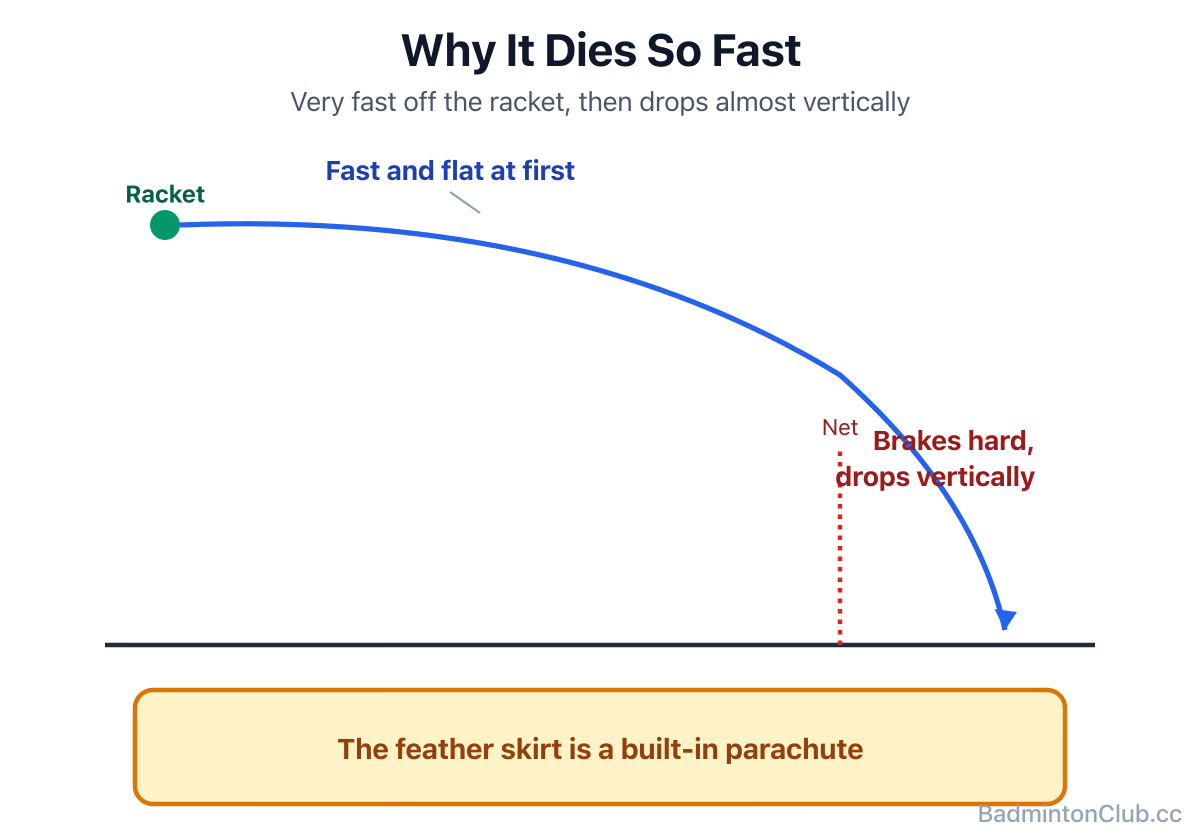
Take a moment to appreciate the shuttlecock — it's genuinely the strangest projectile in any mainstream sport. Part feather, part cork, part exactly 4.74 to 5.50 grams of aerodynamic chaos. It's designed to fly fast off the strings and then slam on the brakes, which is why a smash can leave the racket at over 400 km/h yet drop almost vertically by the time it reaches the floor. That doesn't happen by accident — the feathered skirt is basically a built-in parachute, and the cork base is self-righting so it always flies nose-first. No ball in any sport behaves like this, and if it didn't, badminton wouldn't look anything like the game we know.
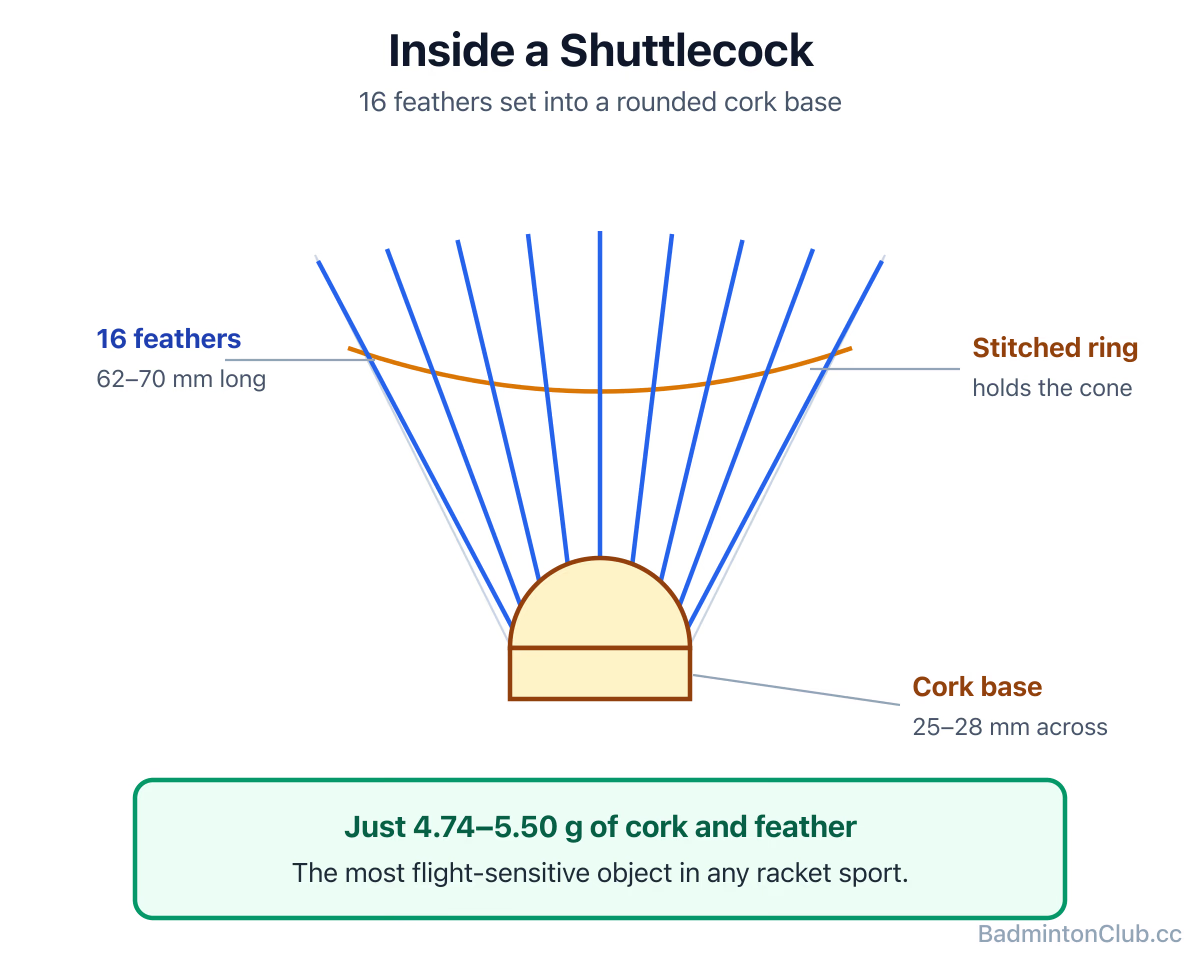
What a shuttlecock is made of
A traditional feather shuttle has 16 feathers — usually from the left wing of a goose or duck (all from the same wing so they curve the same way) — measuring 62–70 mm long, fixed into a cork base 25–28 mm across. Whole-shuttle weight is tightly controlled: 4.74 to 5.50 grams. That's it — a few grams of cork and feather, and yet it's the most flight-sensitive piece of equipment in any racket sport.
The feathers are glued and then double-stitched in a ring to hold the cone shape. It's a surprisingly hand-crafted object: a good tournament feather shuttle is closer to a piece of fletching than a manufactured ball.
Feather vs plastic (nylon) shuttles
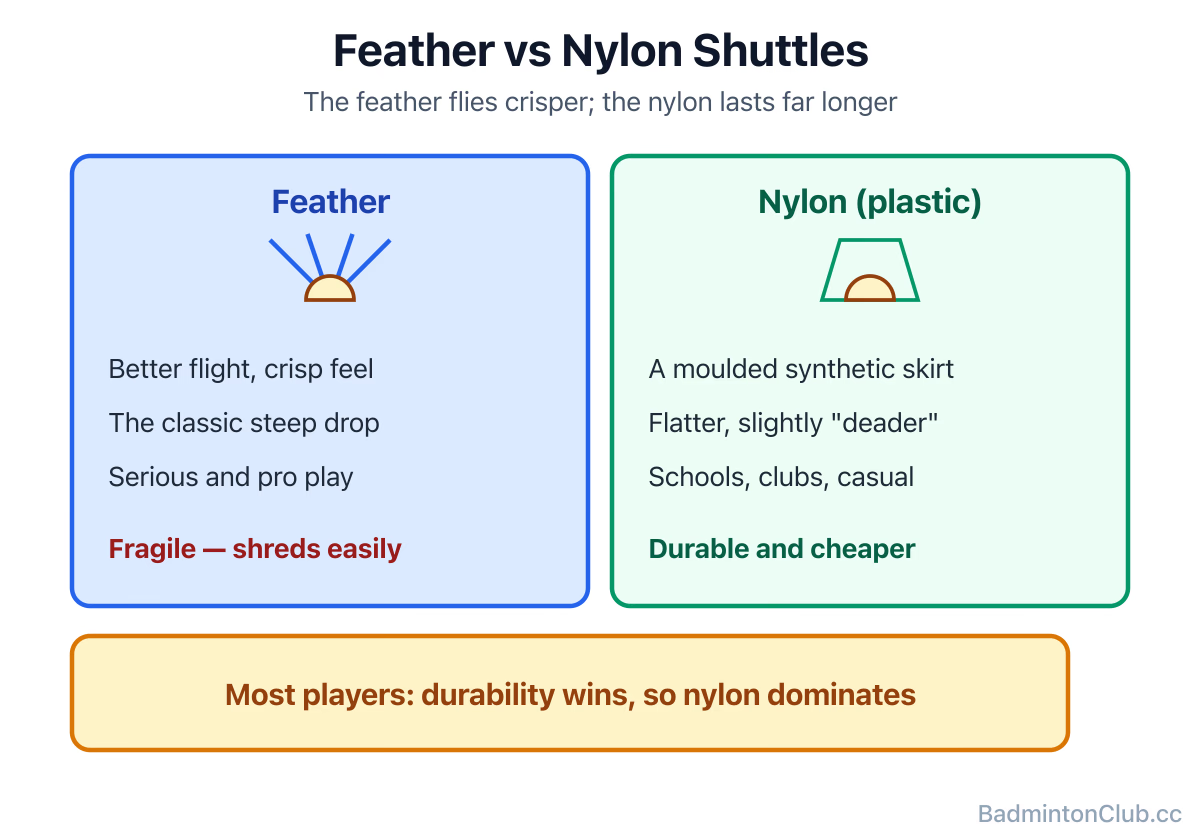
- Feather — the proper article. Better flight, a crisper "feel," the classic steep drop, and the choice for serious and professional play. The downside: fragile. A hard smash can shred one, and a competitive match gets through a dozen or more.
- Plastic / nylon — a moulded synthetic skirt on a cork or composite base. Far more durable and cheaper, so they dominate schools, clubs and casual play. They fly slightly differently — a touch "deader," with a flatter trajectory — but for most players the durability wins.
Why it flies cork-first (and dies so fast)
Throw a shuttle any way you like and it flips to fly cork-first, every time. The mass concentrates in the cork base while the feather cone creates enormous drag at the rear — aerodynamically it's a self-righting badminton dart. That same drag is why the shuttle decelerates faster than any ball: a smash leaves the racket at hundreds of km/h but has shed most of that speed by the time it crosses the net, which is exactly why even a brutal smash can be defended. No other projectile in sport changes speed so violently in flight.
Speed ratings and the "tube number" nobody explains
Open a tube and you'll see a number — often 76, 77, 78 — and most players have no idea what it means. It's the shuttle's speed rating, tied to the weight in grains, and it matters more than people think. A faster (heavier) shuttle flies further, which you want in a cold hall where dense air slows everything down; a slower (lighter) shuttle suits a hot, high-altitude venue where thin air would otherwise send a fast shuttle sailing out the back. Clubs in cold British sports halls in winter often run a 78; the same club in a heatwave might drop to a 76. There's even a legal "shuttle test": serve it flat from the back line, and a correct-speed shuttle lands between the two doubles long service lines at the far end. If your shuttles keep flying long or dropping short for everyone, it's probably not the players — it's the wrong tube number for the room temperature. I've watched entire club nights argue about "bad shuttles" when the real fix was buying the next speed up. A peg-board app like BadmintonClub.cc won't pick your shuttle speed for you, but knowing the tube number saves a lot of pointless grumbling.
FAQ
- Q: What is a shuttlecock? It's badminton's projectile: an open cone of 16 feathers, or a nylon skirt, set into a rounded cork base. Its high-drag shape makes it fly cork-first and decelerate sharply, which defines how the sport plays.
- Q: How many feathers does a shuttlecock have? A standard feather shuttle has 16 feathers, usually goose or duck, all taken from the same wing so they curve identically and spin the shuttle in flight.
- Q: How much does a shuttlecock weigh? Between 4.74 and 5.50 grams under BWF rules — just a few grams of cork and feather, which is why it's so sensitive to wind and temperature.
- Q: What's the difference between feather and plastic shuttles? Feather shuttles fly better and feel crisper but break easily; nylon (plastic) shuttles fly slightly flatter and "deader" but last far longer, so clubs and schools mostly use them.
- Q: Why is a shuttlecock called a birdie? "Birdie" is the casual North American name for the shuttle, from the feathers. "Shuttle" or "shuttlecock" is the standard term elsewhere — all three mean the same thing. See the glossary hub.
- Q: What do the numbers on a shuttle tube mean? They're the speed rating (e.g. 76, 77, 78). Higher numbers fly further — used in cold, dense-air halls; lower numbers suit hot or high-altitude venues where the air is thin.
A shuttlecock is badminton's projectile — an open cone of 16 feathers (or a nylon skirt) set in a rounded cork base — and its shape is why badminton plays nothing like tennis. This covers what a shuttle is made of, the BWF weight and feather specs, feather versus plastic shuttles, why it always flies cork-first and decelerates so fast, and the speed-rating numbers printed on the tube.