What Is Deuce in Badminton? The 20-20 Rule and How to Win by Two
8 June 2026 · Badminton Fans
You're at 20-20. The game should be over, right? Nope — that's deuce. Instead of ending at 21, the game keeps going until one side leads by two points. So 21-20 means nothing; you need 22-20. It can stretch to 23-21, 24-22, all the way up to a hard ceiling at thirty. Deuce is the BWF's way of making sure a game is won decisively, not gifted on a single net-cord that happened to drop at 20-all. It's the sport admitting that sometimes a match needs a little extra time to find the right winner.
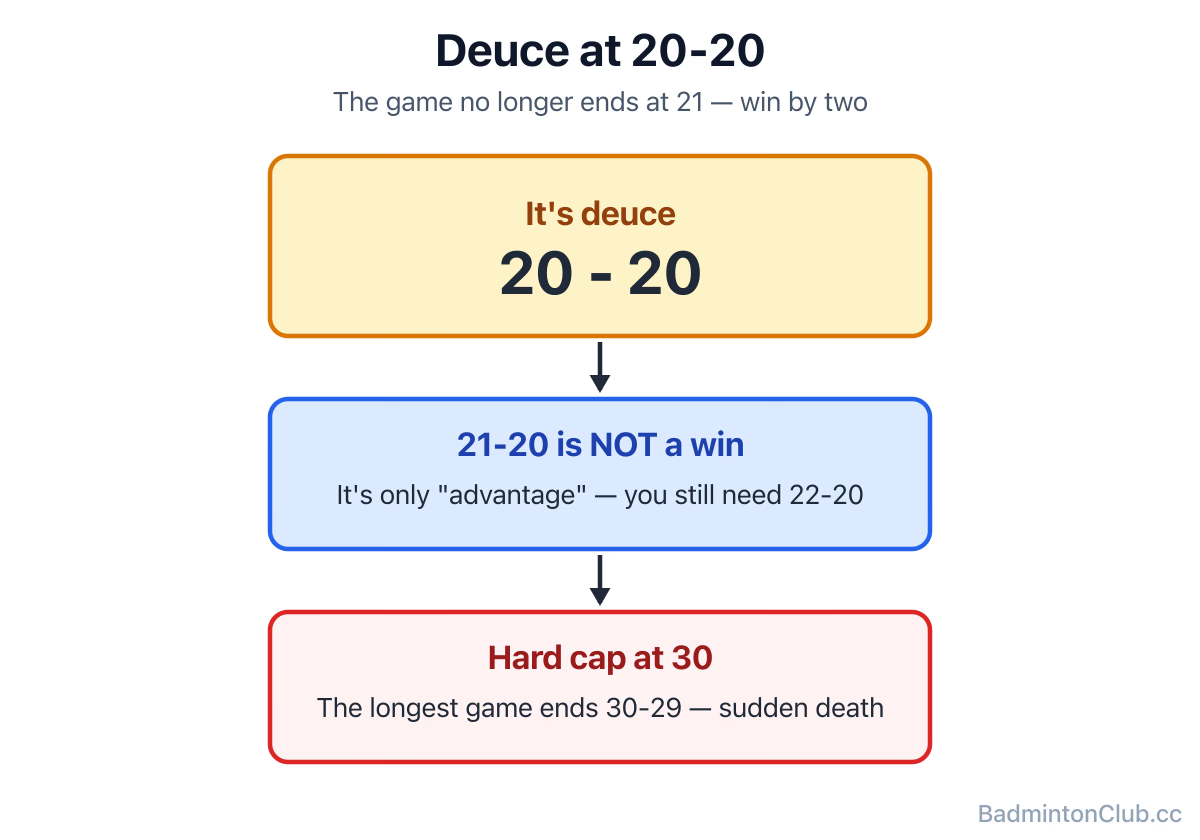
How deuce works, step by step
A normal game goes to 21 — but only if you're two clear. The rule kicks in at 20-20:
- At 20-20, it's deuce. You must now win by two.
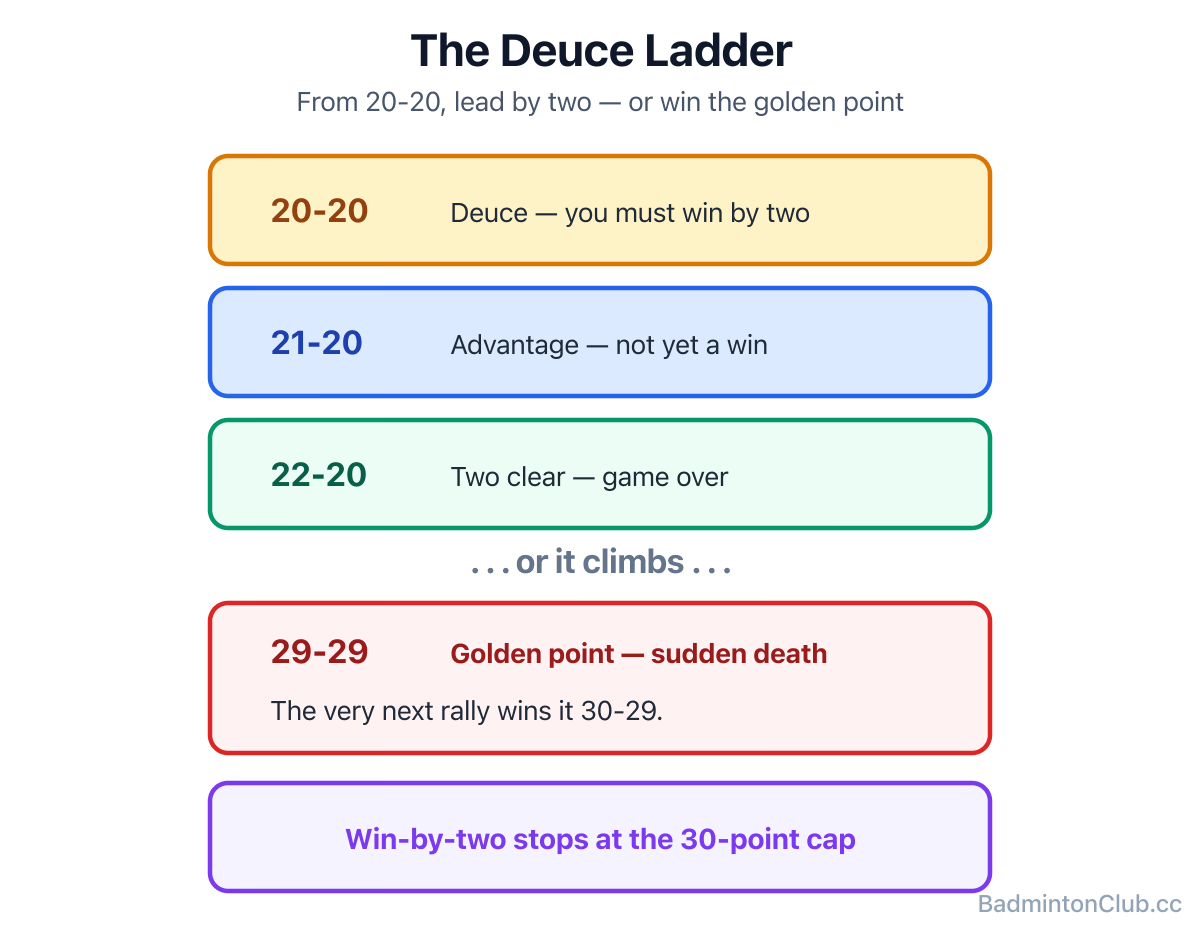
- 21-20 is not a win; it's "advantage." Win the next and it's 22-20, game over. Lose it and you're back to 21-21.
- This continues — 22-21, 23-22, 24-23 — until someone is two ahead.
- There's a hard cap at 30. At 29-29, the next rally wins it: 30-29. No win-by-two at the cap; it's sudden death.
So the longest possible game ends 30-29, and the shortest contested one from deuce ends 22-20.
Why deuce exists
Rally scoring made every point precious, and the BWF wanted to avoid a game being decided by one fluky net-cord at 20-19. Requiring a two-point margin means you have to earn the close ones — beat your opponent twice in a row to close it out. The 30-cap stops a game running forever; without it, two evenly matched players could in theory rally past 40. The cap trades a little fairness for a guaranteed end.
The mental side of deuce (the part that decides who wins)
Here's what years of watching close games taught me: deuce is won in the head, not the hand. The score resets the pressure — suddenly every rally is a potential game-loser, and you can watch players who were striking the shuttle beautifully at 18-14 start poking nervous, short clears at 20-20. The trap is playing not to lose: shortening your swing, serving safe, waiting for the opponent's error. That mindset is exactly what loses deuces, because it invites the aggressive player to attack. The players who win from 20-20 are the ones who keep doing what got them there — full swings, committed serves, the same shot they'd play at 5-3. My honest advice when you reach deuce: pick your most reliable serve and your most reliable attacking pattern, and commit. The opponent is just as nervous as you; the one who flinches first loses. Treat 20-20 as 0-0 in a two-point game and you'll win more than your share.
A worked deuce
You lead 20-18 — two game points. You lose both: 20-19, 20-20, deuce. You win one (21-20, advantage), then lose one (21-21). You take the next two cleanly: 22-21, 23-21 — game. Note how 21-20 didn't end it and you had to win twice from advantage. That's deuce in miniature.
FAQ
- Q: What is deuce in badminton? Deuce is the score at 20-20, after which the game no longer ends at 21 — you must win by two points, up to a maximum of 30.
- Q: Does the game end at 21 in badminton? Only if you're two points clear (e.g. 21-19). At 20-20 it's deuce, and you keep playing until someone leads by two or reaches the 30-point cap.
- Q: What happens at 29-29 in badminton? The two-point rule is suspended at the cap. The very next rally decides the game: the winner scores the 30th point and takes it 30-29 — a golden, sudden-death point.
- Q: Why doesn't 21-20 win the game? Because at deuce you must win by two. 21-20 is only "advantage" — win the next point for 22-20, or lose it and return to 21-21.
- Q: What's the highest score a badminton game can reach? 30-29. The cap at 30 means a game can never go higher; 29-29 always resolves on the next rally. See how this fits the wider scoring terms.
- Q: Is deuce the same as in tennis? The idea is the same — win by two from a tied score — but the numbers differ. Badminton's deuce starts at 20-20 with a 30 cap; tennis deuce uses advantage points with no cap.
Deuce in badminton is the score at 20-20, where the game no longer ends at 21 — you have to win by two points, up to a hard cap of 30. This explains exactly how deuce works, why 21-20 isn't a win, how a game can stretch to 24-22 or 29-29, and the golden-point rule at 29-29 where the very next rally wins it 30-29.