What Is a Let in Badminton? When the Rally Is Replayed and No One Scores
8 June 2026 · Badminton Fans
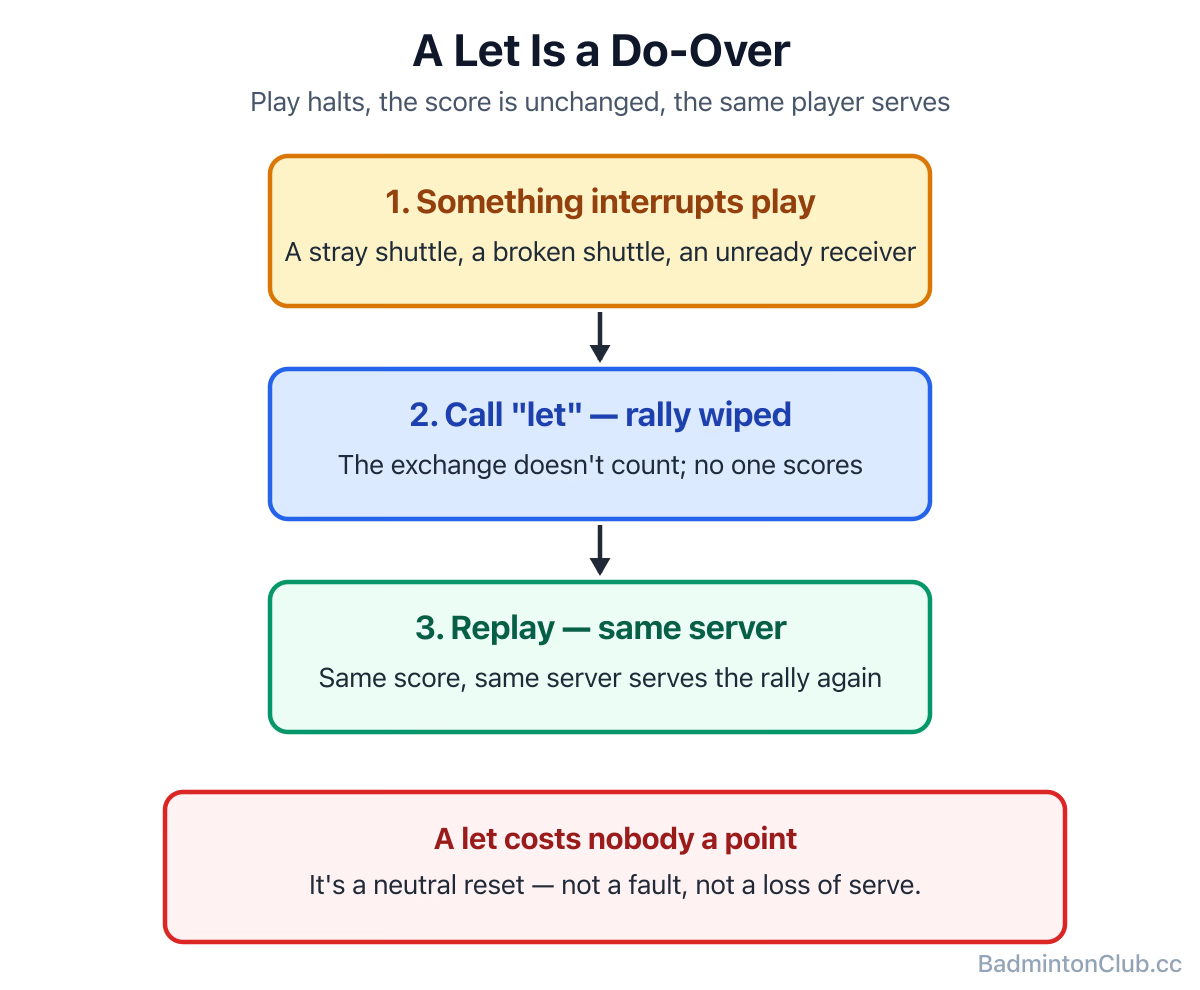
A let is badminton's mulligan — play stops, the rally that just happened is wiped from the record, nobody scores, and the server serves again. Think of it as the sport's neutral reset button for situations where neither side deserves to lose a point. The single most important thing to understand about a let is that it costs nobody anything. It's not a fault, not a penalty, not a loss of serve — just a "pretend that didn't happen" for the few moments when carrying on would be unfair.
What causes a let
The BWF Laws list the situations. The common ones you'll meet in real play:
- The server serves before the receiver is ready (and the receiver doesn't try to return it).
- During the serve, the receiver and server are both faulted at the same time.
- The shuttle disintegrates — the base separates from the feathers — during a rally.
- During a rally (not the serve), the shuttle passes over the net and then gets caught in it, or is left suspended on top of the tape.
- Outside interference — a shuttle from the next court rolls into yours, a let is called.
One trap worth flagging, because half the club gets it backwards: a shuttle that hangs up on the net on the serve is a fault, not a let — the server loses the point. It's only a let when the shuttle snags in the net once the rally is already underway.
In every case the remedy is identical: replay the rally, same server, same score.
Let versus fault — the distinction that matters
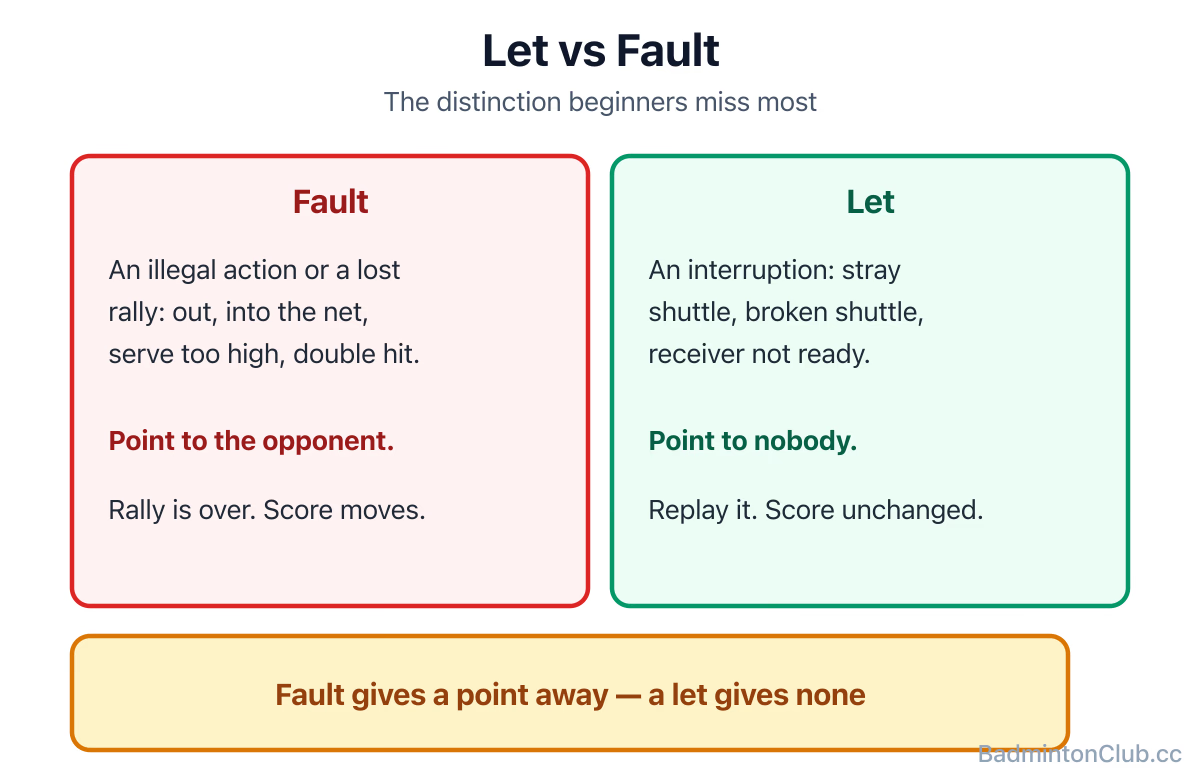
This is the single most useful thing on the page. A fault ends the rally and gives the point to the other side. A let ends the rally and gives the point to nobody — you just play it again. Beginners assume any stoppage costs them, so they keep playing through a shuttle from the next court rather than calling a let, or they concede a point they didn't owe. Learn the difference and you stop giving away points you were entitled to keep.
How you call a let in club play
In an officiated match the umpire or service judge calls it. At a club, you call your own — just say "let" clearly and replay. The etiquette is to call it immediately, not after you've seen whether you won the rally. Calling a let only when it suits you is the badminton equivalent of a slow over-the-shoulder "was that out?" in tennis — technically allowed, socially frowned upon.
The let nobody agrees on (and how to settle it gracefully)
Here's the one that starts arguments on club night: a shuttle from the next court skids across your tramlines mid-rally. Strictly, a let should be called — but only if it actually interfered. The fight is always over whether it "distracted" the losing player or not, and there's no replay button on a memory. My rule, learned the hard way: if the stray shuttle was anywhere near the playing area, call the let before you know who'd have won the point, and call it loudly. The player who pauses, sees they lost, and then claims interference has already lost the moral argument. A let is one of the few rules that runs entirely on good faith at club level, so spend your good faith generously — replay the cheap ones and you'll never be the person nobody wants to share a court with. Honestly, I'd rather replay a rally I'd have won than be remembered as the let-merchant.
FAQ
- Q: What is a let in badminton? A let is a replay of the rally. Play stops, no point is scored, the score stays the same, and the same player serves again. It's badminton's "do-over."
- Q: Does a let lose you a point? No. That's the whole point of a let — it costs nobody. A fault loses a point; a let simply replays the rally.
- Q: When is a let called in badminton? Common causes: serving before the receiver is ready, the shuttle breaking apart mid-rally, the shuttle snagging in the net once the rally is underway, or a shuttle from another court interfering with play. (Note: a shuttle hung up on the net on the serve is a fault, not a let.)
- Q: What's the difference between a let and a fault? A fault ends the rally and awards the point to the opponent; a let ends the rally and awards it to no one — you replay it. Confusing the two is the most common rules mistake among beginners.
- Q: Who calls a let? In an officiated match, the umpire or service judge. In casual or club play, the players call their own — and the etiquette is to call it immediately, not after seeing the outcome.
- Q: Is a shuttle landing on the line a let? No — a shuttle on the line is in, and the rally is decided normally. A let is about interruptions to play, not line calls.
A let in badminton is a replay: play stops, the rally doesn't count, no point is scored, and the same player serves again. This explains the situations that cause a let — serving before the receiver is ready, a shuttle disintegrating mid-rally, outside interference — and the key distinction beginners miss: a let costs nobody a point, while a fault always gives the point away.