Badminton Positions Explained: Court Areas, Base, and Doubles Formations
8 June 2026 · Badminton Fans
When badminton people talk about "positions," they actually mean two separate things. One is the named zones of the court — forecourt, midcourt, rearcourt, and that sweet spot in the middle called your "base." The other is how two players arrange themselves in doubles: front-and-back when they're attacking, side-by-side when they're defending. Here's the thing I'd want every new player to know: good positioning beats good shots every single time. A player who reads the court well and gets into the right spot hits everything easily; a player who's always scrambling makes even simple shots look hard.
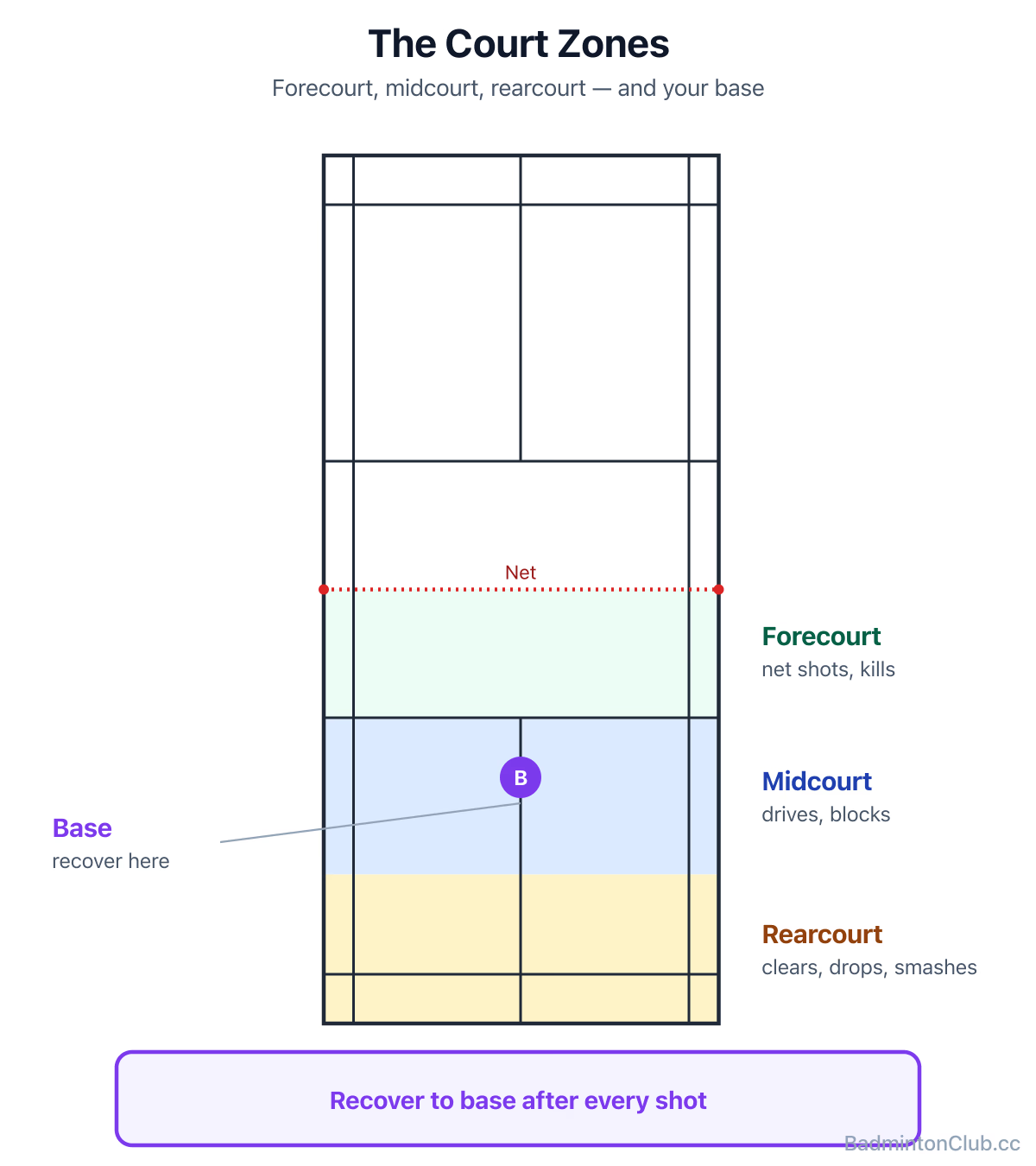
The court areas
Split the court into depth bands:
- Forecourt — the strip just behind the net where net shots and kills are won; stand too deep here and you'll never reach a tumbling reply.
- Midcourt — the middle band where drives are traded and smashes get blocked; it's the no-man's-land you want your opponent stuck in, not you.
- Rearcourt (or back court) — the deep zone you hit clears, drops and smashes from, ideally moving forward through the shuttle rather than reaching back for it.
Your base is the central spot — roughly mid-court in singles — that you return toward after each shot, so you're equidistant from wherever the next shuttle goes. "Recover to base" is the most repeated coaching phrase in the sport for a reason.
Singles positioning: one base, constant recovery
In singles you cover the whole court alone, so positioning is about returning to a central base after every shot and forcing your opponent to move more than you do. The base shifts slightly depending on where you've hit — a bit further back if you've played a deep clear, a bit forward after a tight net shot — but the principle is constant: hit, recover, be ready. Singles is largely a game of moving your opponent to the corners while you guard the middle.
Doubles positioning: attack and defence
Doubles has two core formations, and the whole game is switching between them:
- Front-and-back (attacking) — one player at the net, one at the rear. You use this when you're hitting down (smashes, drops, net kills). The rear player attacks; the front player intercepts the weak reply.
- Side-by-side (defending) — both players level, each covering half the width. You drop into this when you're being attacked (defending smashes), because it covers the full court width.
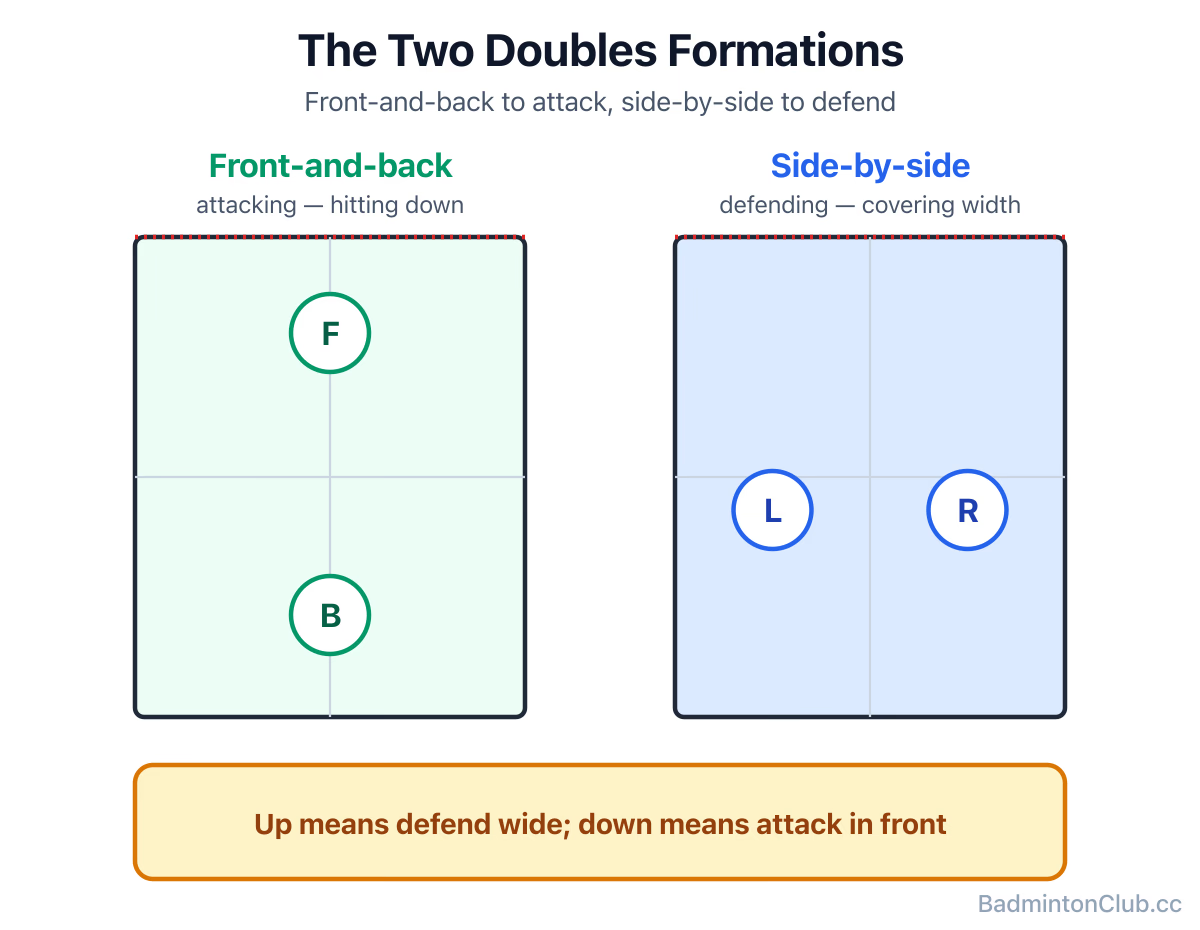
Rotation: the bit that looks like magic
The reason good doubles pairs seem to read each other's minds is rotation — they fluidly swap between front-and-back and side-by-side as the rally flips between attack and defence. Hit a lift and you're suddenly defending, so you rotate to side-by-side. Force a weak net reply and you're attacking, so you rotate to front-and-back. The shuttle's direction (up = defend, down = attack) dictates the formation, and the pair rotates to match. Learning to read that and move with your partner, not into them, is the heart of doubles.
The positioning rule that wins more than any shot
If I could give a doubles beginner one habit, it wouldn't be a shot — it'd be this: the moment your partner lifts the shuttle, both of you drop to side-by-side, and the moment one of you hits down, rotate to front-and-back. Most club-level points are lost not to a great shot but to two players standing in the same formation when the rally demanded the other — both at the back when they should be defending wide, or stacked front-and-back while getting smashed at. Watch a struggling pair and you'll see it constantly: they're in attacking shape while on defence, leaving the sidelines wide open. The fix isn't a better smash, it's a shared rule about up means side-by-side, down means front-and-back, and the discipline to rotate on every single shuttle. Pairs who internalise that one rule jump a whole level without learning a single new stroke. Keeping who-plays-with-whom fair across a busy hall is its own job, which is why clubs lean on a peg board or an app like BadmintonClub.cc so everyone gets balanced games.
FAQ
- Q: What are the positions in badminton? Two senses: the court areas (forecourt, midcourt, rearcourt and your central base), and the doubles standing formations — front-and-back for attack, side-by-side for defence.
- Q: What is the base position in badminton? The central spot you recover toward after every shot, so you're balanced and equidistant from the next possible shuttle. In singles it's roughly mid-court; "recover to base" is the core positioning habit.
- Q: What is front-and-back in doubles? An attacking formation with one player at the net and one at the rear. You use it when hitting down — the back player smashes, the front player picks off the weak reply.
- Q: What is side-by-side in doubles? A defensive formation where both players stand level, each covering half the court width. You drop into it when defending smashes, because it covers the full width.
- Q: What is rotation in badminton doubles? Switching smoothly between front-and-back and side-by-side as the rally flips between attack and defence. The shuttle's direction decides it: hitting up means defend, hitting down means attack.
- Q: How is positioning different in singles and doubles? Singles is one player recovering to a central base and moving the opponent around; doubles is two players rotating between attacking and defending formations. The singles-vs-doubles guide covers the differences in full.
Badminton positions cover two things: the areas of the court (forecourt, midcourt, rearcourt and your base) and where players stand in doubles — front-and-back to attack, side-by-side to defend. This explains the named court zones, the single base position in singles, the two doubles formations and the rotation between them, and the positioning habit that quietly wins more rallies than any shot.