Types of Badminton Shots Explained: Names, Trajectories and When to Use Each
8 June 2026 · Badminton Fans
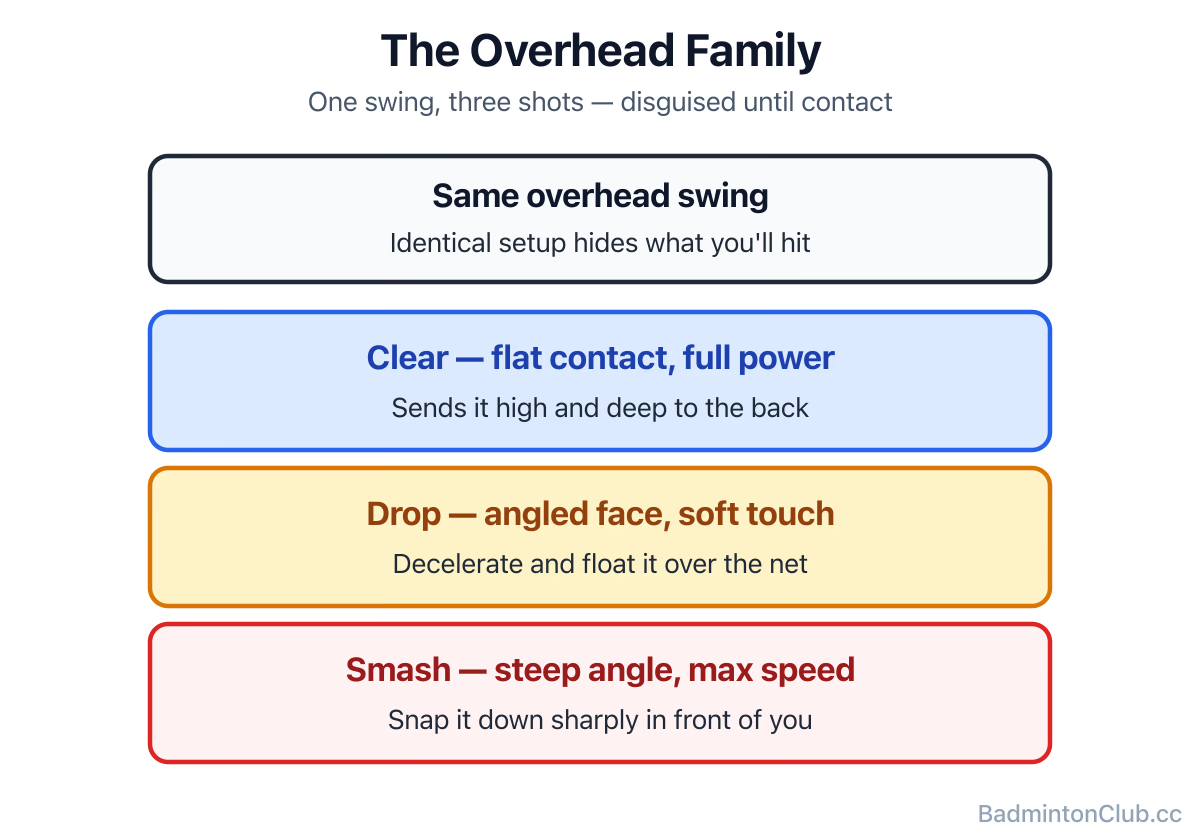
Badminton has roughly eight named shots, and they sort neatly into two groups: overhead shots hit from above your head (clear, drop, smash) and underarm shots hit low (serve, lift, net shot), with drives flat in between. The trick most lists miss: the clear, drop and smash all start from the same overhead swing — only the speed and angle of contact change, which is exactly what makes them deceptive.
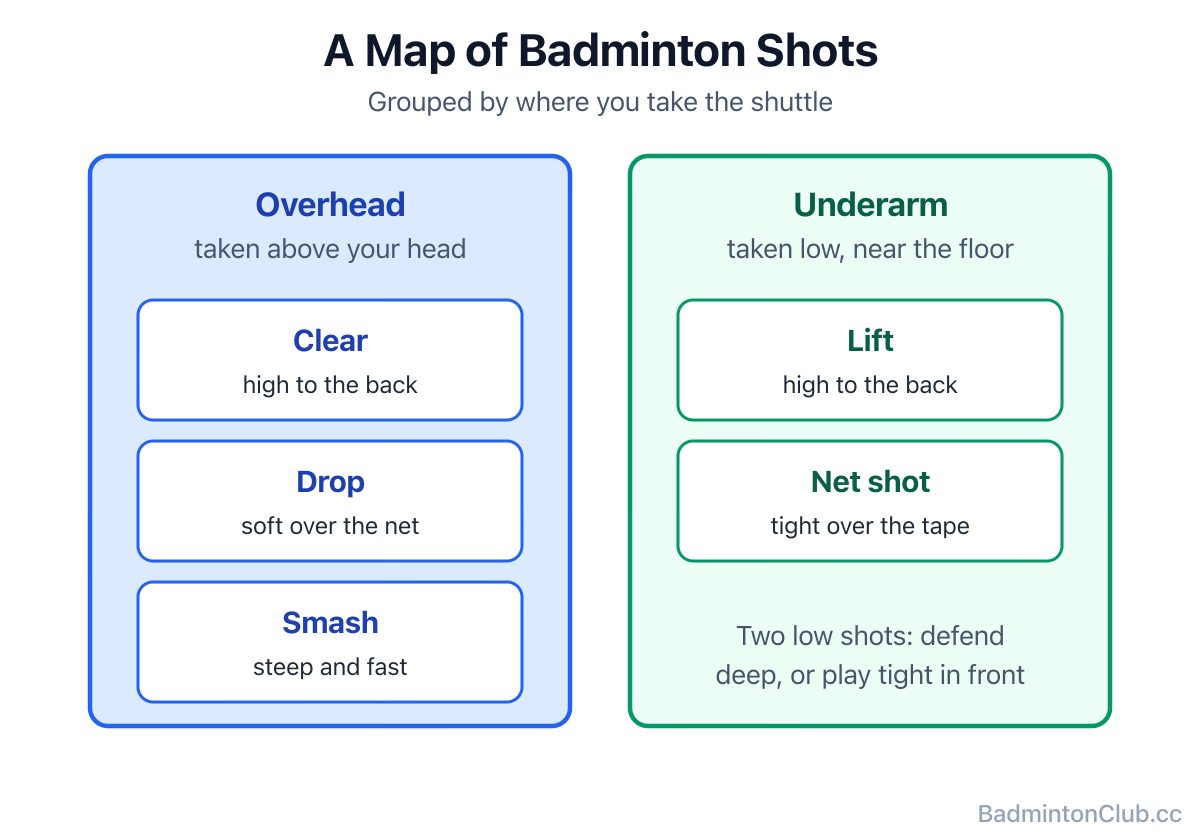
The two families: overhead and underarm
Almost every shot is defined by where you make contact:
- Overhead (shuttle above your head): the clear, drop and smash. Same preparation, three outcomes — high and deep, soft and short, or steep and fast.
- Underarm (shuttle below the net height, near the floor or net): the serve, the lift (also called the underarm clear), and the net shot.
- Flat / mid (shuttle around net height): the drive and the push — hit flat and fast, mostly in doubles.
Seeing them this way matters because deception comes from sharing a swing. If your drop looks identical to your smash until the last instant, your opponent can't react early.
The overhead shots (clear, drop, smash)
- Clear — hit high and deep to the opponent's back court. Your defensive reset and the first overhead shot to learn. Full guide: the clear.
- Drop — hit softly so it falls just over the net. Moves your opponent forward and opens the back. See the drop.
- Smash — hit hard and steeply downward, the main attacking shot. See how to smash.
The underarm and flat shots (serve, lift, net, drive)
- Serve — the underhand shot that starts every rally; strict rules apply. See how to serve.
- Net shot — a soft tap played close to the net so the shuttle tumbles just over. See the net shot.
- Lift — an underarm clear sending a low shuttle high to the back, buying you time to recover.
- Drive — a flat, fast shot hit roughly horizontally, the bread-and-butter of doubles midcourt exchanges (the drive shot has its own guide in this series).
Attacking, defending or neutral — the way to actually choose
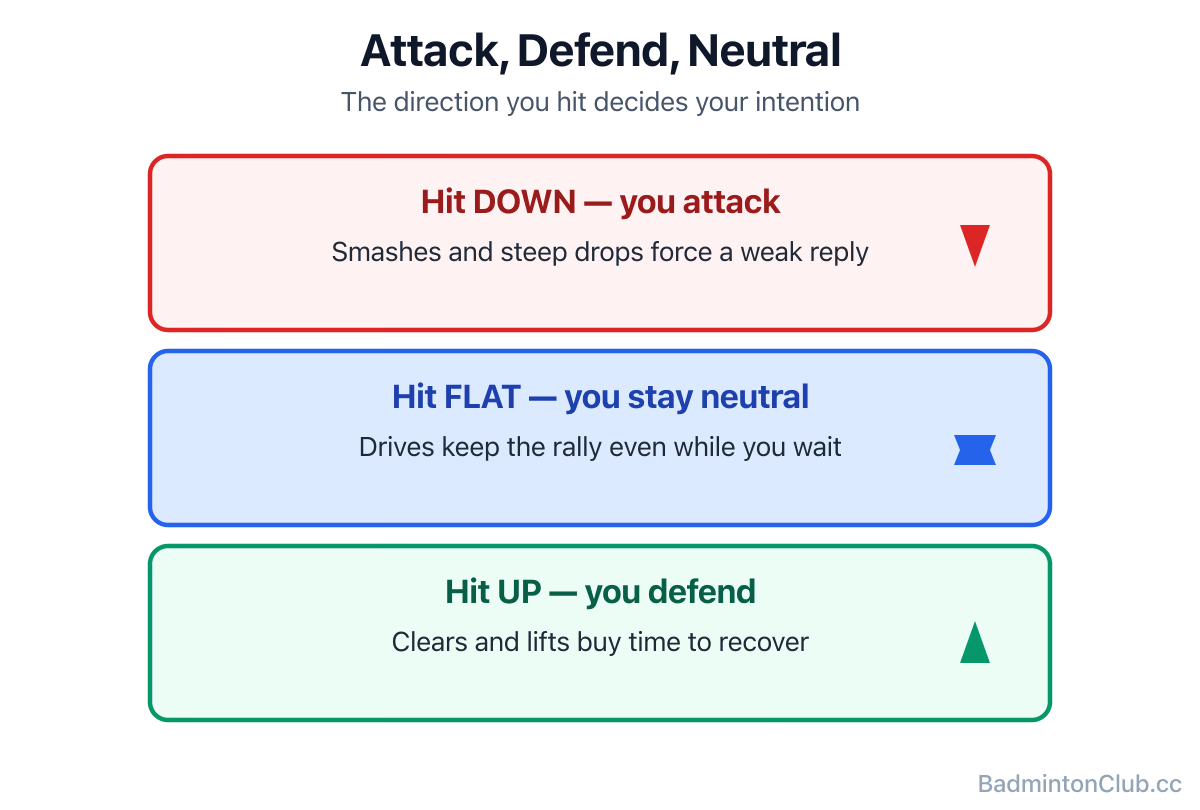
Here's the framing that helped me most as a beginner, and it's not on most "list of shots" pages: don't memorise eight shots, memorise three intentions. Are you attacking (hitting down — smash, net kill, steep drop), defending (hitting up — lift, block, defensive clear), or neutral (hitting flat — drive, push, fast drop)? Whenever you hit up, you've given the attack away; whenever you hit down, you've taken it. Good players obsess over staying off the "hitting up" shots. Once you think in attack/defend/neutral, shot selection stops being a memory test and becomes a simple question: can I take the shuttle early enough to hit it flat or down?
Quick reference: shot, trajectory, when
- Clear: high to back — reset, buy time, push them deep.
- Drop: soft over net — bring them forward, open the court.
- Smash: steep and fast — finish when the shuttle sits up.
- Net shot: tumbling over net — force a weak lift.
- Drive: flat and fast — doubles midcourt duels.
- Lift: low to high — defend, escape a tight net.
- Serve: underhand start — low in doubles, high or low in singles.
The shot that doesn't have a name but you'll use constantly
Every shot classification leaves out the one you'll actually hit most in a rally as a beginner: the "panic block" — a defensive reaction where you stick out your racket and somehow the shuttle pops back over. It has no formal name, no diagram in coaching manuals, and you'll never drill it. But watch any beginner game and it's everywhere. The interesting thing about the panic block is that it's actually a valid defensive tool if you learn to control it — a soft block that lands short at the net can neutralise an attack just as well as a technically perfect lift. The pros call it a "block return" and it's absolutely a real shot at every level, just dressed up with better footwork and intention. So if you find yourself fending off smashes with a surprised racket reflex, you're not doing it wrong — you're doing it instinctively. The next step is to add intent to that instinct and aim your block somewhere useful rather than just surviving.
FAQ
- Q: What are the basic shots in badminton? Serve, clear, drop, smash, net shot and drive. The clear, drop and smash are overhead; the serve, lift and net shot are underarm; the drive is flat.
- Q: How many types of shots are there in badminton? Around eight commonly named shots, but they group into three families — overhead, underarm and flat — which makes them far easier to learn than a list of eight.
- Q: What is the difference between a clear and a lift? Both send the shuttle high to the back, but a clear is hit overhead (from above your head) and a lift is hit underarm (from down low). Same destination, opposite contact points.
- Q: Which badminton shot should I learn first? The clear. It's the foundational overhead shot, teaches you the overhead swing the drop and smash also use, and is your reset when you're in trouble.
- Q: What makes a shot deceptive? Sharing a swing. If your drop, clear and smash all look identical until contact, the opponent can't read which is coming — that's deception, and it beats raw power.
- Q: What's the hardest shot for beginners? The backhand clear, because it needs a good grip and sharp forearm rotation. Most beginners should lift or move around their backhand until the technique is solid.
A clear map of every badminton shot by name and trajectory — serve, clear, drop, smash, drive, net shot, lift and block — and exactly when each one is the right choice. Instead of a flat list of definitions, this groups the shots the way they actually work on court (overhead vs underarm, attacking vs defending) so you can see why a drop and a smash come from the same swing, and pick the right shot under pressure.