How to Smash in Badminton: Power, Technique and When to Actually Use It
8 June 2026 · Badminton Fans
A smash is a powerful overhead shot hit steeply downward to end a rally. The power comes from racket-head speed — generated by forearm rotation (pronation) and a relaxed wrist snap — not from swinging harder with your arm. It's the most exciting shot in badminton and, for a beginner, the most overused. Learn the technique, but learn the timing even more carefully.
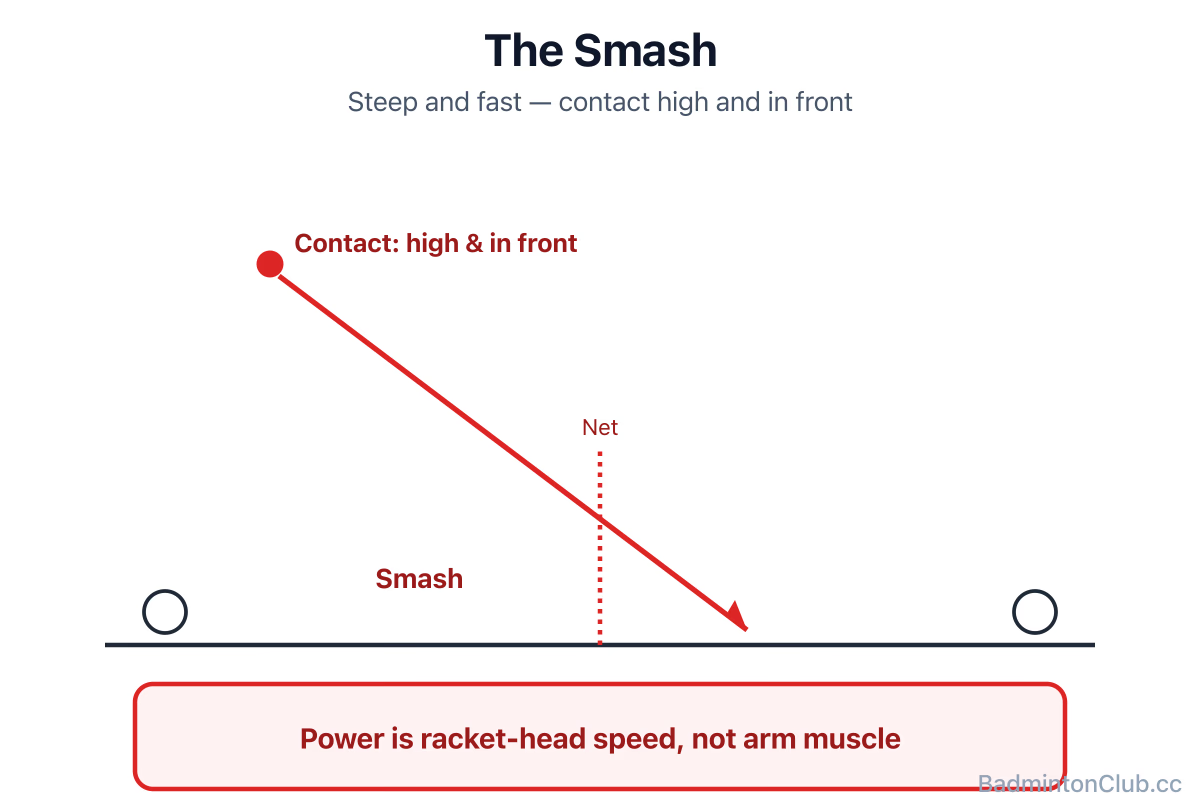
Where the power really comes from
Beginners think the smash is an arm-strength shot. It isn't. The record smashes — Tan Boon Heong's 493 km/h back in 2013, and Satwiksairaj Rankireddy's 565 km/h in April 2023 (the official Guinness World Record for the fastest badminton hit) — come from a whip-like kinetic chain: legs, hip rotation, shoulder, then a sharp forearm pronation and wrist snap at the very last instant. The racket head accelerates like the tip of a cracked whip. A relaxed grip that tightens only at contact produces far more speed than a clenched fist and a muscled arm. In a real match, even pros smash mostly in the 250–420 km/h range — control matters more than the headline number.
The technique, step by step
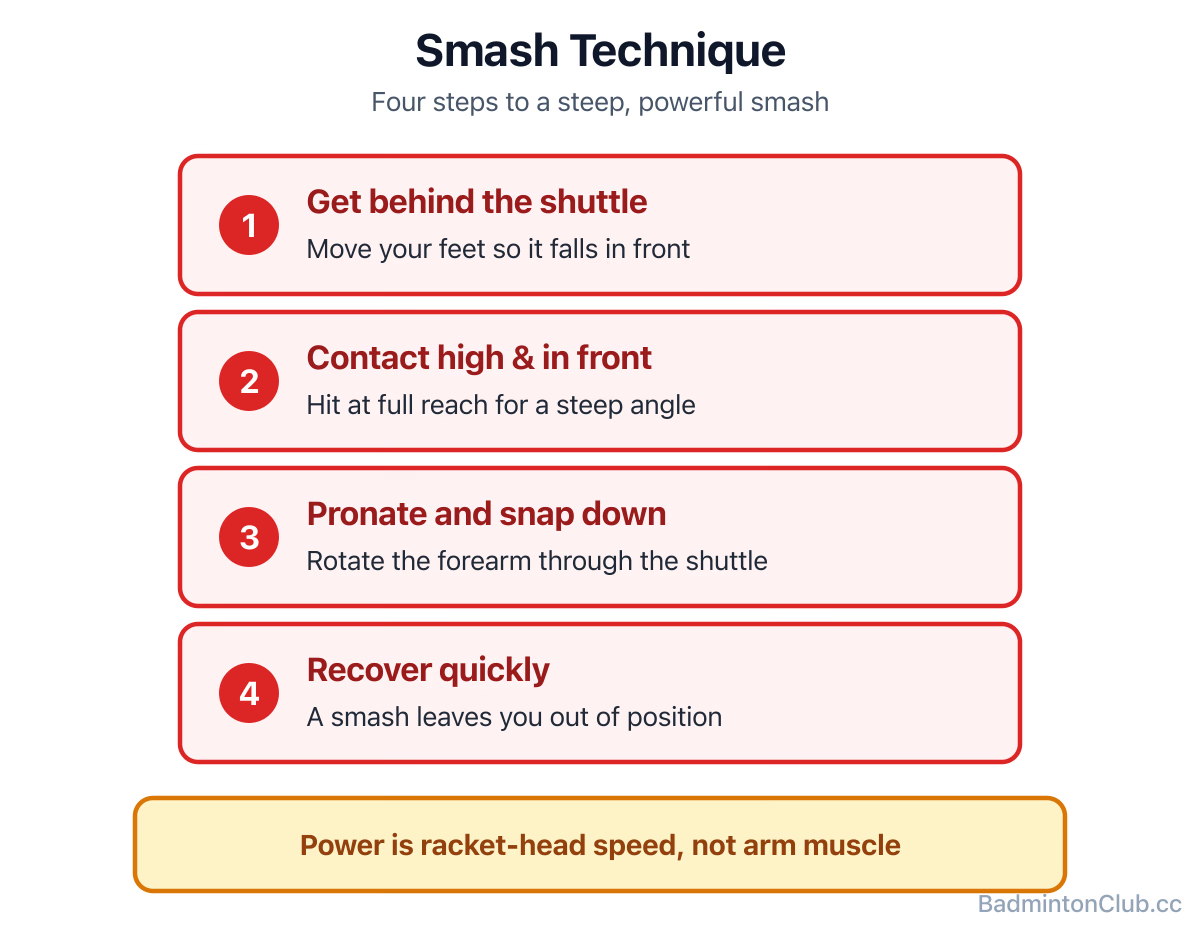
- Get behind the shuttle early — you smash from a balanced position, not while falling backwards.
- Side-on, racket cocked, non-racket arm up for balance.
- Contact the shuttle high and well in front of you, so the angle is steep and downward.
- Pronate — rotate the forearm sharply and snap the wrist through contact.
- Recover immediately; a smash that's returned leaves you committed.
When NOT to smash (the part most guides skip)
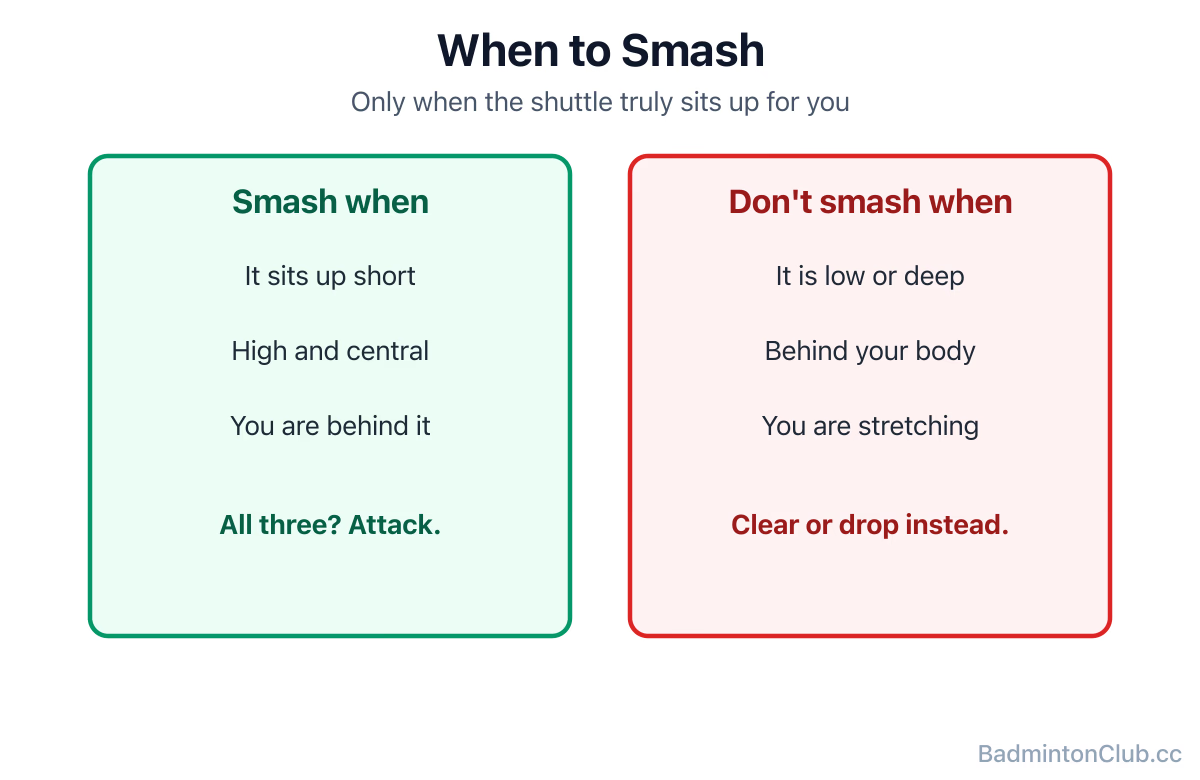
This is the most useful thing in this article. Do not smash when: you're behind the shuttle and off-balance, the shuttle is below net height, you're deep in the back court (the angle is too flat and it just gets blocked), or you're tired and reaching. A smash from a bad position is a slow, flat shot that a calm opponent blocks for a winner, and now you're stranded out of position.
My honest take after watching countless beginner games: the smash loses more points than it wins until you can control it. The shuttle has to sit up for you — short, high, central — and you have to be behind it and balanced. If those two boxes aren't ticked, clear or drop instead. The best beginner attacking habit isn't a harder smash; it's the patience to wait for the smash that's actually on.
Jump smash vs standing smash
The standing smash is the one to learn — feet planted, full technique, repeatable. The jump smash adds height and a steeper angle by leaping, but it's an advanced move that needs timing and core strength; attempting it early just ruins your balance. Get a reliable standing smash first; the jump is a finishing touch, not a foundation.
A smash drill
Have a partner feed you a high, short lift to the mid-court. Smash it down, aiming for the sidelines or straight at the opponent's body (a surprisingly effective target). Don't smash flat-out — smash at about 80% with good technique and watch your accuracy and consistency climb. Speed without placement is just a warm-up for their block.
The one smash target nobody mentions
Everyone talks about smashing down the lines or into the body, but there's a third target that's devastating at every level: the cross-court smash into the deep corner of the tramline. It's a harder shot — requires precise angling — but it pulls your opponent away from centre and opens up the entire court for your next shot. The reason beginners never aim there is that it feels risky; the tramlines are narrow and you're hitting across your body. But in practice, a cross-court smash that lands anywhere in the back tramline zone is almost impossible to return aggressively because the opponent has to cover the whole diagonal. If you have a solid straight-down-the-line smash and want to add a second option, this is the one. Use it when your opponent is leaning toward the centre expecting a straight smash. The extra few metres they have to cover often turns a blockable smash into a clean winner.
FAQ
- Q: How do you smash in badminton? Get behind the shuttle, contact it high and in front, and snap downward using sharp forearm pronation and a relaxed wrist — not arm muscle. Recover immediately afterwards.
- Q: How do I smash harder in badminton? Improve your technique, not your strength: a relaxed grip, full forearm rotation, contact high and in front, and a whip-like kinetic chain from legs through shoulder to wrist. Racket-head speed beats brute force.
- Q: When should I smash? Only when the shuttle sits up short, high and central, and you're behind it and balanced. From deep court or off-balance, a clear or drop is the smarter shot.
- Q: Why does my smash keep getting returned? Usually because it's hit from too deep or too flat, so it lacks downward angle and gives the opponent time. Take it earlier and higher, and pick better moments to attack.
- Q: Should beginners learn the jump smash? Not at first. Master a balanced standing smash — it's repeatable and teaches the technique. The jump smash is an advanced refinement that needs timing and core strength.
- Q: How fast is a badminton smash? Lab records reach 493–565 km/h, but in-match smashes are typically 250–420 km/h. For a beginner, accuracy at 80% effort beats an uncontrolled full-power swing every time.
The smash is badminton's knockout punch — a steep, fast downward shot that ends rallies — but power comes from technique, not muscle. This guide breaks down the jump and standing smash, the forearm pronation that generates real racket-head speed, where to aim, and the part most guides skip: when NOT to smash, because a mistimed smash from the wrong position loses more points than it wins for a beginner.