How to Serve in Badminton: Legal Rules, Low and High Serves, and Common Faults
8 June 2026 · Badminton Fans
A legal badminton serve is hit underhand, with the whole shuttle struck below 1.15 m from the floor, both feet stationary on the court, and the shuttle sent diagonally into the opposite service court. That 1.15 m fixed-height rule is the current BWF law — it replaced the old, subjective "below the lowest rib" and "racket pointing down" rules. Master a low serve that just skims the net and you remove the single biggest source of free points a beginner gives away.
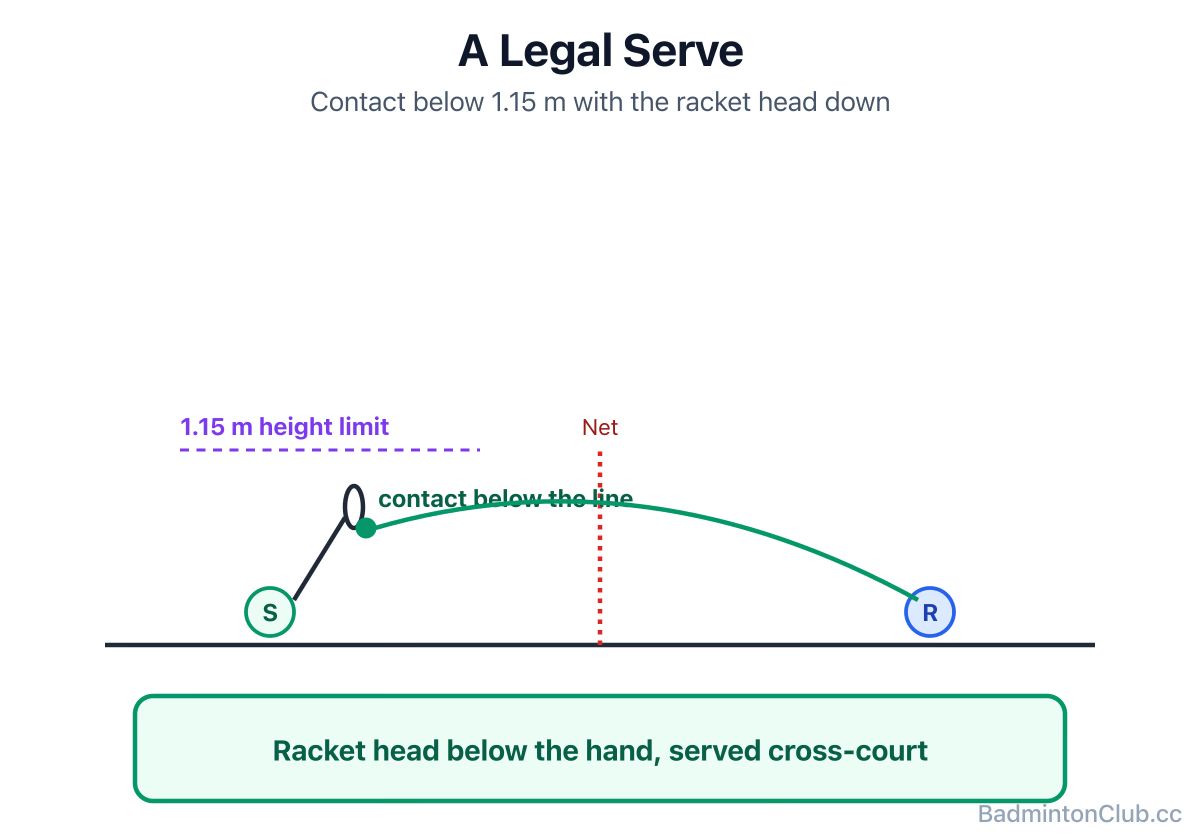
The rules of a legal serve
Since 2018 the BWF uses a fixed-height service law: the whole shuttle must be below 1.15 m above the court surface at the instant the racket strikes it. That single number replaced two older, judgement-call rules — the "below the lowest rib" height and the "racket shaft pointing downward" requirement — both of which are gone from the current high-level law. On top of the height rule:
- The serve must be underhand — you hit the base of the shuttle from below in one forward motion, not overhand.
- Both feet stay in contact with the floor, inside your service court, and stationary until contact.
- The serve goes diagonally, cross-court, into the opposite service box.
- You serve from the right when your score is even, the left when it's odd.
Get these right and a service judge has nothing to call. One wrinkle worth knowing: plenty of clubs don't have the 1.15 m measuring posts, so they still judge serves by the old waist-height eye-test — if someone calls your serve "too high" at a club, that's the rule they're using, not the BWF posts.
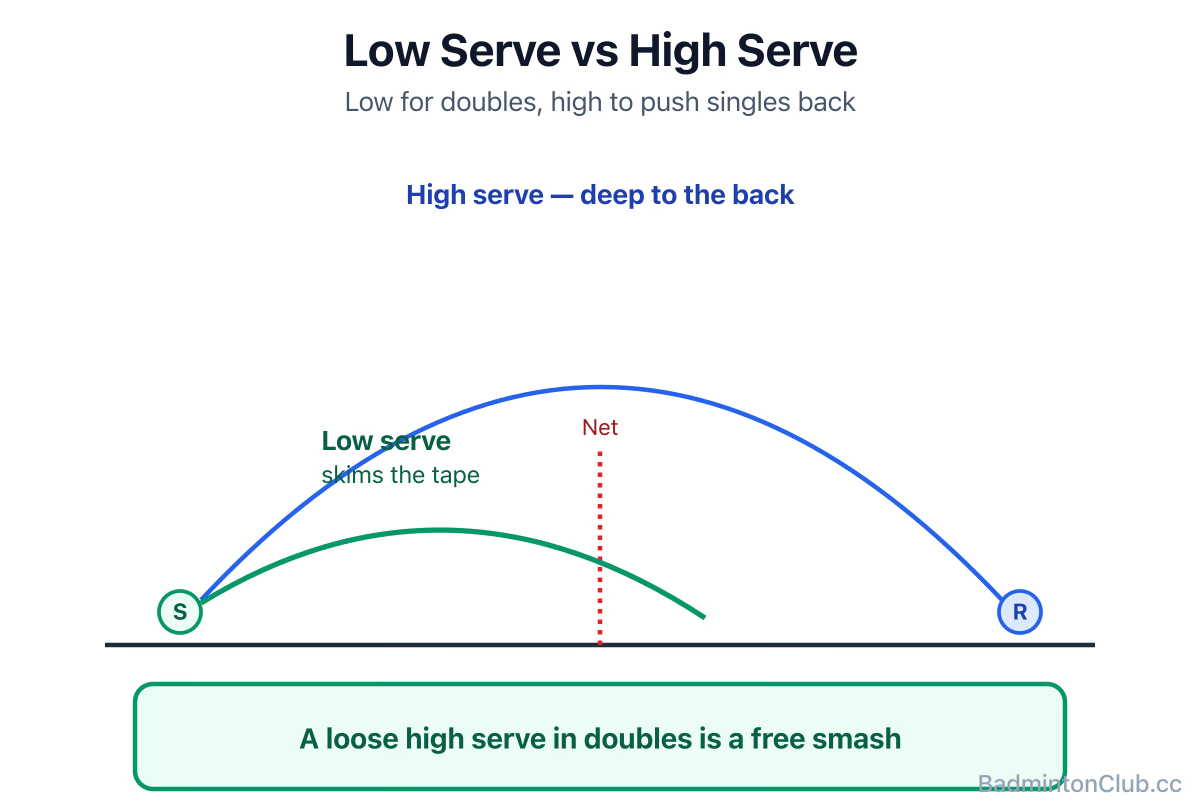
Low serve vs high serve
- Low serve — the shuttle skims just over the net and drops onto the short service line. This is the default in doubles and increasingly in singles, because it gives your opponent nothing to attack. A good low serve is flat, tight to the net, and lands early.
- High serve — a deep, high serve that drops near the back service line. Used mainly in singles to push your opponent right back. Risky in doubles: it's a free smash.
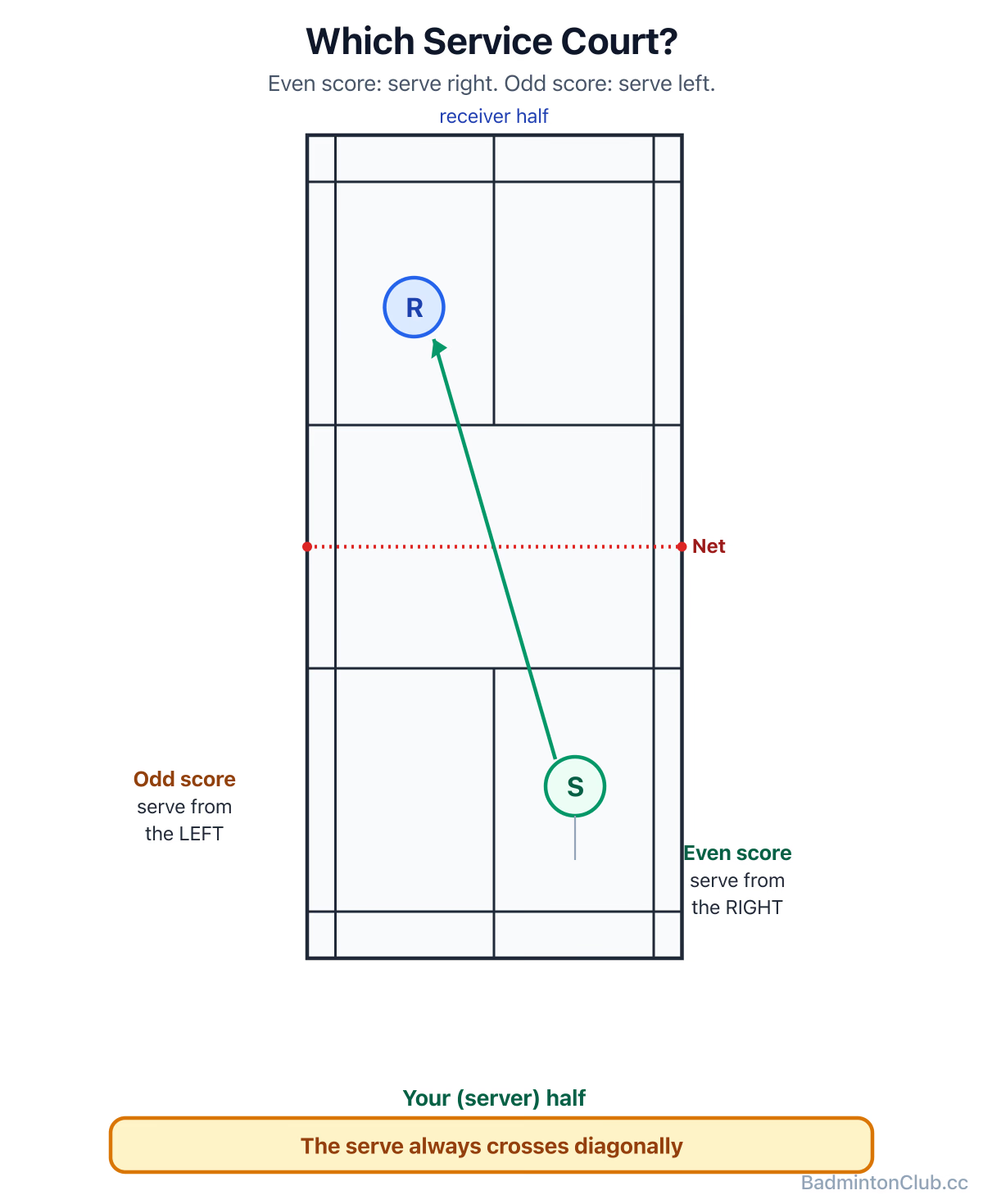
Where to stand and where it goes
Your score decides your box. Even score → serve from the right service court; odd score → from the left. The serve always crosses diagonally to the receiver standing opposite. Beginners constantly stand in the wrong box after a few points — glance at the score, and if it's even you're on the right.
The serve faults nobody explains
Here's what actually gets called, from someone who's both served faults and judged them. The classic beginner fault isn't height — it's lifting a foot or shuffling before contact (a "moving foot" fault). The second is the "too high" contact, easy to do when you panic and scoop. The third, weirdly common, is serving before the receiver is ready — technically your point, but at a friendly club it just annoys everyone, so wait half a second. My honest advice: build one rock-solid low serve and use it 90% of the time. Variety in serving is overrated for beginners; consistency wins far more points than a clever flick you mishit one time in three.
A simple serving drill
Put a target (a shoe, a cone) on the short service line near the centre. Serve 20 low serves at it, aiming to clip the net tape and land on the line. Count how many land in. Beat your score next session. Ten minutes of this, twice a week, and your serve becomes a weapon instead of a liability.
The serve is a conversation
Here's a way to think about serving that changes how you practise: the serve is not a delivery, it's the first move of a negotiation. A low serve says "I dare you to lift, because I'm ready to attack the reply." A high serve says "I'm giving you the attack and trusting my defence." The best servers don't have the most consistent serve — they have the most varied one, with a flick serve lurking that keeps the opponent from leaning in too early. For a beginner, consistency is the priority; but as soon as you have a reliable low serve, add a flick (a slightly higher, faster serve that goes deeper) as a change-up. Not to use often — maybe twice a night — but the threat of it keeps the receiver honest and stops them from attacking every serve. A serve with one predictable speed is a serve that any decent opponent will learn to punish by the second game.
FAQ
- Q: What are the rules for serving in badminton? Underhand, the whole shuttle below 1.15 m at contact, both feet still and inside your box, served diagonally into the opposite service court. Even score serves from the right, odd from the left. (The old "racket must point downward" rule was dropped when the 1.15 m height rule came in.)
- Q: How high can you serve in badminton? The whole shuttle must be below 1.15 m from the floor at the instant you hit it — a fixed height introduced by the BWF in 2018 to replace the old, subjective "below the lowest rib" rule.
- Q: What is the difference between a low and high serve? A low serve skims the net and lands at the short service line (default in doubles); a high serve floats deep to the back (used in singles to push opponents back).
- Q: Can you serve overhand in badminton? No. The serve must be underhand, struck with the whole shuttle below 1.15 m in one forward motion. An overhand serve is an automatic fault.
- Q: Which service court do I serve from? Look at your score: even (0, 2, 4…) you serve from the right court, odd (1, 3, 5…) from the left. The shuttle always goes diagonally.
- Q: Why does my serve keep getting faulted? Usually a moving foot, or contact with part of the shuttle above 1.15 m (or, at a club using the old rule, above your waist). Plant your feet, keep the whole shuttle low, and contact it in front of you in one smooth underhand swing.
Learn how to serve in badminton legally and consistently: the underhand technique, the 1.15 m height rule, where to stand by score, and when to use a low serve versus a high serve. The serve is the only shot you fully control and the easiest place for a beginner to leak points — this breaks down a legal serve step by step, the faults service judges actually call, and the low doubles serve that takes the attack away from your opponent.