The Badminton Clear Shot: How to Hit High, Deep Clears (Forehand and Backhand)
8 June 2026 · Badminton Fans
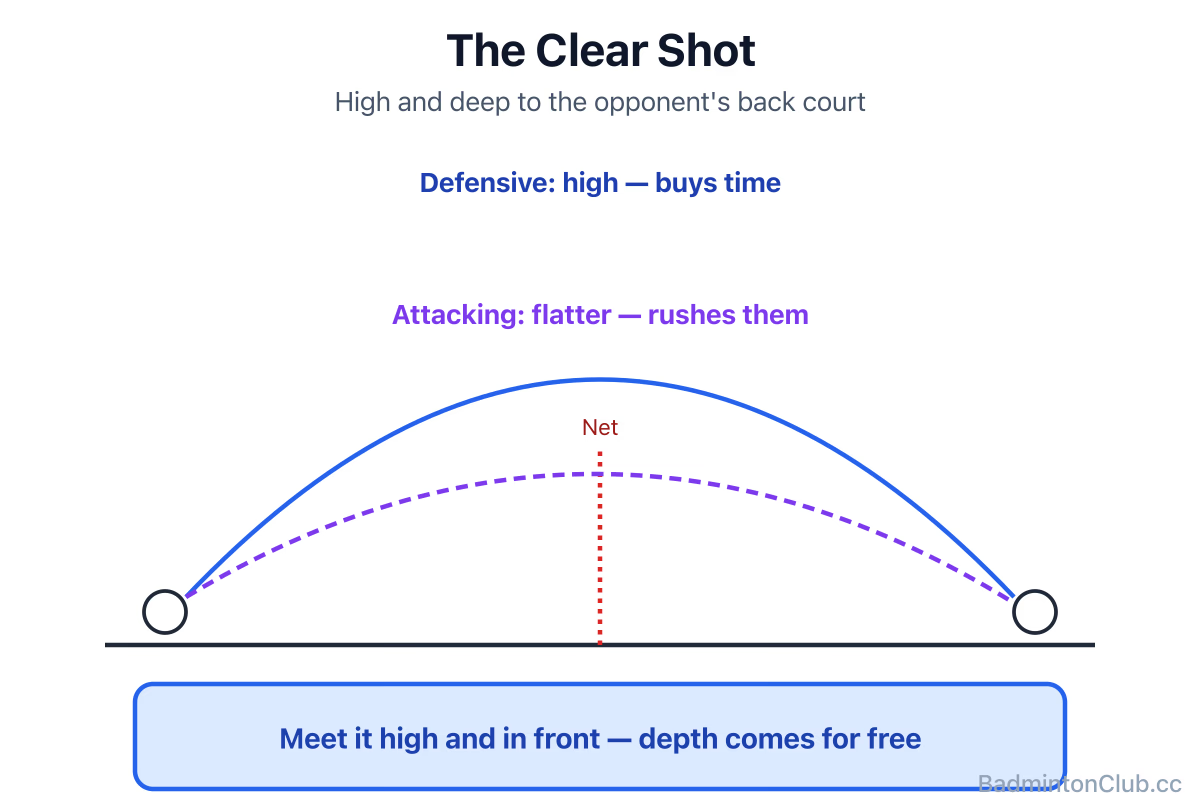
A clear is an overhead shot hit high and deep to your opponent's back court. It's the foundational badminton stroke: it resets a rally, pushes your opponent back, and buys you the split second you need to recover to the middle. There are two kinds — a high defensive clear (maximum height and depth, to gain time) and a flatter attacking clear (faster and lower, to rush a slow opponent).
Why the clear is the shot to learn first
Every overhead shot — clear, drop, smash — uses the same swing. Learn the clear and you've learned the engine that powers the other two. It's also the safest shot in the game: when you're stretched, out of position, or just need a breather, a deep clear sends the shuttle as far from your opponent as possible and gives you time to reset. Strong players clear less and attack more, but they all built on the clear first.
The technique (forehand)
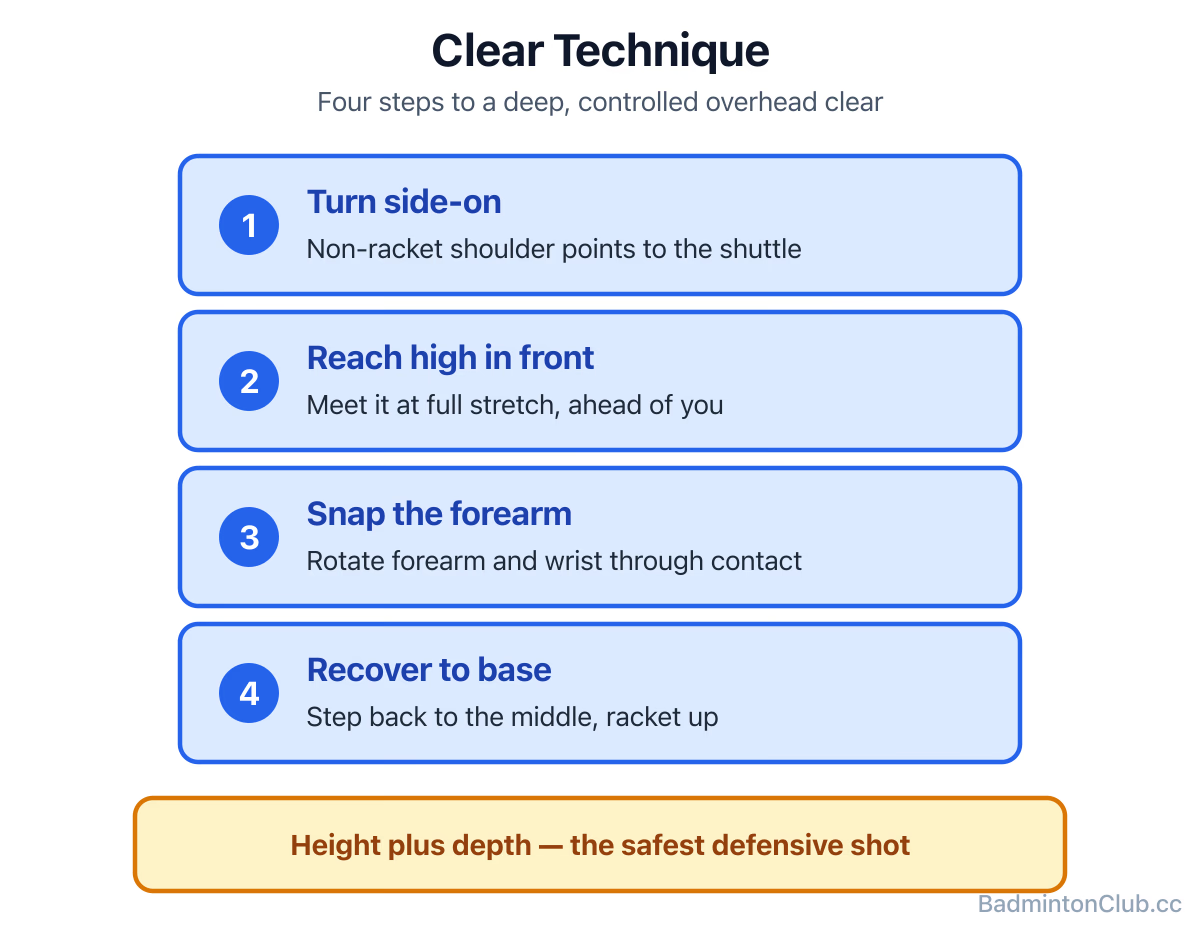
- Turn side-on, non-racket shoulder pointing at the net, racket arm cocked back.
- Reach up and meet the shuttle in front of you and high, at full stretch.
- Power comes from forearm pronation and a relaxed wrist snap at contact — not a stiff arm. Think "throw," like skimming a stone or throwing a ball.
- Follow through naturally and recover to base.
The single biggest fix for a weak clear is contact point: beginners let the shuttle drop behind or beside them. Meet it high and in front and the depth comes for free.
The backhand clear (the hard one)
The backhand clear is famously the hardest beginner shot, because it needs a proper backhand grip and a sharp forearm rotation with little arm behind it. If yours doesn't reach the back, you're not alone — most club players avoid it by rotating their feet and playing a round-the-head forehand instead, which is a perfectly good tactic. Learn the backhand clear eventually, but don't let it block your progress now.
What actually goes wrong (and the honest fix)
I've taught a lot of beginners the clear, and the problem is almost never strength — it's timing and grip tension. People squeeze the handle and swing with a locked wrist, then heave with the shoulder, and the shuttle floops to mid-court. The fix feels counterintuitive: swing softer but snap faster, and relax the grip until the instant of contact. A loose arm that whips is far more powerful than a tense arm that shoves. If your clears die at mid-court, stop adding muscle and start adding snap.
A clear drill that works
Stand at your back line, have a partner clear to you, and clear it straight back to their back line — see how many you can rally back-to-back without it landing short. Aim for 10 in a row, then 20. This trains depth, timing and stamina at once, and it's the drill that quietly makes everything else easier.
How to tell if your clear is working without looking
There's a simple auditory cue that tells you whether your clear has enough depth: the sound of the shuttle hitting the court. If it lands with a crisp, solid thud deep in the back third, your clear is good. If it lands with a shallow, soft sound near the middle, it's short. Experienced players can tell from sound alone whether their clear reached the back line, because the thud from the wood or vinyl floor changes character depending on where it lands. Practise listening rather than turning your head to watch — it's faster, and it trains you to keep your eyes on the opponent instead of checking your shot. When you hear that clean deep thud, you know you've bought yourself the time you need to reset. When you hear the mid-court sound, get ready — a good opponent is about to attack.
FAQ
- Q: What is a clear shot in badminton? An overhead shot hit high and deep to the opponent's rear court. It's used to reset a rally, push opponents back, and buy time to recover.
- Q: What is the difference between a defensive and attacking clear? A defensive clear is hit as high and deep as possible to gain time; an attacking clear is flatter and faster to rush an out-of-position opponent. Same swing, different trajectory.
- Q: Why can't I hit the shuttle to the back on my clear? Almost always grip tension and a late contact point. Relax your grip, meet the shuttle high and in front of you, and generate power from forearm rotation rather than your arm.
- Q: Is the clear or the smash more important for beginners? The clear, by a distance. It teaches the overhead swing, keeps you in rallies, and is far more forgiving. Add the smash once your clear is reliable.
- Q: How do I do a backhand clear? Switch to a backhand (thumb) grip, get side-on with your back briefly to the net, and snap with sharp forearm rotation. It's the hardest beginner shot — many players play a round-the-head forehand instead.
- Q: Where should a clear land? As close to the opponent's back boundary line as you can manage without going out. Depth is what makes a clear effective; a short clear is an invitation to attack.
The clear is the first overhead shot every badminton player should master — a high, deep shot to the opponent's back court that resets the rally and buys you time. This guide covers the forehand and backhand clear, the difference between attacking and defensive clears, the forearm-rotation technique that gets depth without muscling it, and the drills to make your clear reliably reach the back line.