The Badminton Drop Shot: How to Play Slow and Fast Drops That Win Rallies
8 June 2026 · Badminton Fans
A drop shot is an overhead shot hit gently so the shuttle drops just over the net into the front of your opponent's court. Its job is to move your opponent forward, the opposite direction to a clear, and stretch them out of position. Because it's played with the same overhead swing as the clear and smash, a good drop is deceptive — the opponent can't tell which is coming until contact.
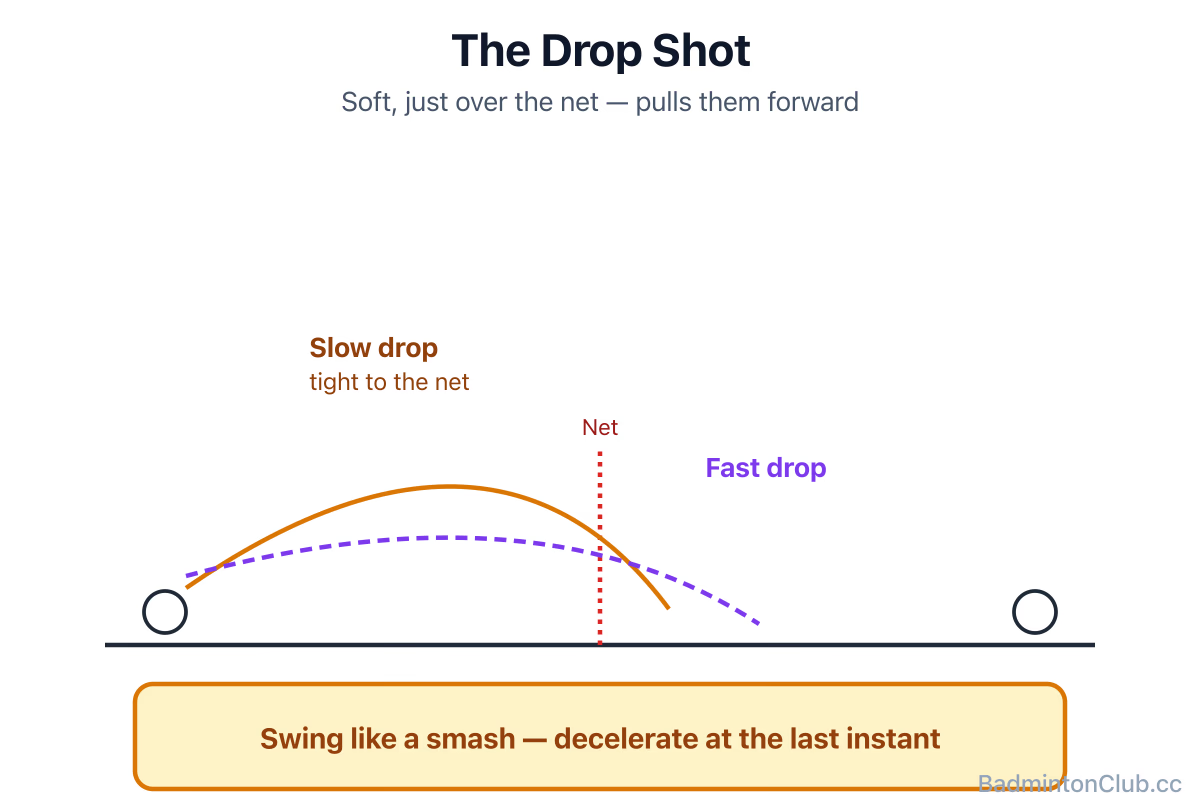
Slow drop vs fast drop
- Slow drop — floated softly so it tumbles down very close to the net. Hard to reach, but slower, giving a fast opponent time to get there. Best when your opponent is deep or slow.
- Fast drop (or "fast/half drop") — hit firmer so it travels quicker and steeper, landing around the front service line. Less perfect placement, but it rushes the opponent and is harder to attack on the return.
The slow drop is about placement; the fast drop is about time pressure. Both have their moment.
The technique
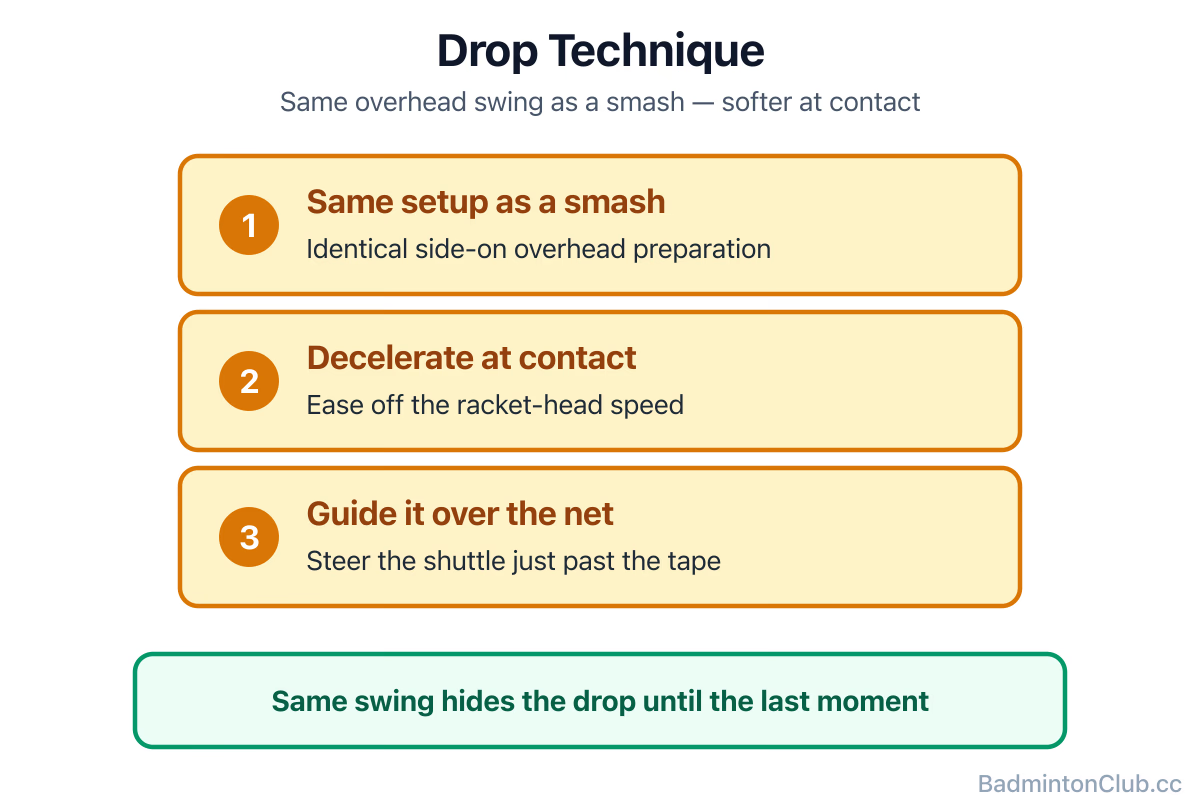
The drop uses the same preparation as your clear and smash — that's the whole point. Get side-on, reach up, meet the shuttle high and in front. The difference is at contact: instead of a full snap, you slow the racket head and gently steer the shuttle downward, almost a "tap" or guide rather than a hit. Keep the swing looking like a smash for as long as possible and only decelerate at the last instant.
Where the drop fits in your attack
The drop shines as part of a pattern. Clear them to the back, then drop short — now they're sprinting forward and the back is wide open. Or drop, force a weak net reply or lift, then smash the lift. A drop on its own is fine; a drop as the first move of a sequence wins rallies. Think of it as a question that forces a predictable answer you've already planned to punish.
The mistake that gives it away
Two things ruin a beginner's drop, and they're related. First, slowing the whole swing — you wind up gently and telegraph it, so the opponent reads "drop" from across the court and is already moving. The fix: swing fast, decelerate late. Second, hitting it too high and loose, so it sits up over the net as a gift to be killed. A drop that floats waist-high above the tape isn't a drop, it's a free point for them. Tight and tumbling, or firm and steep — never lazy and floaty in between.
A drop drill
Have a partner feed you clears; you play only drops, alternating slow (aim to land within a racket's length of the net) and fast (aim for the front service line). Score yourself out of 10 for landing in the front third. Then add deception: make every drop start like a smash. Placement first, disguise second.
The drop is a trust exercise
Playing a good drop requires trusting that your opponent is exactly where you think they are. The natural beginner instinct is to play a drop, immediately panic that it's not tight enough, and back away before it even lands. You see this all the time: a decent drop that should force the opponent to scramble forward gets wasted because the hitter starts retreating before the shuttle even crosses the net, abandoning the advantage. Play the drop and then stay. Hold your ground at the front of the court for half a second — not to admire the shot, but to cover the tight net reply that's the most likely return. If you drop and sprint backward, you've created a huge gap at the net for them to exploit. The best drop players drop, pause, and only then recover — because they trust the placement they just executed.
FAQ
- Q: What is a drop shot in badminton? A soft overhead shot that drops just over the net into the opponent's forecourt, used to pull them forward and open up the back of the court.
- Q: What is the difference between a slow and fast drop? A slow drop floats and lands very tight to the net; a fast drop is hit firmer, travels quicker and steeper, and lands around the front service line. Slow is about placement, fast about time pressure.
- Q: How do I make my drop shot deceptive? Use exactly the same swing as your clear and smash, and only decelerate at the last instant. If your preparation looks identical, the opponent can't read the drop early.
- Q: Why does my drop shot float up and get killed? You're contacting it too high and too softly, leaving it sitting above the net. Hit it earlier and steer it downward so it falls quickly, tight to the net.
- Q: When should I play a drop shot? When your opponent is deep, slow to the net, or expecting a clear or smash. It's especially strong right after a deep clear, when they're pinned at the back.
- Q: Is the drop or the smash harder to master? The slow drop is arguably harder — it demands touch and disguise, not power. Many players can smash long before they can drop tight to the net consistently.
A drop shot is a soft overhead shot that falls just over the net, dragging your opponent forward and opening up the back of their court. This guide explains slow drops versus fast drops, the deception that comes from hitting them with your smash and clear swing, the gentle technique that keeps them tight to the net, and how to use the drop as part of a clear-drop-smash attacking pattern.