Is Badminton Good Exercise? What a Game Really Does for Your Heart, Body and Fitness
8 June 2026 · Badminton Fans
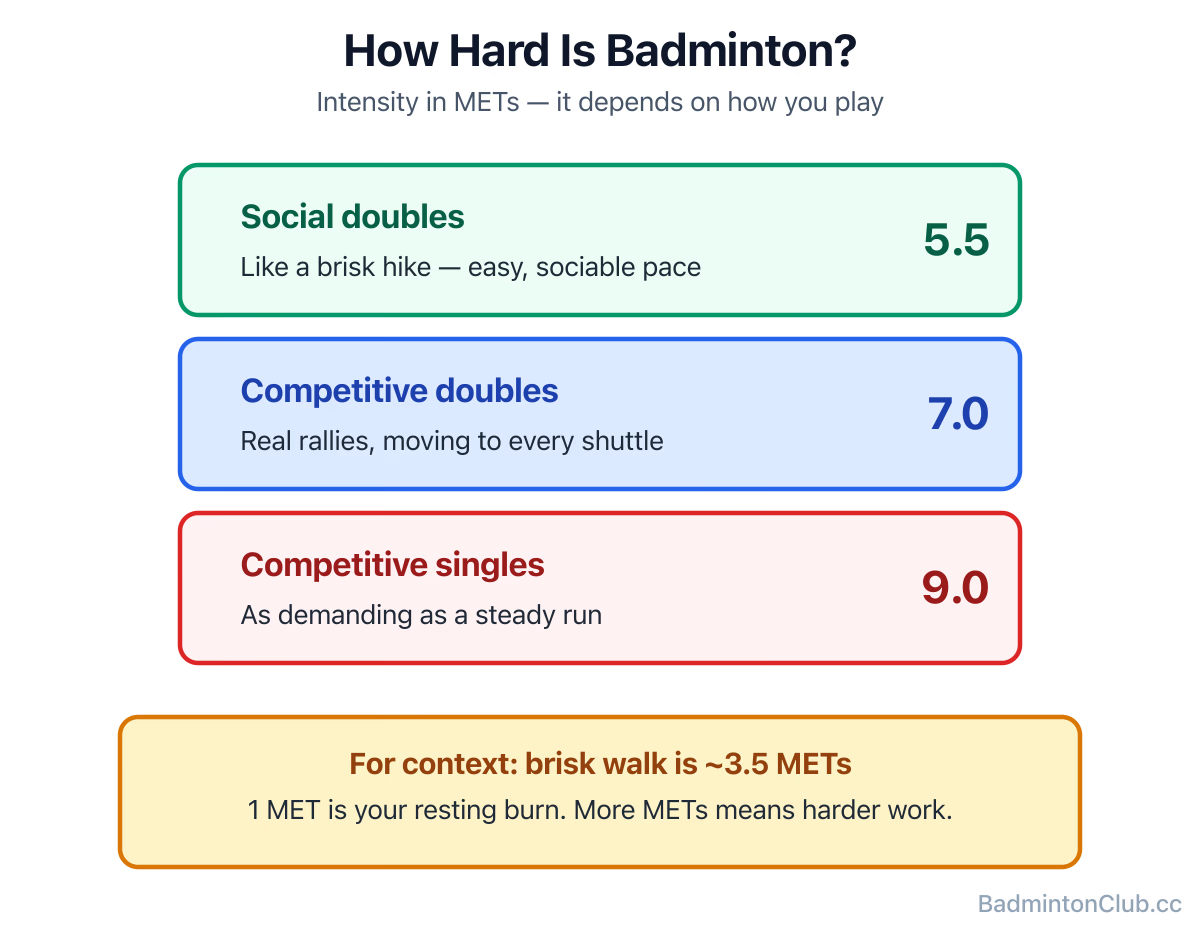
Yes — badminton is genuinely good exercise, but the answer comes with a catch the "health benefits" articles rarely mention: how good a workout it is depends almost entirely on how you play. Two people at the same club night can have wildly different experiences: one gently taps the shuttle back and forth, barely breaking a sweat; the other is lunging, sprinting, recovering, and getting a serious cardiovascular workout. The difference is movement, not swings. Social doubles runs at about 5.5 METs — similar to a brisk hike. Competitive singles can hit 9 METs, which is solidly in running territory. So the honest answer is: badminton can be as gentle or as punishing as you choose to make it.
What the science actually says
Exercise scientists measure intensity in METs — multiples of your resting energy burn. The Compendium of Physical Activities, the standard reference researchers use, pegs social badminton at about 5.5 METs, competitive play at 7.0, and competitive match play at 9.0. For context, a brisk walk is ~3.5 METs and running an 11-minute mile is ~9. So a hard singles game is, beat for beat, as demanding as a steady run — you just don't notice because you're chasing a shuttle instead of staring at a treadmill clock.
The longevity evidence is the headline, though. A large Oxford-led study (British Journal of Sports Medicine, ~80,000 adults) found that people who played racquet sports — tennis, squash and badminton grouped together — had a 47% lower risk of death from any cause and a 56% lower risk of dying from heart disease or stroke over the follow-up than people who didn't. That's an association, not a guarantee, and it lumps the three racquet sports together rather than isolating badminton. But it's a striking signal, and it's hard to wave away.
Why it works as cardio
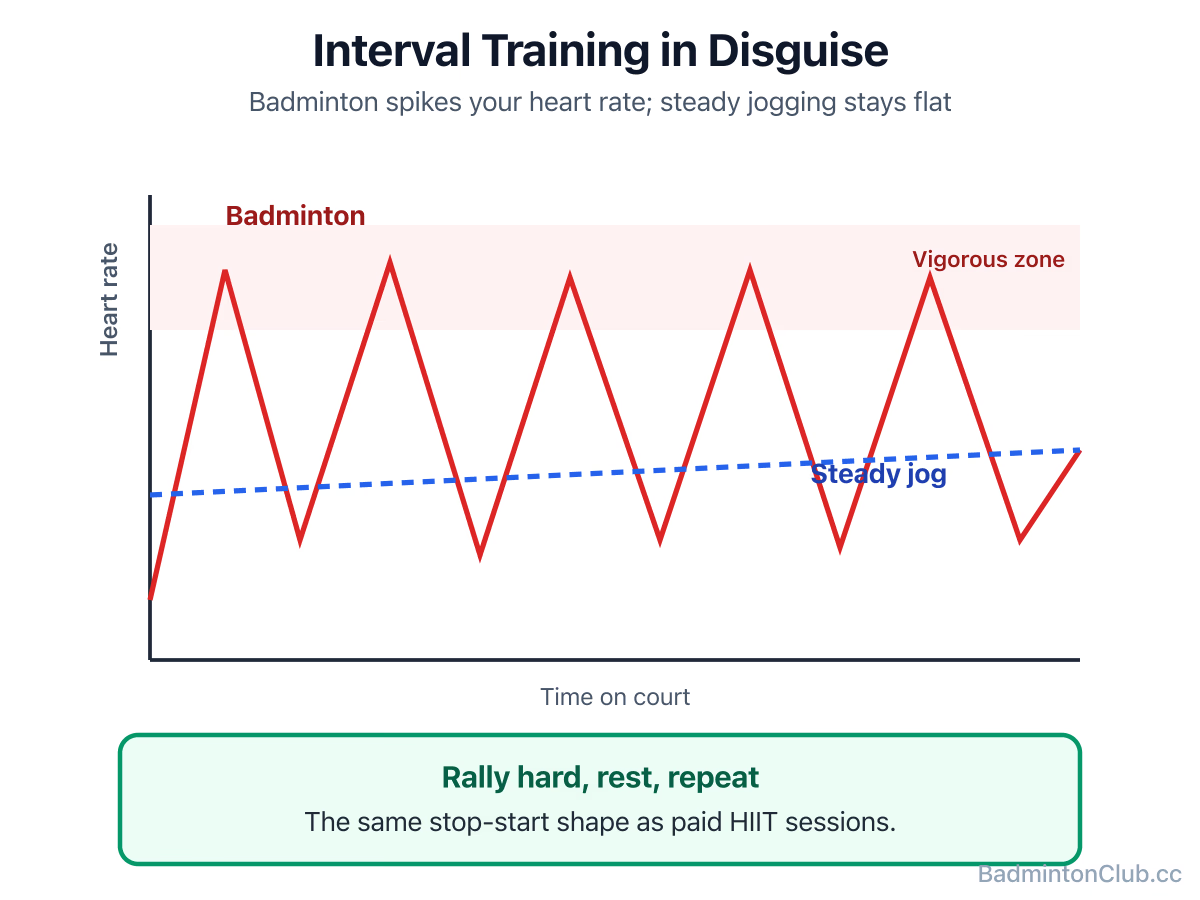
Badminton is interval training in disguise. A rally lasts a handful of seconds at near-full effort — lunge, push back, jump, twist — then there's a few seconds' break before the next serve. That stop-start pattern is exactly the shape of the HIIT sessions people pay for. Your heart rate spikes into the vigorous zone during a long rally, drops in the gaps, and climbs again. Over an hour you accumulate a lot of time with an elevated heart rate without grinding at one fixed pace.
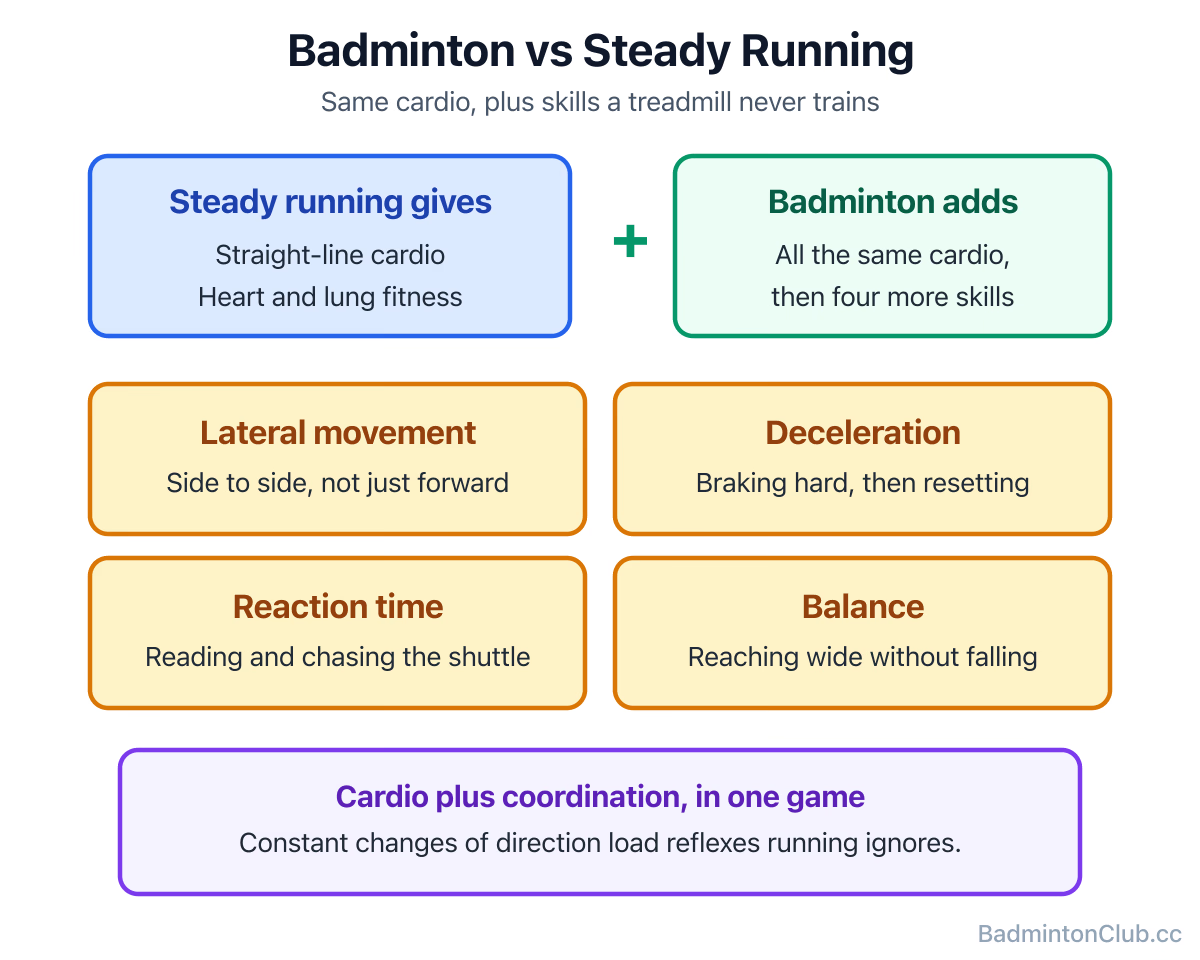
It also trains things a treadmill never touches: lateral movement, deceleration, reaction time and balance. You're constantly changing direction and braking, which loads muscles and reflexes that straight-line cardio ignores.
Social knockabout vs a real workout
Here's the honest distinction nobody likes to hear. Two people gently patting the shuttle back and forth in the park, barely moving their feet, are getting fresh air and a laugh — but it's light exercise at best. The same two people playing actual rallies, moving to the shuttle and trying to win the point, are getting a proper cardio session. The exercise lives in the footwork, not the swing. If you want badminton to count as a workout, the test is simple: are you moving to the shuttle and back to the middle every single shot, or standing still and reaching? Movers get fit; reachers get a stiff back.
The "doesn't feel like exercise" advantage
This is the part I'd argue matters most, and it's why I push badminton over the gym for people who hate the gym. The single biggest predictor of whether exercise helps you is whether you actually keep doing it. Most treadmill memberships die by March. Badminton has a built-in retention trick: it's a game, it's social, and there's always a club night to turn up to. You go because your mates are there and you want to win, and the cardiovascular workout is almost a side effect. A workout you'll do for twenty years beats a "better" one you quit in three weeks. Clubs that keep everyone moving on a fair rotation — a peg board or an app like BadmintonClub.cc — quietly help here too, because you spend the night playing rather than standing around waiting for a court.
A worked example: an hour of club doubles
Say you weigh 70 kg and play two hours of club doubles, the usual mix of rallies and standing-around between games. Harvard Health pegs general badminton at about 282 kcal an hour for a 70 kg player — a figure that already bakes in some of the downtime — so a typical two-hour night lands somewhere around 450–550 kcal once you add the active rallies and subtract the chatting. Push it to competitive singles at ~9 METs and the burn while the rally's on climbs past 600 kcal an hour. The exact figure depends on your weight and intensity; the calories guide breaks the maths down properly.
FAQ
- Q: Is badminton good exercise? Yes. Played with real movement it's a moderate-to-vigorous cardio workout (≈5.5 METs social, up to ≈9 competitive) that trains your heart, legs, reflexes and balance. The fitness comes from chasing the shuttle, not just hitting it.
- Q: Is badminton a good workout for weight loss and fitness? It's a strong one — interval-style cardio that burns roughly 280–450+ calories an hour depending on intensity and body weight, plus it builds agility and leg strength. Pair it with sensible eating for weight loss.
- Q: Is badminton cardio or strength training? Primarily cardio — specifically interval cardio. It builds some lower-body and core strength and a lot of muscular endurance, but it won't replace dedicated resistance training for raw strength.
- Q: How does badminton compare to running? Competitive badminton (~9 METs) is about as intense as a steady run, but in short bursts with rests and far more direction changes. Social badminton is gentler (~5.5 METs), closer to a brisk walk or easy cycle.
- Q: Can casual badminton still count as exercise? Light back-garden patting is low-intensity at best. To make it count, move to every shuttle and recover to the middle — the moment you're genuinely moving, it becomes real cardio.
- Q: Is badminton good for your heart? The evidence is encouraging: racquet sports as a group are linked to markedly lower cardiovascular and all-cause mortality. The interval cardio pattern is exactly what's good for heart health, though the studies show association rather than proof.
Yes — badminton is genuinely good exercise: a moderate-to-vigorous interval workout that trains your heart, legs and reflexes while barely feeling like a workout. This guide puts real numbers on it (MET values, heart-rate zones, how a doubles night compares to a gym session), separates social knockabouts from competitive singles, and explains why one big study linked racquet sports to a 47% lower risk of dying early — so you know exactly what you're getting from a game.