Calories Burned Playing Badminton: How Many per Hour by Body Weight and Intensity
8 June 2026 · Badminton Fans
The straightforward answer: a typical hour of social badminton burns roughly 250 to 340 calories for most adults. Push it to competitive singles and you're looking at 450-plus an hour. The exact number depends on your body weight and how hard you actually play — not how hard you think you're playing. Using Harvard Health's published figures, a 70 kg (155 lb) player burns about 282 calories per hour of general badminton. But that's an average that includes the time you spend picking up shuttles and standing around between points. The real burn during active rally time is higher. I'll give you the formula below so you can work out your own number, because the generic online calculators tend to be wildly optimistic.
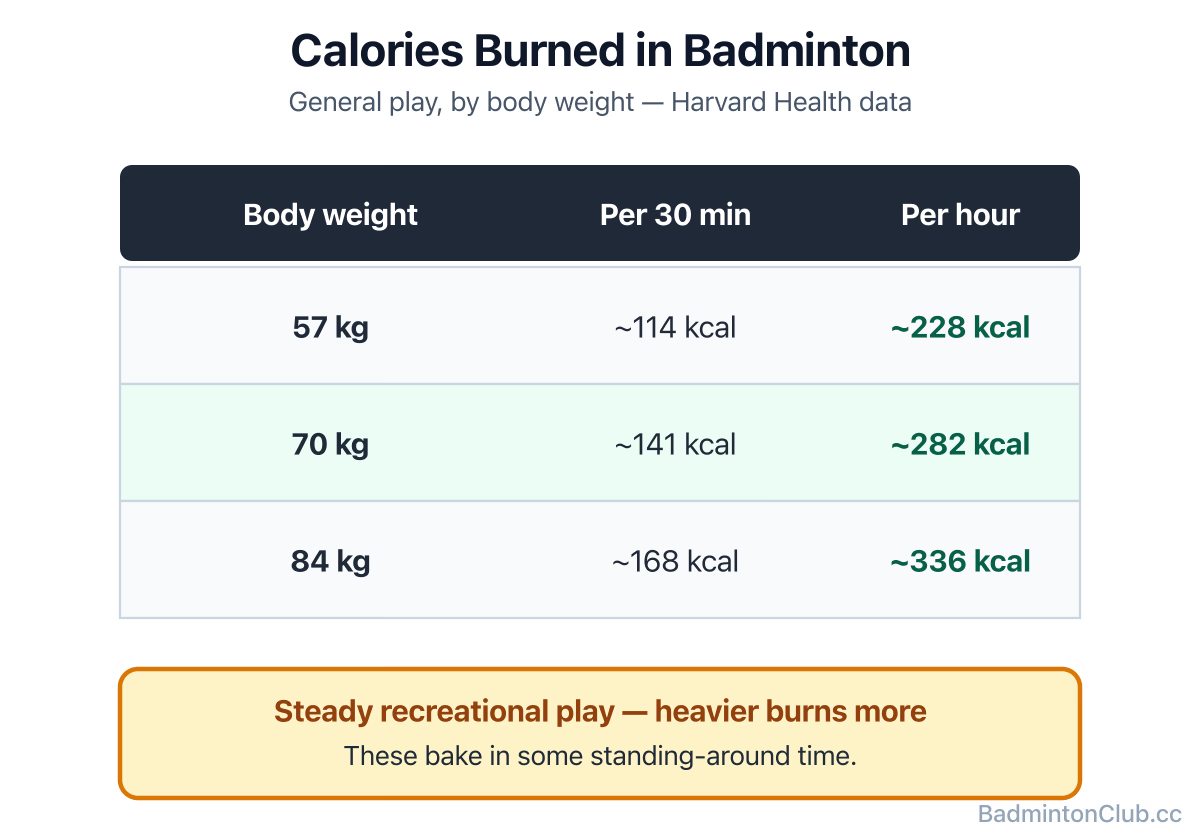
The real numbers (Harvard Health)
Harvard Medical School publishes a widely-cited table of calories burned in 30 minutes. For general badminton it lists:
- 125 lb / 57 kg: ~114 kcal per 30 min → ~228 kcal/hour
- 155 lb / 70 kg: ~141 kcal per 30 min → ~282 kcal/hour
- 185 lb / 84 kg: ~168 kcal per 30 min → ~336 kcal/hour
Those are for steady recreational play. They're real, sourced figures — not the 475–675-kcal-an-hour numbers a lot of calculator and blog sites quote for "social" badminton, which quietly assume you're sprinting flat-out the entire hour. You're not. Nobody is.
The formula (work out your own)
Calorie burn from any activity follows one clean equation:
Calories per hour = MET × your weight in kg
(One MET burns roughly 1 kcal per kg per hour.) So plug in badminton's MET value:
- Social doubles (5.5 METs): 5.5 × your kg = calories/hour. A 70 kg player: 5.5 × 70 = 385 kcal/hour of active play.
- Competitive (7.0 METs): 7.0 × 70 = 490 kcal/hour.
- Competitive singles match play (9.0 METs): 9.0 × 70 = 630 kcal/hour while the rally's on.
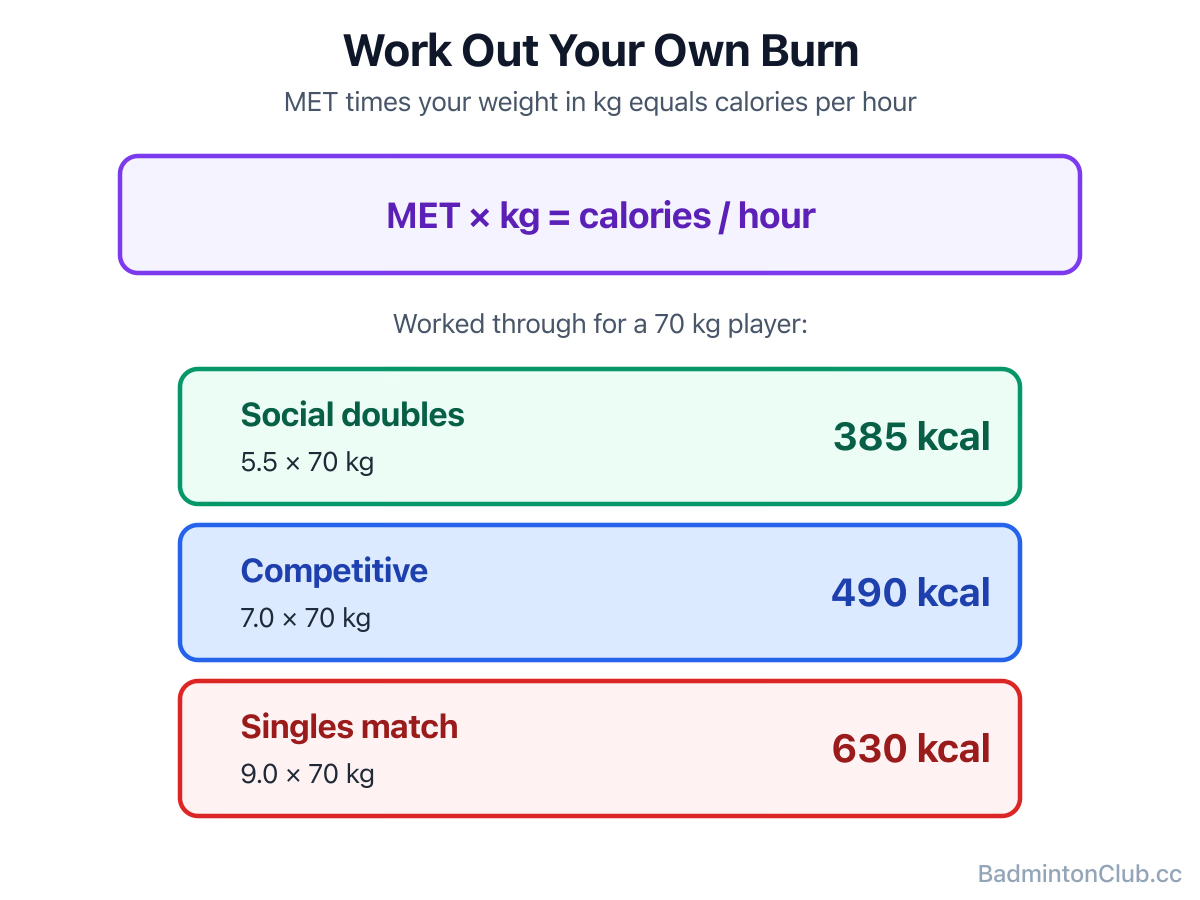
You'll notice the MET-formula numbers run higher than the Harvard table. That's the crucial distinction below.
Why the numbers disagree (active play vs court time)
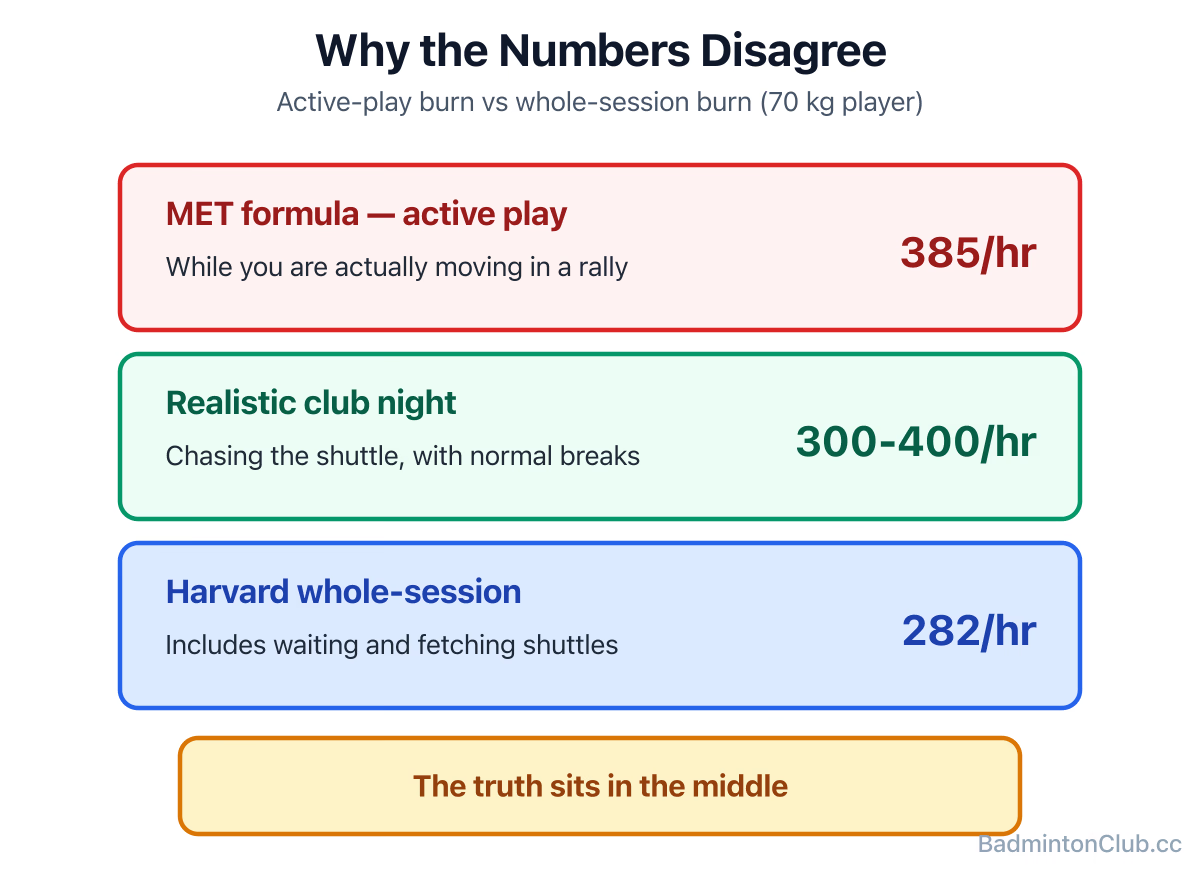
Here's the bit that trips everyone up, and it's the most useful thing on this page. The MET formula gives the burn during active play — while you're actually moving in a rally. But in a real game you're not moving the whole time: you pick up shuttles, you wait between points, you stand around between games waiting to peg back on. Harvard's table effectively builds in some of that downtime, which is why its 282 kcal/hour is lower than the formula's 385. So:
- Want the theoretical max for genuinely continuous play? Use the MET formula.
- Want a realistic club-night estimate? Use Harvard's ~230–340/hour, or take the MET number and knock 25–35% off for rest time.
The truth for most club doubles sits between the two: call it 300–400 calories an hour for an average adult genuinely chasing the shuttle.
A worked example: a two-hour club night
You weigh 70 kg and play a normal two-hour Tuesday — maybe 70 minutes of actual on-court time across your games, the rest spent waiting, chatting and fetching shuttles. At ~5.5 METs that's roughly 5.5 × 70 × (70/60) ≈ 450 calories of active burn, plus a bit for the low-level pottering. So a realistic figure for the whole night is around 450–550 calories — a decent chunk of a meal, not a magic fat-melting machine. Useful, sustainable, repeatable. That last word matters more than the number.
Why your watch is probably wrong
A blunt opinion from watching too many people stare at their wrists: wrist-based calorie counts for badminton are some of the least reliable numbers your watch produces. Optical heart-rate sensors struggle with the sharp, spiky intervals of racquet sports, and the watch has no idea you're doing explosive lunges versus standing still. It tends to over-count for stop-start sports by assuming sustained effort, then sometimes under-count by missing heart-rate spikes during the hardest rallies. Treat the figure as a rough trend line, not gospel. If you genuinely care about the number, the MET formula above — honest about your real moving time — will get you closer than the watch will.
FAQ
- Q: How many calories does badminton burn per hour? Roughly 230–340 calories an hour of social play for most adults (Harvard Health), rising to 450–630 an hour of active competitive play by the MET formula. A realistic club-night average is around 300–400 an hour.
- Q: How many calories does 30 minutes of badminton burn? About 114 calories for a 57 kg person, 141 for 70 kg, and 168 for 84 kg, per Harvard Health's table for general badminton. Competitive play burns substantially more.
- Q: How do I calculate calories burned in badminton? Use METs × your weight in kg = calories per hour of active play. Badminton is about 5.5 METs (social), 7 (competitive) or 9 (match play). Multiply by your actual moving time for a real figure.
- Q: Does badminton burn more calories than walking? Yes, comfortably. Walking is ~3.5 METs; even social badminton is ~5.5, and competitive play 7–9. Per hour of activity, badminton burns roughly 1.5–2.5× what a brisk walk does.
- Q: Why does my fitness watch show a different calorie number? Watches estimate from heart rate and motion, both of which they read poorly during stop-start racquet sports. They often over- or under-count badminton — use the figure as a trend, not a precise total.
- Q: Is badminton enough exercise to lose weight? It can contribute meaningfully — a few hundred calories a session, several times a week, adds up. But weight loss is mostly driven by overall calorie balance; see the weight-loss guide for how to make it count.
How many calories does badminton burn? Roughly 280 calories an hour for a 70 kg player in social doubles, rising past 450 an hour in competitive singles — and it scales with your body weight. This guide gives the real Harvard Health and MET-based numbers for light, casual and competitive play across body weights, shows the simple formula so you can work out your own burn, and explains why the calorie counter on your watch is probably lying to you.