Badminton Court Size: Official Dimensions for Singles and Doubles (with Diagram)
8 June 2026 · Badminton Fans
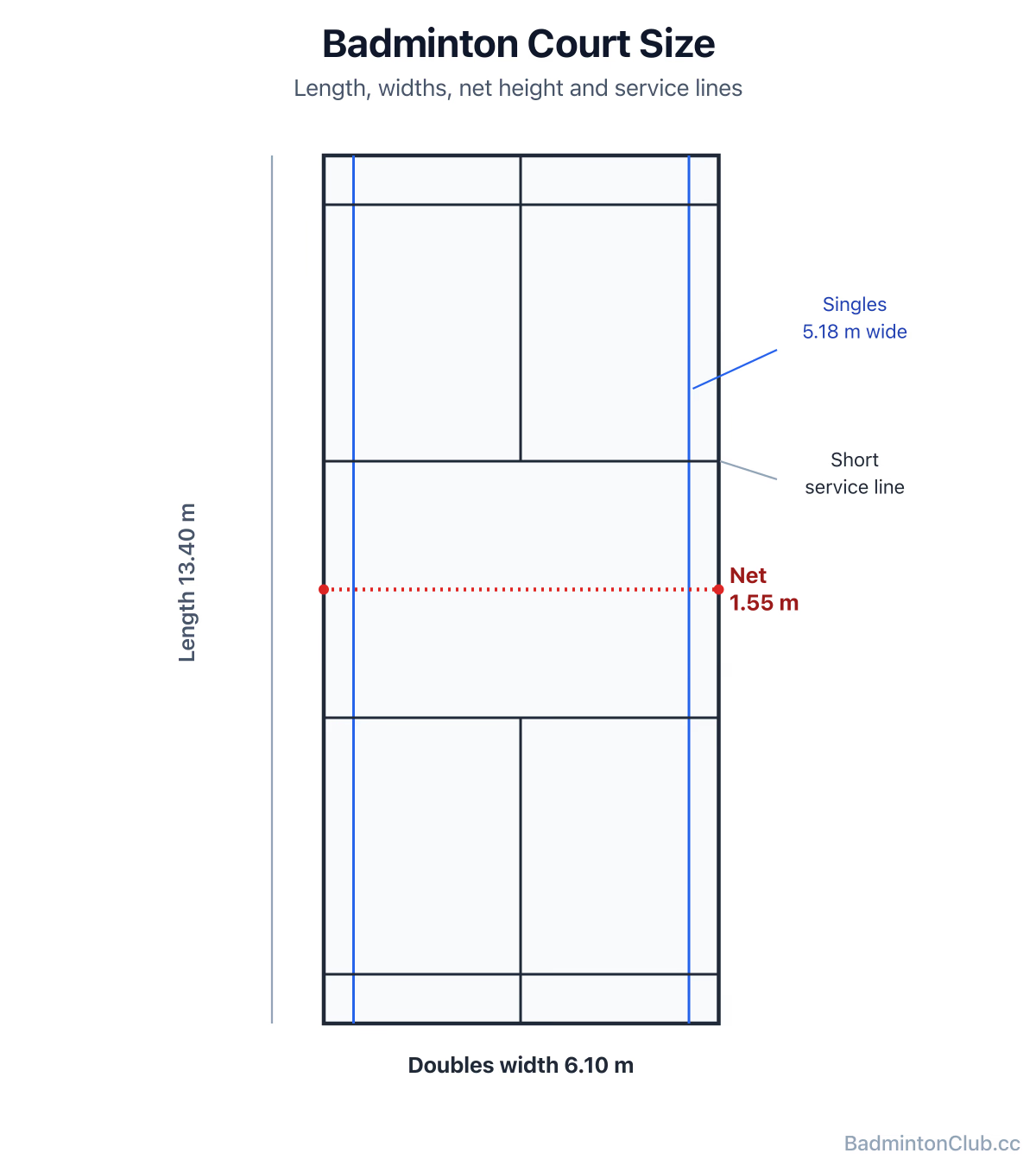
Here are the four numbers that matter: a badminton court is 13.40 metres long. For doubles it's 6.10 metres wide. For singles you ignore the outer side tramlines and it narrows to 5.18 metres. The net is 1.55 metres high at the posts and sags to 1.524 in the middle (yes, the dip is deliberate). Everything else you see on the floor — the short service line, the back service line, all those confusing tramlines — is just dividing up that same rectangle. Learn those four numbers and you've got the skeleton of the court. The rest is detail.
The core measurements
The numbers are fixed by the BWF and used everywhere from your local hall to the Olympic final:
- Length: 13.40 m (44 ft), the same for singles and doubles. Each half of the court is 6.70 m deep, net to back line.
- Doubles width: 6.10 m (20 ft) — the full court, outer tramlines in play.
- Singles width: 5.18 m (17 ft) — the outer side tramlines are out, so the court is narrower.
- Net height: 1.55 m (5 ft 1 in) at the posts, dipping to 1.524 m (5 ft) at the centre.
Notice the court is the same length for singles and doubles — only the width changes. That catches everyone out at first.
The lines that divide it up
Inside that rectangle, a few lines decide where serves and shots are legal:
- Short service line — 1.98 m from the net on each side. A serve must clear this line.
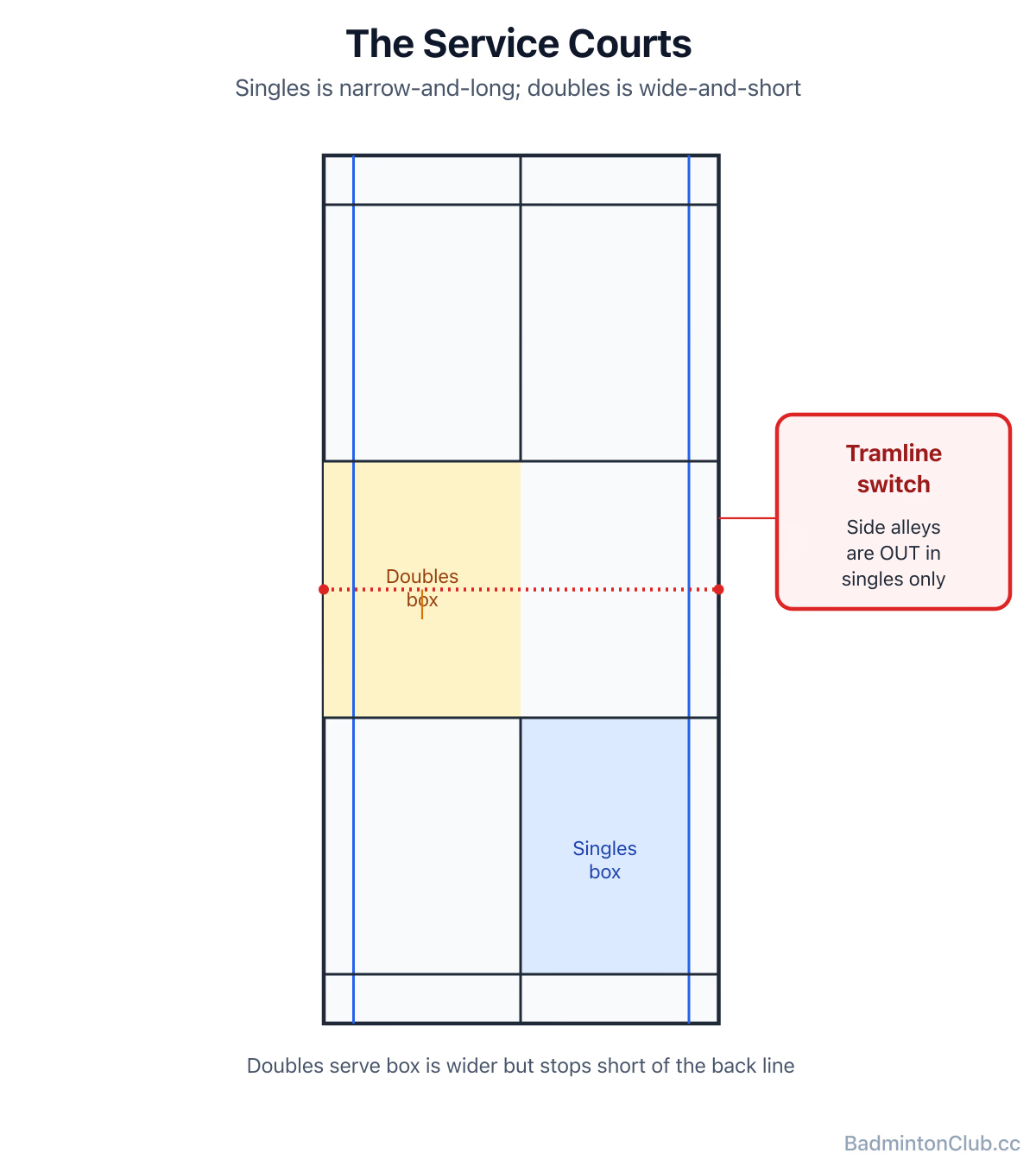
- Side tramlines — the 0.46 m strip down each side. In for doubles, out for singles. This is the singles/doubles width switch.
- Doubles long service line — 0.76 m in from the back boundary. A doubles serve must land in front of it.
- Centre line — splits each half into left and right service courts.
The singles vs doubles switch that confuses everyone
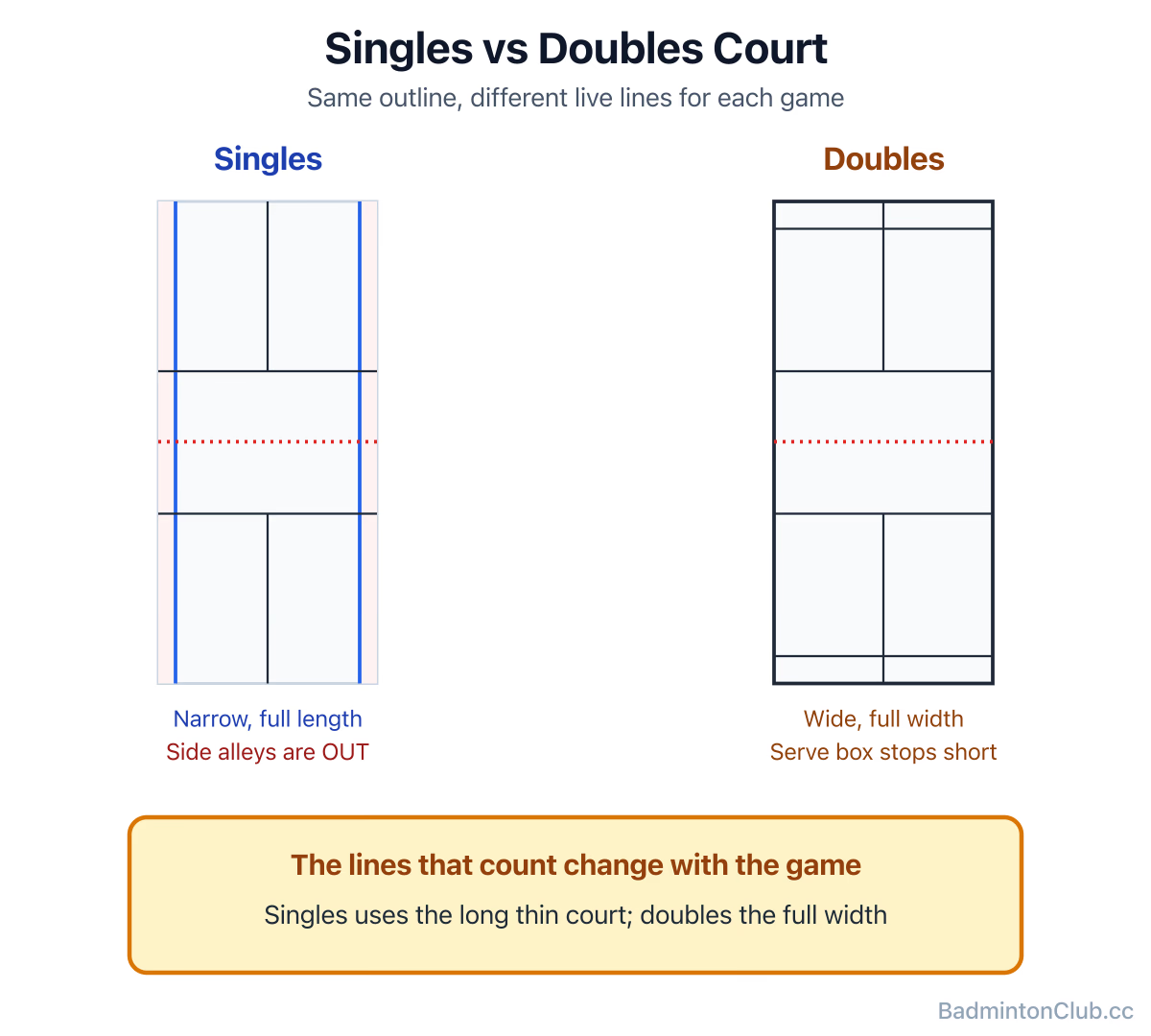
Here's the one thing worth burning into memory, because it trips up every new player and even some umpires on a tired night. The side tramlines flip; the back tramline flips the opposite way.
In singles, the court is long but narrow — you use the inner side lines (5.18 m wide) and the full length to the very back line. In doubles, the court is wide but the serve is short — you use the outer side lines (6.10 m wide), but the serve must land in front of the long service line, 0.76 m short of the back. So a doubles court is wider for rallies but the service box is shorter at the back. Singles = long and thin. Doubles = wide, with a clipped serve box. Get that and you'll never stand in the wrong place again.
How much space you really need (not just the lines)
The painted court is 13.40 m × 6.10 m, but you can't build a usable court in exactly that — you need run-off space around it and clear height above it. A proper hall allows roughly a metre or more behind the back lines and beside the doubles tramlines so players can chase shuttles without hitting a wall, which is why halls are marked closer to 15 m × 8–9 m per court in practice. Overhead clearance matters even more: recreational play wants at least ~7–8 m of unobstructed height, and competition standards ask for 9 m+, because a high clear or a high serve climbs fast. This is exactly why a garage or a low-ceilinged hall doesn't work — the ceiling, not the floor, is usually the binding constraint. If you're trying to play badminton at home, measure your ceiling before your floor.
A quick way to picture it on an unmarked floor
If you ever need to rough out a court in a bare sports hall, here's the lazy-but-accurate method I use. Pace the length first — about 13.5 big steps (a metre a stride) net-to-net total, so 6.7 m each side of the net. Then the doubles width is just under half the length — a hair over 6 m. Drop the net at the halfway point and put the short service line roughly 2 m in front of it on each side. You won't get a tournament-legal court by pacing, but you'll get something close enough for a casual game, and it's far faster than hunting for a tape measure. The proportions are what people get wrong — courts are surprisingly long and narrow, much more than they look on TV.
FAQ
- Q: What is the official size of a badminton court? 13.40 m long and 6.10 m wide for doubles, narrowing to 5.18 m wide for singles (the outer tramlines are out in singles). The net is 1.55 m at the posts and 1.524 m at the centre. The length is the same for both formats.
- Q: What is the difference between a singles and doubles court? The length is identical; only the width changes. Singles uses the inner side lines (5.18 m, narrow), doubles uses the outer tramlines (6.10 m, wide). In doubles the serve must also land in front of the back long service line, so the serve box is shorter.
- Q: How high is a badminton net? 1.55 m (about 5 ft 1 in) at the posts, dipping slightly to 1.524 m (5 ft) at the centre. The small dip is deliberate and standard on every court.
- Q: How far is the service line from the net? The short service line is 1.98 m from the net on each side, and a serve must clear it. In doubles there's also a long service line 0.76 m in from the back boundary that the serve must land in front of.
- Q: How much space do you need for a badminton court? More than the painted lines: allow run-off space around the court (about 15 m × 8 m total per court) and, crucially, at least 7–8 m of overhead clearance for recreational play (9 m+ for competition). The ceiling height usually matters more than the floor space.
- Q: How many players are on a badminton court? Two for singles (one each side) and four for doubles (two pairs). The court width changes between the two formats but the length stays the same. See how many players badminton has for more.
The official badminton court size is 13.40 m long and 6.10 m wide for doubles, narrowing to 5.18 m for singles, with the net at 1.55 m. This guide gives every measurement that matters — court length and width, net height, service lines and tramlines — explains the singles-versus-doubles boundary switch that confuses everyone, and shows how much space you actually need to fit a court at home or in a hall, all with a clear labelled diagram.