How Many Players in Badminton? Singles, Doubles and Why It Matters on Court
8 June 2026 · Badminton Fans
Start with the simplest answer: two players for singles (one per side), four for doubles (two pairs). Doubles splits into three flavours — men's, women's and mixed, where each pair has one man and one woman. That's it for the official formats. The minimum to play a real game is two people; the maximum on a court at once is four. But here's what nobody tells you: that single choice — singles or doubles — changes everything about the game. The court width, who serves where, the whole rhythm and tactics, even how tired you'll be after an hour. It's not a minor variation; it's almost two different sports sharing the same net.
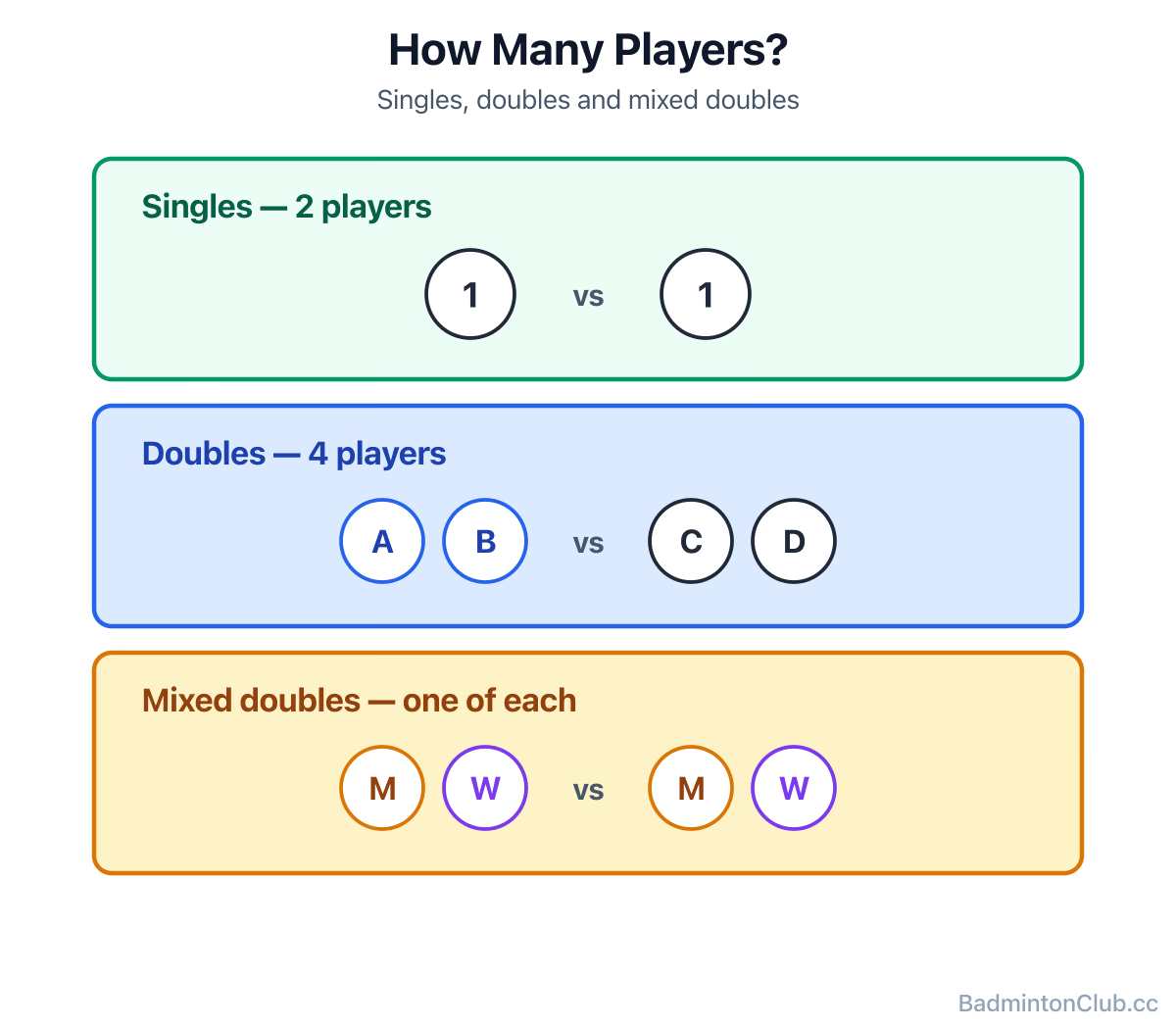
The two formats (and the doubles sub-types)
There are really just two structures, with doubles splitting by gender pairing:
- Singles — 2 players. One person each side. The court is narrower (5.18 m, inner side lines) but you cover all of it alone, so it's the more physically punishing format.
- Doubles — 4 players. Two pairs, two each side. The court is wider (6.10 m, full tramlines), the rallies are faster and flatter, and you share the court with a partner.
- Men's doubles and women's doubles — two players of the same gender per pair.
- Mixed doubles — one man and one woman per pair, with its own distinct tactics (the woman typically holds the front, the man covers the back, though it's not a rule).
Olympic and BWF badminton runs exactly five events on this basis: men's and women's singles, men's and women's doubles, and mixed doubles.
How many people do you actually need to play?
Practically: two people and one court gets you a game of singles. Four gets you doubles, which most casual players prefer because it's less running, more sociable, and more forgiving. If you've got odd numbers — three, five, seven — you rotate someone through, or play "King of the Court" style games where the loser steps off and the next person steps on. You never need a big group; two friends and a court are enough to start. For finding those courts and people, see how to find badminton near you.
Why the player count changes how you play
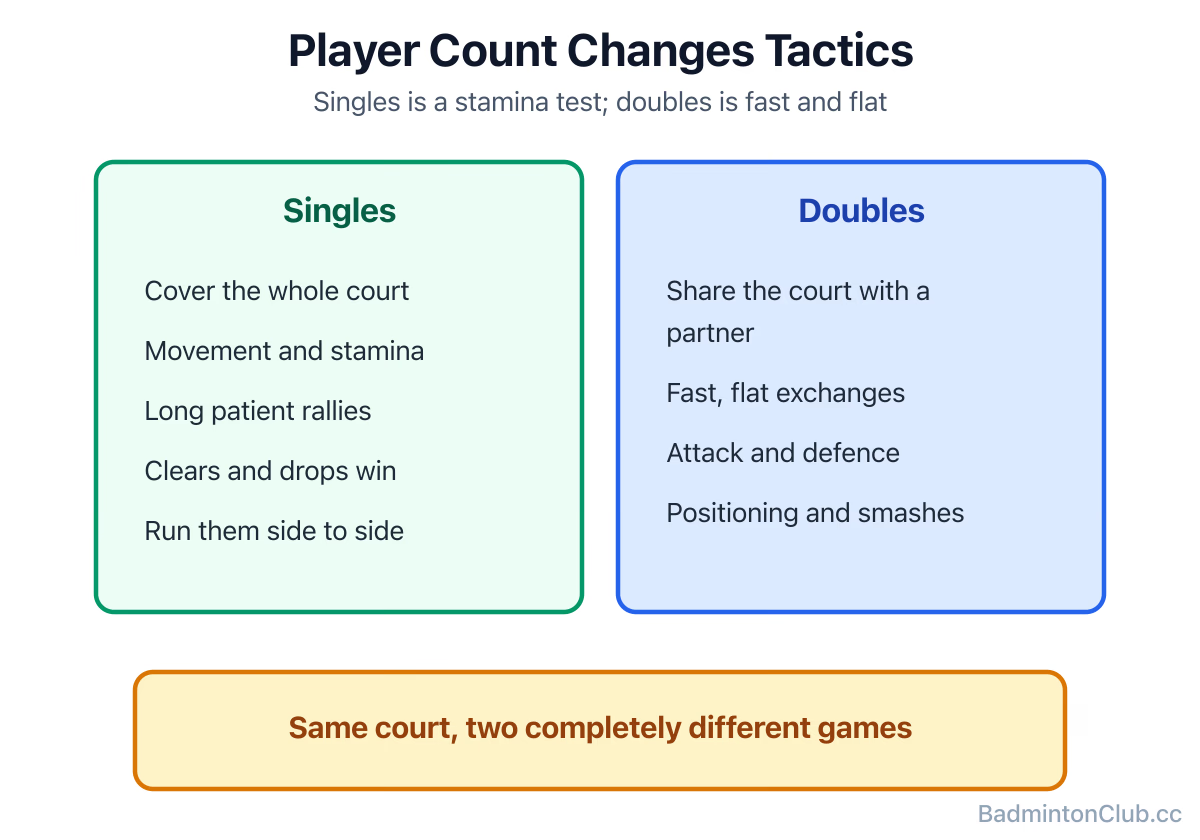
The number on court isn't trivia — it rewires the game. In singles, with one person covering the whole court, the game is about movement and stamina: long rallies, deep clears, and making your opponent run corner to corner until they crack. In doubles, with four people in a similar space, there's no time for high clears — the game goes fast and flat, drives and quick net exchanges, and it's all about attacking position (the famous front-and-back vs side-by-side rotation). The same shot that wins a singles rally (a deep clear) is often a mistake in doubles (a free smash for the back player). So "how many players" quietly determines which shots are smart.
The real-world version: dozens of players, a handful of courts
Here's where the textbook answer ("2 or 4") meets a club-night reality nobody mentions. A typical session has 20, 30, sometimes 40 people and maybe four to six courts. Four players per court means only a fraction can be on at once — so the actual problem of "how many players in badminton" at a club isn't about the rules, it's about fairness: making sure all 30 get a fair share of court time and nobody's stuck on the bench all night while the same four hog a court.
This is the unglamorous engine room of every club, and getting it wrong empties a club faster than anything. The classic low-tech fix is a peg board — your name-peg goes in a slot, you come on when you reach the front of the queue. Busier clubs run the same idea as software, a peg board or an app like BadmintonClub.cc, which mixes partners, balances skill levels, and guarantees newcomers actually get games instead of being frozen out. Four on a court is the rule; sharing courts fairly across a packed hall is the real skill — and it's what separates a club people stay at from one they drift away from.
Can you play badminton with three, or five, or odd numbers?
Yes, and casual sessions do it constantly. With three, you rotate — two play a game while one rests, then swap, or play singles and take turns. With five or more, you queue: finish a game, step off, and the next waiting players step on (winners-stay or losers-off, depending on house rules). Some halls play deliberately uneven formats for fun — two-versus-one "Canadian doubles" or rotating "King of the Court" — but those are house games, not official formats. Officially it's always 2 or 4; informally, you make any number work.
FAQ
- Q: How many players are in a game of badminton? Two in singles (one person each side of the net) or four in doubles (two pairs, two each side). Those are the only official formats — two or four on a court at once.
- Q: How many players are in doubles badminton? Four — two pairs, two players each side. Doubles comes in three types: men's doubles, women's doubles, and mixed doubles (one man and one woman per pair).
- Q: What is the minimum number of players for badminton? Two — that's a game of singles, one person each side. You don't need a big group to play; two friends and a court are enough.
- Q: What is mixed doubles in badminton? A doubles format with one man and one woman in each pair. It has its own tactics — conventionally the woman holds the front of the court and the man covers the back, though pairs vary it.
- Q: Can you play badminton with 3 players? Not as an official format, but casually yes — you rotate, with two playing while one rests and swapping in, or take turns at singles. Odd numbers are normal at club nights and handled with a simple rotation.
- Q: How do clubs handle lots of players and few courts? With a rotation system — traditionally a peg board where your name-peg queues for the next free court, or an app like BadmintonClub.cc that mixes partners and guarantees everyone fair court time. Fair sharing across a busy hall is the real organisational challenge.
Badminton is played by two players in singles (one each side) or four in doubles (two pairs) — but the simple answer hides why it matters: the format changes the court width, the serving rules, the tactics and even how clubs organise a busy night. This guide covers every format including mixed doubles, how many people you need to actually play, and how a hall of dozens shares a handful of courts fairly.