Badminton Doubles Tactics & Rotation: Attack, Defence & the Front-and-Back System
6 June 2026 · Badminton Fans
Doubles is won by managing two formations and the rotation between them: when you attack you play front-and-back (one player up at the net, one back hitting down); when you defend you switch to side-by-side (each player covering half the court for the smashes coming at you); and the whole game is a fight to be the attacking pair. Knowing when and how to rotate between these — and how the serve-and-third-shot starts the attack — is what separates organised pairs from two singles players sharing a court.
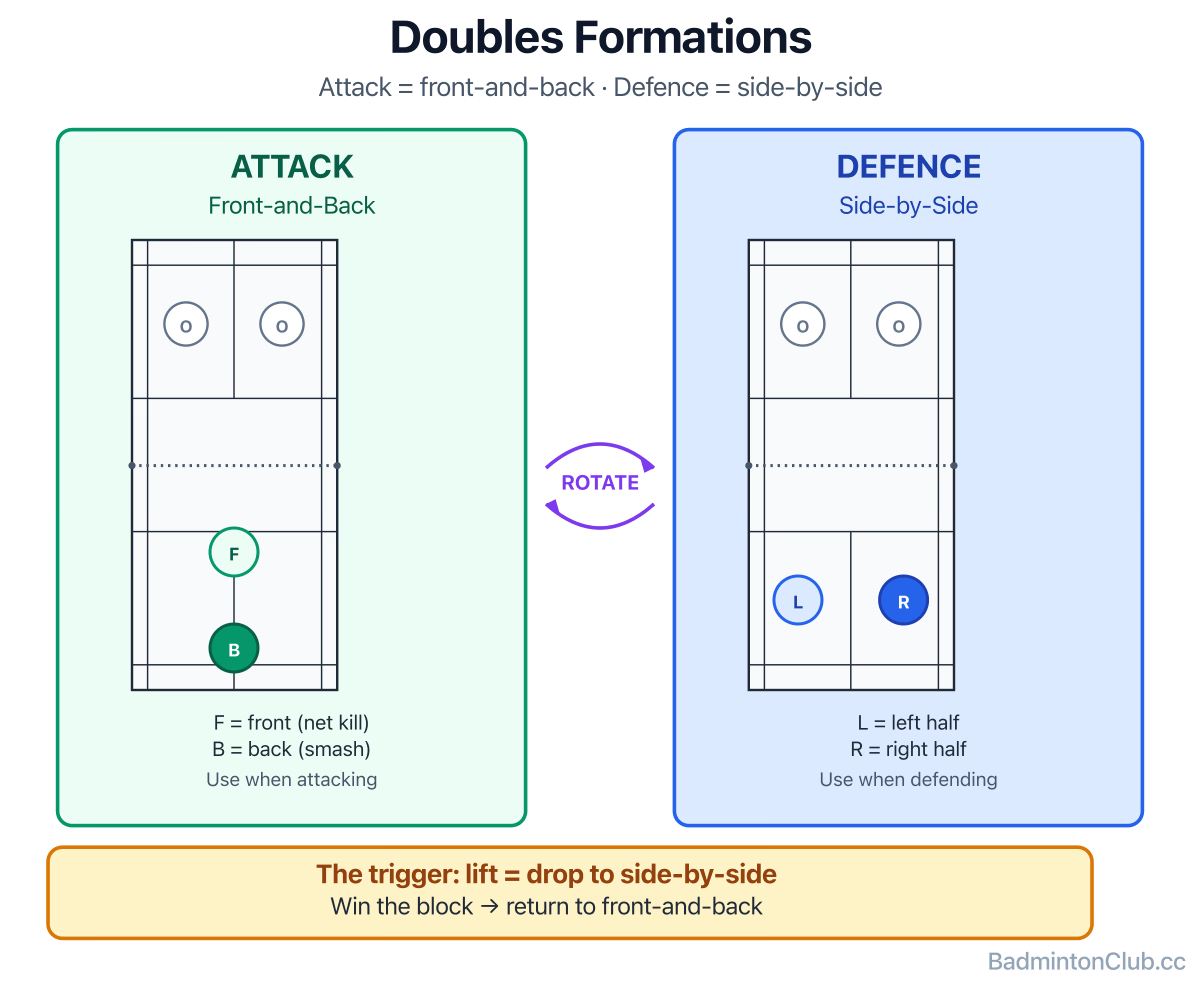
Attack: front-and-back
When your side is hitting down (smashes, drops, net shots), you want front-and-back: the back player attacks from the rear, the front player covers the net to kill weak replies and intercept blocks. This formation funnels every soft return into a put-away. The golden rule is to keep the shuttle going down — every downward shot lets you hold the attack, while one lift hands it over. The front player is the silent hero, picking off blocks and net replies; a good net player wins more doubles points by interception than the back player wins by smashing.
Defence: side-by-side, and the rotation
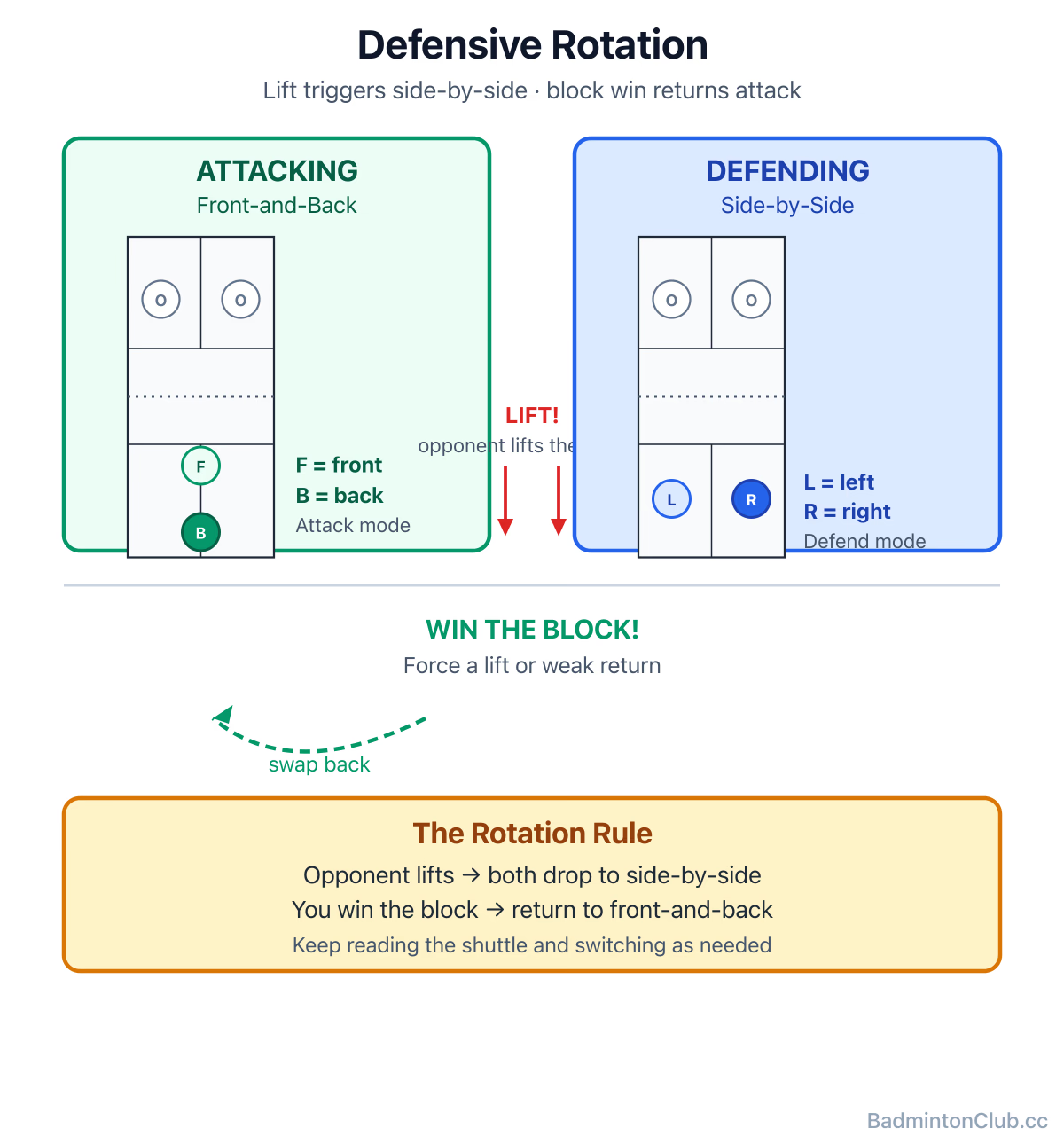
The instant your side lifts (sends the shuttle up), you must switch to side-by-side: the two players split the court left and right, each defending the smashes coming to their half, racket up. The rotation is the live skill — underpinned by the same explosive movement patterns covered in badminton footwork training — as the rally swings between attack and defence, the pair continuously rotates: lift → both drop level (side-by-side); win the attack back with a good block-and-rush → one steps up, one drops back (front-and-back). The most common doubles error is rotating late or not at all — two players both at the net, or both at the back, leaving an obvious hole. Talk, move together, and rotate as a unit.
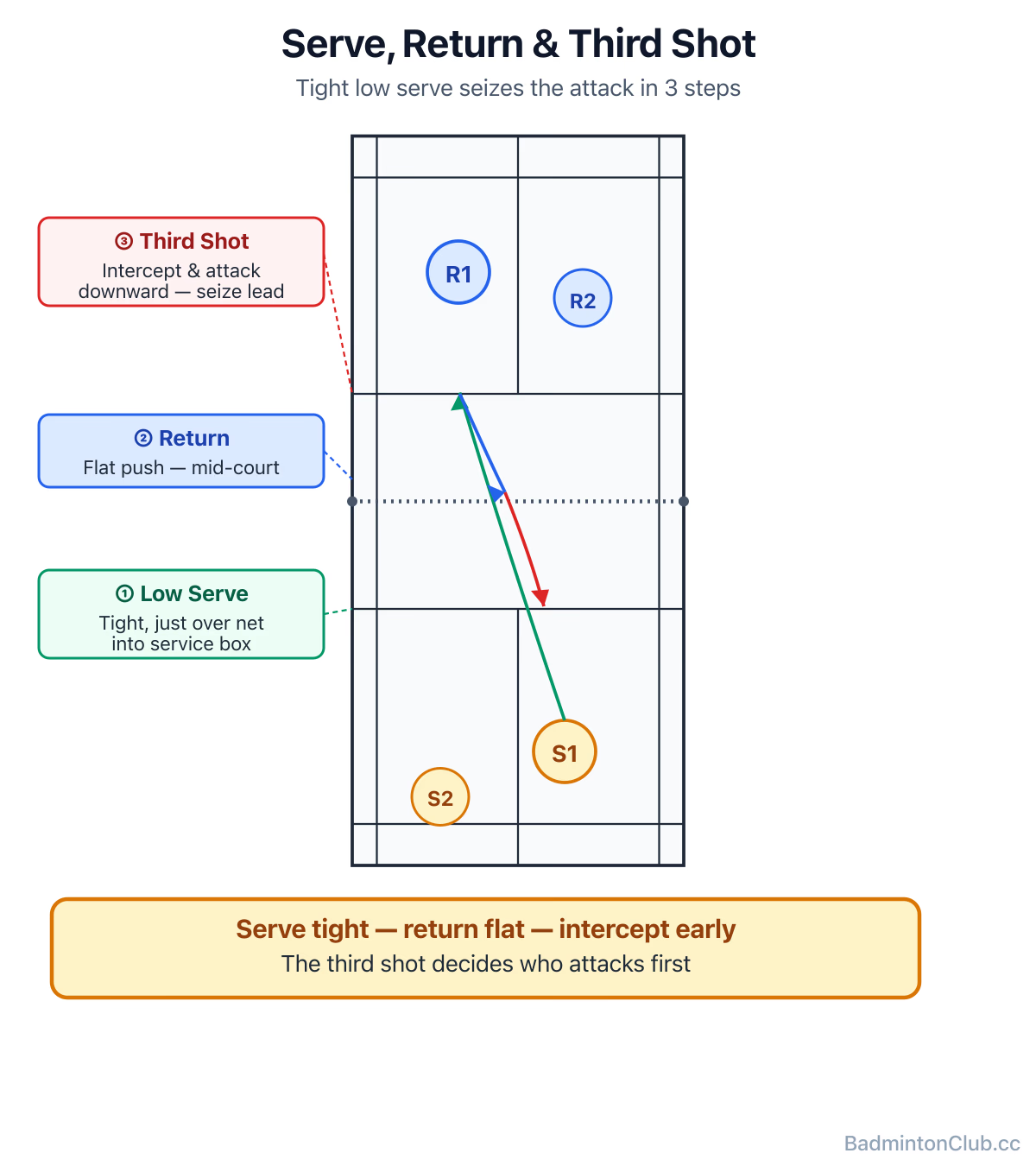
Starting the attack — serve and third shot
The rally's first three shots decide who attacks. A tight low serve gives the receiver nothing to hit down, so they push or net it — and your third shot (the serving side's first real shot after serve and return) is your chance to seize the attack: a push to the mid-court, a net shot, or a third-shot kill if the return floats up. The receiving side, meanwhile, attacks the serve to grab the initiative first. This serve → return → third-shot battle is where doubles points are really won; whoever comes out of it hitting downward usually wins the rally.
What coaches actually shout from the side
"ROTATE!" — and "whose is the middle?!" Club doubles is mostly lost to two avoidable things: not rotating between attack and defence, and the middle shuttle that both players leave for each other (a default convention helps — usually the player with the forehand in the middle, or the one not just committed elsewhere, takes it; agree it beforehand). My firm view: a modestly skilled pair that rotates cleanly and keeps the shuttle down will beat two big hitters who play like strangers, every time. Doubles is a team sport disguised as a racket sport. Communicate constantly, move as a unit, and fight to keep the attack.
The "my side" rule
A small convention that prevents most middle-shuttle arguments: each player owns the shuttle that lands in front of them on their dominant side; the middle is taken by whichever partner would naturally play it on the forehand. Agree it in the warm-up, ideally out loud. Most doubles conflicts come from a missing convention, not from a missing skill — and the in-rally "yours! / no, yours!" dispute is loud enough to lose the next point before it's even hit. Two minutes of agreement saves hours of friction. (If you run a club night and want a smoother way to manage courts and rotations, BadmintonClub.cc is built for exactly that.) The same goes for service-reception sides and for the long serve: pre-decide who covers what, and the court coverage becomes automatic instead of contested.
FAQ
- Q: What are the two formations in badminton doubles? Front-and-back when attacking (one at the net, one at the back hitting down) and side-by-side when defending (each covering half the court).
- Q: When do you rotate in doubles? Switch to side-by-side the moment your side lifts, and back to front-and-back when you regain the attack with a downward shot or a winning block-and-rush.
- Q: How do you keep the attack in doubles? Keep hitting the shuttle downward — smashes, drops, kills — because every lift hands the attack to the opponents.
- Q: What is the third shot in doubles? The serving side's first real shot after the serve and return — your chance to seize the attack with a push, net shot, or a kill if the return floats up.
- Q: Who takes the middle shuttle in doubles? Agree a default beforehand — commonly the player with the forehand in the middle, or whoever isn't already committed elsewhere — to avoid both leaving it.
- Q: Why does my doubles pair keep getting caught out of position? Usually late or missing rotation — both players ending up at the net or the back. Move together and rotate as a unit on every change of attack and defence.
Master badminton doubles by learning when to attack in front-and-back formation and when to defend side-by-side — and how to rotate cleanly between them. Covers the serve-and-third-shot battle, court communication, and the "my side" rule that stops most middle-shuttle arguments. For club players who want to stop playing like two strangers sharing a court.