Badminton Doubles Strategy for Beginners: Formations, Rotation and Who Takes What
8 June 2026 · Badminton Fans
Doubles is simpler than it looks when you're standing on the sideline wondering how those two players move so well together. The whole game rests on two formations and the single rule that tells you when to switch between them. When your pair is attacking — when you're hitting the shuttle downward — one player goes to the net and the other covers the back. Front-and-back. When the other pair attacks and you've had to lift the shuttle, you both drop into a side-by-side defence, each covering half the width. The switch between them is even simpler: follow the shuttle. If you hit a forward shot, drift forward; your partner fills the space behind you. Get those two shapes and that rotation right and you'll look like you've played doubles for years, even if you've only got a few games under your belt.
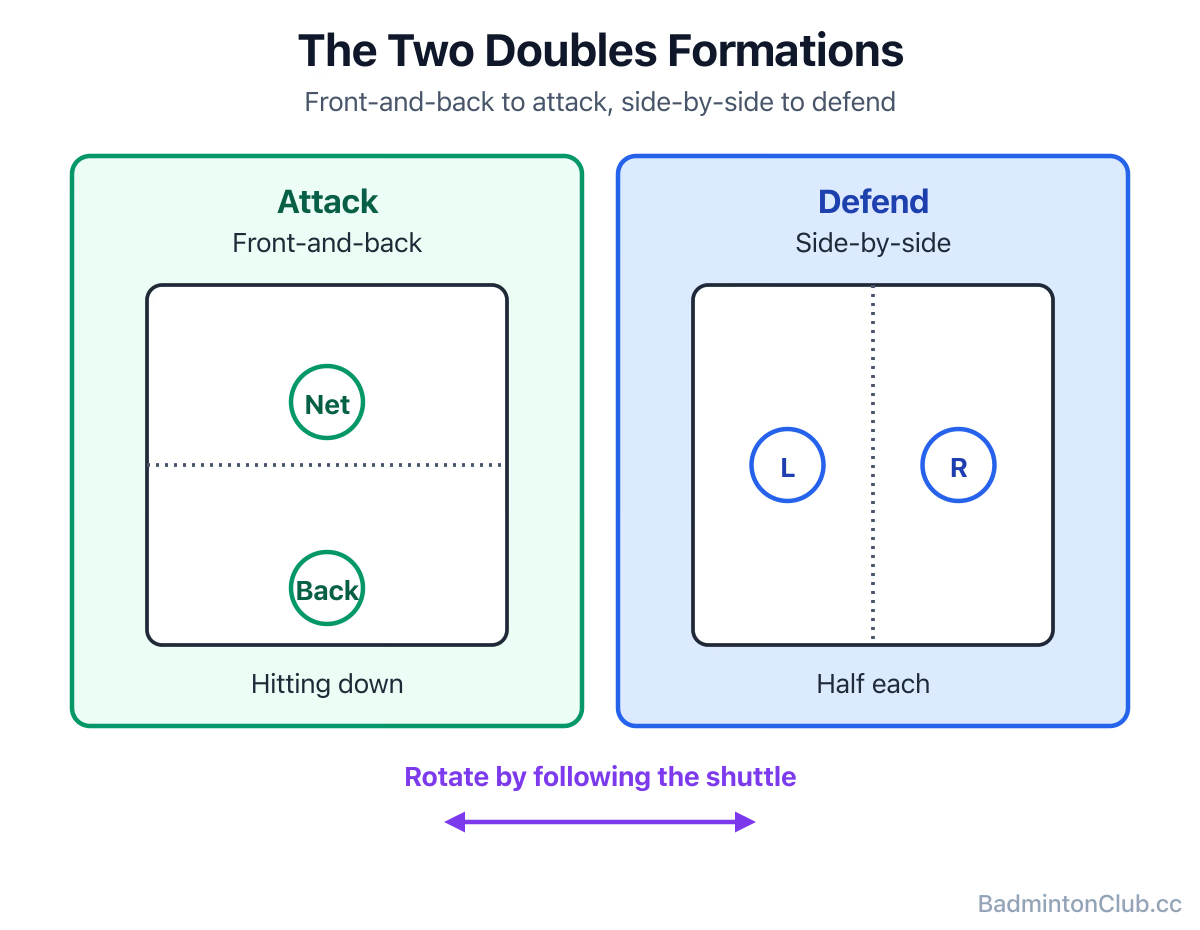
The two formations (this is the whole game)
Doubles has exactly two base shapes, and which one you're in depends on one thing: are you hitting down or up?
- Front-and-back (attacking). When your side is hitting down — smashing, steep drops, net kills — one player is at the net and one at the back. The back player attacks; the front player intercepts the weak blocks and finishes. You're hunting.
- Side-by-side (defending). When the shuttle's been lifted over you and the other pair is attacking, you split the court down the middle — one of you covers the left half, one the right. From here you defend smashes and try to win back the attack.
The single biggest mistake beginners make is standing side-by-side while attacking, or front-and-back while defending. Match the formation to who's hitting down.
Rotation: just follow the shuttle
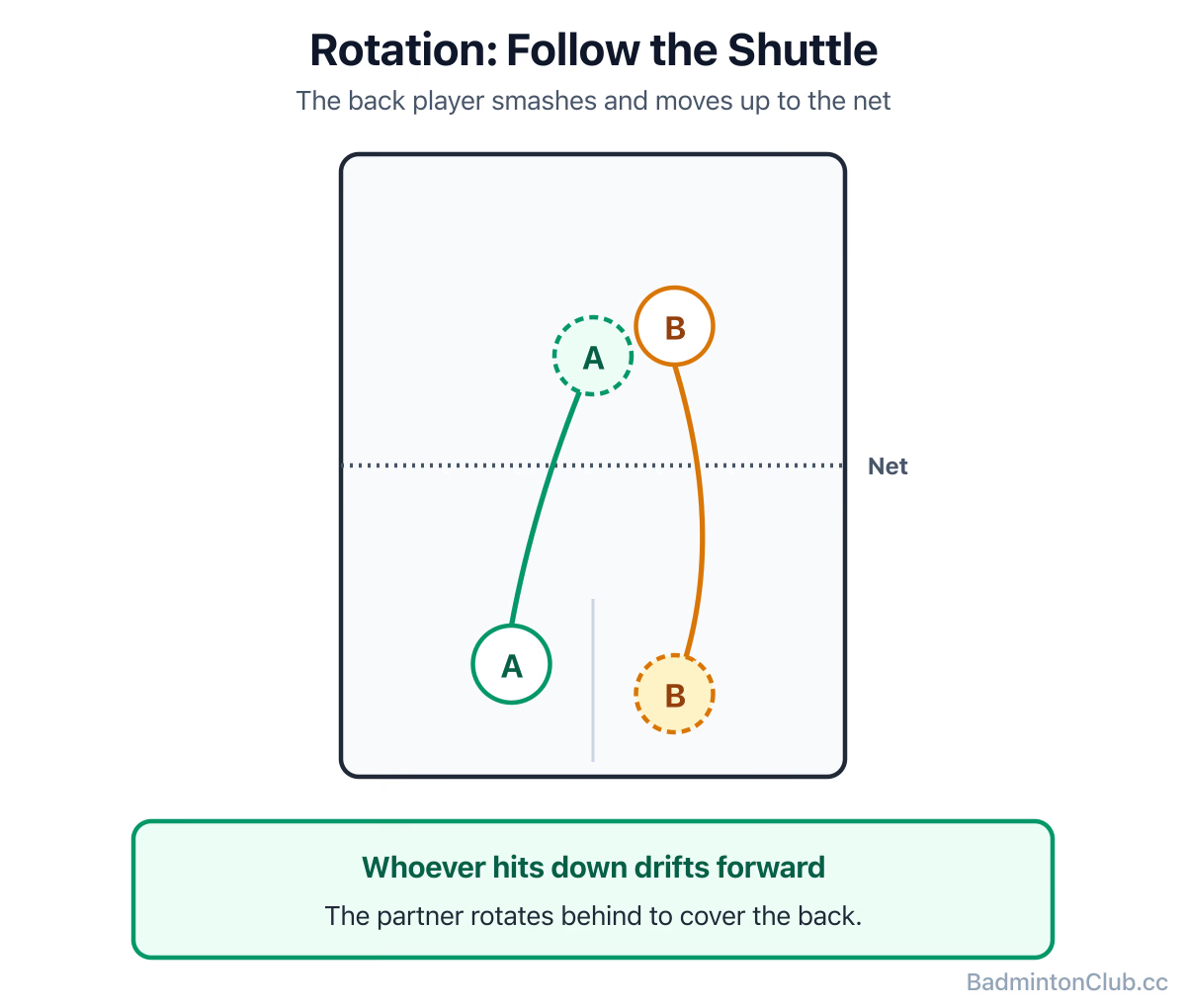
The bit that confuses everyone is how you switch between the two. The rule is beautifully simple: follow the shuttle. If you're at the back and you play a drop or a smash that goes downward and forward, you follow it in toward the net and become the front player — and your partner rotates round behind you to cover the back. If your side gets lifted and has to defend, you both drop into side-by-side. You're not memorising choreography; you're flowing with the shuttle. Whoever last hit a downward/forward shot drifts forward; the partner covers the space behind.
Keep the shuttle DOWN — the golden rule of doubles
If there's one principle that separates good doubles from bad, it's this: whoever hits the shuttle down controls the rally. Hitting up (lifting) hands the attack to the other pair and forces you into defensive side-by-side; hitting down or flat (smash, drive, push, net kill) keeps you on attack in front-and-back. So the entire strategic aim of doubles is to avoid lifting and keep the shuttle flat or descending. When you must defend, your job is to get back on the attack as fast as possible — a tight block, a quick drive, anything that stops you having to lift again. Beginners who grasp "down = good, up = bad" improve overnight.
Who takes the middle? (the question that loses points)
Here's the practical problem every new pair hits, and the original tip that fixes it. A shuttle comes straight down the middle between you, you both go for it, your rackets clash, and it drops. Or — worse and more common — you both leave it, each assuming the other has it, and it lands untouched. So who takes the middle? The convention coaches actually teach: in front-and-back, the front player takes anything they can reach (they're facing forward and see it earlier), and in side-by-side defence, the stronger-forehand player covers the middle — because a forehand in the centre is more powerful and reaches further than a cramped backhand, and the middle is exactly where good pairs aim to sow that "whose is it?" confusion. For two right-handers defending, the player on the left has their forehand pointing into the centre, so by default they take the middle. But honestly? The real fix is communication. Call it. "Mine!" or "Yours!" — shouted early — prevents more middle disasters than any positioning rule. The pairs who never clash and never leave it aren't the ones with the cleverest convention; they're the ones who talk constantly. A silent doubles pair is a losing doubles pair, no matter how good their individual shots are. Decide before the match who takes the middle when in doubt, then talk through every ambiguous one.
Communication and the low serve
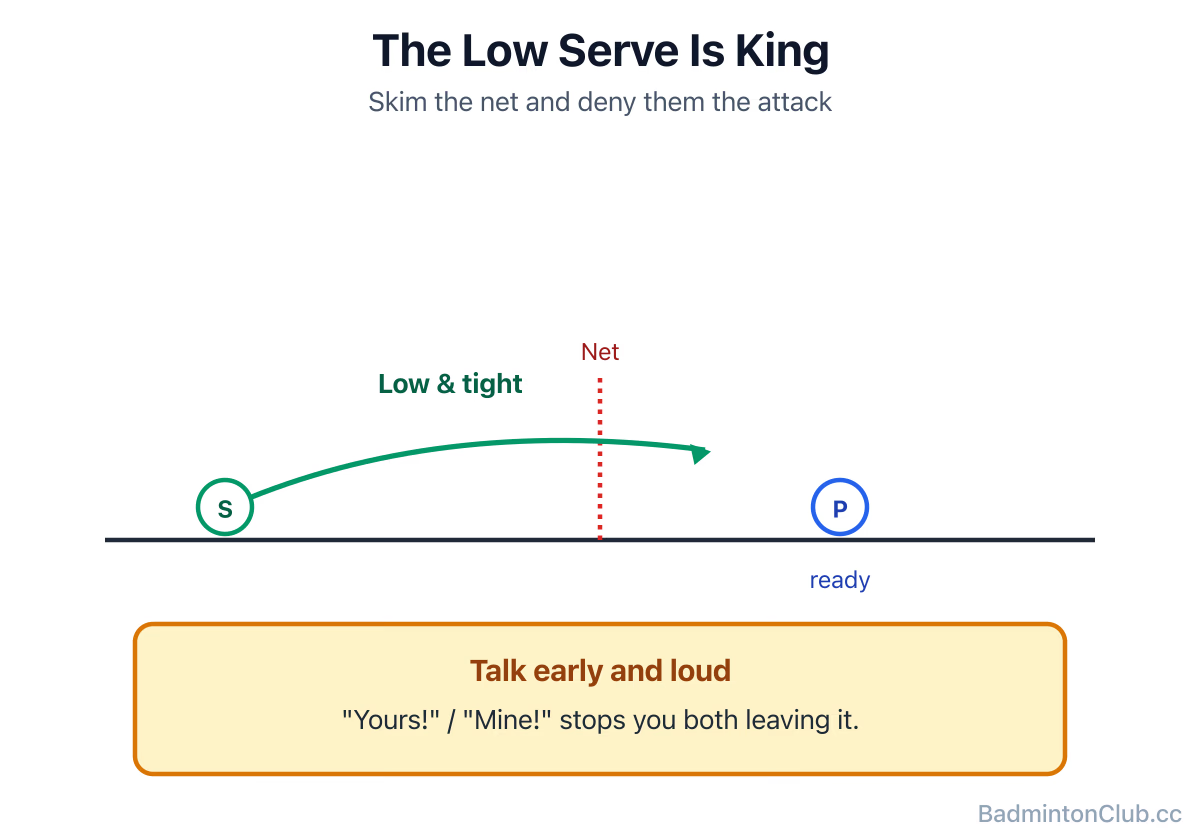
Two more beginner essentials. First, talk — "yours," "mine," "out," "shot" — early and loud. It feels awkward; do it anyway. Second, the low serve is king in doubles. A high serve in doubles is a free smash for the opponents, so serve low and tight to the net almost every time, with the occasional flick to keep them honest. A good low serve denies the other pair the attack from the very first shot, which sets up everything else. Pair these with the formations and you've got a real doubles game.
How a typical club doubles rally flows
Picture it: you serve low. They push it flat; your partner at the net intercepts and pushes it down — you're attacking, so you're front-and-back, your partner up, you at the back. You smash; they block it tight. Your front partner pounces on the block and kills it, or it's lifted and now you're defending, so you both slide into side-by-side. They smash; you block tight to the net; their pair is dragged forward; you lift or drive to reset; the attack flips back to you. The rally is a constant tug-of-war over who gets to hit down, with both pairs rotating between the two formations a dozen times. Once you see doubles as that down-vs-up battle, it stops being chaos and starts making sense.
FAQ
- Q: What is the best strategy for badminton doubles beginners? Play front-and-back when attacking (hitting down) and side-by-side when defending (after a lift), rotate between them by following the shuttle, keep the shuttle down to stay on attack, and communicate constantly.
- Q: What is the difference between attacking and defending formation? Front-and-back (one at net, one at back) is for attacking — hitting down. Side-by-side (splitting the court left/right) is for defending an opponent's attack. Which you use depends on whether your side is hitting down or up.
- Q: How does rotation work in doubles? Follow the shuttle. Whoever plays a downward/forward shot drifts toward the net and becomes the front player; their partner rotates behind to cover the back. You flow with the shuttle rather than memorising set positions.
- Q: Who takes the shot in the middle in doubles? In attack, the front player takes what they can reach; in defence, the player whose forehand covers the centre takes it. But the real answer is communication — call "mine" or "yours" early to avoid both clashing or both leaving it.
- Q: Why is the low serve so important in doubles? A high serve hands the opponents a free smash, so the low serve denies them the attack from the first shot. Serve low and tight almost every time, with an occasional flick to stop them leaning in.
- Q: How is doubles strategy different from singles? Doubles is fast, attacking and built on formations and teamwork in a shared wide court; singles is about movement, court coverage and patience over a big area you cover alone. Doubles rewards keeping the shuttle down; singles rewards moving the opponent.
Doubles badminton is about attacking together and defending together: front-and-back when you attack, side-by-side when you defend, rotating smoothly between the two. This beginner doubles strategy guide explains both formations, how to rotate by following the shuttle, who takes which shots, why keeping the shuttle down wins doubles, and the communication that stops you and your partner both leaving it. The essential tactics for anyone stepping onto a club doubles court for the first time.