Badminton Singles Strategy for Beginners: The Centre Base, Four Corners and Patience
8 June 2026 · Badminton Fans
If you're a beginner trying to figure out singles, here's the strategy boiled down to three ideas you can actually remember on court. One: get back to a central base after every single shot — don't admire your work, just move. Two: make your opponent run corner to corner until they can't recover properly. Three: wait. Don't try to end the point early; wait for them to give you a weak shot, then attack. That's it. Singles is a game of movement, patience and discipline, and the fitter, more patient player wins almost every time. It's not complicated. It's just hard to do.
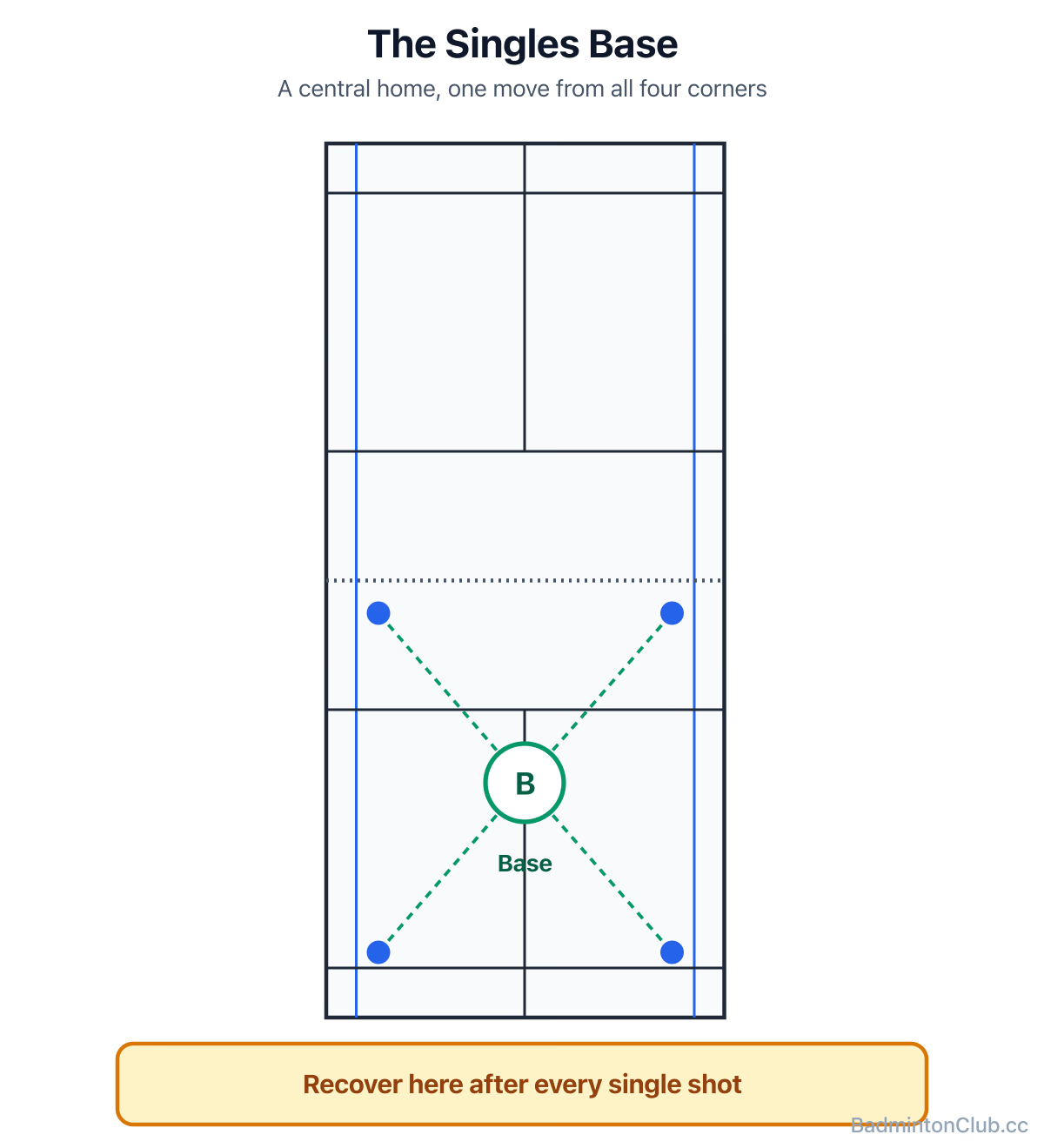
The central base: where every rally resets
Singles is huge to cover alone — the full length and the narrower singles width — so you can't camp anywhere. After every shot you return to a base position near the centre, roughly equidistant from all four corners. From there you're never more than one good move from any reply. Beginners lose singles not because their shots are bad but because they admire each shot and forget to recover, so they're caught flat-footed by the next one. Hit, then immediately move back to base. That single habit wins more singles points than any shot. More on this in positioning basics.
The four corners: make them run
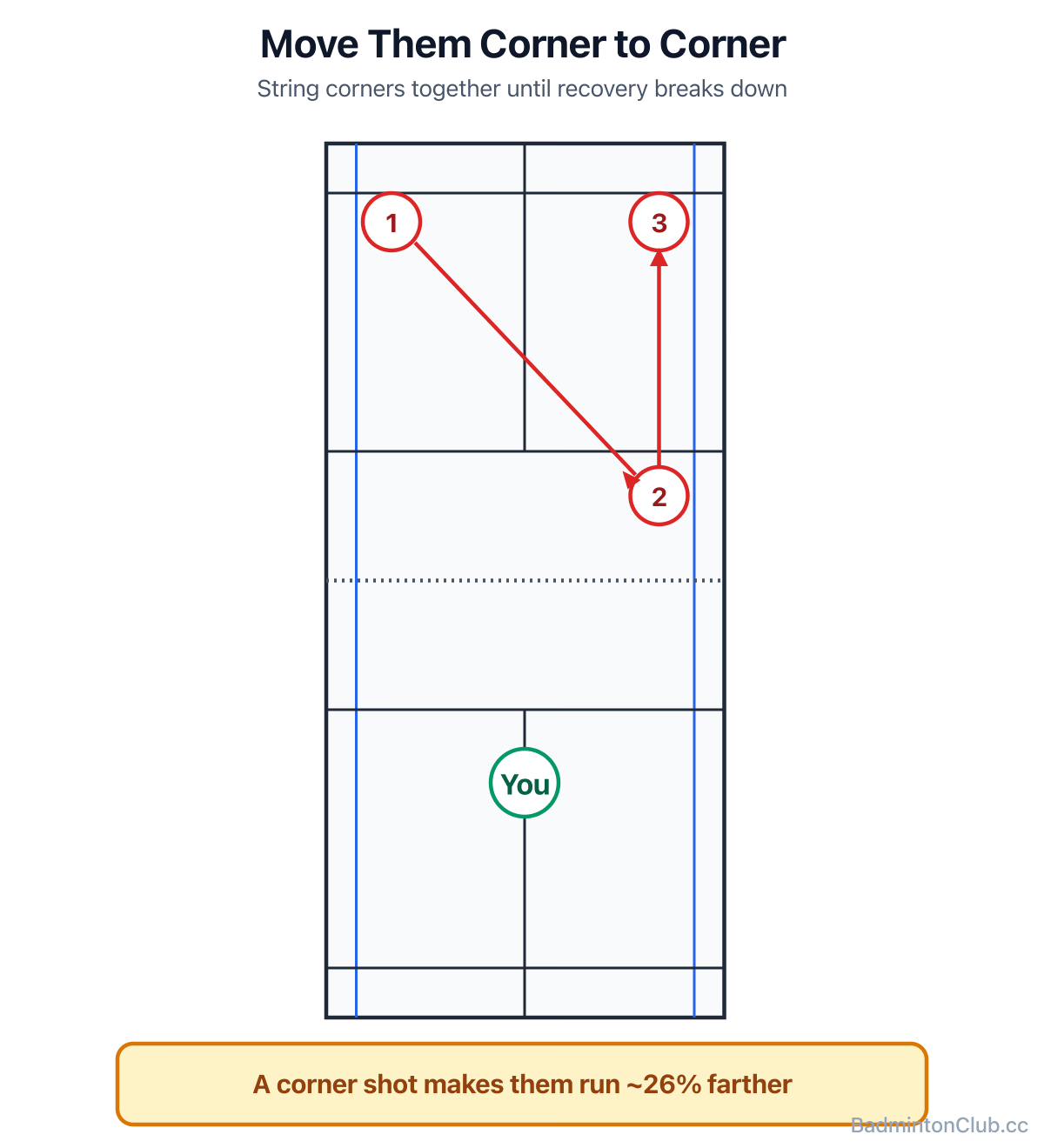
The core singles tactic is simple and brutal: move your opponent to all four corners. It's geometry, not mysticism. A shuttle to a corner makes them travel roughly a quarter farther than a shot to the middle line would — the Badminton Bible puts the diagonal corner at about 26% more distance — and, more importantly, it drags them off their base with a long way back. String corners together — back-left, then front-right, then back-right — and you stretch them until their recovery breaks down and they cough up a weak shuttle. That floaty reply is your chance. Singles is won by moving the opponent, not by hitting harder.
The bread-and-butter patterns
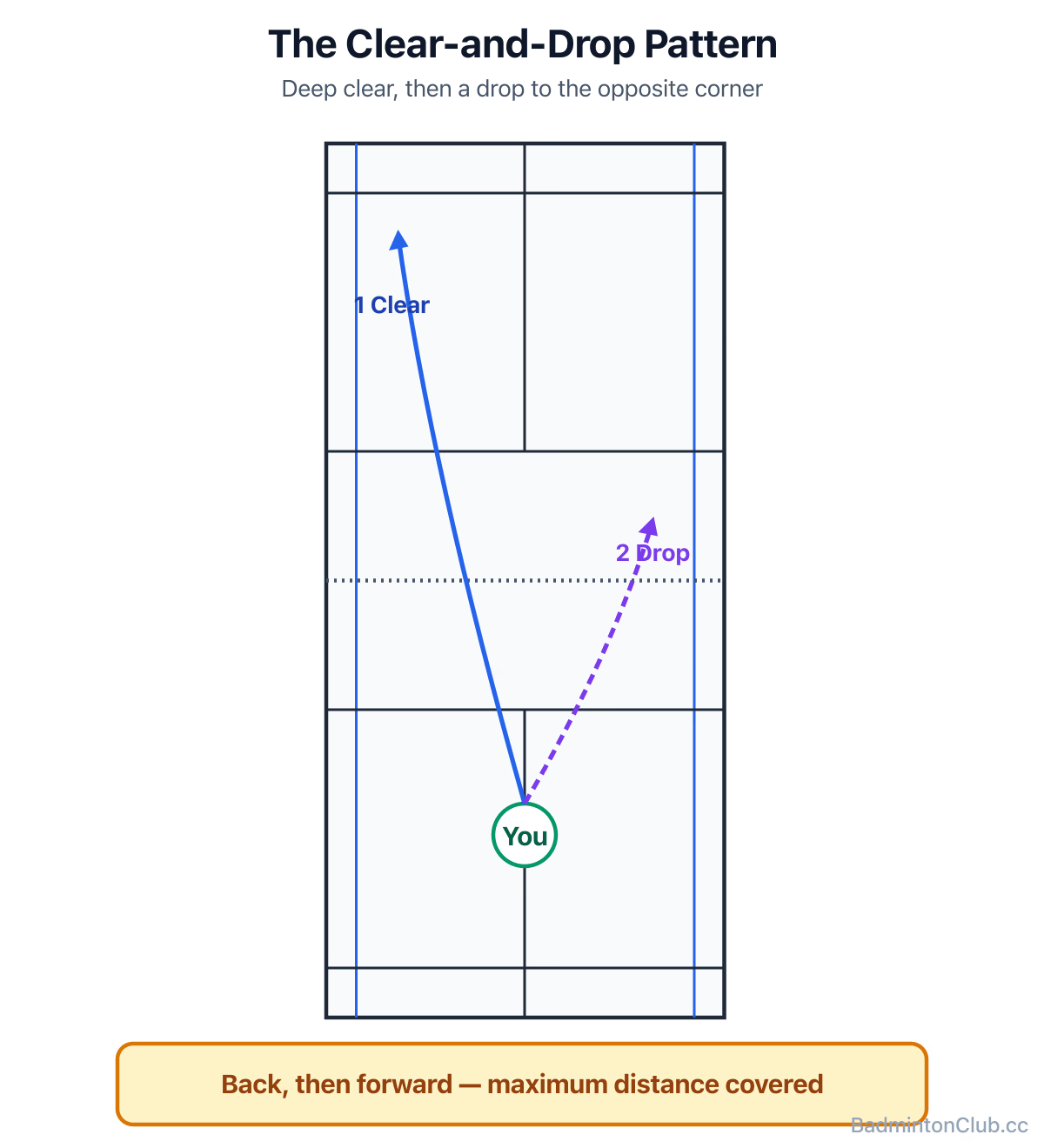
You don't need fancy shots to play this way. Two patterns carry beginner singles:
- Clear and drop. Clear them deep to a back corner, then drop short to the opposite front corner. Back, then forward, on a diagonal — maximum distance covered. The classic singles one-two.
- The straight game. When in doubt, hit straight (down the line) rather than cross-court. Straight shots travel less distance, so you recover faster and leave a smaller gap. Cross-court is powerful but riskier — you cover more court and a good opponent intercepts it. As a beginner, hit straight by default and go cross-court deliberately.
Patience beats power (the singles mindset)
This is the strategic heart of singles, and it's where beginners go wrong most. Singles is a waiting game, not a power game. The instinct is to end rallies fast — smash everything, go for winners. But in singles, a smash from the back court is easily retrieved and leaves you out of position and gassed. The winning approach is the opposite: be patient, keep the shuttle deep and accurate, make your opponent do the running, and only attack when they've handed you a genuinely weak, high shuttle. Think of every rally as a slow squeeze, not a knockout punch. The player who tries to win every point quickly usually loses; the player content to win the point in fifteen shots usually wins. Fitness and patience are your two biggest weapons.
A worked rally: how a point is actually built
Let me walk through a real singles point so the strategy isn't abstract. You serve high and deep to push them to the back. They clear it back; you clear again, deeper, to their backhand corner — now they're stretched. Their reply is a touch short, landing mid-court. Don't smash it. Instead you drop to the front-forehand corner. They scramble forward and dig it up — a weak, floaty lift to your midcourt. Now the shuttle has sat up: you take it early and smash, or play a steep drop into the space they've vacated. Four patient shots set up the fifth. Notice you didn't win with power — you won by moving them until the court opened, then taking the one chance they gave you. That's singles. Greedy beginners try to play that fifth shot on the first rally and net it; disciplined ones wait for it.
Know when to attack
Patience doesn't mean never attacking — it means attacking at the right time. Attack when the shuttle is short, high and central, and you're balanced behind it. That's a genuine opening. Don't attack a deep, flat shuttle from your own back court, or anything below net height, or when you're scrambling — that just gifts them the rally. The discipline to not attack the wrong shuttle is as valuable as the smash itself. See shot selection for the full decision, and the mental game for the patience to stick to it when you're itching to swing.
FAQ
- Q: What is the best strategy for badminton singles beginners? Return to a central base after every shot, move your opponent corner to corner to stretch them, and stay patient — wait for a weak reply rather than forcing winners. Movement and discipline win singles.
- Q: Where should I stand in badminton singles? At a central base position, roughly equidistant from all four corners, so you can reach any reply. Recover back to it after every single shot — that recovery habit wins more points than any shot.
- Q: Why is hitting to the corners effective in singles? It forces your opponent to cover far more ground than a shot to the middle and leaves them out of position. String corners together and their recovery eventually breaks down, producing the weak shuttle you can attack.
- Q: Should I smash a lot in singles? No. A smash from deep is easily retrieved and leaves you out of position and tired. Attack only when the shuttle sits up short, high and central. Singles rewards patience over power.
- Q: Should I hit straight or cross-court in singles? Straight by default — it travels less distance so you recover faster and leave a smaller gap. Use cross-court deliberately, as a surprise, not as your standard shot. See positioning basics.
- Q: How is singles strategy different from doubles? Singles is about movement, court coverage and patience over a big area you cover alone; doubles is about fast attack, formations and teamwork in a wider but shared court. The mindsets are almost opposite.
Singles badminton is a game of movement and patience: hold a central base, move your opponent corner to corner, and wait for the weak reply rather than going for winners. This beginner singles strategy guide covers the base position, why hitting to the corners works, the clear-and-drop patterns that stretch opponents, when to attack, and the fitness-and-discipline mindset that wins singles — the format where the fitter, smarter, more patient player almost always comes out on top.