Badminton Positioning Basics: Base Position, Recovery and Where to Stand
8 June 2026 · Badminton Fans
Positioning in badminton is less about where you stand at any moment and more about where you return to after every shot. Think of it as a home base. In singles, that's roughly the centre of the court, equidistant from all four corners. In doubles, it depends on whether you're attacking (front-and-back) or defending (side-by-side). The magic of good positioning is that it makes a slow player look fast — because they're already in roughly the right place when the shuttle arrives, so they don't have to scramble. And the single habit that makes it all work is recovery: getting back to that base after every shot, without fail, before your opponent hits the next one. It's not glamorous, but it wins rallies.
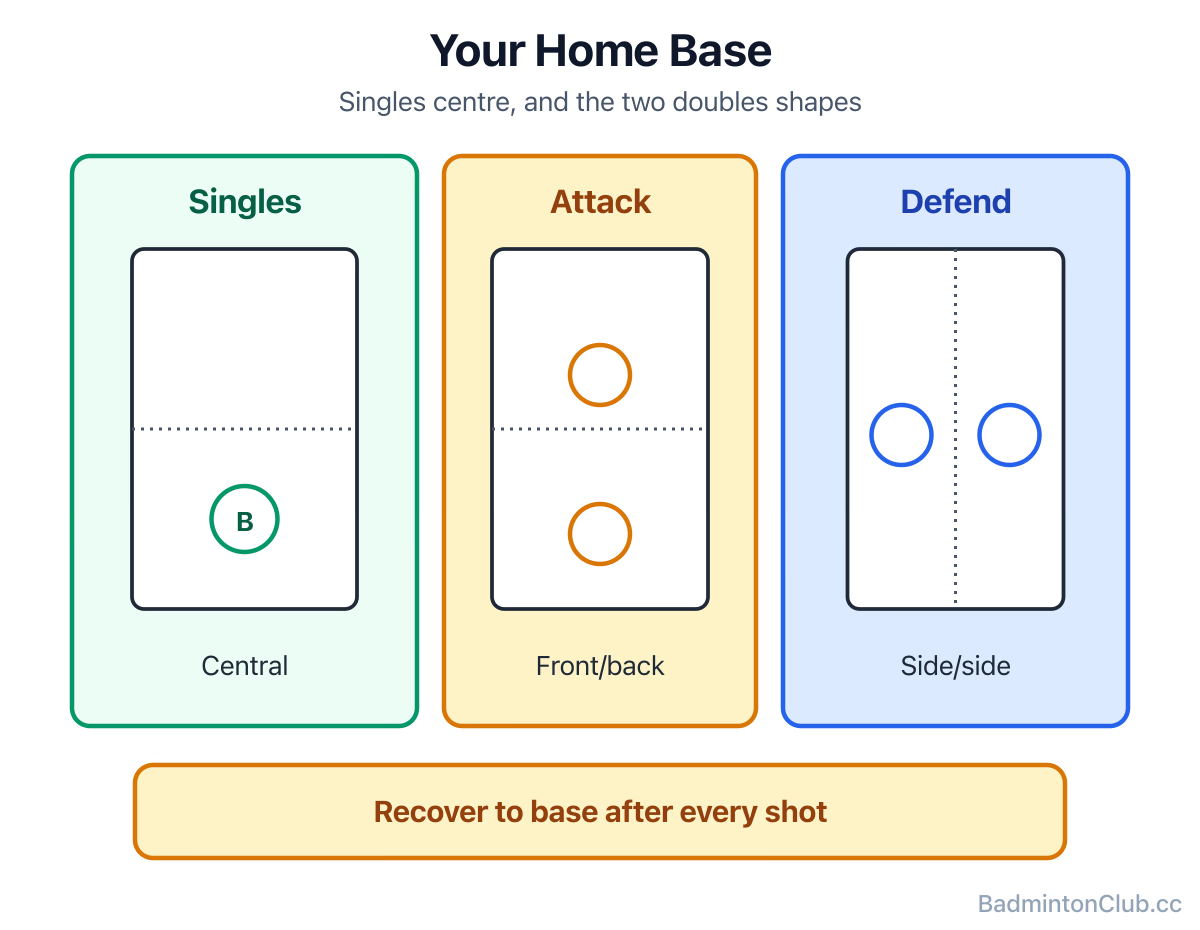
The base position: your home
Every format has a "home" you return to between shots. In singles, it's near the centre, equidistant from all four corners, so no reply is more than one move away. In doubles, your home depends on the formation — net-and-back when your side attacks, half-court-each when you defend. The base isn't a fixed spot you stand still in; it's the place you keep returning to, ready, on the balls of your feet. A player without a base is forever lunging and scrambling; a player with one is calm and covers ground efficiently.
Recovery: the habit nobody drills enough
Here's the thing that separates positioning that works from positioning that doesn't: recovery. It's not enough to know where the base is — you have to get back there after every single shot, fast, before your opponent strikes. Beginners hit a shot and watch it, rooted, then get wrong-footed by the reply. The fix is a hard mental rule: hit, then move back to base, every time, no exceptions. The recovery is part of the shot, not an afterthought. If you do only one thing for your positioning, make recovery automatic.
Recover diagonally, not straight back
Most beginners recover in a straight line back from wherever they hit. Better players recover diagonally toward the centre, and there's a sharp reason. After a net shot, if you back straight up, you leave the cross-court reply wide open. Recover diagonally toward the middle and you cover both the straight and the cross-court return. The same applies from the corners: head for the centre base, not just backward. This diagonal recovery is one of those small habits that looks like talent — the player "reads" the cross-court when really they just recovered to the spot that covers both.
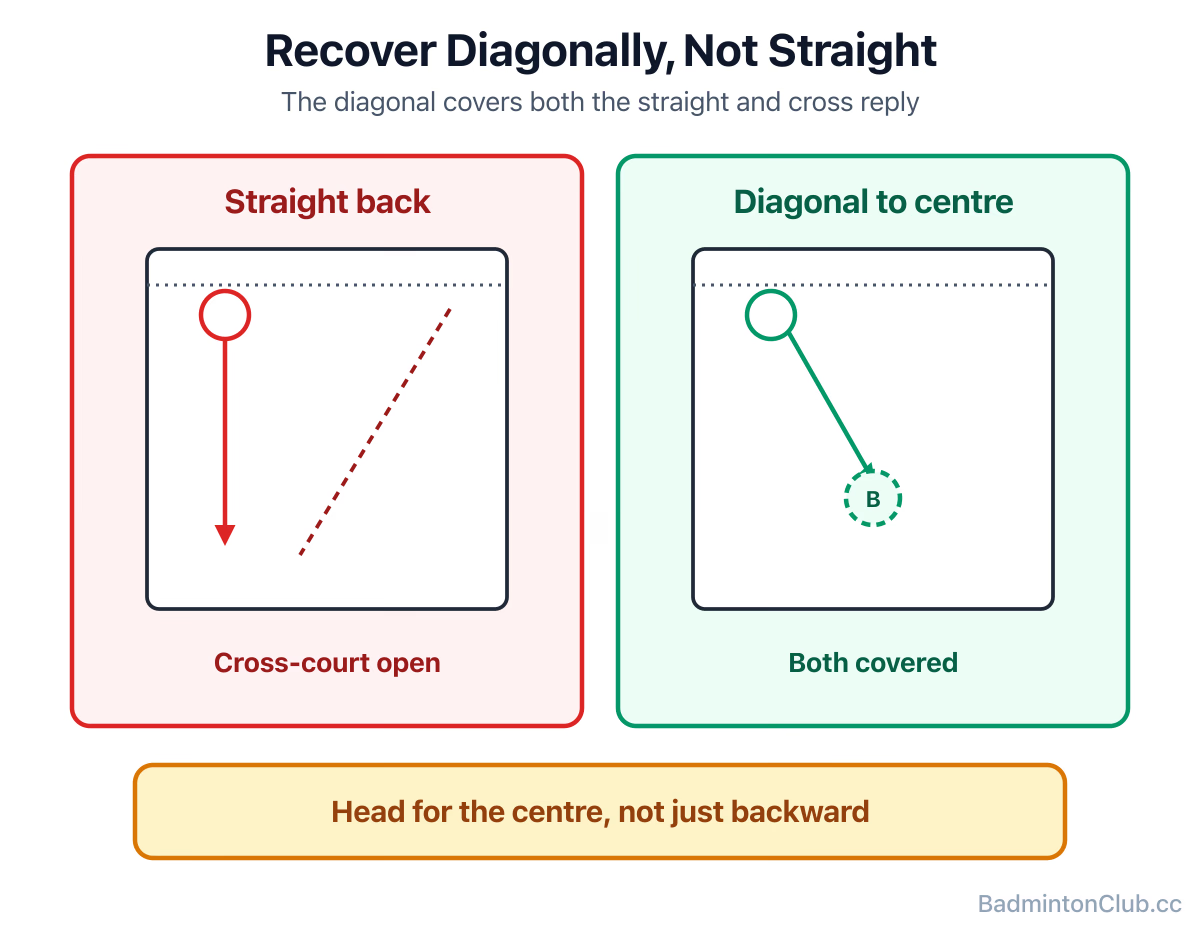
The positioning truth most beginners never hear (original)
I want to make a claim that sounds backwards but is the most useful positioning idea I know: **your position when you hit the shuttle matters less than your position a half-second later.** Beginners obsess over getting to the shuttle; good players obsess over where they'll be once they've hit it. Watch a strong club player and you'll notice they're often already moving toward their recovery spot before the shuttle has left their racket — because they chose a shot that lets them recover, not just a shot that looked good. This is the secret link between shot selection and positioning that nobody spells out: a great shot you can't recover from is a bad shot. A straight clear you can recover from beats a flashy cross-court drop that leaves you stranded. So positioning isn't just footwork — it's choosing shots that protect your court position. When you start picking shots by asking "can I recover from this?" rather than "is this clever?", your positioning fixes itself, and you stop getting caught out of place. The slowest player on court can out-position a faster one simply by never choosing a shot that strands them. Apps that organise busy club nights — a peg board or something like BadmintonClub.cc — won't fix your footwork, but they will get you the regular court time that grooves these recovery habits into instinct.
A positioning drill
Play a normal game but give yourself one rule: after every shot, you must touch your base position before the shuttle comes back. It forces the recovery habit and exposes how often you currently don't bother. Pair it with the diagonal-recovery idea from net shots. A few sessions of this and recovering to base stops being a conscious effort and becomes what you just do.
FAQ
- Q: What is base position in badminton? The "home" spot you return to between shots — central in singles (equidistant from the corners), and net-and-back or side-by-side in doubles depending on the formation. You keep returning to it, ready, after every shot.
- Q: Why is recovery so important in badminton? Because knowing where to stand is useless if you don't get back there. Recovering to base after every shot is what lets you reach the next reply; without it you're permanently wrong-footed and scrambling.
- Q: Should I recover straight back or diagonally? Diagonally, toward the central base. Straight-back recovery (especially from the net) leaves the cross-court open; a diagonal recovery covers both the straight and cross-court replies at once.
- Q: How do I stop getting wrong-footed? Recover to base after every shot and add a split-step as your opponent hits, so you're balanced and ready to move either way. Most wrong-footing comes from admiring your own shot instead of resetting.
- Q: Where do I stand in doubles? Front-and-back when your side is attacking (hitting down), side-by-side when defending (after a lift). Match the formation to who's hitting down — see doubles strategy for the full picture.
- Q: Does positioning matter more than speed? Often, yes. Good positioning and recovery make a slow player effective, because they're already where the shuttle's going. Choosing shots you can recover from beats raw pace. See singles strategy.
Good positioning is the quiet skill that makes everything else easier: stand in the right base, recover to it after every shot, and you reach replies you'd otherwise miss. This guide covers badminton positioning basics for singles and doubles — the central singles base, the front-and-back and side-by-side doubles positions, why you recover diagonally not straight back, and how good positioning turns a slow player into a player who always seems to be in the right place.