How to Get Better at Badminton: A Realistic Plan to Level Up Your Game
8 June 2026 · Badminton Fans
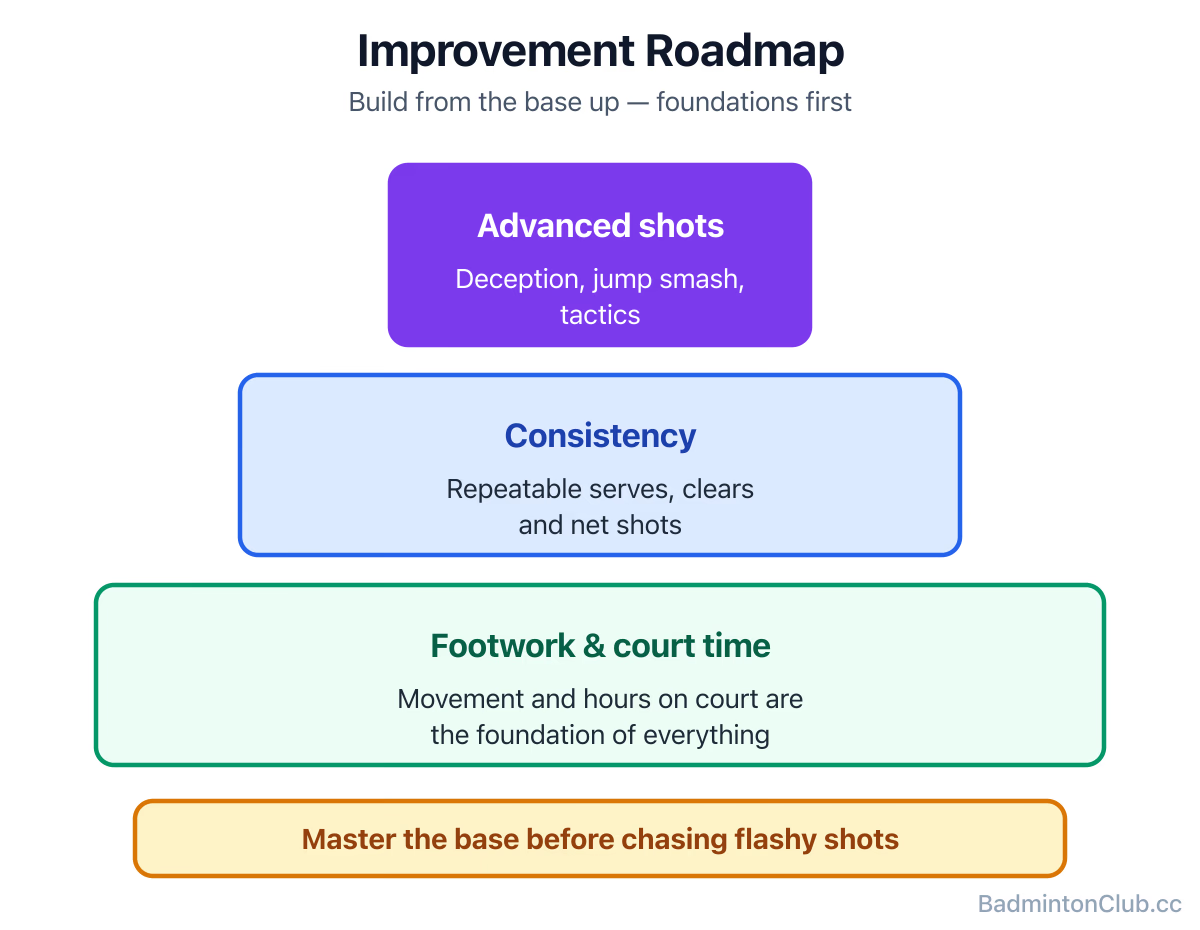
I'll save you the time I wasted chasing the wrong things. To get better at badminton, ignore your smash for now and work on the boring stuff in the right order: footwork first, then a serve you can actually rely on under pressure, then a consistent overhead. Fix one weakness at a time, and find a way to play regularly against people who are slightly better than you. The fastest improvers I've ever seen weren't the most naturally athletic people on court; they were the ones who drilled their movement, accepted that losing to better players was the best lesson they'd get, and protected their court time like it mattered. Power shots and flashy winners are the last thing to chase, not the first. This order is not a suggestion — it's the order that works.
Footwork before everything (the thing that actually levels you up)
If there's one secret, it's this: you cannot hit a good shot you've arrived late to. The single biggest difference between levels is footwork — getting to the shuttle early, in balance, so you can take it high and in front. Most players obsess over strokes and neglect movement, which is exactly backwards. Drill the split-step, the lunge and recovery to base, and the six-corner movement (shadow footwork is perfect for this). Good footwork makes your existing shots look twice as good, because suddenly you're hitting from a balanced position instead of a desperate stretch. Strokes are the visible part; footwork is the engine.
Build consistency, not highlights
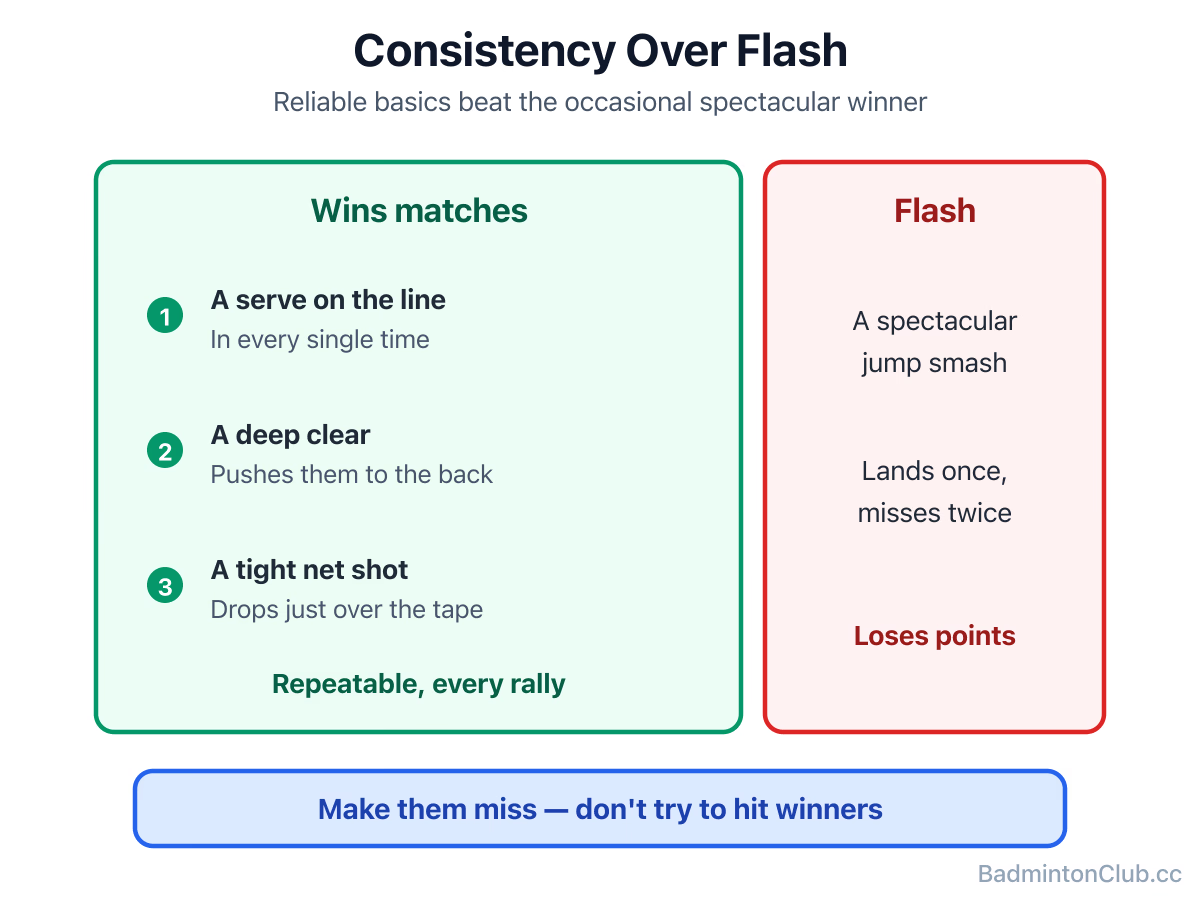
The next layer is reliability. A player who can put a low serve on the line, clear deep every time, and play a tight net shot under control will beat a flashier player who mishits one rally in three. Chase consistency: a serve that never faults, a clear that always reaches the back, a drop that's always tight. Boring? Yes. Effective? Enormously. The drills are simple — serve at a target, rally clears to the back line, play net shots back and forth without lifting — and the gains are real. Highlight-reel shots win rallies; consistency wins matches.
Fix one weakness at a time
Here's a method that works far better than vague "practice more." Every player has a leak — a weak backhand, a serve that floats, footwork to the forehand rear corner, a panic under attack. Pick one. Drill only that for two or three weeks. Then move to the next. Scattershot practice that touches everything improves nothing; obsessive focus on a single weakness for a fortnight produces a visible jump, and the confidence of having fixed something carries into everything else. Be honest about what your weakness actually is — usually it's the shot you quietly avoid in games. That avoidance is the tell.
The honest truth about what makes people improve
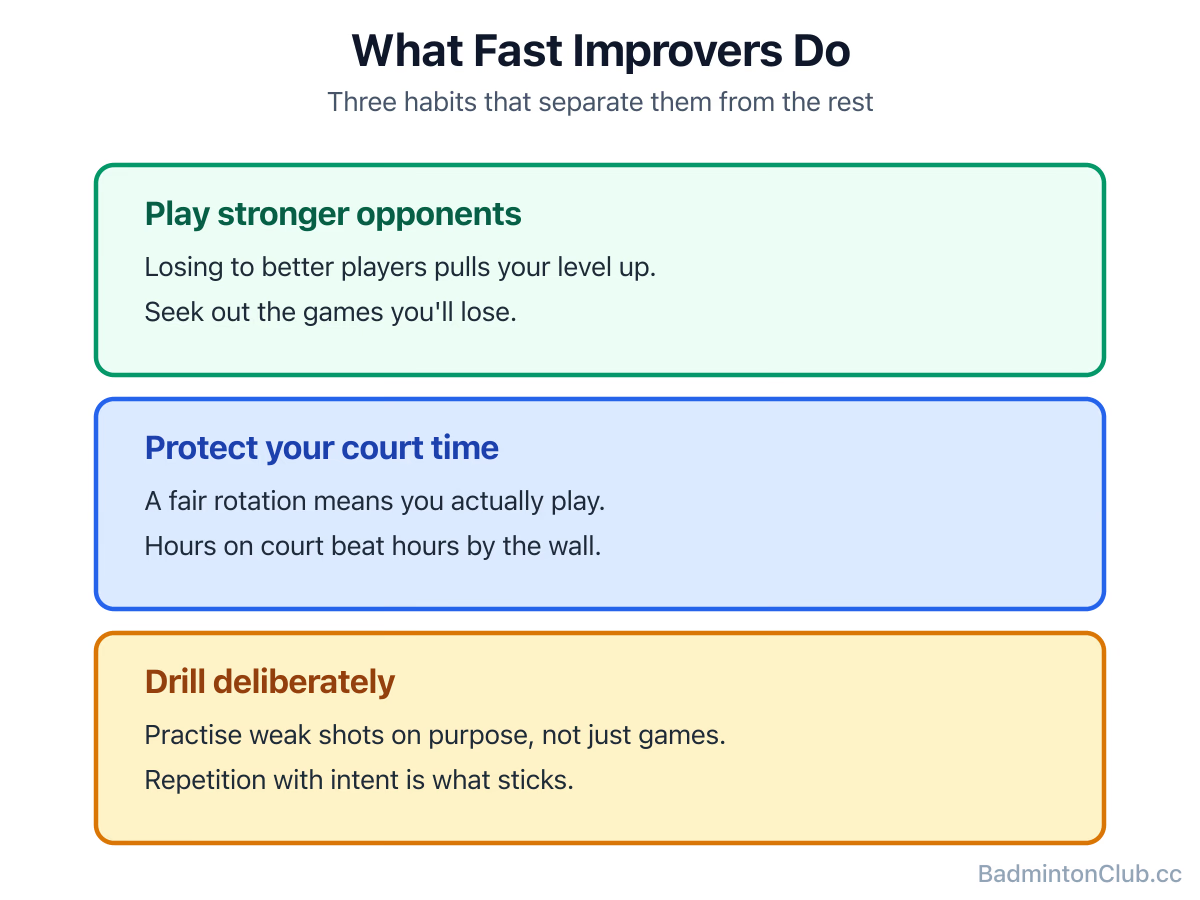
After years around club and county players, the pattern is unmistakable and it's not what beginners expect. The people who improve fastest do three deeply unglamorous things. First, they play opponents better than themselves, on purpose, and lose happily — a night of losing to strong players teaches more than a week of beating weak ones, and the ego hit is the price of progress. Second, they protect their court time — improvement is a function of quality reps, and the player who gets four good games a week beats the one who gets one. Third, they drill deliberately, fixing mechanics alone (footwork, serve, wall drills) rather than only ever playing social games. The unsexy truth is that getting better at badminton is mostly court time + footwork + honest self-assessment, not a magic technique. The players hunting for the one trick that fixes everything are the ones who plateau; the ones grinding the basics are the ones who quietly pass them.
Protect (and increase) your court time
Since court time is the biggest lever, treat it as the thing to optimise. Two short, focused sessions a week beats one long aimless one. Join a club rather than relying on ad-hoc games with the same few friends — you'll face more varied opponents and play more. And pick a club where you'll actually get games: a hall with a fair rotation, where a peg board or an app like BadmintonClub.cc keeps players moving and mixes skill levels, will get you far more quality court time than a clique-y session where you wait by the wall. If you're not sure whether badminton's even for you yet, the honest reassurance is in is badminton hard to learn — but if you're already hooked, the answer to "how do I get better" is almost always "play more, against better people, with attention on your feet."
A simple 8-week improvement plan
Concrete beats vague, so here's a plan that works. Weeks 1–2: footwork only — shadow drills at home, conscious split-step and recovery in every game. Weeks 3–4: serve and clear consistency — target serving, clear-to-the-back rallies, while keeping the footwork habit. Weeks 5–6: pick your single biggest weakness and drill it relentlessly. Weeks 7–8: play up — deliberately seek out stronger opponents and apply everything, losing happily and noting what breaks down. Do this and the difference at week eight is obvious to everyone you play. No magic, no gadgets — just the right things in the right order, with enough court time to make them stick.
FAQ
- Q: How do I get better at badminton? Work on the unglamorous things in order: footwork first, then a consistent serve and overhead, then fix one weakness at a time — and above all get more court time playing people slightly better than you. Power and fancy shots come last, not first. Improvement is mostly court time, footwork and honest self-assessment.
- Q: What is the fastest way to improve at badminton? Drill footwork and play opponents better than you, on purpose, and lose happily. Footwork makes every shot better because you arrive in balance, and stronger opponents stretch you in ways that beating weaker players never will. Two focused sessions a week beats one long aimless one.
- Q: What should I practise to improve at badminton? Footwork (shadow drills and the split-step), serve consistency (target serving), the overhead clear, and whatever single weakness you quietly avoid in games. Pick one weakness and drill only it for two to three weeks, then move on — focused practice beats touching everything.
- Q: Why am I not improving at badminton even though I play a lot? Usually because you're only playing social games and never drilling deliberately, or you're always playing the same-level opponents who don't stretch you. Add focused solo reps (footwork and serving) and seek out stronger players — the missing ingredient is almost always deliberate practice, not more casual games.
- Q: Is footwork really more important than shots in badminton? Yes — you can't hit a good shot you've arrived late to. Footwork lets you take the shuttle early, high and in balance, which makes your existing strokes look far better. It's the single biggest difference between levels, and the most neglected.
- Q: How long does it take to get noticeably better at badminton? With focused practice — footwork, consistency, one weakness at a time, and regular court time against good players — most people see a clear jump in about eight weeks. The unglamorous basics, done deliberately, improve you faster than any single technique fix.
Want to know how to get better at badminton? Forget chasing a harder smash — real improvement comes from footwork, court time, fixing one weakness at a time, and playing people better than you. This is a practical, no-nonsense plan covering what to work on and in what order, how to structure practice, the habits that quietly separate levels, and the mindset that turns a casual player into a genuinely good one. The fixes are unglamorous, but they work.