Is Badminton Hard to Learn? How Easy It Is to Start and What Takes Time
8 June 2026 · Badminton Fans
Badminton tricks you. The first hour is deceptively easy — most people can keep a rally going within minutes, because the basic idea (hit the thing over the net and don't let it land) is almost intuitive. You feel competent fast, and that feeling pulls you in. But then the sport reveals its other side: footwork, deception, stamina, anticipation — a whole world of skill that takes years to build. That easy start followed by a brutal ceiling is exactly what makes badminton so addictive. It's the friendliest racket sport to pick up and simultaneously one of the deepest to play well. I've seen people go from "this is fun" to "I need to fix my backhand" in about three sessions.
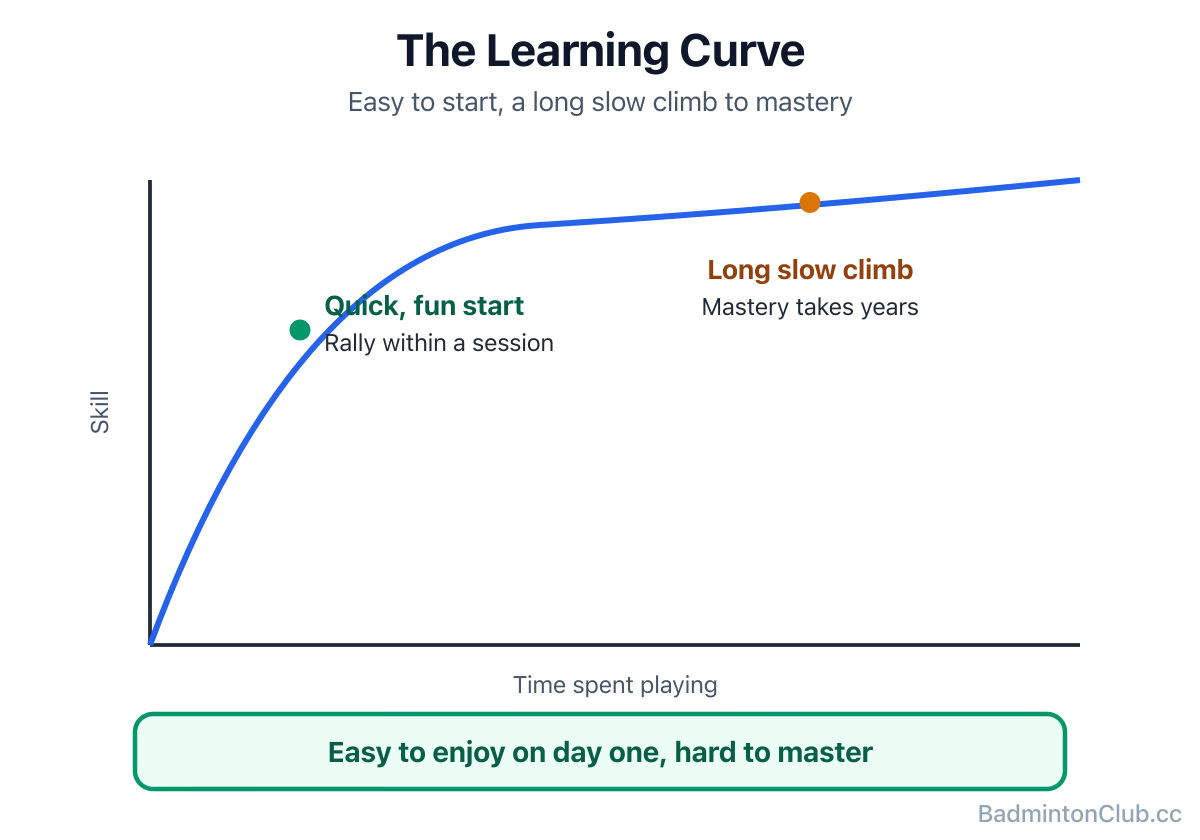
What's genuinely easy (day one)
Badminton has the gentlest on-ramp of any racket sport. The shuttle is light and flies slowly at low power, the court is small, and you don't need a wall or a bounce to time. Within an hour most beginners can serve underhand, return a gentle shot, and keep a short rally going. Compared to tennis (a heavy ball, a big court, a bounce to read) or squash (a hard ball off angled walls), badminton lets a complete novice have fun almost immediately. That early success is why people come back — you feel competent before you're tired of failing.
What takes a few weeks
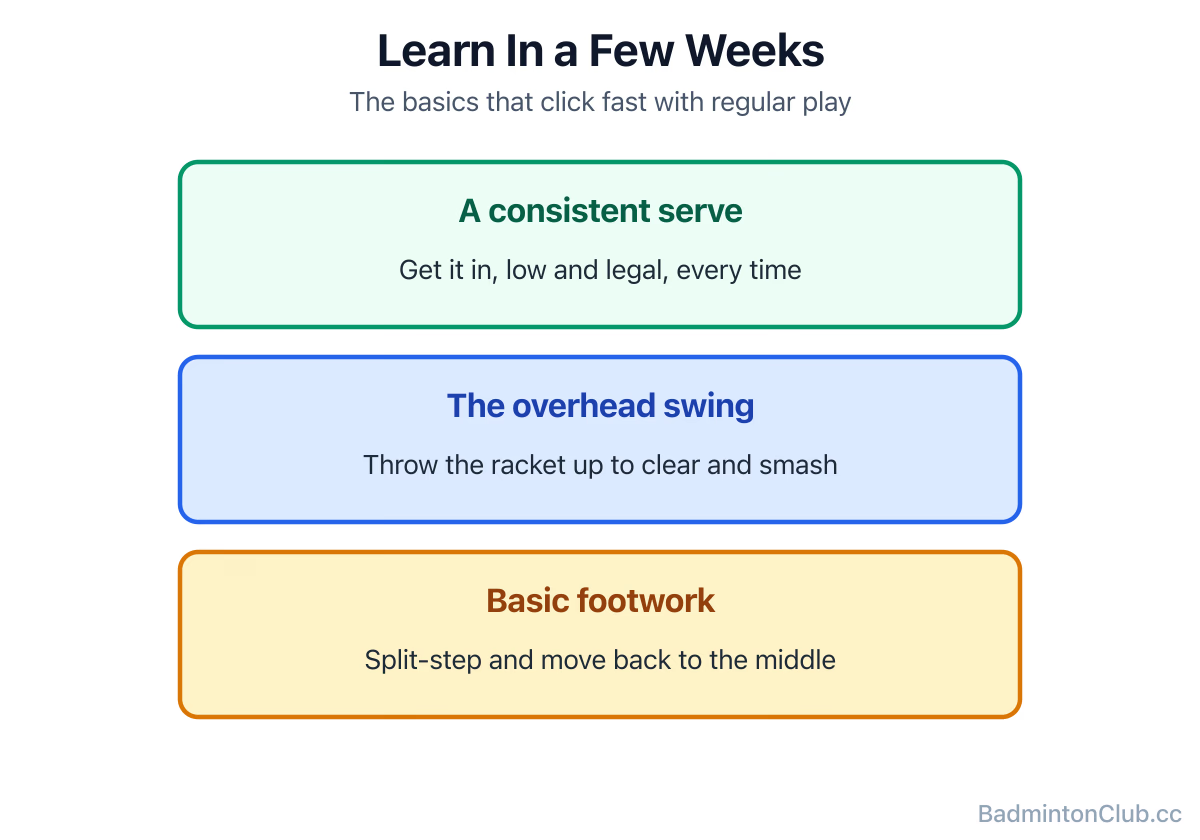
The first real plateau is technique and movement. Three things separate "I can rally" from "I look like I've played":
- A legal, consistent serve — easy to learn, takes a few weeks to make reliable. Detail in the rules of the game.
- The overhead swing — clears, drops and smashes all share one motion driven by forearm rotation, not arm muscle. It clicks in a few weeks of trying.
- Footwork — the split-step and recovering to the middle after every shot. This is the unglamorous skill that quietly does the most, and it takes deliberate practice to feel natural.
What takes years (the mastery ceiling)
Here's where badminton's reputation as "hard" comes from — not the start, but the ceiling. Deception (making a drop look like a smash until the last instant) takes years to do under pressure. Anticipation — reading where the shuttle's going before it's hit — is pattern recognition built over thousands of rallies. And stamina at speed is brutal: a fast doubles rally is an anaerobic sprint, and the elite-level fitness is genuinely extreme. You can enjoy badminton forever without any of this; but the gap between a good club player and a national player is a chasm, and that depth is the point. The sport never runs out of room to improve.
The honest truth about how hard it is
Having taught a fair few beginners, here's the bit the "is badminton easy?" articles get wrong by being too reassuring. Yes, you'll rally in an hour — but you will also be frustrated in weeks two through five, because the easy early progress slows and the next layer (footwork, the backhand, taking the shuttle early) is genuinely awkward. This is the stage where most quitters quit, right before it clicks. The difficulty isn't the skill ceiling you'll never reach; it's the modest dip after the honeymoon, when the sport asks you to fix habits and you feel briefly worse. Push through that — it lasts a few sessions — and the addiction sets in. My honest advice: judge badminton not on your first hour (deceptively easy) or week three (deceptively hard) but on month two, when the basics have settled and the depth starts to reveal itself.
How to make the learning curve easier
A few things genuinely flatten the hard part. Play regularly — two short sessions a week beats one long one, because skill is built by repetition, not marathon effort. Play with people slightly better than you and lose happily; you'll learn more in a night of losing to good players than a week of beating beginners. Get a couple of group lessons early to fix your grip and footwork before bad habits set, though plenty of good players never had a formal lesson. And join a club with a fair rotation so you actually get games rather than standing around — a club that uses a peg board or an app like BadmintonClub.cc to keep newcomers playing will improve you far faster than a clique-y hall where you wait by the wall. Court time is the variable that matters most; protect it. There's more in how to get better at badminton.
FAQ
- Q: Is badminton hard to learn? It's easy to start and hard to master. Most people can rally and enjoy a game within an hour, but getting genuinely good — footwork, deception, stamina — takes years. The gentle start and deep ceiling are what make it addictive.
- Q: How long does it take to learn badminton? You can rally and have fun on day one. Looking competent at club level — moving well, controlling the shuttle, a reliable serve — usually takes a few months of regular play. Mastery is a years-long journey.
- Q: Is badminton easier than tennis? To start, yes — the shuttle is light and slow at low power, there's no bounce to time, and the court is smaller, so beginners rally sooner than in tennis. Both have very high skill ceilings; badminton's is just easier to reach the foothills of.
- Q: What is the hardest part of learning badminton? Usually footwork and the backhand, plus the motivational dip in weeks two to five when early progress slows. The technical hard parts (deception, anticipation) only matter much later; most beginners struggle most with movement and a brief loss of confidence.
- Q: Can I teach myself badminton? Yes — the basics are intuitive and most club players are largely self-taught through play. A few early lessons to fix your grip and footwork speed things up and prevent bad habits, but they're not essential to enjoy the game. See how to get better.
- Q: Why do people give up on badminton early? Almost always in the first few weeks, right when early progress slows and the next layer of skill feels awkward — the dip just before it clicks. Pushing through three or four more sessions, ideally at a welcoming club, is what turns a quitter into a regular.
Is badminton hard to learn? The honest answer: it's one of the easiest sports to start — most people can rally within an hour — but one of the hardest to truly master. This explains exactly what's easy on day one, what takes weeks (footwork, a legal serve, the overhead swing) and what takes years (deception, stamina, anticipation), so you know what to expect and why the gentle learning curve is what makes badminton so addictive.