Badminton Drills for One Person: How to Practise Alone and Actually Improve
8 June 2026 · Badminton Fans
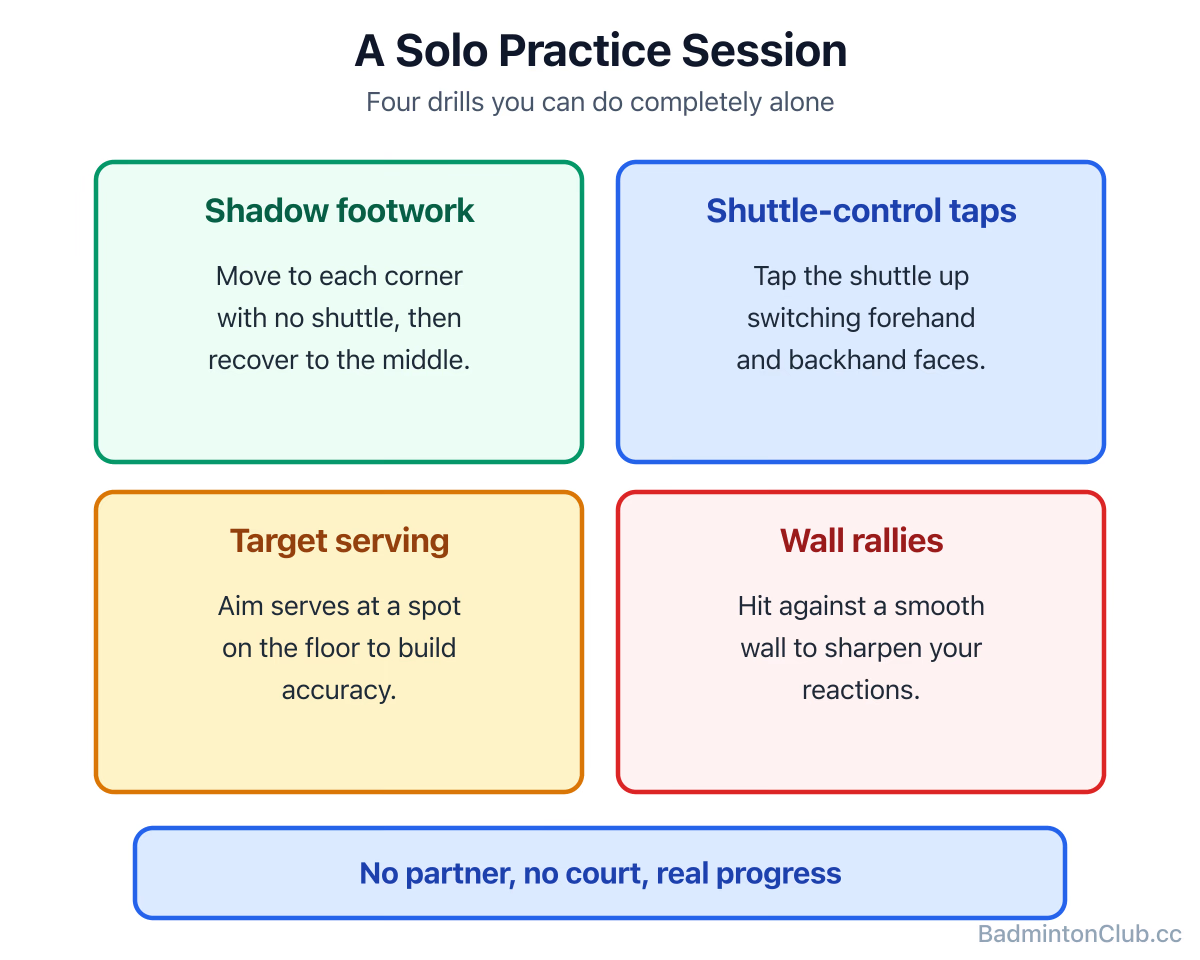
Most people think you need a partner to get better at badminton, and they're half right — for reading an opponent, sure, you need a real person across the net. But the things that actually hold most players back — slow footwork, a serve you can't trust under pressure, hands that feel wooden at the net — those are fixed by repetition, and repetition doesn't need a partner. You can do serious, focused solo work that transforms your game, and an hour of it done properly is worth more than two hours of messing about in a social game where you're not even thinking. Shadow footwork, shuttle control taps, serving at a target, and wall rallies — that's your solo toolkit, and it works.
Shadow footwork (the highest-value solo drill)
If you do one thing alone, do this. Shadow badminton is moving around the court playing imaginary shots — split-step, lunge to a front corner, recover to base, scissor-kick back for a clear — with no shuttle at all. It sounds silly and it's the single best solo drill in the sport, because footwork is what separates levels and it's pure repetition. Pick the six corners (two front, two mid, two back), move to each from your base with proper technique, and recover. Do 2–3 minutes on, short rest, repeat. You'll be sweating fast, and you're grooving the movement patterns that you can't think about mid-rally — they have to be automatic. Pros shadow constantly; beginners almost never do, which is a wasted edge.
Shuttle control and serving against a target
Two more drills that need only you, a racket and shuttles:
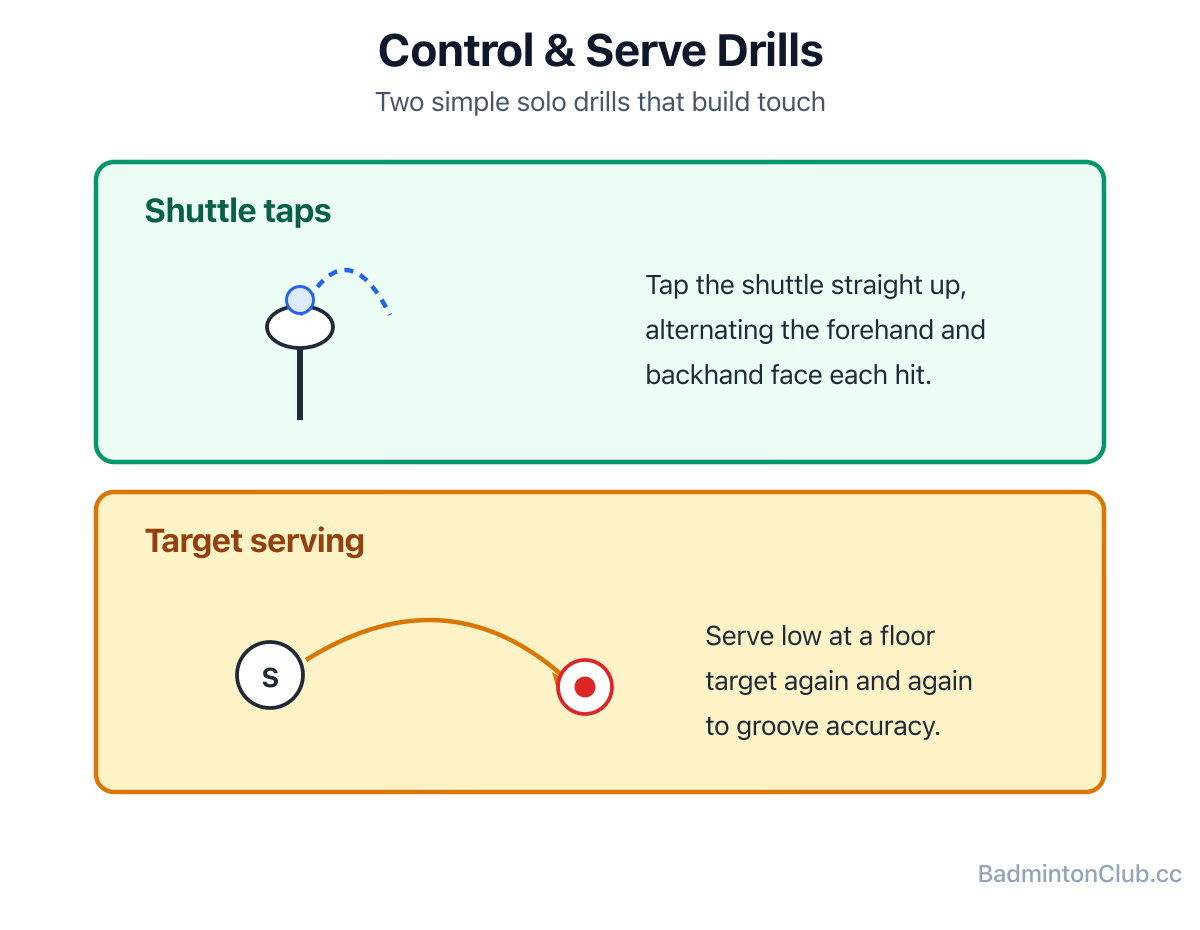
- Shuttle-control taps — bounce the shuttle up off your racket repeatedly, keeping it controlled at a steady height, then alternate forehand and backhand faces, then vary the height. This builds the soft, responsive hands that net play and deception depend on. Five minutes daily and your touch transforms.
- Target serving — put a target (a cone, a shoe, a hoop) on the short service line and serve at it. Count how many of 20 land on target; beat it next time. The serve is the one shot you fully control, and it's the easiest place to leak points — so it's the perfect solo project.
Wall rallies (your tireless partner)
A wall never tires, never judges, and gives the shuttle straight back — which is why wall practice is a staple of solo training. Stand a few metres from a smooth, high wall and rally the shuttle against it, keeping it going as long as you can. It trains fast reactions, consistent contact and grip changes under pressure. It deserves its own full treatment, so the technique, distances and drills live in badminton wall drills — but know that a wall is the closest thing to a free hitting partner you'll find.
How to structure a solo session (so it isn't just messing about)
Here's the honest problem with solo practice: most people who "practise alone" actually just hit a shuttle around aimlessly and call it training. Structure is everything. A focused 45-minute solo session that actually works looks like this: 10 min shadow footwork (six corners, intervals), 10 min serving at a target (count your hits), 10 min shuttle control (taps, forehand/backhand, varying height), 10 min wall rallies, 5 min cool-down. Pick one thing to obsess over each session rather than dabbling in everything. The reason solo practice gets a bad reputation is that people do it without intent; done with a clear target each session, it improves the exact weaknesses that match play never isolates — because in a game you hide your weak serve, but alone you have to face it.
When solo practice beats playing (and when it doesn't)
A genuine opinion, because the "just play more" crowd oversells match time. Solo practice beats playing when you have a specific, isolable weakness — a serve that keeps faulting, footwork that's always late, a backhand you avoid. In a game you'll dodge that weakness; alone, you can't, so you fix it faster. Playing beats solo for everything involving an opponent: shot selection, anticipation, deception, handling pace and pressure. The smart player does both — solo reps to fix mechanics, match play to apply them. If your improvement has stalled despite playing twice a week, the missing ingredient is almost always deliberate solo reps, not more games. And once your basics are solid, mixing solo drills with regular club play — ideally somewhere with a fair rotation so you get real games too — is the fastest combination there is.
FAQ
- Q: Can you practise badminton alone? Yes, and effectively — solo work builds the skills that need repetition rather than an opponent: footwork (shadow movement), serving against a target, shuttle control, and wall rallies. It can't teach reading an opponent, but it fixes mechanics faster than match play, because you can't hide a weakness when you're alone.
- Q: What is the best badminton drill for one person? Shadow footwork — moving to the six court corners playing imaginary shots, split-stepping and recovering to base, with no shuttle. Footwork is what most separates levels and it's pure repetition, so it's the single highest-value thing you can drill without a partner.
- Q: How can I improve my badminton serve alone? Set a target (a cone or shoe) on the short service line and serve at it, counting how many of 20 land on target and beating your score each session. The serve is the only shot you fully control, which makes it the ideal solo project — ten focused minutes twice a week transforms it.
- Q: Can I get better at badminton without a partner? Yes — footwork, serving, shuttle control and wall rallies all improve meaningfully alone, and these are the exact areas that hold most players back. You'll still need match play for shot selection and anticipation, but solo reps fix the mechanics that games never isolate.
- Q: How do I practise badminton against a wall? Stand a few metres from a smooth high wall and rally the shuttle against it, keeping it going as long as possible to train reactions and consistency. It's the closest thing to a free, tireless hitting partner — see badminton wall drills for the full technique and distances.
- Q: How long should a solo badminton practice session be? About 30–45 focused minutes, structured rather than aimless: split it between shadow footwork, target serving, shuttle control and wall rallies, and pick one weakness to obsess over each session. Structured solo practice beats hours of unfocused hitting.
No partner? You can still get meaningfully better with badminton drills for one person. This covers the solo work that genuinely transfers — shadow footwork, shuttle-control taps, serving practice against a target, and wall rallies — plus how to structure a focused solo session so you build the footwork and consistency that hold most players back. Practising alone won't replace match play, but done right it improves the exact skills that need reps, not an opponent.