Badminton Health Benefits: 10 Proven Ways the Sport Improves Body and Mind
8 June 2026 · Badminton Fans
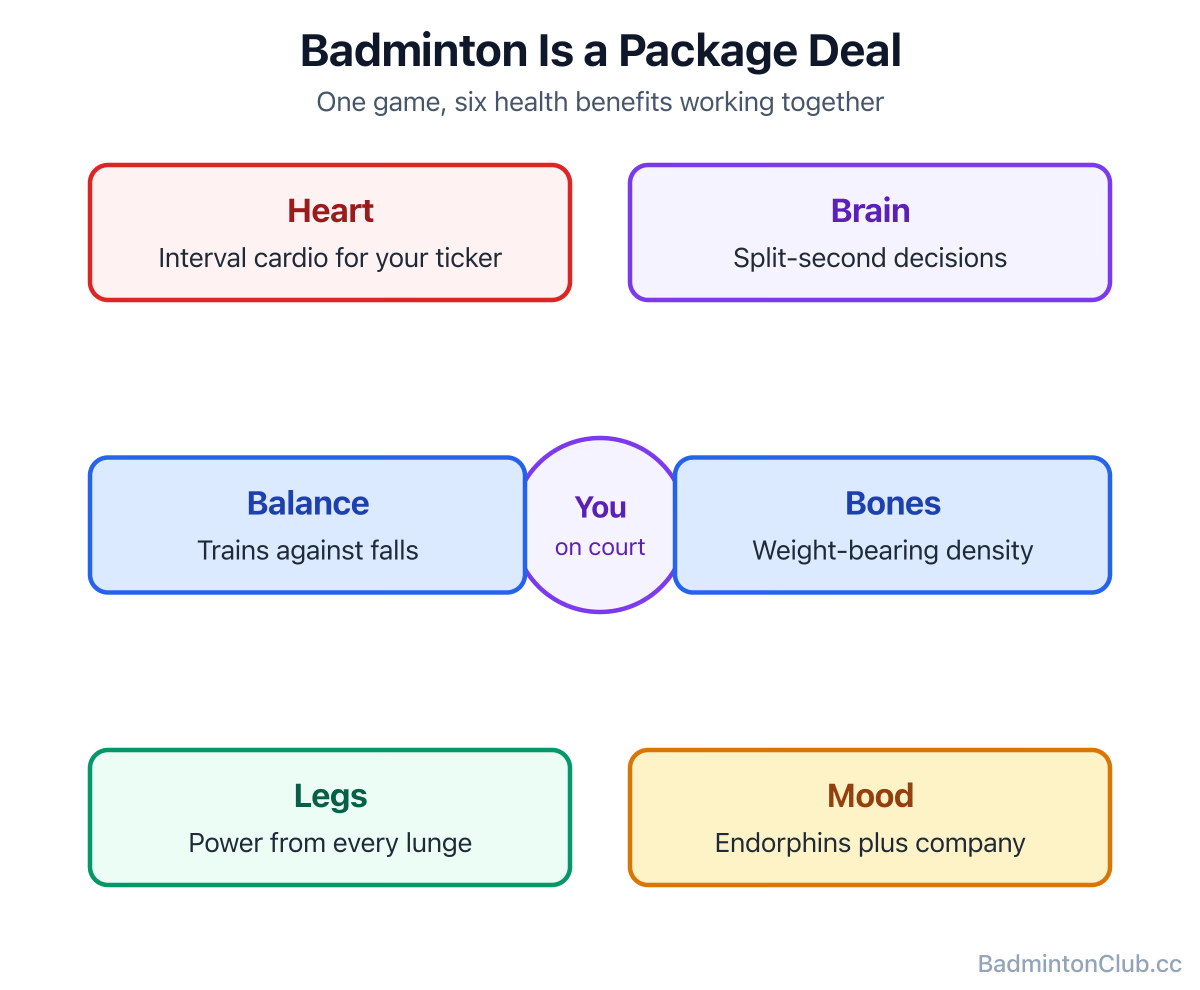
People come to badminton for the fun and stay for the health benefits, often without realising they're getting both. The sport is a package deal: interval cardio that's good for your heart, leg and core conditioning, bone density from the weight-bearing movement, balance training that transfers to everyday life, and — because it's social and game-based — a mood lift that keeps people exercising for decades rather than weeks. The standout statistic is the Oxford-led study that linked racquet sports to a 47% lower risk of dying early. That's not a guarantee and it's not badminton in isolation, but it's a striking signal. Here's what we know for sure and what's still promising.
Heart and cardiovascular health
This is the strongest benefit. Badminton's rally-rest pattern is interval cardio, the kind of exercise most associated with a healthy heart. The Oxford-led study in the British Journal of Sports Medicine found racquet-sport players had 47% lower all-cause mortality and 56% lower cardiovascular mortality than non-players. Badminton was grouped with tennis and squash there, so you can't pin the number on badminton alone — but the direction is clear and consistent with how the sport loads your cardiovascular system.
Longer life (the longevity data)
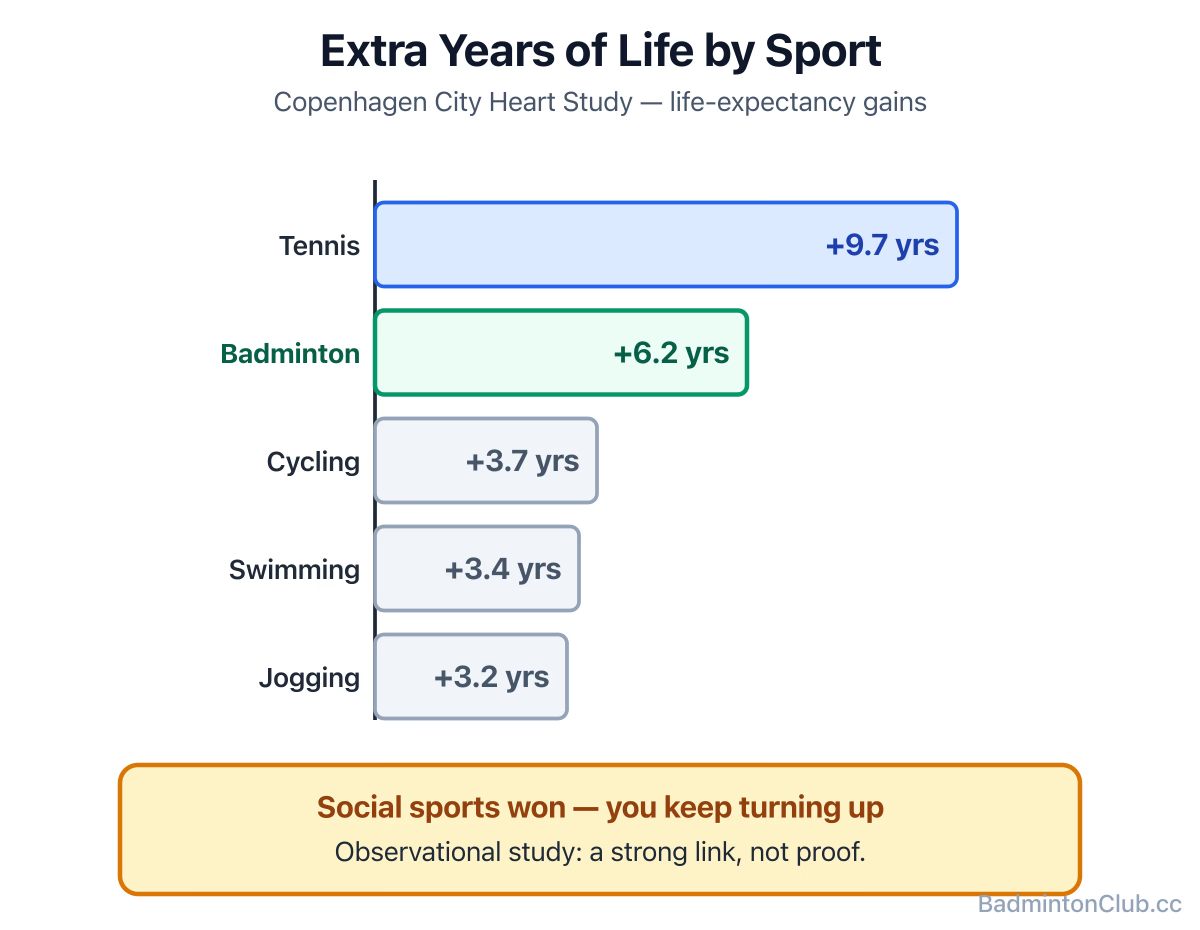
The Copenhagen City Heart Study followed 8,577 people for up to 25 years and estimated life-expectancy gains by sport: tennis came out top at +9.7 years, with badminton second at +6.2 years, ahead of cycling, swimming and jogging. The researchers' theory is that the social sports won — you turn up because people are expecting you, so you keep doing it. Important honesty: this is an observational study. It shows a strong association, not proof that badminton causes those extra years.
Strength, bones and balance
Every lunge, jump and recovery loads your quadriceps, glutes, hamstrings and calves, and the constant rotation works your core. Because it's weight-bearing and involves jumping and rapid braking, it's good for bone density — useful against age-related bone loss. And the relentless changes of direction train balance and proprioception, which is exactly the quality that prevents falls later in life. The muscles guide maps which muscles do what.
Brain, mood and stress
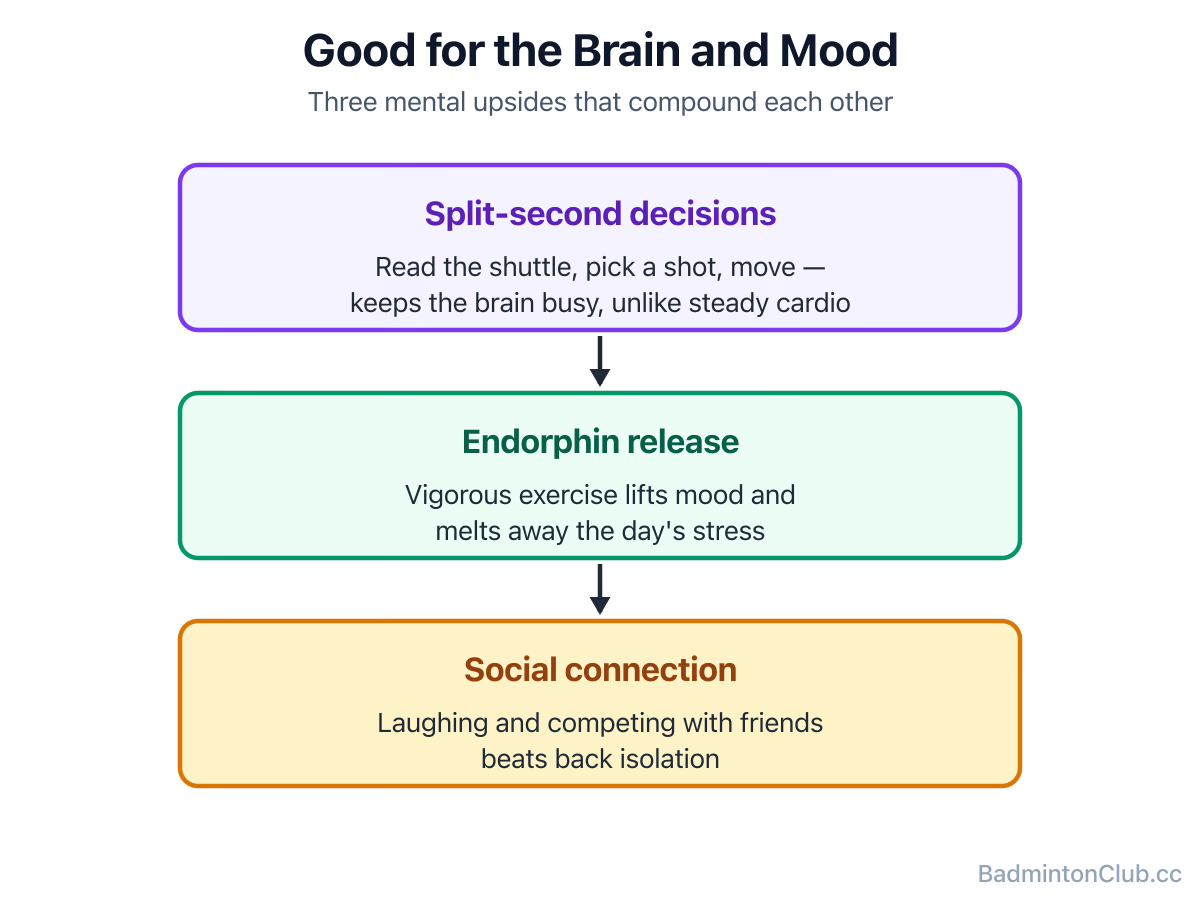
Fast racquet sports demand split-second decisions — read the shuttle, choose a shot, move — which keeps the brain busy in a way steady cardio doesn't. There's growing interest in racquet sports for cognitive health and dementia risk reduction in older players, though that research is still maturing. What's beyond doubt is the mood effect: vigorous exercise releases endorphins, and the social side beats back isolation. An hour of laughing and competing with friends is a mental-health intervention dressed up as a game.
The benefit nobody puts in the listicle
Most "benefits of badminton" pages list ten physical perks and stop. After years around clubs, I think the most underrated benefit is structure — badminton gives your week a fixed, sociable anchor. Tuesday is club night. You go. That single recurring commitment does more for the average person's long-term health than any individual physiological perk, because it's the thing that turns "exercise" from a chore you negotiate with yourself into a standing appointment you wouldn't miss. The people who get the health benefits aren't the ones with the best smash; they're the ones who keep turning up for fifteen years. Habit is the active ingredient, and badminton is unusually good at building it. A well-run club that guarantees you games — rather than leaving you on the sidelines — is half the reason that habit sticks; an organised rotation, whether a peg board or BadmintonClub.cc, keeps the casual member coming back.
Who benefits most
Almost everyone, but the standouts: desk workers (it undoes a day of sitting), people who bounce off the gym (a game keeps them coming), older adults wanting to protect balance and bone (see badminton for seniors), and anyone whose main barrier to exercise is boredom. It's lower-impact than running on the joints over distance, though the lunging does load knees and Achilles — warm up properly with a pre-game stretch.
FAQ
- Q: What are the health benefits of playing badminton? Better cardiovascular fitness and heart health, stronger legs and core, improved bone density, sharper balance and reflexes, lower stress, better mood, and — via its social, habit-forming nature — a more active life overall. Racquet sports are also linked to longer life expectancy.
- Q: Is badminton good for your heart? Yes. It's interval-style cardio, and racquet-sport players show markedly lower cardiovascular mortality in large studies. The evidence is association rather than proof, but it aligns with everything known about interval cardio and heart health.
- Q: Does badminton help you live longer? The Copenhagen City Heart Study linked badminton to about 6.2 extra years of life expectancy — second only to tennis. It's observational, so treat it as a strong association, not a promise, but the social-sport effect is consistent across the data.
- Q: Is badminton good for mental health? Very. Vigorous exercise lifts mood and cuts stress, and the social, competitive game adds connection and focus. Many players say the mental reset is the main reason they keep playing.
- Q: Does badminton build muscle? It builds muscular endurance and tones the legs, core and shoulders rather than bulking you up. For raw strength gains you'd add resistance training — see badminton vs the gym.
- Q: Is badminton good for weight loss? It can be — it burns a solid 280–450+ calories an hour and is enjoyable enough to sustain, which is what actually drives fat loss. The full picture is in the weight-loss guide.
Badminton's health benefits go well beyond burning calories: it strengthens your heart, sharpens reflexes and balance, builds bone and leg strength, lifts mood, and — through its social, game-based nature — keeps people exercising for decades. This guide gathers the evidence-backed benefits, including the study linking racquet sports to a 47% lower risk of early death and the Copenhagen data tying badminton to longer life expectancy, with the honest caveats on what's proven versus promising.