Badminton for Seniors: Is It Safe, What Are the Benefits, and How to Start Later in Life
8 June 2026 · Badminton Fans
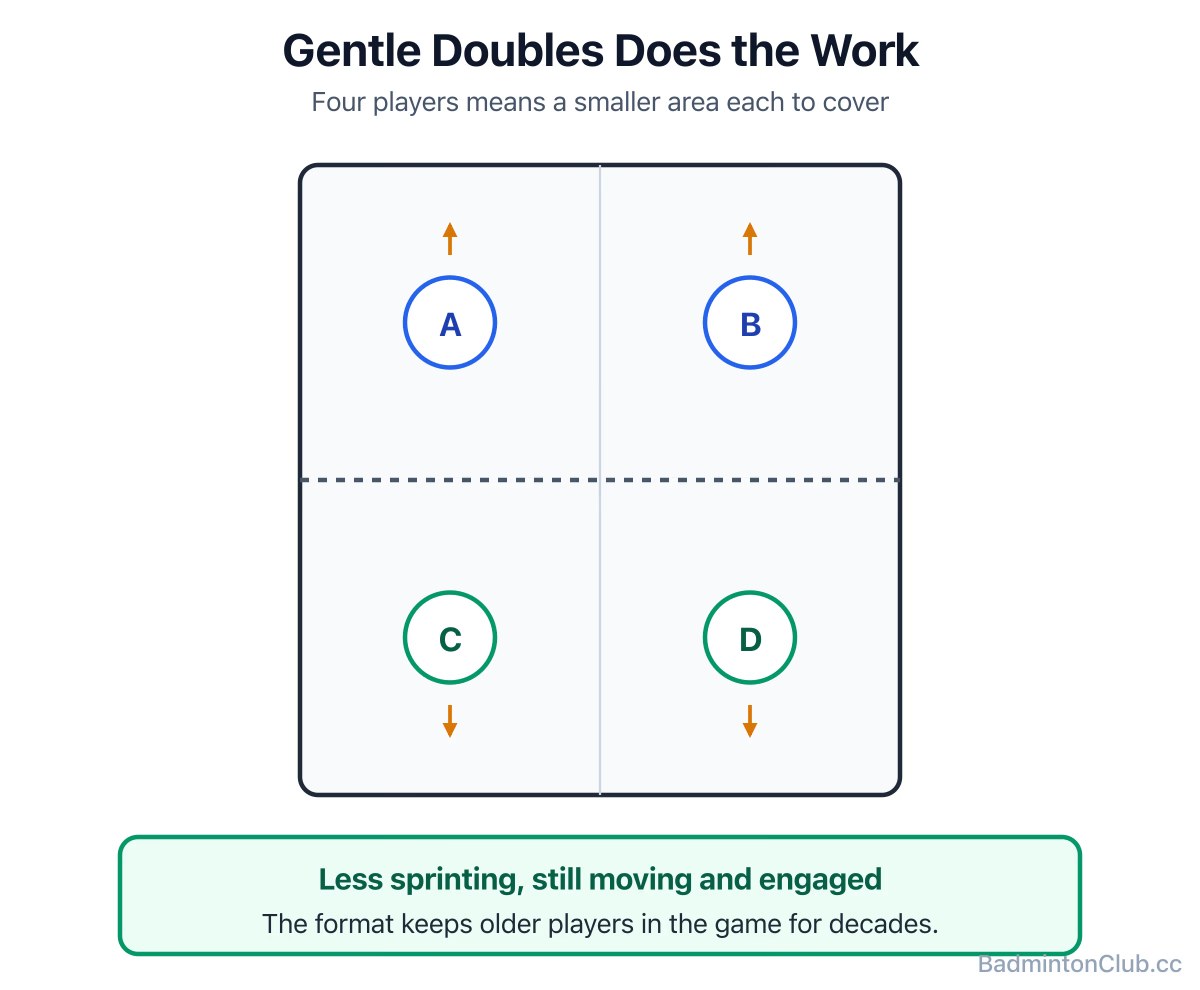
Senior players are some of the cleverest and most enjoyable people to share a court with, and there's a reason badminton has one of the oldest age ranges of any racket sport. Played sensibly — which usually means gentle doubles on a shared court — it delivers almost everything an older adult needs from exercise: cardiovascular work, balance training that directly prevents the falls that threaten independence, weight-bearing movement that helps maintain bone density, cognitive engagement from reading the shuttle and choosing shots, and the social connection that fights the isolation that quietly damages health in later life. The format does the work for you. Four players spread across a court means far less sprinting than singles, but you're still moving, still engaged, still part of the game. I've played against 70-year-olds who moved me around the court like a puppet.
Why it's so good for older adults
The benefits that matter most as you age are exactly the ones badminton delivers. Balance and proprioception — the constant small adjustments to reach the shuttle directly train the systems that stop you falling, and falls are the single biggest threat to independence in later life. Bone density — the weight-bearing, gently impactful movement helps counter age-related bone loss. Heart health — moderate interval cardio without pounding your joints over distance. Cognition — reading the shuttle and choosing shots keeps the brain engaged; racquet sports are an active area of research for cognitive ageing. And the social side directly fights the isolation that quietly damages older people's health.
The risks to manage honestly
It's not risk-free, and pretending otherwise helps nobody. The real hazards for seniors are:
- Sudden sprints and lunges to a wide shuttle, which strain calves, Achilles and hamstrings if you're cold or push past your range.
- Falls from over-reaching or a quick change of direction.
- Joint load on knees and hips from deep lunging.
- Cardiac risk — as with any vigorous exercise, anyone with heart concerns or who's been inactive should get a doctor's clearance before starting.
None of these is a reason not to play. They're reasons to play smart.
How to start (or come back) safely
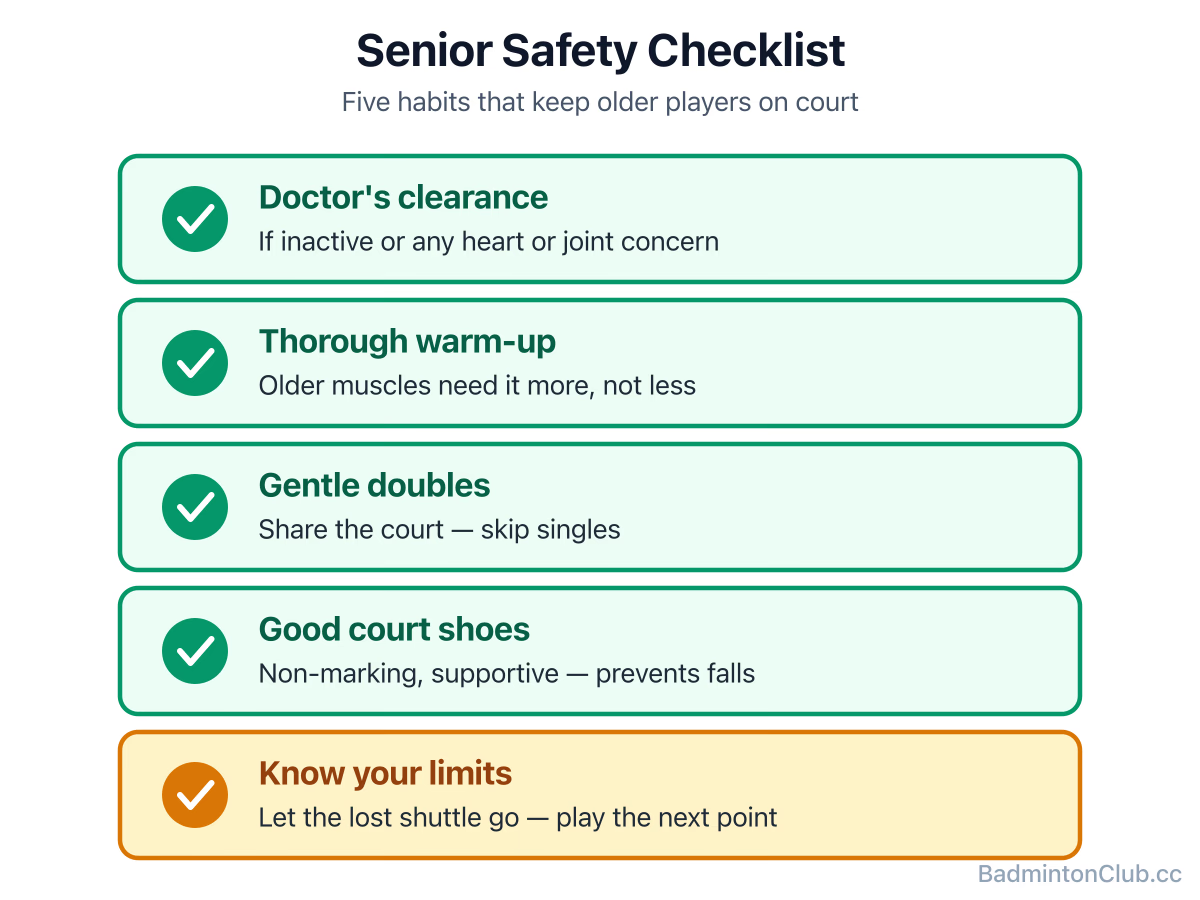
Get a check-up first if you've been inactive or have any heart, joint or blood-pressure concerns. Then: warm up properly every time — older muscles need it more, not less (the pre-game stretch is doubly important). Wear proper non-marking court shoes with good support; this single thing prevents a lot of ankle and fall injuries. Start with gentle doubles, not singles. Don't lunge to your absolute limit for a shuttle that's gone — let it go and live to play the next point. Build up over weeks. And play with people who get it; a club used to mixed ages and abilities will pace games kindly.
What good clubs do — and the format that keeps people playing
Here's the practical bit, from watching plenty of clubs do this well and badly. The clubs where seniors thrive aren't the ones with separate "old folks" sessions tucked away — they're the ones where the rotation is fair and mixed, so a 68-year-old plays a few games with stronger younger members who dial it down, then a few at their own pace. The magic is in the organisation: nobody hogs a court, everyone gets games, and the gentle players aren't left standing on the side feeling like a burden. That's genuinely hard to manage by memory in a busy hall, which is why a peg board or an app like BadmintonClub.cc earns its place — it guarantees the quieter members actual court time instead of leaving them at the mercy of whoever shouts loudest. The single biggest reason older players quit isn't their knees; it's being left on the sidelines. Solve the rotation and you keep people in the game for an extra decade.
A mild opinion on the "gentle" stigma
Some older players resist switching to gentle doubles because it feels like admitting decline. I'd push back hard on that. The skill in badminton was never raw speed — it's touch, placement, anticipation and deception, all of which survive aging beautifully and often improve. A clever 70-year-old who plays the angles will quietly dismantle a 25-year-old who only knows how to smash. Lean into the craft. The game gets more interesting, not less, when you can't rely on athleticism — and that's exactly the version that keeps you healthy for the longest.
FAQ
- Q: Is badminton good for seniors? Excellent — it trains balance (preventing falls), heart health, bone density and cognition, and it's social. Played as gentle doubles it scales to most fitness levels and is one of the best sports for healthy ageing.
- Q: Is badminton safe for older adults? Generally yes, with sensible precautions: a doctor's clearance if you've been inactive or have heart/joint issues, a thorough warm-up, good court shoes, gentle doubles, and not lunging past your limit. The main risks are sprains, falls and joint strain.
- Q: Can you start playing badminton at 60 or older? Absolutely. Start gently, get a check-up first if needed, warm up well, and play doubles. Touch and tactics — which matter most in badminton — keep improving with age even as raw speed fades.
- Q: What are the risks of badminton for seniors? Sudden sprints and lunges straining calves and Achilles, falls from over-reaching, joint load on knees and hips, and the general cardiac risk of vigorous exercise. All are manageable with warming up, good shoes and smart play.
- Q: How often should an older adult play badminton? Two to three moderate sessions a week with rest days between is a sustainable target for most older players. Recovery takes longer with age, so spacing sessions and warming up well matters more than frequency.
- Q: Is singles or doubles better for seniors? Doubles, clearly. Four players sharing the court means far less running and sprinting, so you get the cardio, social and balance benefits without the relentless court coverage that singles demands.
Badminton is one of the best sports for older adults: it protects the heart, sharpens balance to prevent falls, keeps the mind quick, and is intensely social — and it can be scaled to almost any fitness level. This guide covers the real benefits for seniors, the genuine risks to manage (joints, falls, sudden sprints), how to start or return safely later in life, and why gentle doubles is the format that keeps people playing well into their seventies and beyond.