Muscles Used in Badminton: The Full-Body Map of Every Lunge, Smash and Recovery
8 June 2026 · Badminton Fans
If you ask a non-player what muscles badminton works, they'll probably say "the arm." They're wrong — and the mistake is so common that even some beginners I've coached are surprised when they wake up the morning after their first real session. The legs do most of the work, by a huge margin. Every lunge, every jump push, every recovery step is powered by your quads, glutes, hamstrings and calves. Your core drives every rotation. Your shoulder and forearm generate the whip behind your shots. But the arms? They're mainly along for the ride, doing the fine work while the legs do the heavy lifting. The surprise for most beginners is that the power in a smash comes from your forearm rotating, not your biceps flexing — and that the legs are what actually get you tired.
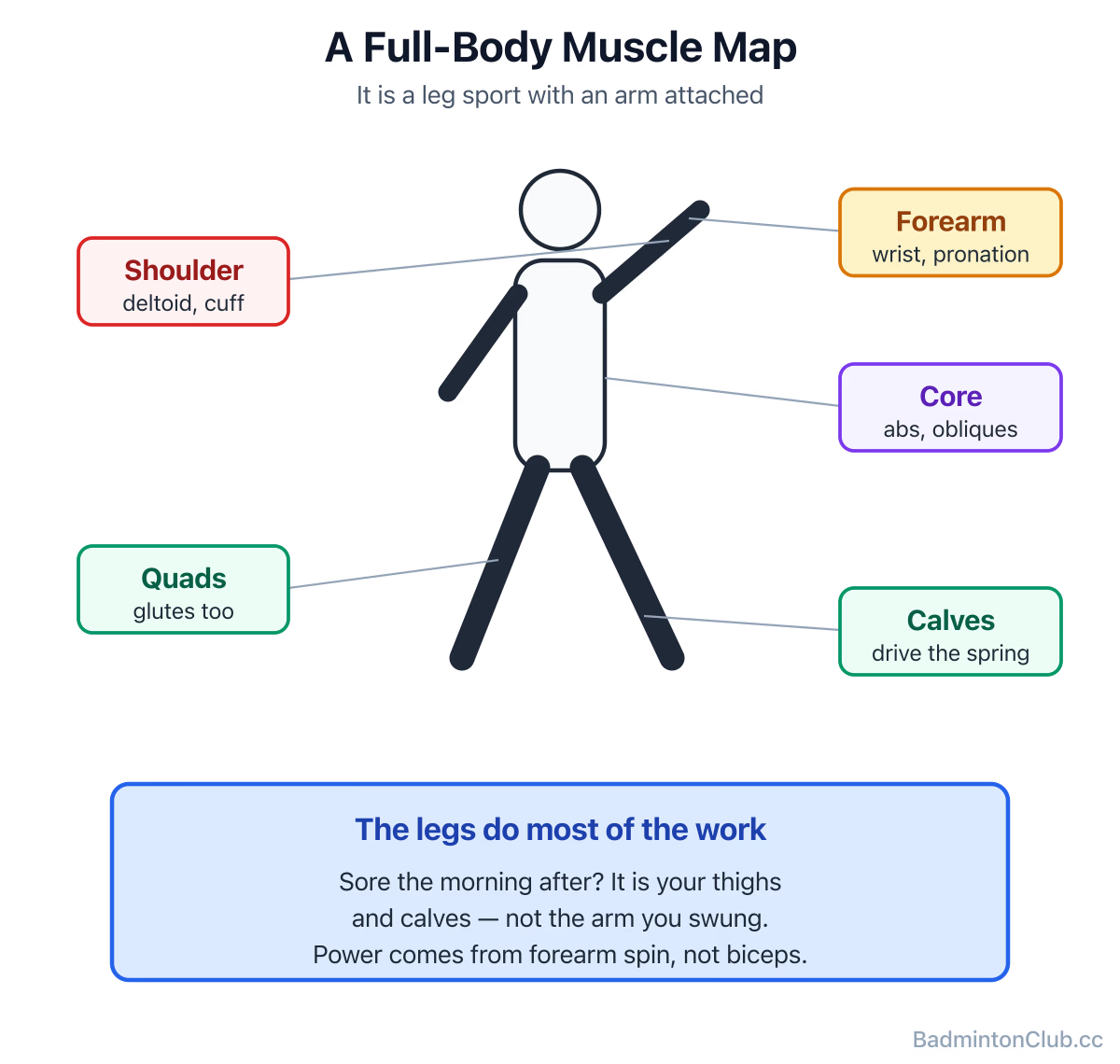
The legs do most of the work
People think badminton is an arm sport. It's a leg sport with an arm attached. Almost every shot starts with a lunge, push or jump, and that's driven by:
- Quadriceps (front thigh) — extend the knee in every lunge and jump; they take a pounding.
- Gluteus maximus — the big power muscle for accelerating, jumping and exploding off the back foot.
- Hamstrings — decelerate you and stabilise the knee during sharp direction changes.
- Gastrocnemius and soleus (calves) — drive the split-step, the spring into a jump, and every push off the floor.
If you're sore anywhere after your first proper session, it's your thighs and calves — that tells you where the work happened.
The core: the link nobody trains
Every overhead shot is a rotation: hips and trunk turn, then unwind to whip the racket through. That's your abdominals, obliques and lower back (erector spinae) transferring power from your legs to your arm. A weak core is why a lot of players have a feeble smash despite strong arms — the chain breaks in the middle. The core also stabilises you mid-lunge so you don't collapse when you reach wide.
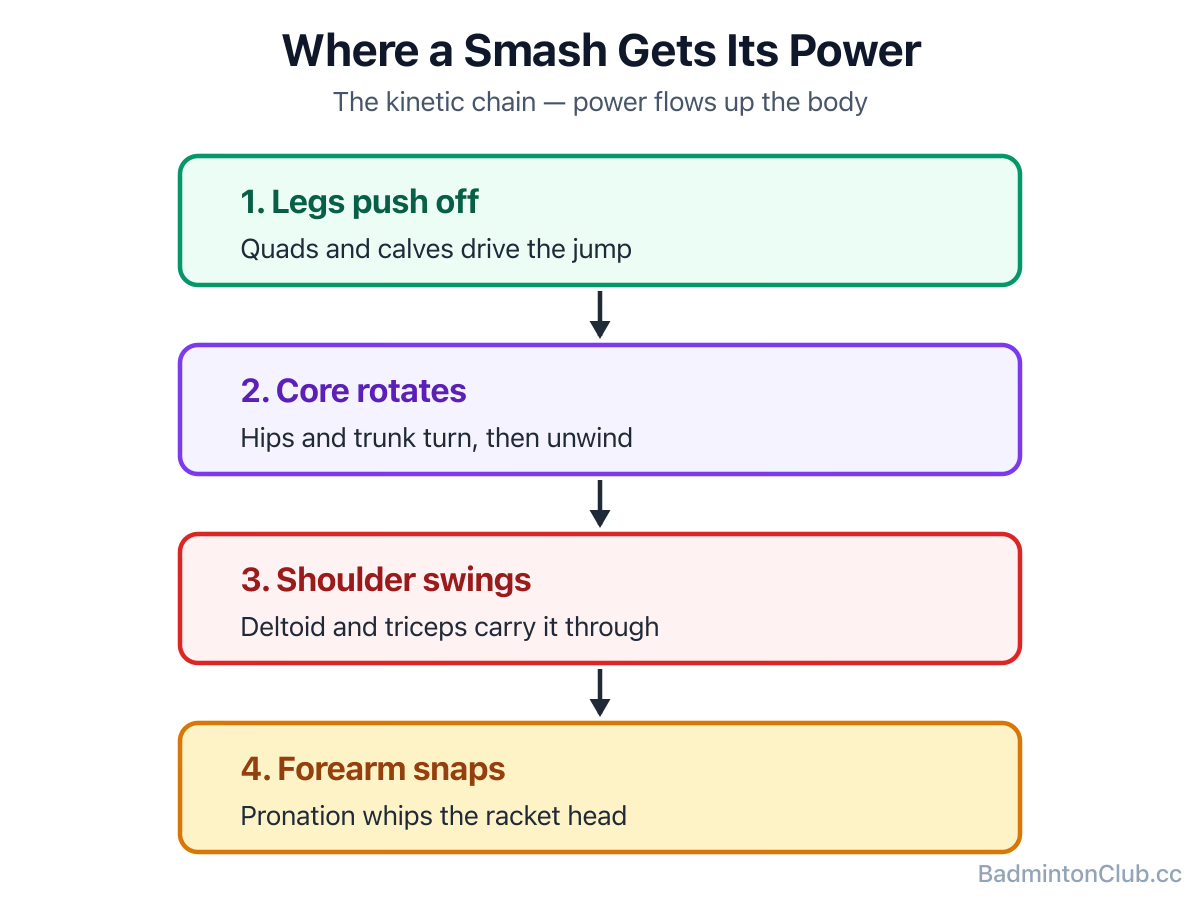
Shoulder and arm: where the racket speed comes from
The hitting action uses:
- Deltoids and rotator cuff — lift, position and stabilise the shoulder through overhead shots. The rotator cuff is small but heavily worked, which is why shoulder niggles are common.
- Triceps — extend the elbow through the swing.
- Forearm muscles (wrist flexors/extensors) — these drive pronation, the forearm rotation that snaps the racket head through the shuttle. This, not the biceps, is the real engine of a smash.
Notice the biceps barely features. Beginners who try to muscle the shuttle with a big bicep-driven arm swing get tired, weak shots; the power is in forearm rotation.
The muscle imbalance nobody warns you about
Here's something I've watched cause injuries for years, and you won't find it on a tidy muscle-map page. Badminton is brutally one-sided and front-loaded. You play every shot with one arm, so your racket-side shoulder, forearm and even your trunk develop asymmetrically — long-term players often have a visibly more developed playing side. More importantly, the sport hammers the front of your legs (quads, hip flexors) and the lunging Achilles far harder than the back, and it loads the shoulder in overhead positions far more than below. Left unmanaged, that imbalance is exactly where the classic badminton injuries come from: tennis/golfer's elbow, rotator-cuff trouble, jumper's knee, Achilles strain. The fix isn't on-court — it's a bit of off-court work that deliberately trains the neglected sides: hamstrings, the non-racket side, the back of the shoulder. Ten minutes twice a week aimed at your weak side prevents the injury that costs you three months. The dedicated strength-and-conditioning work lives in the separate fitness series; here, just know the imbalance exists and respect it.
What to strengthen and stretch
To hit harder and stay healthy, prioritise: legs (squats, lunges, calf raises) for power; core (planks, rotations) for the transfer; forearm and wrist for racket speed; and rotator cuff for shoulder health. And stretch the muscles that get tight and short — hip flexors, calves, shoulders — which is exactly what a pre-game stretch routine targets.
FAQ
- Q: What muscles does badminton work? Mainly the legs (quadriceps, glutes, hamstrings, calves), the core (abs, obliques, lower back), and the shoulder and forearm (deltoids, rotator cuff, triceps, wrist muscles). It's a genuine full-body workout, with the legs doing most of the work.
- Q: Does badminton work your legs or arms more? Your legs, by a long way. The lunging, jumping and constant direction changes load the lower body far more than the single hitting arm. Most first-timers are sore in the thighs and calves, not the arm.
- Q: Which muscle gives power to a badminton smash? Forearm rotation (pronation) driven by the wrist flexors/extensors, powered by a kinetic chain running from the legs through the rotating core to the shoulder — not the biceps. Racket-head speed, not arm strength, makes a smash.
- Q: Does badminton build muscle? It builds muscular endurance and tones the legs, core and shoulders rather than adding bulk. For real size or strength you'd add resistance training — see badminton vs the gym.
- Q: Why does my shoulder/elbow hurt after badminton? The rotator cuff and forearm tendons take heavy, repetitive load from overhead shots and the wrist snap, and the sport is one-sided. Warm up, build those muscles, and don't over-grip — that combination prevents most of the classic strains.
- Q: Is badminton a full-body workout? Yes. It works the lower body, core and upper body together in one explosive package, plus cardiovascular fitness and balance. Few sports engage so much of the body in a single rally.
Badminton is a full-body sport, and this maps exactly which muscles do the work: the quads, glutes and calves that power your lunges and jumps, the core that drives every rotation, and the shoulder and forearm muscles behind the smash. You'll learn which muscle group does what on court, why the forearm matters more than the biceps for power, and which muscles to strengthen and stretch to hit harder and avoid the sport's classic injuries.