Badminton vs the Gym: Which Is Better for Fitness, Fat Loss and Actually Sticking With It
8 June 2026 · Badminton Fans
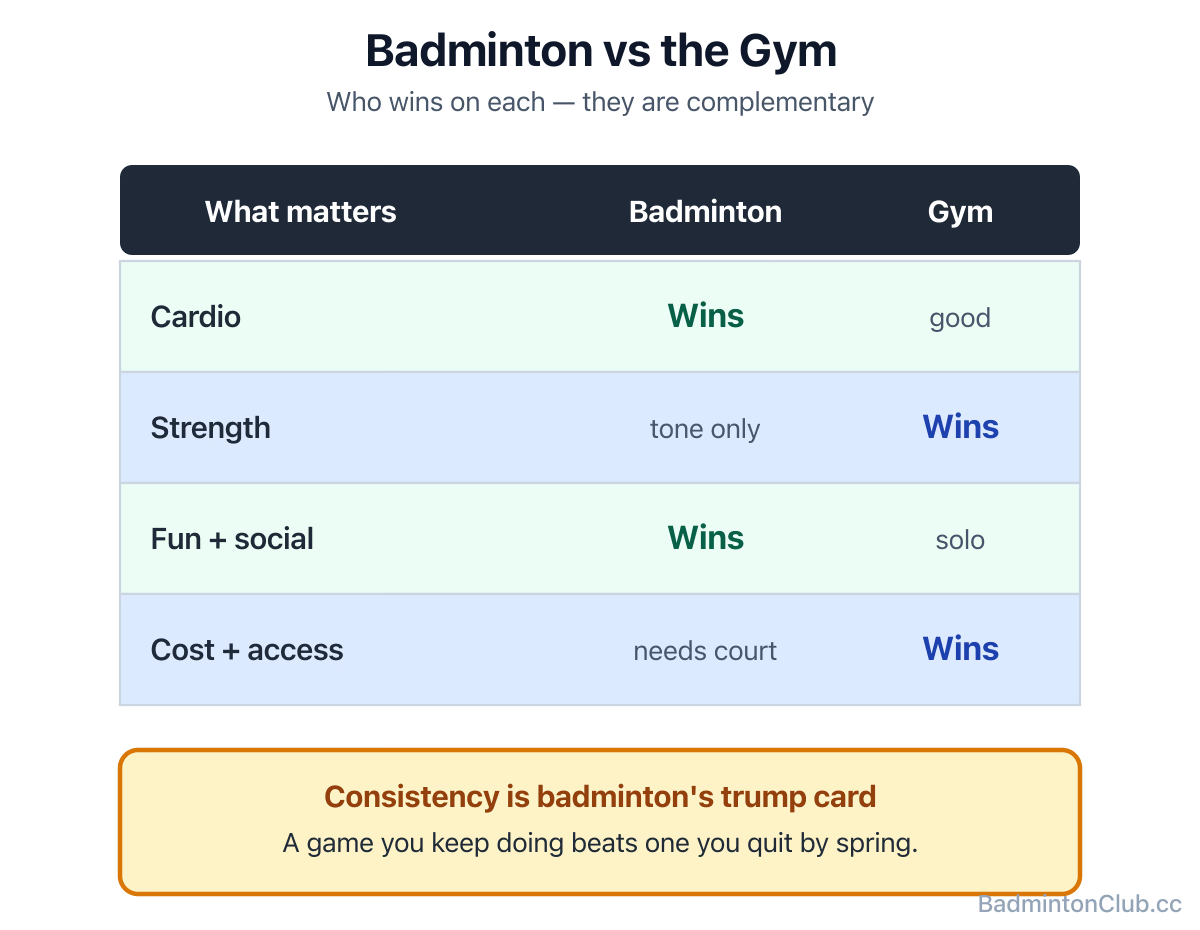
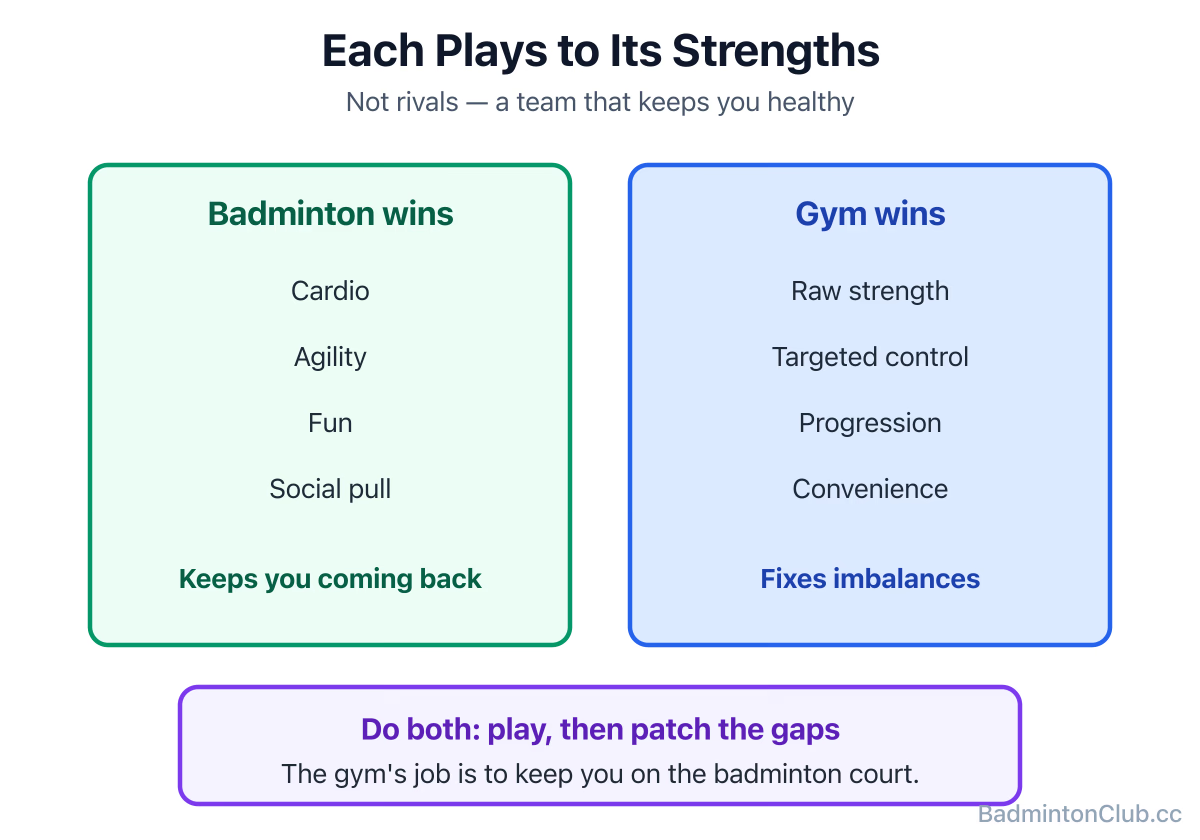
I've spent years going back and forth between badminton and the gym, and the honest conclusion is that they're not competitors — they're complementary, and framing them as an either/or is the wrong way to think about it. Badminton wins on cardio, agility, fun, and the social pull that keeps you doing it for years. The gym wins on building raw strength, targeting specific muscles, and giving you total control over your training progression. If you only care about general health and enjoyment, badminton edges it. If you want to get genuinely stronger or build visible muscle, the gym does that better. But the smartest answer is both. Badminton keeps you fit and coming back; the gym keeps you injury-free by fixing the muscle imbalances badminton creates.
Where badminton wins
- Cardio and agility: the interval pattern trains heart and lungs hard, and nothing in a gym matches the lateral movement, reaction time and balance badminton builds.
- Fun and consistency: this is the decisive one. A game you enjoy gets done for decades; a treadmill gets abandoned by spring. The best workout is the one you'll actually keep doing, and badminton wins that contest comfortably for most people.
- Social connection: you turn up because people expect you. That accountability and the mental-health upside are things a solo gym session simply doesn't provide.
- Whole-body in one go: legs, core, shoulders, cardio and coordination, all in a single rally.
Where the gym wins
- Building strength and muscle: if you want to get genuinely stronger or add muscle size, progressive resistance training is the tool. Badminton builds endurance and tone, not raw strength or bulk.
- Total control and progression: you can target any muscle, load it precisely, and add weight week by week. Badminton's "training" is whatever the game throws at you.
- Predictability: no partner needed, no court to book, open at 6am. You can train rain or shine, alone, on your schedule.
- Rehab and prevention: targeted strength work is how you fix and prevent the muscle imbalances badminton itself creates (see muscles used).
Calories and intensity head to head
On pure burn, they're closer than people assume. Social badminton (~5.5 METs) burns more than light weight-training (~3.5 METs) but less than a hard circuit or spin class. Competitive badminton (~7–9 METs) matches or beats most gym cardio. The difference is texture: badminton's burn is spiky and unconscious; the gym's is controlled and deliberate. If you only care about calories per hour, a hard gym session and competitive singles land in the same ballpark — see the calories guide for numbers.
The honest verdict
Here's my actual opinion after years of both. For general health, longevity and — crucially — actually keeping it up, badminton beats the gym for most ordinary people. The reason isn't physiological; it's behavioural. The gym is "better" on paper for almost every isolated metric, and worse in the one way that decides everything: adherence. A perfectly optimised gym programme delivers nothing if you stop going, and most people stop going. Badminton's social, game-based pull is the most powerful adherence mechanism in amateur fitness. But — and this matters — badminton has a hole the gym fills perfectly: it builds chronic muscle imbalances and neglects the back of your body and your non-racket side. Twenty minutes of targeted gym work twice a week, aimed at the muscles badminton ignores, is the single best insurance against the injuries that end badminton careers.
The combination most people should actually do
So skip the either/or. The setup I'd recommend to almost anyone: badminton two or three times a week as your main cardio, fun and social activity, plus two short gym sessions focused on legs, core, rotator cuff and the neglected posterior chain. The badminton keeps you fit and coming back; the gym keeps you injury-free and playing for longer. They're not rivals — they're a team, and the gym's job is to keep you on the badminton court.
FAQ
- Q: Is badminton better than the gym? For general fitness, fun and long-term consistency, badminton usually wins for ordinary people — mostly because they'll keep doing it. For building raw strength or muscle size, the gym wins. The best results come from doing both.
- Q: Does badminton or the gym burn more calories? It depends on intensity. Competitive badminton (~7–9 METs) matches or beats most gym cardio; social badminton sits between light and moderate gym work. Per hour of genuine effort they're broadly comparable.
- Q: Can badminton replace the gym? For cardio, agility and general health, largely yes. For building strength and fixing muscle imbalances, no — badminton creates one-sided loading that targeted gym work is ideally suited to correct. The two complement each other.
- Q: Should I do badminton or weights to lose weight? Either burns calories; weight loss is mostly about diet. Pick whichever you'll do consistently — for most people that's the more enjoyable badminton. Ideally combine cardio (badminton) with some resistance work to preserve muscle.
- Q: Is the gym or badminton better for building muscle? The gym, clearly. Progressive resistance training is how you build strength and size; badminton builds muscular endurance and tone but won't add significant muscle. Use the gym for strength, badminton for fitness and fun.
- Q: How do I combine badminton and the gym? Play badminton two to three times a week as your main cardio and social activity, and add two short gym sessions targeting legs, core, rotator cuff and your back/posterior chain to prevent the imbalances badminton causes.
Badminton vs the gym isn't really a fair fight — they're good at different things. Badminton wins on cardio, agility, fun and the social glue that keeps you exercising for years; the gym wins on building raw strength, muscle size and targeted training you fully control. This guide compares them honestly on calorie burn, fitness type, injury risk, cost and — the one that decides everything — which you'll actually keep doing, then explains why the smart answer is usually both.