Badminton vs Tennis: Court Size, Speed, Difficulty and Which Sport Is Harder
8 June 2026 · Badminton Fans
On the surface, badminton and tennis look like close cousins — racket, net, two sides, hit the thing over. But spend five minutes watching each and you realise they're almost opposite sports. Badminton uses a 5-gram shuttlecock on a small indoor court and is decided by speed, deception and soft touch. Tennis uses a 57-gram ball on a court nearly three times longer and is decided by power, reach and endurance. The shuttle leaves the racket faster than any tennis ball — more than double the speed at peak — but the shuttle decelerates so violently that a tennis ball actually arrives faster over distance. That paradox sums up the comparison perfectly: both are fast, but they're fast in completely different ways, and the arguments about which is "better" usually boil down to people talking past each other using different definitions of speed.
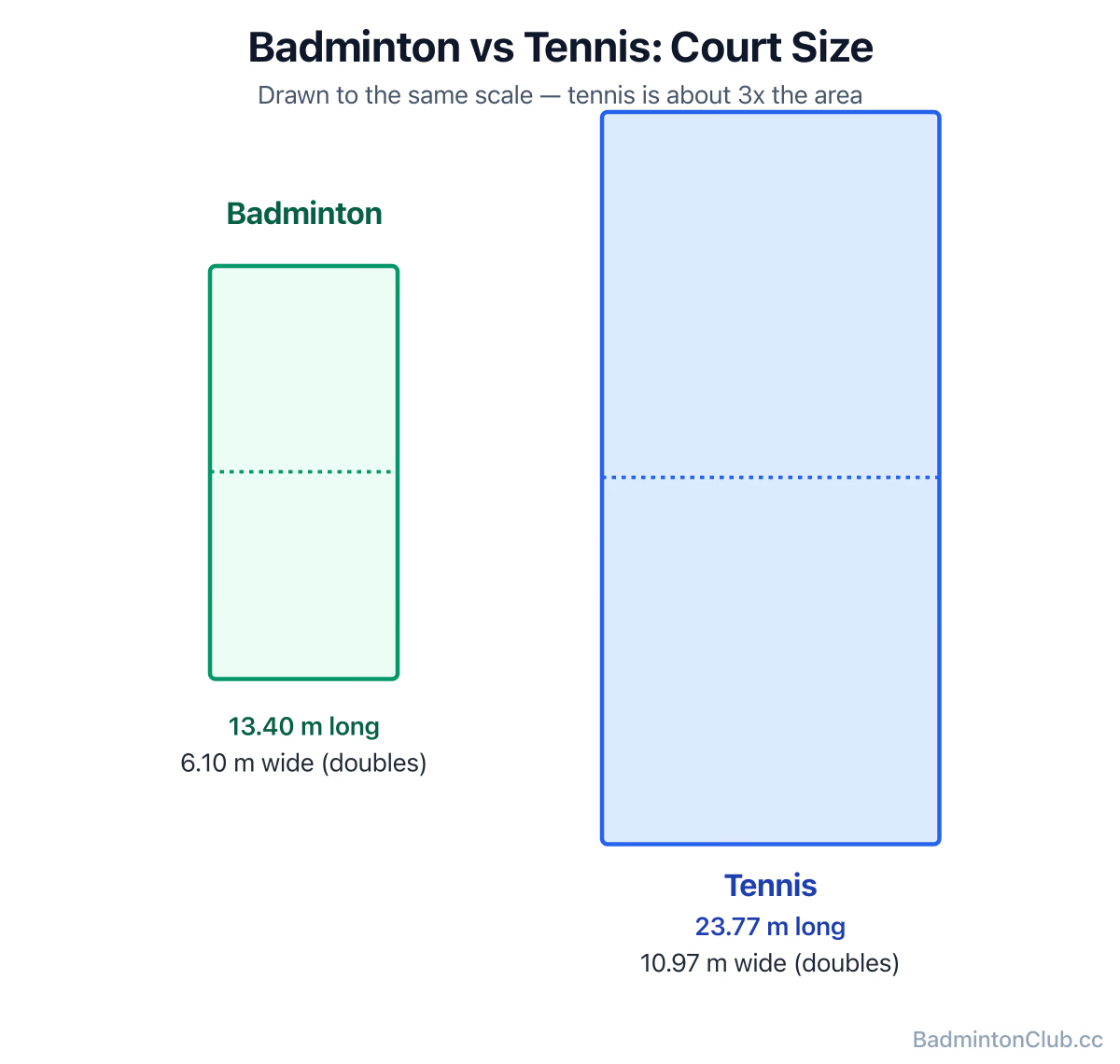
The court and net: tennis is much bigger
A badminton court is 13.40 m long and 6.10 m wide for doubles (5.18 m for singles). A tennis court is 23.77 m long and 8.23 m wide for singles, widening to 10.97 m for doubles. So a tennis court is roughly 1.8× longer and covers about three times the floor area. That single fact drives most of the differences below: tennis players run further and hit with more margin; badminton players move in shorter, sharper bursts.
The nets are nothing alike either. Badminton's net is high — 1.55 m at the posts — and you mostly hit over it from below or smash down over it. A tennis net is low, 0.914 m at the centre, and the ball spends its life skimming just above it. A high net plus a featherweight projectile is exactly why badminton can be so steep and deceptive.
Speed: the shuttle is faster, the serve is "faster"
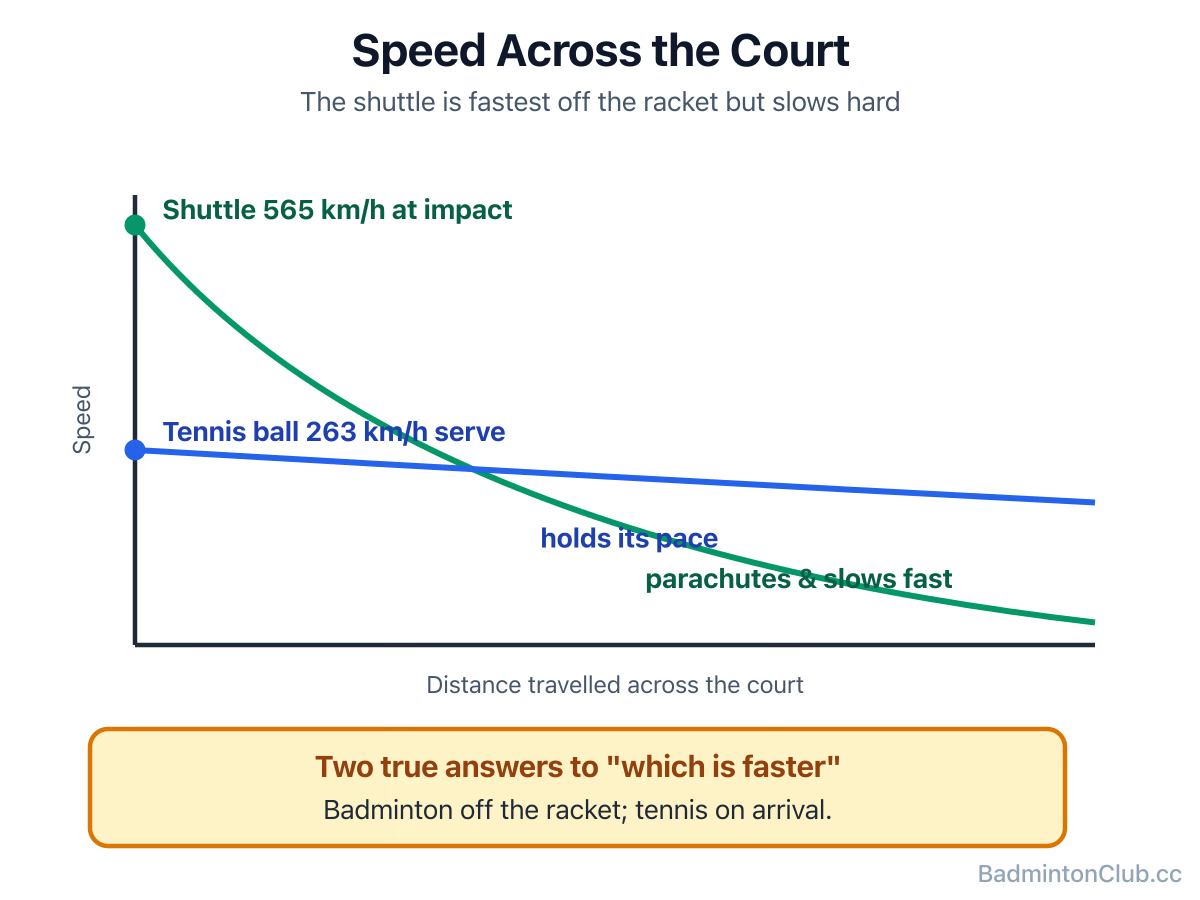
Here's the comparison everyone wants, and it needs care. The fastest tennis serve ever recorded is 263 km/h (Sam Groth, 2012). The fastest badminton smash is 565 km/h (Satwiksairaj Rankireddy, 2023, in a lab) — more than double. So off the strings, the shuttle is the fastest projectile in either sport by a mile.
But a shuttlecock decelerates violently — its feathered skirt is basically a parachute — so by the time it reaches you it has shed most of that speed. A tennis ball keeps almost all of its pace across the court. So "which is faster" has two true answers: badminton wins on peak racket-head speed; tennis wins on the speed the ball actually arrives at over distance. Both camps are right and talk past each other constantly.
Scoring, rallies and stamina
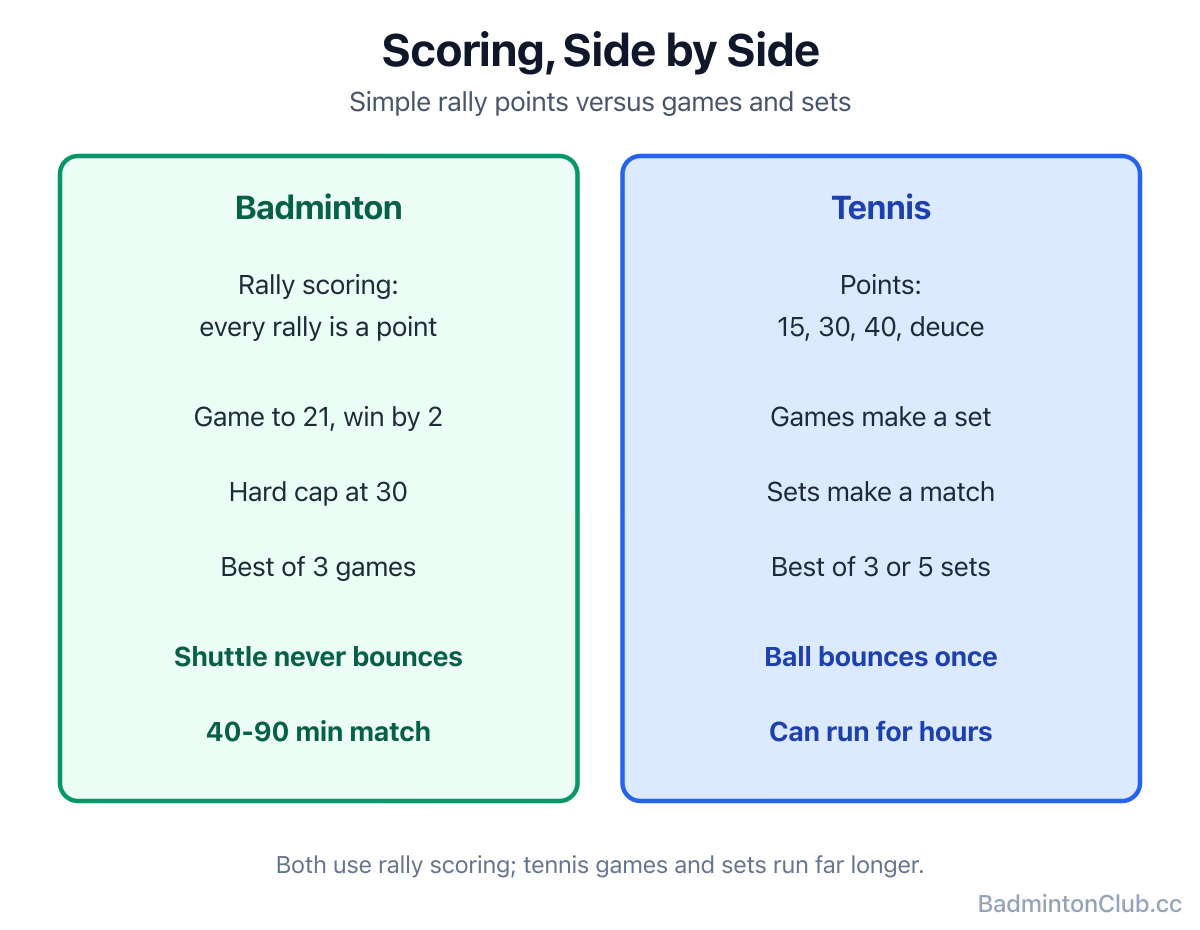
Tennis scoring is its own little language — 15, 30, 40, deuce, games, sets — and a match can run hours. Badminton uses simple 21-point rally scoring, best of three games, and a match is usually 40–90 minutes. Tennis rallies are longer and the ball bounces (you get a beat to set up); in badminton the shuttle never bounces, so everything is taken on the full and the tempo is relentless inside a rally.
On pure cardio per minute, badminton is brutal — lots of jumps, lunges and direction changes with no bounce to buy time. Tennis demands more raw strength and covers more ground per point. If you want a fast, twitchy, indoor game, badminton; if you want a powerful outdoor baseline grind, tennis.
Which is harder to learn? My honest take
I've coached beginners coming from both directions, and the pattern is consistent. **Badminton is easier to start and harder to master; tennis is harder to start and arguably easier to feel competent at.** A complete beginner will rally a shuttle within an hour because it floats — you get time to react. A tennis ball off a real swing is fast and bounces, so newcomers shank it for weeks.
But badminton's ceiling is vicious. The wrist and forearm work, the footwork, the deception where a drop and a smash look identical until the last instant — that takes years. Tennis-to-badminton converts almost always bring the wrong habits: they swing with a big stiff arm (tennis power) when badminton power is a relaxed forearm snap. The most common thing I tell a tennis player picking up a racket on a club night is "use less arm" — they're trying to hit the shuttle when they should be flicking it. The grips fight each other too; a tennis grip on a badminton racket is the dreaded panhandle slap. Coming the other way, badminton players have lovely hands but get bullied by the weight and bounce of a tennis ball until their legs catch up.
A quick head-to-head scorecard
- Court size: tennis is far bigger (≈3× the area).
- Net height: badminton's is much higher (1.55 m vs 0.914 m).
- Projectile off the racket: badminton wins — 565 km/h vs 263 km/h.
- Speed on arrival over distance: tennis wins (the shuttle decelerates hard).
- Rally length / endurance per point: tennis (longer points, the ball bounces).
- Cardio intensity per minute: badminton (no bounce, constant explosive movement).
- Ease to start: badminton. Hardest to master: a close call, both are deep.
FAQ
- Q: Is badminton faster than tennis? Off the racket, yes — by a lot. The fastest badminton smash (565 km/h) more than doubles the fastest tennis serve (263 km/h). But the shuttle slows down dramatically in flight, so a tennis ball arrives faster over the length of the court. Both claims are true.
- Q: Is a badminton court smaller than a tennis court? Much smaller. Badminton is 13.40 m × 6.10 m (doubles); a tennis court is 23.77 m × 10.97 m (doubles) — roughly three times the area.
- Q: Which is harder, badminton or tennis? Badminton is easier to pick up and harder to master; tennis is harder to start but rewards strength and reach. Neither is "easy" at a high level — they just demand different things.
- Q: Which burns more calories, badminton or tennis? Per minute of actual play, competitive badminton is usually more intense because the shuttle never bounces and movement is constant. Tennis covers more distance per point but with more recovery time between shots.
- Q: Can a tennis player switch to badminton easily? They bring fitness and hand-eye skill but usually swing with too much arm and the wrong grip. The fix is "less arm, more wrist" — learn the relaxed forearm snap and the panhandle habit goes away.
- Q: Why doesn't the shuttle bounce like a tennis ball? A shuttlecock has no bounce by design and its feathered skirt acts as a brake, so it's always played on the full. That's why badminton is taken in the air and feels faster inside a rally than the bigger, bouncing tennis ball.
Badminton vs tennis, settled with real numbers: the smaller, faster shuttle game versus the heavier, more powerful ball game. We compare court size, net height, serve and projectile speeds, scoring, calories and how hard each is to learn — and say plainly which sport wins on each axis. Badminton's shuttle is far faster off the racket; tennis's ball is heavier and the rallies last longer. If you're choosing between them, this is the honest head-to-head.