The History of Badminton: From a Victorian Garden Party to an Olympic Sport
8 June 2026 · Badminton Fans
The history of badminton isn't a straight line from one inventor to the modern game — it's a story that crosses centuries and continents. It grew out of battledore and shuttlecock, a children's pastime so old that portraits from Tudor England show people batting a feathered cork back and forth. In the 1860s, British army officers stationed in Poona (now Pune), India, turned that casual game into a competitive net sport by adding — well, a net. They brought it home to England, where it got its modern name from a famous country house, Badminton House in Gloucestershire, around 1873. The Bath Badminton Club wrote the first proper set of rules in 1877, and from there the International Badminton Federation took it global after 1934. The final milestone: full Olympic medal status at Barcelona 1992. That's the whole thread — India, England, the world, the Olympics — and it's a richer story than most people realise.
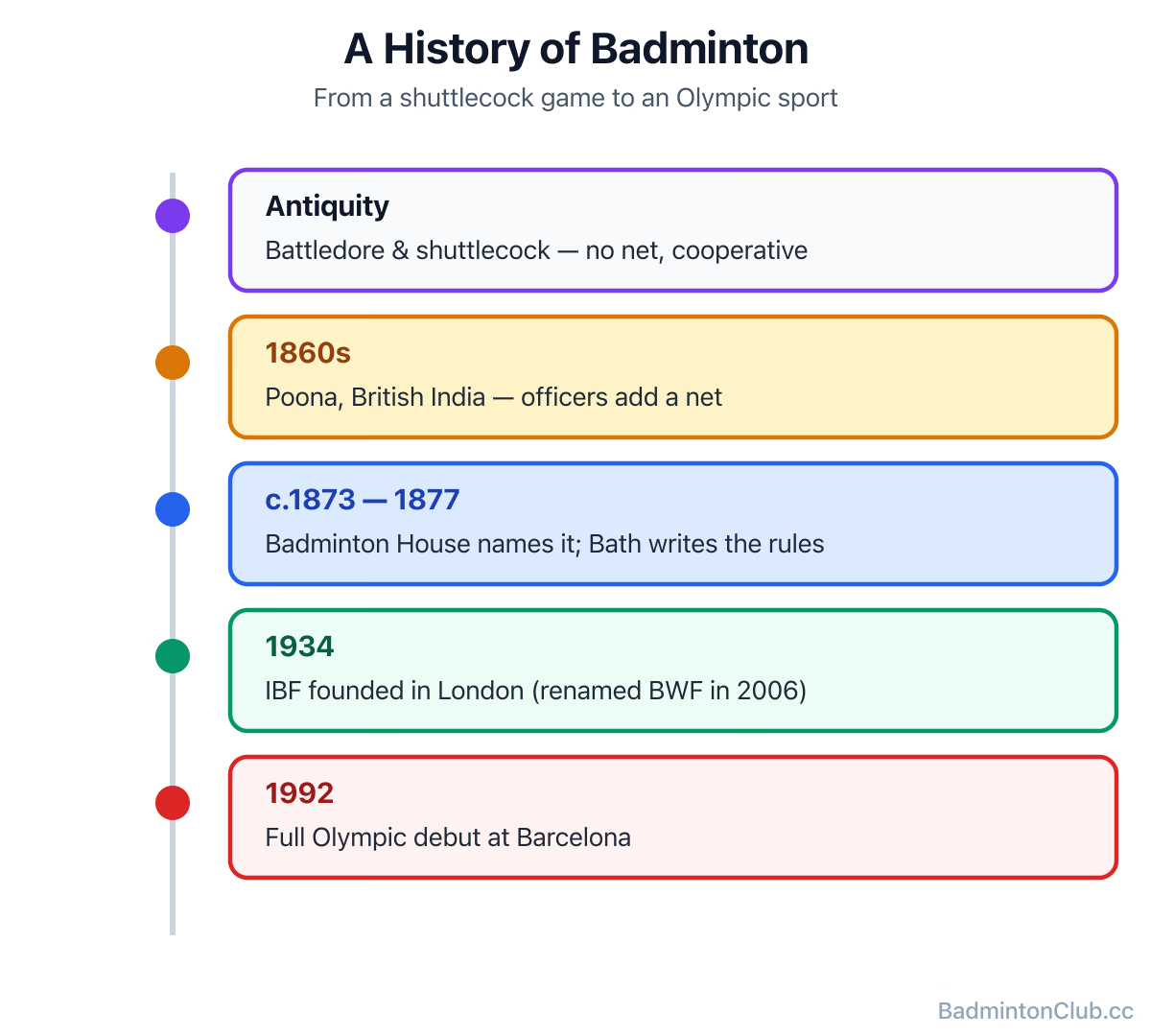
Before badminton: battledore and shuttlecock
Long before any net or court, people across Greece, China, India and medieval Europe batted a feathered cork back and forth with small paddles. The English called it battledore (the bat) and shuttlecock (the cork). It was a cooperative game — the goal was to keep the shuttle in the air as long as possible, not to beat anyone. That ancestry matters, because the shuttlecock itself, the strangest object in any racket sport, is older than the competitive game by centuries.
What badminton added was the one thing that turned a parlour amusement into a sport: a net, a boundary, and the idea that you're trying to make the shuttle land where your opponent can't return it.
Poona, India — where badminton actually began
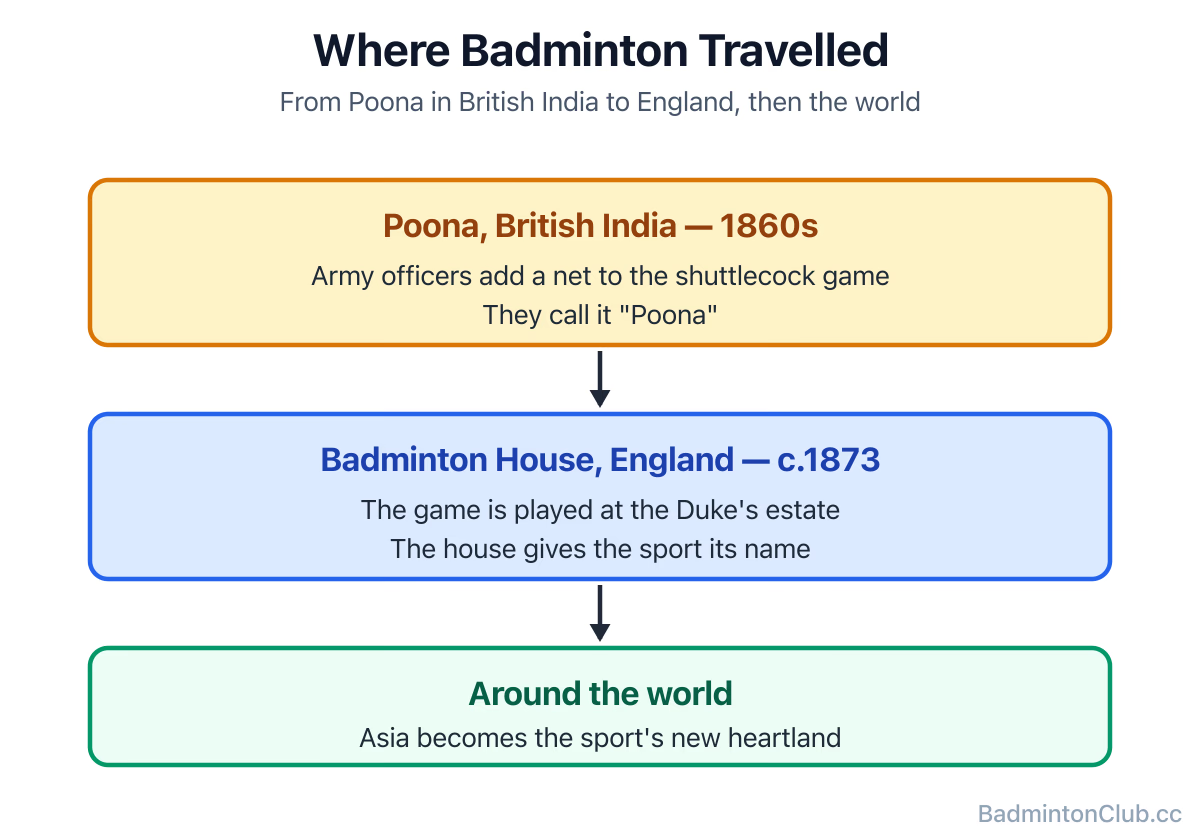
The competitive game took shape in British India. In the 1860s, army officers stationed around the garrison town of Poona (today's Pune) strung a net across the old shuttlecock game and started keeping score. They called it "Poona" after the town. When were the first written rules drawn up there? Honestly, nobody can pin it down: sources split between 1867 and 1873, no original rulebook survives, and you'll see both dates stated as fact online. Don't trust anyone who's certain — the most defensible answer is "the late 1860s to early 1870s." So when people ask where did badminton originate, the honest answer is: the idea is ancient and global, but the modern net game was born in colonial India, sometime in those years.
Badminton House — where it got its name
Officers carried the game home to England, and around 1873 it was played at Badminton House, the Gloucestershire estate of the Duke of Beaufort. (Which Duke? You'll see "the 9th Duke" repeated everywhere, including in Britannica — but that's almost certainly wrong, since the 9th Duke didn't inherit until 1899; in 1873 the estate belonged to the 8th Duke of Beaufort. It's a small error that has copied itself across the internet for a century.) The story that's repeated everywhere — guests playing across a drawing room, stretching string between doorways — is hard to verify and best treated as charming tradition, but the naming is solid: the sport is called badminton because of the house, not the other way round. It's one of the few sports named after a building. For the full "who started it" debate, see who invented badminton.
Rules, clubs and going global
The game needed standard rules, and it got them fast:
- 1877 — the Bath Badminton Club publishes the first written rules of the modern game.
- 1893 — the Badminton Association (of England) forms and standardises the court and laws.
- 1899 — the first All England Championships are held, the oldest tournament in the sport.
- 1934 — the International Badminton Federation (IBF) is founded in London with nine member nations; it's renamed the Badminton World Federation (BWF) in 2006.
From there the centre of gravity shifted east. Denmark and England dominated the early decades; then Indonesia, China, Malaysia and Korea turned badminton into one of Asia's biggest sports.
The thing that surprises everyone about badminton's history
Here's the part that genuinely catches people off guard, and it's worth sitting with: badminton is an English-named, Indian-born, Asian-dominated sport — and all three of those facts are equally true. Most sports have a tidy single-country origin myth. Badminton refuses to. The name is from an English aristocrat's country house. The game is from a British garrison in India. And the people who've owned it for the last fifty years are overwhelmingly Indonesian, Chinese, Malaysian and Korean. I find that lineage more interesting than any "invented by one genius" story, because it tells you something real: badminton travelled along the lines of empire and then completely escaped them. The colonial officers who codified it would be baffled that the modern greats are named Lin Dan and Susi Susanti, not Smith and Jones. The sport outgrew the people who named it — which is, when you think about it, the best thing that can happen to a game.
A short timeline you can actually remember
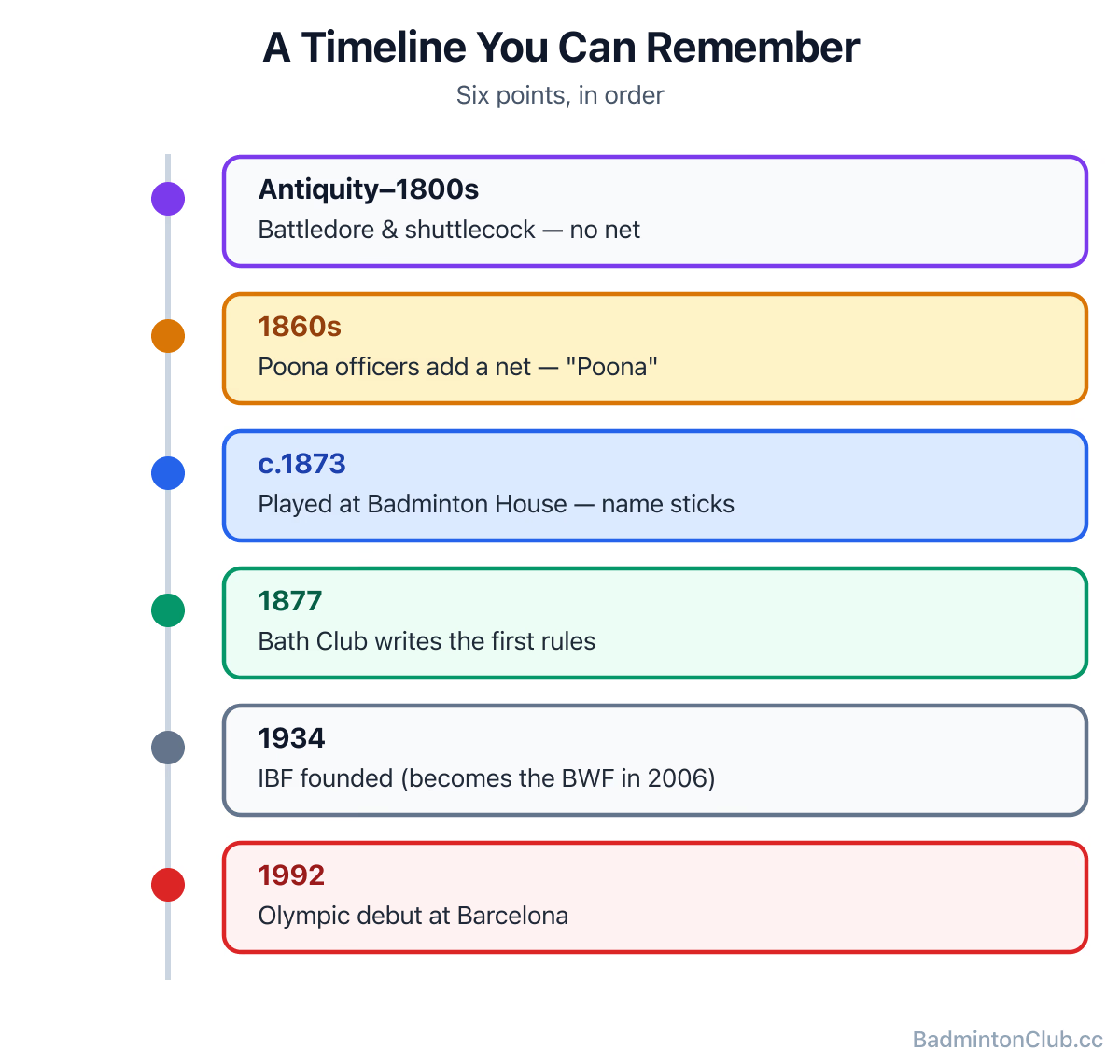
- Antiquity–1800s: battledore and shuttlecock (no net, cooperative).
- 1860s: British officers in Poona add a net — "Poona."
- c.1873: played at Badminton House, England — the name sticks.
- 1877: Bath Badminton Club writes the first rules.
- 1934: IBF founded (becomes the BWF in 2006).
- 1992: Olympic debut at Barcelona.
FAQ
- Q: Where did badminton originate? The modern net game originated in British India in the 1860s, where army officers around Poona (Pune) adapted the old battledore-and-shuttlecock game by adding a net. It was first called "Poona."
- Q: Why is it called badminton? It's named after Badminton House, the Duke of Beaufort's estate in Gloucestershire, England, where the game was played around 1873. The sport took its name from the house.
- Q: How old is badminton? The competitive game is about 150 years old (rules first written in 1877), but its ancestor — battledore and shuttlecock — is thousands of years old and was played across Asia and Europe.
- Q: Who made the first rules of badminton? The Bath Badminton Club published the first written rules in 1877, building on the informal "Poona" rules from India. The Badminton Association of England standardised them in 1893.
- Q: When did badminton become an Olympic sport? It was a demonstration sport at Munich 1972 and became a full Olympic medal sport at Barcelona 1992. See badminton in the Olympics.
- Q: Which country is badminton most associated with today? Asia, overwhelmingly — China, Indonesia, Malaysia, Korea, Japan and India dominate the modern game, with Indonesia treating it almost as a national sport.
Badminton's history runs from an ancient shuttlecock game to British India, where army officers in Poona added a net, to an 1870s garden at Badminton House in England that gave the sport its name. Here's the whole story in order — where badminton originated, who shaped its first rules, how it spread worldwide through the IBF (now the BWF), and how it ended up on the Olympic stage at Barcelona in 1992 — with the dates checked against Britannica, the BWF and Olympic records.