Who Invented Badminton? The Real Story Behind the Sport's Origins
8 June 2026 · Badminton Fans
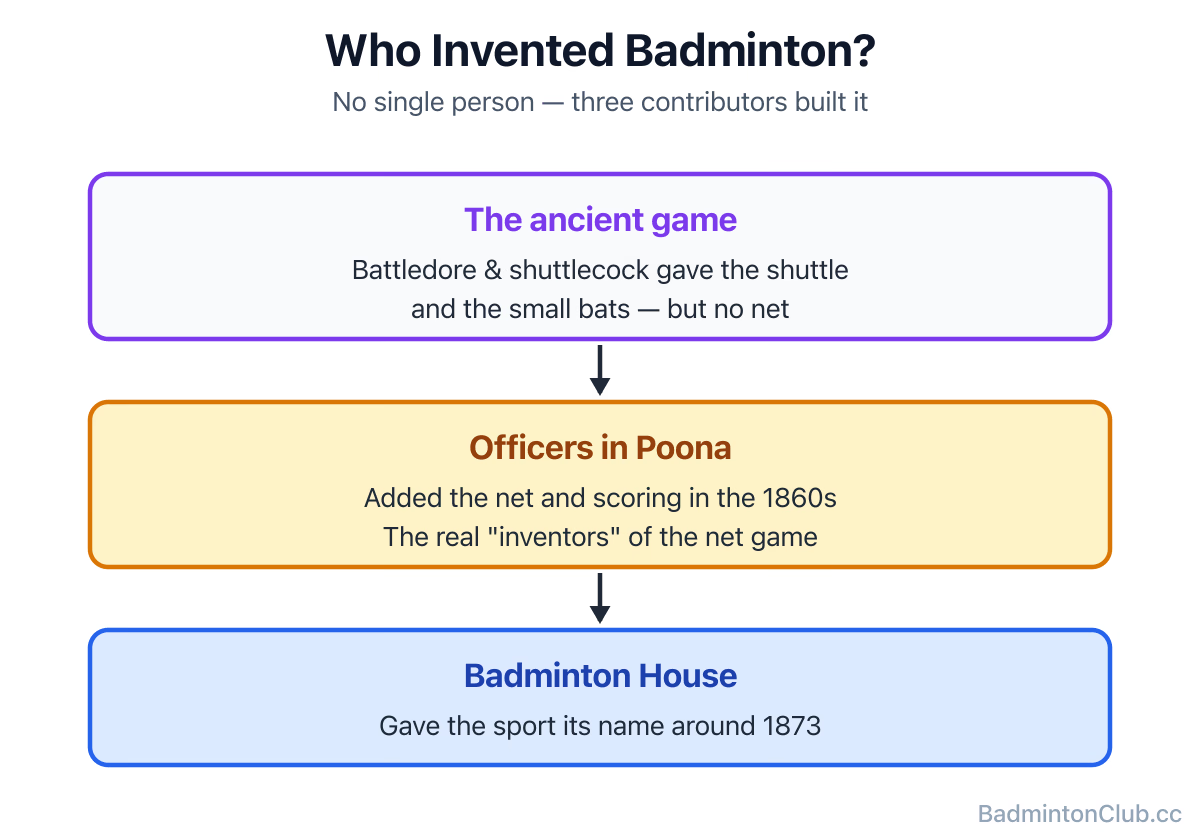
People love a single inventor story — James Naismith with basketball, William Morgan with volleyball — but badminton doesn't have one, and that's part of what makes its origin interesting. No single person invented badminton. It evolved over centuries from the old game of battledore and shuttlecock, was reshaped into a competitive net sport by British army officers in Poona, India, in the 1860s, and was finally named after Badminton House in Gloucestershire, where the Duke of Beaufort's guests played it around 1873. If you hear someone claim a specific person "invented" badminton, they're simplifying a richer story — one that's really about a series of places, a net being added to an old game, and a name that stuck because of a grand country house party.
The short answer: a game, not a person
The reason this question has no clean answer is that badminton wasn't built from scratch — it was assembled from an existing game. The raw material (a feathered shuttle and small bats) already existed as battledore and shuttlecock. What changed it into a sport was the addition of a net and scoring, and that happened gradually among British officers in India, not in a single eureka moment. There's no patent, no founding document signed by one inventor. Just a game that slowly turned competitive.
The British officers in Poona (the real "inventors")
If you want the closest thing to inventors, it's the British army officers stationed around Poona (Pune) in the 1860s. They took the shuttlecock game, hung a net across it, and wrote down informal rules. The version they played was even named after the town — "Poona." This is the genuine birth of the competitive game, and it's the part most casual histories skip in favour of the prettier English garden-party story.
The Duke of Beaufort and Badminton House
The name everyone reaches for is the Duke of Beaufort, because the sport is called badminton after his estate, Badminton House in Gloucestershire, where it was played around 1873. But naming a game isn't inventing it. The Duke (and his guests) helped popularise badminton among the English upper class and gave it the label that stuck — an important role, but not invention. A quick accuracy note, because this trips up even reputable sources: Britannica credits the 9th Duke of Beaufort, but in 1873 the estate was held by the 8th Duke (the 9th didn't succeed until 1899), so be wary of any confidently numbered "duke who invented badminton." And treat the vivid anecdotes — string tied between doorways, a torn drawing-room ceiling — as charming tradition rather than documented fact; they're repeated far more often than they're sourced.
Who actually wrote the rules
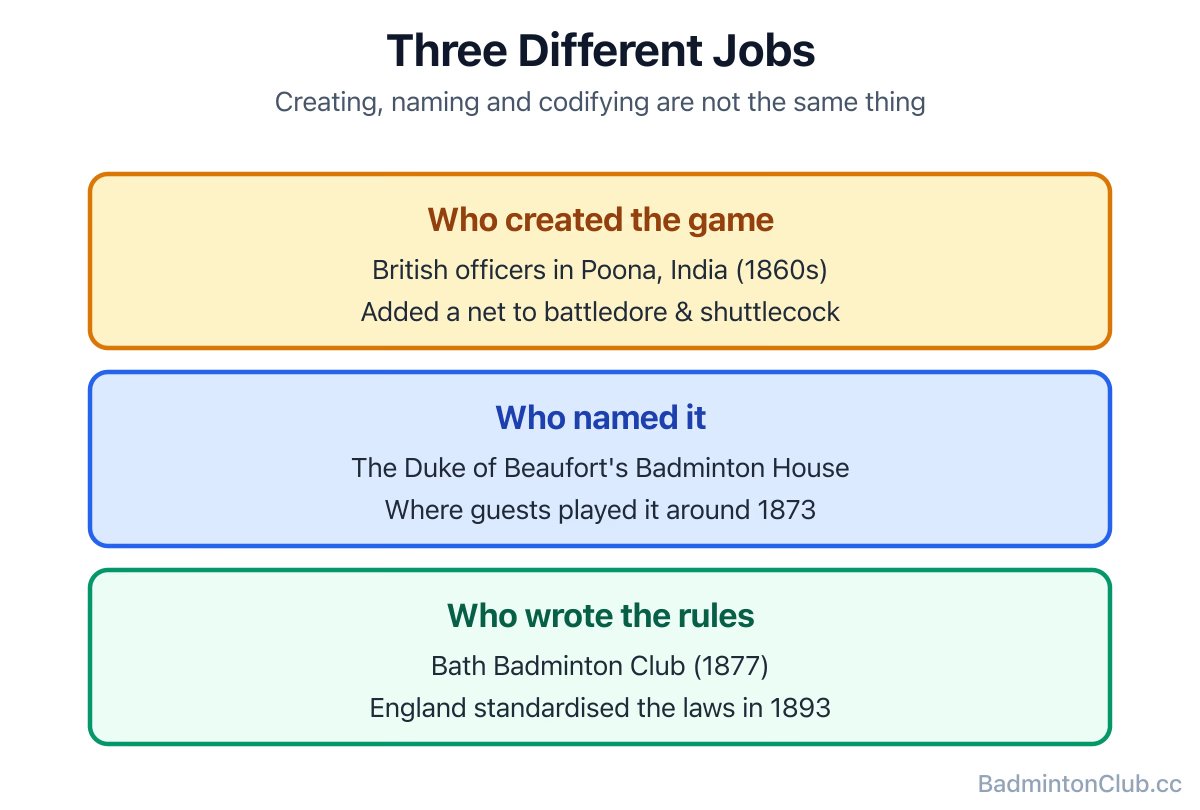
Invention and codification are different jobs. The first written rules of the modern game came from the Bath Badminton Club in 1877, and the Badminton Association of England standardised the court and laws in 1893. If "inventing" a sport means defining how it's played, these clubs have a stronger claim than any individual — they're the ones who turned a loose pastime into a game with fixed dimensions and a rulebook. The history of badminton hub lays out the full sequence.
My honest take on the "inventor" question
I'll be blunt, because the internet is full of confident wrong answers here: anyone who names a single inventor of badminton is either guessing or repeating a myth. I've read a dozen "the man who invented badminton" headlines, and they collapse the moment you check a source. The Duke of Beaufort didn't invent it — he hosted and named it. The Poona officers didn't invent the shuttlecock — they inherited it and added a net. The Bath club didn't create the game — they wrote down rules for something already being played. What you've actually got is a relay race across continents, where each runner gets credit for the wrong leg. My advice if you're researching this: be suspicious of any neat answer, and trust the dates (1860s Poona, c.1873 Badminton House, 1877 Bath rules) over the personalities. The dates are checkable; the heroic-inventor stories mostly aren't.
Why the confusion persists
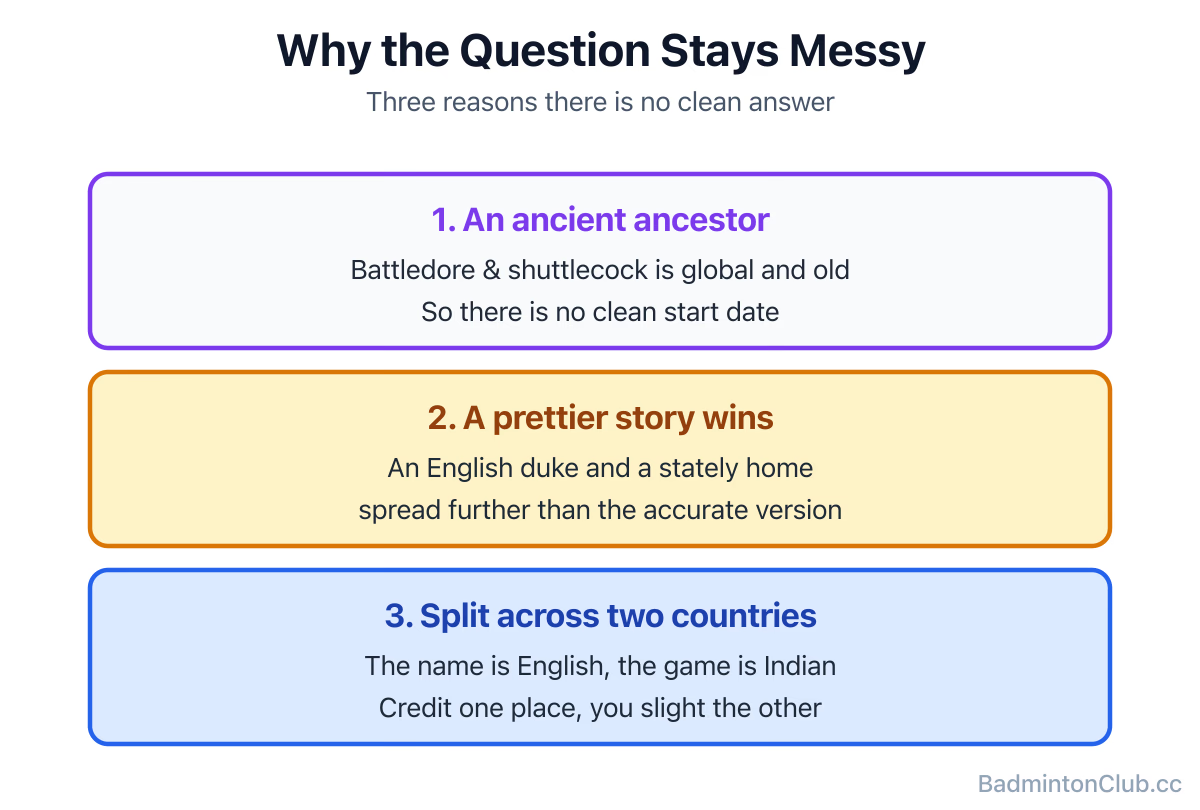
Three things keep the "who invented badminton" question messy. First, the game's ancestor is genuinely ancient and global, so there's no clean start date. Second, the most colourful version of the story (an English duke, a stately home) is more tellable than the accurate one (an unnamed garrison in colonial India), so it spreads further. Third, the sport's name and its origin are in two different countries — which almost guarantees that whoever you credit, you're crediting the wrong place. Hold all three facts at once and the picture finally makes sense.
FAQ
- Q: Who invented badminton? No single person did. It evolved from battledore and shuttlecock, was made competitive by British officers in Poona, India, in the 1860s, and was named after Badminton House in England around 1873.
- Q: Did the Duke of Beaufort invent badminton? No. The Duke of Beaufort's estate, Badminton House, gave the sport its name and helped popularise it among the English elite around 1873, but he didn't invent the game.
- Q: In which country was badminton invented? The modern net game was developed in British India (Poona, now Pune) in the 1860s; it was then named and popularised in England. Both countries have a genuine claim.
- Q: When was badminton invented? As a competitive net game, the 1860s in India, with the first written rules in 1877 (Bath Badminton Club). Its ancestor game is thousands of years older.
- Q: What was badminton originally called? "Poona" (or "Poonah"), after the Indian garrison town where British officers first played the net version.
- Q: Who wrote the first rules of badminton? The Bath Badminton Club, in 1877. The Badminton Association of England standardised the rules and court in 1893.
No single person invented badminton — and that's the honest answer most pages dodge. The game evolved from ancient battledore and shuttlecock, was turned into a net sport by British officers in Poona, India, in the 1860s, and was named after Badminton House in England around 1873. This guide untangles who actually did what, why the Duke of Beaufort gets the credit he doesn't quite deserve, and which 'inventor' claims to treat with caution.