Badminton as a National Sport: Where the Game Means the Most
8 June 2026 · Badminton Fans
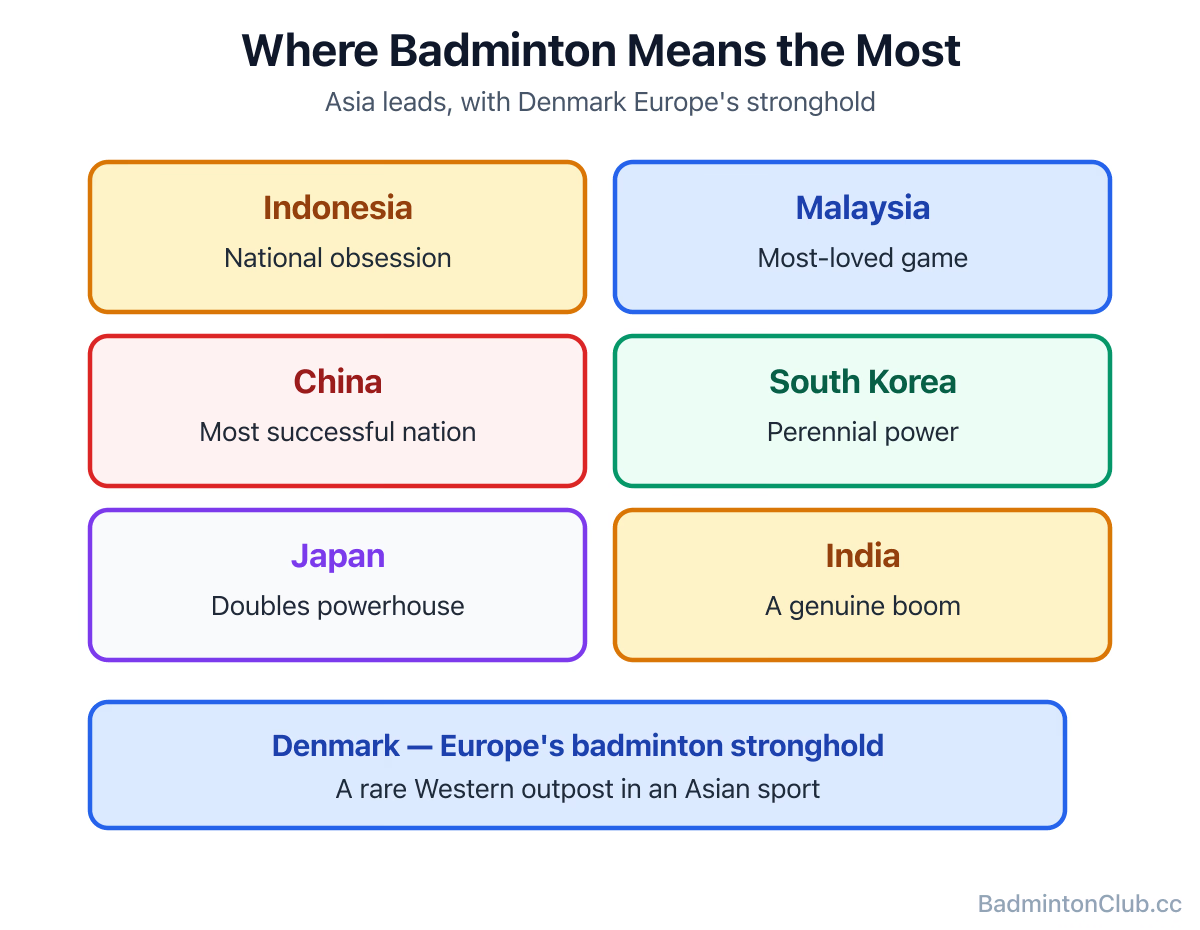
If you grew up in North America or much of Europe, badminton is something you played in the backyard at a barbecue. If you grew up in Indonesia, it's something else entirely. Indonesia is the country where badminton is most deeply woven into national identity — people describe it not just as a popular sport but as part of what it means to be Indonesian. The feeling is similar in Malaysia, where it's the most-loved game even though the official national sport is sepak takraw. And it's enormous in China, South Korea, Japan, India and Denmark — countries where a badminton Olympic gold is front-page news and top players are as famous as movie stars. In these places, the sport isn't a casual pastime you try once at summer camp. It's a genuine source of national pride, tied to Olympic glory and the big team cups that bring entire countries to a standstill.
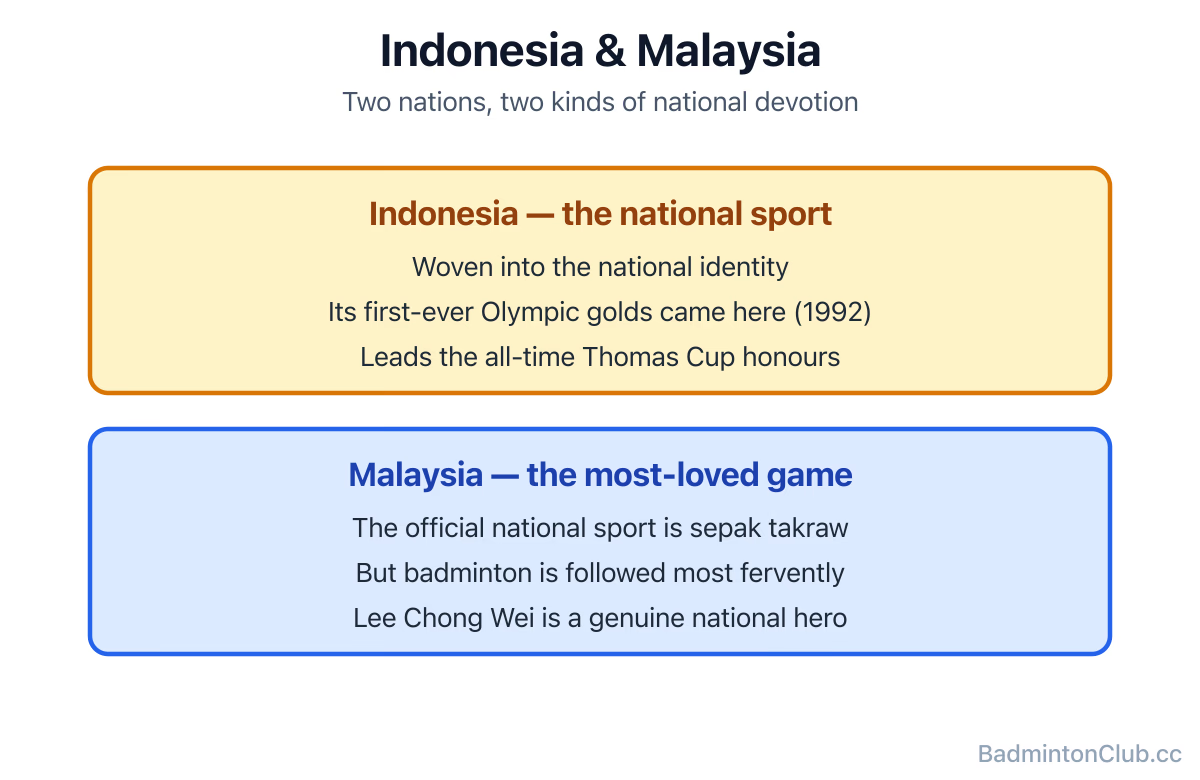
Indonesia: badminton is the national sport
If badminton has a spiritual home, it's Indonesia. The game is woven into national life — described by observers as "part of the national identity" — and it's no accident that Indonesia's first-ever Olympic gold medals came in badminton (Susi Susanti and Alan Budikusuma in 1992, covered in badminton in the Olympics). Indonesia leads the all-time Thomas Cup honours, and a major final involving the national team can bring the country to a standstill. For Indonesians, a badminton title isn't just sport — it's a statement of national arrival.
Malaysia: the most-loved game
In Malaysia, the picture is subtler but the passion is just as real. The official national sport is sepak takraw, but badminton is the game Malaysians follow most fervently — and Lee Chong Wei became a genuine national hero, his Olympic finals watched by half the country. His three silvers (and the agonising near-misses against Lin Dan) are part of Malaysia's sporting folklore. Many Malaysians would call badminton their de facto national sport regardless of the official designation.
China, Korea, Japan, India — the powerhouses
Beyond Southeast Asia, badminton is a major sport across the continent:
- China is the most successful badminton nation overall, with a state-backed system that produced Lin Dan, Gao Ling and a long line of champions.
- South Korea and Japan are perennial powers, especially in doubles.
- India has seen a genuine boom, driven by stars like P.V. Sindhu and Saina Nehwal — badminton is now one of the country's biggest individual-sport stories.
And in Denmark, badminton is the strongest in Europe by a distance, a rare Western outpost in an Asian-dominated sport.
The original block: why badminton took root where it did
Here's a question worth chewing on that most "where is badminton popular" articles never ask: why these countries specifically? It's not random, and I don't think it's only about colonial history. My honest read, having looked at where the sport thrives, is that badminton flourishes where three things line up: a hot, humid climate that makes outdoor sports brutal, dense urban populations, and limited space. Badminton is indoor, needs almost no room, requires cheap equipment, and a shuttle and racket can entertain four people in a car park or a school hall. In tropical, crowded, fast-urbanising Asia, that's a near-perfect fit — you can play after dark, out of the heat, in a tiny footprint. Contrast that with the sports the West built its identity on (football, cricket, baseball), which all demand large outdoor fields and a temperate climate. So badminton isn't just popular in Asia by historical accident; it's popular because it suited the geography and the cities. Denmark is the interesting exception that almost proves the rule — a cold, indoor-loving, club-organised culture that took to an indoor racket sport for its own reasons. Sports spread where they fit, and badminton fit Asia like a glove.
How a sport becomes national pride
The leap from "popular" to "national identity" usually runs through one thing: winning when the world is watching. A nation falls in love with a sport when its athletes win Olympic gold or lift a team cup on home soil. Indonesia's 1992 golds, China's decades of dominance, India's Sindhu era — each created a generation of kids picking up rackets. The sport and the national story feed each other: success breeds participation, participation breeds more success. That virtuous loop is why badminton is "just a game" in some countries and a piece of the flag in others.
FAQ
- Q: Which country's national sport is badminton? Indonesia, in all but the most technical sense — it's woven into the national identity and produced the country's first Olympic golds. It's also the most-loved game in Malaysia, though Malaysia's official national sport is sepak takraw.
- Q: Why is badminton so popular in Indonesia? It's tied to national pride: Indonesia's first Olympic golds (1992) were in badminton, the country leads the all-time Thomas Cup honours, and major matches are a national event.
- Q: Is badminton the national sport of Malaysia? Not officially — that's sepak takraw — but badminton is the game Malaysians follow most passionately, and Lee Chong Wei is a national hero, so many treat it as the de facto national sport.
- Q: Where is badminton most popular? Across Asia — Indonesia, China, Malaysia, South Korea, Japan and India — plus Denmark, which is Europe's badminton stronghold.
- Q: Why is badminton so popular in Asia? It suits the region: it's an indoor sport (ideal for hot, humid climates), needs very little space and cheap equipment, and fits dense urban living — plus decades of Olympic and team-cup success built deep national followings.
- Q: Is badminton popular outside Asia? Mostly as a recreational sport, with Denmark the major competitive exception in Europe. At the elite level, Asia dominates, though stars like Carolina Marín and Viktor Axelsen have broken through.
In some countries badminton isn't a hobby — it's a national obsession. This guide explains where badminton is the national or most-loved sport: Indonesia (where it's woven into the national identity), Malaysia, China, and its huge followings across Asia and northern Europe. It covers why the sport took such deep root in these places, how it became a source of national pride, and the players and team cups that turned badminton into more than a game.