The Thomas Cup and Uber Cup: Badminton's World Team Championships Explained
8 June 2026 · Badminton Fans
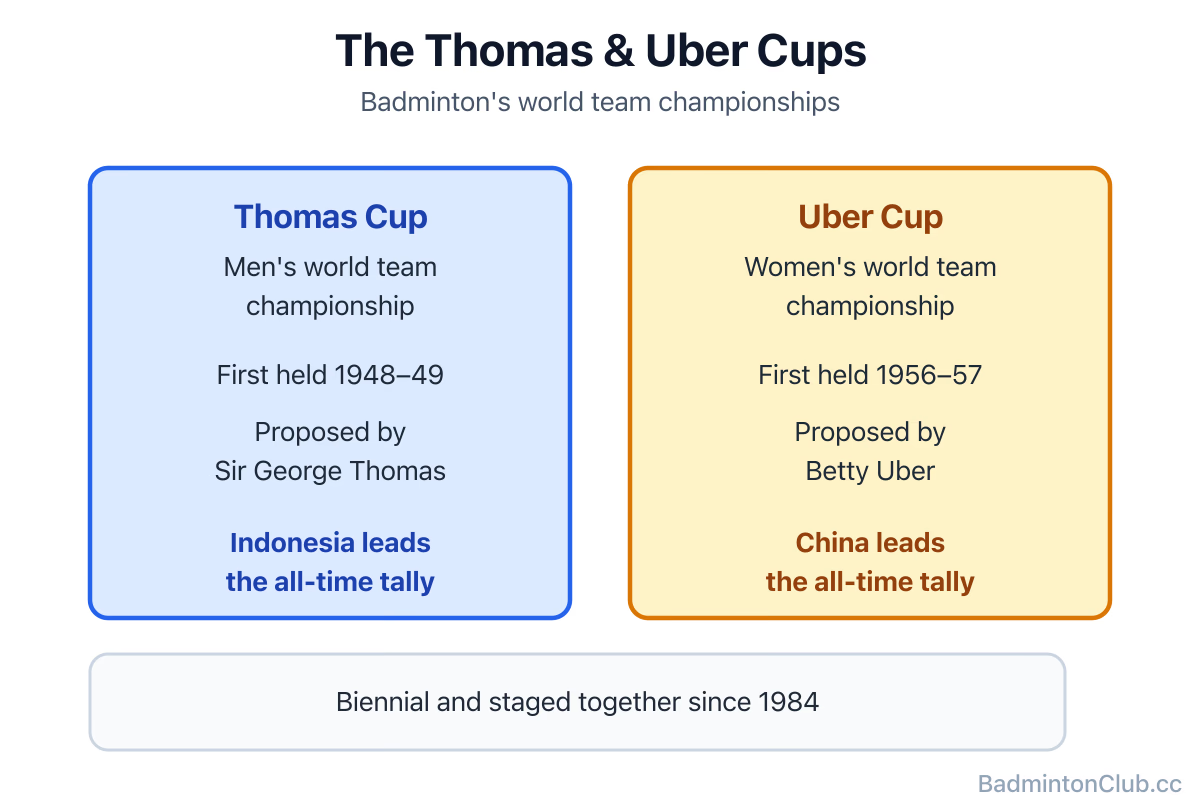
Individual titles are one thing, but the Thomas Cup and Uber Cup are where national pride comes into play. The Thomas Cup is the men's world team championship, first held in 1948-49, and it's named after Sir George Thomas, a former player and the IBF's first president who donated the trophy. The Uber Cup is the women's equivalent, first held in 1956-57, donated by Mrs H.S. Uber. In both competitions, nations field a full team — a mix of singles and doubles players — and battle through ties: each tie is a best-of-five series of matches, and the team that wins three rubbers advances. These are the most emotionally charged events in the sport, because it's not just an individual's name on the line; it's the flag. Indonesia leads the all-time Thomas Cup honours, reflecting the sport's deep roots there. China leads the Uber Cup, reflecting their long dominance in women's badminton.
Two cups, two histories
Both cups are named after the English players who proposed them:
- The Thomas Cup was the idea of Sir George Thomas, a great English player inspired by tennis's Davis Cup and football's World Cup. The first tournament was held in 1948–49.
- The Uber Cup was proposed by Betty Uber, another English pre-war great, and first contested in 1956–57. Uber donated and designed the trophy herself.
For decades they were held separately and on different cycles; since 1984 they've been biennial and staged together as a combined event.
How a tie works
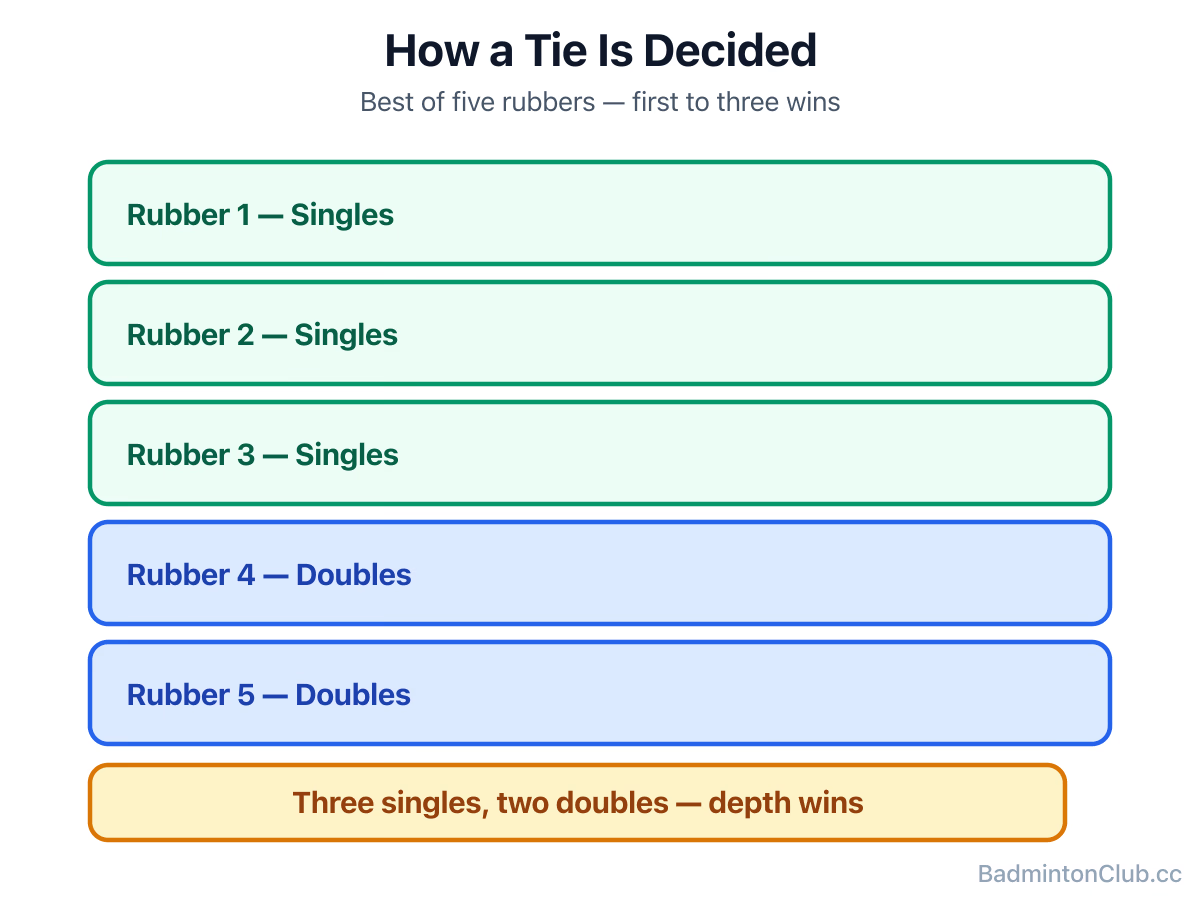
A Thomas or Uber Cup tie between two nations is the best of five rubbers: typically three singles and two doubles matches, played in a set order. The first team to win three rubbers wins the tie — which means a nation needs depth, not just one superstar. You can have the world's best singles player and still lose if your second singles and your doubles pairs are weak. That's the whole appeal: it rewards a country's entire programme, not one individual.
Who dominates
The honours boards tell the story of badminton's superpowers:
- Thomas Cup: Indonesia leads the all-time tally, with China the other dominant force. The early decades were Malayan and Indonesian; China surged later.
- Uber Cup: China leads, having owned the women's team game for long stretches, with Japan, Indonesia, Korea and others taking turns to challenge.
These results map directly onto where badminton is a national obsession — the team cups are where that national investment pays off.
The Sudirman Cup (the mixed-team cousin)
People often lump in a third trophy, so it's worth separating: the Sudirman Cup is the mixed-team world championship — men and women on one national squad, contesting all five disciplines — first held in 1989. So the full picture is: Thomas (men), Uber (women), Sudirman (mixed). The Sudirman is arguably the truest test of a nation's all-round strength, since you can't hide a weak gender.
The original block: why team badminton is better than it has any right to be
I'll make a slightly contrarian case: the Thomas and Uber Cups produce better drama than most individual events, and almost nobody outside Asia watches them. Here's why they're special. In an individual tournament, when a star loses, the story's over — they pack up and fly home. In a team tie, a star losing the opening singles doesn't end anything; it just cranks the pressure onto the next player, who now has to win or the nation's out. You get this beautiful cascade of pressure passed down a lineup, and you see players carry the weight of a whole country's expectation in a way singles never demands. The crowds in Jakarta or in China for these events are something else — football-level noise for a racket sport. And there's a tactical layer casual fans miss: captains have to order their lineup strategically, deciding whether to throw their best player out first to set a tone or save them to close the tie. It turns badminton into something like a team relay with brains. If you only ever watch individual badminton, you're missing the version of the sport that the badminton-mad nations actually care about most.
FAQ
- Q: What are the Thomas Cup and Uber Cup? They're badminton's world team championships: the Thomas Cup for men (from 1948–49) and the Uber Cup for women (from 1956–57), contested by national teams rather than individuals.
- Q: Who are the Thomas and Uber Cups named after? Sir George Thomas, an English player who proposed the men's cup, and Betty Uber, an English player who proposed and designed the women's cup.
- Q: How does a Thomas or Uber Cup tie work? Each tie is best of five rubbers — usually three singles and two doubles. The first nation to win three rubbers wins the tie, so depth across the squad matters as much as star power.
- Q: Which country has won the most Thomas Cups? Indonesia leads the all-time Thomas Cup honours, with China the other dominant nation. China leads the Uber Cup.
- Q: What is the difference between the Thomas Cup and the Sudirman Cup? The Thomas Cup is a men's team event and the Uber Cup a women's; the Sudirman Cup (from 1989) is the mixed-team championship, with men and women on one national squad across all five disciplines.
- Q: How often are the Thomas and Uber Cups held? Both have been held every two years since 1984, staged together as a combined event.
The Thomas Cup (men) and Uber Cup (women) are badminton's world team championships, where nations — not individuals — compete for the sport's most coveted team trophies. This guide explains their history (the Thomas Cup from 1948–49, the Uber Cup from 1956–57), how the tie format works, why Indonesia and China dominate the honours, and how these cups differ from the mixed-team Sudirman Cup — with the dates checked against the BWF.