Badminton in the Olympics: From a 1972 Demonstration to Olympic Gold
8 June 2026 · Badminton Fans
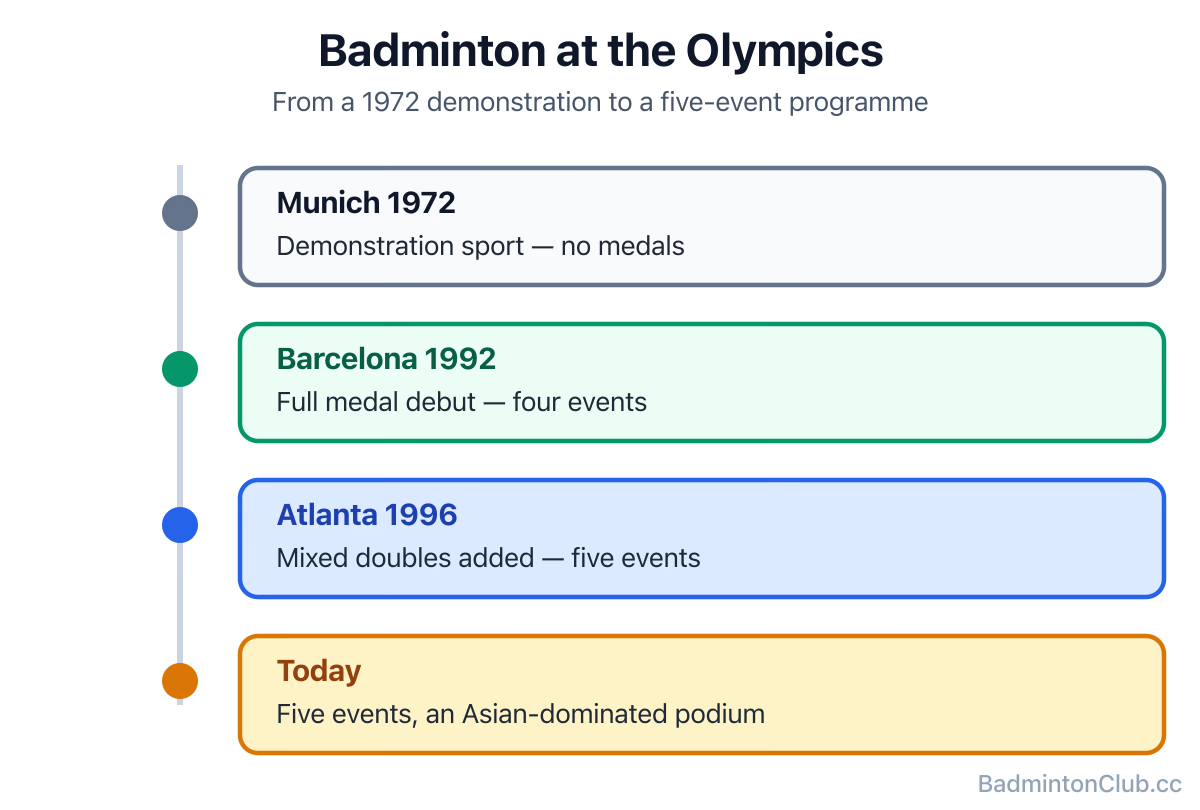
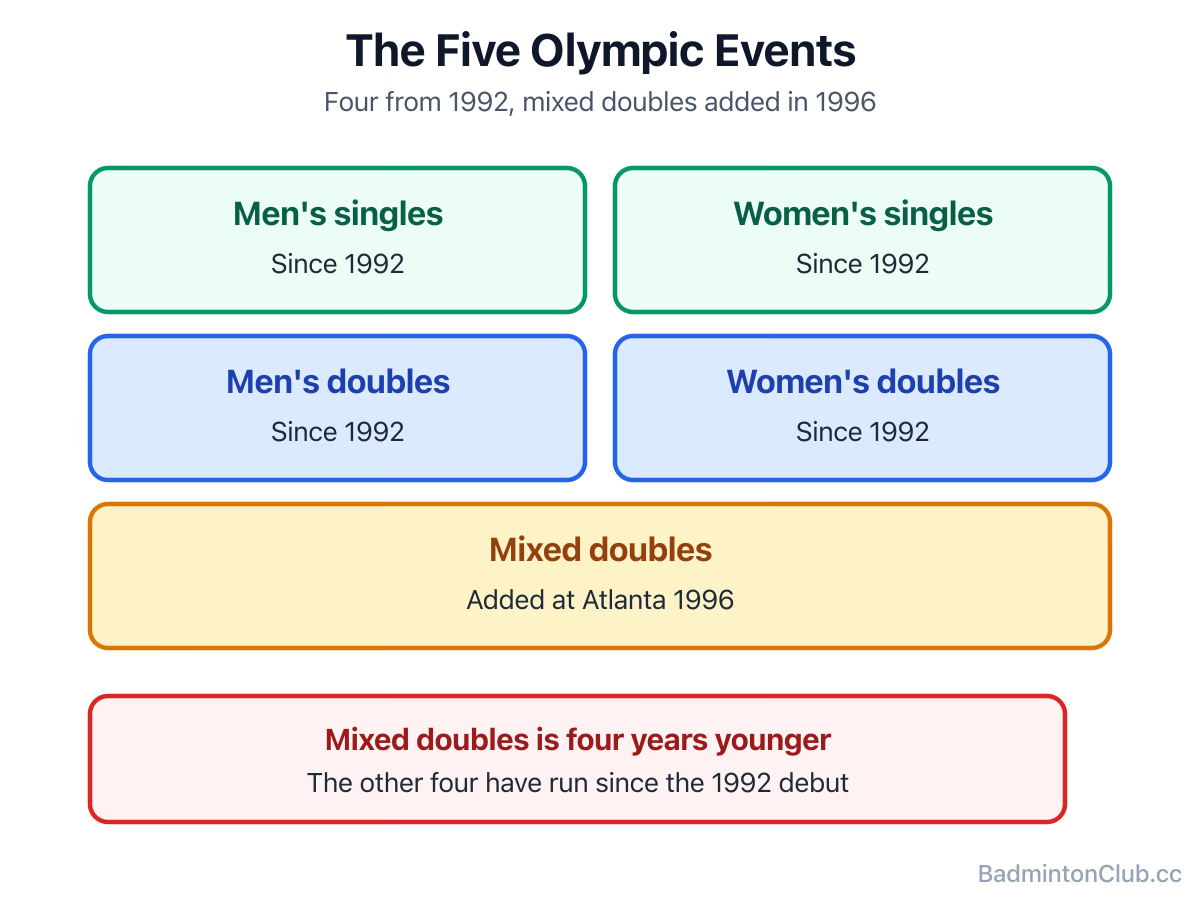
It took a while, but badminton finally arrived as an Olympic sport at the 1992 Barcelona Games — not as a demonstration or an exhibition, but as a full medal event. Before that it had appeared as a demonstration sport at Munich in 1972, a kind of "look at this" showcase without medals. Today the Olympics contest five badminton events — men's and women's singles, men's and women's doubles, and the crowd-favourite mixed doubles — and the medal table tells you exactly where the sport's power centres are: China, Indonesia and Korea dominate in that order. The first Olympic champions, both from Indonesia, were Susi Susanti and Alan Budikusuma in singles, and their gold medals are still celebrated in Indonesia as national milestones.
How badminton got into the Games
Badminton's road to the Olympics was slow. It was played as a demonstration sport at Munich 1972 — a single day of exhibition matches in a volleyball hall — which raised hopes that full inclusion was near. It wasn't: another twenty years passed before the International Olympic Committee admitted badminton as a full medal sport at Barcelona 1992, with 178 athletes from 37 nations in four events. The long wait is one reason the sport treasures its Olympic status so fiercely now.
The events (and a format quirk)
The 1992 debut had four events: men's and women's singles, and men's and women's doubles. Mixed doubles — now one of badminton's showcase events — was only added at Atlanta 1996, giving the modern five-event programme. So if you ever see a trivia question claiming badminton has "always had five Olympic events," it's wrong: mixed doubles is four years younger than the rest.
The first champions — and why Indonesia remembers 1992
The first Olympic badminton gold medals went to Indonesia, and the moment is legendary there. Susi Susanti won the women's singles — she actually lost the opening game to Korea's Bang Soo-hyun before storming back to win 5–11, 11–5, 11–3 (this was the old 11-point format) — and her future husband Alan Budikusuma won the men's singles within hours. They were Indonesia's first-ever Olympic gold medallists in any sport, and the country celebrated with a parade through Jakarta led by a giant shuttlecock. For more on Susanti and the other legends, see the best players of all time.
Who dominates the Olympic podium
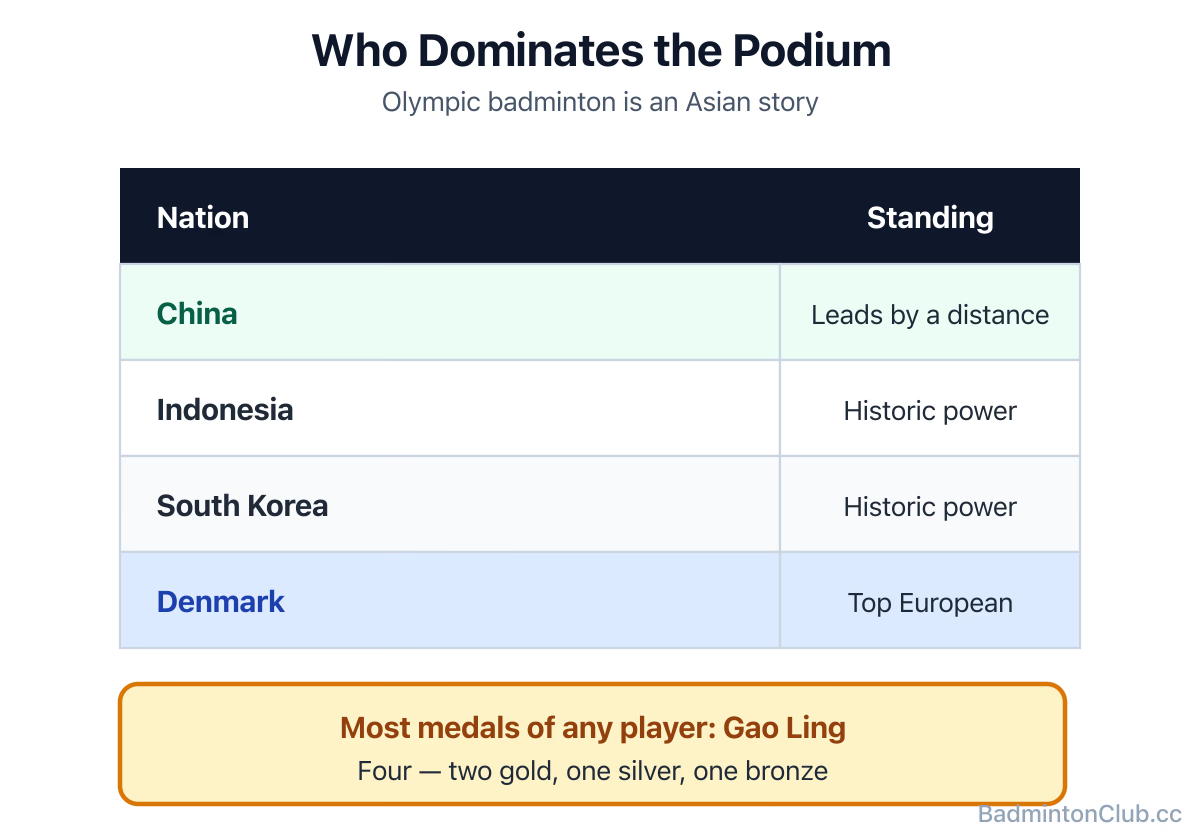
Olympic badminton is an Asian story. China leads the all-time medal count by a distance, with Indonesia and South Korea the other historic powers, and Denmark the strongest European nation. A few names stand out:
- Gao Ling (CHN) holds the record for most Olympic badminton medals — four (two gold, one silver, one bronze).
- Lin Dan (CHN) is the only man to win back-to-back singles golds (2008 and 2012).
- Viktor Axelsen (DEN) repeated the feat in men's singles (Tokyo 2020, held in 2021, and Paris 2024) — the first European to win back-to-back Olympic singles golds.
- Carolina Marín (ESP) is the only non-Asian woman to win Olympic singles gold (2016).
The original block: why Olympic badminton hits different
Having watched a lot of badminton, I'll say something that sounds like hyperbole until you've seen it: the Olympics changes how the players themselves treat the sport. On the BWF World Tour the calendar is relentless — there's always another Super 500 next week, so a loss stings and then you move on. The Olympics only comes every four years, and for most of these athletes it is, flatly, the biggest day of their lives. You can see it in their faces in a way you simply don't at a normal final. The 2012 men's singles final between Lin Dan and Lee Chong Wei is, for my money, the greatest badminton match ever played, and a huge part of why is that both men knew it was an Olympic final. Lee Chong Wei — one of the finest players in history — never won Olympic or World gold, taking three Olympic silvers instead, and that single gap defines how his career is remembered. That's the cruelty and the magic of Olympic badminton: it compresses a four-year cycle into a few points, and it can make or unmake a legacy in an afternoon.
A note on the badminton scandal of 2012
One Olympic moment is worth knowing because it changed the rules. At London 2012, eight women's doubles players (from China, South Korea and Indonesia) were disqualified for deliberately trying to lose group-stage matches to engineer an easier knockout draw. The crowd booed, the BWF acted, and the women's doubles format was later reformed to make tanking pointless. It's a reminder that even at the sport's pinnacle, the structure of a competition shapes behaviour — get the incentives wrong and you get players trying to lose on an Olympic court.
FAQ
- Q: When did badminton become an Olympic sport? It debuted as a full medal sport at the 1992 Barcelona Olympics, after a demonstration appearance at Munich 1972.
- Q: How many badminton events are in the Olympics? Five: men's singles, women's singles, men's doubles, women's doubles, and mixed doubles. Mixed doubles was added at Atlanta 1996.
- Q: Who won the first Olympic badminton gold medals? Indonesia's Susi Susanti (women's singles) and Alan Budikusuma (men's singles) at Barcelona 1992 — Indonesia's first-ever Olympic gold medallists.
- Q: Which country has won the most Olympic badminton medals? China, by a wide margin, followed by Indonesia and South Korea. Gao Ling of China holds the individual record with four medals.
- Q: Did Lee Chong Wei ever win Olympic gold? No. The Malaysian great won three Olympic silver medals (2008, 2012, 2016) but never gold, which is one of the sport's most famous near-misses.
- Q: Was there a badminton scandal at the Olympics? Yes — at London 2012, eight women's doubles players were disqualified for deliberately losing matches to manipulate the draw, prompting format reforms.
Badminton has been a full Olympic medal sport since Barcelona 1992, after a one-off demonstration at Munich 1972. This guide covers how it joined the Games, the five events contested today, the first champions (Indonesia's Susi Susanti and Alan Budikusuma), the nations that dominate the podium, and the format quirks — like why mixed doubles only arrived in 1996 — with every date checked against the BWF and Olympic records.