The BWF World Tour Explained: Levels, Events and How the Season Works
8 June 2026 · Badminton Fans
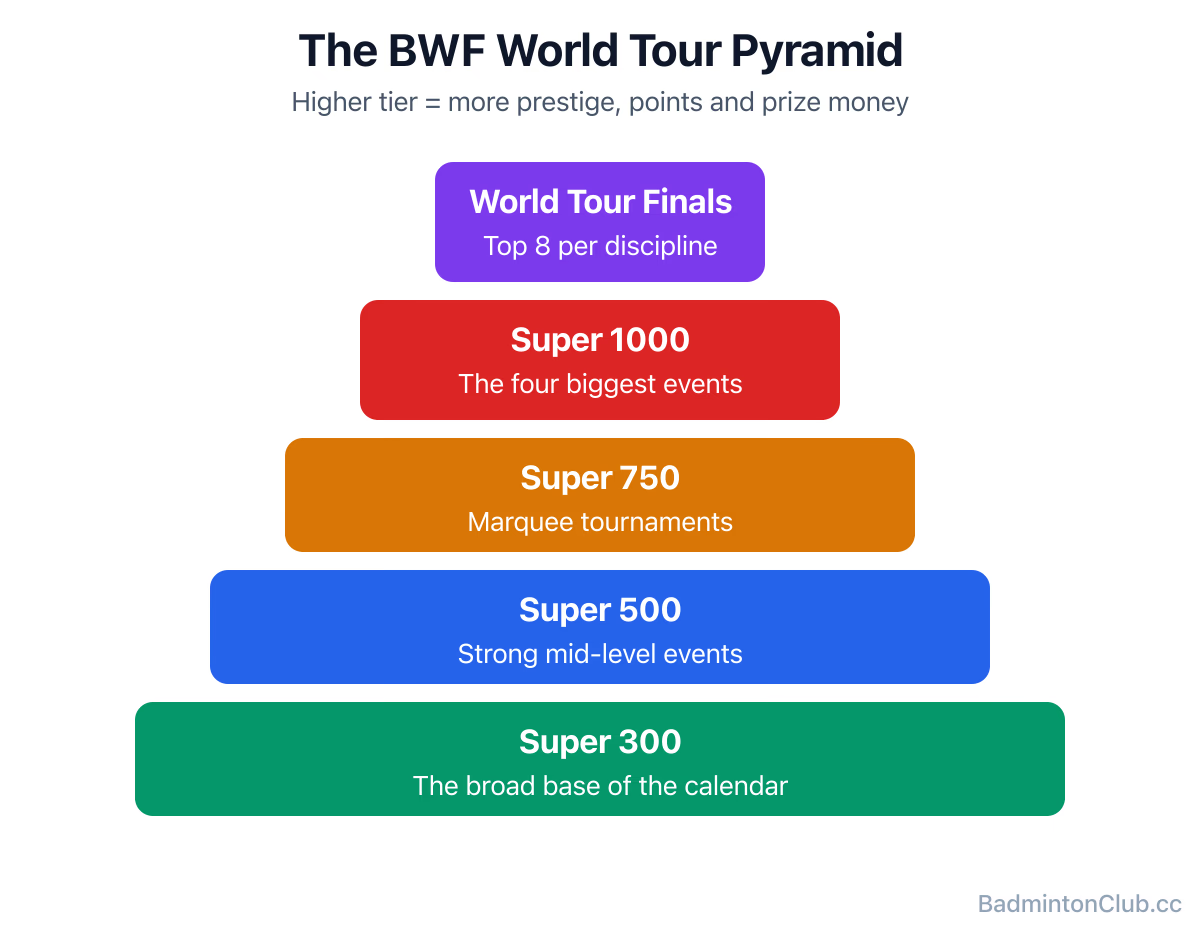
Before 2018, the professional badminton calendar was a bit of a mess — tournaments of all sizes with inconsistent branding and prize money. The BWF cleaned it up by launching the World Tour, a graded annual circuit that organises events into clear tiers. At the top sits the season-ending World Tour Finals, where only the year's top eight players per discipline qualify. Below that come the Super 1000s (the biggest events), then Super 750s, Super 500s, and Super 300s. The higher the tier, the more ranking points and prize money on offer. It's a straightforward pyramid that lets fans, players and sponsors know where each event sits in the pecking order, and the season climax — the World Tour Finals — gives the year a proper ending, which the old calendar never quite had.
The levels, top to bottom
The Tour is a pyramid. The higher the level, the more prestige, points and prize money:
- World Tour Finals — the season finale, top eight per discipline only.
- Super 1000 — the four biggest events, badminton's "grand slams".
- Super 750 — the next tier of marquee tournaments.
- Super 500 — strong mid-level events.
- Super 300 — the broad base of the Tour calendar.
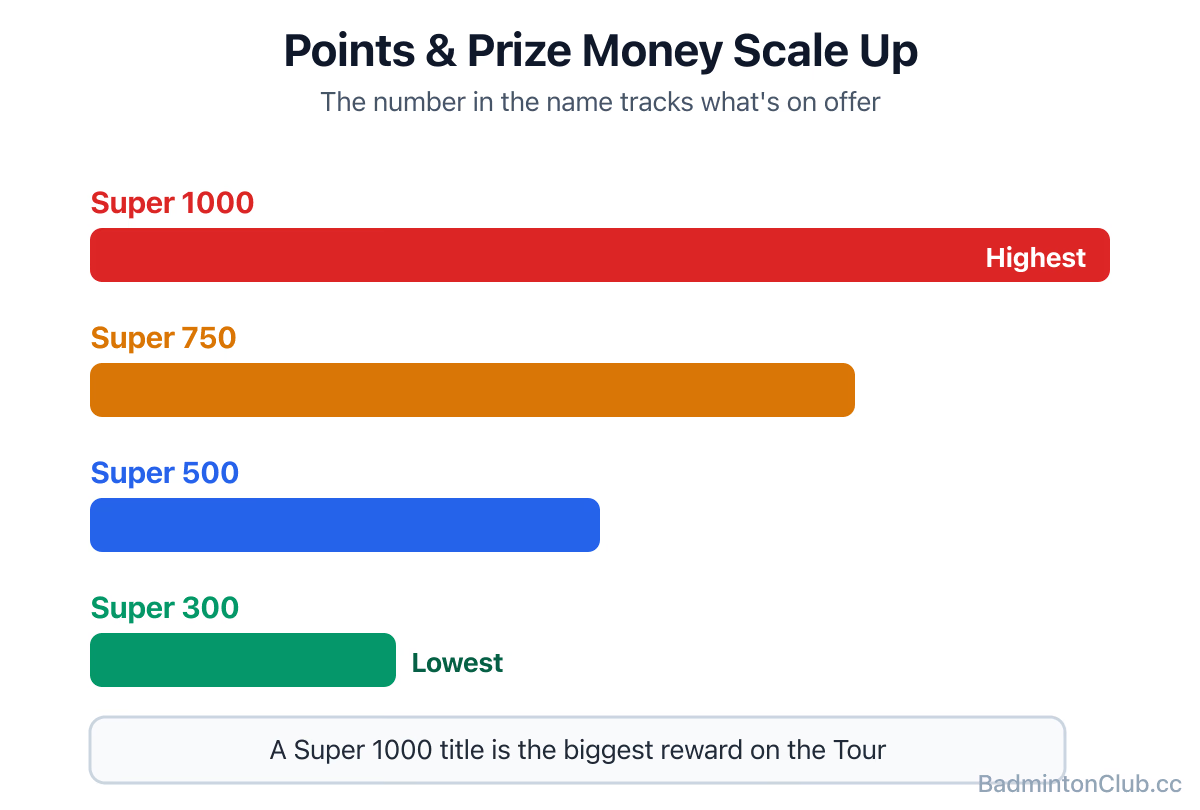
(A Super 100 grade sits just below as a feeder series.) In the 2024 season the Tour ran 32 tournaments across these levels. The numbers in the names roughly track the ranking points and prize pools on offer — a deliberate signal of where the big titles are.
How a season actually flows
A pro's year is a balancing act. They can't play everything — the calendar is punishing and bodies break — so top players pick their events strategically, prioritising the Super 1000s and 750s (big points, big prestige) and using smaller events to top up ranking points or shake off rust. Because the world ranking only counts your best ten results, there's real skill in choosing which tournaments to target. The season builds toward the World Tour Finals, where only the year's eight best in each discipline qualify, with a maximum of two per nation.
Where the Tour sits in the bigger picture
The World Tour is the week-to-week heartbeat of pro badminton, but it's not the whole sport. Sitting alongside it are:
- The Olympics — four-yearly, and the pinnacle of an individual career.
- The World Championships — the annual individual world title (in non-Olympic years).
- The big team cups — Thomas, Uber and Sudirman — contested by nations, not individuals.
The Tour decides who's hot all year; the Olympics, Worlds and team cups decide who's remembered.
The original block: why the World Tour is quietly brutal
People look at the World Tour and see glamour — packed arenas in Jakarta, big prize cheques, world No. 1s. What they don't see is how grinding it is, and it's worth saying out loud. Unlike tennis, where the four majors tower over everything, badminton's calendar is a near-weekly conveyor belt of events spread across Asia and Europe, and the points system forces you onto it. There's no "I'll just play the four big ones and rest" — your ranking demands a steady diet of results, which means constant travel, jet lag, and back-to-back finals on different continents. I think this is the single most underrated reason badminton careers peak and fade faster than you'd expect: the Tour doesn't let you pace yourself the way a tennis player can. The smartest modern players — Axelsen is the obvious example — have essentially gamed this, skipping lower events, protecting their bodies, and showing up fresh for the ones that matter. The ones who chase every Super 300 for ranking points tend to burn out. The Tour rewards selectivity as much as talent, and the players who understand that last the longest.
FAQ
- Q: What is the BWF World Tour? It's professional badminton's main annual circuit, launched in 2018: a graded series of tournaments (Super 1000 down to Super 300) plus a season-ending World Tour Finals, where players earn ranking points and prize money.
- Q: What are the levels of the BWF World Tour? From highest to lowest: World Tour Finals, Super 1000, Super 750, Super 500 and Super 300, with a Super 100 feeder grade below. Higher levels pay more points and prize money.
- Q: What are the Super 1000 tournaments? The four biggest events on the Tour, often called badminton's "grand slams": the All England, Indonesia Open, China Open and Malaysia Open. See grand slam events.
- Q: How do players qualify for the World Tour Finals? The top eight players or pairs in each discipline's season standings qualify, with a maximum of two per nation, to contest the season-ending Finals.
- Q: How many tournaments are on the BWF World Tour? It varies by season; the 2024 season featured 32 tournaments across the five graded levels.
- Q: How is the World Tour different from the Olympics? The Tour runs all year and decides season form and rankings; the Olympics is four-yearly and is the single biggest prize in an individual player's career.
The BWF World Tour is professional badminton's main circuit: a season-long series of tournaments graded from Super 1000 down to Super 300, climaxing in the season-ending World Tour Finals. This guide explains the levels, how many events there are, how prize money and ranking points scale with prestige, how players qualify for the Finals, and how the Tour fits alongside the Olympics and the big team cups — with the structure checked against the BWF.