Badminton's 'Grand Slam' Events: The Super 1000 Tournaments Explained
8 June 2026 · Badminton Fans
If you come from tennis, you're used to the idea of four specific grand slam tournaments that everyone agrees on. Badminton doesn't have an official set like that — there's no BWF-declared "grand slam" label. But there's an unwritten consensus among players and fans: the four Super 1000 tournaments are treated as the closest equivalent. Those four are the All England, the Indonesia Open, the China Open and the Malaysia Open — the biggest, most prestigious, highest-points events on the calendar. Separately, the term "Grand Slam" is also used in badminton to mean something a player achieves: winning all the sport's major titles at least once. That includes the Olympics, the World Championships, and the four big Super 1000s. Only one player in history has ever completed that full set — Lin Dan — which gives you a sense of how hard it is. By contrast, the four Super 1000s alone have had multiple winners from several nations; winning all of them in a career is a marker of true greatness.
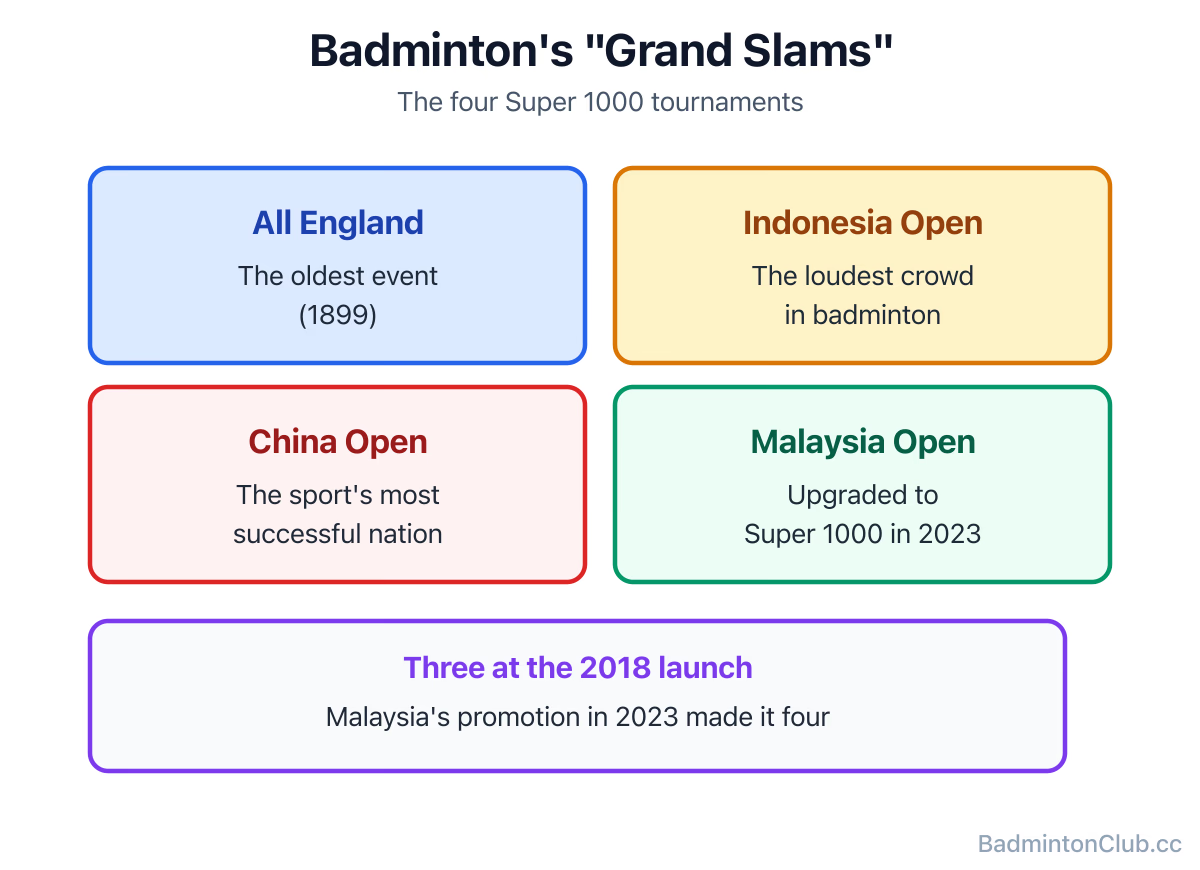
The four "grand slam" tournaments
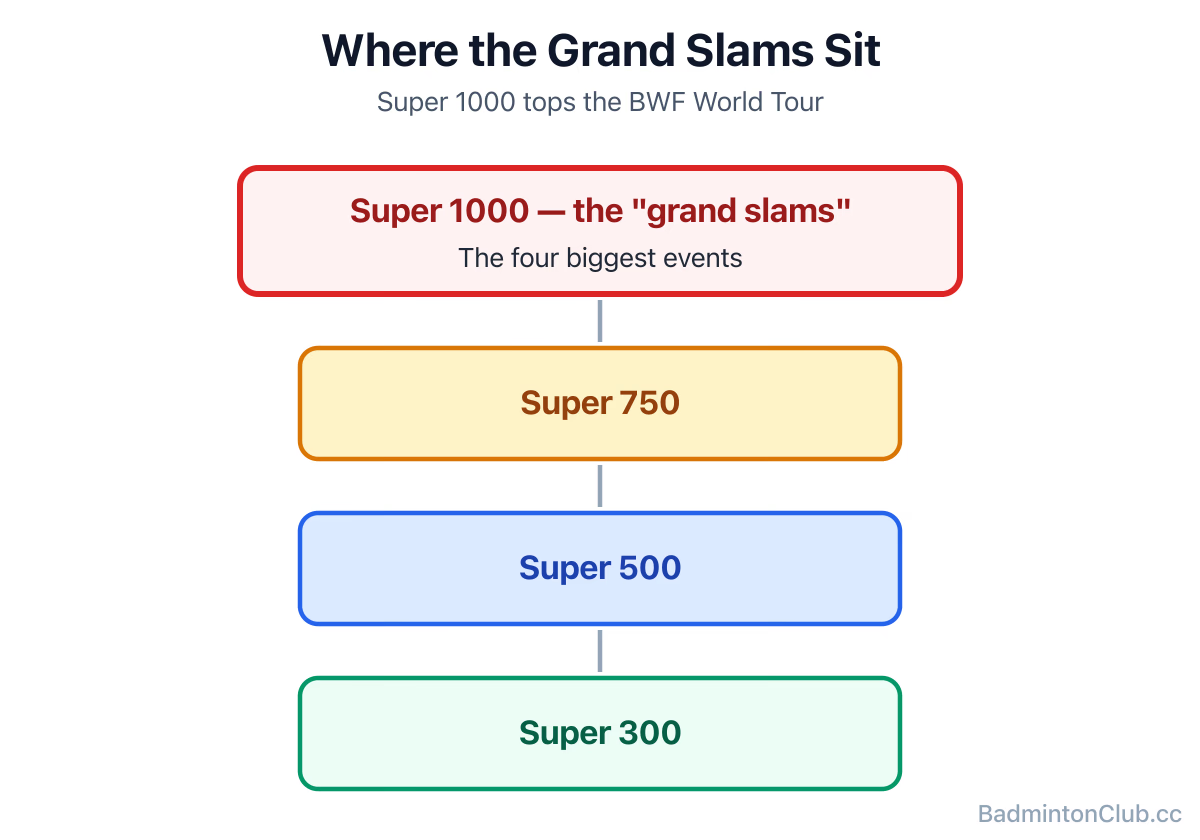
When people say "badminton's grand slams," they almost always mean the Super 1000 events, the top tier of the BWF World Tour:
- The All England Open — the oldest tournament in the sport (1899), the most historically prestigious. See the All England.
- The Indonesia Open — played in front of the most passionate crowd in badminton.
- The China Open — held in the sport's most successful nation.
- The Malaysia Open — upgraded to Super 1000 in 2023, joining the original three.
At the 2018 launch of the World Tour there were only three Super 1000s (All England, Indonesia, China); the Malaysia Open's promotion made it four. So if an older article lists only three "grand slams," it's not wrong — it's just out of date.
The other "grand slam": winning everything
There's a second, completely different use of "grand slam" in badminton, and it's worth separating to avoid confusion. It refers to one player winning all nine of the sport's major titles over a career: the Olympics, World Championships, World Cup, Thomas Cup, Sudirman Cup, Super Series / World Tour Finals, All England, Asian Games and Asian Championships. This is the "Super Grand Slam," and only Lin Dan has ever completed it (see the best players of all time). So "grand slam" can mean a tournament or a career achievement depending on context.
Why these four events stand apart
The Super 1000s tower over the rest of the calendar for a simple reason: the best players all show up. A Super 300 might be missing half the top names who've chosen to rest; a Super 1000 draws the full field, because the points and prestige are too valuable to skip. That's what makes winning one meaningful — you didn't beat a depleted draw, you beat everyone. The prize money and ranking points are the biggest on the Tour, but it's the strength of the field that really separates a grand slam from an ordinary title.
The original block: why badminton's "grand slam" label is borrowed and a bit awkward
I'll be honest about something the sport doesn't love admitting: calling the Super 1000s "grand slams" is marketing borrowed from tennis, and it doesn't quite fit. In tennis, the four slams are genuinely in a class of their own — they're two weeks long, best-of-five, worth double the ranking points, and they define careers. Badminton's Super 1000s are bigger than the other Tour events, yes, but the gap isn't nearly as dramatic, and crucially the World Championships and the Olympics sit above them, which has no clean tennis equivalent. So the hierarchy is genuinely confusing: a Super 1000 is a "grand slam" in casual talk, but a player would trade three of them for one World title or one Olympic gold without hesitation. My take is that badminton would be better off owning its own structure rather than borrowing tennis's vocabulary — the sport's real majors are the Olympics and the Worlds, with the Super 1000s as a prestigious-but-secondary tier. The "grand slam" label flatters the Super 1000s while quietly undercutting the events that actually matter most. It's a small thing, but if you want to sound like you actually know badminton rather than a tennis fan watching badminton, that's the distinction to get right.
FAQ
- Q: What are badminton's grand slam events? There are no official grand slams, but the four Super 1000 tournaments are treated as them: the All England, Indonesia Open, China Open and Malaysia Open — the biggest events on the BWF World Tour.
- Q: How many Super 1000 tournaments are there? Four. There were three at the World Tour's 2018 launch (All England, Indonesia, China); the Malaysia Open was upgraded to Super 1000 in 2023.
- Q: What is the "Super Grand Slam" in badminton? A separate meaning: one player winning all nine of the sport's major titles over a career. Only Lin Dan has achieved it.
- Q: Are the Super 1000s the most important events in badminton? They're the biggest on the year-round World Tour, but the Olympics and World Championships rank above them — players would trade Super 1000 titles for an Olympic or World gold.
- Q: Why are the Super 1000 events so prestigious? The full field of top players turns up (the points and prestige are too valuable to skip), so winning one means beating everyone, not a depleted draw. They also offer the most points and prize money on the Tour.
- Q: Is the All England a grand slam? Yes, in the casual sense — it's a Super 1000 and the oldest, most historically prestigious of the four "grand slam" events.
Badminton doesn't have official 'grand slams' like tennis — but the Super 1000 tournaments are widely treated as them: the All England, Indonesia Open, China Open and Malaysia Open. This guide explains what makes these four events the sport's biggest, how 'grand slam' is also used for a player winning every major title (Lin Dan's feat), and how the Super 1000s sit at the top of the BWF World Tour, with prestige and points to match.