Badminton World Rankings Explained: How BWF Points and Rankings Work
8 June 2026 · Badminton Fans
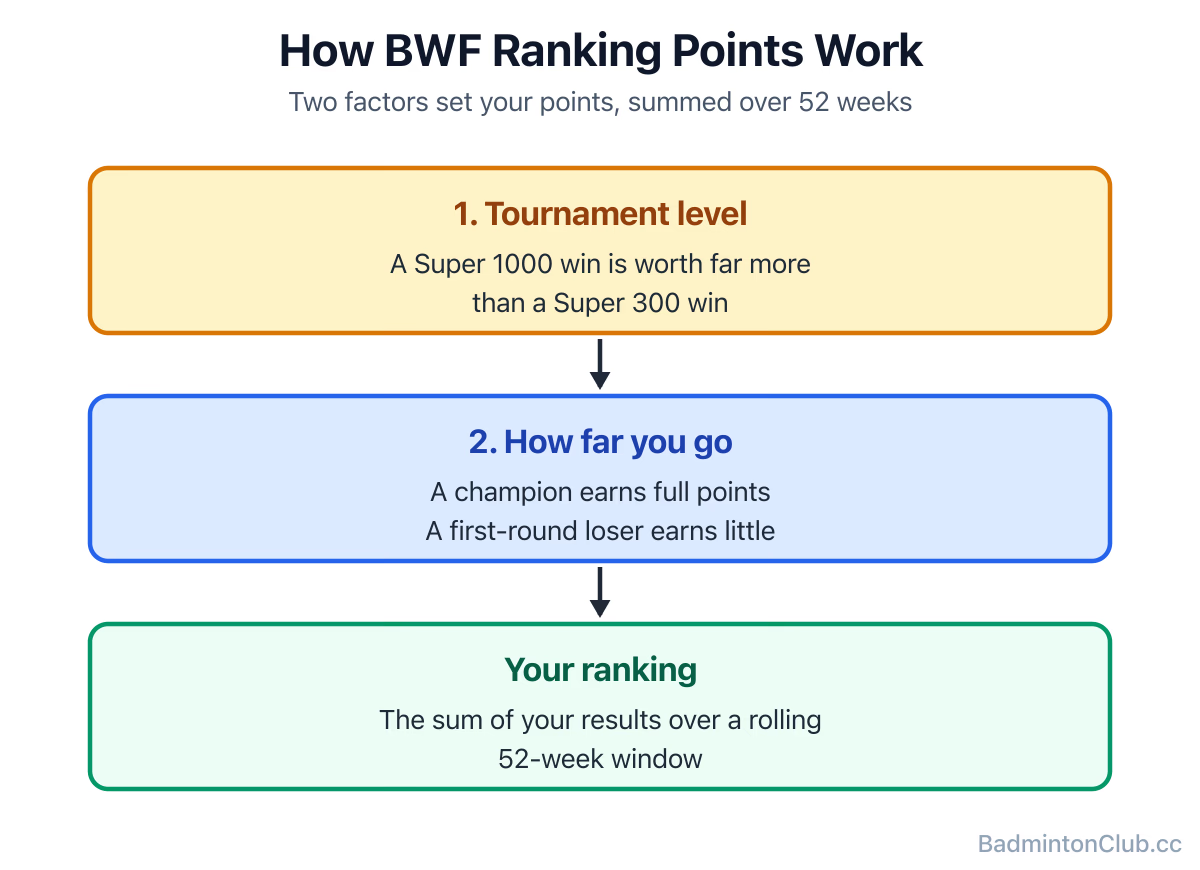
The BWF World Ranking sounds more complicated than it really is. It's a 52-week rolling points system that works like this: every time you play a BWF-sanctioned tournament, you earn points based on how far you advance. Events at higher levels pay more points — winning a Super 1000 is worth far more than winning a Super 300. Your ranking is simply the total of your best results over the past year, with only the top ten tournaments counting once you've played eleven or more. That's the whole system. But because rankings determine tournament seeding, entry eligibility, and Olympic qualification, the top players treat them with the kind of attention that would make an accountant proud — planning entire seasons around defending points, skipping weaker events to rest, and timing their peaks for the tournaments that matter most.
How the points work
Two factors decide how many points you win:
- The level of the tournament. A Super 1000 win is worth far more than a Super 300 win. The bigger the event, the bigger the points.
- How far you go. A champion earns the full points; a semi-finalist earns less; a first-round loser earns little or nothing. You're rewarded for winning matches at big events, not just entering them.
Your ranking is then the total of your qualifying results over the last 52 weeks — a rolling window, not a calendar year. As each tournament's anniversary passes, last year's points for that event drop off and are replaced by this year's.
The "best 10" rule
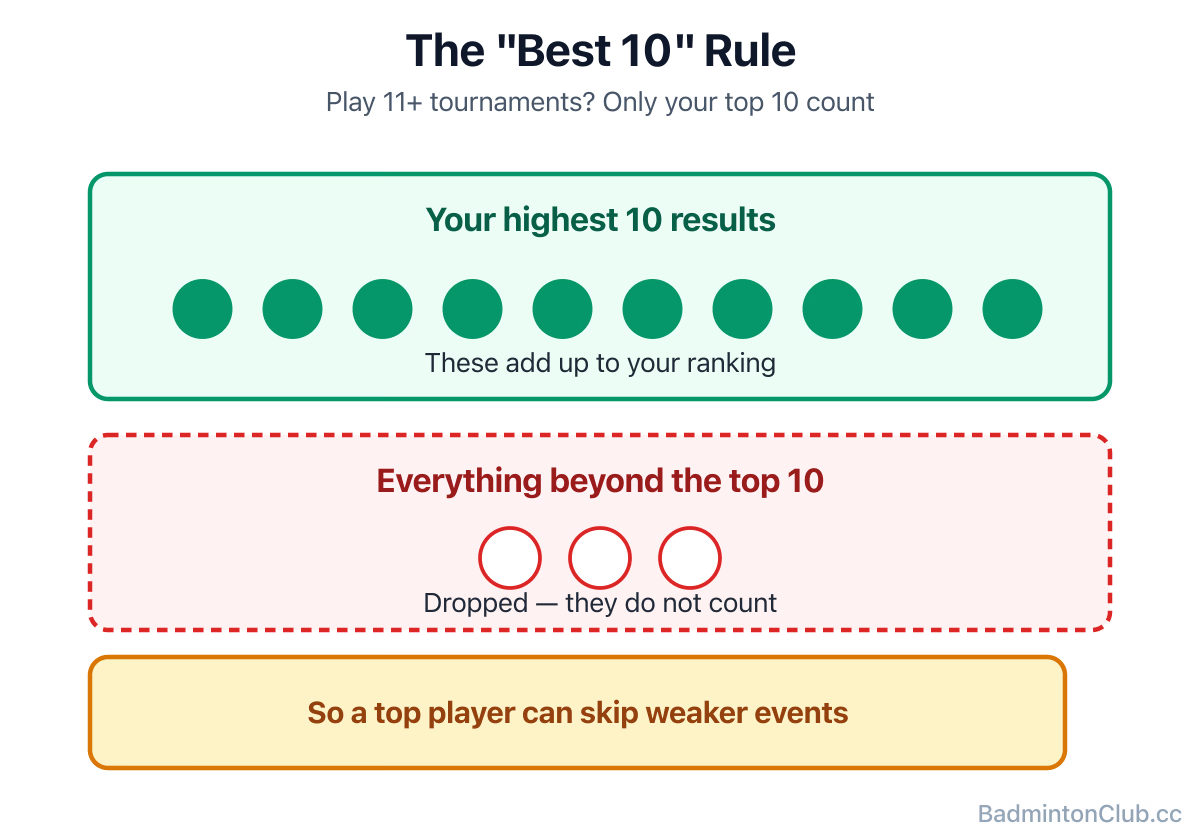
There's one rule that confuses people, so here it is plainly: if you've played eleven or more ranking tournaments in the 52-week window, only your ten highest-scoring results count. Play fewer than eleven and they all count. This matters because it means a top player can skip events without being punished — their best ten are what defines them — while a player chasing points has to keep entering tournaments to fill their ten slots.
Why rankings actually matter
Rankings aren't just bragging rights. They decide:
- Seeding — the top eight are seeded so they don't meet early, keeping the best players apart until late rounds.
- Entry — many big events take entries strictly by ranking.
- Olympic qualification — the "Race to" rankings over a qualifying window determine who gets the limited Olympic spots, with a cap on players per nation.
That last point is brutal: a country as strong as China, Japan or Indonesia can have more world-class players than it's allowed to send, so the ranking decides who stays home.
The original block: why the ranking number lies more than you think
Here's something the casual fan misses, and it changes how you should read a ranking. The world No. 1 is often not the player you'd least want to face right now. Because the system is a rolling 52-week sum, the number is a trailing average of a whole year, not a snapshot of current form. A player can be ranked No. 3 while playing the best badminton on the planet this month, simply because their big results are recent and haven't fully accumulated yet. Conversely, someone can cling to No. 1 on the strength of results from ten months ago while quietly declining. I've watched seedings that everyone in the hall knew were "wrong" — a dangerous unseeded player drawn against a top seed in round two — purely because the maths hadn't caught up. So when you see an upset where a "lower-ranked" player demolishes a top seed, don't call it a shock. Often the ranking was the thing that was out of date, not the result. The number tells you who had the best year; the draw tells you who's dangerous today. Smart coaches scout the second, not the first.
FAQ
- Q: How do badminton world rankings work? They're a rolling 52-week points system. You earn points by advancing at BWF tournaments, bigger events pay more, and your ranking is the sum of your qualifying results over the past year.
- Q: How are BWF ranking points calculated? By tournament level and round reached: a Super 1000 champion earns far more than a Super 300 champion, and a finalist earns more than a quarter-finalist. The points are tabulated in the BWF statutes.
- Q: What is the "best 10" rule in badminton rankings? If a player has competed in eleven or more ranking tournaments in the 52-week window, only their ten highest-scoring results count toward their ranking.
- Q: Why do badminton rankings matter? They determine tournament seeding, entry, and Olympic qualification — including which players a strong nation is allowed to send when it has more contenders than spots.
- Q: Can the world No. 1 lose to a much lower-ranked player? Often, yes. Because rankings are a 52-week trailing sum, they can lag a player's current form, so an in-form lower-ranked player can be far more dangerous than their number suggests.
- Q: How often are badminton rankings updated? The BWF publishes updated world rankings weekly, reflecting the latest results as they roll into (and out of) the 52-week window.
How do badminton world rankings actually work? The BWF World Ranking is a rolling 52-week points system: you earn points by how far you go at sanctioned tournaments, bigger events pay more, and only your best results count once you've played enough. This guide explains the points, the 'best 10' rule, why rankings decide tournament seeding and Olympic qualification, and the quirks that make a player's number jump or drop — checked against the BWF's own statutes.