Badminton Racket Buying Guide: Head Balance, Weight (3U/4U/5U) & Shaft Flex Explained
7 June 2026 · Badminton Fans
A badminton racket is defined by three trade-offs: head balance (head-heavy gives a heavier smash but slower swing speed; head-light gives quicker hands but less smash power; even-balance sits in between), weight (heavier 2U/3U rackets generate more momentum but tire the arm; lighter 4U/5U are faster to swing and easier on the shoulder), and shaft flex (flexible shafts forgive timing and add power for slower swings; stiff shafts give faster response and control but demand a faster, cleaner swing). Pick on style and physicality, not on which model your favourite player uses.
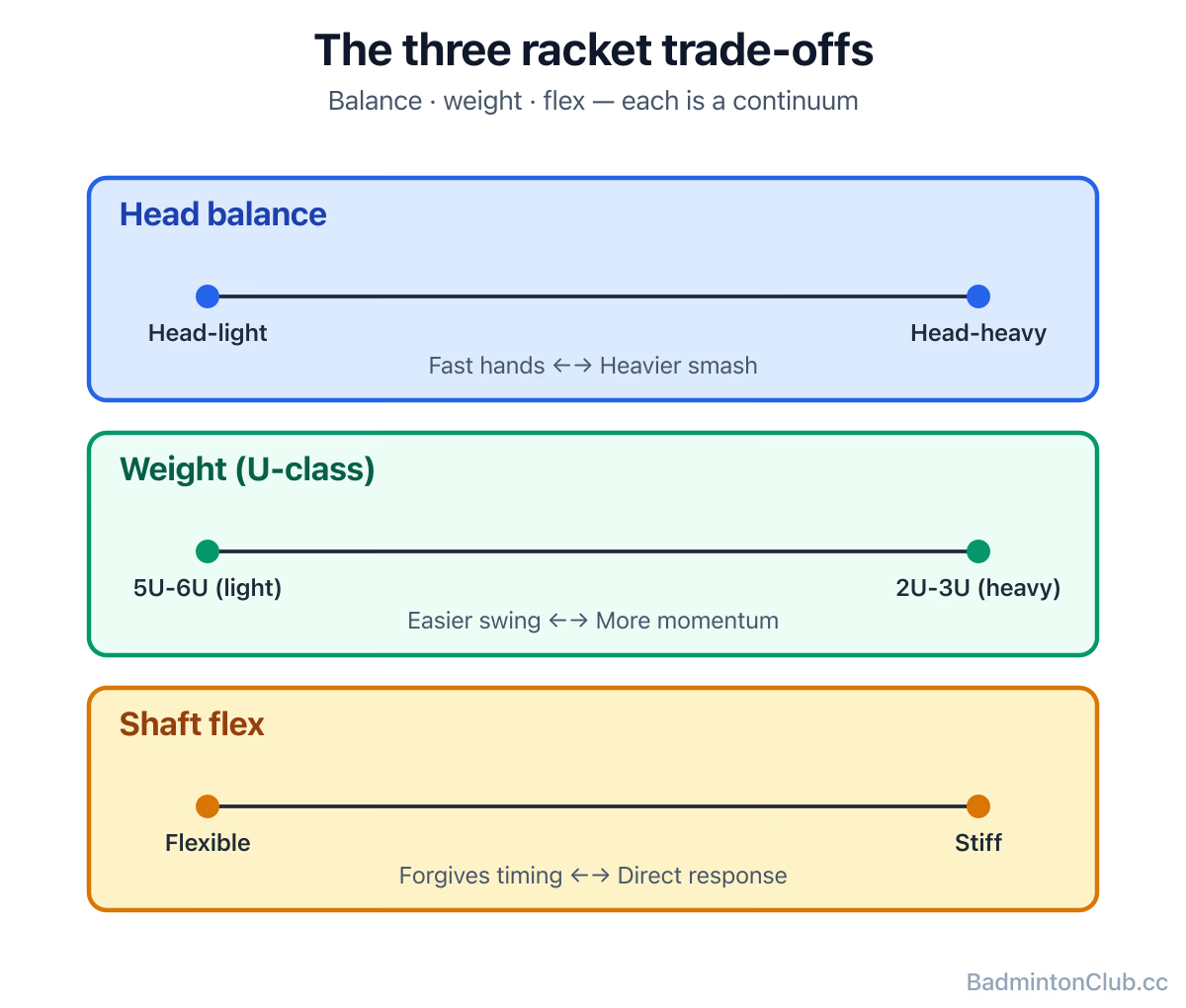
Head balance: head-heavy, even, or head-light?
- Head-heavy rackets concentrate mass in the racket head — heavier momentum into the shuttle means a heavier smash and clear, but slower transitions in fast doubles and more fatigue. Best for singles players who love attacking from the back, and doubles back-court attackers.
- Head-light rackets put mass in the handle — fast hands at the net and in flat exchanges, less arm fatigue, but a smaller smash. Best for front-court doubles specialists, players with shoulder issues, and many mixed-doubles ladies.
- Even-balance rackets are the all-rounder — neither the heaviest smash nor the fastest hands, but a comfortable middle for most club players. Default recommendation if unsure.
You can sometimes feel the balance: hold the racket flat on one finger at the throat — if it tips toward the head, it's head-heavy; toward the handle, head-light.
Racket weight (3U / 4U / 5U)
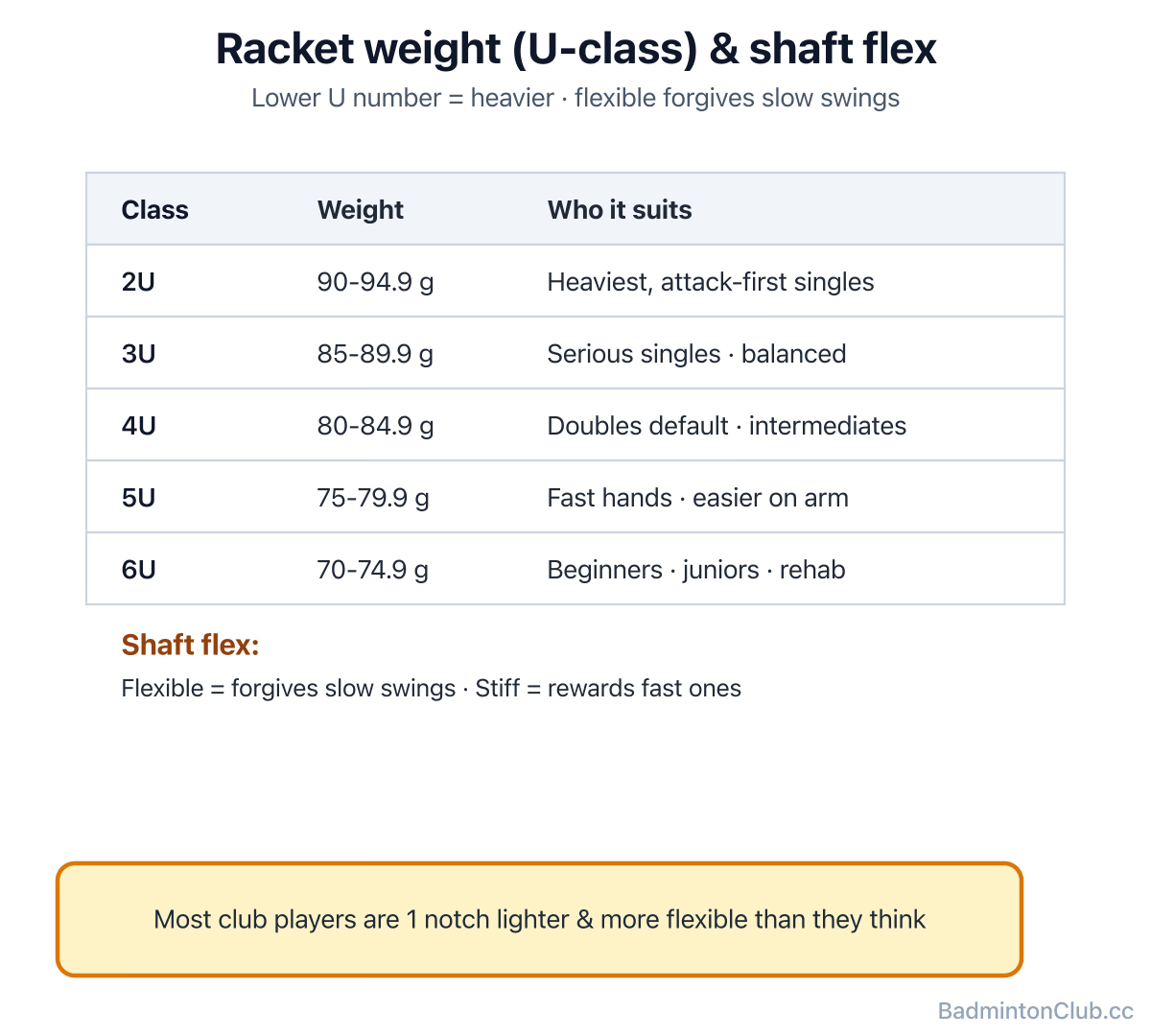
The "U" classification is bare-frame, unstrung, unwrapped weight (lower number = heavier):
| Class | Weight | Who it's for |
|---|---|---|
| 2U | 90–94.9 g | Heaviest — strong, advanced, attack-first singles |
| 3U | 85–89.9 g | Most common for serious singles players — balanced power |
| 4U | 80–84.9 g | Most common for doubles and intermediates — quicker swing |
| 5U | 75–79.9 g | Light — fast hands, easier on arm, smaller smash |
| 6U | 70–74.9 g | Very light — beginners, juniors, or shoulder rehab |
A typical strung, gripped racket weighs ~7–10 g more than its U class, so the final racket in your hand is closer to ~92–98 g depending on string and grip choice.
Shaft flex
The shaft bends slightly on impact then snaps back — this "whip" stores and releases energy.
- Flexible (or "high flex") — bends more, easier to load with a slower swing, forgives bad timing, helps players who don't yet generate fast racket-head speed. Trades a touch of response for power and feel. Best for beginners and intermediates.
- Medium / regular — the all-purpose default for most club players.
- Stiff / extra-stiff — bends less, gives a faster, more direct response and better control on hard shots, but demands you already swing fast — slow swingers get a deader shuttle from a stiff racket. Best for advanced fast-armed players.
A common mistake: buying the same stiff "pro" racket your favourite player uses, then wondering why your smash feels worse. They generate the racket-head speed; you might not, yet.
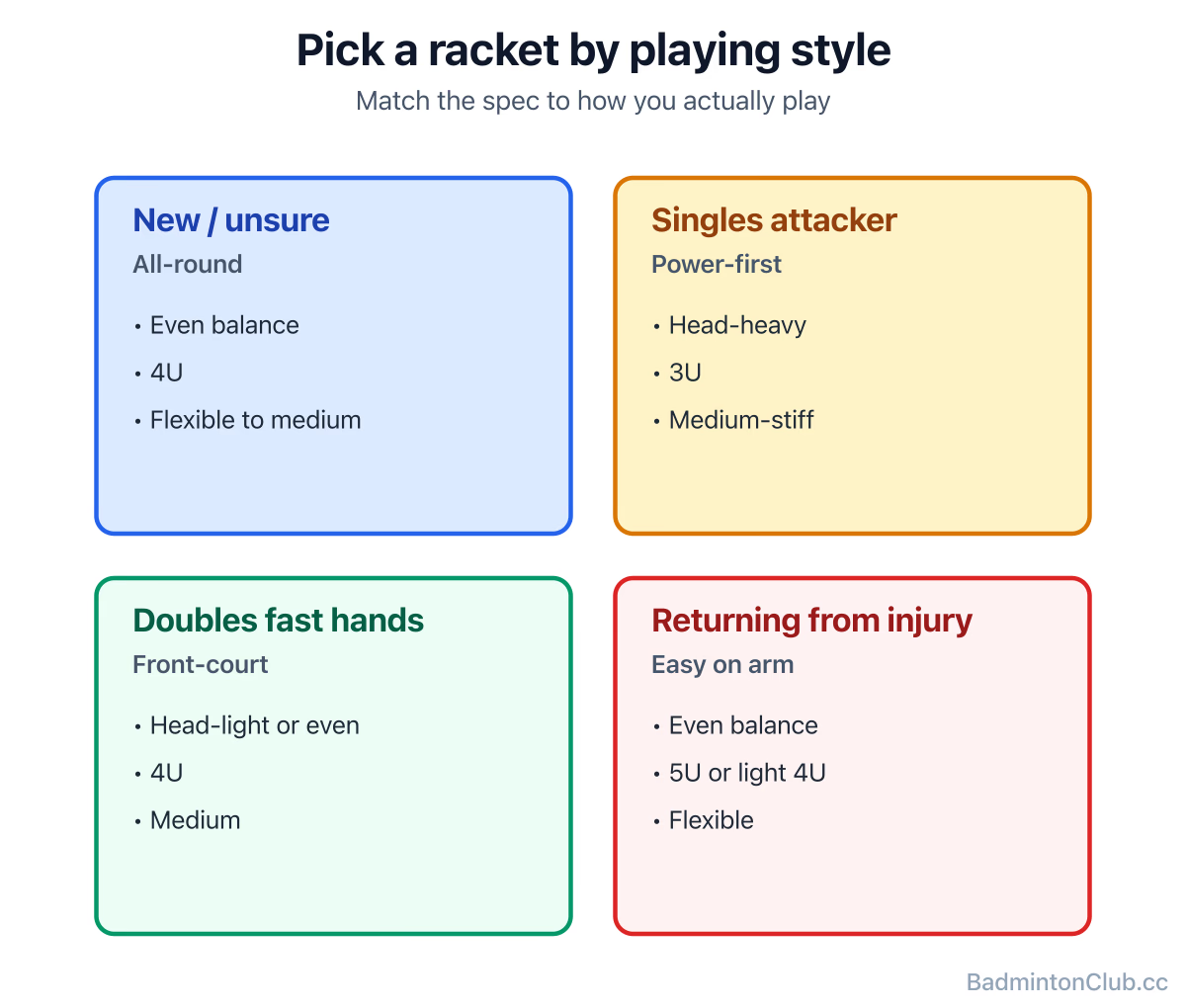
A simple buyer's framework
- New / improving / unsure? Even-balance, 4U, flexible-to-medium shaft. Forgiving, fast enough, gentle on the arm.
- Singles attacker? Head-heavy, 3U, medium-stiff shaft.
- Doubles front-court / fast hands? Head-light or even, 4U, medium shaft.
- Returning from shoulder issues / older player? Even, 5U or light 4U, flexible shaft.
- Mixed doubles lady (front court)? Head-light, 4U/5U, medium shaft for control.
What this looks like on a club night
The number of players who buy a top-end stiff head-heavy frame and then can't get their clears to length is depressing. The marketing implies the expensive racket makes you better; in practice, a too-stiff or too-heavy racket exposes weaknesses in your swing and tires you out (read How to Smash Harder for what those weaknesses typically look like, and the Strings & Tension article for how string choice compounds it). A frank opinion: most club players are better off one notch lighter and one notch more flexible than they think they need. Comfort and speed of hand outperform a heavier smash that you can't reliably produce. Borrow a friend's racket for a session before you buy — half an hour of real play tells you more than any spec sheet. If your club uses BadmintonClub.cc to organise pairings, you can usually ask the person rotating onto your court next week to bring their racket along; informal swaps in the queue between rotations are how most of the best buying decisions actually get made.
FAQ
- Q: What's the difference between head-heavy and head-light badminton rackets? Head-heavy concentrates mass in the head for a heavier smash (favoured in singles/back-court attack); head-light puts mass in the handle for faster hands (favoured at the net and in fast doubles); even-balance sits between them as a versatile default.
- Q: What does 3U/4U/5U mean in badminton rackets? It's the bare-frame weight class — 3U = 85–89.9 g, 4U = 80–84.9 g, 5U = 75–79.9 g — with lower numbers being heavier. 3U is common for singles, 4U for doubles and intermediates, 5U for fast hands and lighter arms.
- Q: Should a beginner use a flexible or stiff racket shaft? Flexible — it bends more readily for slower swings and forgives timing, helping beginners generate power without perfect technique. Stiff shafts only reward fast, clean swings.
- Q: How do I know if a racket is head-heavy or head-light? Balance it flat on one finger at the T-joint — if it tips toward the head it's head-heavy; toward the handle, head-light; level, even-balanced.
- Q: Does the racket really matter, or is it all technique? Technique dominates, but a poorly-matched racket can mask gains and tire your arm. The right racket lets your real technique show; the wrong one hides it.
- Q: 3U or 4U for doubles? 4U for most doubles players — the slightly lighter frame is quicker in fast exchanges. 3U suits a back-court attacker who wants more smash mass and accepts a slower hand.
A badminton racket buying guide for club players — explaining the three trade-offs that actually matter: head balance (head-heavy vs head-light vs even), weight class (2U through 6U, with 3U for singles attackers and 4U as the doubles default), and shaft flex (flexible for beginners, stiff only for fast swingers). With a simple buyer's framework matched to playing style, and the frank reason most club players are better off one notch lighter and more flexible than they think.