Mixed Doubles Badminton Tactics: Lady Positioning, Attacking the Woman & Rotation
7 June 2026 · Badminton Fans
In modern mixed doubles, the lady plays the front court and the man attacks from the back whenever the pair is on the attack; both partners drop to a side-by-side defence the instant they're forced to lift; and the opposition will almost always try to "attack the woman" because she is, on average, the higher-percentage target. Win mixed and you've usually won three smaller fights: she holds the net under fire, he stays patient at the back, and the rotation between attack and defence happens fast. Lose mixed and one of those fights almost always cracked.
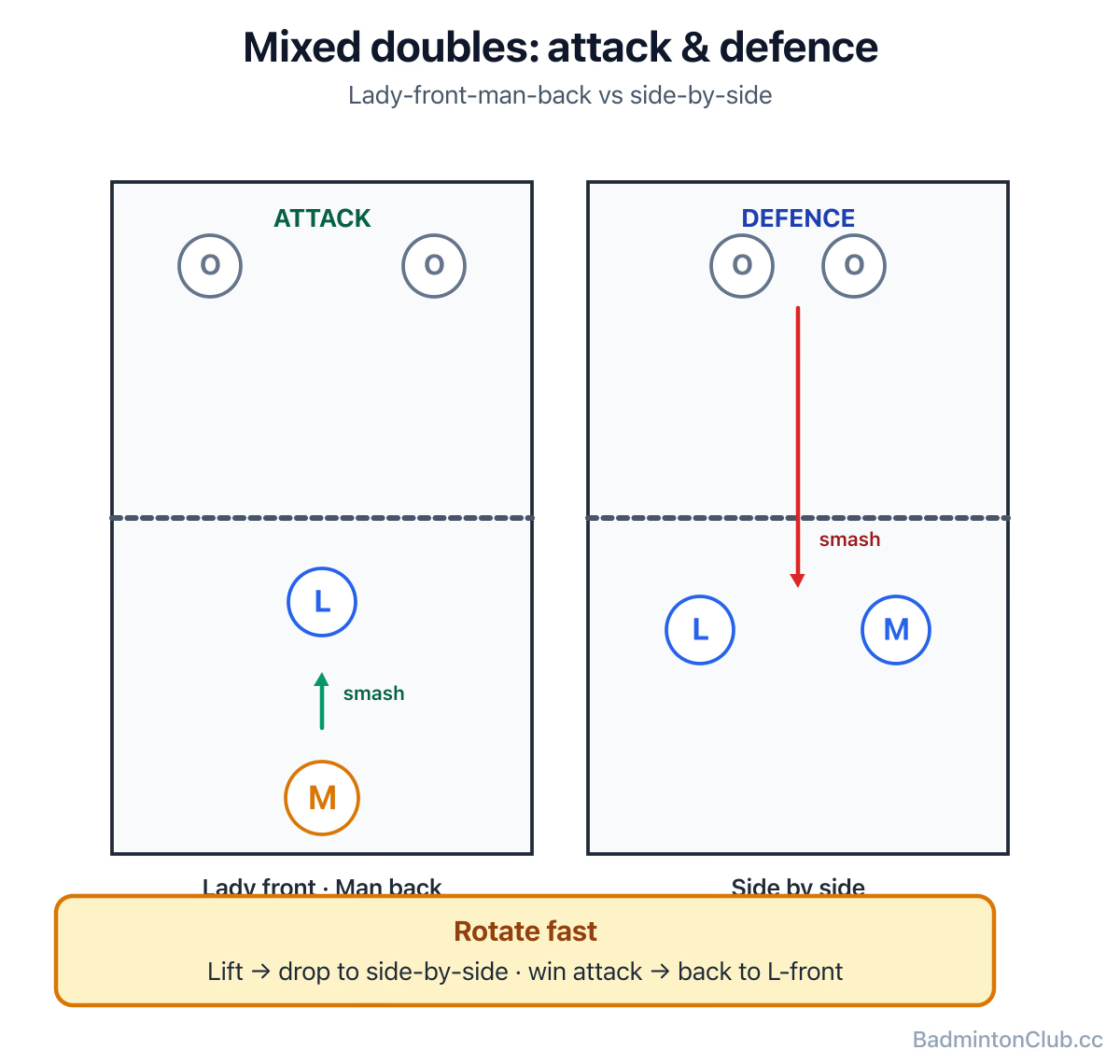
The standard formation
Attacking side: the lady stays at the front net; the man attacks from the rear. Her job is finishing — kill the loose net replies, push flat into the doubles "hole", make every block sting. His job is the steep, patient attack. The shot they're never trying to hit is the highlight-reel cross-court winner; they're trying to keep the shuttle going down, again and again, until the opposition leaves something soft.
Defending side: the standard receive set-up is also lady-front, man-back. The moment they lift, they drop to side-by-side and split the court left-and-right. A common league-night mistake is staying lady-front-man-back through a lift — the man can't reach front-court blocks without abandoning the back, and the pair gets ripped down the middle. Most clubs that use a club-night rotation tool like BadmintonClub.cc will throw mixed pairs together unpredictably; the surest sign of an experienced pair is how quickly they slot into formation in the first three rallies.
"Attack the woman" — and how to survive it
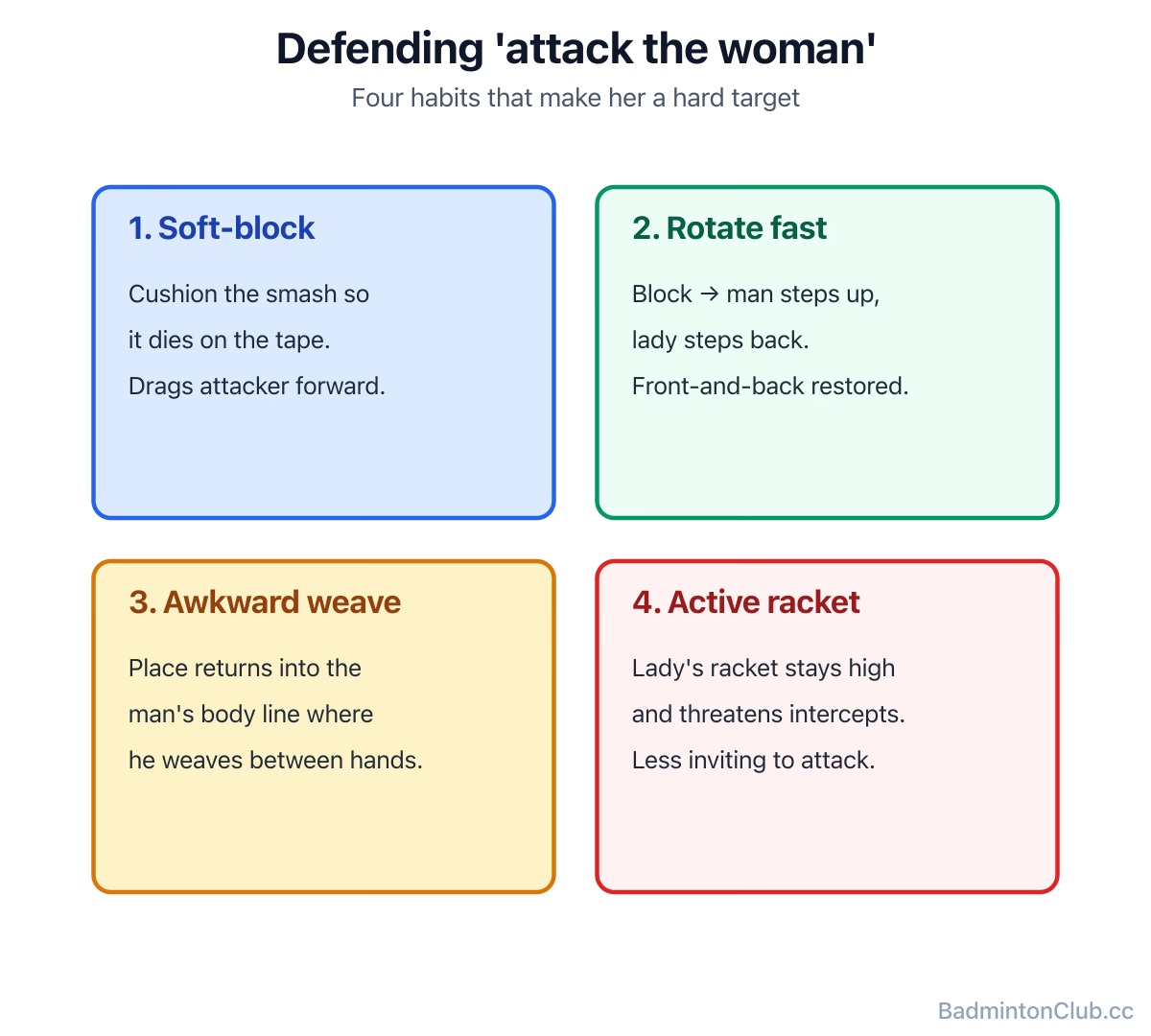
There's no polite way to phrase the next bit: at any given level the average physical mismatch usually favours smashing the woman over the man, and competent opposing pairs do exactly that. It isn't personal, it's percentages. The counter isn't to hide her at the back (where the formation falls apart); it's to make her a hard target:
- Soft-block everything. A smash defended back as a dying net shot drags the attacker forward off balance. Two of those in a row and the smash dries up.
- Rotate fast. Defend a smash to the net, the man pushes up, the lady steps back — front-and-back is restored within two shots, not five.
- Quote returns to the man's awkward weave — the body-and-elbow line where his forehand and backhand are both compromised — rather than the open court that lets him reset.
- Active racket. A lady whose racket is high at the net is much less inviting to attack than one who's lowered her hands.
She doesn't have to out-smash anyone. She has to survive each rally one shot longer than they want her to.
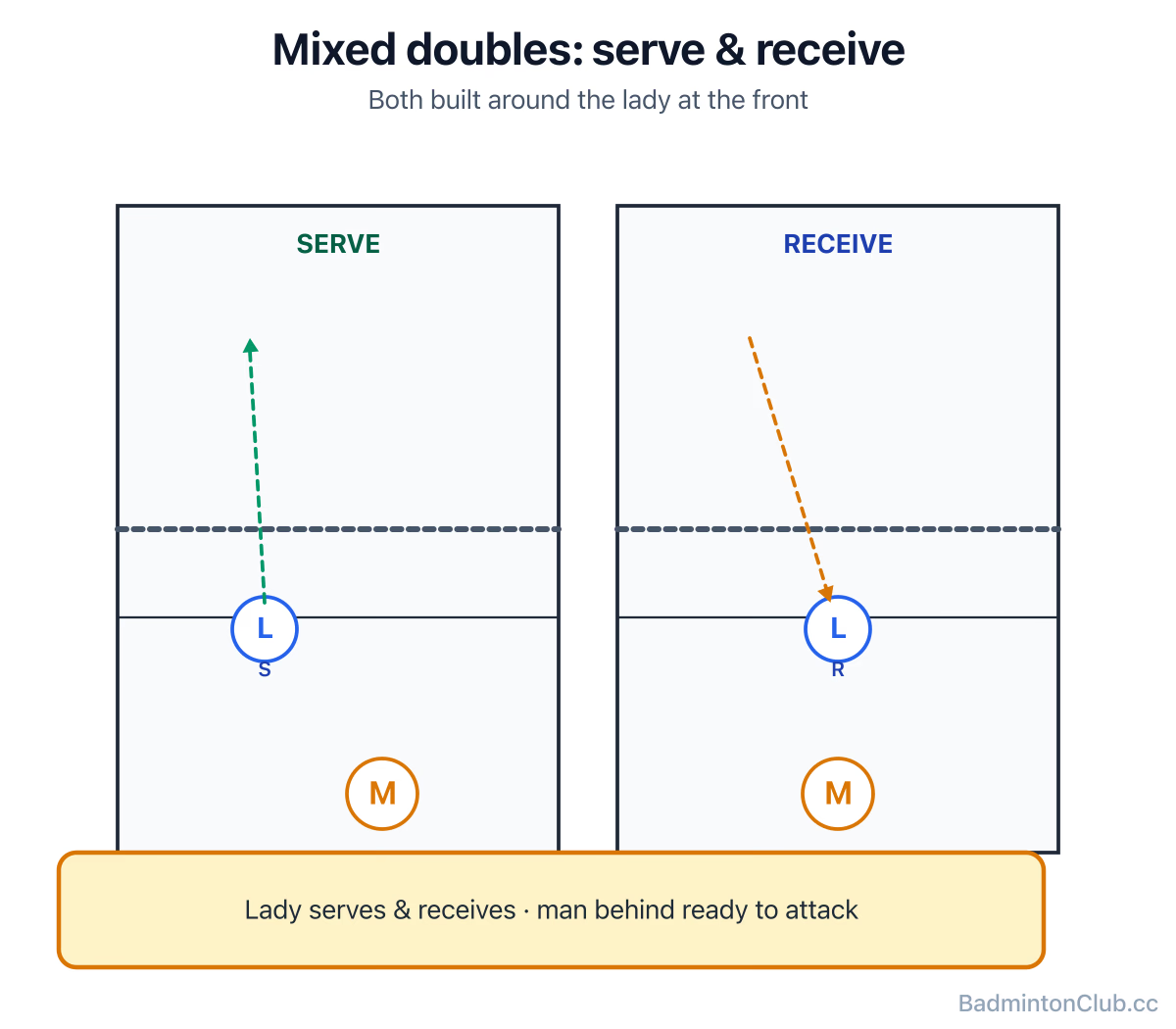
Mixed-doubles serve and receive
The serve is almost always a low backhand serve from right at the front line, with a credible flick to keep the receiver honest. The lady serves and immediately holds the front. The man stands behind, ready to attack any reply that floats. The serve itself is a Low & Backhand Serve — same technique as in singles or level doubles — but the consequence in mixed is that anything not tight gets killed.
On receive, the lady receives. She's at the front anyway, and she's in the perfect spot to attack the serve early. The right mindset is the one from the Return of Serve article: rush balanced, threaten everything, but stay recoverable on the flick.
What coaches actually shout from the side
"Stay UP!" — to the lady who drifts back, because the second she lands in the mid-court the formation has already collapsed. "ATTACK HER!" — to the man at the back who's politely wandering smashes onto the bigger opponent. And "ROTATE!" — to both, on every lift. A frank opinion that experienced mixed players will recognise: mixed is the format where tactics beats talent most reliably. Two physically dominant individuals who refuse to rotate get beaten by a disciplined, modest pair every league weekend. Drill the formation, drill the lady's net defence, drill the man's patience — and your win-rate jumps in weeks. Pinning the formation diagram inside the team page on BadmintonClub.cc so it's the first thing the pair sees before a match is a small thing that earns its rent.
FAQ
- Q: How should mixed doubles be played in badminton? Lady at the front net, man at the back attacking, both dropping into side-by-side the instant they lift — and rotating back to lady-front the moment they regain the attack.
- Q: Should the lady stand at the front or back in mixed doubles? Front, almost always. Her job is net control and finishing blocks; the man attacks from the back. Drifting back collapses the formation.
- Q: Why do mixed pairs attack the woman? Average physical mismatch favours smashing the smaller player at the same level. The counter is tight defence and instant rotation, not switching her to the back.
- Q: How do you defend "attack the woman" tactics? Soft-block her smashes to the net, rotate fast so she's not stuck defending, keep her racket up to threaten interceptions, and direct returns to the man's awkward weave.
- Q: Who serves and receives in mixed doubles? Usually the lady, because she's at the front anyway. She serves a low backhand serve with a credible flick and rushes aggressively on the receive — see the Low & Backhand Serve and Return of Serve guides.
- Q: Is mixed doubles more tactical than other formats? Yes — physical mismatches and formation discipline matter more than raw shot-making, which is why disciplined, modest pairs regularly beat talented but disorganised ones. Logging match notes by partner in BadmintonClub.cc helps spot which formation cracks first against which kind of opposition.
Mixed doubles badminton tactics — the lady-front-man-back attacking formation, the side-by-side defensive switch the instant they lift, and how to survive the opposition's near-universal 'attack the woman' plan with soft blocks, fast rotation and an active racket. Plus the serve and receive convention (low backhand serve, lady receives), the awkward weave on the male partner, and the honest reason mixed is where tactics beat raw talent more reliably than any other format.