Badminton Strength Training: Legs, Core, Forearm & Wrist Workouts for Power & Injury Prevention
7 June 2026 · Badminton Fans
Strength training for badminton focuses on the legs (squats, deadlifts, lunges) for lunging and jumping power, the core (anti-rotation and anti-extension work) for transferring force through the trunk, and the forearm/wrist (rotation, grip, light wrist work) for the racket-head snap — all done with moderate loads, fast intent, twice a week, around your on-court training. Big slow lifts aren't the goal; strong and fast is.
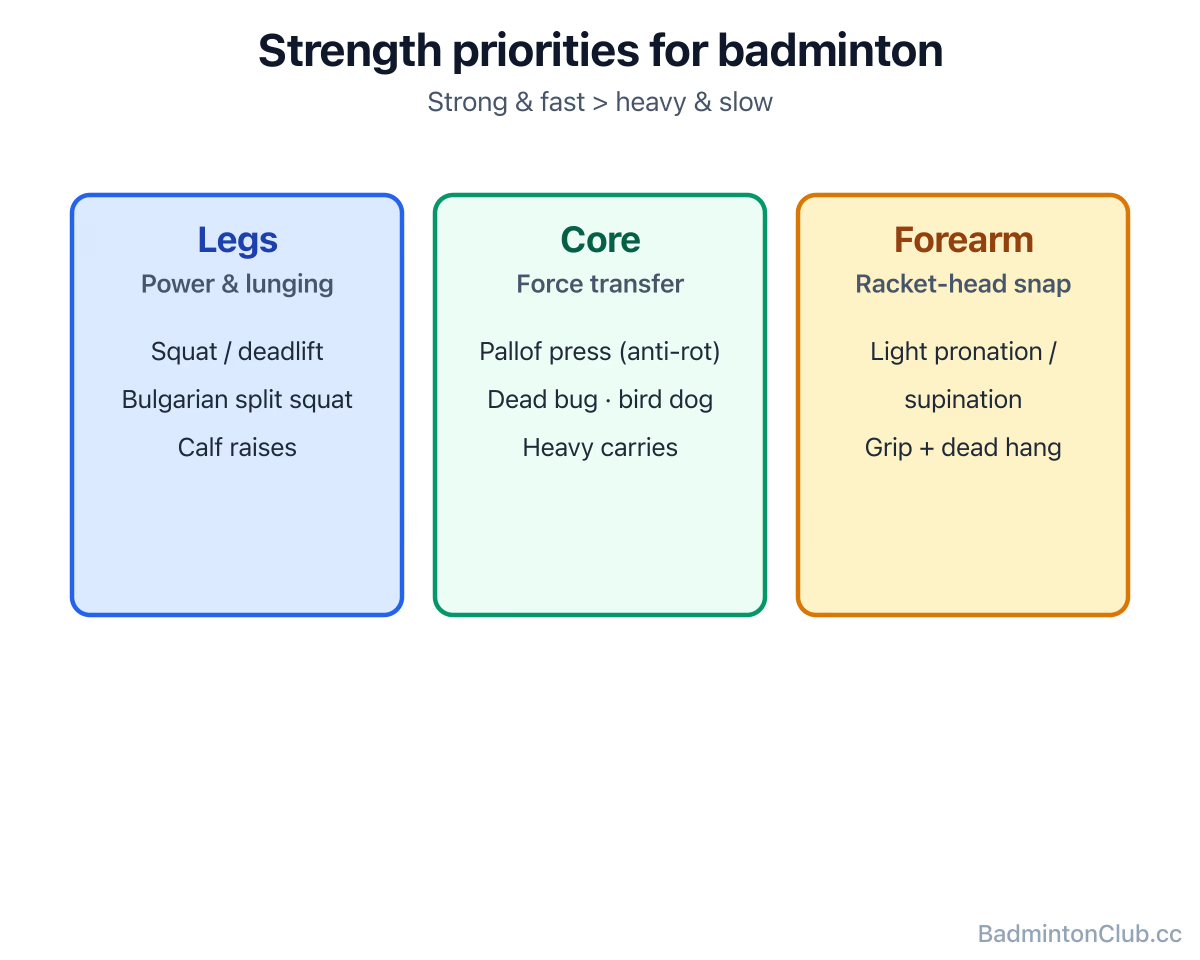
Why "moderate-heavy but fast"
Badminton needs strength that moves quickly. Grinding 1-rep maxes builds slow strength. Most of the year, work in the 4–8 rep range at moderate-to-heavy loads (~70–85% of 1RM) and intend to move the bar fast. Sets that take 10 seconds with a slow grind build the wrong quality; sets that move with snap build the right one. Save true heavy work for periodic phases and never close to a match.
Leg strength — the engine
- Back squat or front squat: 4 × 5 reps. Builds raw leg power.
- Trap-bar deadlift: 3 × 5 reps. Big hip-hinge strength with knee-friendly mechanics.
- Bulgarian split squat: 3 × 6/side. Unilateral leg strength — exactly what a lunge demands.
- Calf raises: 3 × 10–12, slow lowering. Critical for jumping and ankle resilience.
- Reverse lunge: 3 × 6/side. Trains the lunge pattern under load.
Train legs twice a week, with 48 hours between sessions.
Core — anti-rotation, anti-extension
The kinetic chain runs through the trunk; a weak core leaks power. Train it as a stabiliser, not a vanity muscle:
- Pallof press (anti-rotation): 3 × 10/side.
- Plank with reach: 3 × 10 reaches/side.
- Dead bug: 3 × 8/side, slow control.
- Bird dog: 3 × 8/side.
- Heavy carries (suitcase, farmer's): 3 × 30 m.
Sit-ups and crunches alone miss the point. The core's job in badminton is to resist spine motion while the hips and shoulders rotate.
Forearm & wrist — for the snap
The forearm rotation that finishes a smash or a clear is built less by heavy wrist curls and more by rotational and grip-endurance work:
- Forearm pronation/supination (light dumbbell, 2–3 lb): 3 × 12/side. The bell rotates from neutral to thumb-down (pronation) and back; supination is the reverse. Train both.
- Wrist curls and extensions: 3 × 12 each. Light load, full range.
- Plate or towel pinch: 3 × 30 s. Builds grip without bulking.
- Dead hang from a bar: 3 × max time. Grip endurance for long matches.
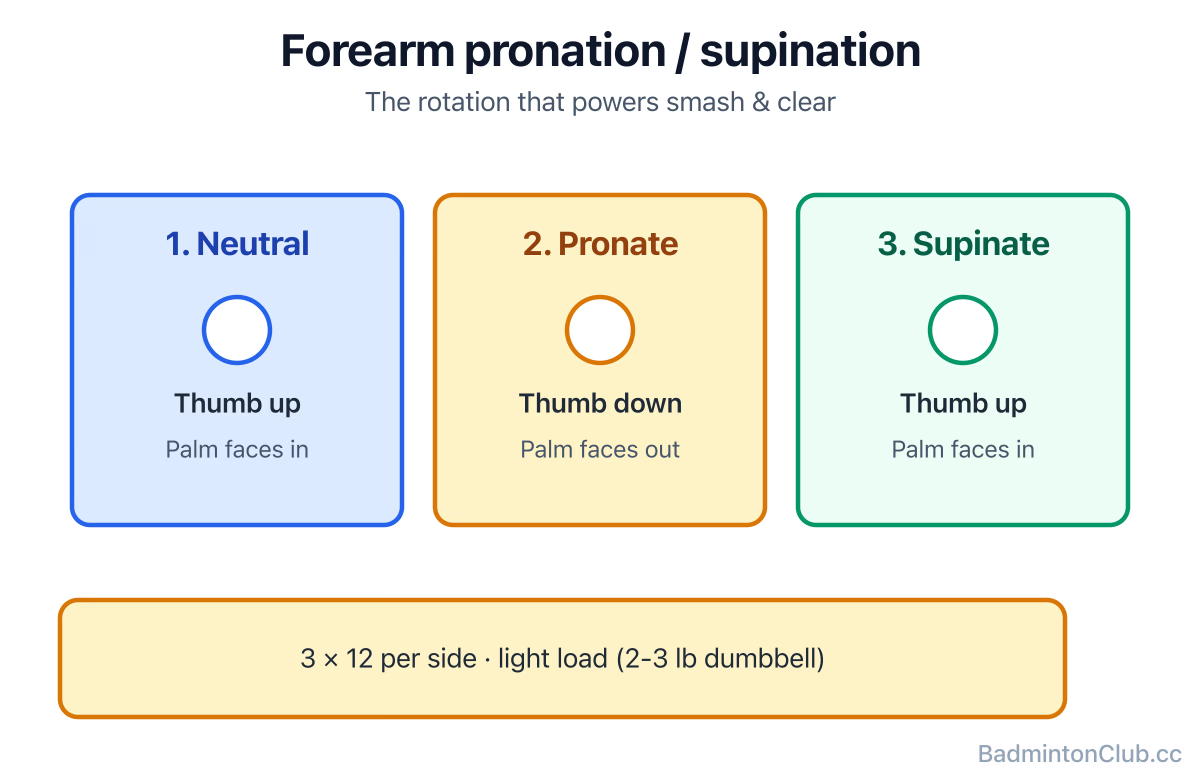
Heavy wrist loading is counter-productive — it tightens the forearm, which kills the loose-to-tight grip that powers a real smash.
A twice-weekly badminton strength session
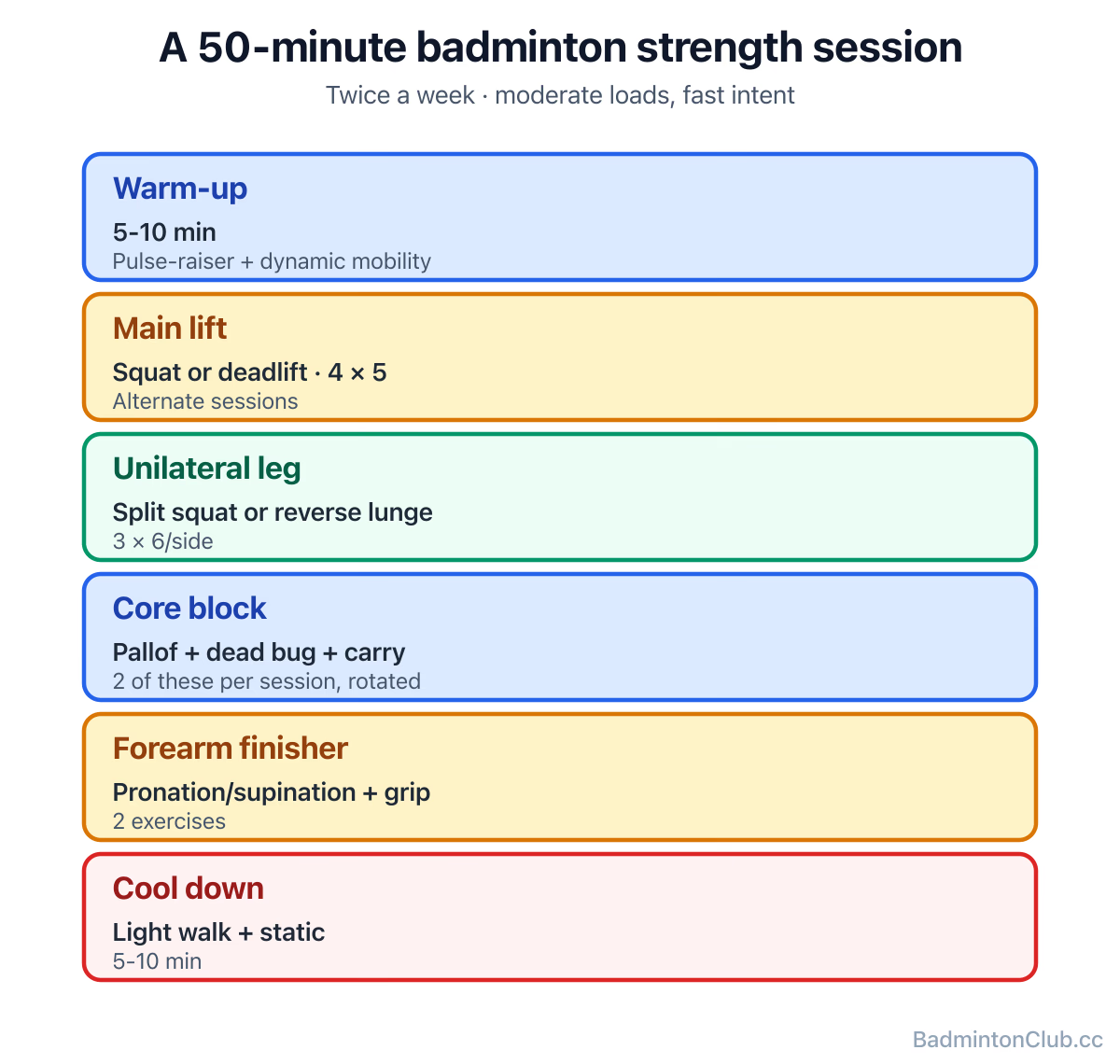
- Warm-up (5–10 min, see Warm-up & flexibility).
- Main legs: squat or deadlift (alternate sessions), 4 × 5.
- Single-leg: split squat or reverse lunge, 3 × 6/side.
- Calf: raises, 3 × 10–12.
- Core: Pallof + dead bug + carries (2 of these per session, rotated).
- Forearm: pronation/supination + grip work, 2 exercises.
40–55 minutes, twice a week. That's the whole programme for a recreational/serious club player.
What coaches actually shout from the side
Strength work is undervalued by club players because it's slow to pay off and the results are invisible for weeks. But the players who keep playing well into their 40s and 50s almost universally lift — even modestly. A strong opinion: strong legs are insurance against the knee and Achilles problems that end so many badminton careers. You don't need a fancy programme; squats, hinges, single-leg work, and a few core movements, twice a week, do most of the job. Skip ego-lifting and never lift to failure on big movements within 48 hours of a match; you want to walk on court fresh, not sore. Pin a one-line weekly lifting template inside your team page on BadmintonClub.cc so a regular doubles partner knows whether you're "fresh" or "Friday-squat-leg-day" before they decide whether to push the rotation hard.
FAQ
- Q: How should I do strength training for badminton? Twice a week with squats, hinges, single-leg work, core stability and a forearm finisher — moderate loads moved fast, 4–8 reps per set, around 45–55 minutes.
- Q: What's the best exercise for leg strength in badminton? Back/front squat and Bulgarian split squat — the single-leg work in particular trains the lunging pattern badminton demands.
- Q: How do I increase wrist strength for a badminton smash? Train forearm pronation/supination with a light dumbbell, plus light wrist curls/extensions and grip-endurance work — avoid heavy wrist loading, which tightens the forearm and kills the snap.
- Q: What core exercises help badminton balance? Anti-rotation (Pallof press), anti-extension (dead bug, plank), bird dog and heavy carries — the core's job is to resist spine motion while hips/shoulders rotate.
- Q: Will lifting weights make me slower or less flexible? No — properly programmed strength with full range of motion and fast intent makes you faster and more durable, not slower.
- Q: How close to a match should I do heavy strength work? Leave at least 48 hours between a heavy leg session and a match; never go close to failure on big lifts within 72 hours of a competition.
Badminton strength training in 45–55 minutes twice a week — legs (squat, deadlift, split squat, calf), core anti-rotation (Pallof, dead bug, carries), and forearm rotation work for the racket-head snap. The article gives full session structure, sets and reps in the 4–8 range moved fast (not heavy-and-slow), and the brief on why heavy wrist curls are counter-productive. The minimum useful programme.