Shuttlecocks Explained: Feather vs Plastic & Speeds 76/77/78 in Badminton
7 June 2026 · Badminton Fans
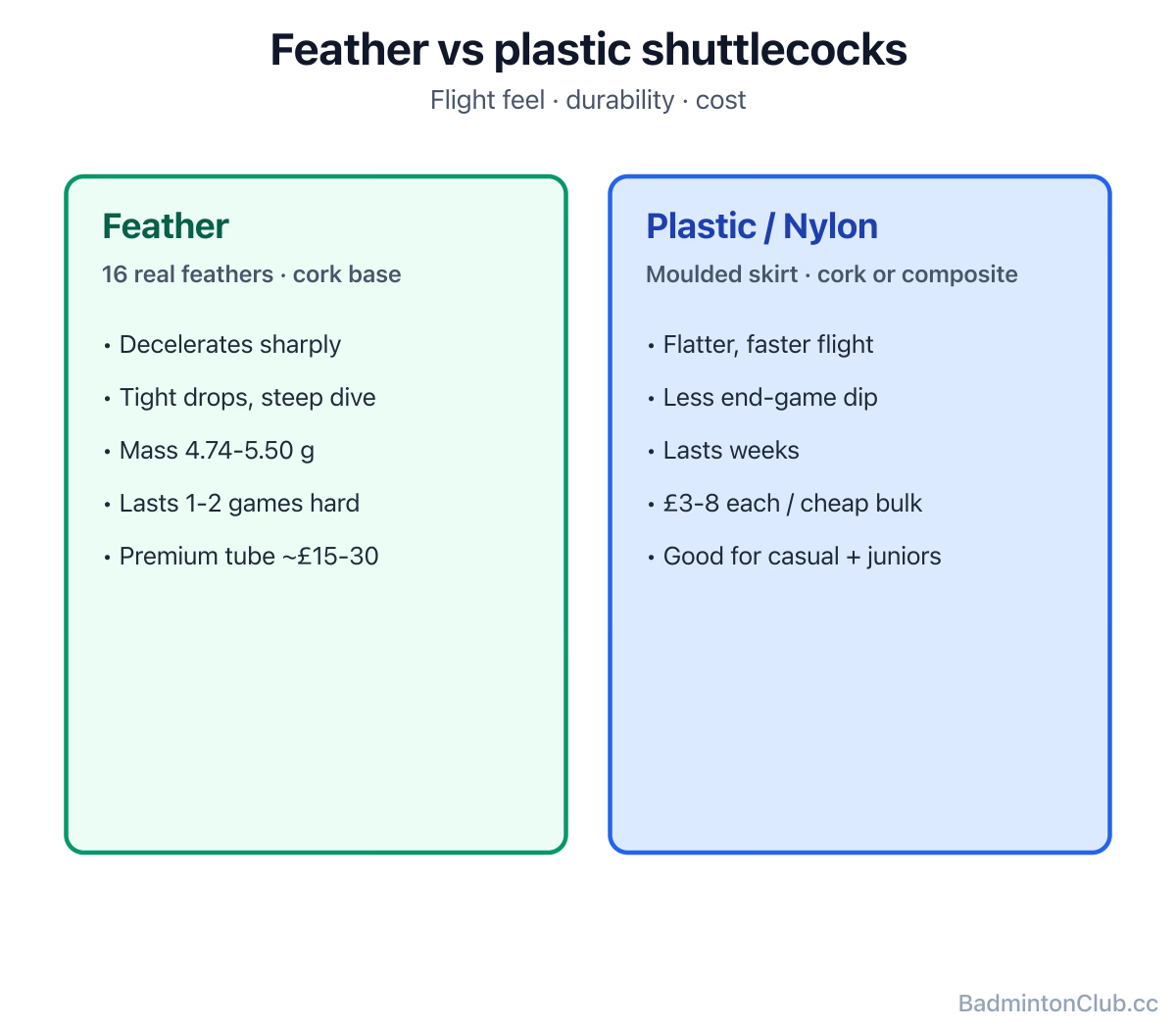
Feather shuttlecocks are 16 real goose or duck feathers fixed to a cork base — they fly more naturally, slow down more abruptly near the end of flight, and are what professionals use; plastic ("nylon") shuttlecocks have a moulded skirt around a synthetic base, last far longer, and cost a fraction of the price. Feather shuttles are also numbered for speed (76 / 77 / 78), where higher numbers fly faster — choose based on temperature and altitude, not preference. Almost every serious club uses feathers; nylon is for casual and high-turnover play.
Why pros use feathers
A regulation feather shuttle has 16 feathers stuck into a cork base, mass 4.74–5.50 g, length 62–70 mm. The asymmetric feathers spin the shuttle slightly in flight and create a flight curve that decelerates sharply at the end — that's the dive you see on a steep smash and the tight drop on a hairpin net shot. Plastic shuttles mimic this with a moulded skirt, but the deceleration is less pronounced and the flight is flatter and faster through the air. Practising drops and net shots with a plastic feels less rewarding because the shuttle just doesn't behave the way a feather does.
The trade-off is cost and durability:
- A tube of premium feathers (12) might last one decent club session if there's hard smashing. £15–30 a tube.
- A plastic shuttle can last weeks of casual play. £3–8 each, or much less in bulk.
Most clubs that play "proper" badminton — drills, league, tournament prep — use feathers and accept the cost. Casual sessions and beginners use plastic.
Reading the speed number (76 / 77 / 78)
Feather shuttle tubes are stamped with a speed number that tells you how far the shuttle travels in standardised test conditions. The convention (used by Yonex and most reputable brands):
| Speed | Fly | Best for |
|---|---|---|
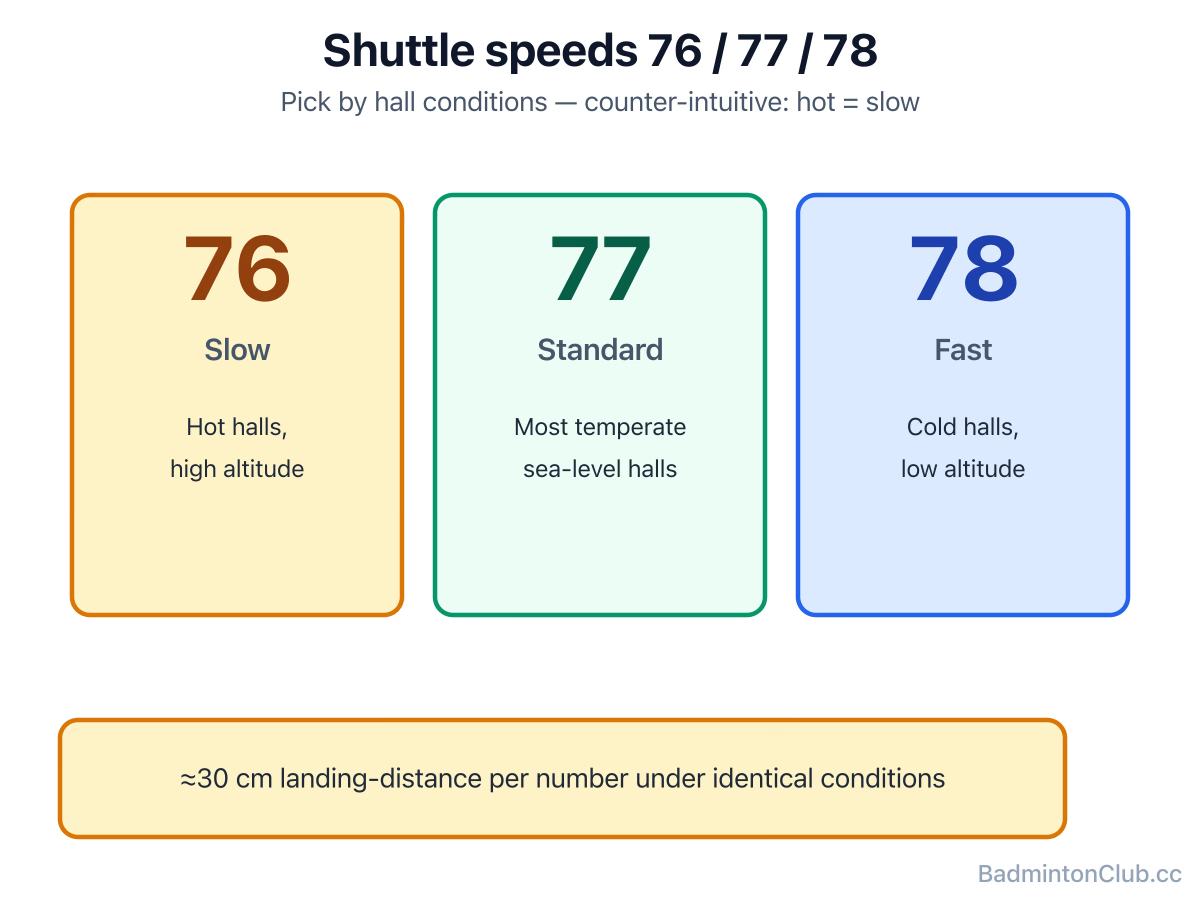
| 76 | Slow | Hot or high-altitude halls (air is thinner; shuttle naturally flies further, so you slow it with a "slow" shuttle) |
| 77 | Standard | Most temperate sea-level halls — the everyday default |
| 78 | Fast | Cold or below-sea-level halls (air is denser; shuttle flies shorter, so you speed it with a "fast" shuttle) |
| 79 | Very fast | Very cold halls, indoor sub-zero conditions (rare) |
| 75 | Very slow | Very hot tropical halls (rare) |
There's about a 30 cm difference in landing distance between consecutive speeds under identical conditions. Counter-intuitively, **you choose a slower shuttle in warmer air** — the air helps the shuttle fly, so you compensate with a slower one. A common rule: pick a 77 if you're in a typical UK/US/European indoor hall; drop to 76 in summer or in heated halls; bump to 78 in unheated winter halls.
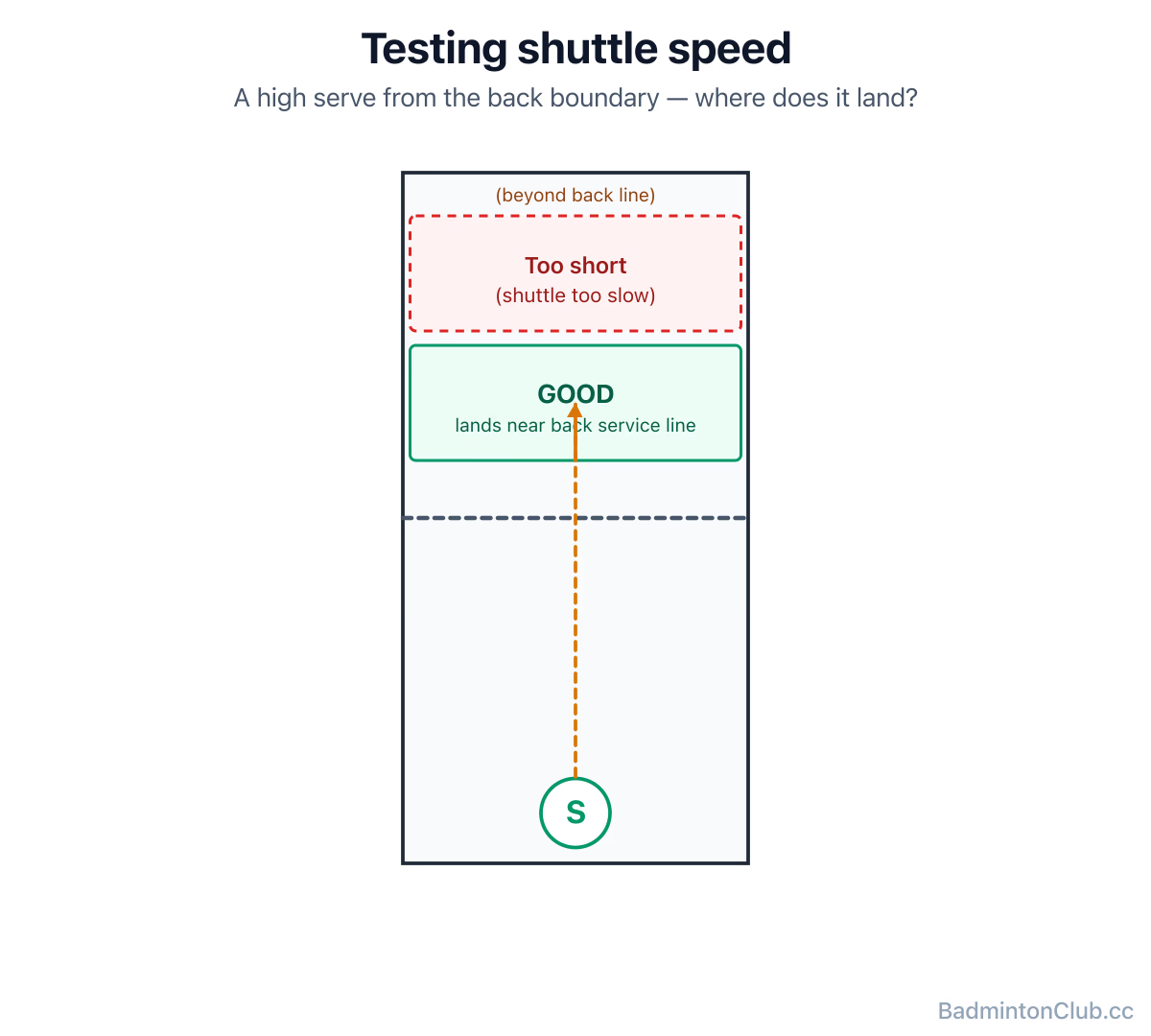
How to test it on the day: stand at the back boundary line and serve a high serve down the court — a correctly-speeded shuttle lands somewhere between the doubles back service line and the back boundary on the opposite side. Too short = shuttle's too slow; too long = too fast.
Plastic shuttles — when they're the right choice
- Beginners and juniors — much cheaper, won't be broken by mis-hits, training cost stays sensible.
- Casual/social play where speed and feel matter less than durability.
- Outdoor casual play (you should never play seriously outside — wind ruins it — but if you must, plastic survives outdoors better).
- Some plastic shuttles have decent flight (Yonex Mavis line, for example) and are good enough for warm-up and club casual.
Tip: drop string tension by 2–3 lbs when playing with plastic shuttles — they hit the strings harder and the higher feather-tension feels harsh and breaks strings faster.
What this looks like on a club night
The "feather vs plastic" argument runs forever, but it's mostly settled: if you're trying to improve, feathers teach you faster, because the shuttle behaves like the one you'll play in any serious match. Plastic feels wrong on drops, drives, and net shots, and you build technique that doesn't transfer — the Spinning & Tumbling Net Shots article in particular only really comes alive once you're hitting feathers. A blunt opinion: most clubs that have switched from plastic to feather see their players improve faster within a few months, and once you've played with feathers for a session it's hard to go back. The cost is real, but it's the cost of taking the sport seriously. For absolute beginners, plastic is fine; once you're past the very first weeks, save up for feathers. Clubs that buy shuttles in bulk usually keep the per-tube cost printed on the team page on BadmintonClub.cc so a £2–3 per-session shuttle levy stops feeling like a mystery tax and starts being part of the normal cost of playing properly.
FAQ
- Q: Why do professionals use feather shuttlecocks instead of nylon? Feather shuttles decelerate more sharply at the end of their flight, giving the tight drops and steep smashes the sport's technique is built around — plastic mimics this less convincingly.
- Q: How do I choose the right shuttle speed (76 vs 77 vs 78)? Match it to your hall's conditions — 76 for hot/high-altitude halls (where air helps the shuttle fly), 77 for typical sea-level temperate halls, 78 for cold halls. Test with a high serve from the back boundary; it should land near the opposite back service line.
- Q: What does the speed number on a shuttle tube mean? It indicates how far the shuttle travels in standardised tests — higher number = faster (longer flight). Consecutive numbers differ by about 30 cm in landing distance under the same conditions.
- Q: Are feather shuttles worth the cost? For improving and competitive players, yes — the flight characteristics teach correct technique. For casual social play and beginners, plastic is reasonable.
- Q: How long does a feather shuttle last? Premium feathers can last just one or two games of hard smashing; mid-range tubes (12) typically last a single club session with serious hitting. Plastic shuttles last for weeks.
- Q: What's a regulation badminton shuttlecock made of? 16 feathers (goose or duck) on a cork base, total mass 4.74–5.50 g, length 62–70 mm — per the BWF Laws of Badminton.
Shuttlecocks explained — feather vs plastic, the verified BWF specs (16 feathers, 4.74–5.50 g, 62–70 mm), and how to choose between speeds 76 (hot or altitude halls), 77 (standard sea-level) and 78 (cold halls). Includes the high-serve test from the back boundary line to dial in shuttle speed on the day, when plastic is fine, and the 2–3 lbs string-tension drop that comes with plastic. The article most people search after their first 'why does the shuttle feel different here?' moment.