How to Play Badminton: A Complete Beginner's Guide to Rules, Scoring and Shots
8 June 2026 · Badminton Fans
To play badminton, you and your opponent rally a shuttlecock over a 1.55 m net — one hit each side, no bounce allowed — and a point is scored on every single rally, with games played to 21. Win the rally and you score, whether you served or not; the shuttle landing in their court, or them netting it or hitting it out, ends the rally in your favour. A match is the best of three games. That's the entire sport in three sentences — the rest of this page is detail you can pick up as you go.
The basic idea
Two sides, one shuttle, a net in the middle. You serve to start a rally, then the shuttle has to cross the net and land in bounds each time it's hit. The moment it touches the floor — your side or theirs — the rally is over and somebody scores. Unlike tennis, the shuttle is never allowed to bounce; it's live until it hits the ground or goes out.
Badminton is played indoors at any serious level because a shuttlecock is absurdly sensitive to wind — a light breeze ruins a rally. You can absolutely play in the garden for fun, but the "real" game lives in a sports hall.
The court and kit you need
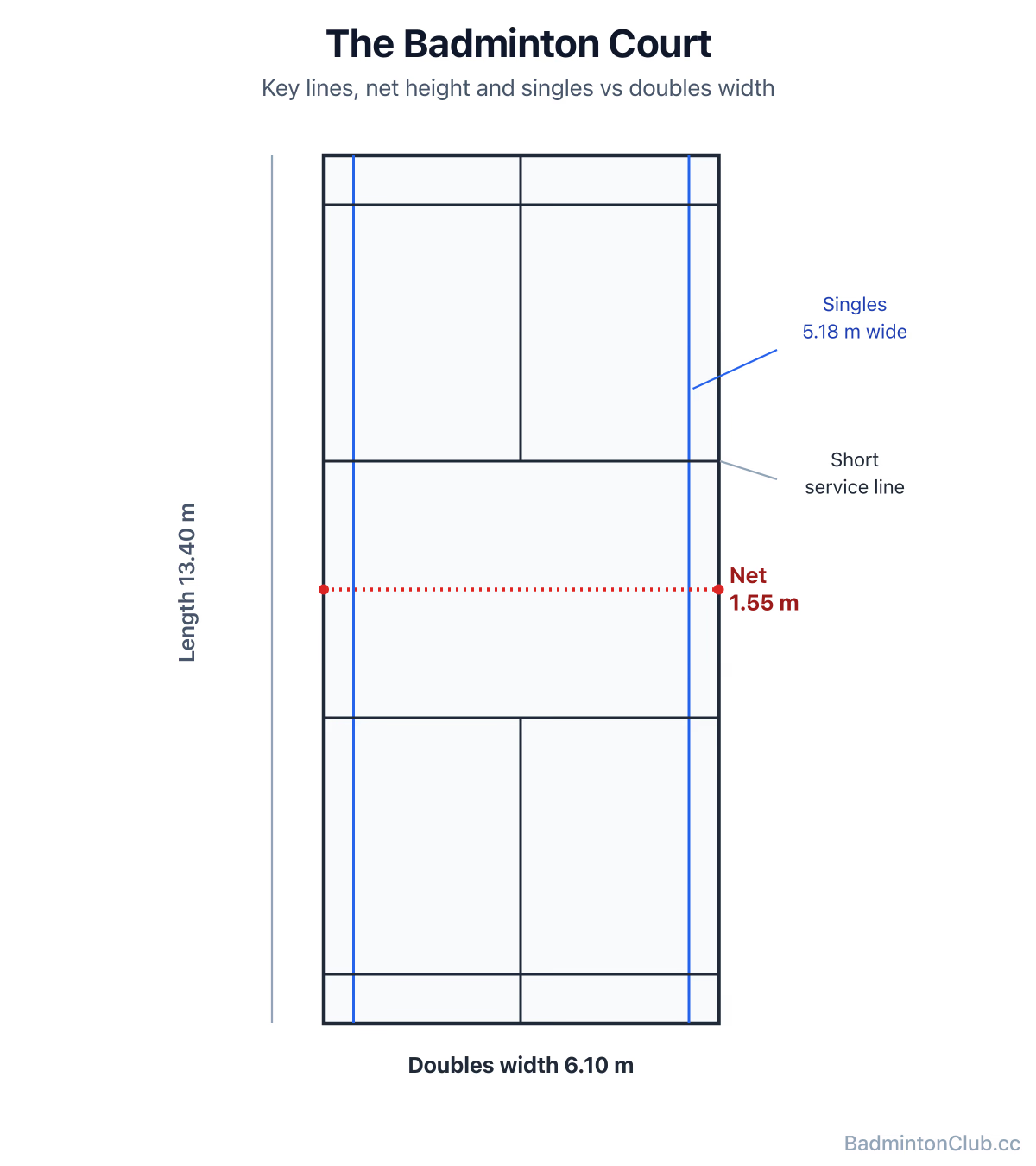
The court is 13.40 m long. For doubles it's 6.10 m wide; for singles the outer side tramlines are out, narrowing it to 5.18 m. The net sits 1.55 m high at the posts and dips to 1.524 m in the centre. There's a short service line 1.98 m from the net that your serve must clear.
To actually play you need almost nothing: a racket (a beginner one is fine — see how to hold it), a tube of shuttlecocks, non-marking court shoes, and a partner or three. Indoor shoes matter more than the racket at the start — badminton is all stops and lunges, and running shoes will roll your ankle.
How scoring works
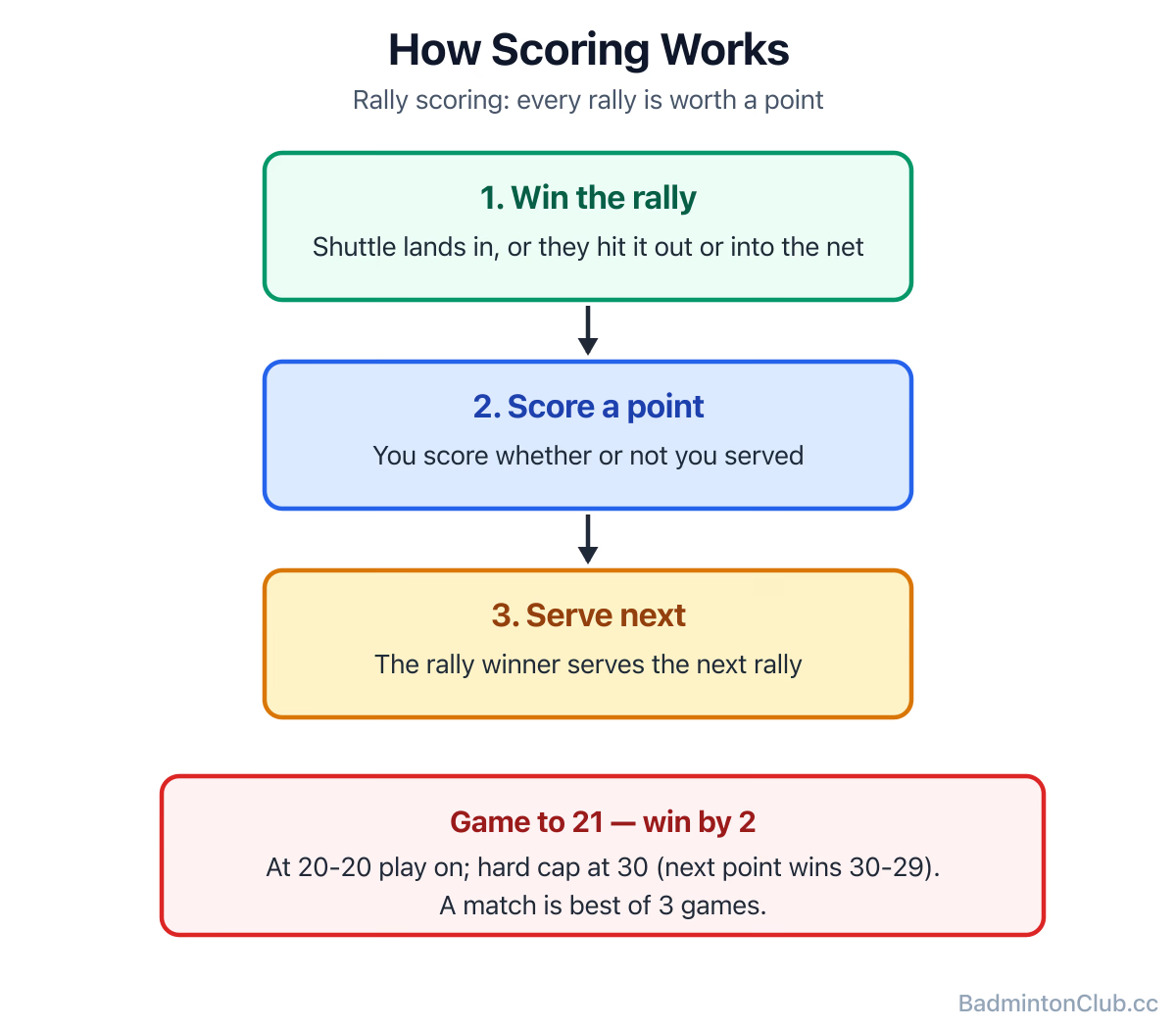
Badminton uses rally scoring: whoever wins the rally gets the point, whether or not they served. Games go to 21 points, and you have to win by two. So 21-19 ends it, but 20-20 keeps going — 22-20, 23-21, and so on — until someone leads by two. There's a hard ceiling: at 29-29, the very next point wins it 30-29. First to two games out of three takes the match, and you swap ends when the leader hits 11.
One thing worth knowing in 2026: the BWF has voted in a new 3×15 format — games to 15, win by 2 from 14-all, capped at 21, still best of three — but it doesn't go live until 4 January 2027. Until then, 21 is the number, and the habit of "win by two" you build now carries straight over.
One quirk that confuses every beginner: in singles you serve from the right service court when your score is even (0, 2, 4…) and the left when it's odd. The score literally tells you where to stand.
The serve — where every rally starts
Every rally begins with a serve, and the serve is the one shot with strict rules. It must be hit underhand, with the whole shuttle below 1.15 m from the floor at the instant you strike it, and both feet must be still and touching the floor. You serve diagonally into the opposite service court. Get the serve legal and consistent and you've removed the single biggest source of cheap lost points for a beginner — full detail in how to serve.
The shots you'll actually use
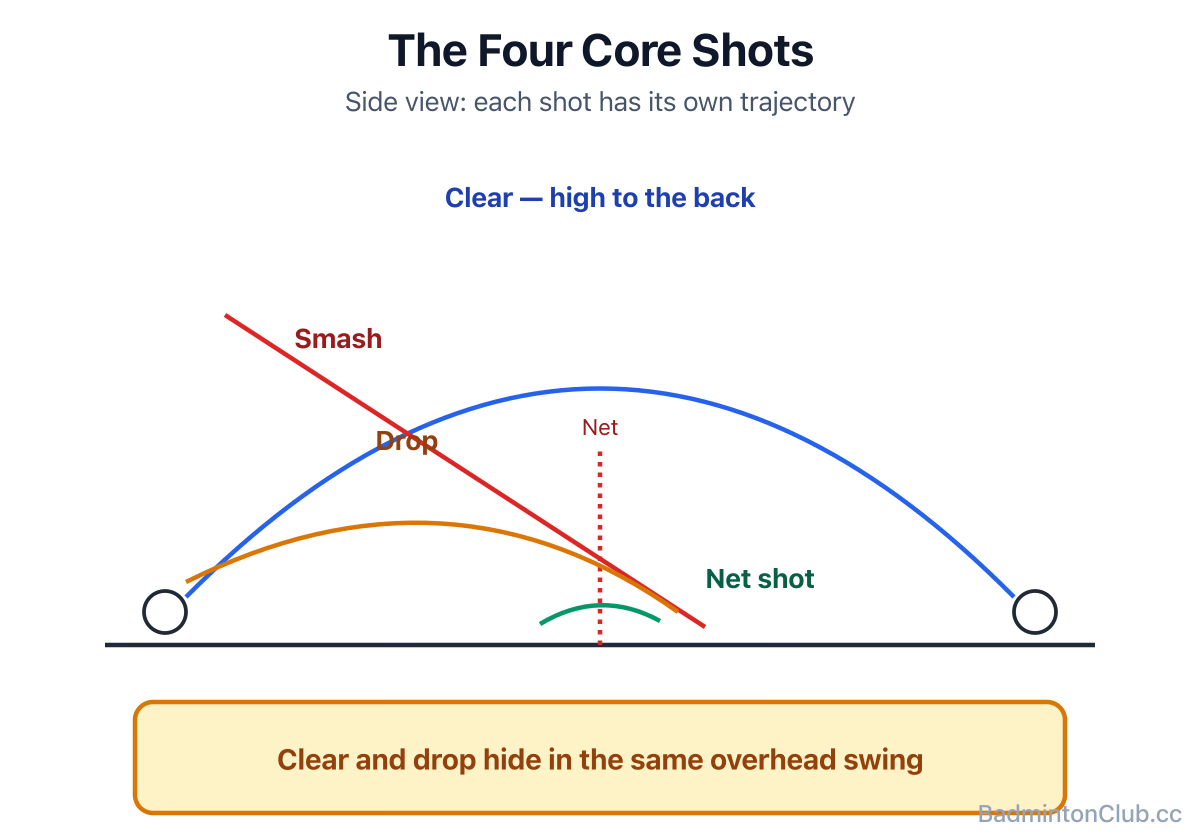
There are a lot of named shots, but on your first night you really use four: a clear (high to the back), a drop (gentle, just over the net), a smash (steep and fast, downward), and a net shot (a soft tap by the net). Everything else is a variation. The shot-types guide breaks the whole family down.
What it actually looks like on a club night
Here's the part the rule books skip. At a typical UK or Asian club night, you don't book a singles court and grind for an hour — you play doubles, rotating in and out as courts free up. You'll get four players to a court, games to 21 that last maybe 12–15 minutes, then everyone shuffles and you play with new partners. Nobody expects a beginner to be good; they expect you to call the score honestly, not stand frozen when the shuttle comes to the middle ("yours!" is the most-shouted word in the hall), and to chase your own out-shuttles.
A mild opinion, having watched a lot of first-timers: the people who improve fastest aren't the athletic ones — they're the ones who stop apologising and start moving early. Keeping a fair rotation across a busy hall is its own small headache, which is why most organised clubs run a peg board or an app like BadmintonClub.cc so nobody hogs a court and newcomers actually get games on a fair rotation.
A worked example: your first game to 21
You're playing doubles. You serve (score 0-0, so from the right box) low over the net. The rally goes four shots and your opponent hits it into the net — 1-0, and you serve again, now from the left because your score is odd. A few rallies later it's 20-all. Now you must win by two: you take the next point (21-20), then lose one (21-21), win one (22-21), and win the last (23-21). Game one is yours. You swap ends, play game two, and if each side wins one, a deciding third game settles it. That's a complete match.
What nobody tells you about the rhythm
Here's something every experienced player knows but no rulebook says: badminton has a tempo — the game flows in waves. You serve, you rally, you get a short break between points, you swap ends at 11. Beginners feel every rally is a separate emergency, but the game actually has a pulse: short bursts of effort, brief resets, longer rests between games. Good players breathe with that pulse; beginners exhaust themselves by treating every point like it's match point. Learn to use the gaps — walk slowly to pick up the shuttle, breathe deep at the change of ends, and you'll find you have far more energy in game three than the opponent who's bent over panting every third rally. Stamina in badminton is mostly about resting well during the rests, not just fitness.
FAQ
- Q: How do you play badminton for the first time? Grab a racket, find a court, and start with low serves and gentle clears to a partner. Keep the shuttle in play, learn to call the score, and don't worry about smashing — control beats power for the first month.
- Q: Is badminton easy to learn? The basics are easy — most people can rally within an hour. Getting good (footwork, deception, stamina) takes years, which is the fun of it. It's easy to start, hard to master.
- Q: How many points do you need to win a game of badminton? 21, and you must lead by 2. If it reaches 29-29, the next point wins at 30-29. A match is the best of three games. (A new 3×15 format — games to 15 — was approved for 2027, but 21 is still the rule until then.)
- Q: Can you play badminton singles and doubles with the same rules? Mostly — the scoring is identical. The court is narrower for singles (the outer tramlines are out) and the service rules for where you stand differ slightly, but the game is the same.
- Q: Do you have to let the shuttle bounce? No — the opposite of tennis. The shuttle is never allowed to hit the floor while it's in play; the instant it lands, the rally is over.
- Q: What should a complete beginner focus on first? Three things, in order: a comfortable grip, a legal, consistent serve, and moving back to the middle of the court after every shot. Power can wait.
Learn how to play badminton from scratch: the court, the kit, the 21-point rally scoring system, a legal serve and the handful of shots you actually need on day one. This is the plain-English walkthrough we give every newcomer who turns up to a club night — no jargon, just what to do when the shuttle comes at you, how a game to 21 is won, and the three mistakes that mark you out as brand new (and how to skip them).