How to Win at Badminton: Building a Game Plan That Actually Beats Your Opponent
8 June 2026 · Badminton Fans
Most beginners step on the court with no plan beyond "hit it hard and hope." That's a plan, technically — just a bad one. The way to actually win is to think before you play. Build a simple game plan: know what you do well, find what your opponent does badly, figure out how to attack that weakness, and have the discipline to stick with it when the score gets tight. Winning at badminton isn't about your best shot; it's about repeatedly putting your opponent in spots they can't handle, and having the patience to keep doing it even when you're behind. A clear, simple plan executed calmly will beat raw talent more often than most beginners believe. I've watched it happen hundreds of times.
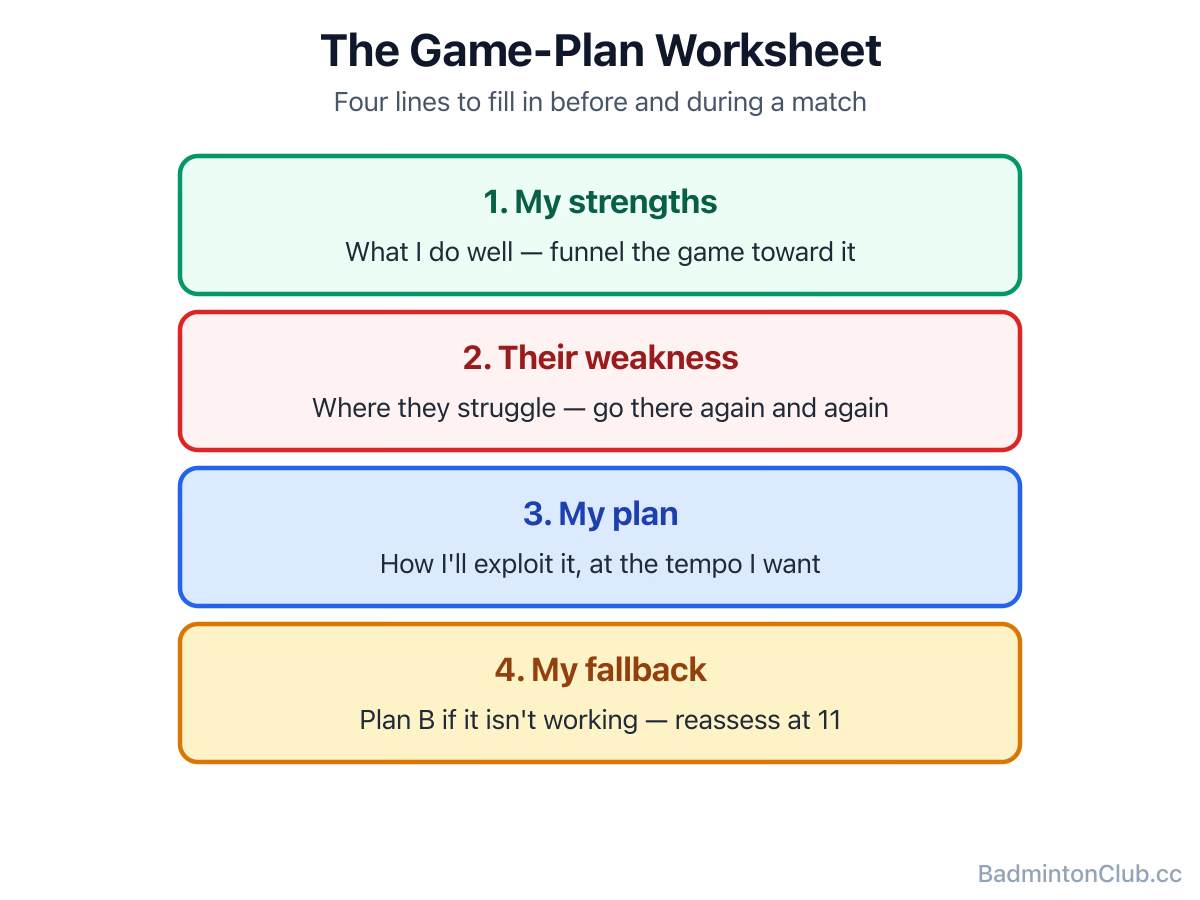
Step 1: know your own strengths
A game plan starts with honesty about you. What do you actually do well? Maybe it's a deep, reliable clear; maybe a tight net game; maybe you're just fitter than most and can outlast people. Whatever it is, your plan should funnel the game toward your strength. If your net play is your weapon, drag rallies to the net. If your fitness is your edge, make every rally long. Don't play a style that suits your opponent better than you — play your game and make them deal with it. Most beginners have no plan at all; just having one puts you ahead.
Step 2: find and attack their weakness
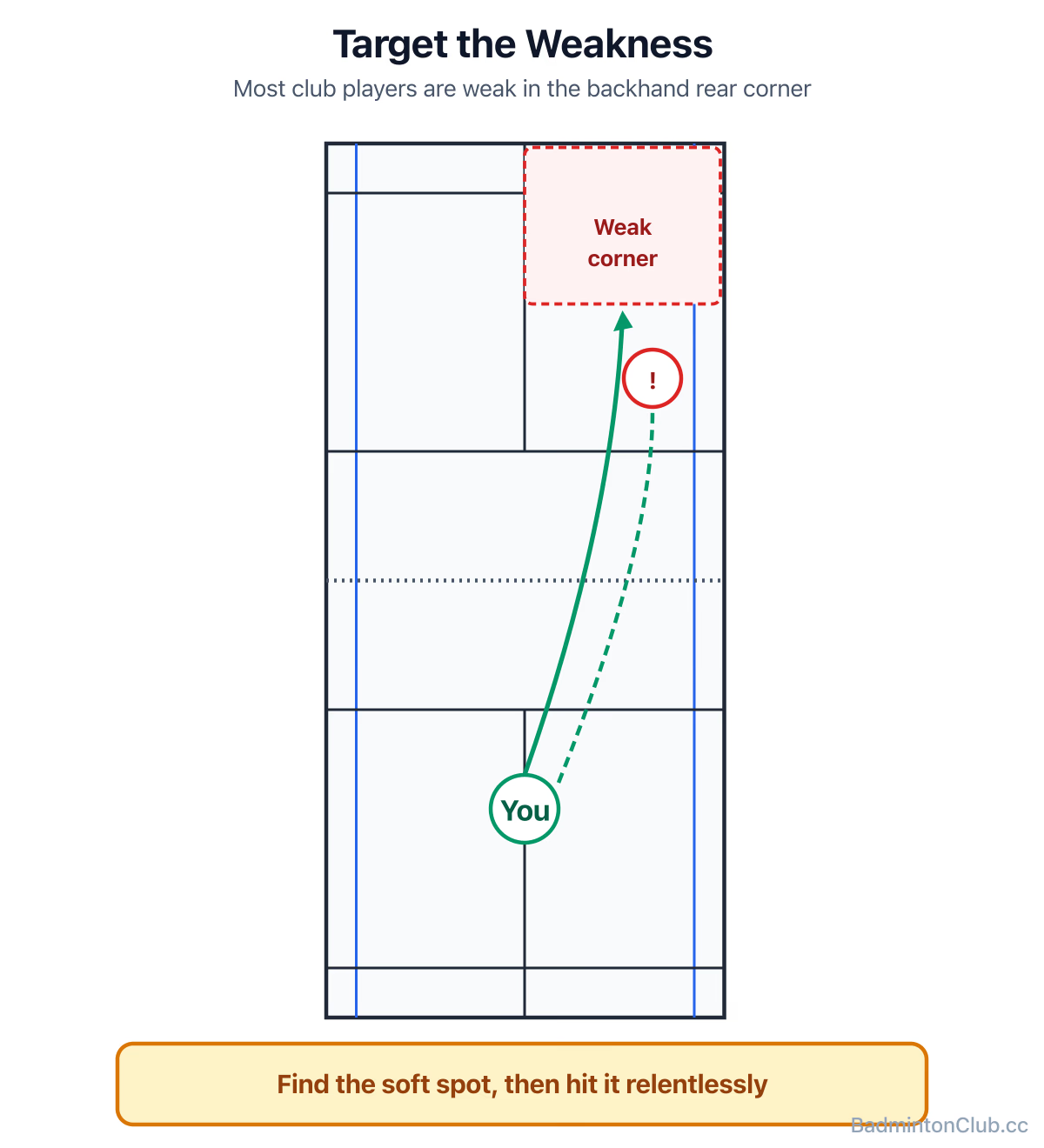
Now the opponent. Within the first few points, you're scouting: where do they struggle? The most common club weakness is the backhand, especially the backhand rear corner — most players can't clear from there, so they cough up a weak shot. Other weaknesses to probe: poor movement to the net, weak defence against body smashes, a shaky high serve, a tendency to fall apart when rallies go long. Find the soft spot, then go there again and again. You don't have to be subtle — if their backhand corner is weak, hit it every chance you get until they prove they've fixed it. Ruthless beats fair when you're trying to win.
Step 3: control the tempo
Tempo is the underrated half of a game plan. Do you want the game fast or slow? A fit, patient player wants long, slow rallies that grind the opponent down — so they keep the shuttle deep and refuse to rush. A sharp, attacking player wants it fast — quick serves, flat drives, early attacks before the opponent settles. Decide which suits you, then impose it. And know that you can change the tempo to disrupt them: if a fast-attacking opponent is in a groove, slow everything down — take your time, lift deep, lengthen the points — and break their rhythm. Whoever controls the tempo usually controls the match. Don't just play at whatever speed happens; choose one.
Step 4: adjust when it isn't working
Here's where beginners and good players diverge. A beginner picks a plan (or no plan) and rides it off a cliff — losing 11-3 and still doing the same thing. A good player constantly asks, at every change of ends, "is this working?" If your smash is getting blocked for winners, stop smashing — clear and drop instead. If they've started reading your low serve, flick one. If the long-rally plan is exhausting you faster than them, change it. A game plan isn't a script you follow blindly; it's a hypothesis you keep testing and revising. The 11-point interval — the short pause when either side reaches 11 in any game, and the genuine change of ends once you reach 11 in a deciding third — exists partly for exactly this. Use that break to reassess, not just to drink.
A worked example: planning a real match (original)
Let me build a plan against a specific, very common club opponent — the big hitter with no patience. You've all played them: a fearsome smash, loves to attack, but moves poorly and hates long rallies. A beginner walks onto court, gets smashed past four times, panics, and tries to out-hit them — playing straight into their strength. Here's the actual plan. One: never give them a high, central shuttle to smash — keep everything deep to the corners or tight to the net, starving the smash. Two: when they do smash, block tight, don't lift — drag them forward into the net play they're bad at. Three: make every rally long. They want it over in three shots; you make it fifteen, clearing deep, moving them corner to corner, and waiting. By the second game they're blowing hard, their smash has lost its sting, and they're making errors trying to end rallies early. Four: the discipline part — when you go 15-12 up, don't get tempted into a hitting contest to "finish it off." Stick to the boring plan that's working. I've watched this exact plan beat players with far better strokes, again and again, because most big hitters have never developed a Plan B. The lesson generalises: identify what your opponent wants the game to be, and refuse to give it to them. Make them play the match they're worst at. A clear plan executed by a calmer head beats superior shots played without one — every time. Lean on shot selection to execute it and the mental game for the discipline to not abandon it at 15-12.
Use the score and the maths
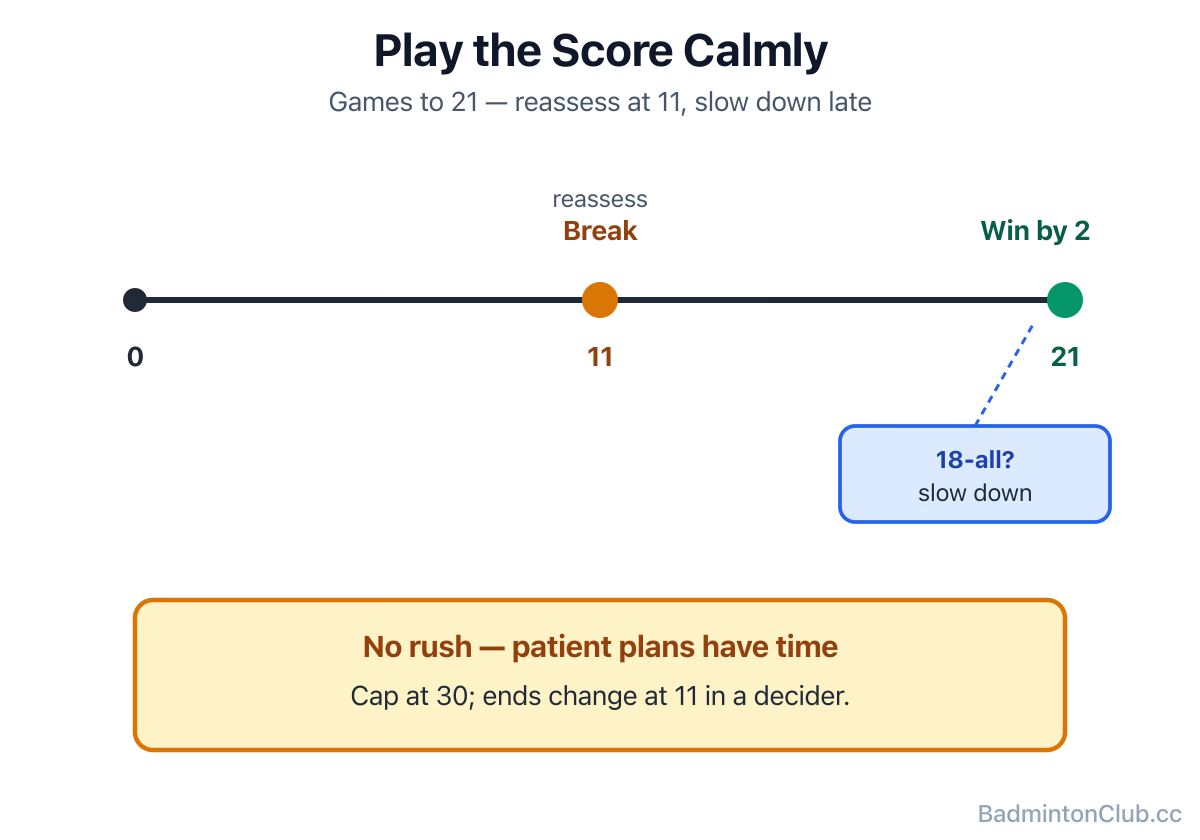
A little scoring awareness sharpens any plan. Games go to 21, win by two, capped at 30 (30-29 wins), best of three. (Mind you, BWF has approved a shorter 3×15 format from 2027 — but club leagues will run on 21 for a good while yet, so that's what these articles assume.) Knowing the maths shapes your tactics: there's no rush, so a slow patient plan has all the time it needs; and because every rally scores, a string of disciplined points swings the game fast. Use the 11-point break in each game to reset your plan — and remember the only mid-game change of ends comes at 11 in a deciding third, so factor the side swap into a tight decider. Late in a tight game, lengthen your routine — slow down, breathe, stick to your highest-percentage shots — rather than gambling. The score is information; play it calmly, not desperately.
FAQ
- Q: How do I win at badminton? Build a game plan: funnel the game toward your strengths, find and attack your opponent's weakness, control the tempo, and stay disciplined when it's tight. Repeatedly put them in situations they handle badly rather than relying on your best shot.
- Q: What is a badminton game plan? A simple strategy decided before and during a match: what you do well, where your opponent is weak, how you'll attack that weakness, and your fallback if it isn't working. Even a basic plan beats playing with no plan at all.
- Q: What is the most common weakness to attack? The backhand, especially the backhand rear corner — most club players can't clear well from there. Probe it early and target it relentlessly until they prove they can handle it.
- Q: How do I beat a stronger player? Don't out-hit them — out-think them. Identify what game they want (fast hitting, short rallies) and refuse to give it to them. Make them play their weakest format: lengthen rallies against a big hitter, attack a slow mover's movement.
- Q: What do I do when my game plan isn't working? Reassess at the 11-point break and adjust — stop the shot that's getting punished, change the tempo, vary your serve. A plan is a hypothesis to test and revise, not a script to follow off a cliff.
- Q: How does the score affect strategy? Games to 21 (win by 2, cap 30) mean there's no rush, so patient plans have time, and disciplined runs swing the game fast. There's a short break whenever a side reaches 11 — use it to reassess — but the only mid-game change of ends is at 11 in a deciding third game. Late in a tight game, slow down and play your highest-percentage shots rather than gambling. See shot selection.
Winning at badminton isn't about hitting harder — it's about a clear game plan: play to your strengths, target your opponent's weakness, control the tempo, and stay disciplined when it's tight. This guide shows how to win at badminton by building a real badminton game plan before and during a match, how to adjust when it isn't working, and how to use the score and the change of ends to your advantage. The strategic thinking that turns even strokes into wins.