Badminton for Beginners: Your First Session, the Basics and What to Learn First
8 June 2026 · Badminton Fans
Badminton for beginners comes down to four things: a relaxed grip, a ready position you return to after every shot, a legal underhand serve, and the habit of moving early. Get those and you can rally, score and have fun on day one — the fancy shots come later. You don't need lessons, expensive gear or athleticism to start; you need a court, a partner and about an hour.
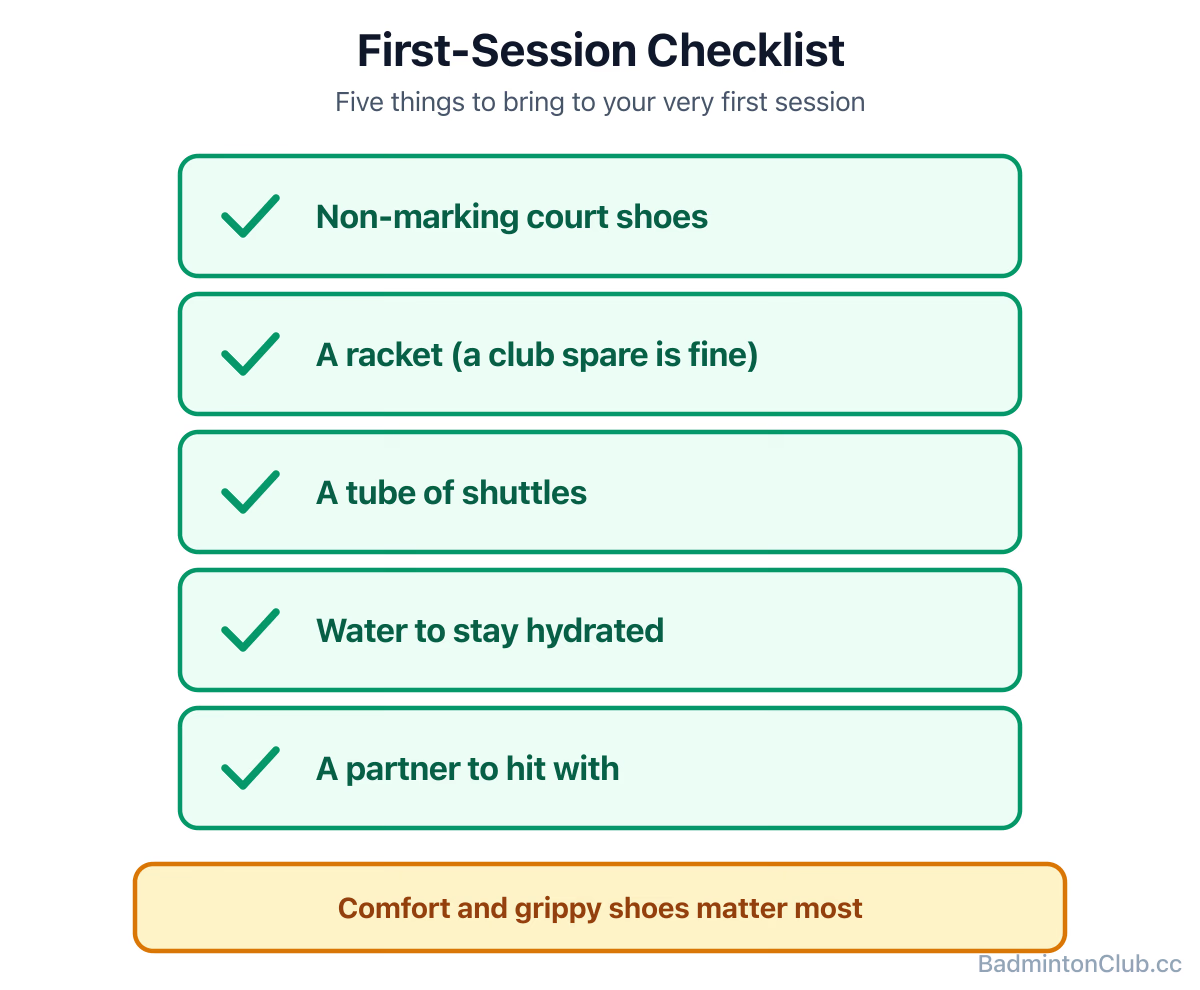
What to bring to your first session
Non-marking indoor court shoes (borrow or buy cheap — this is the one thing that matters), a beginner racket, a tube of shuttles to share, water, and comfortable clothes you can lunge in. That's it. Most clubs have spare rackets and will lend you one for a night, so message ahead and you can turn up with nothing but trainers.
Don't buy an expensive racket yet. A £15–£25 racket is perfect until you know whether you enjoy the sport and what swing you have.
The basics: grip, ready position, serve
Three things make you look like you've played before:
- Grip — hold the racket like you're shaking hands with it (the "handshake" or V-grip), loosely, not in a fist. A tight grip kills your wrist. See how to hold a racket.
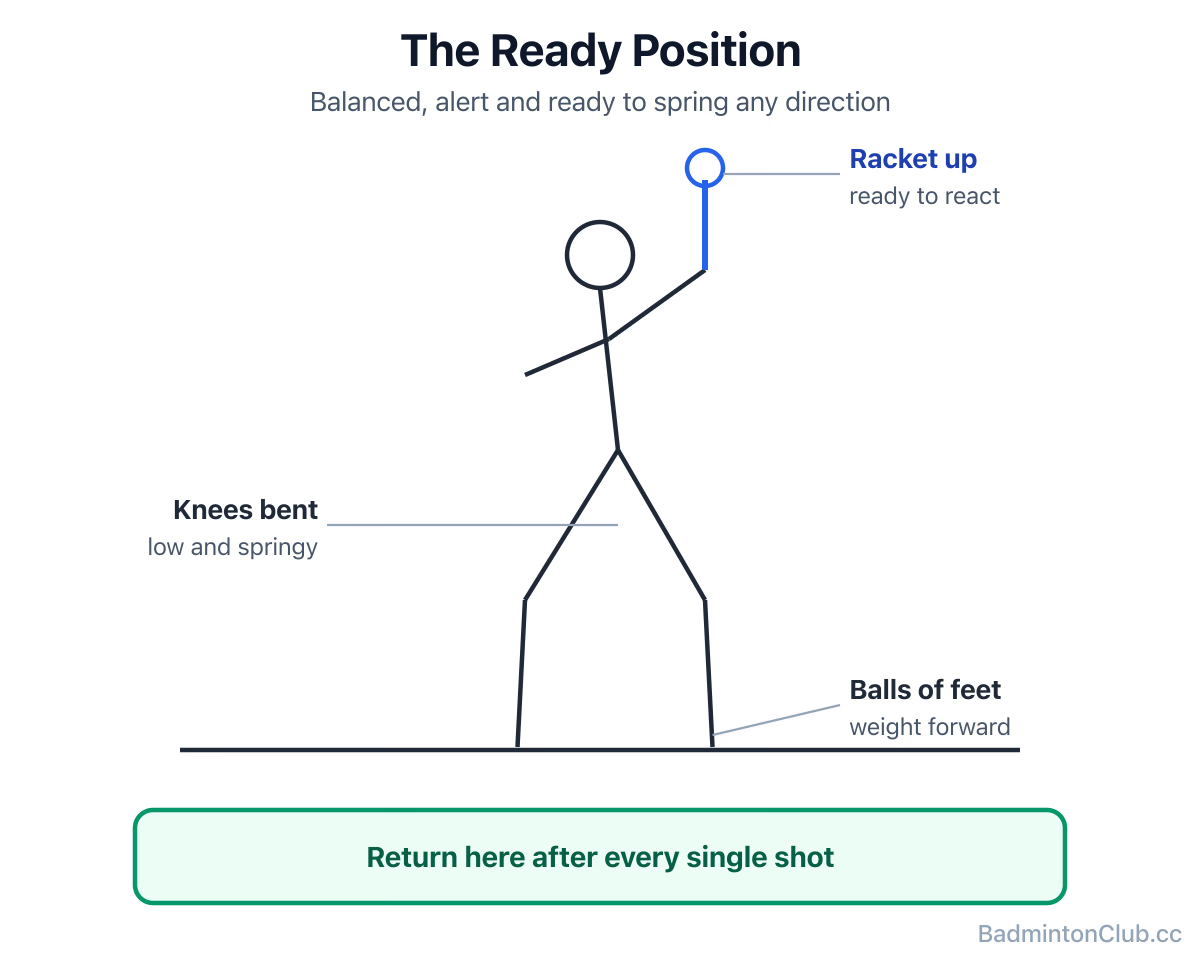
- Ready position — feet a bit wider than your shoulders, knees soft, racket up in front of you around chest height, weight on the balls of your feet. You come back here after every shot.
- Serve — underhand, shuttle below 1.15 m, diagonally across. Detail in how to serve.
What to learn first (the right order)
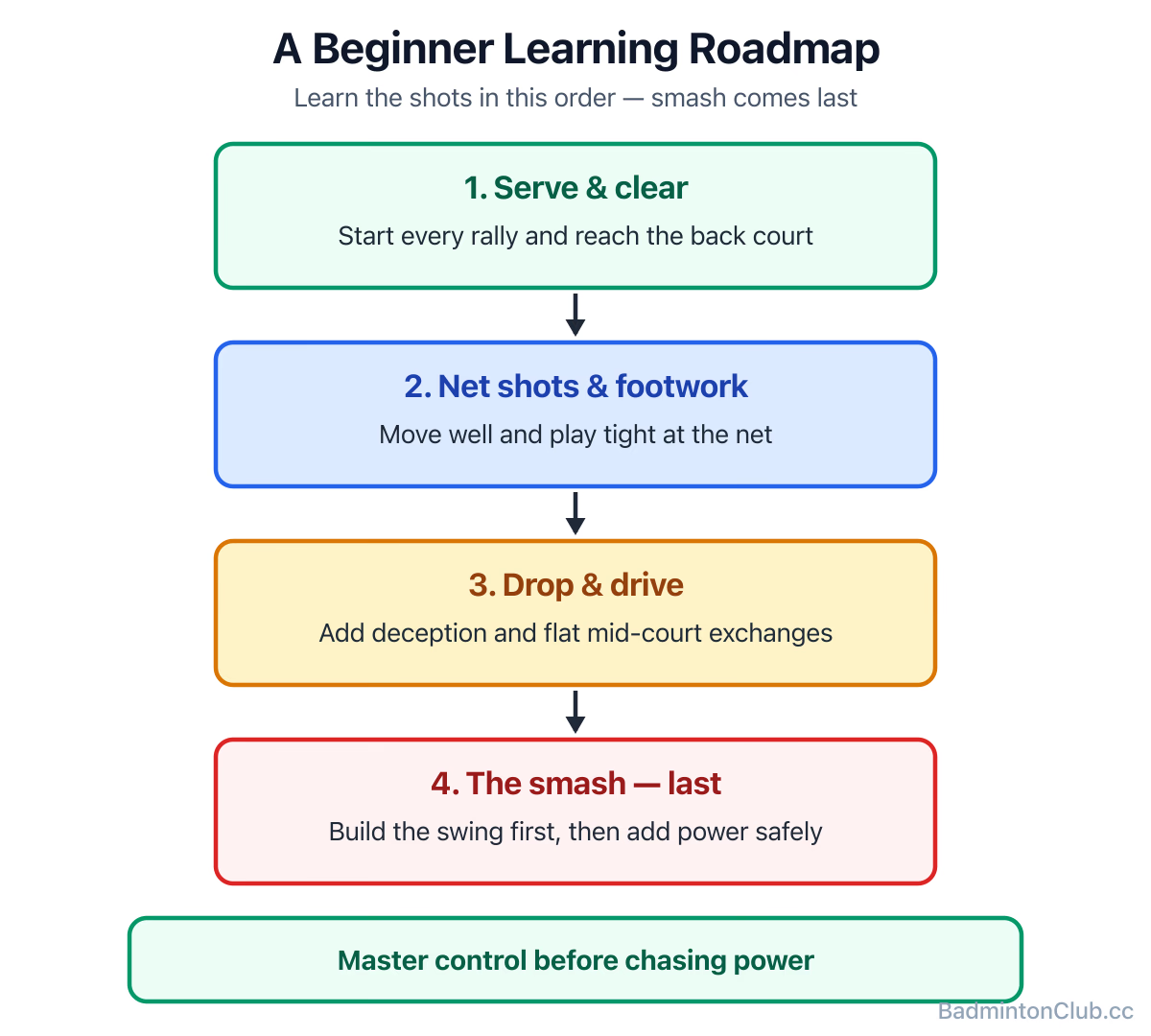
Beginners waste weeks practising smashes when they can't yet rally. Here's the order that actually works:
- Consistent low serve.
- Overhead clear (high to the back) — your reset shot.
- Net shot (soft, close to the net).
- Footwork: split-step, then move and recover to the middle.
- Drop shot, then drive, then — last — the smash.
Notice the smash is last. Power is the easiest thing to add and the least useful when you can't control the shuttle.
What really happens at a club night (the bit lessons skip)
You'll arrive, someone will point you at a peg board or a queue, and you'll play doubles with three strangers, all of whom will be kind and none of whom expect you to be good. You'll mis-hit. You'll laugh. You'll get a few rallies that feel amazing. Then the game ends at 21, you peg back on, and play with three new people.
The honest truth nobody says out loud: your first night you will be tired in twenty minutes and your forearm will ache, because beginners grip too hard and run too late. Both fix themselves in a week or two. Stick with it past the first session — that's where almost everyone who quits gives up too early. Clubs that run a fair rotation — a peg board or an app like BadmintonClub.cc — make a huge difference here, because you're guaranteed games instead of standing around hoping someone picks you.
A simple first-session plan
Spend ten minutes just rallying gently with one partner — no scoring, no smashing, just keep it going. Then ten minutes of low serves. Then play points. If you do only that for your first three sessions you'll be ahead of most people who've "played for years" but never practised a single thing on purpose.
The reality check nobody gives you
Let me say something that might save you a month of frustration: your first few sessions will feel chaotic and disjointed, and that is normal. The shuttle will go places you didn't intend, you'll miss easy shots, and you'll feel like everyone else has a secret you don't. They don't — they've just been through this same awkward stage. There is a specific moment that happens around session four or five where something clicks. Suddenly the shuttle starts arriving in roughly the right place at roughly the right time. You'll feel the rhythm of a rally for the first time instead of just reacting. That moment is worth pushing through the first few confused sessions for. Almost everyone who quits does so in sessions 1–3, right before it would have clicked.
One more thing: leave your ego at the door. In badminton, especially at club level, playing down to your partner's level does nobody any favours — but being gracious about mishits, calling close ones in the opponent's favour, and laughing off your own errors is the fastest way to become someone people want on their court. Good club players are remembered for their attitude before their skill.
FAQ
- Q: How do I start playing badminton as a beginner? Find a local club with a beginner or "back to badminton" night, bring indoor shoes, and turn up. Most clubs lend rackets. You'll be playing doubles within minutes.
- Q: Do I need lessons to learn badminton? No, but a few group lessons accelerate things by fixing your grip and footwork early, before bad habits set in. Plenty of good club players never had a formal lesson.
- Q: What should a beginner learn first in badminton? A relaxed grip, the ready position, a consistent serve and the overhead clear — in that order. Save the smash for last.
- Q: How long does it take to get decent at badminton? You can rally and enjoy games on day one. Looking competent at a club level — moving well, controlling the shuttle — usually takes a few months of regular play.
- Q: What should I wear to play badminton? Non-marking indoor court shoes, breathable sportswear and nothing that restricts a big lunge. The shoes are the only non-negotiable.
- Q: Is it embarrassing to be a beginner at a club? No — every club has a steady stream of newcomers and most run sessions specifically for them. Honestly, regulars enjoy helping; just call your scores honestly and chase your own shuttles.
New to badminton? Here's exactly what to do at your first session: what to bring, the basic rules and grip, the ready position that fixes half of all beginner problems, and the order to learn things in so you improve fast. Written as the lesson we'd give a friend coming to a club night for the first time — what really happens, what nobody tells you, and the few things worth practising before everything else.