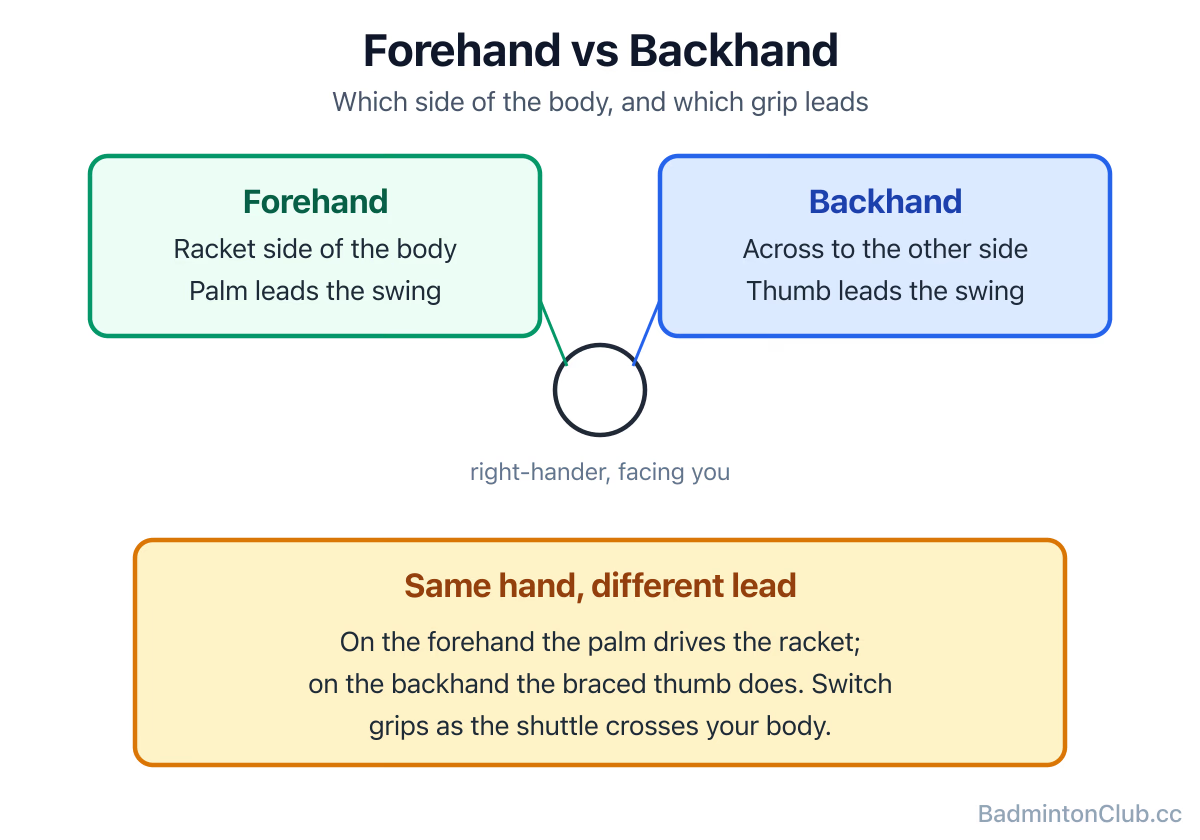
Forehand and backhand are the two sides of every badminton stroke, and most beginners are far stronger on one. This guide explains the difference in grip and technique, when to use each, the round-the-head forehand that lets you avoid a weak backhand, and how to actually improve your backhand instead of hiding it forever — because the players who fix their weak side stop getting picked apart in the back corner.
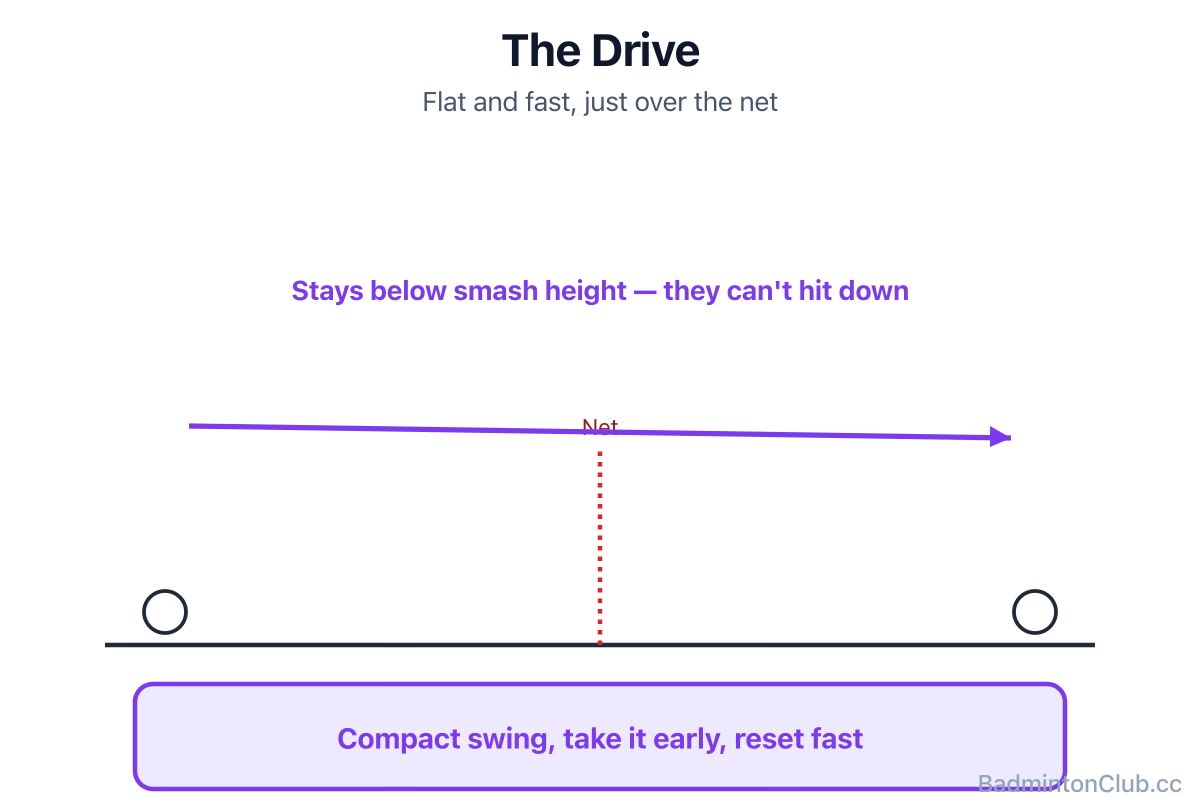
A drive is a flat, fast shot hit roughly parallel to the floor, straight at your opponent or down the sidelines — the engine of doubles midcourt exchanges. This guide covers forehand and backhand drives, the compact swing and relaxed grip that let you hit fast and recover instantly, how to take the shuttle early and flat, and why the drive is the shot that turns doubles from gentle rallying into a fast, attacking battle.
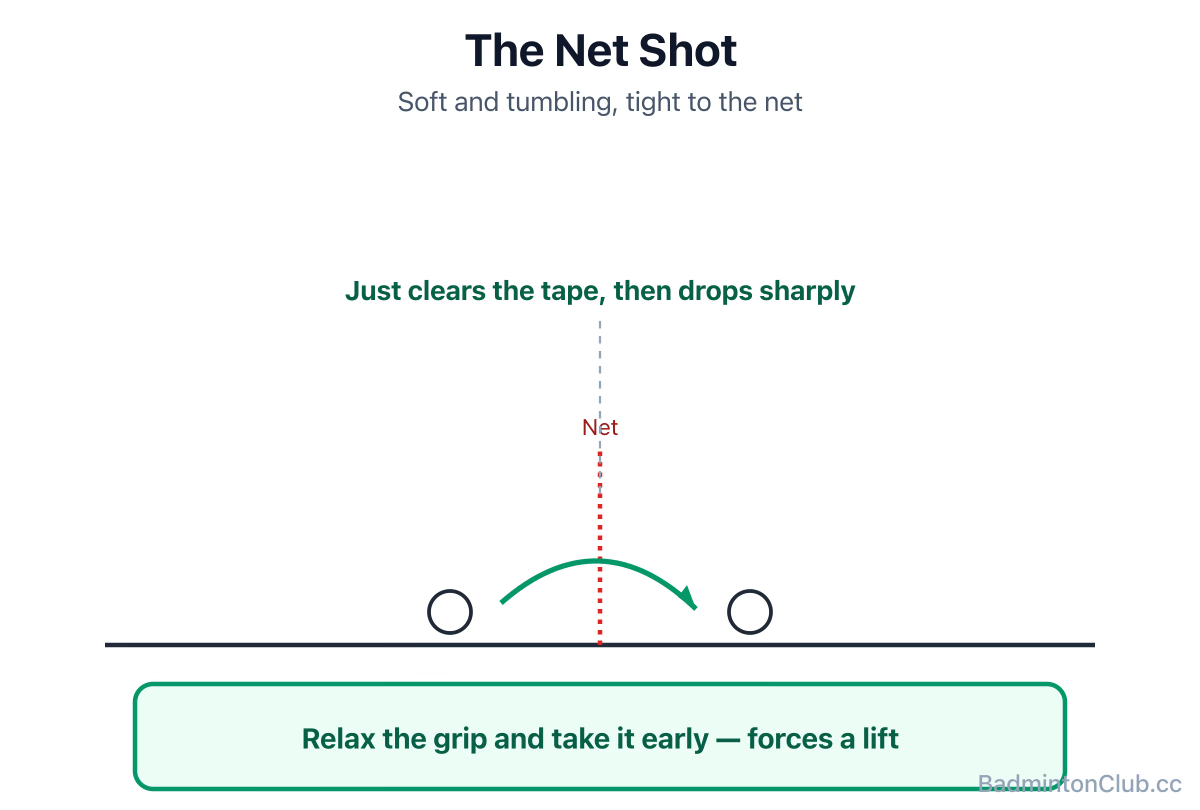
The net shot is a soft, delicate shot played close to the net so the shuttle tumbles just over and drops sharply — and it's where touch beats power. This beginner guide covers the relaxed grip and gentle technique, how to take the shuttle early and high near the net, the difference between a net shot and a net kill, and why winning the net is the secret to controlling rallies that most beginners completely overlook.
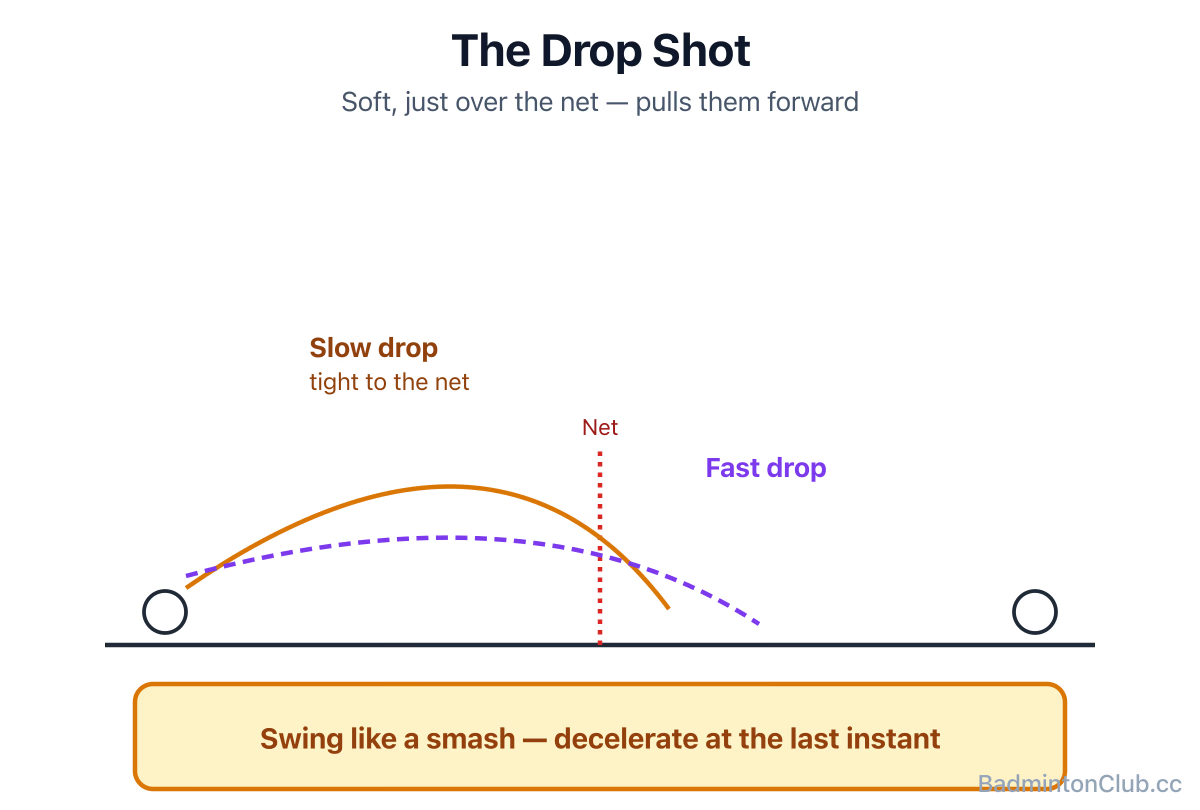
A drop shot is a soft overhead shot that falls just over the net, dragging your opponent forward and opening up the back of their court. This guide explains slow drops versus fast drops, the deception that comes from hitting them with your smash and clear swing, the gentle technique that keeps them tight to the net, and how to use the drop as part of a clear-drop-smash attacking pattern.
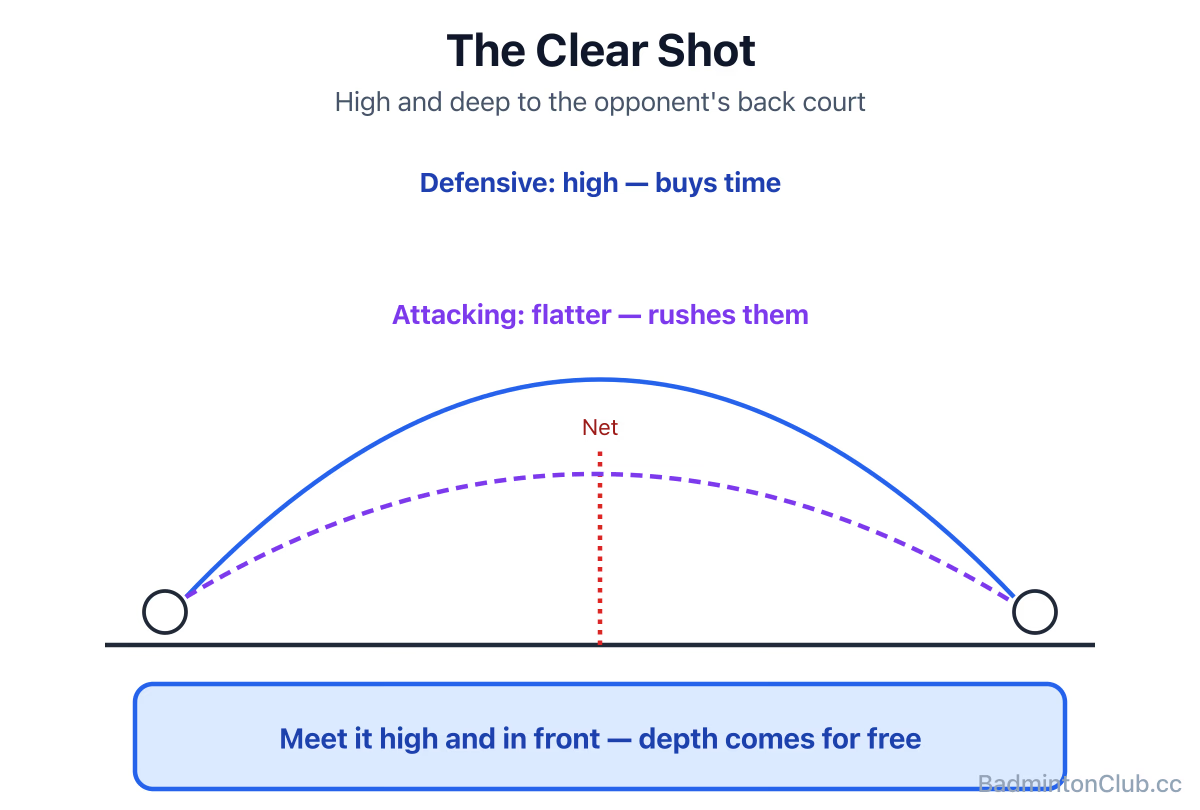
The clear is the first overhead shot every badminton player should master — a high, deep shot to the opponent's back court that resets the rally and buys you time. This guide covers the forehand and backhand clear, the difference between attacking and defensive clears, the forearm-rotation technique that gets depth without muscling it, and the drills to make your clear reliably reach the back line.
Practical badminton tips for beginners that fix the real things holding you back: loosen your grip, recover to the middle, serve low, use your wrist not your arm, and stop swinging at full power. These are the cues that take a new player from flailing to competent in a few weeks — the same short list a coach would give you courtside, with the why behind each one so it sticks.
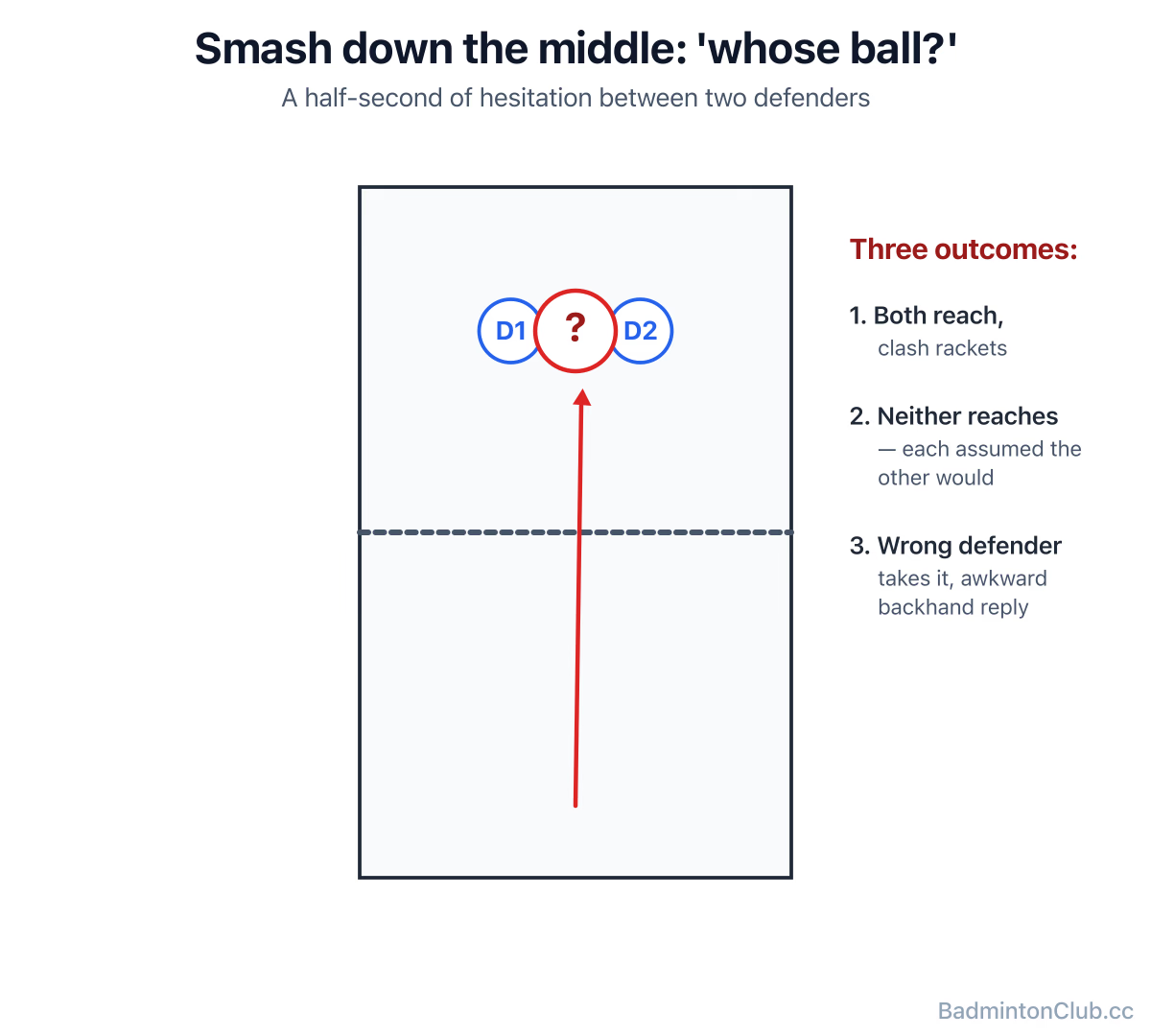
Smashing down the middle in badminton doubles — why it works (the 'whose ball is it?' moment of confusion between two defenders), where exactly to aim (slightly off-centre toward one defender's backhand body), and when to use it (after a couple of corner smashes have spread them outward). Plus the three default conventions for who takes the middle on your side — forehand-side player, whoever isn't already committed, or the back player on lifts.
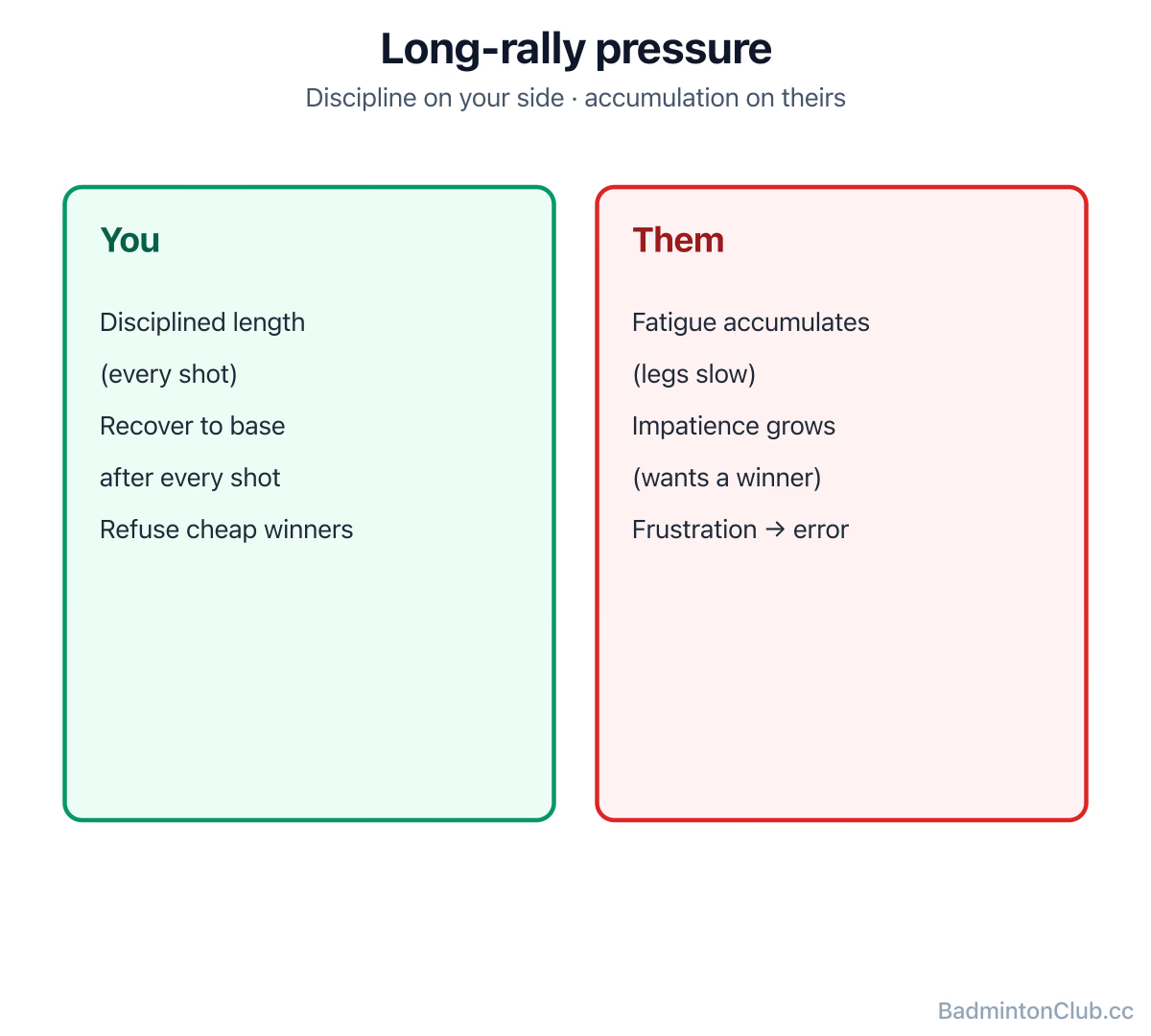
How to force unforced errors in badminton — extend rallies past the opponent's comfort window with disciplined length and base recovery, refuse cheap winners yourself, vary pace, and target a known weakness relentlessly until they overreach. Includes the four sources of errors (fatigue, impatience, frustration, mid-game lulls), a worked six-shot rally that wins on patience, and the honest opinion that at most club levels patience is the single most under-rated skill — and the cheapest one to add.
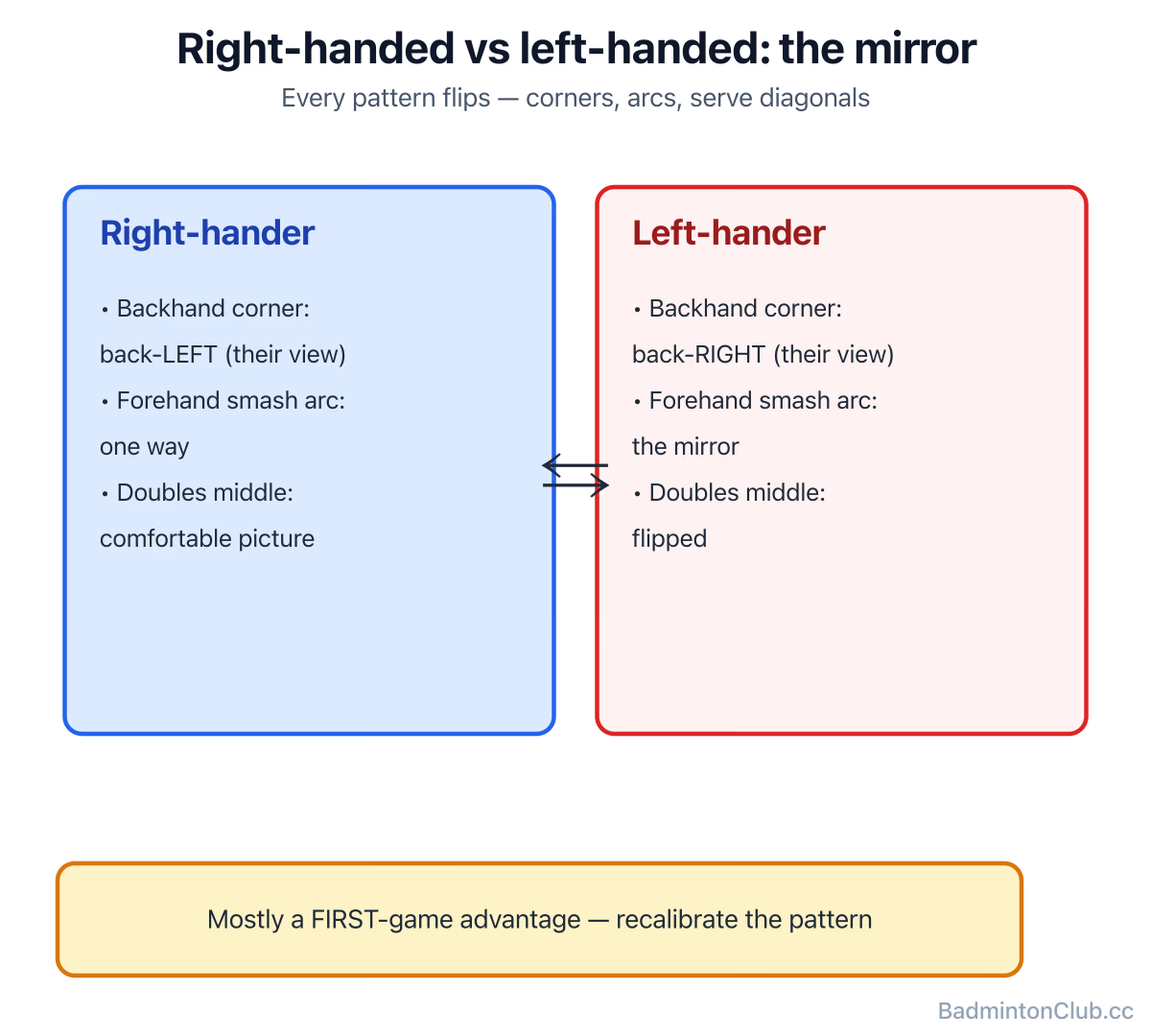
How to play against a left-handed badminton player — every spatial pattern is mirrored, so the backhand corner moves to your right, the smash arcs curve the other way, and the doubles middle shifts shape. The practical adjustment: target the reversed backhand corner deliberately, re-read every cross-court angle for the first game, and recalibrate 'attack the woman' geometry in mixed where forehands flank the centre differently. The lefty advantage is mostly a first-game advantage, and most opponents never adjust.
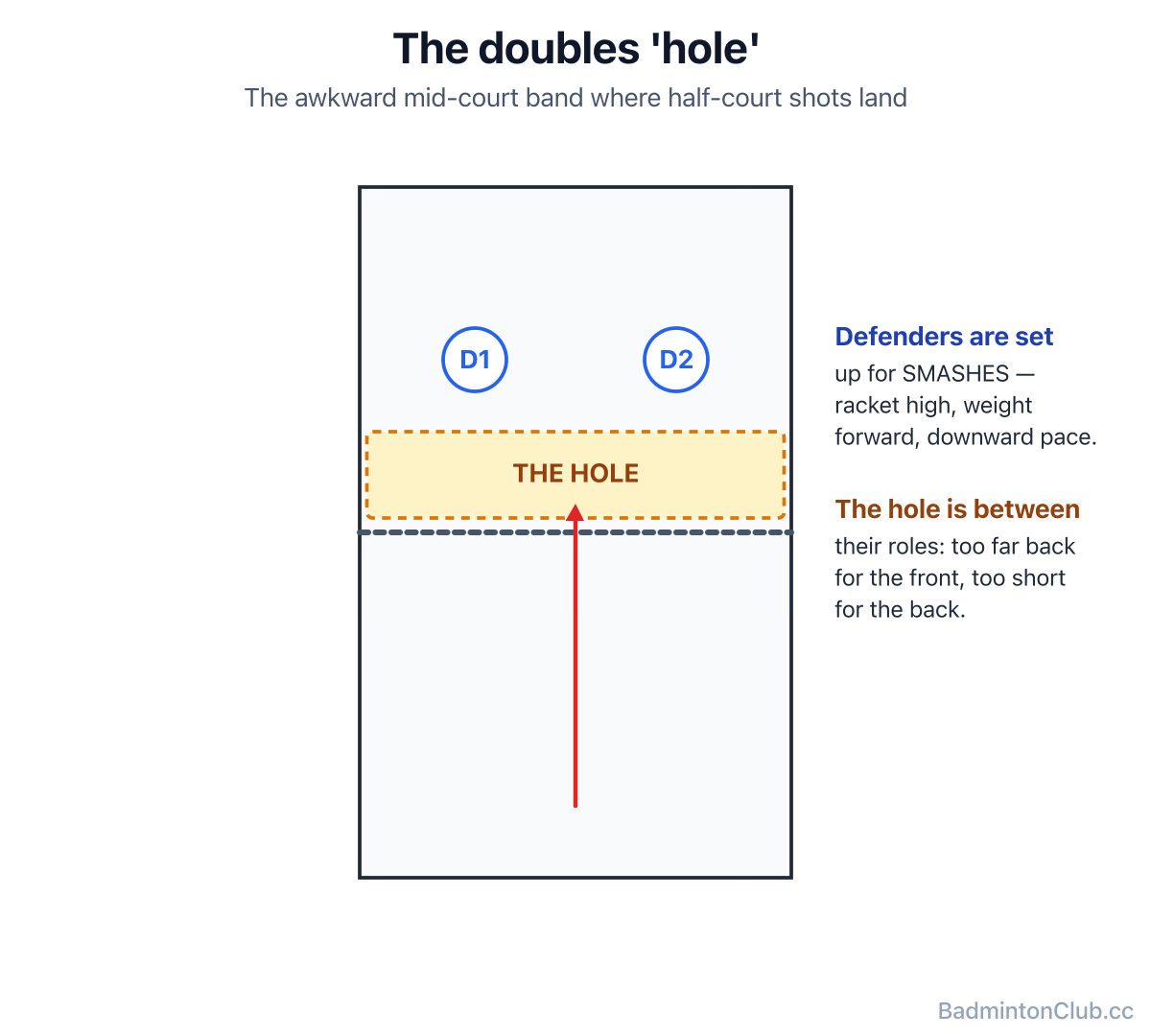
Half-court shot tactics in badminton doubles — the half-paced smashes, pushes and drives placed into the mid-court 'hole' between the opposing front and back defenders, which forces an awkward low pick-up that's too flat to lift and too deep to net-kill. Includes the three attack options, the smash-smash-half-smash-push-kill shot-construction pattern, and the frank reason half-court tactics are under-used at club level — the highlight-reel smash feels more satisfying than the boring shot that actually wins points.
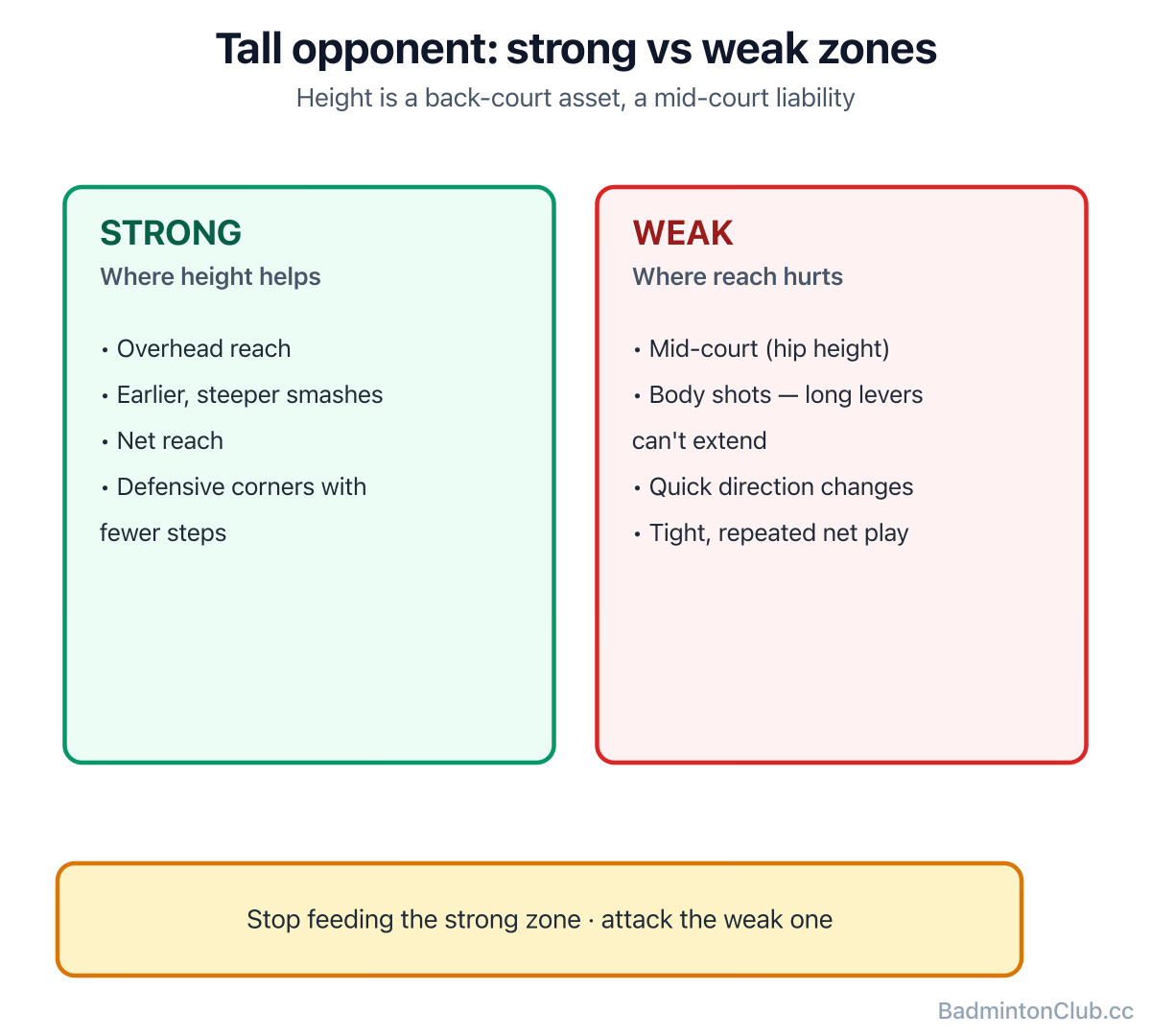
How to beat a tall badminton player — attack the mid-court (the awkward hip-to-shoulder zone), jam their body where long levers can't extend, and stop feeding clears their reach loves. The article walks through a worked rally pattern (flat drive to body, half-smash to mid-court, soft drop, net kill), the four mid-court tactics that neutralise height, and the patient mindset that beats taller opponents at club level — where most short players lose because they panic and lift, not because they're shorter.
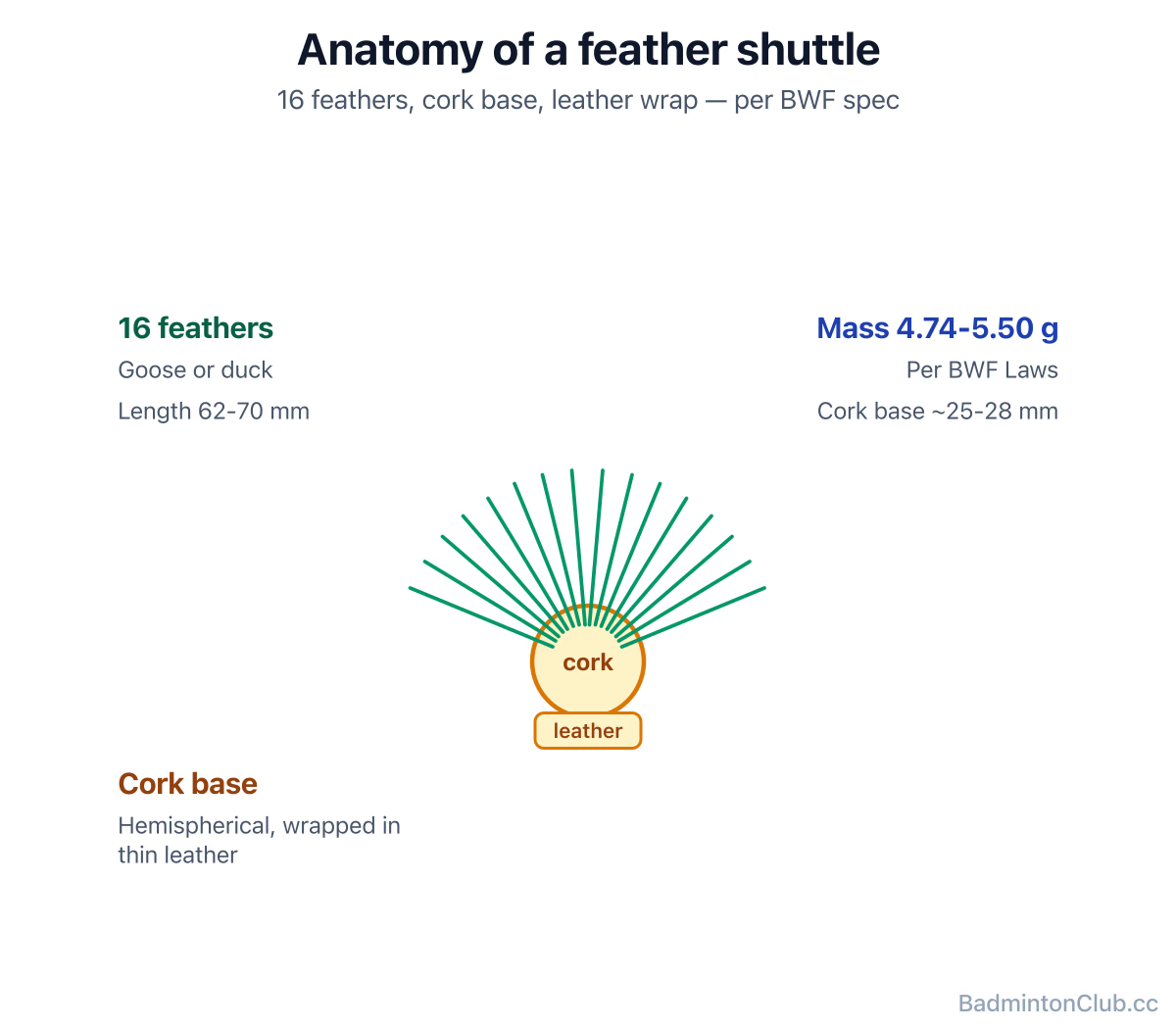
Why a shuttlecock is called a birdie — because traditional feather shuttles are made from real goose or duck feathers, 16 of them by BWF rule, fixed into a cork base about 25–28 mm wide. The name 'shuttle' comes from the Old English weaving tool; 'cock' from the feathered tail-like shape. The casual American nickname 'birdie' stuck because the projectile is literally a small bird-feather assembly. Verified specs included, plus the manual feather-tying that still happens by hand.
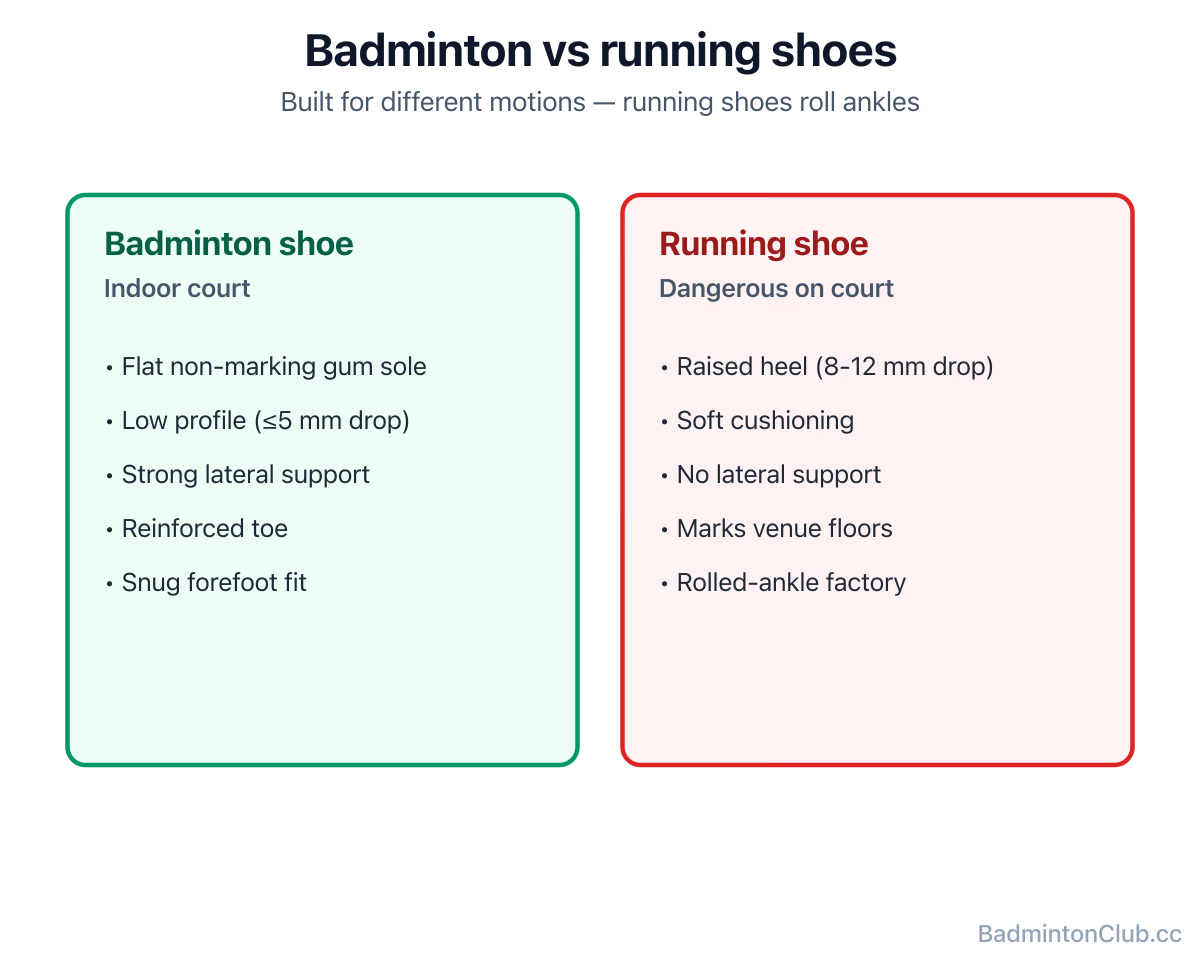
Why badminton needs dedicated non-marking indoor court shoes — flat gum-rubber sole that grips and doesn't scuff venue floors, low profile for stability on lateral lunges, and reinforced sides for the sport's stop-start motion. Running shoes are dangerous on court because of raised heels and soft cushioning that roll ankles. Includes a buyer's checklist, how often to replace (sole-wear-driven), and the £40–60 price point that's perfectly fine. The cheapest injury insurance in the sport.
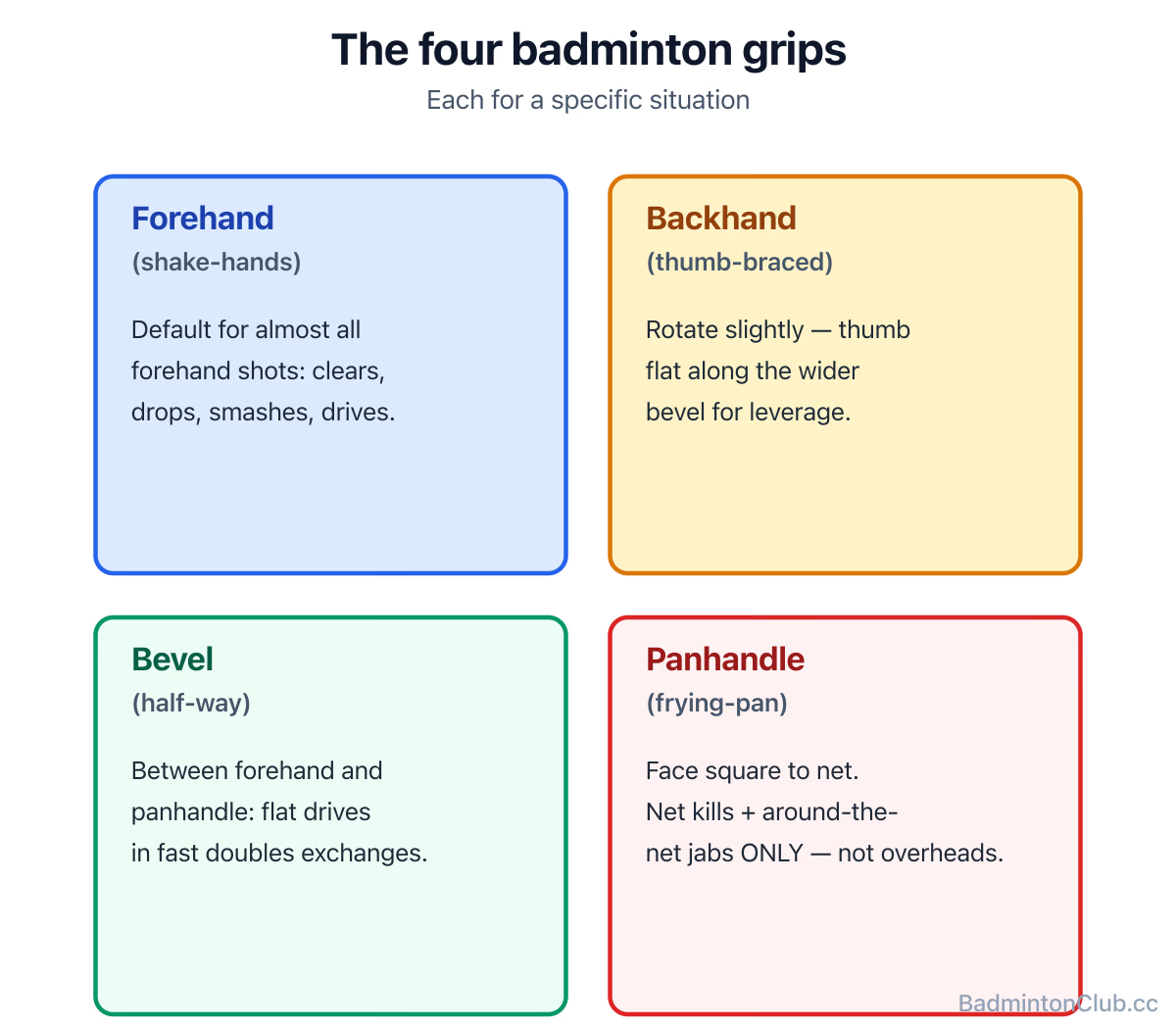
How to hold a badminton racket properly — the four grips every club player should know and when to switch between them. Default forehand (shake-hands) for forehand shots, thumb-braced backhand for backhand clear/serve/smash, panhandle (frying-pan) only situationally for net kills, and the in-between bevel grip for flat drives. The single most common error in any club hall is the player who never changes grip — five minutes of shadow grip-changes a session fixes most backhands.
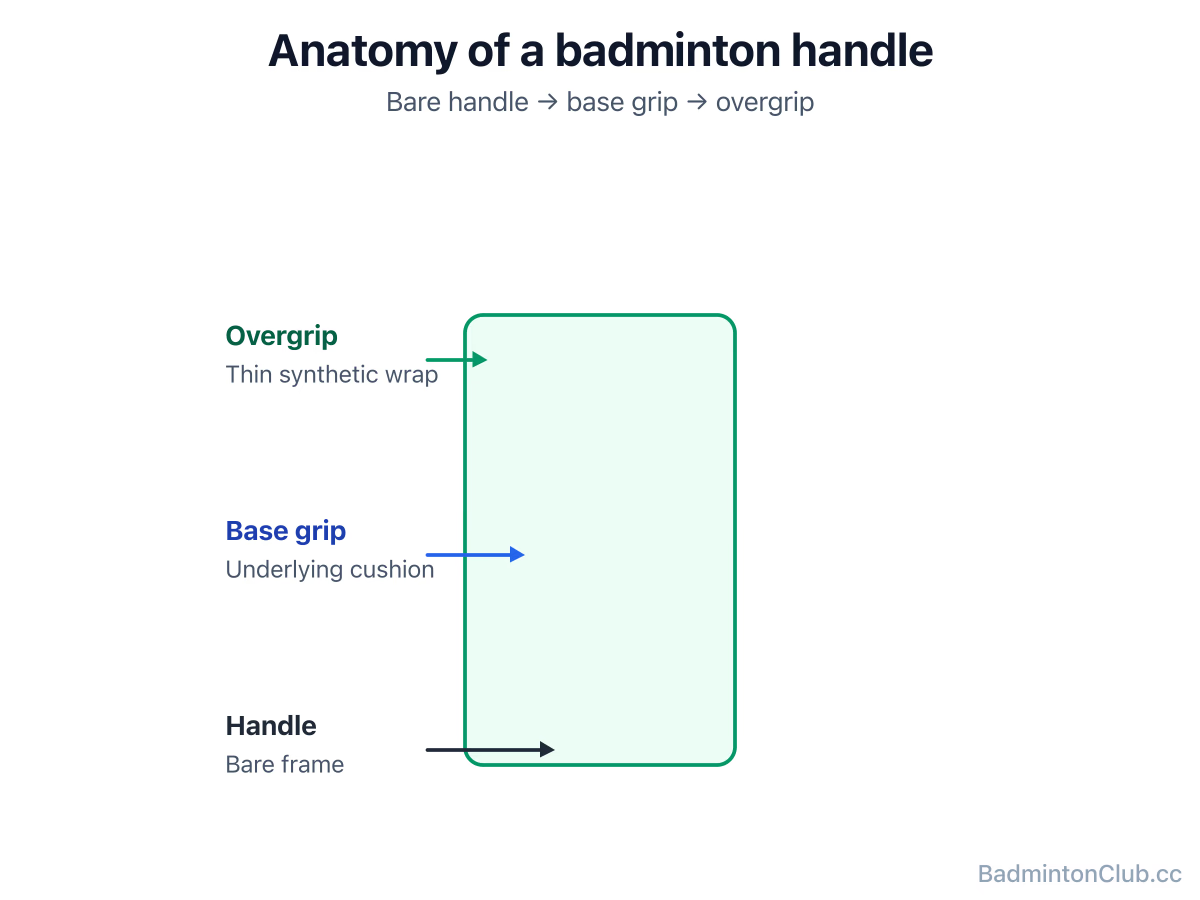
Badminton grip wraps compared — towel grip (absorbent, soft, thick, replaced often, the answer for sweaty hands), rubber/PU overgrip (slim, uniform, durable, less absorbent), and the four-step sweaty-hand fix from towel plus chalk down to perforated overgrips. Plus how grip thickness affects wrist snap, when to use one wrap vs two, and the loose-to-tight principle that matters more than any wrap choice. A short, opinionated guide for the player whose racket keeps slipping mid-rally.
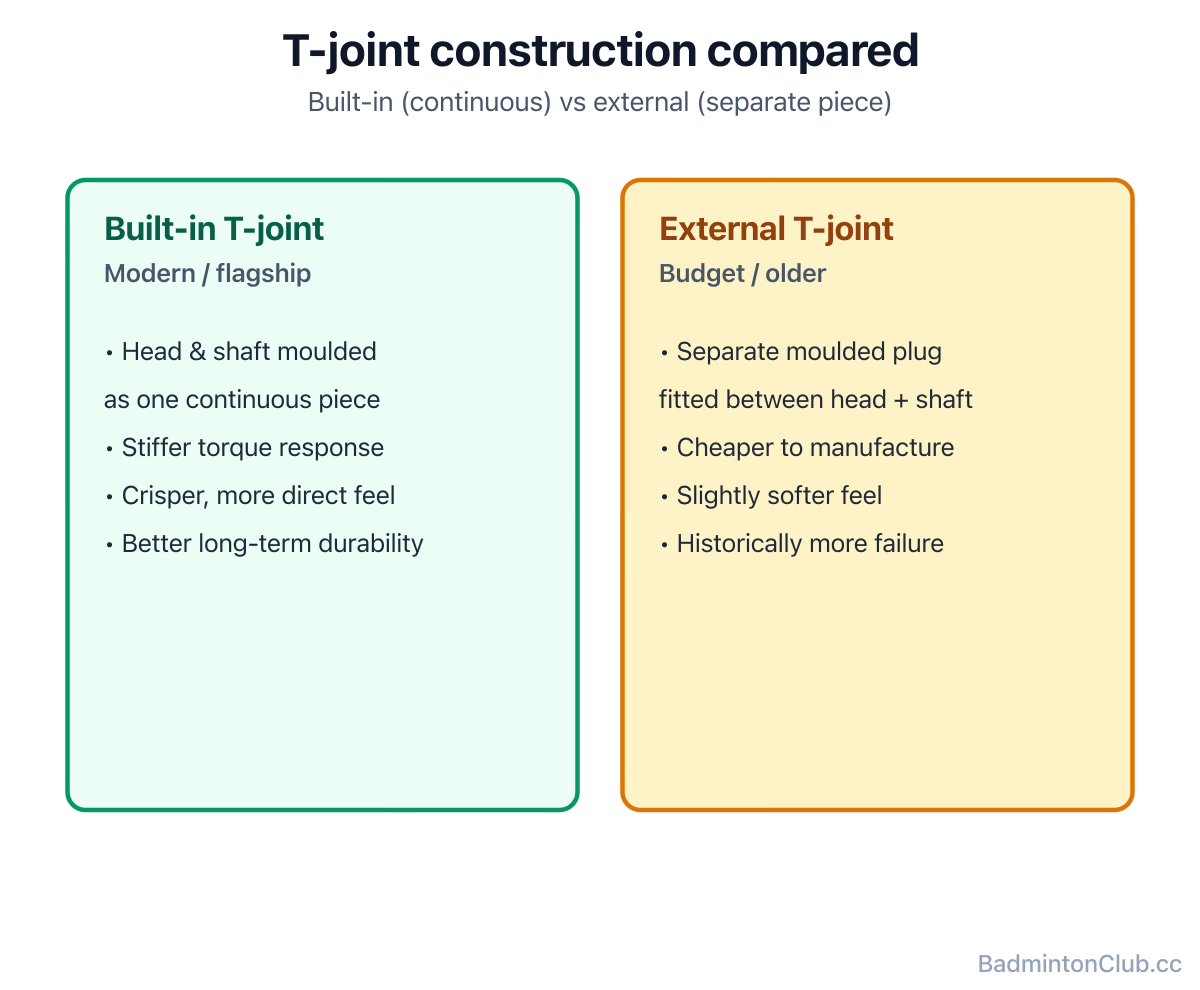
The badminton racket T-joint — the throat piece where shaft meets head — and the difference between modern built-in (moulded continuous) and older external (separate piece) construction. Built-in T-joints give stiffer torque, crisper feel and better durability; external joints are cheaper and slightly softer, with a small history of joint failure on abused frames. Honest take: T-joint type is a tie-breaker between similar rackets, not a headline spec.
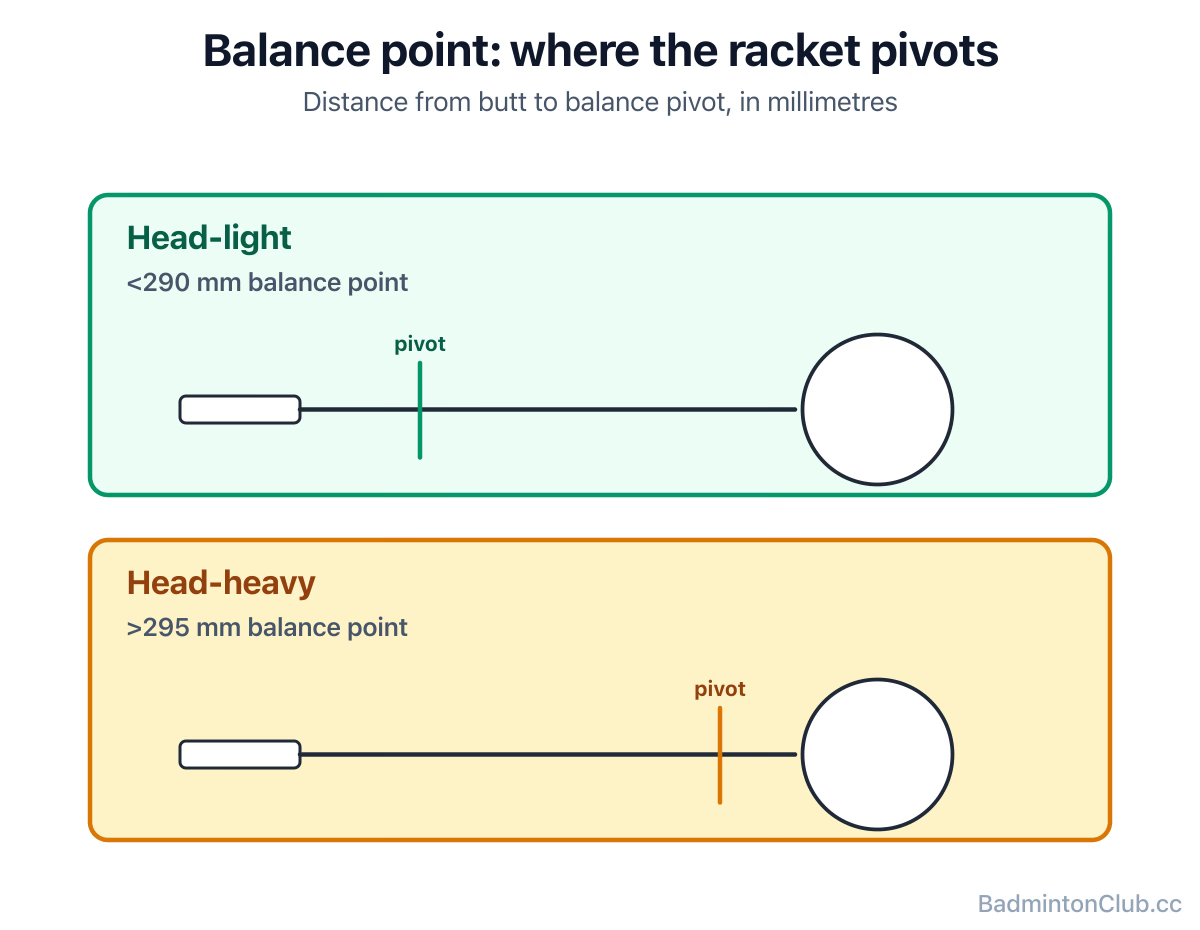
Badminton racket balance point in millimetres — under 290 mm is head-light, 290–295 mm even, above 295 mm head-heavy — and how to fine-tune balance with small (1–3 g) strips of lead tape at the racket head or under the handle wrap. Covers the standard 2/10, 3/9 and 12 o'clock placements, the 4–5 g total ceiling, and the honest caution that lead tape is a fine-tuning tool, not a fix for the wrong racket. A useful skill for players who love their frame but want a tweak.
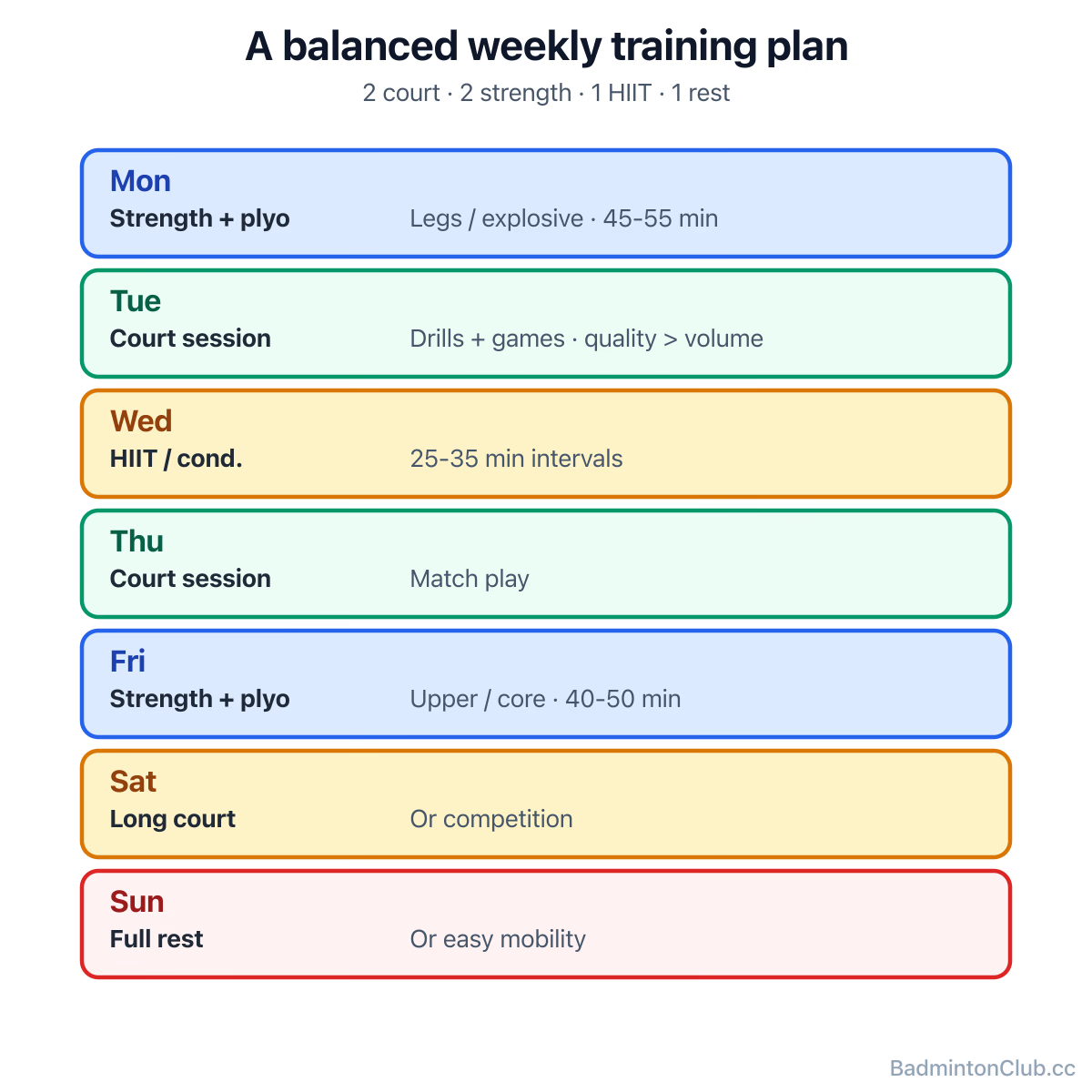
An off-court badminton conditioning programme for working adults: two strength + plyo sessions, one HIIT, one mobility, sitting alongside two or three court sessions, with one full rest day a week. Includes periodisation around tournaments (deload 5–10 days, then 2–3 light days after), a minimum-viable two-session-per-week version, and a phased ramp from week 1 to week 5+. The honest line: programmes fail because they're optional, not because they're wrong.
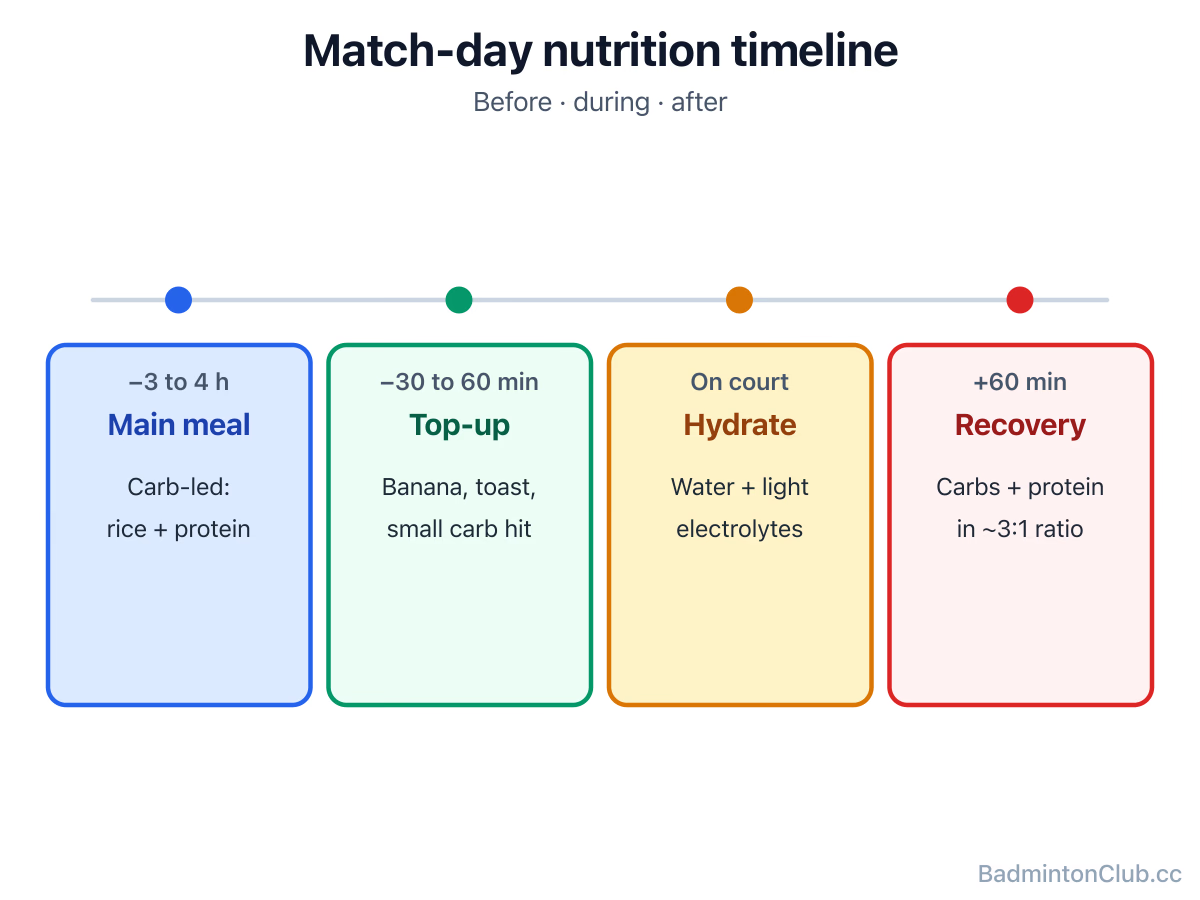
Badminton nutrition for a competitive day — a carb-led meal 3–4 hours before, a small top-up 30–60 minutes before, and steady electrolyte hydration through long days. Between-match snacks by gap length, what to refuel with within 60 minutes of finishing, and an honest take on caffeine timing. Not influencer advice; the boring real-food playbook that actually delivers stable energy through three sets without GI distress on court.
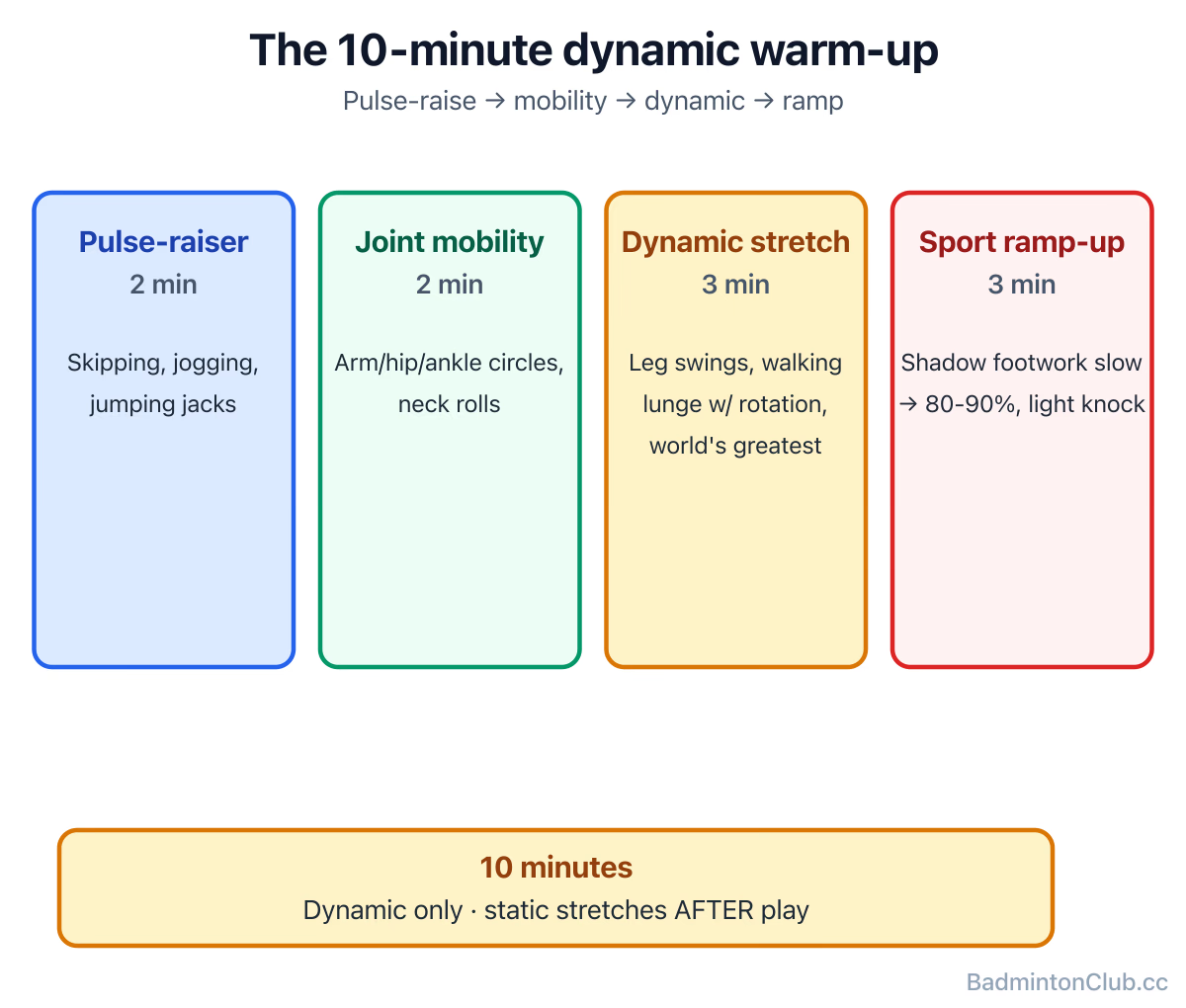
The 10-minute badminton warm-up routine: pulse-raiser, joint mobility, dynamic stretches, then ramped-up shadow footwork to game intensity. Plus what a proper cool-down looks like, why static holds belong after play (not before), and a short functional-mobility block targeting the three joints badminton actually loads — shoulders for overheads, hips for lunges, ankles for split steps. Ten minutes that prevent more injuries than any single drill.
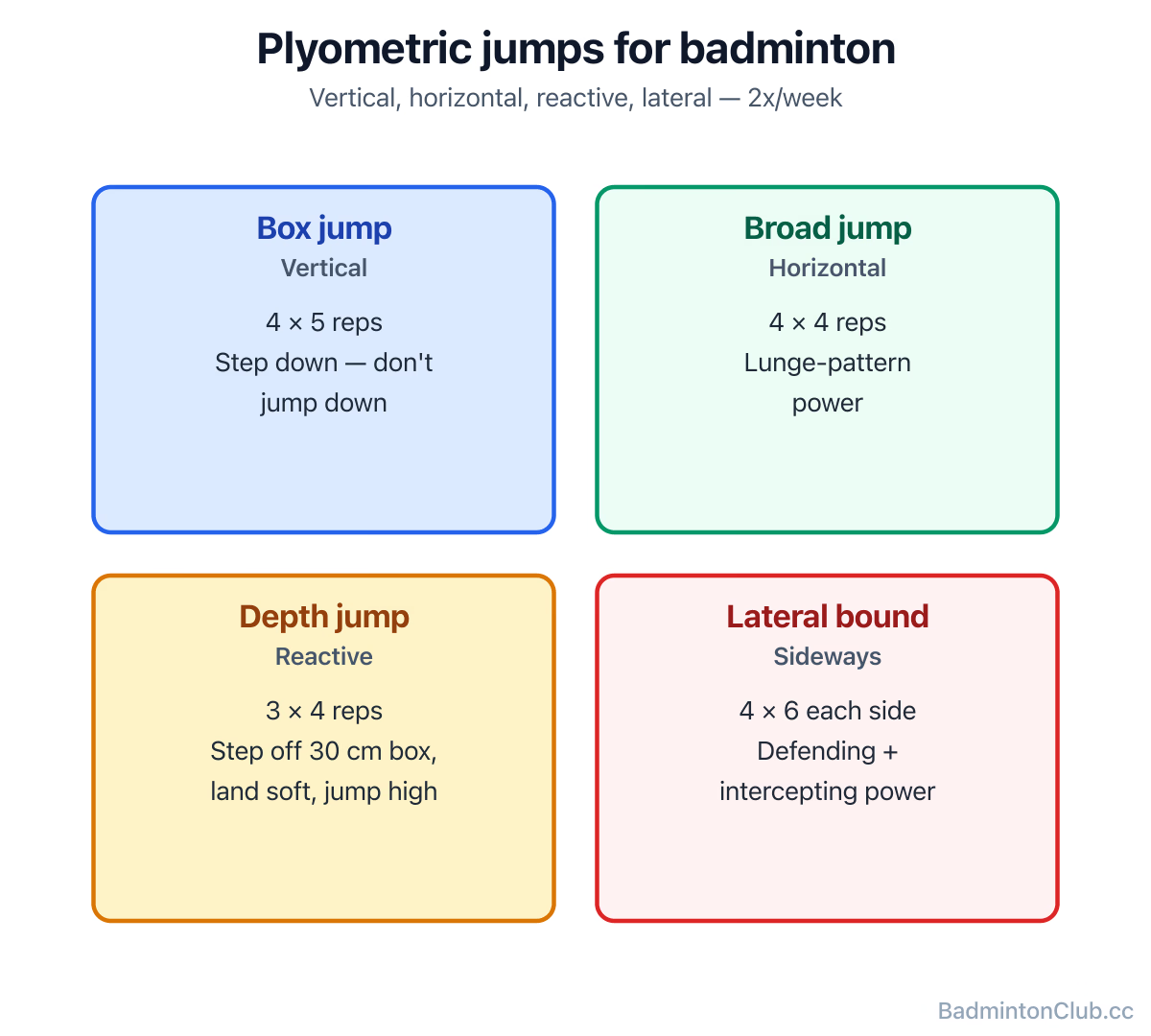
Explosive power for badminton, built with plyometric jumps (box, broad, depth, lateral, skater) that train the stretch-shortening cycle the jump smash actually uses — paired with heavy-but-fast leg strength so the jumps have power to multiply. Two plyo sessions a week, a sample weekly layout, depth-jump form, and a blunt take on why pronation matters more than vertical for most club smashes.
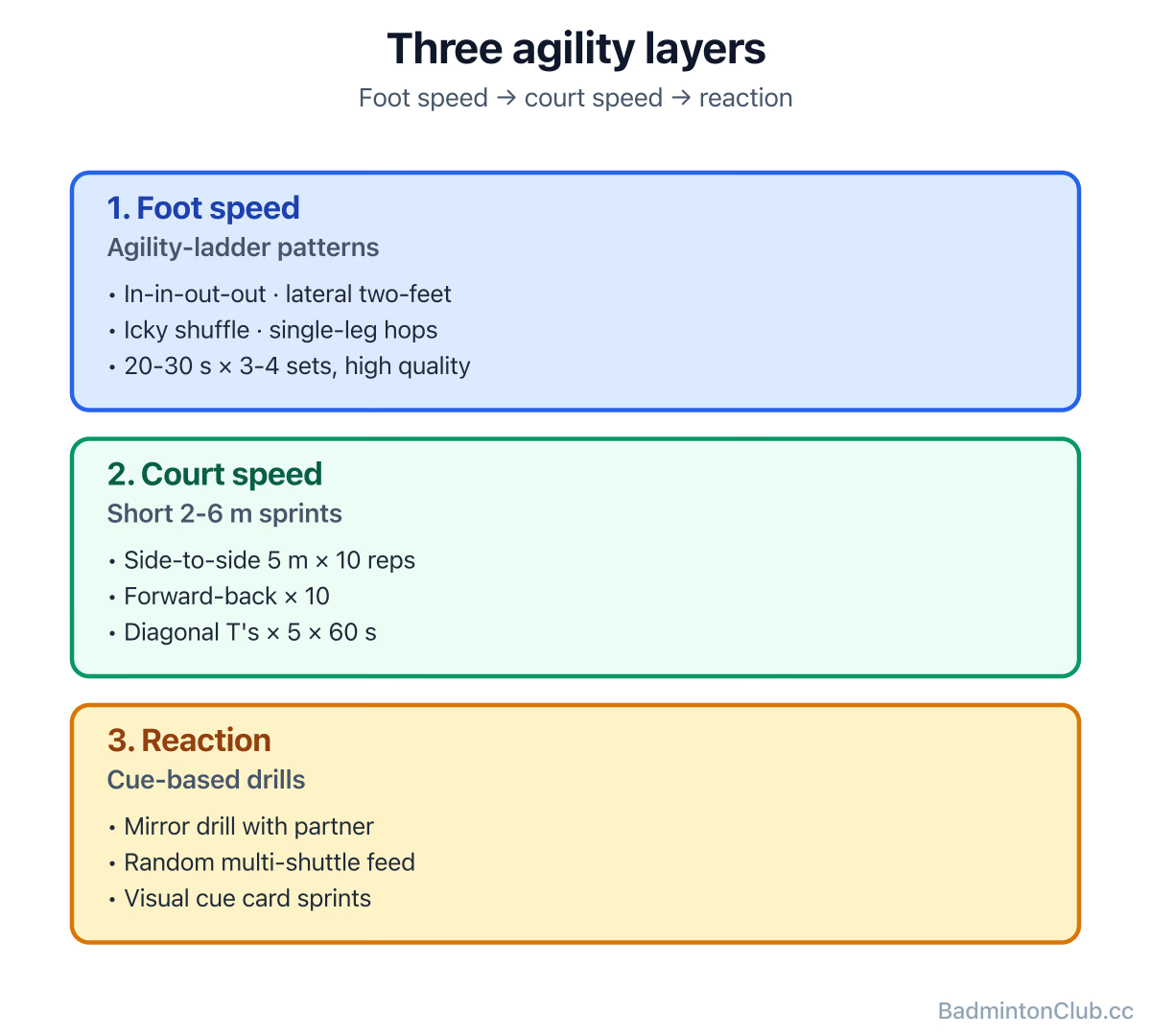
Badminton agility, speed and reaction training in three layers: agility-ladder patterns for foot speed, short court sprints (2–6 m) for raw movement, and partner-cued mirror and multi-shuttle drills that train you to start moving first. Includes 20–60 second drill sets with full recovery, the reason reaction beats raw speed at club level, and the honest reason ladder work doesn't transfer as directly as people think.
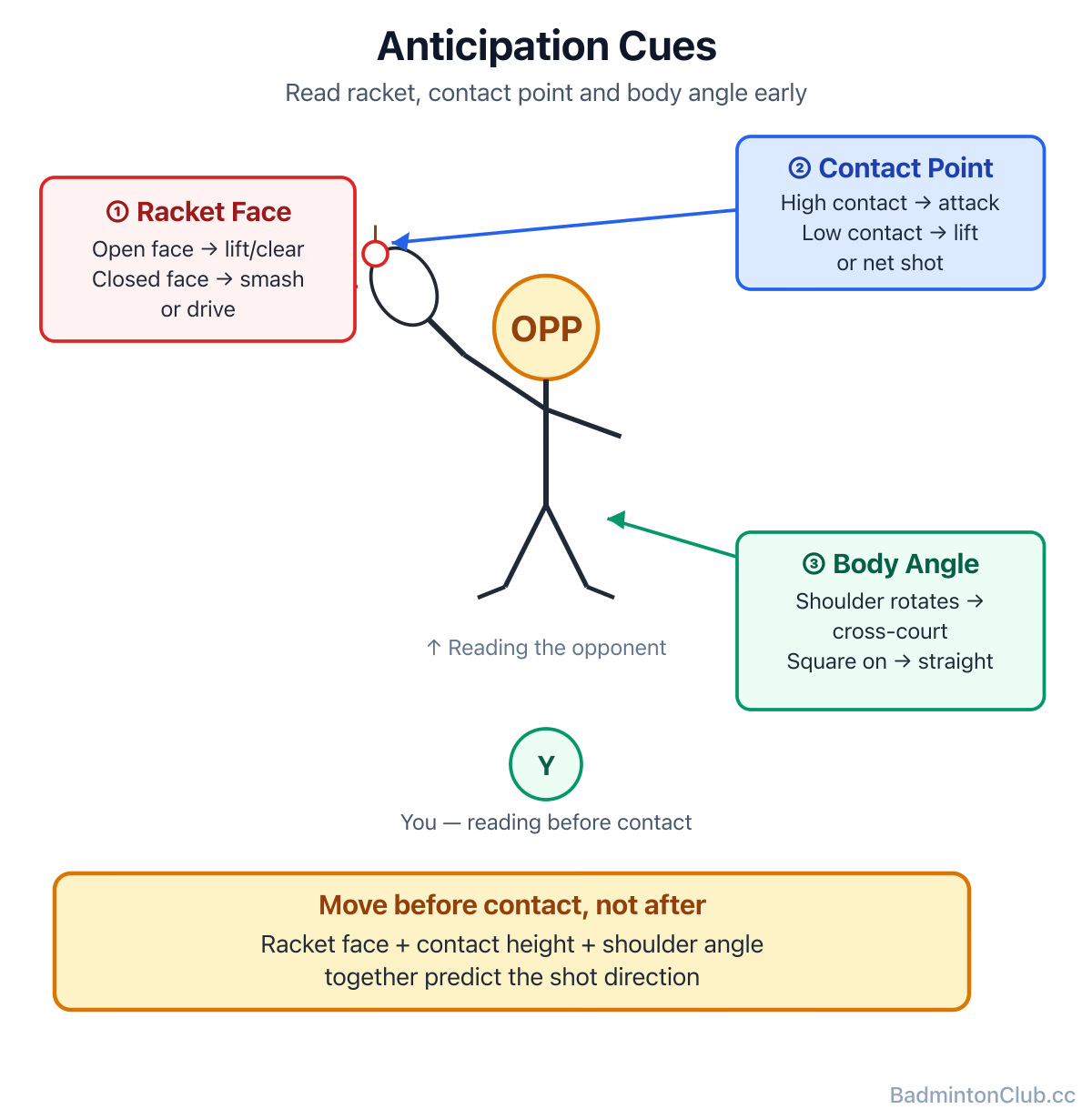
Anticipation in badminton is about reading your opponent's racket face, contact point, and body angle before the shuttle leaves the strings — so you move early and win points cheaply. This guide covers the cues that give shots away, how to spot court patterns and pre-empt them, long net strategy, and adjusting for shuttle drift and hall conditions.
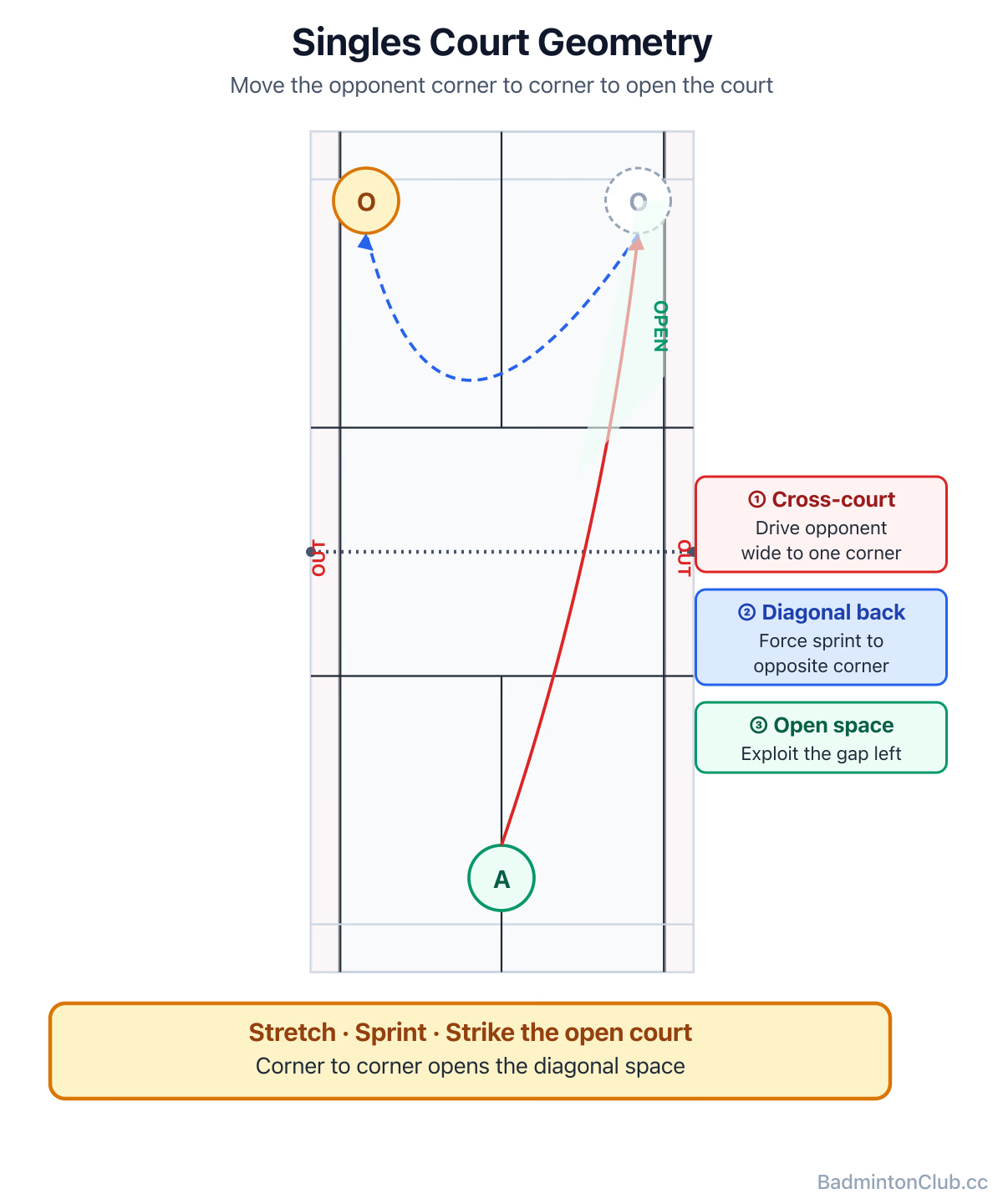
Badminton singles tactics explained: use corner-to-corner geometry to stretch your opponent, vary pace to break their rhythm, and systematically target the backhand rear corner. Covers mid-court exploitation, the first-three-shots review habit, and why patience plus fitness beats power for most club players.
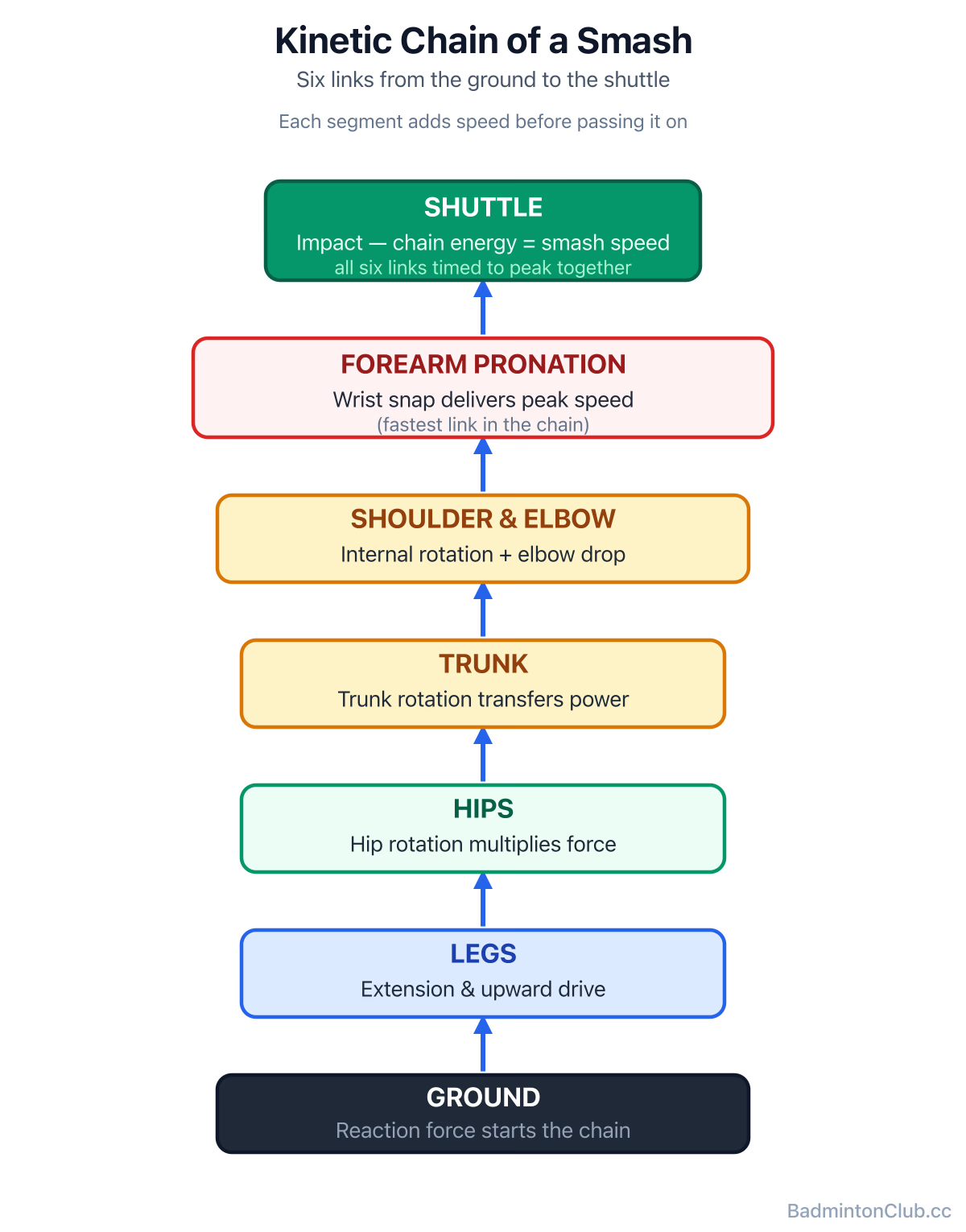
Forearm pronation and supination are the final release points of a smash's kinetic chain — a ground-up sequence through legs, hips, trunk, shoulder, and elbow. This piece explains how the chain works, why timing beats strength, and why ankle stability underpins both power and injury prevention. For anyone wanting to smash harder without swinging harder.
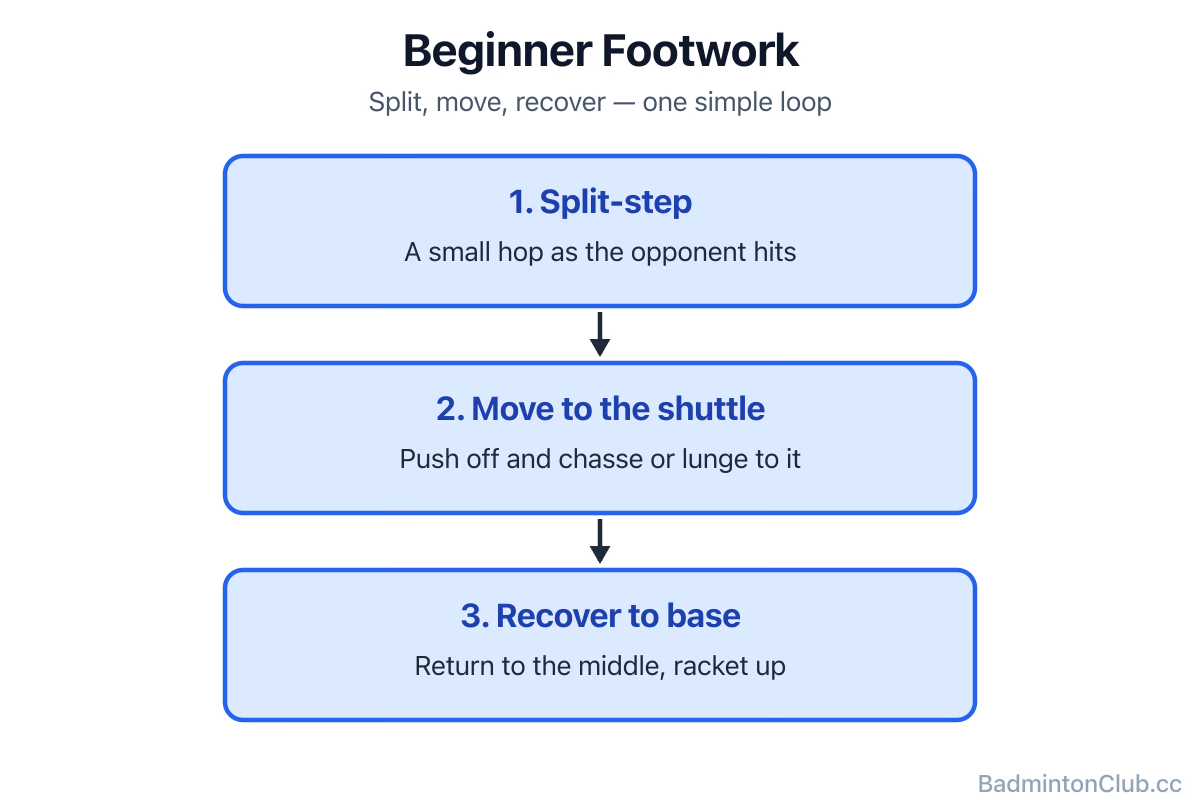
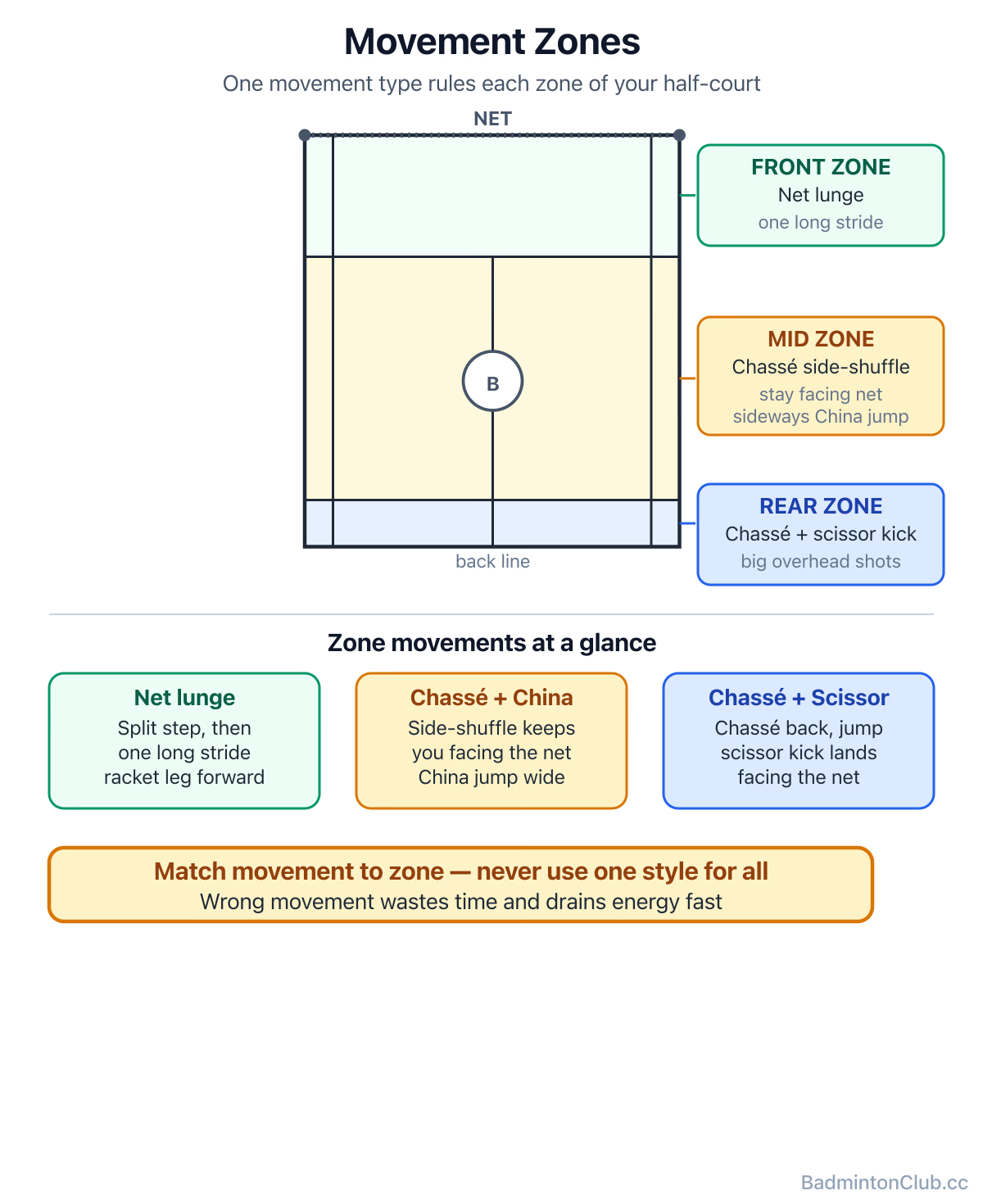
Master the key badminton movement techniques — the net lunge, scissor kick, and China jump — that get you to the corners and back. Covers correct lunge alignment, rear-court scissor recovery, explosive sideways movement, and the "quiet feet" cue that shows whether you're moving with control or just rushing around the court.
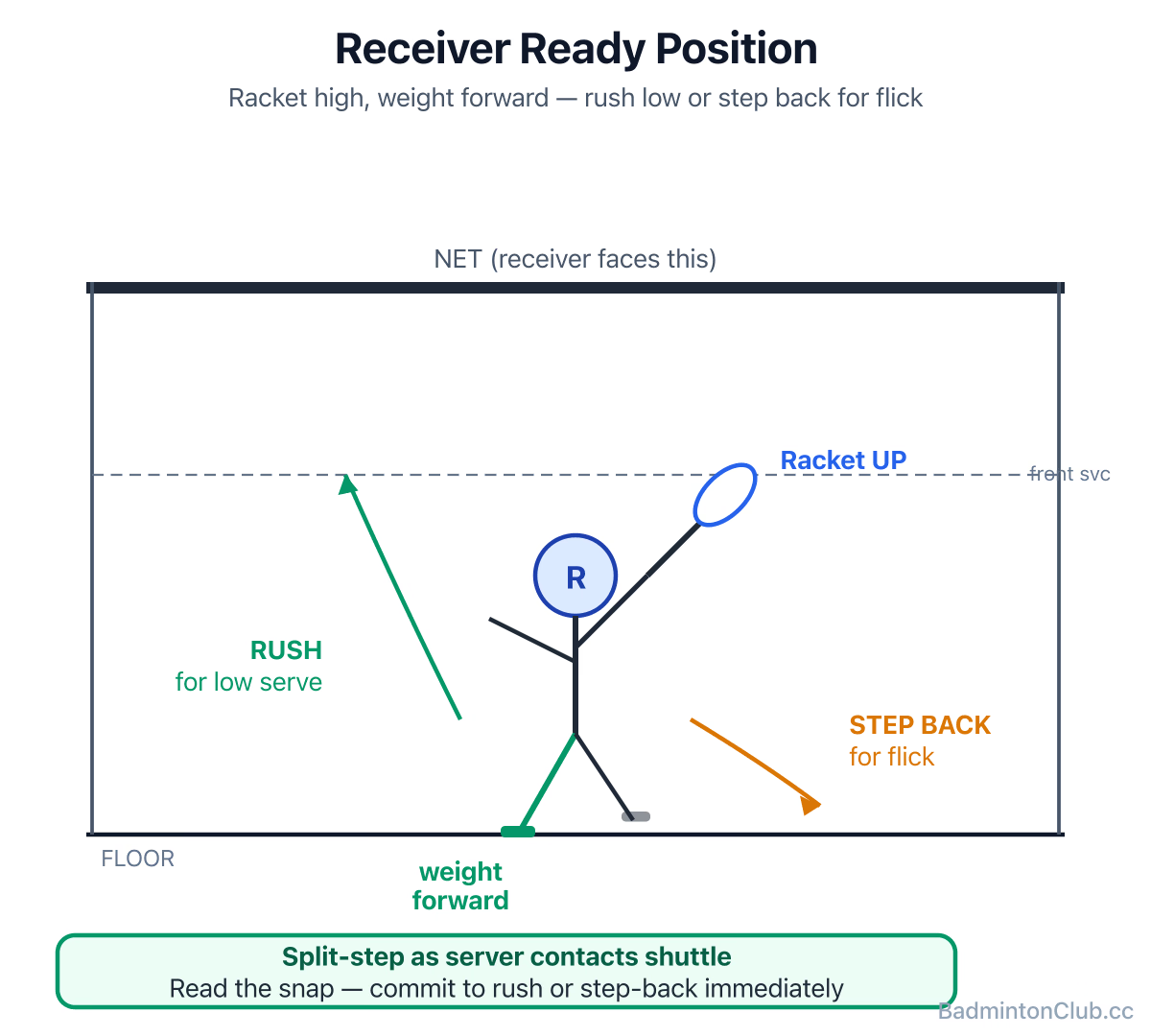
Mastering the return of serve in badminton means standing racket-up, weight forward, ready to rush any loose low serve — not waiting for it to land. This guide covers the aggressive receiver stance, how to intercept the flick without overcommitting, and how to use deceptive returns to keep the server guessing. Written for doubles players who want to seize the initiative from the very first shot of each rally.
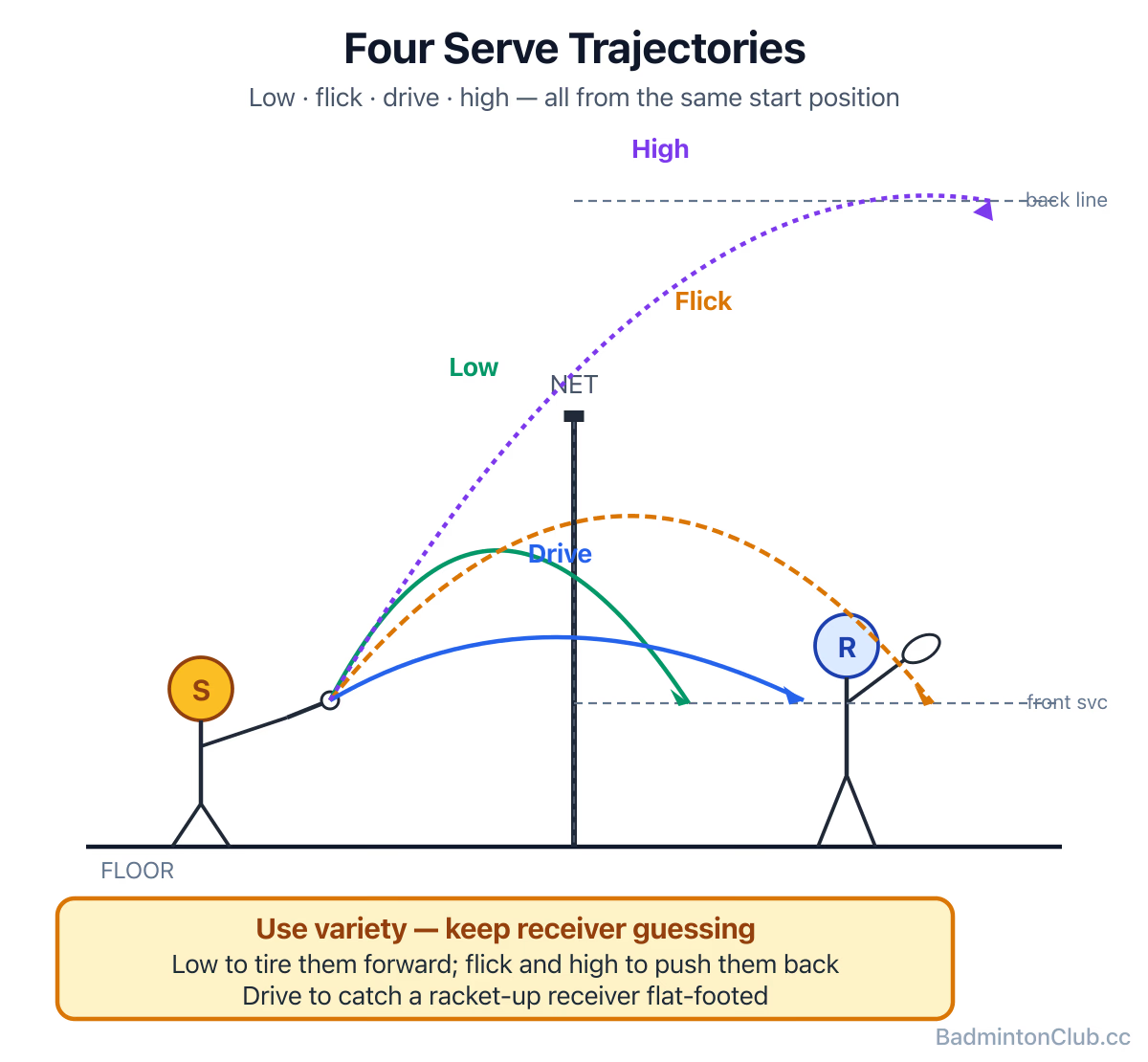
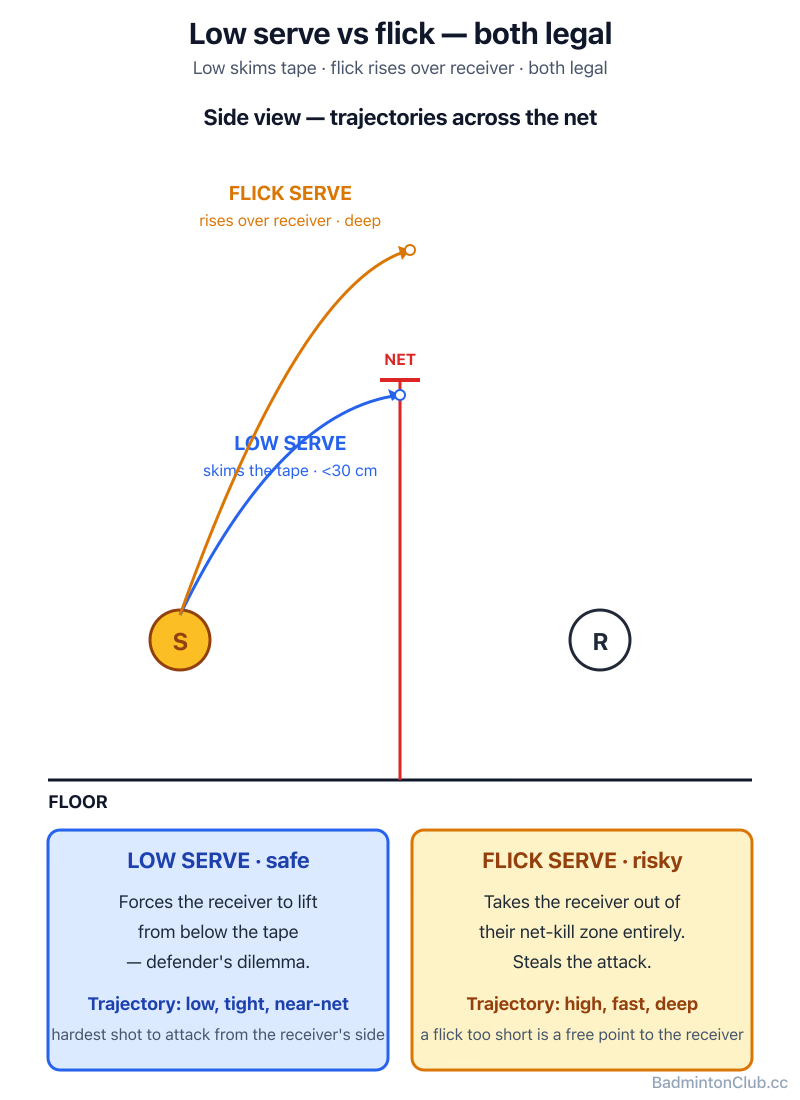
Master the flick, drive, swerve, and high serves in badminton — four weapons that punish receivers who guess wrong. Covers the identical low-serve disguise that makes the flick work, when to use a flat drive serve as a rare surprise, and why the high serve is a singles staple. Practical tips on reading when to vary, and how to reset after your flick gets smashed.
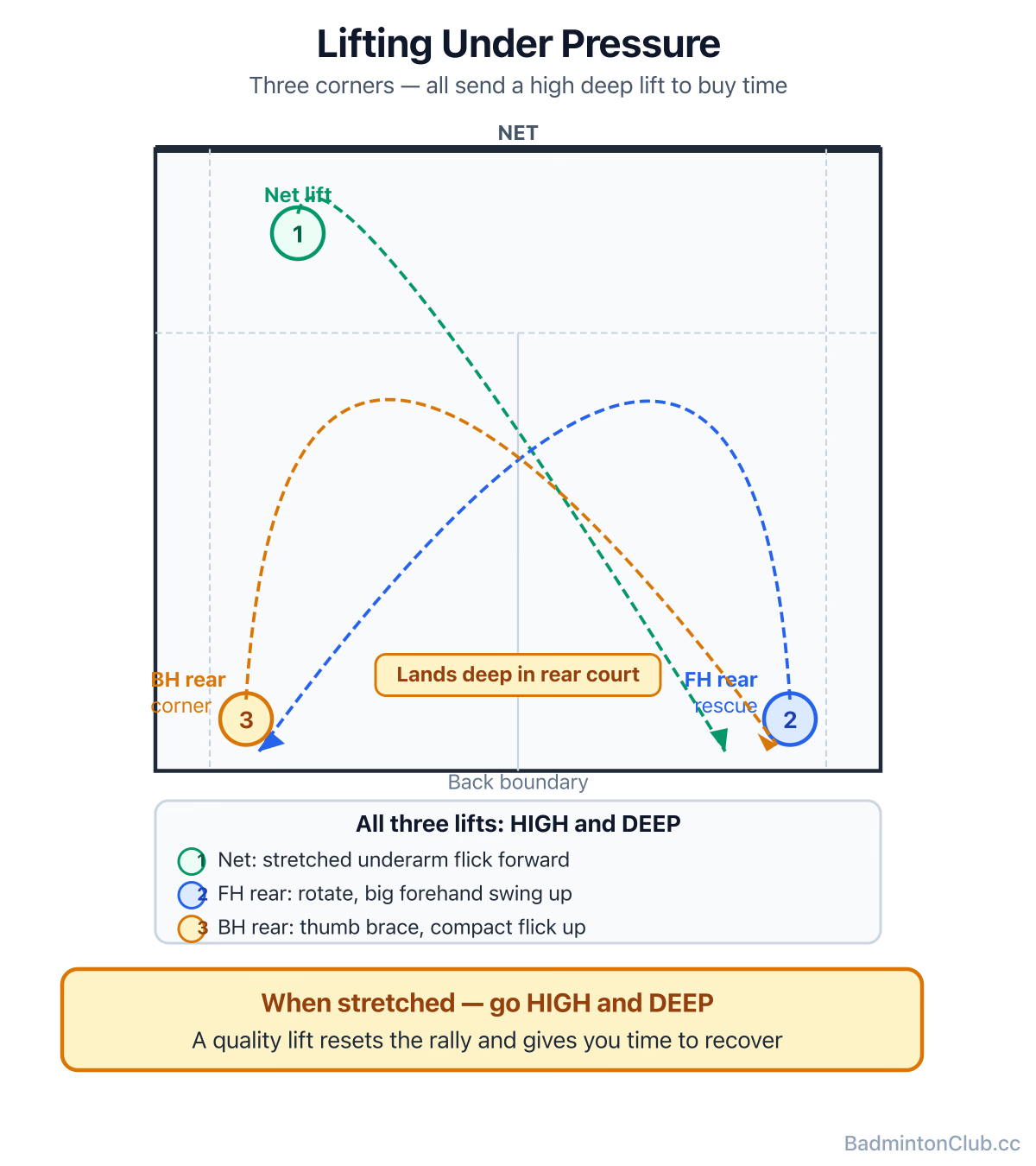
Master the pressure lift — the survival shot that resets a losing rally. Learn the thumb-braced backhand lift, forehand deep-corner rescue, and the "minimum lift" principle that keeps you in the point when you're scrambled and stretched.
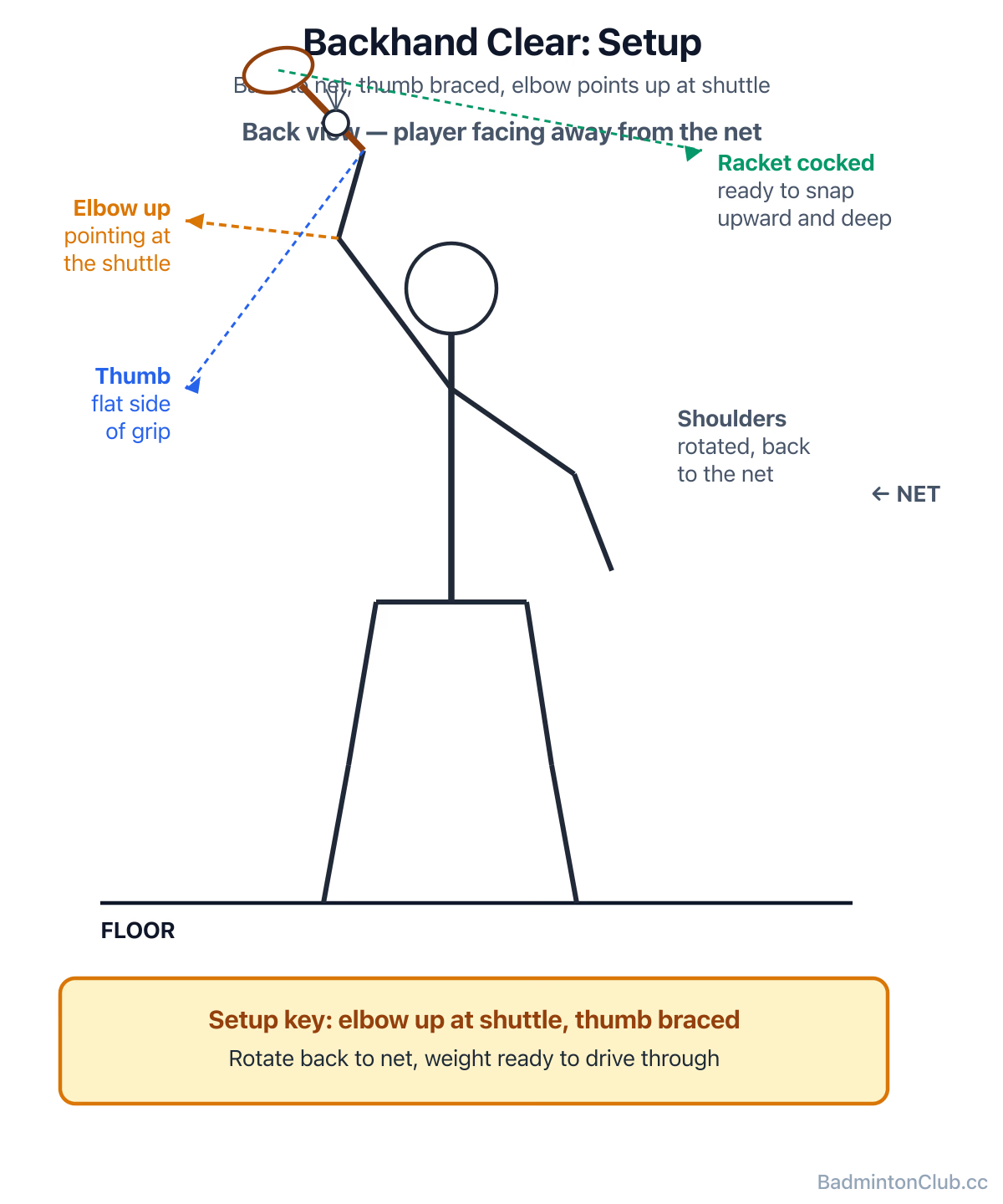
The backhand clear is the shot that exposes every player who hasn't drilled it — a thumb-braced grip, back to the net, and a sharp late forearm snap are what turn a panicked scoop into a genuine reset. This guide covers grip, footwork, the supination snap that creates length, common faults, and a focused drill to build consistency from your backhand rear corner.
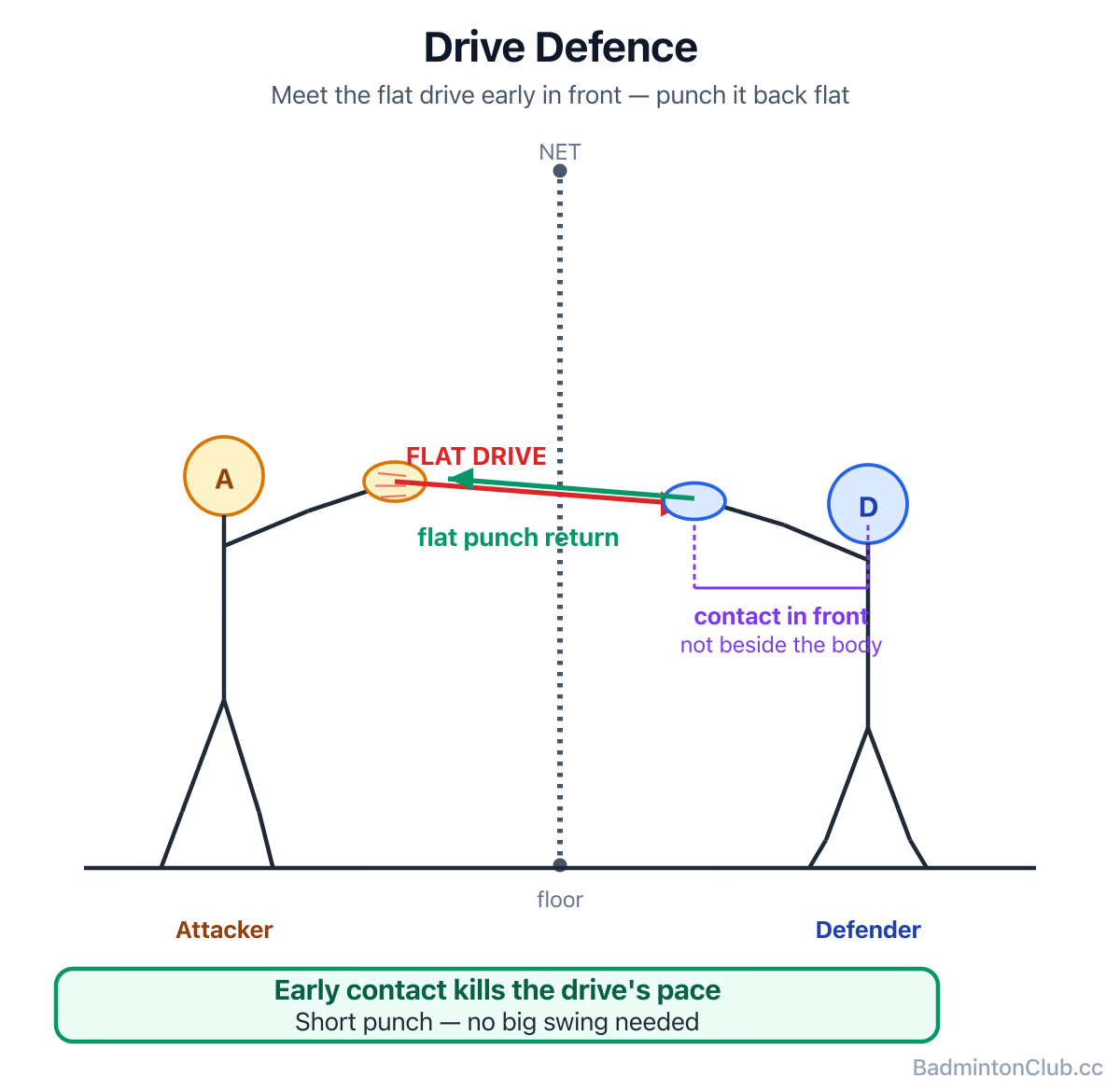
Drive defence turns fast, flat rallies in your favour by meeting the shuttle early and redirecting it rather than lifting. This guide covers drive exchanges, angle redirection, scramble recovery, the defensive dive, and the cross-court "wrong-foot" window — practical technique for club and intermediate players who want to stop being pinned on defence.
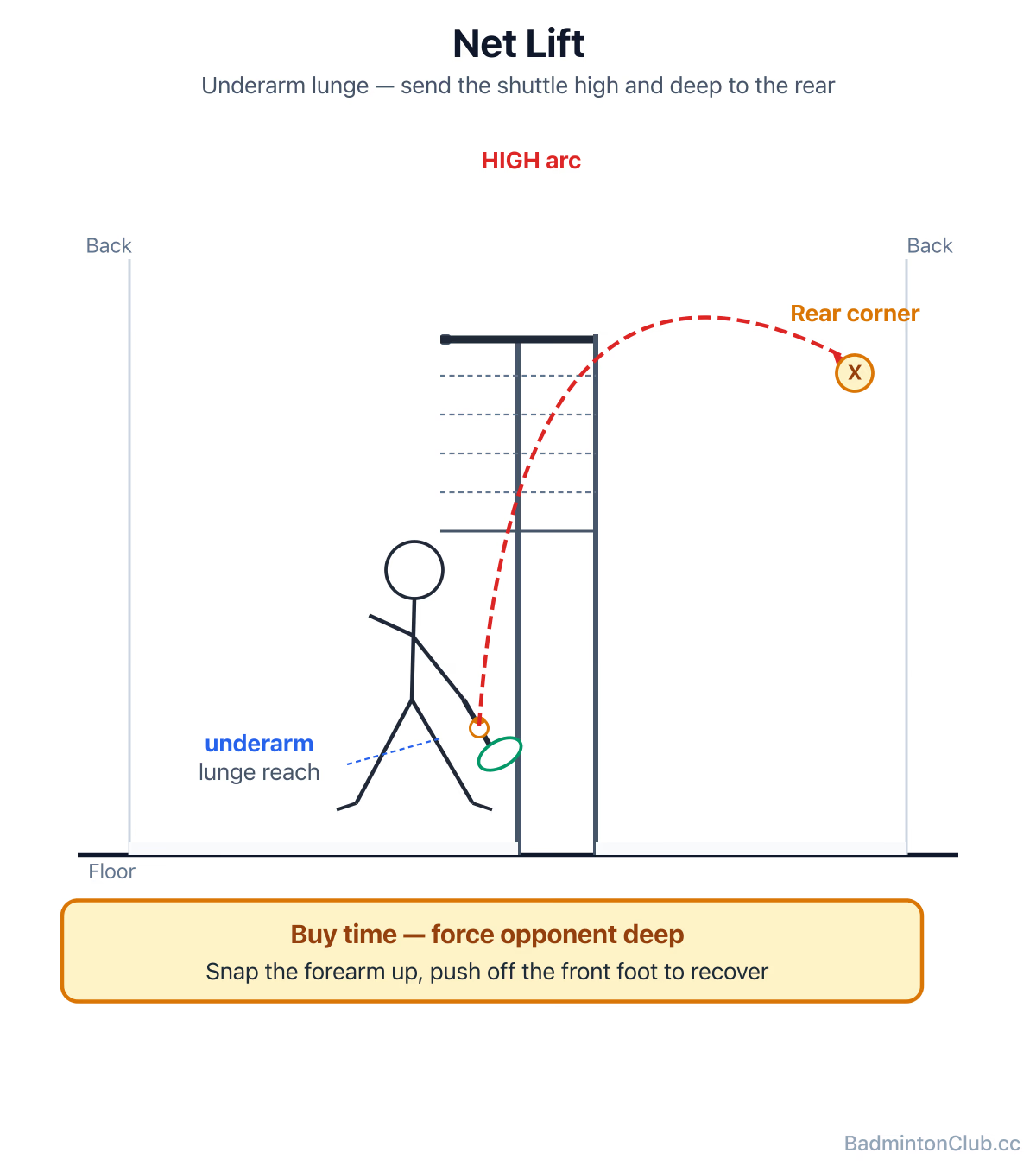
The net lift (underhand clear) is your reset button when a front-court exchange goes against you — hit it high, hit it deep, and recover fast. This piece covers lunge mechanics, forearm snap, straight vs cross-court choice, and a targeting trick for aiming past the back line. Practical and unglamorous, it's the shot that quietly keeps you in rallies you have no business still being in.
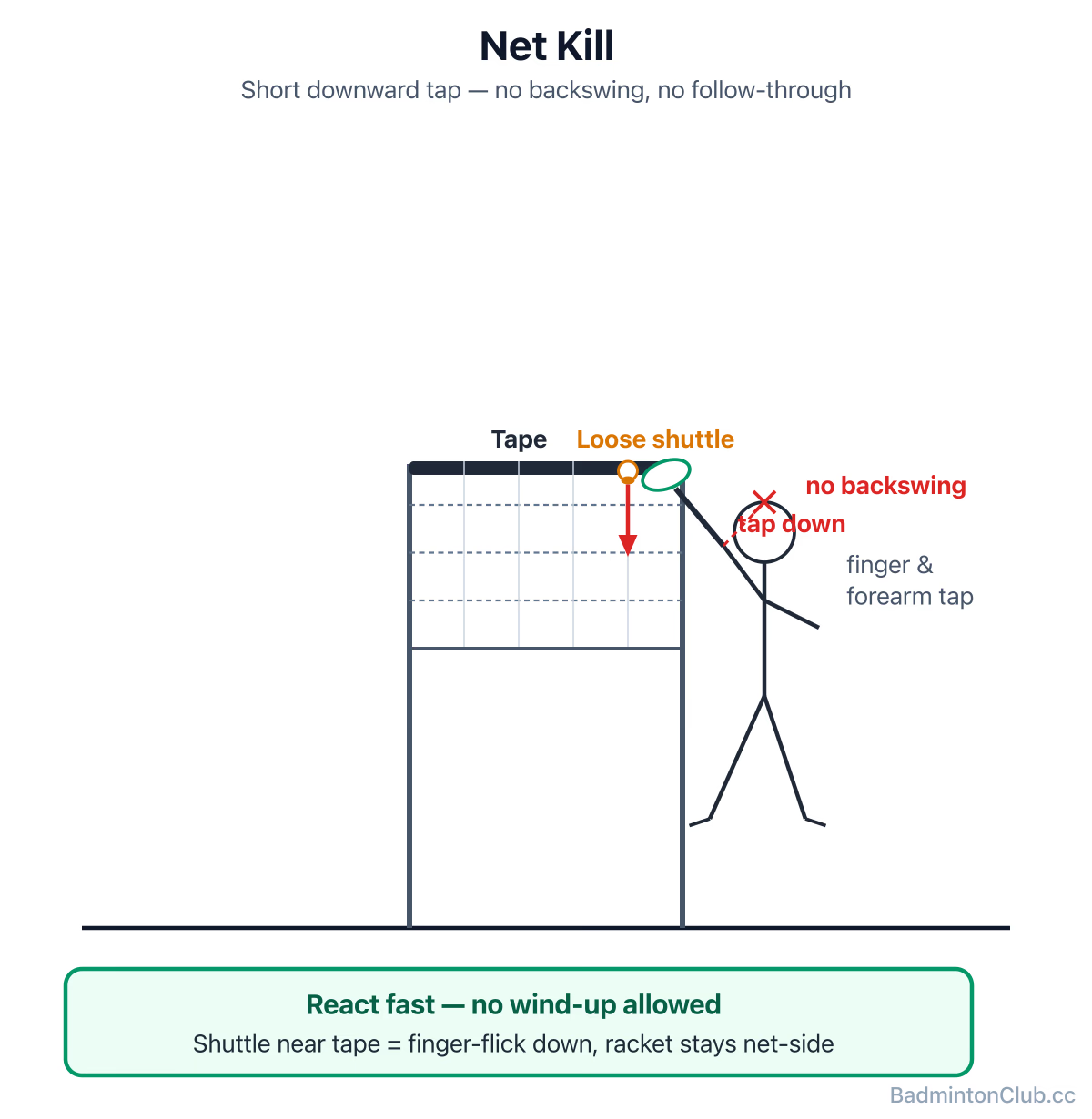
Master the net kill and brush kill — the short, snapping strokes that turn loose shuttles near the tape into instant winners. Covers technique, the sideways brush for tight positions, net tap drills to build finger speed, and the two errors (over-swing and hesitation) that give easy points away. A must-read for doubles players.
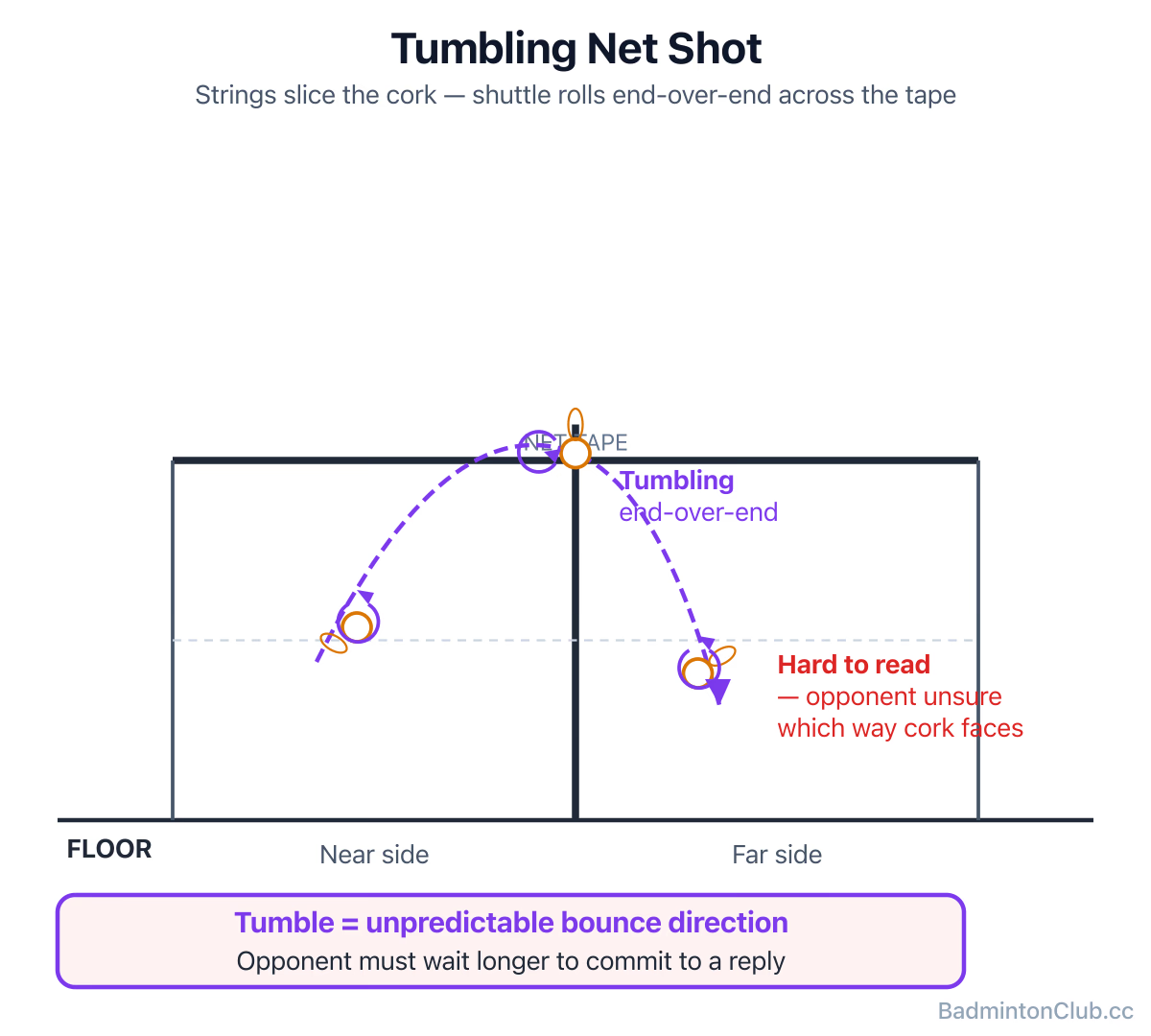
Master the spinning net shot by learning to slice across the cork with soft hands and high contact. This guide covers forehand and backhand technique, the cork-slicing detail most players miss, a drill to groove the tumble, and why the hum you hear — or don't hear — is your best diagnostic tool.
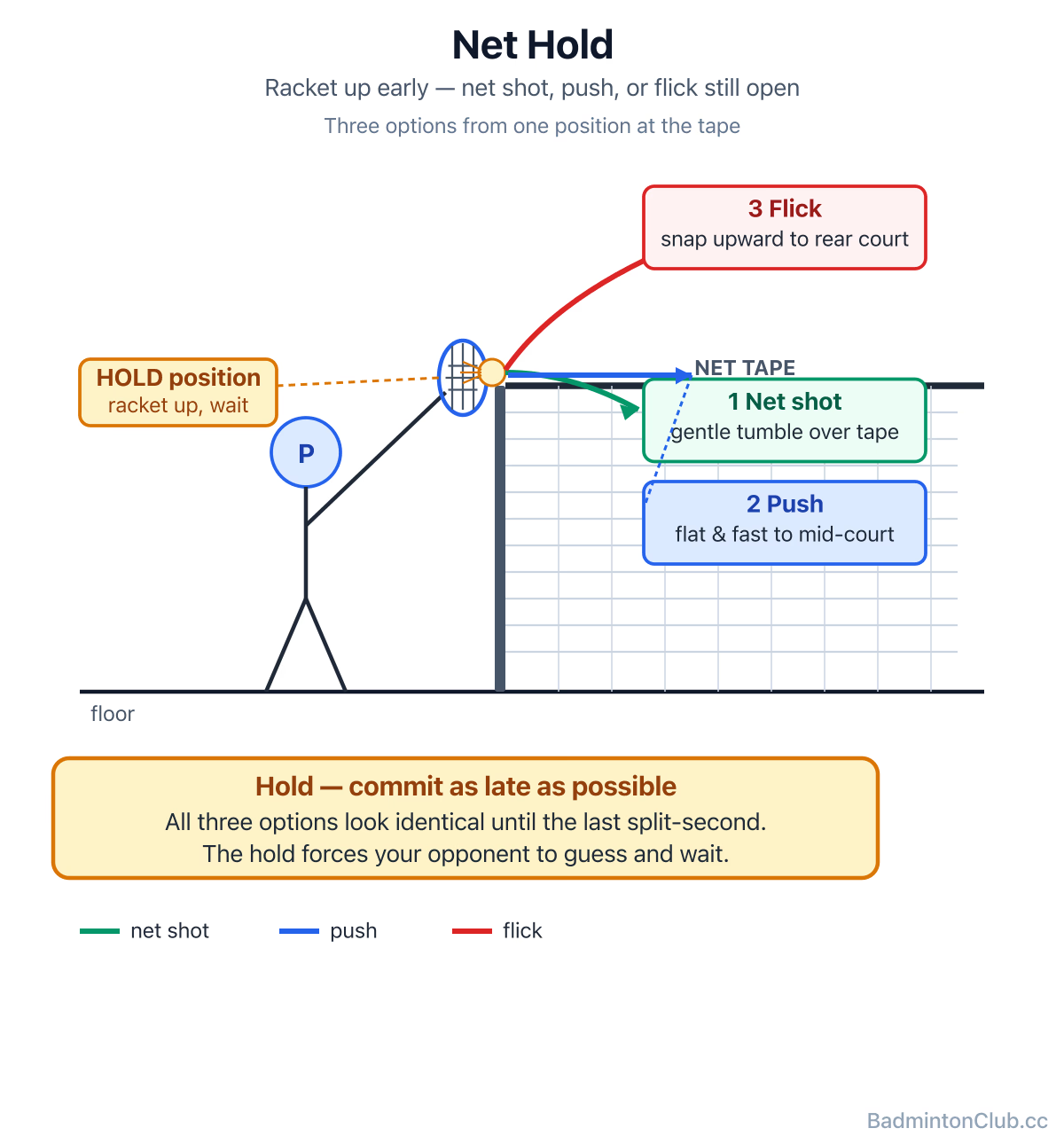
Master deceptive net shots in badminton by learning the hold-and-flick, deceptive push and cross-court flick. Taking the shuttle early keeps every option alive, letting you freeze opponents at the net without needing power or athleticism — just soft hands, a racket-up position and the patience to commit last.
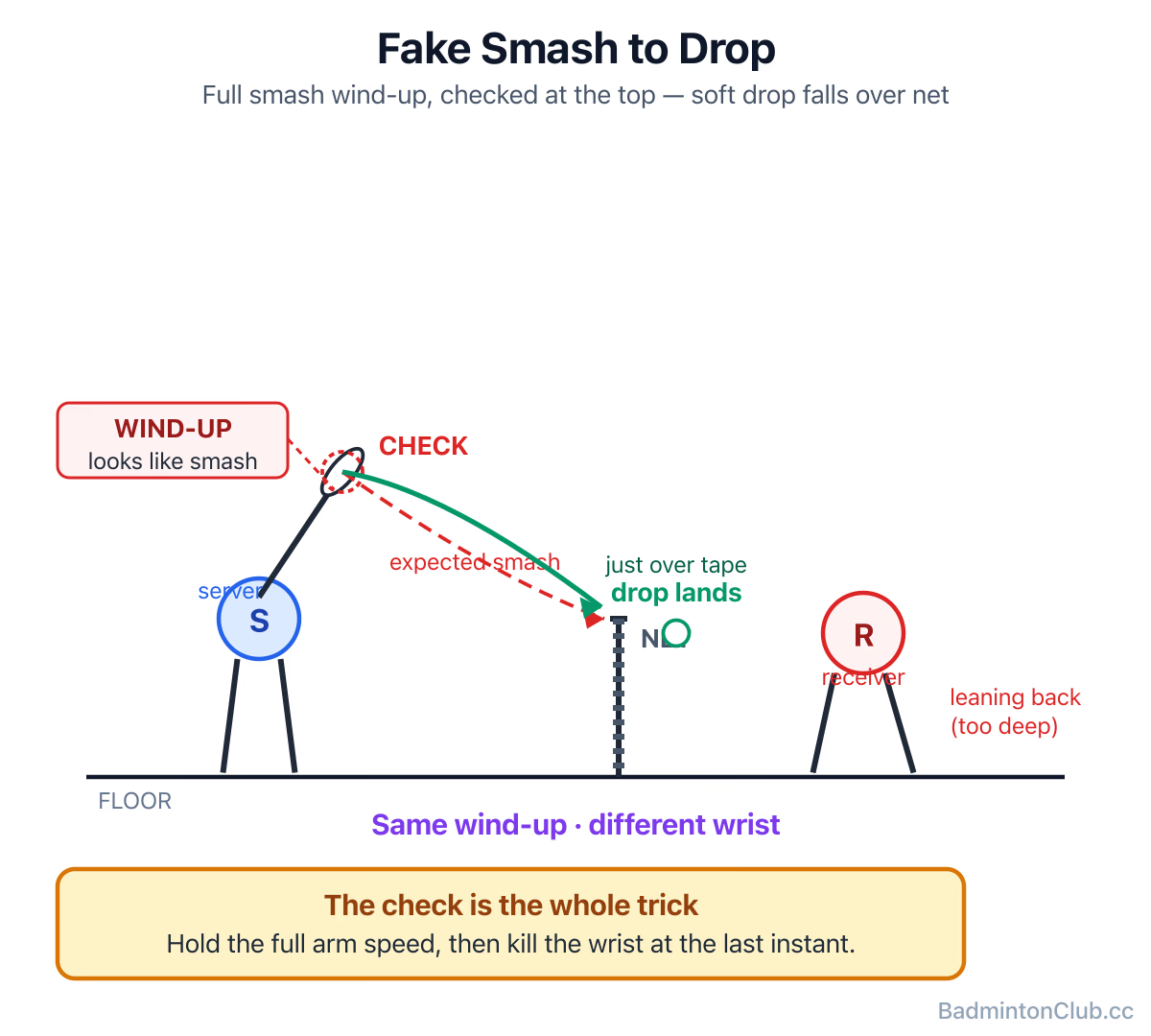
Master the fake smash drop, check smash, and stop drop — three deceptive overhead shots that weaponise the same smash wind-up to freeze defenders. Covers the hold technique, how to hide deceleration, the stop drop's soft-hands mechanics, when to deploy fakes (and how often), and why the threat of a real smash is the foundation for all of it.
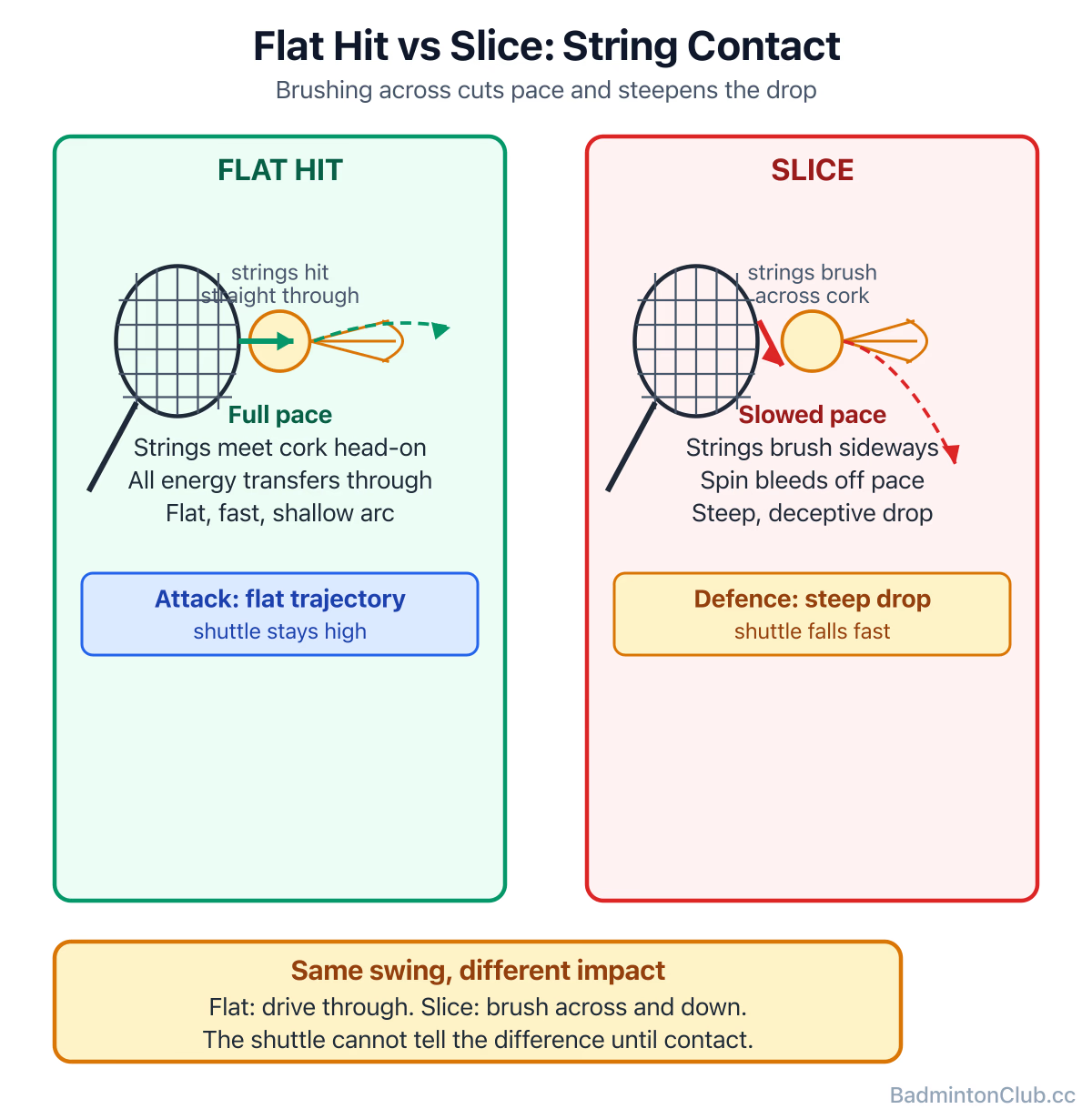
Learn how to hit deceptive slice and reverse-slice drop shots in badminton by brushing across the shuttle with a full smash-speed arm. Covers the straight slice, the cross-court reverse slice, common giveaways like the slowed arm, a groove drill for both corners, and string tension tips — ideal for intermediate players ready to add the most disguised drop in the game.
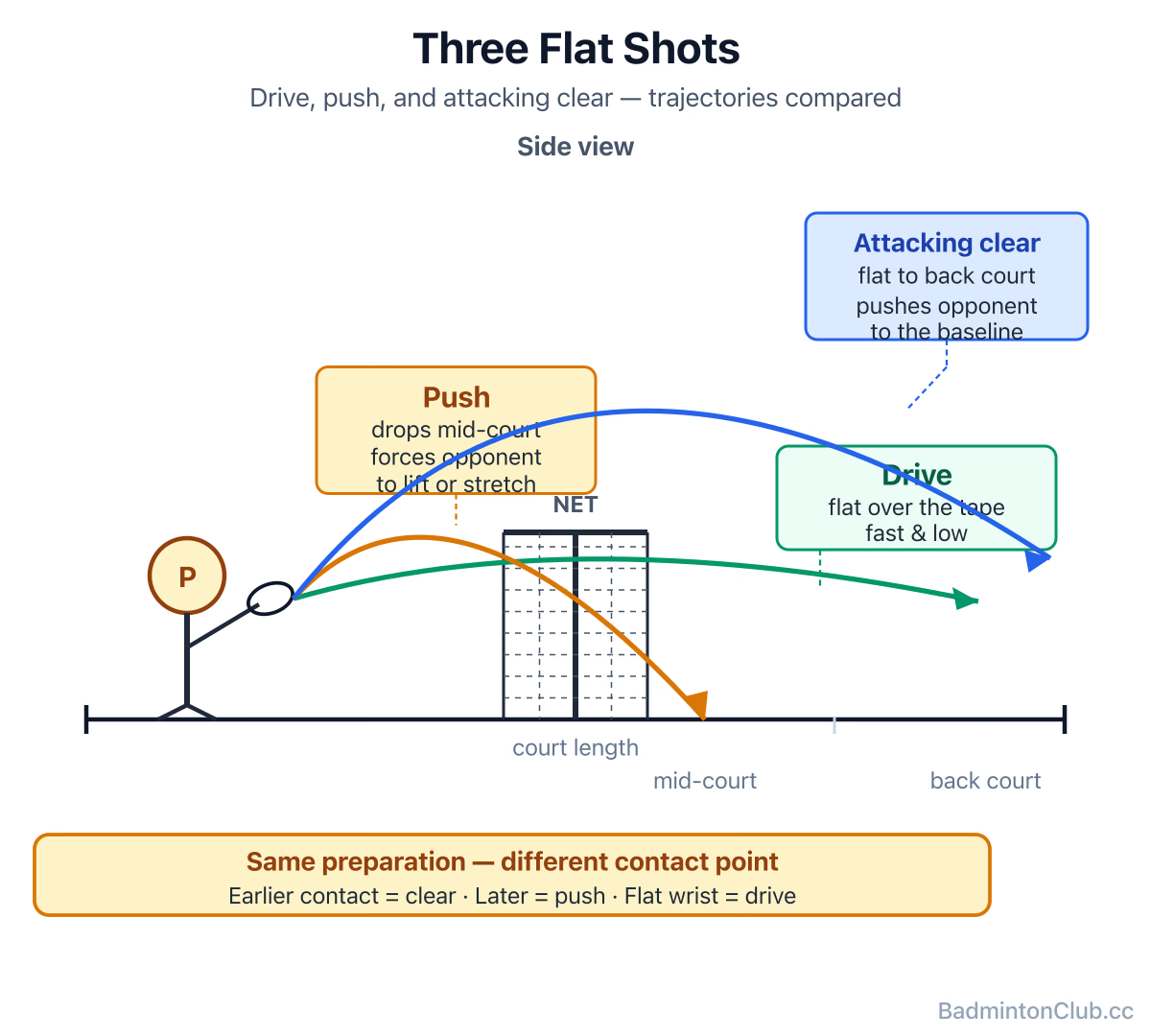
Drives, pushes and the attacking clear are badminton's flat-game weapons — they take time away instead of hitting down. This guide covers the mechanics of each shot, when to use them in doubles, and the two-tempo warm-up habit that sharpens your fast-exchange hands.
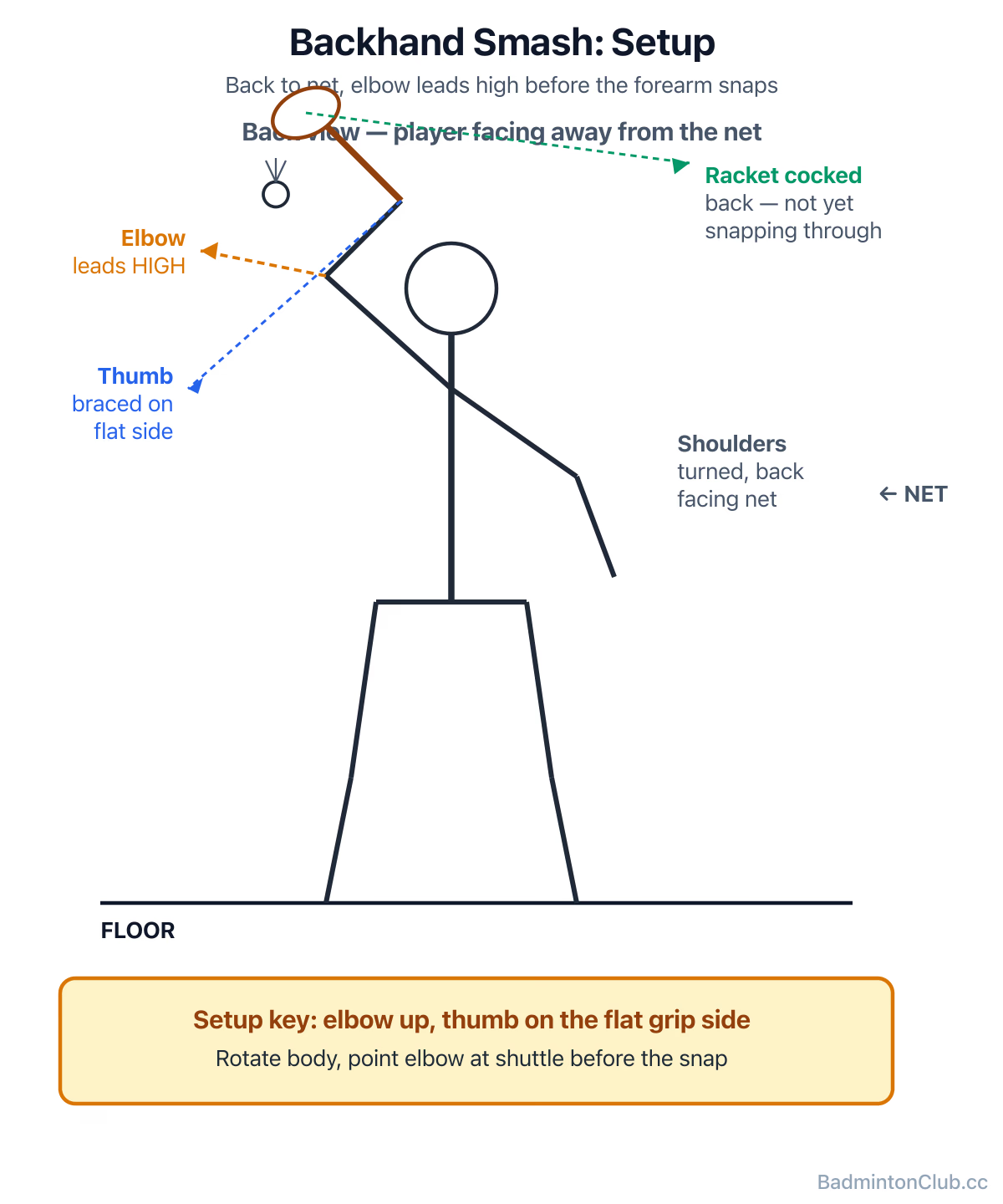
The backhand smash is one of the hardest shots to hit with real pace — almost all the power comes from a sharp forearm supination snap at the top of the reach. This guide covers the mechanics, the grip, the most common faults (swinging with the whole arm, taking the shuttle too late), and the honest truth about when a backhand clear is the smarter choice.
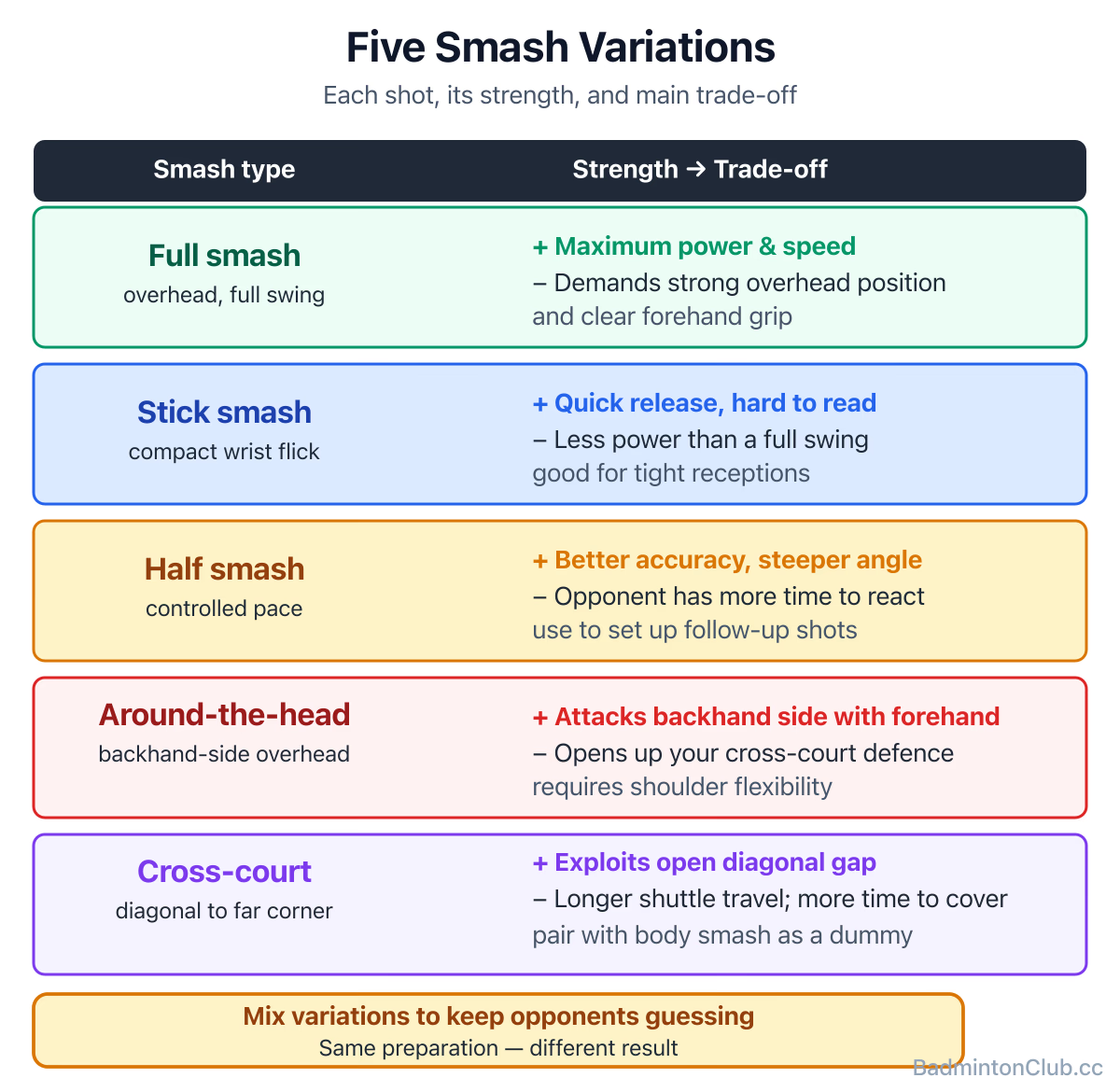
Master five badminton smash variations beyond full power: stick smash uses a compact wrist snap to disguise timing, half smash trades speed for a steeper angle, around-the-head keeps your forehand on the backhand side, body smash jams opponents at the hip, and cross-court smash surprises when the straight one is respected. Includes shot-mix rules and common coaching fixes.
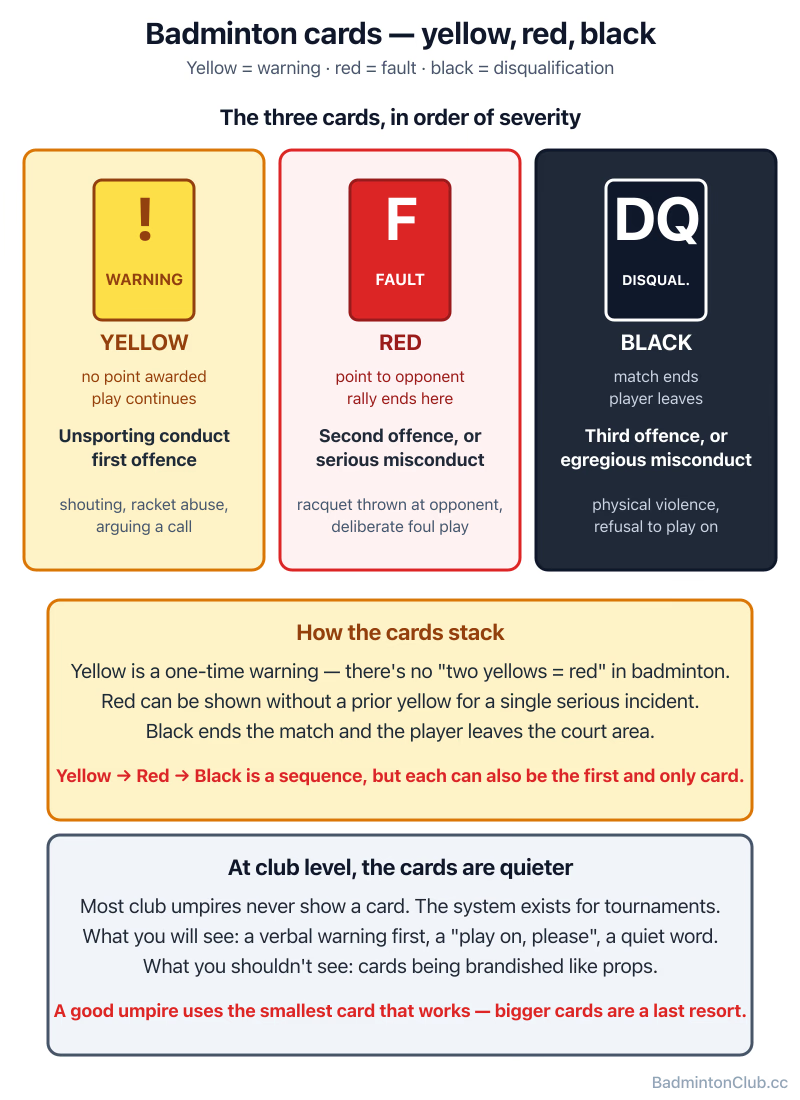
Badminton's yellow, red, and black cards are issued for misconduct — not mistakes. A yellow card is a warning, a red card hands the opponent a point, and a black card means disqualification. This guide covers what triggers each card, which official issues it, and why tournament players need to know the difference between the umpire and the referee.
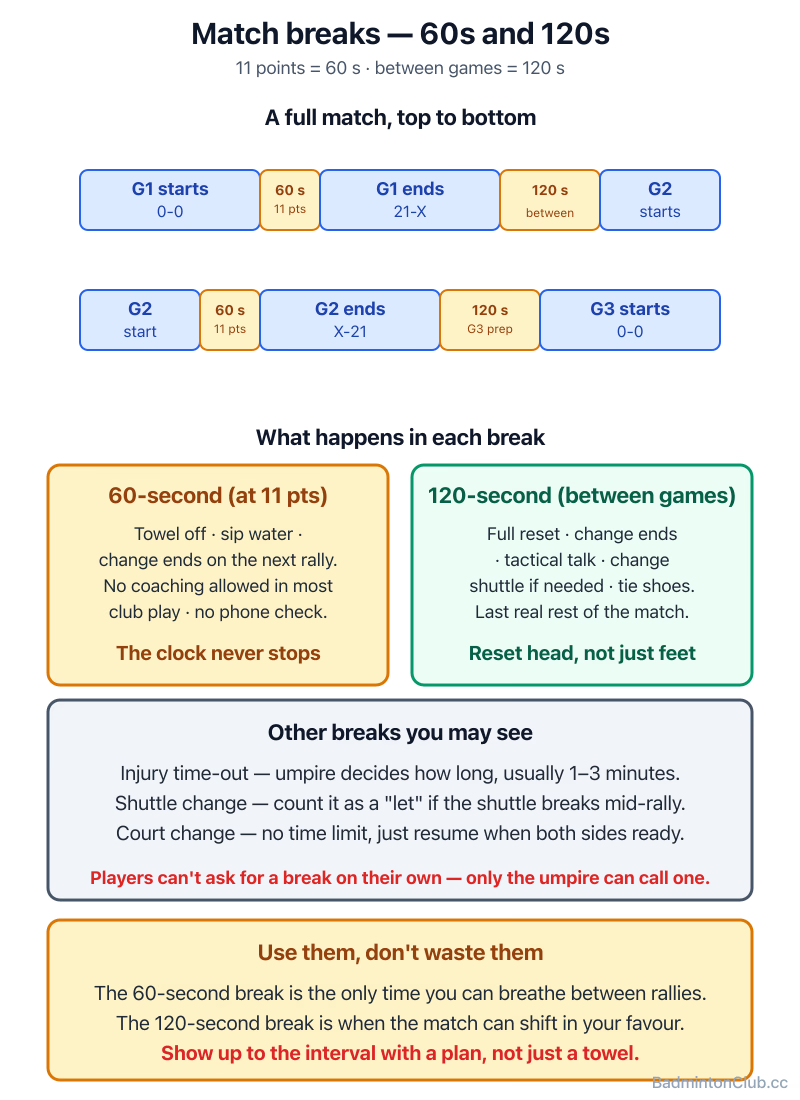
Official BWF interval rules explained: a 60-second break when either player hits 11 points, a 120-second break between games, and when coaches are allowed to give advice. Covers on-court coaching rules, whether players can leave the court, and where to find the full BWF Laws of Badminton PDF — useful for players and umpires at any level.
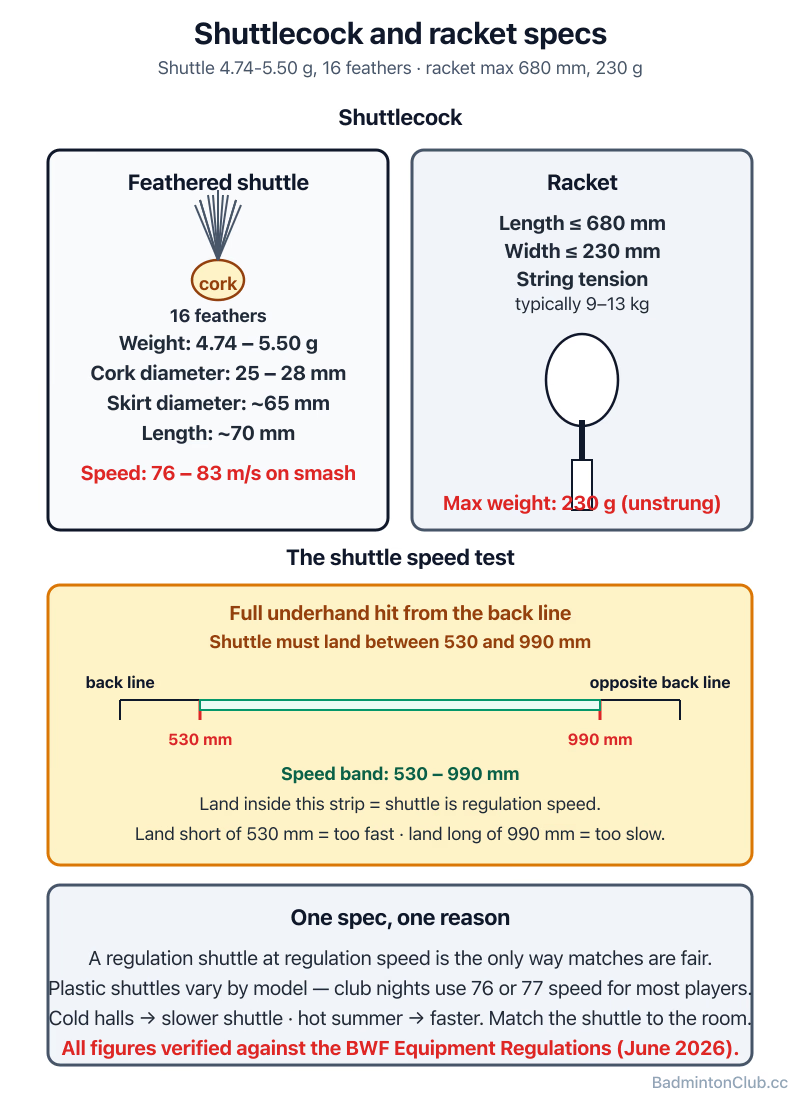
Official BWF specs for shuttlecocks and badminton rackets: a legal shuttle has 16 feathers, weighs 4.74–5.50 g, and must pass the speed test by landing 530–990 mm short of the far back boundary. Racket frames cap at 680 mm long and 230 mm wide. Covers why shuttle speed numbers matter and how to run the speed test before a match.
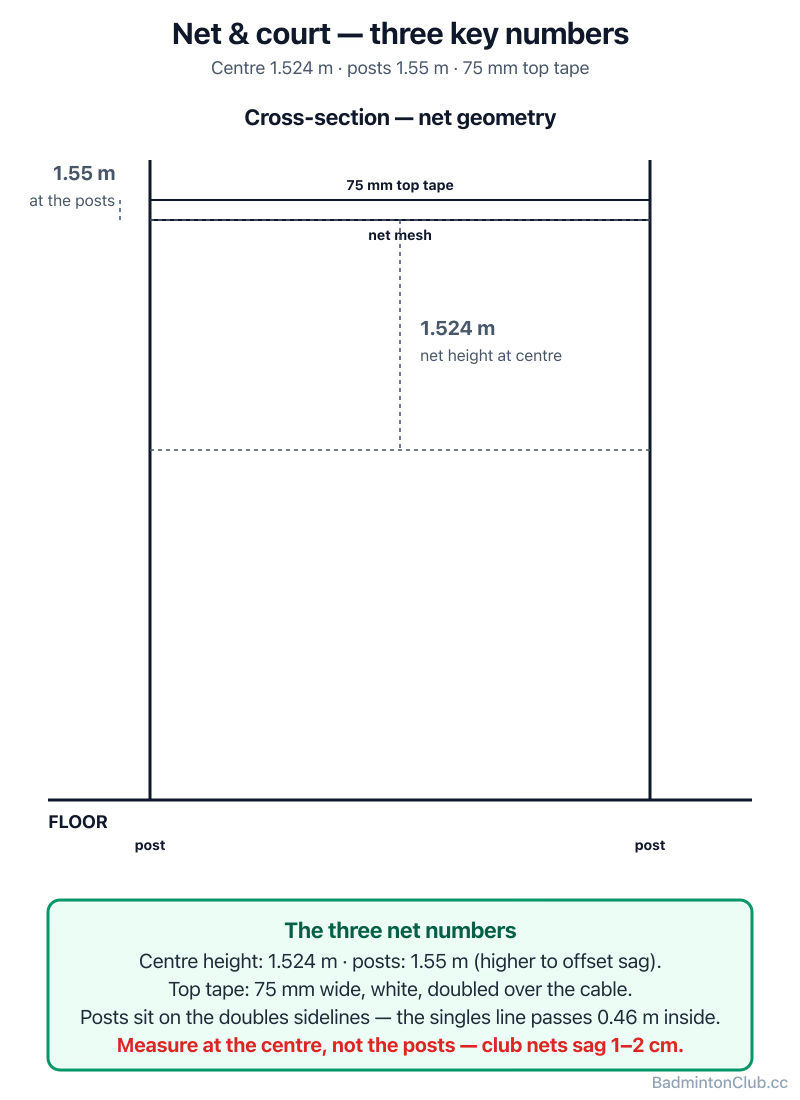
Badminton net height is 1.524 m at the centre and 1.55 m at the posts — most club nets hang too low because players measure the posts and ignore the sag in the middle. This guide covers official BWF net dimensions, post placement rules, court line widths, and a quick setup checklist to make sure your court is regulation before you play.
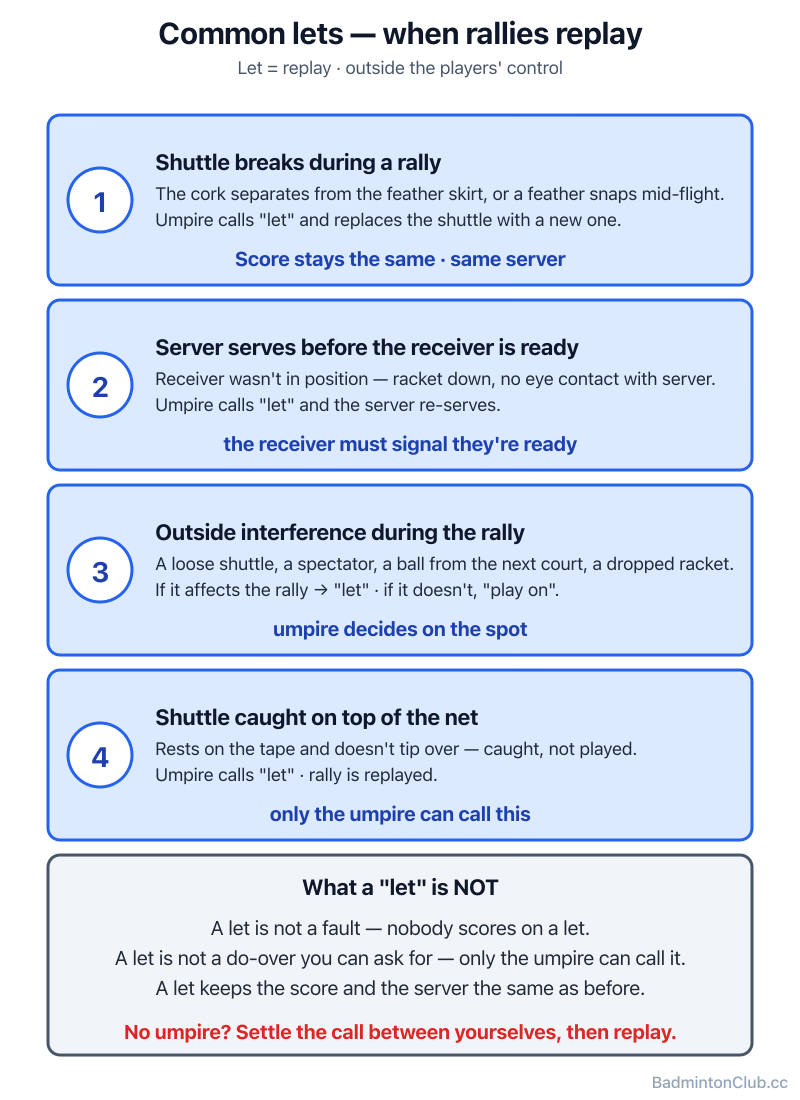
A let in badminton replays the rally with no score change and the same server serving again. This guide covers every situation that triggers a let — broken shuttle, server too early, outside interference — and clears up a common misconception: a net-cord serve is not a let in badminton, it's live play.
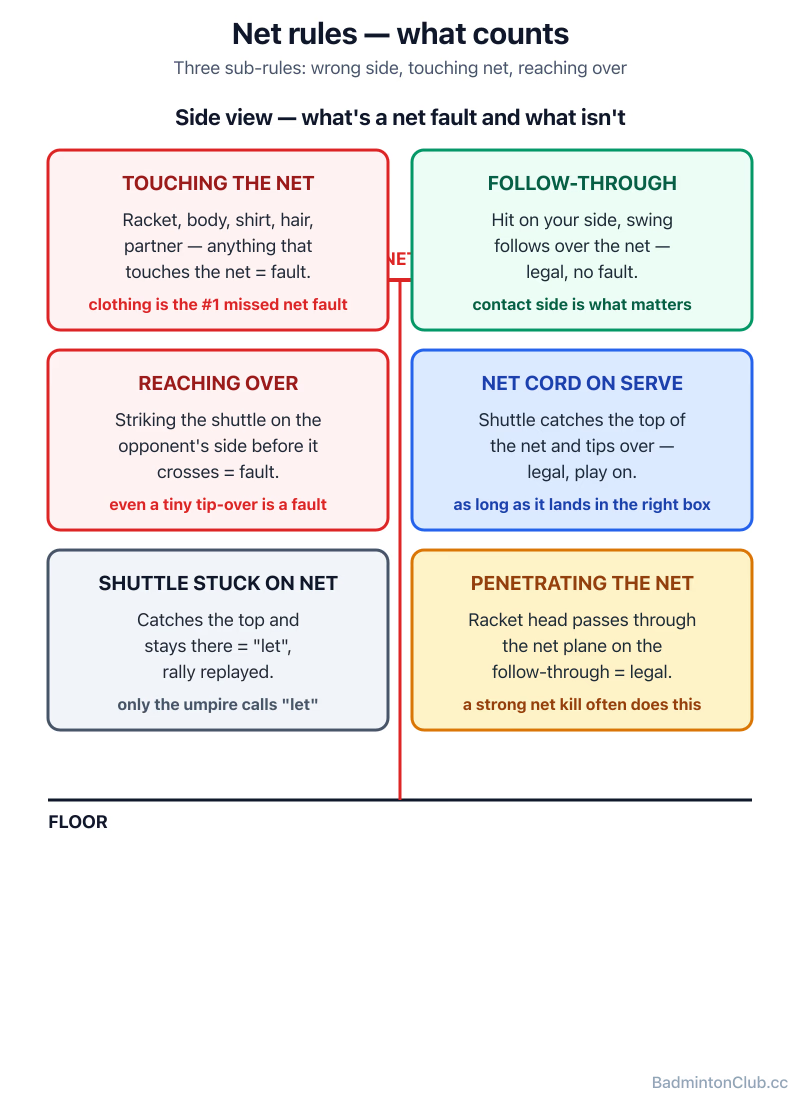
Touching the net with your racket, body, or clothing during a rally is an instant fault in badminton — but your racket can legally follow through over the net after you've hit the shuttle on your own side. This guide explains exactly when a net contact costs you the point, what counts as reaching over illegally, and covers the most-missed rule: clothing faults.
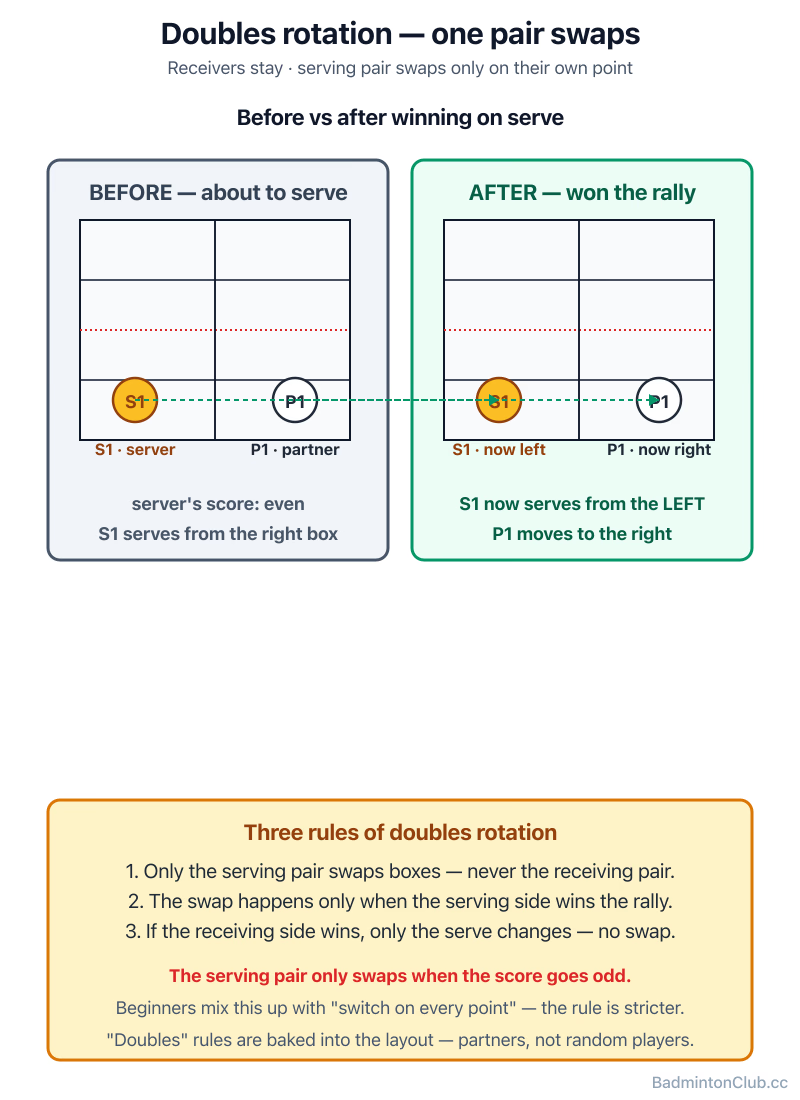
Understand who serves next in badminton doubles and how the rotation works under rally scoring. This guide covers the one rule that resolves most confusion — your side only swaps courts when you score on your own serve — and walks through the FAQ every club player asks.
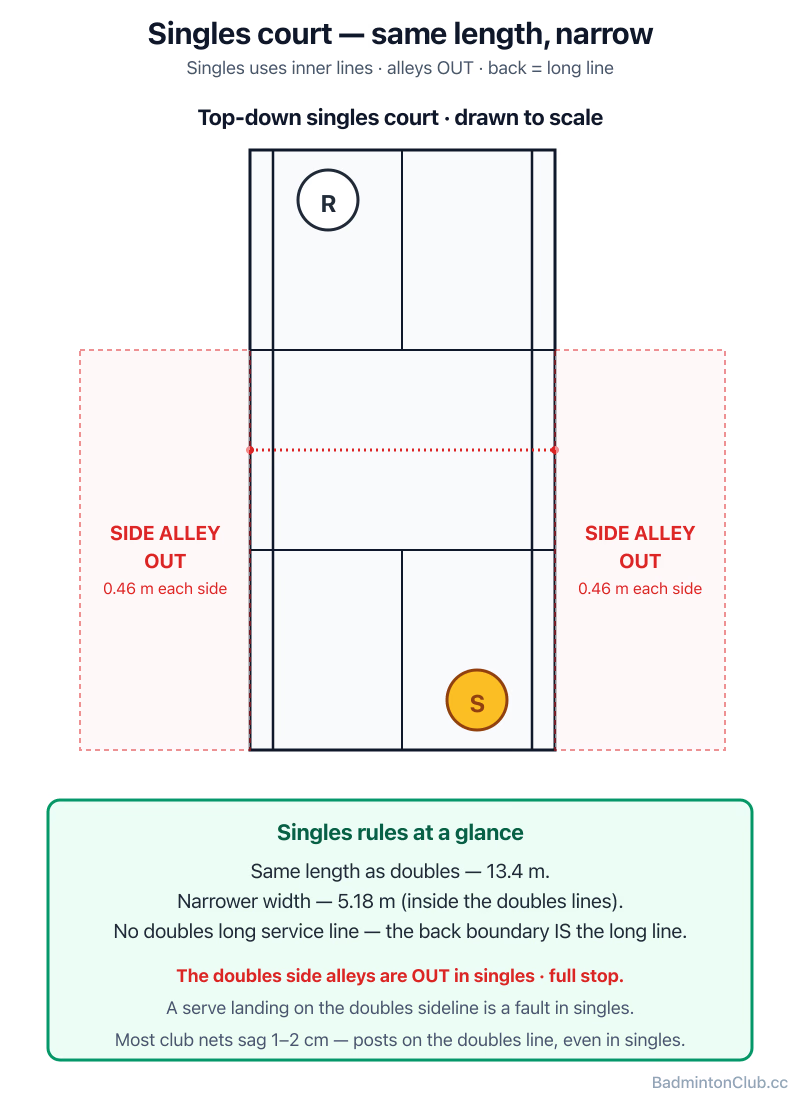
Badminton singles uses the narrower inner court (alleys out) but the full length — including on the serve. Learn which lines are in, how the serve direction works, and the key ways singles differs from doubles in court width and serving rules.
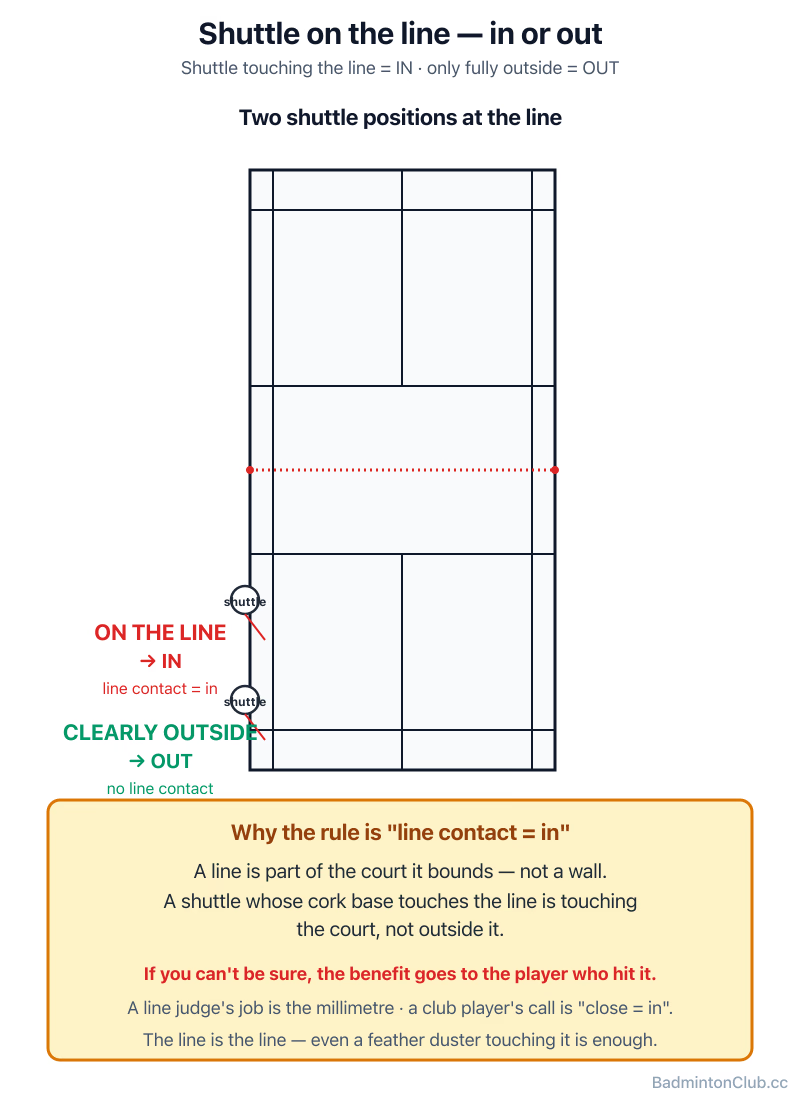
In badminton, any shuttle that touches a boundary line counts as in — the rule is decided by where the base first contacts the floor, not where it skids or leans afterward. This guide explains the exact boundary rule, how line judges apply it, and why singles and doubles use different court lines.
Can you smash a serve in badminton? The server cannot — a serve must go upward and underarm below 1.15 m — but the receiver can absolutely attack or smash a loose serve. The flick serve is legal provided it still meets those contact rules. This piece covers what the server is and isn't allowed to do, why doubles serves hug the net, and when the receiver can pounce.