Forehand vs Backhand in Badminton: Differences, When to Use Each and How to Improve Your Weak Side
8 June 2026 · Badminton Fans
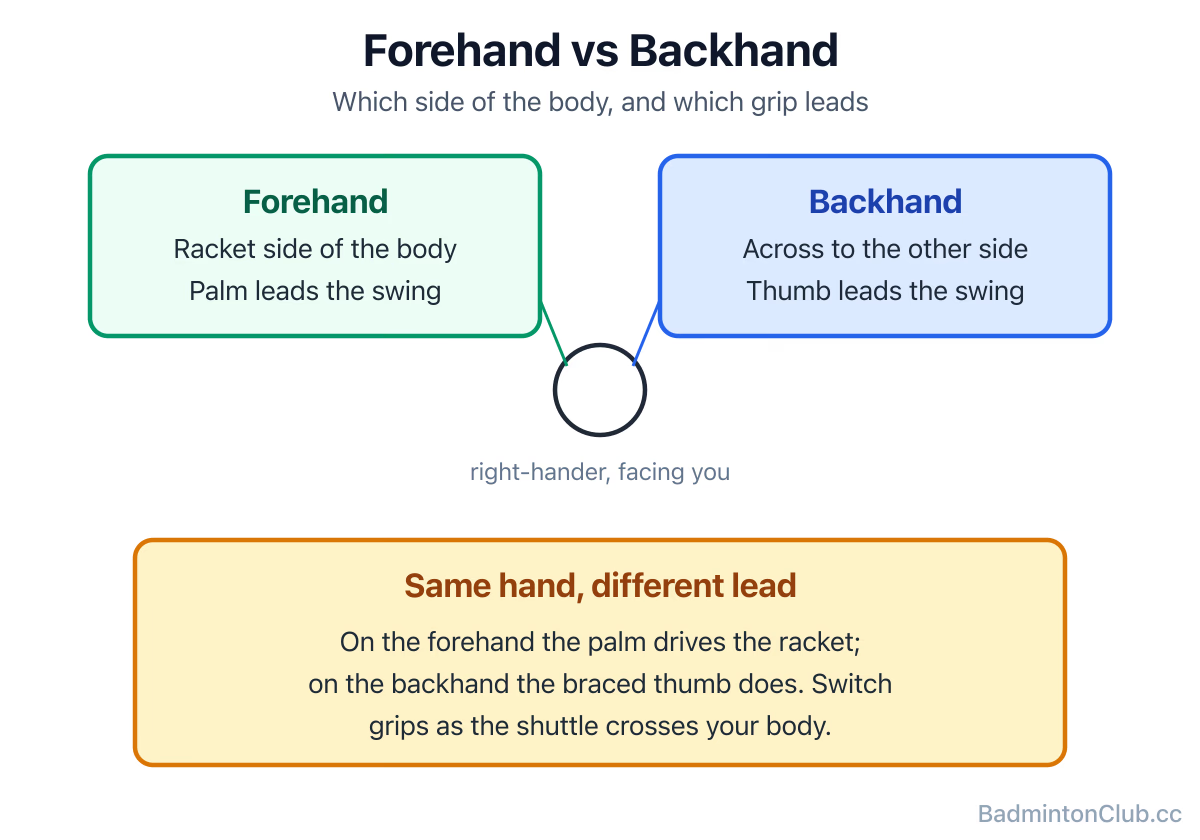
In badminton, a forehand is hit on your racket-hand side with the palm leading, using the handshake grip; a backhand is hit on the opposite side with the back of your hand leading, using the thumb grip. The forehand is more powerful and natural; the backhand is harder but essential for shots you can't run around. Most beginners have a strong forehand and an avoided backhand — and good opponents will exploit that gap relentlessly.
The core difference
- Forehand — racket-hand side of your body, palm facing the direction of the hit, handshake grip. More power, bigger range, your default for overheads.
- Backhand — opposite side, back of the hand leading, thumb grip for leverage. Harder to generate power, but unavoidable for shots that come to your non-racket side quickly.
The forehand is stronger because your body and forearm rotate naturally into it. The backhand fights against that, which is why even pros have a weaker backhand clear than forehand.
When to use each
Use the forehand whenever you have time to get behind the shuttle — which is most of the time, and especially for powerful overheads like the clear and smash. Use the backhand when the shuttle comes fast to your non-racket side and you can't rotate around it: quick drives, net shots on the backhand side, and defensive returns under pressure. In short: forehand when you can, backhand when you must.
The round-the-head shot: avoiding your weak backhand
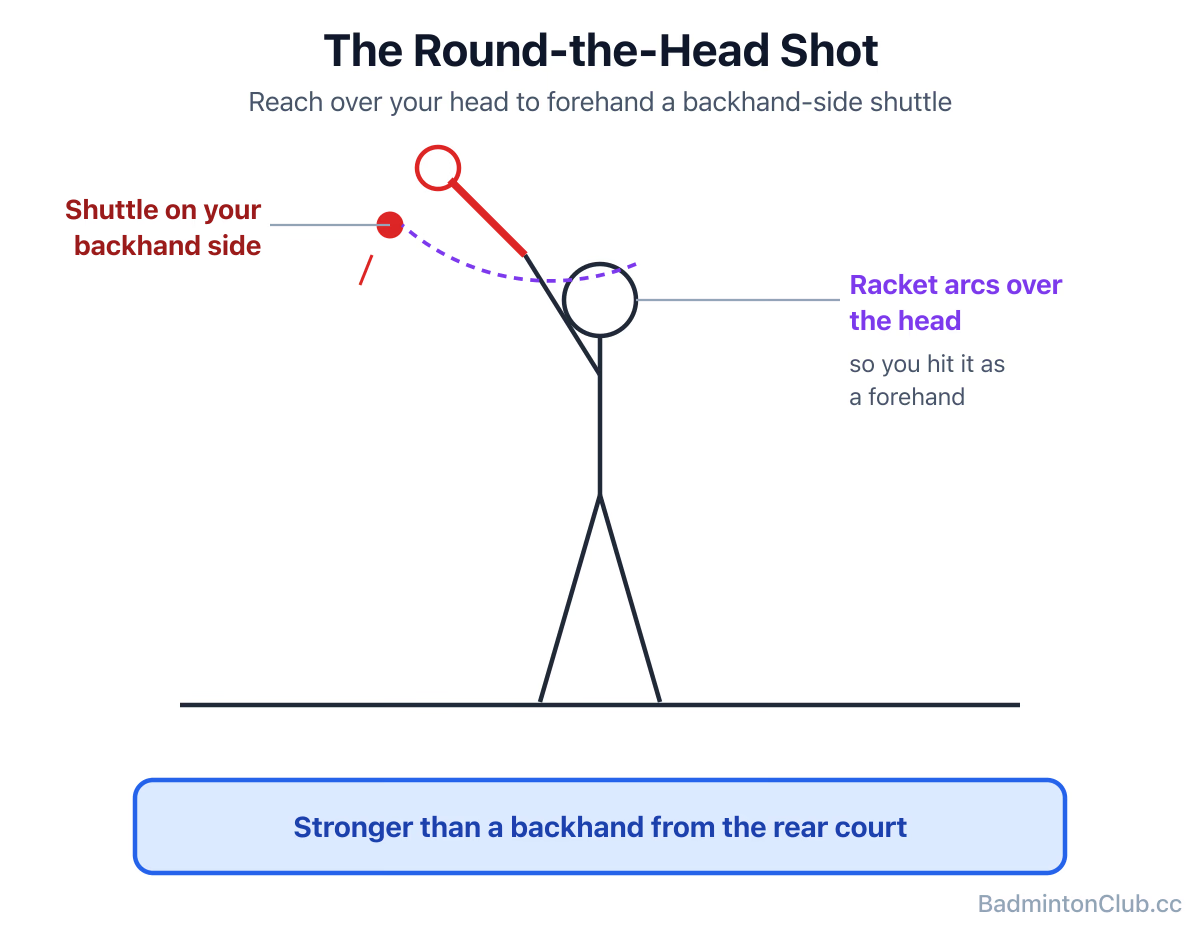
Here's a tactic that surprises beginners: top players hit a huge number of shots that arrive on their backhand side as forehands, by leaning and reaching over their head — the round-the-head forehand. It lets you use your stronger, more powerful forehand on shuttles that technically came to your backhand. It's not "cheating" your weakness; it's smart, and it's why a monster backhand clear is less essential than beginners fear. Footwork lets you choose your stronger side.
Don't just hide your backhand forever
That said — and this is the honest bit — you can't round-the-head everything. A fast drive or a deep shuttle into the backhand rear corner will catch you, and if your backhand can only dribble the shuttle to mid-court, a decent player simply keeps hitting there until you crack. I've watched countless club players with a lovely forehand get dismantled by one repeated shot to the backhand corner. The fix isn't glamorous: drill backhand drives and net shots (the achievable ones) until they're solid, and slowly build toward the backhand clear. You don't need a world-class backhand — you need one good enough that opponents stop targeting it for free points.
A weak-side drill
Have a partner feed shuttles only to your backhand side: net shots, drives, then deeper ones. Play them as backhands (no running around) to build the actual stroke, then mix in round-the-head forehands so you learn to choose. Twenty minutes a week on your weak side does more for your game than another hour on your already-good forehand.
The geometry you're not thinking about
Here's a spatial insight that helped me more than any backhand drill: the backhand corner is not equally dangerous from both sides of the court. A shuttle to your backhand when you're in the back-left corner (for a right-hander) is genuinely hard — you're far from the shuttle, your body is in the way, and the angle is tight. But a shuttle to the same backhand when you're in the centre of the court is much easier to handle, because you can take a step and play a round-the-head forehand, or you have the angle to slice a cross-court backhand. Good players don't just have a better backhand; they understand positioning geometry and minimise how often they're caught in the dead zone. Watch how experienced players position themselves a step toward their backhand side during a rally — not enough to leave the forehand wide open, but just enough that the backhand corner is never a full stretch away. It's a subtle adjustment, but over a match it saves dozens of weak backhand returns. You don't need to fix your backhand if you never get caught in the position where it's your only option.
FAQ
- Q: What is the difference between forehand and backhand in badminton? A forehand is hit on your racket-hand side with the palm leading and a handshake grip; a backhand is hit on the opposite side with the back of the hand leading and a thumb grip. Forehand is more powerful, backhand harder.
- Q: Why is the backhand so hard in badminton? Your body and forearm rotate naturally into a forehand but against a backhand, so generating power is harder. The backhand relies on thumb leverage and sharp forearm rotation instead of body rotation.
- Q: What is the round-the-head shot? Reaching over your head to play a shuttle on your backhand side as a forehand. It lets you use your stronger forehand instead of a weak backhand, and top players do it constantly.
- Q: Should I avoid my backhand? Use the round-the-head forehand when you can, but don't hide your backhand forever — fast drives and deep backhand-corner shots will catch you. Build at least a solid backhand drive and net shot so opponents can't target it for free.
- Q: How do I improve my backhand? Drill the achievable backhand shots first (drives and net shots) with the thumb grip, then progressively work toward the backhand clear. Regular focused reps on your weak side, even 20 minutes a week, make a big difference.
- Q: Which should beginners focus on first, forehand or backhand? Build a reliable forehand first since it's more natural and powerful, but start your backhand early enough that it never becomes a glaring weakness opponents can exploit.
Forehand and backhand are the two sides of every badminton stroke, and most beginners are far stronger on one. This guide explains the difference in grip and technique, when to use each, the round-the-head forehand that lets you avoid a weak backhand, and how to actually improve your backhand instead of hiding it forever — because the players who fix their weak side stop getting picked apart in the back corner.