How to Force Unforced Errors in Badminton: Patience, Pace & the Long Rally
7 June 2026 · Badminton Fans
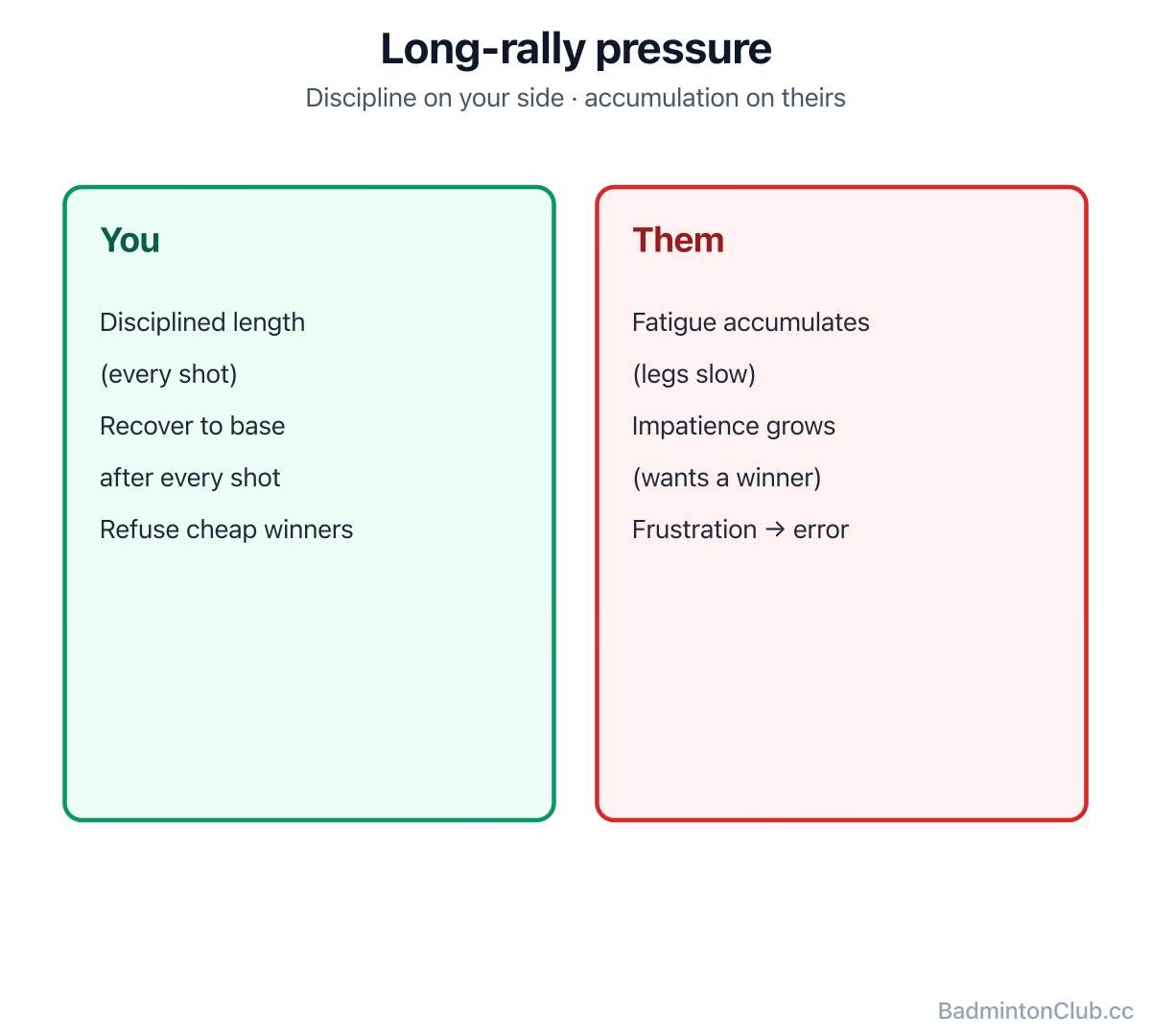
**You force unforced errors by extending the rally past the opponent's comfort window — keep every shot disciplined (correct length, correct depth, recovered base), refuse cheap winners, and let them hit the difficult one — while applying deliberate pressure by varying pace, targeting their weakness relentlessly, and lifting the tempo the moment they're settling into a rhythm.** The most boring strategy in badminton is also the most effective one at every level under "pro": don't lose to yourself, and let them lose to themselves.
The mental model
At any level below the very top, the average rally has more unforced errors than forced winners. The match isn't decided by who hits the most spectacular shots; it's decided by who hits the fewest dumb ones. Accept that and the tactical implication is simple: make the rally last until the opponent does something rash, and don't gift the rash shot yourself. This is the patience side of singles tactics — and it's a skill, not just a mood.
Specific pressure techniques
- Disciplined length. Every clear to the back tramline; every drop tight to the front service line; every lift high and deep. If your length slips mid-court, you've handed them an easy attack and gifted the rally.
- Pace variation. Slow-fast-slow-fast disrupts their breathing and timing. A predictable opponent settles; a varied one doesn't. (Volume 1's Reading the Game article covers the perception side; this is the application.)
- Target the weakness, relentlessly. Once you've identified the weak corner or weak shot, feed it again and again until they err. Many players think "I've hit there twice, I should mix it up" — wrong. Mix only when they prove they can defend it, not before.
- The deliberate long rally. When you're a touch ahead but tired, extend the next rally — no winners, no risks, just consistent rallying. They're tired too; the pressure of "no easy way out" produces errors.
- Refuse the half-volley. Tempted to swing at a tight shuttle for a winner? Push it instead. Save the swing for when you've genuinely set them up.
Where errors come from
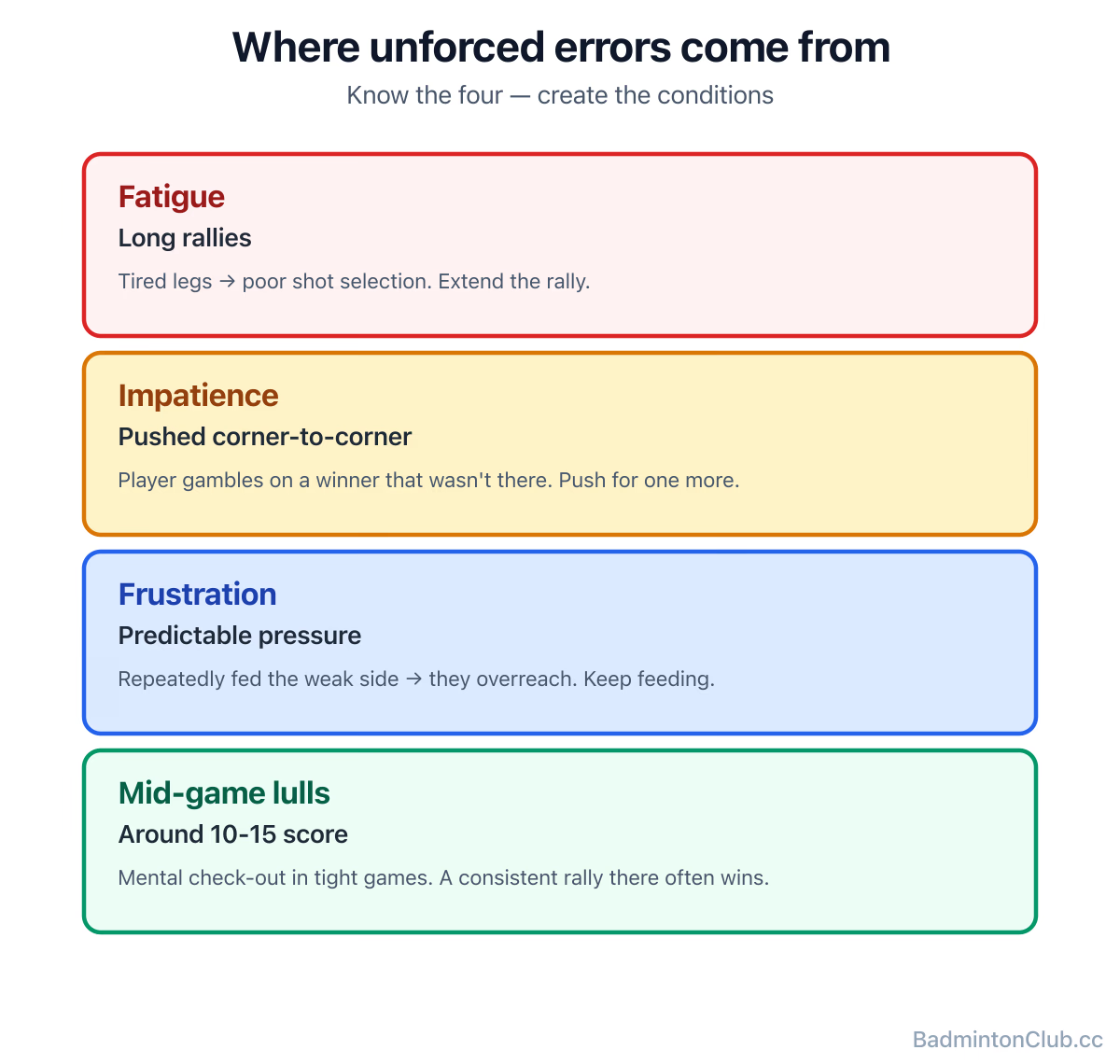
Knowing why opponents err helps you create the conditions:
- Fatigue. Long rallies = tired legs = poor shot selection. Extend.
- Impatience. A player who's been pushed corner-to-corner three times starts gambling on a winner that wasn't there. Push for the fourth corner.
- Frustration at predictable pressure. Repeated targeting of a known weakness causes them to overreach — a too-tight net shot, an over-cooked smash. The fourth smash into a known weak backhand corner is often the one dumped into the net.
- Mid-game lulls. Players check out mentally around 10–15 in tight games. A consistent rally there often wins because they're not fully focused. The same is true of warm club nights, league fixtures with restless schedules — the kinds of things you spot in the match-log history on BadmintonClub.cc if you actually log results.
A worked example
Singles, you're up 14–13. Opponent is breathing hard.
- Long clear to back forehand. They clear back, a touch shorter.
- Drop tight to opposite front corner. They lift, a little flat.
- Don't smash — flat clear to the same back forehand corner (they just came from there). They scramble, return short.
- Drop tight, again. They lift again, this time too flat.
- Now you smash. Steep, accurate, into the body. Point.
A six-shot rally where you played four "boring" shots and they made three small errors of length compounding into one fatal one. You didn't hit any winners until the very end — but you set the conditions for theirs to come apart. That's the whole technique. The build-up shots themselves are technique you'll find in Drives, Pushes & the Attacking Clear and the Slice & Reverse-Slice Drop Shots article; the application is patience.
What this looks like on a club night
The flashy player who wins 15 of the first 20 rallies on highlight-reel shots and then loses three sets to a "boring" player is a club-night fixture. A frank opinion: at most levels, patience is the single most under-rated skill in badminton, and the players who learn it climb the fastest. It isn't glamorous, it doesn't show up on YouTube, and it works. If you've been losing tight matches to less-talented players, the answer is almost always to stop trying to hit through them. Set the conditions and let them hand you the points. They will. League-result history kept on BadmintonClub.cc is sobering to look back on a season later — you'll see the games you lost playing "well" and the ones you won playing patiently.
FAQ
- Q: How do you force unforced errors in badminton? Extend rallies past the opponent's comfort window with disciplined length and recovery, refuse cheap winners, vary pace, and target their weakness relentlessly until they overreach.
- Q: Why does patience work in badminton? Because at most levels rallies end with unforced errors more often than forced winners — the player who hits the fewest poor shots usually wins.
- Q: When should I attack vs play patient? Attack only when you've genuinely set up an opponent (out of position, off-balance, weak reply); otherwise play the next disciplined shot and wait for the opportunity.
- Q: Is targeting the weakness "boring"? Tactically it's the percentage play — keep hitting the weak corner until they prove they can defend it, then mix in. Mixing too early gives them an escape from the pressure.
- Q: How do I extend rallies without making errors myself? Focus on length and depth (back-tramline clears, tight drops, high lifts) and base recovery after every shot — the same shot, every time, played safely.
- Q: When in a match are errors most likely? Around mid-game lulls (10–15 in a 21-point game), after long rallies (fatigue), and after a player has been pushed predictably to the same corner several times (frustration). Apply pressure there.
How to force unforced errors in badminton — extend rallies past the opponent's comfort window with disciplined length and base recovery, refuse cheap winners yourself, vary pace, and target a known weakness relentlessly until they overreach. Includes the four sources of errors (fatigue, impatience, frustration, mid-game lulls), a worked six-shot rally that wins on patience, and the honest opinion that at most club levels patience is the single most under-rated skill — and the cheapest one to add.