Net Lift & Underhand Clear: The Defensive Rescue From the Front Court
6 June 2026 · Badminton Fans
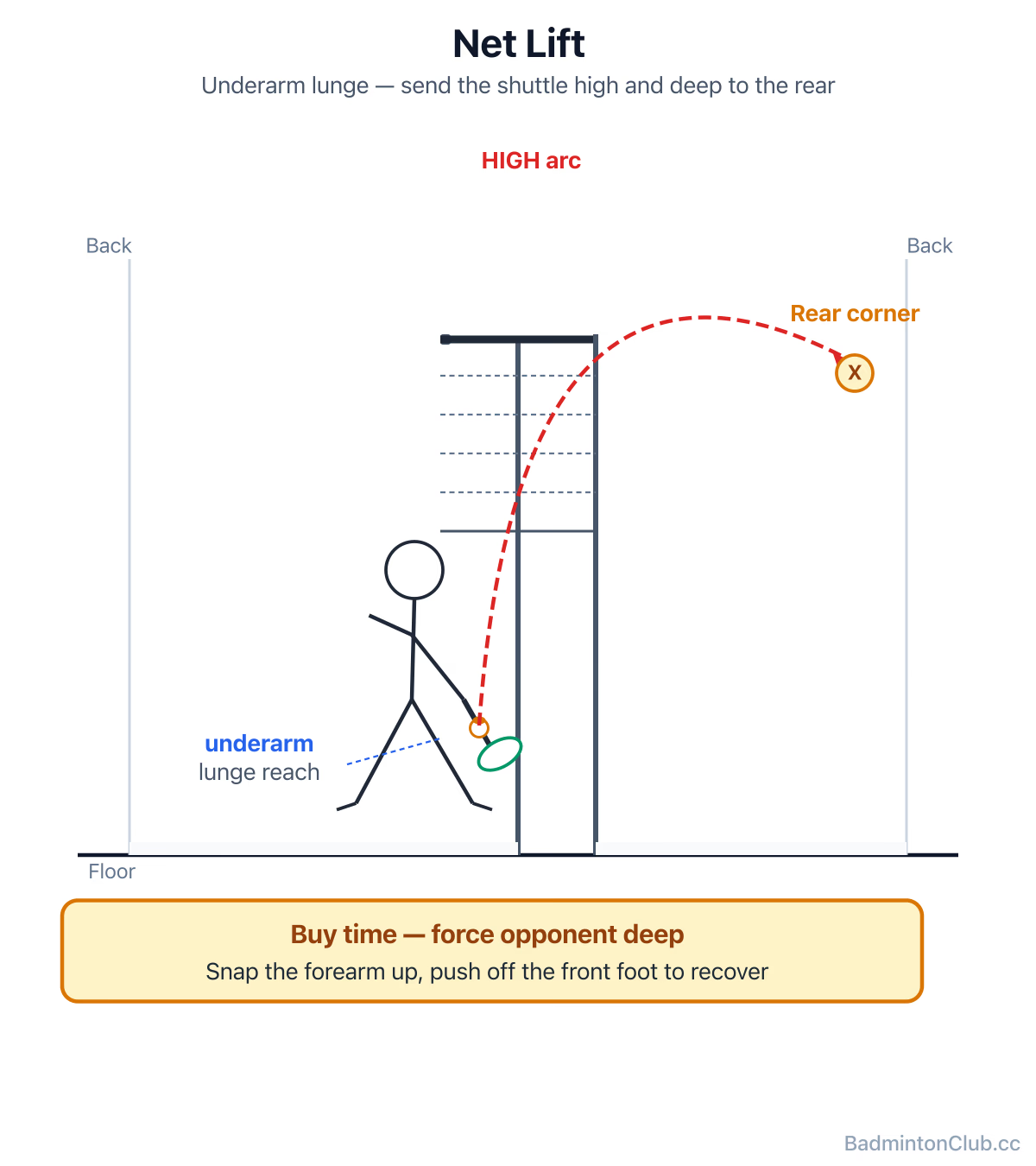
A net lift (underhand clear) is a high, deep shot played from the front court that sends the shuttle up and back to the opponent's rear corner — your reset button when a net exchange goes against you or you can't attack a tight shuttle. It's hit with an underarm lunge, a firm forearm/wrist snap up through the shuttle, and a clear target: high and to the back tramline so you buy maximum time to recover.
When and why to lift
You lift when you've run out of better options at the net: the shuttle is too low or too tight to play a winning net shot, or the rally tempo has you scrambling and you need to reset. A good lift trades the front-court battle (which you were losing) for time — sending the opponent all the way back resets your base position. The key word is high: a flat, short lift is a free smash for the opponent, so the trajectory must climb steeply and land deep. In singles a deep lift is a routine rally-builder; in doubles it's more of a last resort, because it hands the attack over.
The technique: lunge and lift
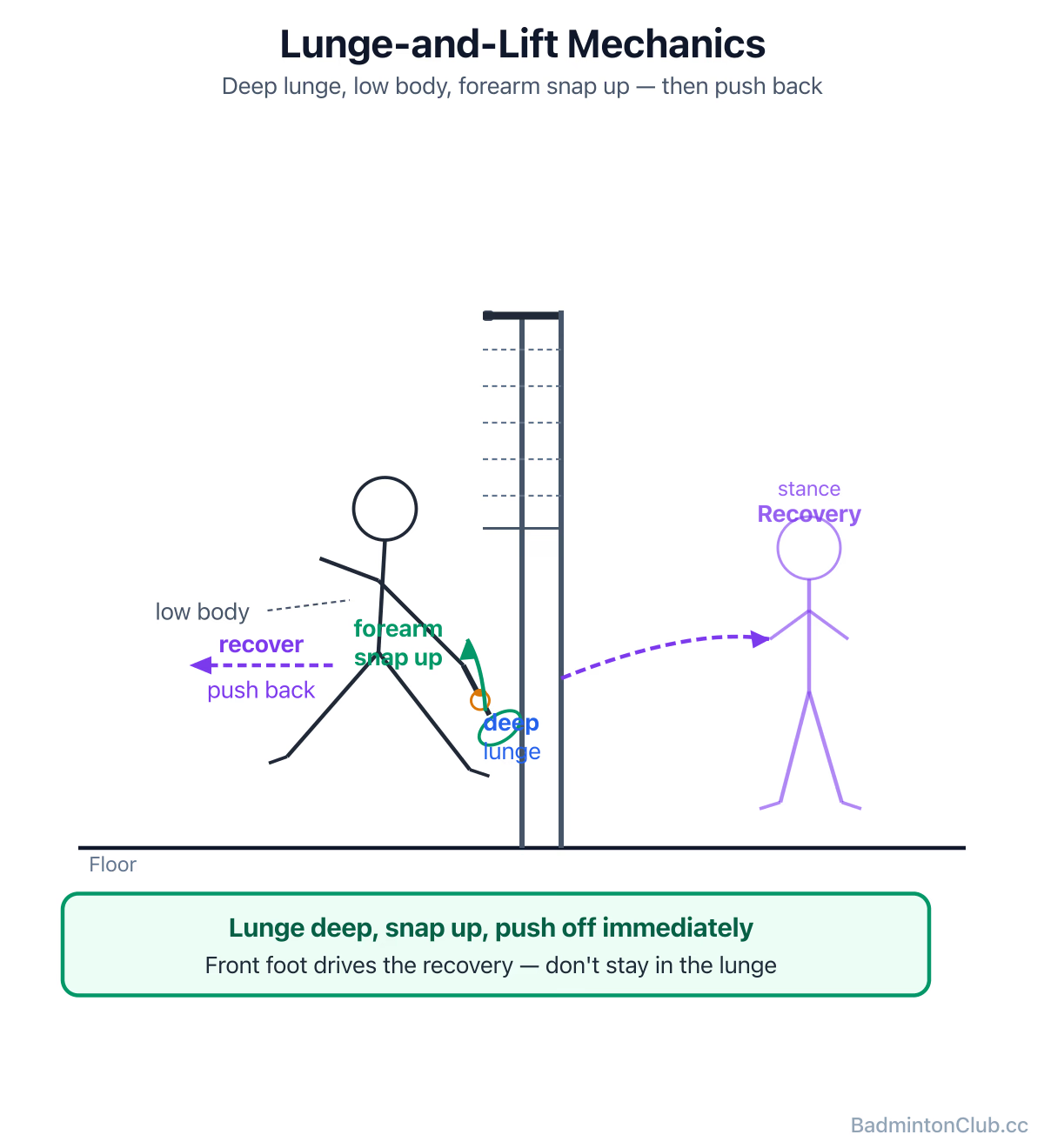
Move to the shuttle with a final lunge — racket-side leg forward, knee over toes, body low. Reach out in front and play the shuttle with an underarm action: the forearm and wrist snap up through it, racket face open, sending it high and long. The power is a compact flick from the forearm, not a heave from the shoulder. Aim for depth first, height second — a lift that reaches the back tramline but is only moderately high beats a sky-high lift that lands mid-court. Recover out of the lunge immediately by pushing back off the front leg; a lift you don't recover from is just a delayed loss of the point. Sharp footwork fundamentals — split step, chassé, and crossover steps are what let you arrive at the shuttle balanced enough to execute the lunge properly rather than flailing into it.
Straight vs cross-court lift
A straight lift is the safe default — shortest distance, least that can go wrong, easiest to recover from. A cross-court lift sends the opponent the longest way but travels further and gives them more time, so it can be intercepted if it's flat or read early; use it to wrong-foot an opponent leaning to cover the straight lift. As a habit, vary your lifts so you're not predictable, but lean on the straight one under real pressure. The deceptive version — showing a net shot and flicking a lift late (the hold-and-flick) — belongs to the deception toolkit, but it starts from this same lifting action. When the shuttle is on the backhand side, the mechanics shift; the backhand lift from a deep corner covers that rescue in detail.
What this looks like on a club night
The lift is unglamorous and it's the shot that quietly keeps you in rallies you have no business still being in. The mistake I see constantly is the short, flat lift under pressure — panicked, it lands mid-court, and the opponent smashes it for a winner; the player then blames the smash, not the weak lift that invited it. If you're going to lift, commit to it: high and deep, every time, and recover. A disciplined defensive lift is the foundation that lets you survive long enough to turn defence back into attack. Boring, essential, and badly underrated. If you're running your own club nights and want a smoother way to shuffle courts and track who's waiting, BadmintonClub.cc handles the rotation so you can focus on your game.
Aim past the back line
A small targeting tip: aim your lift just past the back tramline, not at the back line itself. The shuttle lands on the line if you execute cleanly, and the small bit of margin prevents you drifting too short under pressure. Reverse logic: a lift that lands an inch inside the back line is borderline attackable for a quick opponent; a lift that lands a hair over the back line is unattackable almost by definition. Use the white as a target, not a ceiling. This is also a free mental trick: under pressure it's easier to commit to "I'm aiming past the line" than to "I'm aiming at the line", because the latter sounds like a boundary and your body tightens up trying to respect it.
FAQ
- Q: What is a net lift in badminton? A high, deep underarm shot from the front court that sends the shuttle to the opponent's rear corner — your reset when you can't win the net exchange.
- Q: How do you hit an underhand net clear? Lunge to the shuttle, reach in front, and snap the forearm and wrist up through it with an open face to send it high and deep, then recover off the front leg.
- Q: When should I lift instead of playing a net shot? When the shuttle is too low or tight to attack, or you're scrambling and need to reset the rally by sending the opponent deep.
- Q: Why is my lift getting smashed? It's probably too flat or too short — a lift must climb steeply and land at the back tramline so the opponent can't attack it easily.
- Q: Straight or cross-court lift? Straight is safer and easier to recover from; cross-court wrong-foots a leaning opponent but travels further and can be intercepted if flat.
- Q: Is lifting bad in doubles? It hands over the attack, so it's more of a last resort in doubles than in singles — but a good high, deep lift is still better than a weak net reply.
The net lift (underhand clear) is your reset button when a front-court exchange goes against you — hit it high, hit it deep, and recover fast. This piece covers lunge mechanics, forearm snap, straight vs cross-court choice, and a targeting trick for aiming past the back line. Practical and unglamorous, it's the shot that quietly keeps you in rallies you have no business still being in.