Fake Smash, Check Smash & Stop Drop: Holding the Shuttle to Beat the Defence
6 June 2026 · Badminton Fans
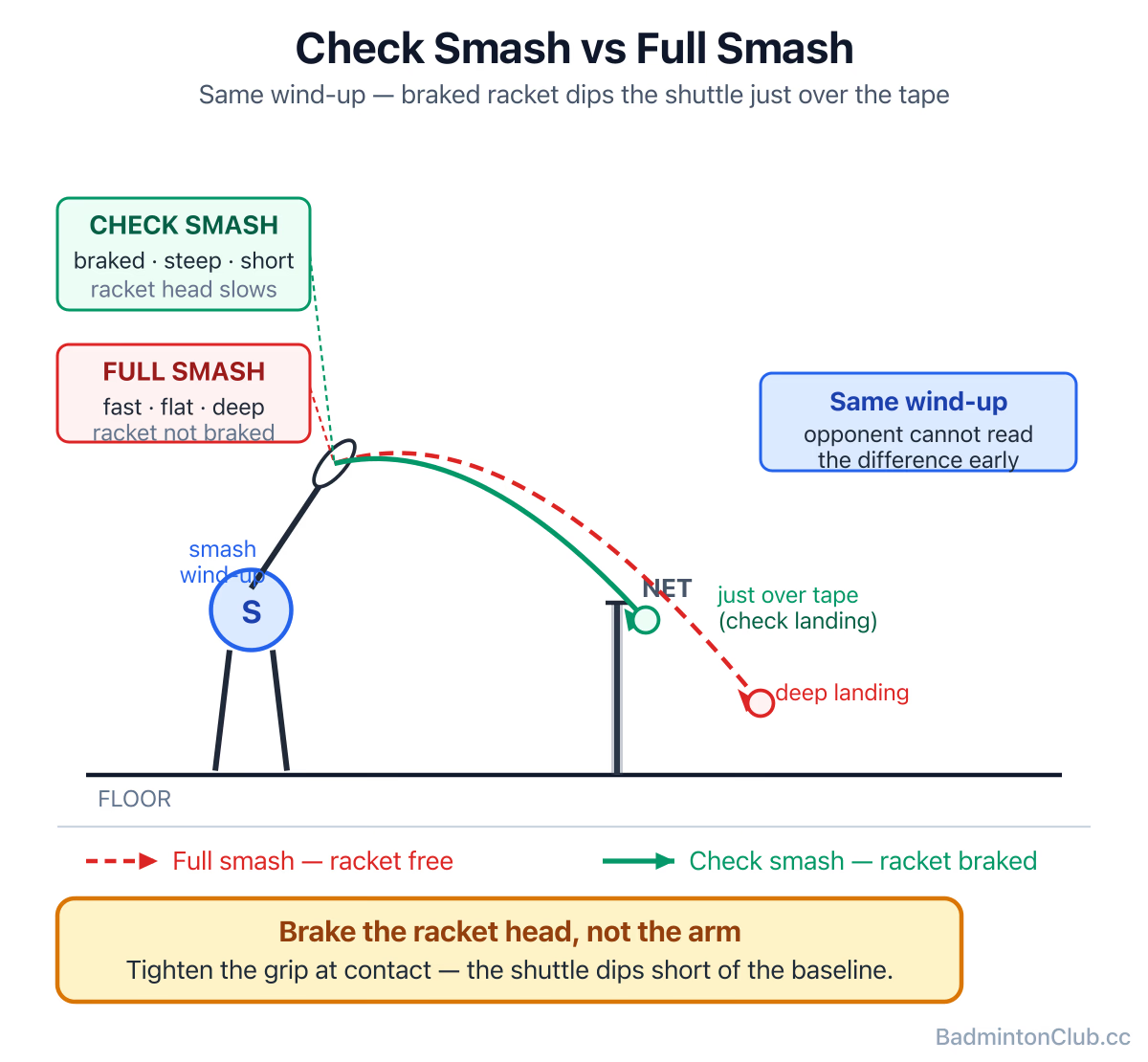
A fake smash drop sells a full smash motion and then plays a soft drop at the last instant; a check smash is a slowed-down smash where you "check" the racket speed to drop the shuttle steeply just over the net; and a stop drop absorbs the shuttle's momentum almost completely so it dies on the tape. All three weaponise the overhead by making the defender brace for power that never comes.
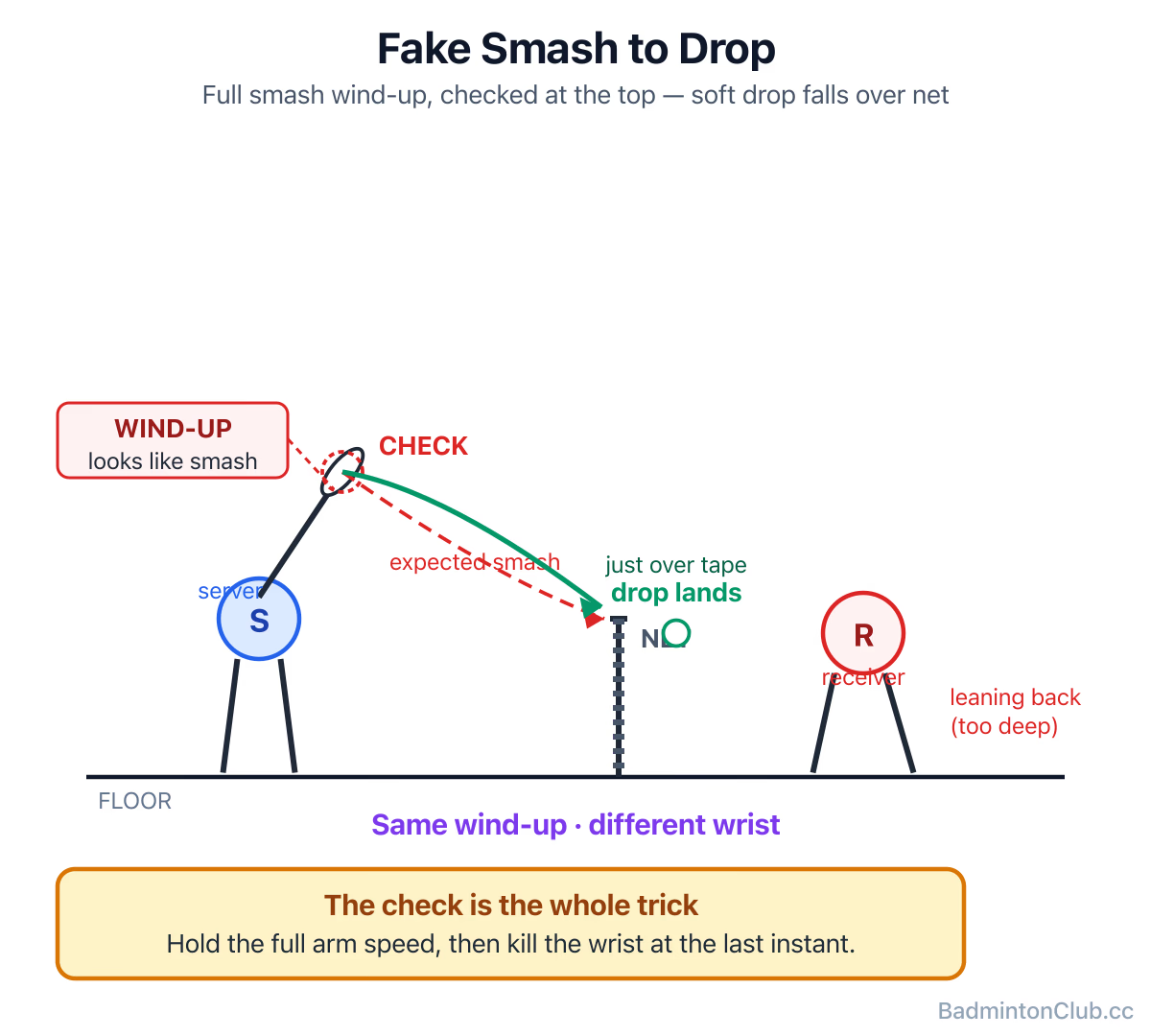
Fake smash drop
The setup is everything: an unmistakable smash preparation — jump, racket back, body coiled — so the defender drops into a low, wide defensive stance, weight back, ready to block hard. Then at the top you decelerate and feather a drop into the forecourt. They're now low and heavy-footed, and the shuttle is dying ten feet in front of them. The art is hiding the deceleration: keep the arm looking committed for as long as possible and take the pace off only in the final snap. It's most effective against a defender who respects your smash — which is exactly why you build a real smash first.
Check smash and the hold
A check smash is subtler than a fake: you genuinely smash, but you check — brake — the racket speed mid-stroke so the shuttle leaves steeply but slowly, dipping just over the net rather than rocketing down. It splits the difference between a smash and a drop and is murder on a defender who's timing a hard block. The broader skill underneath all of this is the hold: keeping the racket up and the shuttle "waiting" an extra beat while the opponent commits, then choosing. A held smash-look that becomes a drop, or a check, is the same family — disguise plus a late decision. If you want to take that concept further across the whole court, the deception fundamentals around wrist snap and double-action apply everywhere from net to rear court.
Stop drop — killing the momentum
The stop drop is a touch shot played off pace, usually against a fast incoming shuttle (a drive or a hard clear) where you simply absorb the pace — soft hands, a cushioned racket face — so the shuttle stops dead and tumbles over the net. There's almost no forward swing; you're catching-and-releasing. It turns the opponent's own speed against them: the faster they hit at you, the deader your stop drop can fall. Soft grip, relaxed forearm, and a racket face that "gives" at contact are the whole technique.
What this looks like on a club night
These are the shots that get a gasp from the next court — and they're also the shots club players butcher most, because they try them cold without the threat that makes them work. If you run a club night and want to keep court rotation smooth while players focus on drills like these, BadmintonClub.cc handles the queueing so the session runs itself. A fake smash only fools someone who fears your smash; played by someone whose smash floats, it's just a slow drop telegraphed from a mile away. Build the real weapon first, then fake it. My favourite version is the check smash, because it has the smallest downside: even when the disguise doesn't fully land, you've still hit a steep, awkward shot rather than gambled everything on a fake. Earn the fake; don't borrow it.
The over-fake tax
There is a real cost to faking on every shot. The opponent learns that your "hold" is free, so they simply wait one beat longer — and that extra wait is often enough to read the actual shot. A player who fakes constantly is paradoxically easy to play. Pick a small number of high-percentage moments per game to actually commit a dummy — one or two a set, on a clearly tired or leaning opponent — and let the rest of your game just disguise. The threat lives in the rarity. This is also why the world's most deceptive players look almost boring for ten rallies, then suddenly spring a fake that wins the point outright: they've kept the currency valuable.
FAQ
- Q: What is a fake smash drop? A shot that sells a full smash motion, then feathers a soft drop at the last instant so the braced defender is caught low and flat-footed.
- Q: What is a check smash in badminton? A smash where you brake (check) the racket speed mid-stroke so the shuttle leaves steeply but slowly, dipping just over the net.
- Q: What is a stop drop shot? A touch shot that absorbs an incoming shuttle's pace with soft hands so it stops dead and tumbles over the net.
- Q: Why isn't my fake smash working? Almost always because the opponent doesn't fear your real smash — without that threat there's nothing to fake. Build the smash first.
- Q: How do you hide the deceleration on a fake smash? Keep the arm and body committed to the smash look as long as possible and take pace off only in the final snap.
- Q: When should I use a stop drop? Against fast incoming shots (drives, hard clears) where you can absorb their pace and drop the shuttle dead just over the net.
- Q: What other soft overhead options pair well with the fake smash? Slice and reverse-slice drop shots use a cutting action off the same overhead swing and produce angled drops that complement the straight-on fake smash perfectly.
Master the fake smash drop, check smash, and stop drop — three deceptive overhead shots that weaponise the same smash wind-up to freeze defenders. Covers the hold technique, how to hide deceleration, the stop drop's soft-hands mechanics, when to deploy fakes (and how often), and why the threat of a real smash is the foundation for all of it.